
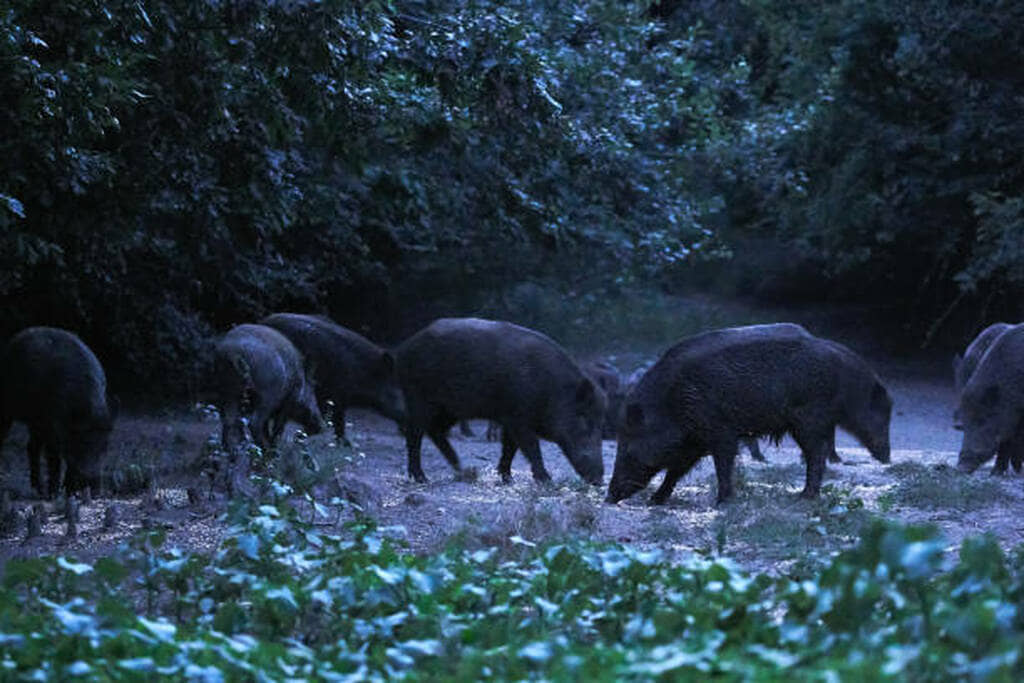
Few things frustrate hunters and landowners more than watching wild hogs seemingly disappear overnight. One week, trail cameras capture hogs feeding in broad daylight. The next, daytime sightings vanish completely, leaving only nighttime photos and fresh tracks behind. This sudden change often leads people to believe the animals have moved to another property or abandoned the area altogether.
In most cases, however, the hogs have not gone anywhere. Instead, they have adjusted their behavior. Understanding why hogs become nocturnal is essential for anyone trying to track, manage, or hunt feral hog populations effectively.
Wild hogs are among the most adaptable large mammals in the world. Their intelligence, strong survival instincts, and ability to learn from experience allow them to thrive in a wide range of environments, from agricultural fields and forests to swamps and grasslands. One of their most impressive survival traits is the ability to alter their activity patterns in response to changing conditions.
Contrary to popular belief, wild hogs are not strictly nocturnal by nature. Under ideal conditions, they may move throughout the day, especially during cooler months or in areas with little human disturbance. However, factors such as hunting pressure, extreme temperatures, human activity, and food availability can gradually push hogs toward nighttime movement.
In this guide, we will explore the primary reasons hogs become nocturnal, how quickly these behavioral changes occur, and what the shift means for hunters, landowners, and wildlife managers. By understanding the forces that influence feral hog activity, you can better predict their movements and make more informed decisions in the field.
Are Wild Hogs Naturally Nocturnal?
One of the biggest misconceptions about feral hogs is that they are naturally nocturnal animals. While many hunters only encounter hogs after dark, this does not necessarily mean nighttime activity is their default behavior.
In reality, wild hogs are considered highly adaptable and behaviorally flexible. Wildlife researchers often classify them as crepuscular animals, meaning they are most active during dawn and dusk. These periods provide several advantages. Temperatures are cooler, visibility is reduced, and there is generally less human activity compared to the middle of the day.
In areas with minimal disturbance, hogs may be active throughout the day. It is not uncommon to observe sounders feeding during the morning, resting during the hottest part of the afternoon, and resuming movement in the evening. This pattern is particularly common on large ranches, remote properties, and wildlife areas where hunting pressure is low.
The ability to adjust activity schedules is one of the primary reasons feral hogs have become so successful across a variety of environments. Unlike species that rely on rigid behavioral patterns, hogs can quickly adapt when conditions change.
This flexibility allows them to respond to:
• Increased hunting pressure
• Human disturbance
• Seasonal weather changes
• Food availability
• Predator presence
As a result, a population that displays significant daytime activity one season may become almost entirely nocturnal the next.
The key takeaway is simple: wild hogs are not born fully nocturnal. Instead, nocturnal behavior is usually an adaptive response to environmental pressures. Understanding this distinction helps explain why hog activity patterns can vary dramatically from one property to another.
Why Hogs Become Nocturnal
The shift from daytime activity to nighttime movement rarely occurs because of a single factor. Instead, it is typically the result of multiple environmental pressures working together. Understanding these influences is essential for predicting hog behavior and identifying the conditions that encourage nocturnal activity.
Hunting Pressure
Among all factors influencing hog behavior, hunting pressure is widely considered the most significant.
Wild hogs possess remarkable learning abilities. After repeated encounters with hunters, vehicles, gunfire, dogs, or human scent, they begin associating daylight hours with danger. Over time, this creates a powerful incentive to move primarily at night when human activity is reduced.
Many hunters observe this transformation firsthand. A property that initially produces regular daytime sightings may experience a dramatic decline in visible hog activity after several weeks of intensive hunting. Trail camera data often reveals that the animals are still present but have shifted movement to nighttime hours.
This adaptation can occur surprisingly quickly. In heavily pressured environments, hogs may alter their schedules within days rather than months.
High Temperatures
Temperature is another major reason why hogs become nocturnal, particularly in southern regions where summer heat can be extreme.
Unlike many mammals, hogs do not sweat efficiently. This limits their ability to regulate body temperature during hot weather. To avoid overheating, they often reduce daytime movement and become more active after sunset when temperatures are significantly cooler.
Nighttime activity allows hogs to:
• Conserve energy
• Reduce heat stress
• Travel longer distances
• Spend more time feeding
During summer, many hogs remain bedded near water sources, swamps, or dense shade throughout the day before emerging after dark.
Human Activity and Disturbance
Not all pressure comes from hunting.
Wild hogs frequently alter behavior in response to routine human activity such as:
• Farming operations
• Ranch work
• Recreational traffic
• Hiking
• ATV use
• Construction projects
When human presence becomes predictable, hogs often adjust their schedules to avoid encounters. This behavioral adaptation helps them remain undetected while continuing to use the same habitat.
In suburban and agricultural areas, hogs commonly wait until nighttime before entering open fields, food plots, or crop land. The reduction in human activity creates a safer environment and lowers the risk of disturbance.
Additional Factors That Encourage Nocturnal Behavior
While hunting pressure, heat, and human disturbance are the primary drivers of nocturnal activity, several additional factors can influence when hogs choose to move.
Predator Avoidance
Although adult hogs have relatively few natural predators, younger pigs remain vulnerable to animals such as coyotes, mountain lions, and bears in some regions.
Nighttime movement can help reduce encounters with certain predators while allowing hogs to take advantage of safer travel periods. However, compared to hunting pressure and temperature, predator avoidance is generally considered a secondary influence.
Food Availability
Food resources can significantly affect movement schedules.
Agricultural crops, acorn production, feeders, and natural forage sources often attract hogs to specific areas. If these feeding locations are exposed or frequently visited by people during daylight hours, hogs may delay feeding until after sunset.
This behavior allows them to access valuable food resources while minimizing risk.
For example, hogs feeding in crop fields often wait until darkness before entering open ground. By remaining hidden during the day and feeding at night, they reduce the likelihood of detection.
Habitat Security
The availability of secure bedding cover also influences activity patterns.
Properties containing dense vegetation, swamps, creek bottoms, and brush-filled drainages allow hogs to remain concealed throughout the day. These secure environments make it easier for hogs to avoid threats and adopt a more nocturnal lifestyle.
Conversely, in areas where cover is limited, hogs may be forced to move during daylight hours to access food or water.
Learned Behavior Within Sounders
Wild hogs are highly social animals. Young pigs often learn movement patterns from older members of the sounder.
When mature sows begin avoiding daylight activity due to pressure or disturbance, younger animals frequently adopt the same habits. Over time, entire groups can become predominantly nocturnal even if only a portion of the population initially altered its behavior.
This social learning process helps explain why nocturnal behavior can spread rapidly through local hog populations.
Survival Through Adaptation
Ultimately, nocturnal activity is a survival strategy. Wild hogs constantly evaluate risk and reward. When daylight movement becomes dangerous due to hunting, heat, or human activity, shifting activity to nighttime provides a significant advantage.
This remarkable adaptability is one of the primary reasons feral hog populations continue to thrive in diverse environments across North America and beyond.
How Quickly Can Hogs Become Nocturnal?
One of the most surprising aspects of feral hog behavior is how quickly these animals can adapt to changing conditions. Many hunters assume that behavioral shifts occur gradually over several months. In reality, hogs can become significantly more nocturnal within a matter of days when environmental pressure increases.
The speed of this transition largely depends on the level of perceived threat. A property that experiences sudden hunting activity, increased vehicle traffic, or repeated human encounters can trigger immediate behavioral changes. Hogs quickly learn to associate daylight movement with danger and begin adjusting their schedules accordingly.
Several factors influence how fast this change occurs:
Intensity of Hunting Pressure
Properties subjected to frequent hunting often experience the fastest behavioral shifts. Repeated exposure to gunfire, hunting stands, and human scent teaches hogs that daytime activity carries greater risk.
In heavily pressured environments, trail cameras may show a dramatic reduction in daylight movement after only a few encounters.
Habitat Availability
Areas with abundant cover allow hogs to transition to nocturnal behavior more easily. Dense forests, swamps, brush fields, and creek bottoms provide safe daytime bedding locations while allowing movement after dark.
Where cover is limited, hogs may have fewer opportunities to become fully nocturnal.
Human Disturbance Patterns
Predictable human activity often accelerates adaptation. If farming equipment, recreational users, or landowners follow regular schedules, hogs quickly learn when to avoid certain areas.
Previous Experience
Older boars and mature sows often adapt faster because they have survived previous encounters with predators and humans. Their experience helps them recognize threats more quickly than younger animals.
The important lesson is that feral hogs do not require months to change behavior. Under the right conditions, a population that regularly moves during daylight can become predominantly nocturnal in a remarkably short period of time.
Signs That Hogs Have Shifted to Night Activity
Many hunters mistakenly assume that hogs have left an area when daytime sightings suddenly stop. However, in many cases, the animals are still present and simply operating under a different schedule.
Recognizing the signs of nocturnal behavior can help prevent unnecessary scouting mistakes and improve management decisions.
Fresh Sign but No Daytime Sightings
One of the clearest indicators is the presence of fresh hog sign without visible daytime activity.
You may continue finding:
• Fresh tracks
• New rooting damage
• Recently used wallows
• Fresh droppings
Yet daytime observations become increasingly rare.
This often indicates that hogs are moving under the cover of darkness while remaining in the same general area.
Trail Camera Activity After Sunset
Trail cameras frequently provide the first confirmation that hogs have altered their schedules.
Common patterns include:
• Increased movement after sunset
• Activity concentrated between dusk and dawn
• Minimal daytime photographs
• Consistent nighttime feeding visits
When cameras repeatedly capture hogs during overnight hours while showing little daytime movement, nocturnal behavior is usually well established.
Reduced Daylight Feeding
Food sources that once attracted hogs during the day may suddenly appear inactive.
Hunters often notice:
• Feeders being visited only at night
• Crop damage occurring overnight
• Food plots showing morning evidence but no daytime activity
This shift reflects an effort to access food while minimizing risk.
Increased Use of Dense Cover
Nocturnal hogs typically spend more daylight hours inside secure bedding habitat.
As pressure increases, they may retreat deeper into:
• Swamps
• Thick brush
• Creek bottoms
• Timber blocks
• Overgrown vegetation
These locations provide concealment until darkness allows safer movement.
Nighttime Travel Patterns Become Predictable
Interestingly, while daytime sightings decrease, nighttime activity often becomes more consistent.
Many nocturnal hog populations establish predictable routes between bedding areas, water sources, and feeding locations. Understanding these routes can provide valuable insight into local movement patterns.
Quick Checklist
If you observe most of the following signs, hogs have likely become nocturnal:
✓ Fresh rooting appears overnight
✓ Trail cameras capture mostly nighttime activity
✓ Daytime sightings decline sharply
✓ Dense cover shows increased sign
✓ Feeding areas remain active after dark
Recognizing these indicators allows hunters and landowners to adjust scouting strategies rather than assuming the hogs have disappeared.
Seasonal Changes in Hog Activity Patterns
Although hunting pressure is often the primary reason hogs become nocturnal, seasonal conditions also play a major role in determining when feral hogs move, feed, and rest.
Understanding these seasonal trends can help explain why hog behavior may change dramatically throughout the year.
Spring
Spring is often characterized by moderate temperatures, increasing vegetation growth, and expanding food resources.
During this season, hogs commonly display:
• More daytime movement
• Increased feeding opportunities
• Greater habitat flexibility
• Expanded travel patterns
Because temperatures remain relatively comfortable, many hogs continue moving during daylight hours, especially in areas with limited hunting pressure.
Spring is also an important period for reproductive activity, which can increase movement throughout the day.
Summer
Summer typically produces the strongest nocturnal tendencies.
As temperatures rise, hogs face increasing challenges related to heat stress. Since hogs cannot cool themselves efficiently through sweating, they often reduce daytime movement to conserve energy and avoid overheating.
Common summer behavior includes:
• Bedding near water
• Frequent wallow use
• Nighttime feeding
• Reduced daytime travel
In southern regions, some hog populations become almost entirely nocturnal during extended periods of extreme heat.
Fall
Fall introduces significant changes in food availability.
Acorns, agricultural crops, and natural forage sources often become abundant during this season. Hogs may increase movement to take advantage of these resources.
Activity patterns during fall are often influenced by:
• Crop harvest schedules
• Mast production
• Hunting pressure
• Weather conditions
Depending on local circumstances, hogs may display both daytime and nighttime movement.
Winter
Winter frequently provides the best opportunities for observing daytime activity.
Cooler temperatures reduce heat-related stress and allow hogs to remain active longer during daylight hours.
Many hogs seek:
• South-facing slopes
• Wind-protected cover
• Dense vegetation
• Warm bedding locations
Because energy demands increase during colder weather, feeding activity may also occur more frequently during daylight.
Why Seasonal Understanding Matters
Hunters who ignore seasonal behavior often struggle to predict hog movement accurately.
A location that produces primarily nocturnal activity during summer may generate regular daytime sightings during winter. Likewise, areas with substantial daytime movement in spring may become almost completely nocturnal by midsummer.
Successful scouting requires understanding not only where hogs live but also how environmental conditions influence when they move.
By combining seasonal knowledge with habitat analysis and trail camera data, hunters and landowners can develop a much more accurate picture of local hog behavior throughout the year.
Read more: Can Hogs Smell Hunters Better Than Deer?
Can Nocturnal Hogs Become Active During Daylight?
A common assumption among hunters is that once hogs become nocturnal, they will remain strictly active at night forever. Fortunately, this is not always the case. While feral hogs can develop strong nighttime movement patterns, several conditions may encourage them to become active during daylight hours again.
Understanding these exceptions can help hunters and landowners identify opportunities that others might overlook.
Cold Weather Often Increases Daytime Activity
One of the most significant triggers for daytime movement is a drop in temperature.
During cooler months, hogs no longer face the same risk of heat stress that exists during summer. As a result, they can comfortably travel, feed, and socialize during daylight hours without expending excessive energy.
Many hunters report increased daytime sightings following:
• Cold fronts
• Extended periods of cool weather
• Winter storms
• Overcast conditions
These weather events often create short windows of opportunity when normally nocturnal hogs become visible during the day.
Reduced Hunting Pressure
Behavioral adaptation works both ways.
Just as hogs can learn to avoid daytime activity after repeated encounters with hunters, they can gradually return to daylight movement when pressure decreases.
Properties that receive little hunting activity for several months often experience:
• Increased daylight feeding
• More visible travel routes
• Earlier evening movement
• Later morning activity
This change is particularly common on private land where hunting pressure fluctuates throughout the year.
Food Demands Can Override Caution
There are times when nutritional needs become more important than avoiding risk.
Periods of increased food demand may encourage additional movement, including daytime feeding.
Examples include:
• Drought conditions
• Limited food availability
• Population competition
• Recovery after severe weather events
When resources become scarce, hogs may accept greater risk in exchange for access to food.
Breeding Activity Can Increase Movement
Breeding behavior occasionally alters normal movement schedules.
Boars searching for receptive sows may travel considerable distances regardless of time of day. This can create unexpected daytime sightings, even in areas where hogs are generally nocturnal.
Daylight Activity Does Not Mean Behavioral Reversal
It is important to understand that occasional daytime movement does not necessarily mean a population has abandoned nocturnal habits.
Instead, hog activity often exists on a spectrum. A primarily nocturnal population may still exhibit occasional daytime movement when conditions become favorable.
Hunters and landowners who monitor weather, pressure levels, and food availability are often better positioned to recognize these opportunities and adjust their strategies accordingly.
Common Myths About Nocturnal Hogs
Because feral hogs are highly adaptable animals, many misconceptions exist regarding their activity patterns. Separating fact from fiction helps create a more accurate understanding of why hogs become nocturnal and how they respond to environmental pressure.
Myth #1: Hogs Are Naturally Nocturnal
This is perhaps the most widespread misconception.
While hogs frequently move at night, they are not strictly nocturnal by nature. Under low-pressure conditions, hogs often display activity during daylight, especially during dawn and dusk.
Nocturnal behavior is usually a response to environmental conditions rather than an inborn requirement.
Myth #2: If Hogs Become Nocturnal, They Have Left the Area
Many hunters stop scouting productive locations after daytime sightings disappear.
In reality, hogs often remain within the same home range while simply changing their movement schedule. Fresh tracks, rooting damage, and nighttime trail camera photos frequently confirm their continued presence.
The animals have adapted, not disappeared.
Myth #3: Only Mature Boars Become Nocturnal
Some people believe that only older boars avoid daylight activity.
Although mature boars are often more cautious, entire sounders can become nocturnal when pressure increases. Sows, juveniles, and young pigs frequently adopt the same movement patterns as the rest of the group.
Myth #4: Night Movement Means Hogs Feel Safe
Ironically, the opposite is often true.
Many hogs move at night specifically because they perceive daytime conditions as unsafe. Their nocturnal behavior reflects caution and adaptation rather than comfort.
Myth #5: Nocturnal Hogs Never Move During Daylight
Even highly nocturnal populations occasionally become active during the day.
Weather changes, food shortages, breeding activity, and reduced pressure can all create periods of daylight movement.
Understanding these exceptions allows hunters and landowners to take advantage of opportunities that others may overlook.
The Reality
The most accurate way to view nocturnal hog behavior is as a survival strategy. Hogs continuously adjust their schedules based on risk, reward, and environmental conditions. This flexibility explains why their activity patterns can vary dramatically between properties and seasons.
What This Means for Hunters and Landowners
Understanding why hogs become nocturnal is not simply an academic exercise. It has direct practical implications for anyone managing, monitoring, or hunting feral hog populations.
For Hunters
Hunters who understand behavioral adaptation are less likely to misinterpret changes in hog activity.
Instead of assuming hogs have left the property, they can focus on:
• Adjusting scouting methods
• Monitoring nighttime movement
• Identifying bedding areas
• Locating travel corridors
• Evaluating hunting pressure
This approach often leads to more accurate assessments of local hog populations and more effective hunting strategies.
Perhaps most importantly, hunters learn that excessive pressure can unintentionally train hogs to become increasingly nocturnal.
For Landowners
Landowners dealing with crop damage or property destruction benefit from understanding when hogs are active.
Recognizing nocturnal behavior can improve:
• Population monitoring
• Damage assessment
• Control efforts
• Camera placement
• Resource management
Many landowners discover that significant damage occurs overnight even when no hogs are observed during the day.
For Wildlife Managers
Wildlife professionals often use activity patterns to evaluate population behavior and management effectiveness.
Understanding the relationship between pressure and nocturnal activity helps managers:
• Interpret survey data
• Design monitoring programs
• Evaluate population responses
• Develop long-term management plans
The Bigger Picture
The ability to shift from daytime movement to nighttime activity is one of the primary reasons feral hogs have become such successful invasive animals.
Their intelligence, adaptability, and behavioral flexibility allow them to survive under conditions that challenge many other species.
For hunters and landowners, recognizing these adaptations is often the difference between assuming hogs are gone and understanding where they are likely to be when the sun goes down.
Conclusion
Understanding why hogs become nocturnal is one of the most important pieces of knowledge for anyone who hunts, manages, or studies feral hog populations. While many people assume that wild hogs are naturally active only at night, the reality is far more complex. Their activity patterns are highly flexible and often shaped by environmental conditions rather than instinct alone.
Throughout this guide, we have seen that hunting pressure is typically the strongest factor driving nocturnal behavior. Repeated exposure to hunters, vehicles, human scent, and other disturbances teaches hogs that daylight movement carries greater risk. In response, they shift their activity to nighttime hours when they are less likely to encounter danger.
Temperature also plays a major role. During hot summer months, nighttime movement allows hogs to conserve energy, avoid heat stress, and access food and water more efficiently. Additional influences such as human activity, habitat security, food availability, predator pressure, and seasonal changes further shape how and when hogs move across the landscape.
Perhaps the most important takeaway is that nocturnal behavior does not necessarily mean hogs have left an area. In many cases, they are still using the same bedding cover, feeding locations, and travel corridors. The only difference is the timing of their movement. Hunters who understand this concept are often better equipped to interpret trail camera data, identify active habitat, and adapt their scouting strategies accordingly.
Wild hogs continue to thrive because they are exceptionally adaptable animals. Their ability to learn, adjust, and survive under changing conditions is one of the primary reasons they remain such a successful and challenging species to manage.
The next time daytime hog sightings suddenly disappear, do not assume the animals are gone. Instead, consider the possibility that they have simply adapted. Understanding that shift may provide the insight needed to locate them again.
Have you noticed feral hogs becoming more nocturnal on your property? Share your observations, trail camera results, and experiences. Comparing activity patterns across different regions can help build a deeper understanding of how wild hogs respond to pressure and environmental change.