
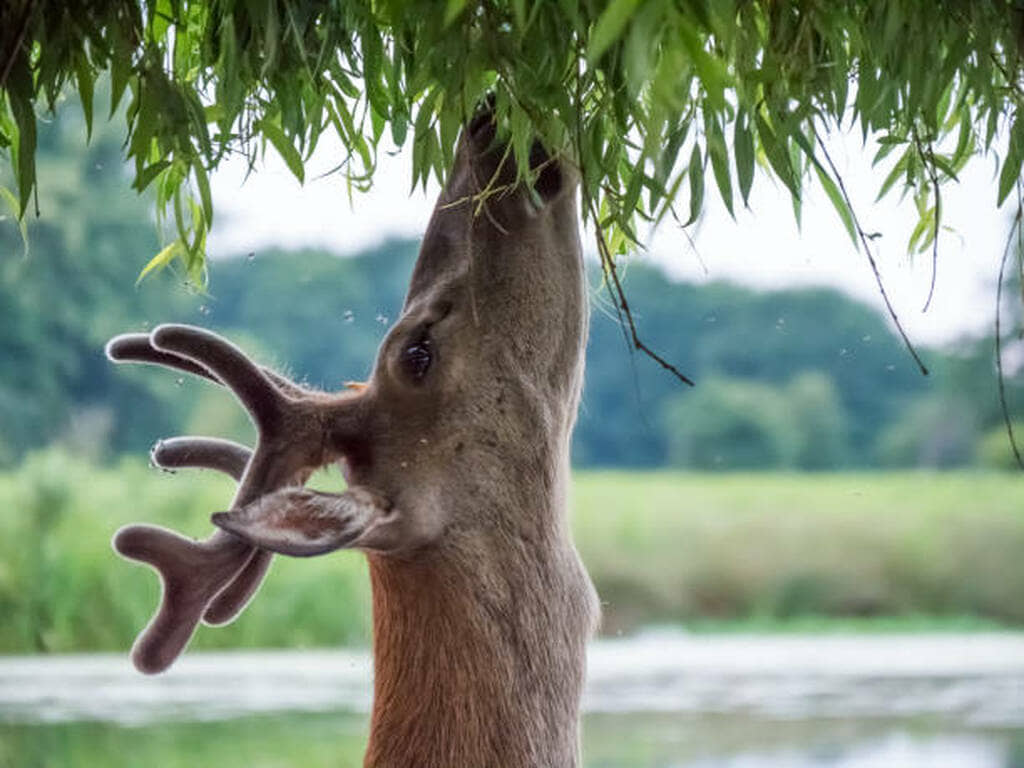
Yes, deer do eat weeping willow trees. They browse the leaves, tender shoots, twigs, and even bark, especially when preferred forage is limited. Although weeping willow is not among a whitetail deer’s most preferred food sources, it becomes an important browse plant during periods of food scarcity and in habitats where willow grows near water.
For hunters, understanding how deer interact with weeping willow trees provides more than a simple answer to a wildlife question. Browsed willow trees can reveal where deer feed, how they move through riparian corridors, and which areas receive consistent deer activity throughout the year. Fresh browsing on young shoots, tracks around the tree, and nearby trails often indicate active feeding locations that can influence scouting and stand placement.
The extent of browsing depends on several factors, including the season, local deer density, hunting pressure, and the availability of more nutritious forage such as acorns, agricultural crops, or soft mast. During late winter and early spring, when natural food sources become scarce, deer rely more heavily on woody browse, making weeping willow noticeably more attractive than it is during summer or early fall.
This guide explains whether deer eat weeping willow trees, which parts they consume, when browsing is most common, how willow compares with other tree species in a deer’s diet, and how hunters can use willow trees to identify productive hunting locations and improve habitat management decisions.
Do Deer Eat Weeping Willow Trees?
Yes, deer eat weeping willow trees, but they are considered a secondary food source rather than a preferred browse species. Whitetail deer feed on willow when tender vegetation is available or when higher-value food sources become scarce. In regions where weeping willow grows along ponds, streams, wetlands, and drainage areas, deer often browse the trees as part of their daily feeding routes.
Deer do not consume weeping willow with the same consistency as highly preferred foods such as white oak acorns, apple trees, persimmons, or agricultural crops. Instead, willow serves as supplemental browse that helps fill nutritional gaps throughout the year. Young trees are especially vulnerable because their leaves and shoots are within easy reach and contain softer plant tissue than mature branches.
The amount of browsing varies based on local habitat conditions. Properties with abundant natural forage typically experience light damage to willow trees because deer have many feeding options. In contrast, areas with high deer densities or limited winter forage often show heavy browsing on willow, particularly after frost reduces the availability of herbaceous plants.
For hunters, fresh browsing on weeping willow trees can indicate active deer use of riparian habitat. Willow growing near creeks, ponds, marsh edges, or river bottoms frequently marks travel corridors that connect bedding cover with evening feeding areas. While a willow tree alone does not guarantee a productive stand location, multiple signs—including fresh browse, tracks, droppings, and well-used trails—provide stronger evidence of consistent deer activity.
Which Parts of a Weeping Willow Tree Do Deer Eat?
Deer primarily eat the leaves, tender shoots, young twigs, and bark of weeping willow trees. The parts they consume change throughout the year as the tree’s growth cycle and food availability shift.
During spring and early summer, deer target newly emerged leaves and succulent shoots because they are high in moisture, easier to digest, and contain more nutrients than mature woody growth. Repeated browsing during this period can slow the development of young willow trees by removing new growth before it hardens.
As the growing season progresses, deer continue feeding on flexible twigs, especially when they remain within browsing height. Mature trees generally tolerate occasional twig browsing, but young saplings can become misshapen or experience stunted growth after repeated damage.
Winter browsing focuses more on woody material. When green vegetation becomes scarce, deer strip bark from small branches and young trunks to access the nutrient-rich cambium layer beneath the outer bark. Although mature weeping willow trees usually survive moderate bark damage, extensive girdling around the trunk can interrupt water and nutrient transport, potentially killing young trees.
Hunters can also use browsing patterns to estimate the timing of deer activity. Cleanly clipped shoots at a height of approximately 3 to 5 feet, freshly exposed bark, and recently removed leaves often indicate active feeding. When these signs appear alongside fresh tracks and droppings, they suggest that deer are regularly using the surrounding habitat rather than passing through only occasionally.
When Do Deer Eat Weeping Willow Trees the Most?
Deer browse weeping willow trees throughout the year, but feeding activity typically peaks during late winter and early spring. During these seasons, natural forage is limited, forcing deer to rely more heavily on woody browse, including willow shoots and twigs.
In spring, weeping willow becomes one of the first trees to produce fresh leaves and tender shoots. These young tissues are rich in moisture and easier to digest than mature vegetation, making them an attractive food source as deer recover from winter and replenish energy reserves. Does also increase nutrient intake during pregnancy and the early stages of lactation, which can lead to heavier browsing in areas where willow is abundant.
Browsing generally declines during summer because food is plentiful. Deer shift their diet toward agricultural crops, food plots, forbs, soft mast, and other highly nutritious plants. While they may still feed on willow leaves growing near travel routes or bedding cover, willow represents a much smaller portion of their overall diet.
During fall, deer often prioritize calorie-dense foods such as acorns, apples, persimmons, and crop fields in preparation for winter. Willow remains an available browse plant, but it rarely becomes a primary feeding destination unless preferred foods are scarce.
Winter produces the most noticeable damage to willow trees. After frost reduces green vegetation, deer consume more woody browse to meet their daily nutritional needs. Young twigs and small branches become especially important because they remain accessible above the snow and provide a reliable source of fiber and nutrients. On properties with high deer populations, repeated winter browsing can significantly alter the shape and growth of young willow trees.
For hunters, seasonal browsing patterns provide valuable scouting information. Heavy winter browse often identifies feeding areas that deer continue to revisit in early spring, while fresh spring shoots clipped by deer can confirm active movement through riparian corridors before green food becomes widely available elsewhere.
Why Do Deer Eat Weeping Willow Trees?
Deer eat weeping willow because it provides accessible browse when preferred food sources are unavailable or less abundant. Willow is not considered a top-choice forage species, but its tender growth, year-round availability, and location within productive habitat make it a dependable supplemental food source.
One reason deer browse willow is the quality of its new growth. Young leaves and shoots contain more moisture and are easier to digest than mature woody stems. Deer naturally seek plants that deliver the greatest nutritional return with the least amount of digestive effort, particularly during spring when they need to rebuild body condition after winter.
Habitat also plays an important role. Weeping willow commonly grows near streams, ponds, wetlands, and riverbanks—areas that naturally attract deer because they combine water, cover, and diverse vegetation. Even if willow is not the primary reason deer visit these locations, the trees become convenient browse while deer travel between bedding and feeding areas.
Food availability is another major factor. Deer consistently choose the highest-quality forage available in their home range. When acorns, agricultural crops, food plots, or native forbs are plentiful, browsing on willow usually remains light. As those food sources disappear because of drought, snow cover, overbrowsing, or seasonal changes, deer increase their use of woody plants, including willow.
Population pressure further influences browsing intensity. Areas with high deer densities often experience heavier damage because more animals compete for the same food resources. Young willow trees may be browsed repeatedly throughout the year, while similar trees in regions with lower deer populations may receive only occasional feeding.
For hunting properties, willow browsing should be viewed as one indicator of habitat quality rather than a standalone attraction. Consistent feeding on willow becomes much more meaningful when combined with nearby bedding cover, reliable water, established travel corridors, and additional food sources that support deer throughout the year.
Do Deer Prefer Weeping Willow Over Other Trees?
No, deer do not prefer weeping willow over their favorite browse and mast-producing trees. While deer readily feed on willow when conditions are right, they consistently choose more nutritious and energy-rich food sources when those options are available.
Trees that produce hard mast and soft mast generally rank higher in a whitetail’s diet. White oak acorns, apple trees, crabapple trees, persimmons, and young fruit trees provide more calories or carbohydrates than willow foliage. During the growing season, deer also favor native forbs, legumes, agricultural crops, and food plots before increasing their reliance on woody browse as winter approaches.
Weeping willow occupies the middle tier of preferred browse species. Its tender shoots and leaves are palatable, but deer rarely seek them out if higher-quality forage is abundant. Instead, willow functions as a dependable backup food source that supplements a deer’s diet throughout the year.
The age of the tree also affects browsing pressure. Young willow saplings attract significantly more feeding because their shoots remain within browsing height and are softer than mature branches. Older trees often experience only light browsing on low-hanging branches unless food shortages become severe.
The table below summarizes how weeping willow compares with several common tree species found on hunting properties.
| Tree species | Deer preference | Primary food source |
|---|---|---|
| White oak | Very high | Acorns |
| Apple | Very high | Fruit, leaves, shoots |
| Crabapple | High | Fruit, leaves |
| Persimmon | High | Fruit |
| Aspen | Moderate to high | Shoots, bark |
| Weeping willow | Moderate | Leaves, shoots, twigs, bark |
| Red maple | Moderate | Buds, twigs |
| Pine | Low | Needles, limited browse |
For hunters and land managers, this ranking highlights an important point. Planting a single weeping willow is unlikely to increase deer use of a property by itself. A diverse habitat that combines quality browse, mast-producing trees, water, bedding cover, and secure travel corridors provides far greater value than relying on one tree species.
Can Weeping Willow Trees Attract Deer to Your Hunting Property?
Yes, weeping willow trees can attract deer, but they work best as part of a complete habitat rather than as a standalone attractant. Deer are drawn to areas that satisfy multiple needs, including food, water, cover, and security. Willow contributes to that habitat by providing browse and growing naturally along moist environments that deer already use.
Properties with ponds, creeks, wetlands, or riverbanks often contain willow trees because these areas support the moisture the species requires. These same locations frequently serve as natural travel corridors that allow deer to move between bedding cover and evening feeding destinations while remaining concealed.
Young willow trees provide the greatest attraction because they produce abundant leaves and tender shoots within browsing height. Mature trees contribute less as a direct food source but continue to improve habitat by creating shade, stabilizing streambanks, and increasing vegetation density along waterways.
Hunters should avoid treating willow as a substitute for proven habitat improvements such as food plots, oak regeneration, native browse management, or soft mast plantings. Instead, willow should complement these features. A property that combines several high-quality food sources with reliable cover encourages deer to spend more time within the area throughout the year.
When scouting, pay close attention to willow trees located near creek crossings, pond edges, or narrow strips of timber connecting larger blocks of cover. If fresh browsing is accompanied by tracks, droppings, rubs, or well-worn trails, the surrounding area may represent a productive location for trail cameras or tree stands during the appropriate season.
Ultimately, weeping willow should be viewed as a habitat indicator rather than a primary deer attractant. Its greatest value for hunters lies in revealing where deer naturally travel and feed, especially in riparian environments where multiple habitat features come together.
How Can Hunters Use Weeping Willow Trees to Locate Deer?
Hunters can use weeping willow trees as habitat indicators to identify feeding activity, travel routes, and stand locations. While willow trees rarely become primary feeding destinations, fresh browsing around them often confirms that deer are actively using the surrounding area.
The first step is to inspect the tree for recent browse. Deer leave clean, angled cuts on shoots because they lack upper incisors and tear vegetation with their lower teeth. Freshly clipped twigs, stripped bark, and missing leaves indicate feeding activity within the past several days, especially during late winter and spring.
Next, examine the ground surrounding the tree. Multiple tracks pointing in the same direction usually reveal a travel route rather than random movement. Fresh droppings, flattened vegetation, and narrow trails connecting willow stands to thicker cover suggest deer regularly move through the area during daylight or shortly before sunset.
Location matters as much as the tree itself. Weeping willow commonly grows along creeks, ponds, marshes, and drainage ditches. These riparian corridors naturally funnel deer movement because they provide water, security cover, and cooler temperatures during warm weather. If several browsed willow trees appear along the same corridor, the area deserves additional scouting with trail cameras before selecting a stand location.
Hunters should also evaluate nearby habitat instead of focusing only on the willow tree. Bedding cover located within a few hundred yards, nearby crop fields, oak flats, food plots, or soft mast trees create a complete habitat that supports consistent deer movement. Willow browsing becomes much more meaningful when several habitat features overlap in the same area.
Wind direction remains the deciding factor for hunting success. Even when willow browsing confirms regular deer activity, placing a stand without considering prevailing winds can alert mature bucks before they enter shooting range. Use willow trees to identify high-traffic areas, then position stands where scent disperses away from expected deer movement.
Read more: Red Osier Dogwood for Deer: Is It Worth Planting?
How Can You Protect Weeping Willow Trees From Deer?
Young weeping willow trees require protection if frequent deer browsing threatens their growth. Mature trees generally recover from occasional feeding, but repeated damage to saplings can reduce growth, deform branches, or kill the tree if bark is removed around the trunk.
The most effective solution is installing a wire cage or tree guard around the trunk and lower branches. A barrier at least 5 to 6 feet tall prevents most browsing while allowing the tree to continue growing naturally.
Temporary fencing works well when protecting several young trees. Individual cages are often more practical for homeowners or landowners with only a few newly planted willows.
Commercial deer repellents can reduce browsing pressure for short periods, but they require regular reapplication after rainfall and become less effective in areas with high deer densities. Repellents should be considered a supplemental measure rather than a long-term solution.
For hunting properties, protecting every willow tree is rarely necessary. Browsing is part of a healthy deer habitat, and allowing some feeding can even help identify active deer locations during scouting. Protection is most valuable when preserving ornamental trees or establishing new habitat plantings.
What Other Trees Do Deer Commonly Eat?
Deer browse a wide variety of trees, but they do not consume every species equally. Preference depends on nutrition, seasonal availability, local habitat, and regional plant communities.
Highly preferred trees include apple, crabapple, persimmon, and young oak seedlings. These species provide fruit, tender shoots, or mast that supplies significant energy during different seasons.
Aspen, poplar, dogwood, maple, and willow fall into the moderate-preference category. Deer regularly browse their leaves, buds, and young twigs, particularly when preferred forage becomes limited.
Evergreens such as cedar also receive heavy browsing during winter because they remain green after deciduous plants lose their leaves. Pine, spruce, and fir generally experience much lighter browsing except during severe food shortages.
Land managers should evaluate the entire browse community instead of focusing on one species. A diverse mixture of mast-producing trees, native shrubs, regenerating hardwoods, and herbaceous vegetation provides more consistent nutrition than any single browse plant.
Frequently Asked Questions
Do deer kill weeping willow trees?
Yes, repeated browsing can kill young weeping willow trees. Removing shoots slows growth, while stripping bark completely around the trunk interrupts the flow of water and nutrients, a process known as girdling. Mature trees usually survive moderate browsing because they have thicker bark and larger energy reserves.
Will mature weeping willow trees survive deer browsing?
Most mature weeping willow trees tolerate occasional browsing without serious damage. Deer typically feed on low branches and young shoots, while the tree continues producing new growth throughout the growing season.
Are weeping willow trees good cover for deer?
Yes, weeping willow trees can provide limited security cover, especially along waterways. Their drooping branches create visual screening, but deer rely more heavily on dense shrubs, native grasses, young timber, and thick bedding cover for protection during daylight hours.
Should you plant weeping willow trees for deer hunting?
Weeping willow should not be planted solely to attract deer. The tree offers supplemental browse and improves riparian habitat, but it is far more effective when combined with food plots, mast-producing trees, native browse, and quality bedding cover. Hunters seeking long-term habitat improvements will achieve better results by creating a diverse landscape that supplies food, cover, and secure travel corridors throughout the year.