
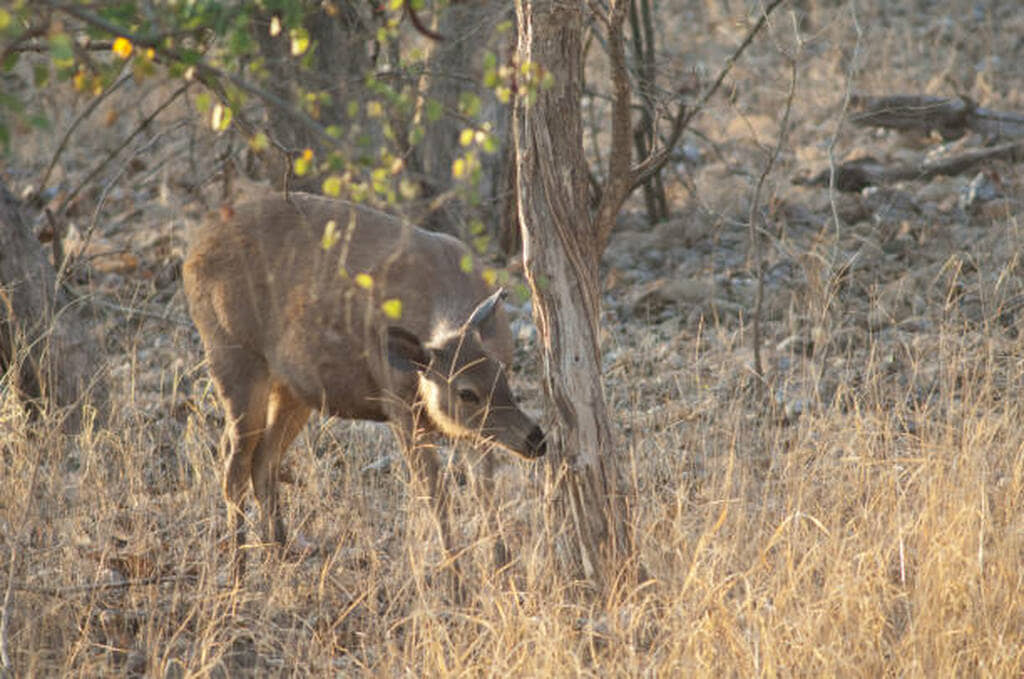
A deer can detect human scent from hundreds of yards away under the right conditions, but there is no fixed distance that applies to every encounter. Wind direction, air currents, humidity, terrain, and the strength of your scent all determine how far odor molecules travel before a deer detects them. In many hunting situations, a mature whitetail reacts to human scent long before it sees or hears a hunter, making scent management one of the most important factors in a successful hunt.
A deer’s extraordinary sense of smell comes from an advanced olfactory system containing hundreds of millions of scent receptors. Combined with its habit of moving with the wind and constantly testing the air, this ability allows deer to identify predators, locate food sources, recognize other deer, and avoid danger. For hunters, this means that choosing the right stand location or wearing camouflage is rarely enough if human scent drifts into a deer’s travel route.
This guide explains how far a deer can smell a human, what environmental factors influence scent detection, and how deer respond after catching human odor. You’ll also learn practical hunting strategies, including how to hunt the wind, minimize scent contamination, and avoid common mistakes that alert deer before they come into range.
How Far Can a Deer Smell a Human?
A deer can smell a human from several hundred yards away under favorable conditions, but there is no scientifically proven maximum distance. Hunters often report deer detecting human scent from 300 to 500 yards away, while some observations suggest even greater distances when a steady wind carries scent over open terrain. The exact range changes from one situation to another because scent does not travel in a straight, predictable line.
Wind is the biggest reason no single distance applies to every hunt. Human scent consists of microscopic odor molecules that disperse continuously into the air. A consistent breeze can carry those molecules much farther than calm conditions, while swirling winds in timber or hilly terrain can spread scent in multiple directions. As a result, a deer positioned downwind is far more likely to detect a hunter than one standing at the same distance upwind.
A deer’s nose is designed to process scent with remarkable efficiency. Whitetails constantly sample the air as they walk, frequently lifting their heads or stopping to test wind currents before entering feeding areas, bedding cover, or travel corridors. Mature bucks become even more cautious after experiencing hunting pressure, relying heavily on their sense of smell to avoid danger before exposing themselves.
For hunters, the practical takeaway is simple: focus on wind direction instead of distance. A hunter who remains 400 yards away but allows scent to drift into a deer’s approach route is more likely to be detected than someone only 100 yards away with a favorable wind. Successful deer hunting depends less on staying outside an imagined scent radius and more on preventing your scent cone from intersecting the deer’s path.
What Factors Affect How Far a Deer Can Smell?
Five primary factors determine how far a deer can detect human scent: wind direction, air movement, humidity, terrain, and hunting pressure. These factors influence how scent molecules travel through the environment and whether they reach a deer’s nose in a concentrated or diluted form.
Wind direction has the greatest impact. A steady wind creates a predictable scent cone extending downwind from the hunter. If a deer enters that cone, it can recognize human odor long before coming within shooting distance. Crosswinds may reduce direct exposure but can still carry scent into nearby travel routes, while swirling winds create unpredictable scent patterns that make stand locations much riskier.
Humidity and temperature also influence scent movement. Higher humidity helps odor molecules remain suspended in the air for longer periods, making scents easier for deer to detect. Temperature changes, especially during early morning and late evening, create thermal currents that move scent uphill or downhill. Many hunters overlook these thermals, yet they often explain why deer detect human odor even when the prevailing wind appears favorable.
Terrain and vegetation shape the way scent travels. Open crop fields allow wind to move scent over long distances, whereas thick timber, ridges, creek bottoms, and dense brush interrupt airflow and create pockets of swirling wind. These changing air currents can carry human scent into areas a hunter assumes are safe, particularly in broken terrain.
Hunting pressure affects the deer’s response after detecting human odor. Deer living in heavily hunted areas become more cautious and react quickly to unfamiliar scents. Mature bucks often circle downwind before entering food sources or calling locations, using their sense of smell as a final safety check. This behavior makes wind management one of the most important skills for consistently encountering older deer during hunting season.
Can Deer Smell You Even If They Cannot See You?
Yes. A deer can detect your scent even when you are completely hidden from view. In fact, smell is often the first sense a deer uses to identify danger. Dense vegetation, low light, or natural cover may conceal a hunter visually, but they do nothing to stop airborne scent from reaching a deer’s nose.
Whitetail deer rely on their sense of smell because it provides information that sight and hearing cannot. Human odor tells a deer that a potential predator is nearby, even if the source is hidden behind trees, brush, or terrain. When a deer catches fresh human scent, it typically becomes alert, raises its head, points its ears forward, and begins testing the wind before deciding whether to continue moving or leave the area.
A mature buck is especially cautious. Rather than walking directly into a food plot or along a trail, an older buck often approaches from downwind to verify that no danger is present. If it detects human scent, it may change direction, circle the area, or leave without ever exposing itself. Many hunters believe deer have disappeared from an area when, in reality, the animals simply detected their scent before becoming visible.
Because smell usually overrides concealment, successful hunters prioritize scent management over camouflage. Camouflage helps prevent visual detection, while proper wind management prevents deer from receiving the warning signal that matters most.
Can Deer Smell You From a Tree Stand?
Yes. Hunting from an elevated tree stand reduces visual detection, but it does not keep your scent above a deer’s nose. Human scent does not remain suspended overhead. Instead, wind and thermal currents continually move scent through the woods, allowing deer to detect it if the air carries it into their travel route.
Many hunters assume that sitting 20 feet above the ground keeps scent safely out of reach. In reality, wind pushes scent horizontally, while changing temperatures create thermals that move air vertically. During cool mornings, warming air often rises and carries scent uphill. As evening temperatures fall, cooling air sinks into valleys, creek bottoms, and bedding cover. These daily air movements can transport human odor well beyond the immediate area around a tree stand.
Stand placement is just as important as stand height. A tree positioned directly downwind of a heavily used trail may expose every approaching deer to human scent, regardless of elevation. By contrast, a stand placed with a consistent crosswind or where the scent cone drifts into an area deer rarely use can significantly reduce the chance of detection.
Experienced deer hunters treat the wind as part of every stand setup. Before each hunt, they evaluate forecasted wind direction, local terrain, and expected thermal movement rather than relying solely on stand height. This approach helps keep human scent away from likely deer travel routes and increases the odds of seeing mature bucks before they detect danger.
How Can Hunters Prevent Deer From Smelling Them?
Hunters cannot eliminate human scent completely, but they can reduce and control it enough to avoid alerting deer. The most effective strategy combines proper wind management, scent reduction, and careful route planning rather than relying on a single product or technique.
Hunt with the wind in your favor. Wind direction has a greater impact on success than any scent-control product. Before choosing a stand location, identify where deer are most likely to approach and position yourself so your scent cone drifts into an area deer rarely use. If the forecasted wind carries your scent toward bedding cover, feeding areas, or major travel corridors, moving to another stand is usually the better decision.
Reduce the amount of human odor you bring into the field. Showering with scent-free soap, storing hunting clothes in airtight containers, and avoiding strong odors from gasoline, food, smoke, or household detergents can lower the amount of scent released during a hunt. These steps do not make a hunter scentless, but they reduce the intensity of the odor that reaches a deer’s nose.
Use scent-control products as a supplement, not a solution. Scent-eliminating sprays, activated carbon clothing, and ozone devices may help reduce odor under certain conditions, but they cannot overcome poor wind direction. If your scent is blowing directly toward a deer, no product can reliably prevent detection. Experienced hunters use these products as an additional layer of scent management rather than a replacement for hunting the wind.
Plan your entry and exit routes carefully. Many hunts fail before they begin because hunters leave fresh human scent across trails leading to their stand. Enter the hunting area from a direction that minimizes contact with deer travel routes, avoid walking through bedding areas whenever possible, and leave after dark without crossing feeding areas where deer are actively moving. Limiting ground scent helps prevent deer from becoming wary on future hunts, especially in locations with consistent hunting pressure.
What Happens When a Deer Smells a Hunter?
Most deer become cautious immediately after detecting human scent, but their exact response depends on the freshness of the odor, wind conditions, and previous hunting pressure. A deer that catches a faint scent may stop to investigate, while one that detects strong, fresh human odor often leaves the area without hesitation.
The first signs of detection are usually subtle. A deer may suddenly stop walking, lift its head, flare its nostrils, and repeatedly test the wind. It often shifts its body to face downwind, trying to pinpoint the source of the scent before deciding whether the threat is real. During this stage, the animal is gathering information rather than reacting out of panic.
If the scent confirms the presence of a nearby hunter, the deer’s behavior changes quickly. Does frequently snort, stomp, or wave their tails before moving away, actions that alert nearby deer to potential danger. Mature bucks tend to respond differently. Instead of making obvious alarm signals, they often turn quietly, circle into thicker cover, or leave the area using terrain that provides concealment. This cautious behavior is one reason older bucks can seem to disappear without ever offering a shot opportunity.
A single encounter with human scent can also influence future movement patterns. In heavily hunted areas, mature deer often become more nocturnal, avoid exposed travel routes, or approach feeding areas from different directions after repeated exposure to hunters. For this reason, effective scent management not only improves the current hunt but also helps preserve the long-term productivity of a hunting property.
Read more: Can Deer Smell A Buddy Heater?
What Common Myths About Deer Smell Are False?
Many hunting myths exaggerate or oversimplify a deer’s sense of smell. Understanding what is true—and what is not—helps hunters make better decisions in the field.
Myth 1: A deer can always smell a human from one mile away.
There is no scientific evidence proving that deer can consistently detect human scent from a fixed distance such as one mile. Scent detection depends on wind speed, wind direction, humidity, terrain, vegetation, and the concentration of human odor. Under ideal conditions, scent may travel much farther than expected, while calm or unstable air can significantly reduce detection distance.
Myth 2: Scent-eliminating sprays make you invisible to deer.
No spray completely removes human odor. Scent-control products may reduce the amount of odor released, but deer can still detect a hunter if the wind carries scent directly toward them. Wind management remains far more important than any scent-elimination product.
Myth 3: Hunting from a tree stand keeps your scent above deer.
Elevation alone does not prevent scent detection. Wind and thermal currents constantly move scent both horizontally and vertically. Morning thermals often lift scent uphill, while evening thermals carry it downhill into valleys and travel corridors.
Myth 4: Rain completely washes away human scent.
Light rain can temporarily reduce airborne scent by increasing moisture in the air, but it does not eliminate odor. Human scent continues to accumulate on clothing, boots, vegetation, and hunting equipment. As conditions dry, deer can still detect residual scent left along access routes.
Frequently Asked Questions
Can deer smell cigarette smoke?
Yes. Deer can detect cigarette smoke because it contains strong airborne odor molecules that travel with the wind. Even if smoke dissipates quickly, the scent can alert nearby deer, especially mature bucks that associate unfamiliar odors with danger.
Can deer smell laundry detergent on hunting clothes?
Yes. Fragrances left by regular laundry detergents and fabric softeners create foreign scents that deer can detect. Many hunters use fragrance-free detergents designed for hunting clothing to reduce unnecessary odors before entering the field.
How often should you check the wind while hunting?
Check the wind throughout the entire hunt, not just before climbing into your stand. Wind direction can change several times during the day as weather conditions and thermal currents shift. Carrying a wind checker or observing natural indicators such as drifting milkweed seeds helps you monitor changing conditions and decide whether to stay, adjust your position, or end the hunt before deer detect your scent.