
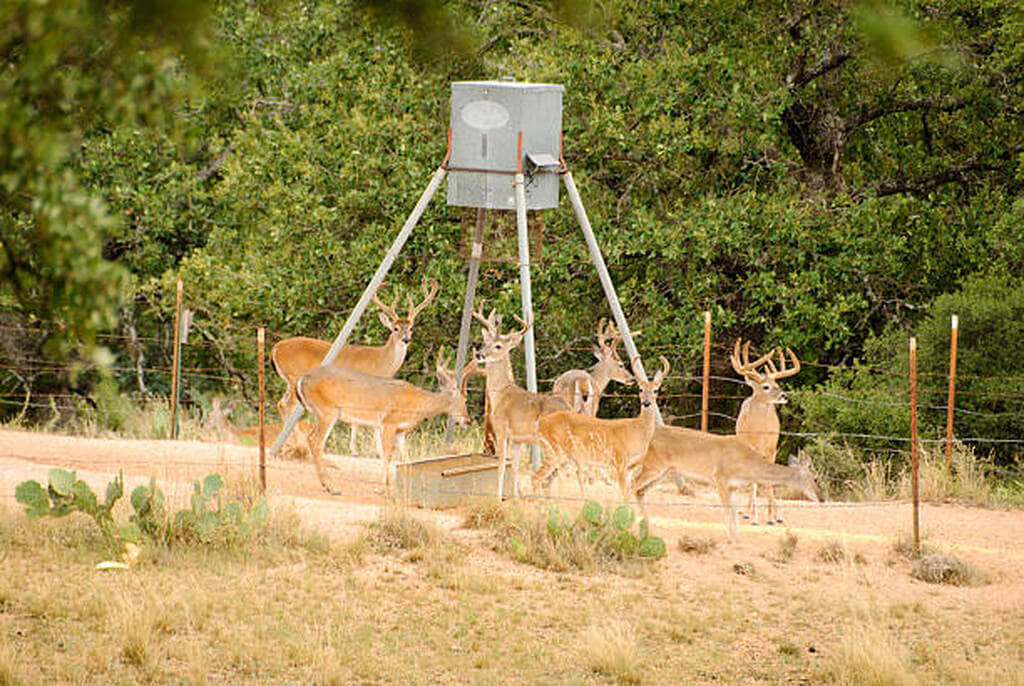
There are several effective ways to keep cows away from deer feeders, including installing cattle-proof enclosures, using electric fencing, raising feeder height, reducing feed spillage, and relocating feeders away from grazing areas. The best solution depends on your property’s layout, the number of cattle, and the type of deer feeder you use. In many hunting properties where cattle and wildlife share the same land, combining two or more methods provides the most reliable long-term results.
Cattle are naturally attracted to the same high-energy grains, protein pellets, and mineral-rich supplements used to attract deer. Because cows are larger, stronger, and more aggressive around food sources, they often empty feeders before deer have a chance to feed. They can also damage feeder legs, knock over spin feeders, create excessive ground disturbance, and increase human scent around feeding sites, making deer less likely to visit consistently.
This guide explains how to keep cows away from deer feeders without discouraging deer activity. You’ll learn which exclusion methods work best, how to build an effective cattle-proof enclosure, whether feeder height alone is enough, how to reduce feed waste that attracts cattle, and which solution delivers the best results for different types of hunting properties. By the end of this article, you’ll be able to choose a practical strategy that protects your deer feed while maintaining consistent deer visitation throughout the hunting season.
Why do cows eat from deer feeders?
Cows eat from deer feeders because deer feed contains the same high-energy ingredients that attract livestock, including corn, protein pellets, soybeans, and mineral supplements. From a cow’s perspective, a deer feeder is simply an easy, concentrated food source that requires little effort to access.
Unlike deer, cattle are larger and typically feed in groups. Once a herd discovers a feeder, it can consume large amounts of feed in a short period. Adult cattle also dominate feeding areas because of their size and behavior, leaving little opportunity for deer to approach. Even if feed remains available, deer often avoid a site when cattle are present because repeated disturbance increases stress and reduces their sense of security.
The problem extends beyond feed loss. Cattle frequently rub against feeder legs, bend spinner assemblies, damage timers and solar panels, or knock lightweight feeders off balance. Their hooves also churn the soil around the feeder, creating muddy conditions that make routine maintenance more difficult. Over time, these issues increase maintenance costs while reducing the feeder’s effectiveness.
Properties that support both cattle and deer are especially vulnerable because the two species often travel through the same pastures, water sources, and travel corridors. If a feeder is placed inside an active grazing area, cattle usually find it long before deer establish a consistent feeding pattern.
What is the best way to keep cows away from deer feeders?
The most effective way to keep cows away from deer feeders is to combine a physical barrier with proper feeder placement and good feed management. No single solution works on every hunting property because cattle density, pasture layout, feeder design, and fencing conditions vary from one location to another.
A cattle panel enclosure is the most common long-term solution. Heavy-duty cattle panels supported by T-posts create a barrier that prevents livestock from reaching the feeder while leaving enough space for deer to enter and exit comfortably. This approach requires little maintenance once installed and protects both the feed and the feeder itself.
Electric fencing is another effective option, particularly on working cattle ranches where livestock already respect electric fences. A single or double hot wire installed around the feeder creates a psychological barrier instead of a physical one. When properly maintained, electric fencing can reduce cattle intrusion without significantly affecting deer movement, since deer typically jump over or walk through openings rather than pushing against the wire.
Relocating the feeder can also improve results. Feeders placed away from watering points, mineral stations, gates, or heavily grazed pastures are less likely to be discovered by cattle. Although moving the feeder alone rarely solves the problem, it becomes much more effective when combined with exclusion fencing.
Reducing feed spillage is equally important. Feed scattered on the ground encourages cattle to return even if they cannot reach the feeder itself. Adjusting spinner settings, limiting feed distribution to the amount deer consume, and cleaning excess feed around the site reduce the attraction for livestock and help establish more consistent deer activity.
For most hunting properties, the best long-term strategy combines a cattle-proof enclosure, careful feeder placement, and proper feed management. This layered approach protects the feeder, minimizes feed loss, and allows deer to access supplemental feed with fewer disturbances throughout the season.
How do you build a cattle-proof enclosure for a deer feeder?
A cattle-proof enclosure works by physically blocking cattle while leaving enough space for deer to enter and feed comfortably. The enclosure should be strong enough to withstand livestock pressure and large enough to avoid making deer feel confined.
The most common design uses 16-foot cattle panels secured to steel T-posts to form a circular or square enclosure around the feeder. An inside diameter of approximately 18–24 feet (5.5–7.3 m) provides adequate room for deer to move naturally while allowing enough clearance for filling and maintaining the feeder. Smaller enclosures can discourage deer from entering, while oversized enclosures increase material costs without providing additional benefits.
Fence height is equally important. A finished height of 50–52 inches (127–132 cm) is generally sufficient to stop mature cattle from stepping over or pushing through the enclosure. Secure every panel to T-posts using heavy-duty fence clips or wire ties to prevent gaps from forming over time. If cattle frequently lean against fences, reinforce corners and gate openings because these are the first areas to fail under repeated pressure.
The entrance design should also accommodate deer movement. Many hunting managers leave one or two narrow openings that deer can easily pass through while remaining too tight for mature cattle. Another option is to position staggered panel openings that require animals to make a sharp turn before reaching the feeder. Deer navigate these entrances with little difficulty, but cattle generally avoid them because of their larger body size and limited maneuverability.
Finally, inspect the enclosure several times throughout the hunting season. Loose fence clips, leaning T-posts, or washouts caused by heavy rain can create openings that cattle quickly learn to exploit. Routine maintenance prevents small problems from becoming repeated feed losses.
Can feeder height keep cows away?
Raising a deer feeder helps reduce cattle access, but height alone is rarely enough to keep cows away. It works best when combined with exclusion fencing or other deterrents.
Broadcast feeders mounted with spinner plates 6 to 7 feet (1.8–2.1 m) above the ground are generally high enough to keep cattle from reaching the feed mechanism. Elevated feeders also reduce rubbing damage because livestock cannot easily push against spinner assemblies or timers. However, cattle can still consume feed that lands on the ground after each feeding cycle.
Gravity feeders present a different challenge. If feed ports remain within reach of cattle, livestock will continue feeding regardless of the hopper’s overall height. Installing the feeder on taller legs offers only limited protection unless the feeding ports themselves remain inaccessible to cattle.
Feeder height should also support normal deer behavior. Deer naturally feed with their heads lowered and are comfortable eating from feed distributed across a moderate area beneath a broadcast feeder. Raising the feeder excessively can widen the distribution pattern, increasing feed waste and reducing feeding efficiency. Lowering it too much increases the risk of cattle interference and equipment damage.
For most hunting properties, feeder height should be viewed as a supporting measure rather than a complete solution. Combining proper feeder height with a cattle-proof enclosure and controlled feed distribution provides significantly better long-term protection than relying on elevation alone.
How can you reduce feed spillage that attracts cattle?
Reducing feed spillage removes one of the main reasons cattle return to a deer feeder. Even if cows cannot reach the feeder itself, grain scattered on the ground provides an easy meal and encourages them to revisit the site repeatedly.
Start by adjusting the feeder’s spinner plate to distribute feed only as far as deer typically consume it. An overly wide broadcast pattern wastes feed beyond the feeding area, while an excessive spin time dumps more grain than deer can eat before cattle or other wildlife arrive. Most hunting properties achieve better results by scheduling multiple short feeding cycles instead of one long feeding event.
Feed quantity should match the local deer population. Filling the ground with more feed than deer can consume within a day increases spoilage and attracts cattle, feral hogs, raccoons, and birds. Monitoring feed consumption with a trail camera helps determine whether the feeding schedule needs adjustment. If large amounts of feed remain after each feeding cycle, reduce either the duration or the frequency of feed distribution.
Ground conditions also influence feed loss. Uneven terrain allows grain to collect in low spots where cattle can easily find it. Positioning the feeder on firm, level ground improves feed distribution and makes it easier for deer to consume most of the feed before other animals arrive.
Regular maintenance further reduces unnecessary waste. Inspect the spinner plate for wear, check that the timer releases feed at the correct intervals, and repair damaged components promptly. A malfunctioning feeder that continuously leaks grain can attract cattle within a few days and quickly undo the benefits of fencing or feeder relocation.
By limiting feed waste, you not only discourage cattle but also improve feed efficiency, reduce operating costs, and ensure more supplemental feed reaches the deer population you intend to manage.
Will electric fences keep cows out without scaring deer?
A properly installed electric fence can keep cattle away from deer feeders while having little long-term effect on deer movement. Unlike cattle, deer rarely challenge a fence by pushing against it. They usually walk around it, step through openings, or jump over low barriers if necessary.
For cattle exclusion, a single electrified wire positioned approximately 30–36 inches (76–91 cm) above the ground is often sufficient where livestock are already accustomed to electric fencing. On properties with persistent cattle pressure, adding a second wire improves reliability by preventing animals from attempting to reach underneath or lean through the fence.
Fence placement is just as important as fence design. Position the electric fence far enough from the feeder to give deer adequate room to approach, feed, and leave naturally. Installing the wire too close to the feeder can make the feeding area feel confined, especially for younger deer or areas with heavy hunting pressure.
Vegetation management is another critical factor. Grass, weeds, and fallen branches touching the wire reduce voltage and weaken the fence’s effectiveness. Inspect the fence regularly, particularly during the growing season, to maintain consistent performance. Solar-powered fence chargers also require periodic checks to ensure batteries remain fully charged and panels stay free of dust or debris.
Electric fencing is not the best solution for every property. Remote hunting leases without a reliable power source or areas where fences cannot be maintained frequently may benefit more from a permanent cattle-panel enclosure. On many properties, combining a cattle-proof enclosure with a short electric fence around the perimeter provides the highest level of protection against persistent livestock.
When installed and maintained correctly, an electric fence serves as an effective deterrent for cattle without significantly reducing deer activity, making it a practical option for hunting properties where livestock and wildlife share the same landscape.
What mistakes allow cows to keep reaching deer feeders?
Most cattle intrusion problems continue because of avoidable management mistakes rather than ineffective equipment. Correcting these issues often improves results without requiring major investments.
Placing a deer feeder inside an active grazing pasture is one of the most common mistakes. Cattle naturally travel between water sources, shade, mineral stations, and grazing areas throughout the day. A feeder located along these routes is likely to be discovered quickly, regardless of its design. Whenever possible, position the feeder in areas that deer regularly use but cattle visit less frequently.
Poorly designed exclusion fencing is another frequent problem. Gaps beneath cattle panels, loose fence clips, leaning T-posts, or entrances that are too wide make it easy for cattle to push inside. Even a small opening can become larger over time as livestock apply repeated pressure to the fence. Regular inspections help identify these weak points before they become major problems.
Overfeeding also attracts cattle. Large amounts of grain left on the ground create a predictable food source that encourages livestock to return daily. Feeders should dispense only the amount deer are expected to consume before the next scheduled feeding. Adjusting feed volume based on trail camera observations improves feed efficiency while reducing unwanted visitors.
Many landowners also overlook routine maintenance. Broken spinner plates, leaking hoppers, damaged lids, and weak batteries can cause feed to spill continuously or feeders to operate at incorrect times. These mechanical issues increase feed waste and reduce the effectiveness of every other cattle exclusion strategy.
Avoiding these common mistakes makes every protective measure more effective and helps maintain consistent deer activity throughout the hunting season.
Read more: What Do Deer Eat In The Winter? How to Feed Deer During the Cold
Which solution works best for your hunting property?
The best cattle exclusion strategy depends on your property’s size, cattle pressure, budget, and management goals. Choosing the right combination of methods usually delivers better long-term results than relying on a single solution.
For a small hunting lease with occasional cattle activity, relocating the feeder and reducing feed spillage may be enough to minimize interference. These low-cost improvements require little installation and can significantly reduce how often cattle visit the feeder.
For properties where cattle graze year-round, a cattle-panel enclosure offers the best balance between durability, effectiveness, and maintenance. Once installed correctly, it protects both the feed and the feeder while allowing deer to access the feeding area naturally. Adding proper feeder height and careful feed management further improves performance.
Large hunting properties or professionally managed ranches often benefit from a layered approach. Combining cattle panels, electric fencing, strategic feeder placement, and routine maintenance creates multiple barriers that discourage livestock while maintaining reliable deer access. Although this approach requires a higher initial investment, it typically reduces feed loss, equipment damage, and maintenance costs over multiple hunting seasons.
The right solution should also account for future management needs. If cattle numbers increase, grazing patterns change, or additional feeders are installed, the exclusion system should be easy to expand without redesigning the entire feeding program.
Which cattle exclusion method provides the best long-term value?
A cattle-panel enclosure combined with proper feeder placement and effective feed management provides the most reliable long-term solution for keeping cows away from deer feeders. While electric fencing, feeder height adjustments, and relocation each solve part of the problem, they perform best when used together rather than as standalone methods.
Successful deer feeding programs focus on preventing cattle from accessing both the feeder and the feed itself. Limiting feed spillage, maintaining exclusion structures, and placing feeders outside primary cattle travel routes help create a feeding site that deer can use consistently with minimal disturbance.
As your hunting property evolves, review feeder performance regularly using trail cameras and field observations. Monitoring cattle activity, feed consumption, and deer visitation makes it easier to identify problems early and adjust your management strategy before feed losses become significant.
If you’re developing a complete deer management program, the next step is learning how to choose the right deer feeder, determine the best feeder locations, and create a feeding schedule that supports seasonal deer movement while minimizing competition from non-target animals.