
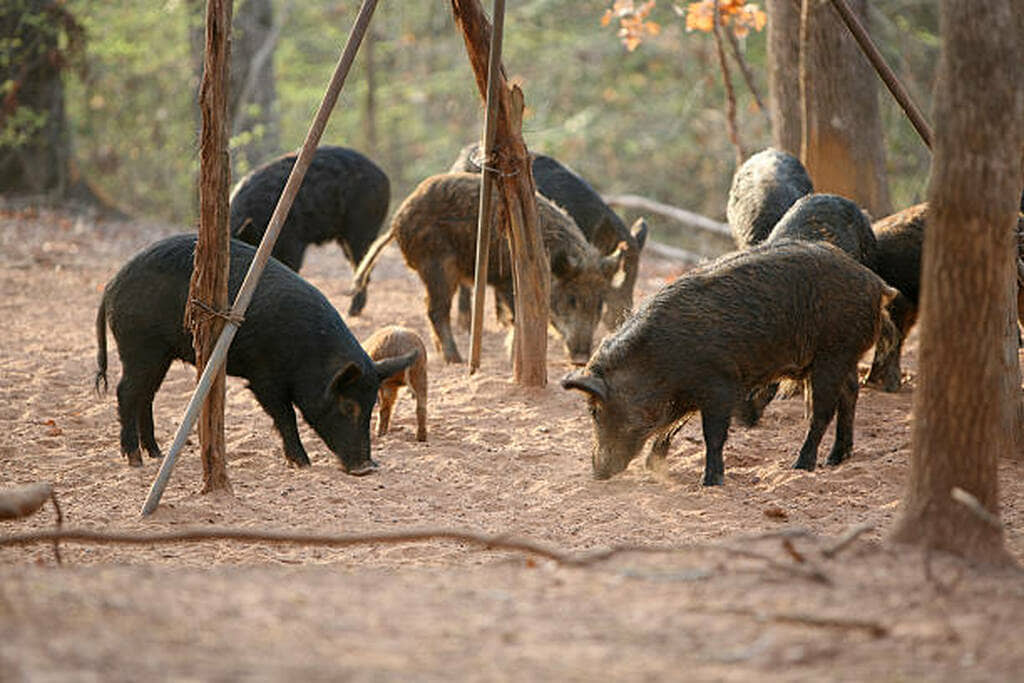
Have you ever had a hog bait site that produced consistent activity for weeks or even months, only to have the hogs suddenly disappear without warning? If so, you’re not alone. One of the most frustrating challenges in hog hunting is figuring out why hog bait sites stop working when everything seemed to be going perfectly.
Many hunters assume the solution is simple: add more corn, refresh the bait, or wait for the hogs to return. Unfortunately, wild hogs do not always behave predictably. Their movement patterns are influenced by a combination of environmental conditions, food availability, hunting pressure, social hierarchy, and habitat changes. Even a highly productive bait site can become ineffective if one or more of these factors changes.
The good news is that a decline in bait site activity does not necessarily mean the hogs have disappeared permanently. In many cases, identifying the underlying cause can help you restore activity and improve long term success.
In this guide, you’ll learn:
- The most common reasons hog bait sites stop producing results
- How feral hog behavior changes throughout the year
- Warning signs that indicate a problem
- Practical solutions to bring hogs back to your bait station
- Strategies for maintaining consistent bait site activity
Whether you’re managing a property for population control or trying to increase hunting opportunities, understanding the real reasons behind a failing bait site can save time, money, and frustration.
Let’s start with one of the biggest reasons hogs suddenly abandon an area: hunting pressure.
1. Increased Hunting Pressure Makes Hogs Avoid the Area
One of the most overlooked reasons why hog bait sites stop working is excessive hunting pressure. Wild hogs may not be known for having exceptional eyesight, but they are remarkably good at detecting danger and adapting their behavior to avoid it.
A bait site can be highly productive for weeks, but repeated disturbances often teach hogs that the area is no longer safe. Once that happens, activity may decline rapidly or disappear altogether.
How Hunting Pressure Changes Hog Behavior
Common sources of pressure include:
- Frequent visits to refill feeders
- Repeated trail camera checks
- Vehicle traffic near the bait site
- Human scent accumulation
- Gunshots and hunting activity
- Excessive foot traffic
When hogs associate a bait site with danger, they often respond by:
- Visiting only after midnight
- Reducing the amount of time spent feeding
- Approaching cautiously without entering the site
- Relocating to alternative feeding areas
- Abandoning the location completely
Signs Hunting Pressure Is the Problem
| Sign | What It May Mean |
|---|---|
| Fewer daytime photos | Hogs have become nocturnal |
| Sudden drop in visits after a hunt | Hogs associate the area with danger |
| Tracks around but not inside bait site | Hogs are investigating from a distance |
| Increased activity on neighboring properties | Hogs have shifted feeding locations |
How to Fix It
If hunting pressure is driving hogs away:
- Limit visits to the bait site.
- Use trail cameras with remote access if possible.
- Refill bait during low-impact periods.
- Avoid hunting the same location repeatedly.
- Allow the site to rest for several days or weeks.
Pro Tip: Sometimes doing nothing is the best solution. Giving a pressured bait site time to “cool off” can restore hog confidence faster than adding more bait.
2. Natural Food Sources Become More Attractive
A common mistake among hunters is assuming hogs will always choose bait over natural food. In reality, wild hogs are opportunistic feeders and will often select the most abundant, nutritious, and easily accessible food source available.
This is one of the leading answers to the question: why hog bait sites stop working during certain times of the year.
Seasonal Food Availability Matters
Depending on your region, hogs may have access to:
- Acorns
- Pecans
- Agricultural crops
- Fruits and berries
- Roots and tubers
- Recently harvested grain fields
When these food sources become abundant, even the best bait station may struggle to compete.
Why Hogs Choose Natural Foods
Natural foods often provide:
- Greater nutritional value
- Less risk than visiting a bait site
- Larger feeding areas
- Consistent availability
From a hog’s perspective, feeding naturally often requires less effort and less exposure to danger.
Common Seasonal Shifts
| Season | Food Source Competing With Bait |
|---|---|
| Spring | Fresh vegetation and roots |
| Summer | Agricultural crops and fruit |
| Fall | Acorns and mast crops |
| Winter | Remaining crop residue and grain |
How to Determine if Food Competition Is the Issue
Look for:
- Fresh rooting activity away from your bait site
- Reduced bait consumption despite fresh bait
- Trail camera photos showing hogs moving through but not feeding
- Nearby fields with active crop production
How to Fix It
Consider the following strategies:
- Increase bait attractiveness with scent-enhanced products.
- Move bait closer to travel corridors.
- Identify competing food sources using scouting trips.
- Focus on areas between bedding cover and feeding locations.
Key Insight: In many cases, hogs have not disappeared. They have simply found a better food source nearby.
3. Human Scent Contamination
Many hunters underestimate how sensitive wild hogs are to unfamiliar odors. While their eyesight is relatively poor, their sense of smell is extremely powerful.
A bait site that suddenly goes quiet may be suffering from excessive scent contamination.
Common Sources of Human Scent
Human odor can reach a bait site through:
- Boots
- Clothing
- Vehicle exhaust
- Fuel containers
- Food wrappers
- Cigarette smoke
- Sweat and body odor
Even routine maintenance visits can leave enough scent to make hogs cautious.
Why Human Scent Matters
Wild hogs survive by identifying threats before they become dangerous. When they repeatedly encounter human scent around a bait site, they may begin to associate the location with risk.
This often leads to:
- Delayed feeding activity
- Increased nighttime visits
- Shorter feeding periods
- Complete avoidance of the bait site
Warning Signs of Scent-Related Avoidance
You may have a scent problem if:
- Trail cameras show hogs approaching but not feeding.
- Hogs circle the bait site before leaving.
- Activity declines immediately after site maintenance.
- Smaller groups appear instead of large sounders.
Best Practices to Reduce Human Scent
- Wear dedicated field clothing.
- Use scent-free detergents.
- Avoid unnecessary visits.
- Approach from downwind whenever possible.
- Minimize time spent around feeders.
- Wear gloves when handling bait.
Quick Checklist
| Question | Yes | No |
|---|---|---|
| Are you visiting more than once per week? | □ | □ |
| Do you walk directly through feeding areas? | □ | □ |
| Do you refill bait during daylight hours? | □ | □ |
| Do you use scent-control practices? | □ | □ |
If you answered “Yes” to the first three questions and “No” to the last one, scent contamination may be contributing to your problem.
Remember: Wild hogs do not need to see you to avoid you. Often, your scent alone is enough to change their behavior.
4. Changes in Weather Conditions
Weather can dramatically influence feral hog behavior, often causing hunters to believe their bait site has stopped working when hogs have simply altered their movement patterns.
Unlike many game species, wild hogs are highly sensitive to environmental conditions. Even short-term weather changes can affect when, where, and how often they feed.
Weather Factors That Impact Bait Site Activity
The most significant factors include:
- Extreme heat
- Heavy rainfall
- Drought conditions
- Cold fronts
- Barometric pressure changes
- Strong winds
During periods of extreme heat, hogs often reduce daytime movement and spend more time near water and shaded cover.
How Different Weather Conditions Affect Hogs
| Weather Condition | Typical Hog Response |
|---|---|
| Extreme heat | Feed mostly at night |
| Heavy rain | Reduced movement during storms |
| Drought | Concentrate near water sources |
| Cold front | Increased feeding activity |
| Strong winds | More cautious movement |
| High humidity | Shorter travel distances |
Signs Weather Is the Culprit
Look for these indicators:
- Trail camera activity shifting several hours later.
- Consistent tracks despite fewer photos.
- Reduced feeding during unusually hot periods.
- Increased activity around water sources.
How to Adapt
Instead of abandoning the site:
- Monitor weather trends over several weeks.
- Adjust hunting times accordingly.
- Relocate bait closer to bedding cover during hot periods.
- Increase monitoring around water sources.
Important: A temporary weather-related decline often corrects itself once conditions stabilize.
5. Water Availability Shifts Hog Movement
If you’re wondering why hog bait sites stop working during summer or drought conditions, water availability may be the answer.
Wild hogs depend heavily on water for:
- Hydration
- Cooling their bodies
- Wallowing behavior
- Parasite control
Because of this, changes in local water sources can quickly redirect hog movement patterns.
Why Water Is So Important
A mature hog may travel significant distances to access reliable water. If a new water source becomes available, hogs may alter established feeding routes almost overnight.
Examples include:
- Newly filled ponds
- Seasonal creeks
- Irrigation ditches
- Livestock tanks
- Flooded lowlands
Conversely, if a nearby water source dries up, hogs may leave the area entirely.
Signs Water Is Influencing Movement
You may notice:
- Fresh tracks around water but not bait.
- Trail camera activity concentrated near ponds.
- Increased rooting along creek bottoms.
- Reduced travel through previously active corridors.
Water and Bait Site Success
The most productive bait sites are often located near:
| Distance to Water | Expected Activity |
|---|---|
| Less than 200 yards | High |
| 200 to 500 yards | Moderate |
| More than 500 yards | Lower |
While exceptions exist, proximity to water frequently improves consistency.
What You Should Do
Conduct a scouting trip and identify:
- New water sources.
- Seasonal water changes.
- Areas showing fresh wallowing activity.
- Recently flooded or dried habitats.
Pro Tip: If hog activity suddenly disappears, check water before changing bait types. The issue may have nothing to do with the bait itself.
6. Bait Quality Has Declined
Sometimes the simplest explanation is the correct one.
A bait site may stop attracting hogs because the bait itself has become less appealing. Although wild hogs are opportunistic feeders, they still prefer fresh, high-quality food whenever possible.
Common Bait Problems
Poor bait quality often results from:
- Mold growth
- Excessive moisture
- Insect infestations
- Rodent contamination
- Improper storage
- Spoiled feed
These issues can reduce the attractiveness of the site and encourage hogs to seek food elsewhere.
Warning Signs of Poor Bait Quality
Inspect your bait regularly for:
- Unusual odors
- Visible mold
- Clumping feed
- Discoloration
- Excessive insect activity
If bait sits untouched while other signs of hog activity remain nearby, quality should be one of the first things you investigate.
Comparing Fresh vs. Degraded Bait
| Characteristic | Fresh Bait | Degraded Bait |
|---|---|---|
| Smell | Strong and appealing | Sour or musty |
| Texture | Dry and consistent | Wet or clumped |
| Attraction Level | High | Low |
| Consumption Rate | Fast | Slow |
Improving Bait Effectiveness
To maximize attraction:
- Store feed in sealed containers.
- Keep bait dry.
- Replace old bait regularly.
- Remove contaminated material immediately.
- Experiment with proven attractants when legal in your area.
Best Practices for Long-Term Success
Checklist:
✔ Inspect bait every visit
✔ Protect feed from moisture
✔ Rotate old inventory first
✔ Watch for insect infestations
✔ Monitor consumption rates with trail cameras
Key Takeaway: Even the best location can fail if the bait itself is no longer attractive. Before relocating a bait site, always verify that bait quality remains high.
7. Dominant Hogs Have Changed the Social Structure
Many hunters focus on food, weather, and hunting pressure but overlook an important factor: hog social dynamics.
Wild hogs live within complex social groups called sounders, typically consisting of related females and their offspring. Larger boars often operate independently but still influence movement patterns and feeding behavior.
When the social structure changes, a previously productive bait site can quickly become less active.
How Social Changes Affect Bait Sites
Several events can disrupt established routines:
- Removal of a dominant boar
- Harvest of multiple adult animals
- Arrival of new hog groups
- Increased competition for resources
- Territorial shifts caused by population growth
After a significant change, hogs may temporarily alter:
- Feeding schedules
- Travel routes
- Preferred feeding locations
- Group size at bait stations
Signs Social Structure May Be Changing
Trail camera footage often reveals clues.
Watch for:
- Smaller groups than normal
- Different hogs appearing at the site
- Increased fighting or aggressive behavior
- Irregular visitation schedules
- Previously dominant boars disappearing
What Happens After a Dominant Hog Is Removed?
The impact varies, but common outcomes include:
| Event | Possible Result |
|---|---|
| Dominant boar harvested | Temporary disruption in movement patterns |
| Large sounder reduced | Feeding behavior becomes less predictable |
| New hog group arrives | Increased competition and shifting schedules |
| Population density increases | More cautious behavior around bait |
How to Respond
Avoid making drastic changes too quickly.
Instead:
- Continue monitoring with trail cameras.
- Track activity for several weeks.
- Observe whether new groups are entering the area.
- Maintain consistent baiting practices.
Pro Tip: A sudden decline in activity does not always indicate a problem. Sometimes hog populations are simply reorganizing, and activity returns naturally once a new hierarchy is established.
8. Predator or Disturbance Activity Nearby
Another overlooked reason why hog bait sites stop working is the presence of predators or other disturbances in the surrounding area.
While adult wild hogs are formidable animals, they still respond to perceived threats. Young pigs are particularly vulnerable, making sounders more cautious when danger increases.
Potential Disturbances That Affect Hog Activity
Common disturbances include:
Natural Threats
- Coyotes
- Bobcats
- Mountain lions (where present)
- Packs of feral dogs
Human-Related Disturbances
- Construction projects
- Logging operations
- Agricultural equipment
- Increased vehicle traffic
- Recreational activity
- Property development
Even if these activities occur hundreds of yards away, they can influence hog movement.
Signs Disturbance Is Affecting Your Site
Look for:
- Sudden activity decline without bait changes
- Increased nighttime-only visits
- Shorter feeding periods
- Hogs appearing nervous on camera
- Frequent start-and-stop movement patterns
Disturbance Assessment Table
| Disturbance Type | Impact on Hog Activity |
|---|---|
| Heavy construction | High |
| Logging operations | High |
| Frequent vehicle traffic | Moderate to High |
| Occasional farm activity | Moderate |
| Predator presence | Moderate |
| Recreational hiking | Moderate |
How to Investigate
A thorough property inspection can reveal issues you might otherwise miss.
Check for:
- New roads or trails
- Logging equipment
- Fresh predator tracks
- Nearby land management activities
- Increased human presence
Possible Solutions
If disturbance is unavoidable:
- Move bait deeper into cover.
- Shift bait sites away from activity zones.
- Increase the distance between hunting locations and feeding areas.
- Allow hogs time to adapt.
Key Insight: Hogs often return once the disturbance decreases. Patience can be just as important as strategy.
9. The Bait Site Has Become Predictable
It may sound surprising, but a bait site can become a victim of its own success.
Many hunters use the same feeder, the same bait, and the same location for years. While consistency is important, excessive predictability can sometimes reduce effectiveness over time.
Why Predictability Can Become a Problem
Wild hogs constantly balance two priorities:
- Finding food.
- Avoiding danger.
If hogs repeatedly encounter hunting pressure, human scent, or disturbances at a predictable feeding location, they may eventually seek alternative food sources.
Signs a Site Has Become Overused
Common indicators include:
- Declining activity despite fresh bait.
- Increased nighttime-only visits.
- Hogs feeding quickly and leaving.
- Fewer mature animals appearing.
- Reduced group size.
The “Trap Effect”
Over time, some hogs may begin viewing the bait site as a potential threat rather than a food opportunity.
This often occurs when:
- Hunting occurs directly over the bait.
- Human activity is frequent.
- Feeders are checked too often.
- The same access route is used repeatedly.
Strategies to Refresh a Stale Bait Site
Consider introducing variation.
Option 1: Relocate the Bait Site
Moving the site even 100 to 300 yards can produce noticeable results.
Option 2: Create Multiple Feeding Locations
Benefits include:
- Reduced pressure on a single site.
- Better monitoring of movement patterns.
- Increased opportunities to identify preferred travel routes.
Option 3: Change Bait Presentation
Examples:
- Broadcast bait instead of piling it.
- Use timed feeders.
- Adjust feeding schedules.
- Experiment with legal attractants.
Quick Refresh Checklist
| Strategy | Potential Benefit |
|---|---|
| Move bait location | Restores curiosity |
| Add secondary site | Reduces pressure |
| Change feeding schedule | Improves unpredictability |
| Reduce site visits | Increases hog confidence |
Pro Tip: Sometimes the problem is not the bait. It is the routine surrounding the bait.
10. Population Movement or Habitat Changes
Sometimes the answer to why hog bait sites stop working has nothing to do with the bait site itself.
Wild hogs are highly adaptable animals that respond quickly to changes in their environment. Habitat modifications, agricultural activity, and shifting resource availability can all cause hog populations to relocate.
In these situations, hunters often continue adjusting bait, feeders, and attractants when the real issue lies elsewhere.
Habitat Changes That Influence Hog Movement
Several environmental changes can affect local hog populations:
- Crop harvesting
- New crop planting
- Timber harvesting
- Land clearing
- Controlled burns
- Flooding
- Drought conditions
- Urban development
Even minor habitat changes can alter established travel corridors.
How Habitat Changes Affect Bait Sites
| Habitat Change | Potential Impact |
|---|---|
| Crop harvest | Hogs relocate to new food sources |
| Timber removal | Reduced cover and security |
| Flooding | Forced movement to higher ground |
| Drought | Concentration near permanent water |
| New development | Increased disturbance |
| Controlled burns | Temporary relocation |
Signs Hogs Have Moved
You may notice:
- Little or no fresh rooting activity.
- Reduced track density.
- Fewer trail camera captures across the entire property.
- Increased reports of hog activity on neighboring properties.
- New signs appearing in previously inactive areas.
How to Confirm Population Movement
Rather than focusing solely on the bait site, expand your scouting efforts.
Use:
- Trail cameras across multiple locations.
- Track surveys.
- Aerial imagery when available.
- Conversations with neighboring landowners.
- Field observations around water and cover.
What to Do Next
If hogs have shifted their range:
- Identify the new activity zone.
- Establish bait sites along fresh travel routes.
- Monitor activity for several weeks.
- Avoid overreacting to short-term fluctuations.
Key Takeaway: A bait site cannot attract hogs that are no longer using the area. Understanding broader habitat conditions is often the key to restoring success.
Quick Diagnosis Table: Why Hog Bait Sites Stop Working
| Cause | Difficulty to Fix | Likelihood |
|---|---|---|
| Hunting pressure | Medium | Very High |
| Natural food competition | Medium | Very High |
| Human scent contamination | Easy | High |
| Weather changes | Low | High |
| Water availability shifts | Medium | High |
| Poor bait quality | Easy | Medium |
| Social structure changes | Low | Medium |
| Predator/disturbance activity | Medium | Medium |
| Predictable bait sites | Medium | Medium |
| Habitat and population shifts | High | High |
FAQ
Why did hogs suddenly stop coming to my bait site?
The most common reasons include hunting pressure, abundant natural food sources, human scent contamination, weather changes, and habitat shifts. In many cases, hogs have not disappeared. They have simply adjusted their feeding patterns or moved to areas offering greater security or food availability.
How long does it take for hogs to return to a bait site?
There is no universal timeline. Hogs may return within a few days, while heavily pressured populations may avoid a location for several weeks or even months. Reducing disturbance and maintaining a consistent baiting strategy generally improves the chances of re-establishing activity.
What is the best bait for attracting feral hogs?
The most effective bait often varies by region, but common options include:
- Whole corn
- Soured corn
- Fermented grain mixtures
- Commercial hog attractants
- Flavored corn products
However, bait quality and site placement are usually more important than the specific bait type.
Can trail cameras help identify bait site problems?
Absolutely.
Trail cameras provide valuable information about:
- Feeding times
- Group size
- Travel direction
- Changes in behavior
- Potential disturbances
They are often the fastest way to determine why activity has declined.
Should I move my hog bait site if activity drops?
Not immediately.
Before relocating, investigate:
- Hunting pressure
- Water availability
- Natural food competition
- Weather patterns
- Habitat changes
If no clear cause is identified and activity remains low for an extended period, moving the site may be the best option.
How often should I check a hog bait site?
For most situations, less is more. Many experienced hunters recommend:
- Limiting visits to once every 5 to 7 days
- Checking cameras remotely when possible
- Minimizing time spent near feeding areas
Reducing disturbance often results in increased hog confidence and more consistent activity.
Conclusion
Understanding why hog bait sites stop working requires looking beyond the bait itself. While it is tempting to blame an empty feeder or ineffective attractant, the reality is that wild hog behavior is influenced by a complex combination of environmental, social, and human-related factors.
Throughout this guide, we explored the 10 most common reasons bait sites lose effectiveness, including hunting pressure, natural food competition, scent contamination, weather shifts, changing water sources, declining bait quality, social hierarchy changes, nearby disturbances, predictable feeding patterns, and large-scale habitat changes.
The most successful hunters and land managers recognize that troubleshooting a bait site is a process of observation rather than guesswork. By monitoring trail camera data, scouting regularly, and understanding seasonal changes in hog behavior, you can identify the true cause of declining activity and make informed adjustments.
Key Takeaways
✔ Reduce hunting pressure whenever possible
✔ Monitor natural food availability
✔ Control human scent around bait sites
✔ Track weather and water conditions
✔ Maintain high-quality bait
✔ Use trail cameras to gather objective data
✔ Adapt to changing habitat conditions
A bait site that suddenly goes quiet does not necessarily mean failure. In many cases, a few strategic adjustments can restore activity and improve long-term success. The key is understanding what the hogs are telling you through their behavior and responding accordingly.
By applying the strategies outlined above, you’ll be far better equipped to keep your wild hog bait site productive throughout the year and maximize your opportunities in the field.