
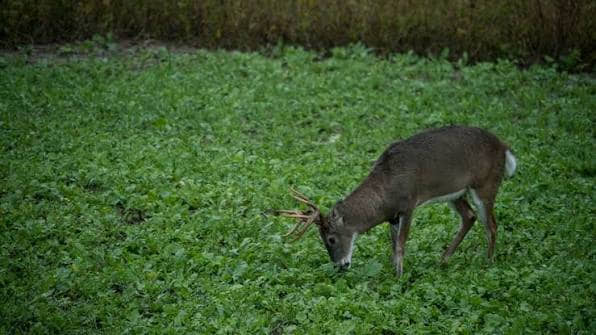
The best time to plant brassicas for deer is approximately 45–60 days before your area’s average first fall frost. This planting window gives brassicas enough time to establish a dense canopy, develop large bulbs or tubers, and accumulate the carbohydrates that make them highly attractive to whitetail deer during the hunting season. While many hunters focus on calendar dates, the first frost is the more reliable benchmark because growing conditions vary significantly across regions.
Planting too early can cause brassicas to become overly mature, woody, or lose nutritional quality before peak deer activity. Planting too late has the opposite effect—plants may not produce enough leafy growth or bulbs before cold weather slows development. In both cases, the food plot provides less forage when deer need it most during the rut and late-season hunting.
Successful brassica food plots depend on more than timing alone. Regional climate, soil moisture, fertility, and the brassica species you choose all influence how well the crop establishes and how attractive it becomes after frost. Understanding how these factors work together allows hunters to schedule planting with greater confidence instead of relying on fixed calendar dates.
This guide explains when to plant brassicas for deer based on first frost dates, regional planting windows, and hunting objectives. You’ll also learn which brassicas perform best, how to establish a productive food plot, and the common mistakes that reduce deer attraction before and during the hunting season.
When is the best time to plant brassicas for deer?
The best time to plant brassicas for deer is 45–60 days before the average first fall frost in your area. This planting window gives brassicas enough growing time to produce abundant leafy forage and develop energy-rich bulbs before growth slows in cold weather. For most hunters, using the first frost as the starting point is more accurate than planting on the same calendar date every year because weather patterns vary by region.
Brassicas grow rapidly during late summer when soil temperatures remain warm and daylight is still sufficient for vigorous growth. During the first several weeks after planting, the crop invests energy into producing large leaves that capture sunlight and fuel root development. As temperatures gradually decline, many brassica varieties begin storing carbohydrates in their bulbs and leaves. This process improves both forage production and nutritional value heading into the peak hunting season.
For example, if the average first frost in your area occurs around October 15, the ideal planting window falls between mid-August and early September. In northern states, planting often begins in late July or early August because frost arrives sooner. In much of the Midwest and Northeast, hunters typically seed brassicas throughout August. Southern states with milder autumns usually plant from early September into October to match their later frost dates.
Planting earlier than the recommended window often reduces the effectiveness of a deer food plot. Brassicas can become overly mature, develop thick stems, or begin declining before hunting season reaches its peak. Although deer may browse young leaves during early growth, mature plants that have passed their prime generally provide less attractive forage throughout late fall.
Planting too late creates a different problem. Brassicas require several weeks of active growth before cold temperatures slow development. When seeded only a few weeks before the first frost, plants frequently produce limited leaf mass and undersized bulbs, reducing both forage availability and the amount of energy available to deer during the rut and late season.
Rather than asking, “What month should I plant brassicas?” hunters should ask, “How many days before my average first frost should I plant?” Using the first frost as your reference produces more consistent food plots across different climates and helps ensure brassicas reach peak attractiveness when deer begin relying on high-energy forage during the hunting season.
Why is the first frost the most important factor?
The first frost determines the ideal planting date because it predicts when brassicas will reach peak palatability and nutritional value during deer season. While brassicas can grow before frost, their attractiveness to whitetail deer often increases after several cold nights trigger physiological changes within the plant.
As temperatures approach freezing, brassicas convert part of their stored starch into soluble sugars to protect their cells from frost damage. This natural process gives leaves and bulbs a sweeter taste while maintaining plant health in colder conditions. Although brassicas remain nutritious throughout their growth cycle, many hunters notice heavier deer browsing after the first frost because the forage becomes more palatable and alternative natural food sources begin to decline.
The first frost also aligns brassica maturity with key phases of the hunting season. By the time pre-rut transitions into the rut and eventually the late season, deer require large amounts of energy to recover from breeding activity and prepare for winter. Mature brassicas provide digestible carbohydrates and leafy forage when native vegetation becomes less abundant, making well-timed food plots a dependable feeding destination.
Planting too early disrupts this timeline. Brassicas seeded well before the recommended window may become oversized and begin losing forage quality before deer shift their feeding patterns toward agricultural crops and food plots. Some varieties can also bolt or produce excessive stem growth under unfavorable conditions, reducing overall forage utilization.
Planting too late has a greater impact on food plot performance. Brassicas need several weeks of warm soil temperatures to establish a healthy root system and produce sufficient leaf area. An early frost shortly after planting slows growth before plants can fully mature, resulting in smaller bulbs, less forage biomass, and lower carrying capacity throughout the late season.
For this reason, experienced hunters use the average first frost date as the foundation of their planting schedule, then adjust by one to two weeks based on local rainfall, soil moisture, and the brassica varieties they plan to grow. This approach produces more consistent food plots than relying on calendar months alone and helps ensure forage reaches peak quality when deer are actively seeking high-energy food sources.
When should you plant brassicas in different regions?
The ideal planting date varies by region because the average first frost occurs at different times across the United States. Instead of following a universal planting calendar, hunters should work backward 45–60 days from their local first frost date. This approach allows brassicas to reach full maturity as deer begin relying more heavily on food plots during fall and winter.
Northern States
Hunters in northern states such as Minnesota, Wisconsin, Michigan, North Dakota, and northern New York typically experience the earliest frosts. Most brassica food plots are planted between late July and mid-August. Planting within this window provides enough growing time before cool weather arrives and ensures bulbs and leafy forage are fully developed by archery season and the rut.
Midwest
In states such as Iowa, Illinois, Indiana, Ohio, Missouri, and much of Kansas, the average planting window falls between early August and late August. This schedule aligns brassica maturity with the peak of bow season and provides a reliable late-season food source after agricultural crops begin to disappear.
Northeast
States including Pennsylvania, Vermont, New Hampshire, Maine, and Massachusetts generally follow a planting schedule similar to the upper Midwest. Most hunters achieve the best results by planting from early to late August, although higher elevations may require slightly earlier seeding because frost arrives sooner.
Southeast
Hunters in Kentucky, Tennessee, Virginia, North Carolina, northern Georgia, and similar climates can usually wait until late August through mid-September. Later planting helps avoid excessive summer heat and improves germination when rainfall becomes more consistent during early fall.
Southern States
In southern regions such as Alabama, Mississippi, Louisiana, Texas, and Florida, brassicas are commonly planted between mid-September and October. Warm autumn temperatures allow crops to establish successfully long after northern food plots have matured. Waiting until cooler weather also reduces moisture stress and improves seedling survival.
Regional planting guide
| Region | Typical planting window |
|---|---|
| Northern States | Late July – Mid August |
| Midwest | Early August – Late August |
| Northeast | Early August – Late August |
| Southeast | Late August – Mid September |
| Southern States | Mid September – October |
These planting windows serve as general guidelines rather than fixed rules. A late summer drought, unusually early frost, or prolonged heat wave can shift the ideal planting date by one or two weeks. Before planting, check your local average first frost date, monitor the weather forecast, and aim to seed just before a period of expected rainfall. Adequate soil moisture during germination often has as much influence on food plot success as choosing the correct planting week.
Which brassicas attract deer the most?
Turnips, forage radishes, rape, and kale are the most effective brassicas for attracting deer because they provide abundant forage, tolerate cold weather, and remain productive throughout the hunting season. Each variety offers different benefits, so many hunters plant a brassica blend instead of relying on a single species.
Turnips
Turnips are one of the most popular brassicas for deer food plots because they produce both leafy forage and large energy-rich bulbs. Deer typically begin feeding on the leaves during early fall and increase their use of both leaves and bulbs after several frosts. Purple top turnips are a common choice because they establish quickly and provide forage well into winter.
Forage Radishes
Forage radishes, often sold as daikon or tillage radishes, produce large taproots that improve soil structure while supplying nutritious leafy growth. Deer usually browse the foliage before frost and may consume the exposed roots later in the season as other food sources become scarce. Radishes also decompose rapidly after winter, helping loosen compacted soil for future food plots.
Rape
Forage rape produces dense, high-protein leaves that remain palatable through repeated frosts. Unlike turnips, it does not develop large bulbs, allowing the plant to direct more energy into leaf production. Because of its rapid growth and strong cold tolerance, rape is often included in late-season food plot blends designed to provide consistent forage from autumn through early winter.
Kale
Kale is one of the most cold-tolerant brassicas used in deer food plots. It continues producing nutritious leaves after repeated freezes, making it especially valuable in northern climates where hunting seasons extend well into winter. Although deer may not browse kale as aggressively during early fall, feeding activity often increases as temperatures decline and competing food sources disappear.
Brassica Seed Mixes
For most hunters, a brassica seed mix provides better results than planting a single variety. Combining turnips, radishes, rape, and kale creates a food plot with different growth habits, rooting depths, and forage characteristics. Some species deliver attractive leafy forage shortly after establishment, while others become more desirable after frost or continue producing into late winter. This diversity extends the period during which the plot remains productive.
The best brassica for your property ultimately depends on hunting goals and local conditions. Hunters focused on early-season attraction often favor leafy varieties such as rape, while those targeting late-season deer typically include turnips and kale for their ability to provide high-energy forage after frost. A well-balanced brassica mix offers the greatest flexibility by supplying quality forage throughout the entire hunting season rather than during a single period.
What mistakes reduce brassica food plot success?
Most brassica food plot failures result from a handful of preventable mistakes rather than poor seed quality. Planting at the wrong time, neglecting soil preparation, or using improper seeding practices can significantly reduce forage production and make the plot less attractive to deer throughout the hunting season.
Planting Too Early
Planting brassicas several months before the first frost often causes plants to mature too quickly. Large, overgrown plants can become stemmy and lose forage quality before peak deer activity begins. Early planting also increases the risk of drought stress and insect damage during the hottest part of the growing season.
Planting Too Late
Late planting limits the amount of time brassicas have to establish before cold weather slows growth. Plants may produce only a small amount of leafy forage and fail to develop mature bulbs. As a result, the food plot provides less nutrition and attracts fewer deer during the rut and late season.
Skipping a Soil Test
Many hunters apply fertilizer without knowing what their soil actually needs. This approach often leads to nutrient deficiencies or an incorrect soil pH, both of which reduce plant growth. A simple soil test identifies the lime and fertilizer required to maximize forage production and improve nutrient uptake.
Planting Seed Too Deep
Brassica seeds are extremely small and contain limited energy for emergence. Planting deeper than ½ inch can dramatically reduce germination because seedlings struggle to reach the soil surface. Broadcasting seed onto a firm seedbed and lightly cultipacking usually produces better results than burying the seed too deeply with heavy tillage.
Using the Wrong Seeding Rate
Applying too much seed creates overcrowded plants that compete for sunlight, water, and nutrients. This competition reduces leaf growth and limits bulb development. Seeding too lightly leaves open spaces where weeds can establish, lowering the overall productivity of the food plot.
Ignoring Weed Control
Weeds compete directly with young brassicas during the establishment stage. Fast-growing grasses and broadleaf weeds can quickly dominate a newly planted food plot if existing vegetation is not controlled before planting. A clean seedbed gives brassicas the best opportunity to establish a dense canopy that naturally suppresses later weed growth.
Planting Into Dry Soil
Even perfectly timed planting can fail if seeds are placed into dry ground without adequate rainfall. Brassicas germinate quickly when moisture is available, but prolonged dry conditions after planting often result in uneven emergence and thin stands. Whenever possible, schedule planting just before a forecasted rain to improve germination and early growth.
Focusing Only on Brassicas
Brassicas are excellent for mid- and late-season nutrition, but they should not always be the only crop in a food plot program. Many successful hunters combine brassicas with cereal grains or perennial legumes to provide forage from early fall through winter. A diverse planting strategy creates a more dependable food source and keeps deer returning throughout multiple phases of the hunting season.
Avoiding these common mistakes has a greater impact on food plot performance than simply purchasing premium seed. Correct timing, healthy soil, proper planting depth, and consistent moisture are the four factors that most often determine whether a brassica food plot becomes a reliable hunting destination or a disappointing investment.
Should you mix brassicas with other food plot crops?
Yes, mixing brassicas with other food plot crops creates a more productive and longer-lasting food source than planting brassicas alone. A diverse seed mix provides forage across multiple stages of the hunting season, reduces the risk of crop failure, and attracts deer even as their nutritional needs and feeding preferences change from early fall through winter.
Brassicas perform best during the mid- and late-season, especially after the first frost. However, many deer pay more attention to cereal grains and legumes during early fall when brassicas are still establishing. Combining different crops ensures the food plot remains attractive for a longer period instead of peaking during only one phase of the season.
Brassicas and Clover
Mixing brassicas with clover can provide nearly year-round forage, but they are usually established differently. Brassicas are annual crops that grow aggressively from late summer into winter, while clover is a perennial that becomes an important food source during spring and early fall.
Many hunters avoid planting both crops in the same stand because brassicas can shade young clover seedlings during establishment. Instead, they plant separate plots or rotate brassicas and clover between seasons to maintain soil health and reduce weed pressure.
Brassicas and Cereal Grains
One of the most effective combinations includes brassicas with cereal grains such as winter rye, winter wheat, or oats. Cereal grains germinate quickly and attract deer soon after planting, filling the gap before brassicas reach maturity. As temperatures continue to drop, brassicas become increasingly attractive while cereal grains continue supplying green forage throughout much of the winter.
This combination creates a continuous food source rather than a short feeding window, making it especially valuable on properties managed for both archery and firearm seasons.
Choosing the Right Seed Mix
The best seed mix depends on your hunting objectives and local climate.
- Early-season hunting: Include more oats, wheat, or cereal rye to provide fast-growing forage.
- Rut and late-season hunting: Increase the proportion of turnips, rape, kale, and forage radishes for high-energy forage after frost.
- Long-term food plot management: Rotate brassicas with clover or other legumes to improve soil structure, reduce disease pressure, and naturally add nitrogen to the soil.
Rather than searching for a single “best” food plot crop, successful hunters build a planting program that delivers forage throughout the entire hunting season. Combining brassicas with complementary crops keeps deer visiting the property longer and reduces the chance that changing weather or poor crop performance will leave the food plot without quality forage.
Frequently Asked Questions
Can you plant brassicas in September?
Yes, but only if September still falls within 45–60 days of your area’s average first frost. In northern states, September planting is usually too late because frost arrives early. In many southern states, however, September is the ideal time to establish brassica food plots.
How long do brassicas take to mature?
Most brassicas reach productive forage levels in 45 to 60 days, although leafy growth appears much sooner. Bulbs continue developing after the leaves have matured, allowing the crop to remain productive well into winter.
Do deer eat brassicas before the first frost?
Yes. Deer often browse young brassica leaves before frost, especially where hunting pressure is low or natural forage is limited. However, feeding activity commonly increases after several frosts because the plants become sweeter and many competing food sources begin to decline.
Will brassicas survive the winter?
Most brassicas tolerate repeated frosts and continue providing forage well into winter. Cold-hardy varieties such as kale, rape, and turnips often remain productive until prolonged periods of freezing temperatures or heavy snow cover limit deer access.
Can you plant brassicas in the same field every year?
Repeated planting is possible but not recommended over the long term. Rotating brassicas with cereal grains, clover, or other cover crops helps reduce disease buildup, improves soil fertility, and maintains consistent food plot performance over multiple seasons.