
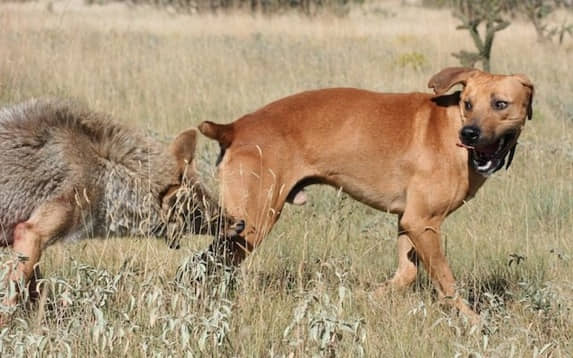
Training a coyote decoy dog requires far more than teaching basic obedience. An effective decoy dog must confidently engage a coyote, respond instantly to the handler’s commands, and safely return before the encounter becomes dangerous. Achieving that balance takes a structured training program that develops recall, confidence, prey control, environmental exposure, and hunting discipline over time.
Unlike tracking dogs or bay dogs, a decoy dog is expected to interact with coyotes in a controlled manner. The dog encourages coyotes to follow or investigate, then returns to the handler on command, helping bring the predators within range. Because this role places the dog in close proximity to wild animals, poor training can increase the risk of injury, lost dogs, or failed hunts. Building reliable obedience before introducing field work is therefore the foundation of every successful decoy dog.
This guide explains the complete process of training a coyote decoy dog, from selecting a suitable breed and establishing core obedience to introducing predator scent, practicing controlled field scenarios, and preparing for real hunts. You’ll also learn the equipment that improves safety, the mistakes that delay progress, and the signs that indicate a dog is ready to work confidently in the field.
What Is a Coyote Decoy Dog?
A coyote decoy dog is a hunting dog trained to attract, engage, and retreat from coyotes while remaining under complete control of its handler. Instead of pursuing or killing a coyote, the dog’s primary role is to trigger the animal’s territorial or protective instincts. When the dog returns on command, curious or aggressive coyotes often follow, giving the hunter an opportunity for a safe and ethical shot where legal.
This behavior works because coyotes naturally defend their territory, especially during breeding and pup-rearing seasons. An unfamiliar dog entering their area is frequently viewed as a competitor or potential threat. Rather than fleeing immediately, many coyotes approach to investigate, challenge, or escort the intruder away. A properly trained decoy dog uses this predictable behavior to create a controlled interaction instead of a prolonged chase.
A decoy dog differs from other working hunting dogs. Tracking dogs follow scent trails to locate animals after a shot, while bay dogs hold game at a distance by barking until the hunter arrives. A decoy dog performs neither task. It repeatedly moves between the coyotes and the handler, responds immediately to recall commands, and avoids direct confrontation whenever possible. The dog’s value comes from discipline, confidence, and responsiveness—not aggression.
Because every interaction occurs near wild predators, the handler must maintain control throughout the encounter. Reliable obedience is therefore more important than courage. A dog that refuses to return, chases coyotes out of range, or ignores commands creates unnecessary risk for both itself and the hunting party.
Which Dog Breeds Make the Best Coyote Decoy Dogs?
No single breed is the best coyote decoy dog. The most successful dogs combine intelligence, athleticism, confidence, and exceptional recall. Breed influences performance, but temperament and training determine whether a dog can work safely around coyotes.
Several breeds have developed strong reputations among predator hunters because they naturally possess the traits required for decoy work.
- Mountain Cur — Highly intelligent, athletic, and responsive to handlers. The breed adapts well to different terrain and is known for maintaining focus during predator encounters.
- Black Mouth Cur — Valued for courage, endurance, and balanced prey drive. Many hunters appreciate its ability to engage coyotes confidently without becoming reckless.
- Catahoula Leopard Dog — Recognized for stamina, independence, and problem-solving ability. Early obedience training is essential because the breed tends to think and work independently.
- Airedale Terrier — Combines toughness with intelligence and has a long history as a versatile working dog. Consistent training is necessary to channel its energy into controlled decoy work.
Many experienced hunters also use mixed-breed dogs. Crosses that inherit strong recall, confidence, and athletic ability often perform just as well as purebred dogs. A dog’s willingness to work with its handler is generally more important than its pedigree.
Regardless of breed, every future decoy dog should demonstrate five essential characteristics:
- Reliable recall under distraction.
- Confidence around unfamiliar animals and environments.
- Moderate prey drive that remains controllable.
- Physical endurance for extended field work.
- A strong willingness to work cooperatively with the handler.
Selecting a dog with these qualities provides a far better foundation than relying on breed reputation alone. Training can refine natural ability, but it cannot consistently replace poor temperament or weak obedience.
When Should You Start Training a Coyote Decoy Dog?
The best time to begin training a future coyote decoy dog is between 8 and 16 weeks of age. Puppies in this developmental stage learn new experiences quickly, build confidence more easily, and are less likely to develop fear-based behaviors. The goal during this period is not to introduce coyotes but to establish the habits that every reliable working dog needs.
During the first several months, training should focus on socialization and basic obedience. Expose the puppy to different people, vehicles, livestock, uneven terrain, water crossings, and common outdoor distractions. Each positive experience builds confidence, making the dog less likely to hesitate when it later encounters unfamiliar situations in the field.
Basic commands should become automatic before any hunting-specific training begins. Reliable recall, heel, stay, and leave it form the foundation of decoy work because they allow the handler to control the dog’s movement regardless of distractions. A dog that cannot consistently obey these commands in a park or training field is not ready to work around wild coyotes.
Adult dogs can also become effective decoy dogs if they already possess a stable temperament and strong obedience. However, correcting years of undesirable habits often takes longer than developing good habits in a puppy. Older dogs that chase wildlife uncontrollably, ignore recall, or display excessive aggression usually require significant retraining before progressing to field exercises.
Rather than following a strict age requirement, evaluate readiness through performance milestones. A dog should consistently respond to commands under heavy distraction, recover quickly from unexpected situations, and remain engaged with the handler before advancing to hunting-specific exercises.
How to Train a Coyote Decoy Dog Step by Step?
Successful decoy dog training follows a gradual progression from obedience to controlled predator exposure. Skipping foundational steps often produces dogs that become difficult to control once excitement and prey drive increase.
Step 1: Build Reliable Obedience
Every training program begins with obedience. Teach recall, heel, stay, place, leave it, and load up until the dog responds immediately without hesitation. Practice these commands in increasingly distracting environments, including fields, wooded areas, and locations where wildlife scents are present.
Training sessions should remain short and consistent. Multiple 10- to 15-minute sessions each week produce better long-term results than infrequent, lengthy sessions that overwhelm the dog.
Step 2: Develop Confidence in Outdoor Environments
Introduce the dog to the environments it will eventually encounter during hunts. Walk through tall grass, brush, creek crossings, rocky terrain, and open pasture while encouraging calm exploration. Confidence reduces hesitation and helps the dog remain focused when unexpected situations arise.
At the same time, gradually expose the dog to common hunting stimuli such as ATVs, trucks, gunfire at a safe distance, electronic callers, and other hunting dogs. Each new experience should be associated with positive reinforcement rather than fear or stress.
Step 3: Introduce Predator Scents and Wildlife Distractions
Once obedience is dependable, begin introducing predator scents using coyote fur, scent products, or areas with fresh coyote activity. Reward curiosity and controlled investigation while discouraging uncontrolled chasing.
The objective is to teach the dog to acknowledge predator scent without abandoning the handler. Maintaining engagement with the handler is more valuable than displaying intense prey drive.
Step 4: Strengthen Recall Under High Excitement
Recall becomes the defining skill of every decoy dog. Practice calling the dog away from rabbits, livestock, birds, and other distractions before expecting it to disengage from coyotes. A long training line or GPS-enabled training collar provides additional security while reinforcing consistent responses.
As reliability improves, gradually increase distance and difficulty. The dog should return immediately regardless of what captures its attention.
Step 5: Simulate Hunting Scenarios
Before working around wild coyotes, recreate realistic hunting conditions. Use electronic predator calls, hunting equipment, camouflage clothing, and field setups that resemble actual hunts. Practice having the dog move away from the handler before recalling it repeatedly from different directions.
These controlled simulations help the dog understand the routine it will follow during future hunts while allowing mistakes to be corrected in a safe environment.
Step 6: Introduce Controlled Field Work
The final stage involves supervised exposure to wild coyotes under favorable conditions. Early sessions should be short and carefully managed. The handler’s priority is observing how the dog responds, not harvesting a coyote.
If the dog hesitates, ignores recall, or attempts prolonged pursuit, end the session and return to foundational training. Gradual improvement produces a safer and more dependable working dog than rushing into repeated predator encounters.
Throughout every stage, prioritize consistency over speed. Most successful decoy dogs require months of structured training before they demonstrate the judgment, discipline, and confidence necessary for reliable field performance.
Which Commands Should Every Coyote Decoy Dog Know?
A reliable coyote decoy dog should consistently respond to six core commands before participating in real hunts. These commands allow the handler to control the dog’s movement, reduce unnecessary risks, and manage encounters with coyotes under changing field conditions.
Recall
Recall is the most important command in decoy dog training. The dog must immediately return to the handler regardless of distractions, including moving coyotes, fresh scent trails, or other wildlife. Every successful decoy sequence depends on the dog’s willingness to disengage and return without hesitation.
Strengthen recall by practicing at increasing distances and under progressively more difficult conditions. Begin in enclosed areas, then move to open fields and locations with natural distractions. Reward every successful response to reinforce speed and consistency.
Heel
The heel command keeps the dog close while walking to and from hunting locations. Maintaining control before making a stand prevents unnecessary excitement and reduces the chance of alerting nearby coyotes.
Practice heeling around vehicles, gates, livestock, and uneven terrain so the dog remains attentive regardless of the environment.
Stay
Stay teaches patience and impulse control. A decoy dog may need to remain beside the handler while predator calls are operating or while coyotes are approaching from a distance. Breaking position too early can end an opportunity before it develops.
Gradually increase both duration and distance while reinforcing calm behavior rather than simply preventing movement.
Leave It
A decoy dog must ignore distractions that do not contribute to the hunt. The “leave it” command prevents the dog from chasing deer, rabbits, livestock, or other animals that could disrupt training or create dangerous situations.
Consistent use of this command also reduces the likelihood of the dog pursuing a retreating coyote farther than intended.
Hunt
The hunt command releases the dog to begin searching or investigating the immediate area. Rather than encouraging uncontrolled pursuit, it signals that the dog has permission to work while remaining responsive to future commands.
The dog should understand that “hunt” is temporary. Every release is followed by another recall, reinforcing that independence never replaces handler control.
Load Up
Loading into a truck or dog box on command improves efficiency at the beginning and end of every hunt. It also provides a quick method for removing the dog from potentially dangerous situations without unnecessary handling.
Although simple, this command saves time, reduces stress, and helps establish consistent routines throughout training and hunting.
What Equipment Do You Need for Decoy Dog Training?
The right equipment improves safety, supports consistent training, and helps monitor the dog’s performance in the field. Equipment cannot replace proper training, but it allows handlers to introduce challenges gradually while reducing unnecessary risks.
GPS Tracking Collar
A GPS tracking collar provides real-time information about the dog’s location, direction of travel, and distance from the handler. This is particularly valuable in large properties, dense vegetation, or rolling terrain where visual contact may be lost.
Tracking data also helps evaluate training sessions by revealing movement patterns and identifying situations where the dog consistently ignores commands or travels beyond the desired range.
Long Training Lead
A long lead, typically 20 to 50 feet, bridges the gap between basic obedience and complete off-leash control. It allows the dog to explore while giving the handler the ability to reinforce recall if necessary.
Using a long lead during early field exercises minimizes the risk of uncontrolled chases and builds dependable responses before full freedom is granted.
Electronic Training Collar
An electronic training collar can reinforce previously learned commands when used correctly. It should never introduce new behaviors or replace structured obedience training. Instead, it serves as a communication tool when the dog is working at greater distances where verbal commands may be ineffective.
Handlers should condition the dog to the collar gradually and use the lowest effective stimulation level. Poor timing or excessive correction can reduce confidence and create confusion during training.
Protective Vest
A protective vest helps shield the dog’s chest and abdomen from brush, barbed wire, bites, and other hazards commonly encountered during predator hunts. While no vest eliminates all risk, it provides an additional layer of protection during close encounters with coyotes.
Choose a vest that fits securely without restricting movement or causing overheating during extended activity.
First Aid Kit
Every hunting vehicle should carry a canine first aid kit. Essential supplies include sterile gauze, self-adhering bandages, antiseptic solution, tweezers, saline rinse, protective gloves, emergency blanket, and a tick removal tool. Keeping contact information for the nearest emergency veterinarian is equally important.
Inspect the dog after every hunt for cuts, punctures, torn paw pads, embedded thorns, or signs of exhaustion. Early treatment of minor injuries reduces the risk of infection and shortens recovery time before the next training session.
What Mistakes Should You Avoid When Training a Coyote Decoy Dog?
Most training failures result from advancing too quickly or overlooking foundational obedience. Avoiding a few common mistakes helps develop a safer, more reliable decoy dog and reduces setbacks later in training.
Starting Field Work Too Early
Introducing a dog to wild coyotes before its obedience is dependable is one of the most common mistakes. A young or inexperienced dog may panic, chase a coyote out of range, or ignore recall when excitement increases. These early failures can become learned behaviors that are difficult to correct.
Instead of rushing into hunting situations, ensure the dog consistently performs every basic command in multiple environments before progressing to field work.
Neglecting Recall Training
Many handlers spend significant time encouraging confidence but not enough time reinforcing recall. A decoy dog that enjoys pursuing coyotes but hesitates to return creates unnecessary danger for itself and everyone involved in the hunt.
Continue practicing recall throughout the dog’s working life rather than treating it as a skill learned only during early training. Regular reinforcement maintains reliability as the dog gains experience.
Encouraging Excessive Aggression
A decoy dog should appear confident without becoming reckless. Allowing the dog to attack or relentlessly pursue coyotes increases the risk of serious injury and undermines the purpose of decoy work.
Reward controlled engagement instead of aggressive behavior. The objective is to attract coyotes and return safely—not to fight them.
Training Inconsistently
Dogs learn through repetition. Changing commands, expectations, or training schedules creates confusion and slows progress. Using different words for the same command or allowing unwanted behaviors on some days but correcting them on others produces unreliable responses.
Maintain consistent commands, routines, and expectations during every training session.
Ignoring Physical and Mental Fatigue
Long training sessions reduce concentration and increase mistakes. A tired dog learns less effectively and may begin ignoring commands simply because of exhaustion rather than disobedience.
Keep sessions focused and end them while the dog is still engaged. Regular breaks, adequate hydration, and recovery days help maintain enthusiasm for future training.
Skipping Post-Training Evaluations
Every session provides valuable information about the dog’s strengths and weaknesses. Ending training without reviewing performance often leads to repeated mistakes.
After each session, evaluate whether the dog:
- Responded immediately to recall.
- Maintained focus around distractions.
- Showed confidence without excessive aggression.
- Recovered quickly after corrections.
- Finished the session with consistent obedience.
Using these observations to plan the next session creates steady, measurable improvement.
How Do You Know Your Dog Is Ready for Real Hunts?
A dog is ready for real coyote hunts when it demonstrates consistent control, confidence, and reliability across multiple training environments. Readiness depends on performance rather than age or time spent in training.
Obedience Is Reliable Under Distraction
The dog should obey recall, heel, stay, and leave it even when wildlife, livestock, unfamiliar dogs, or loud noises are present. Commands must produce immediate responses without repeated verbal cues.
If obedience declines significantly as distractions increase, additional training is needed before entering hunting situations.
Confidence Remains Stable
A field-ready decoy dog explores unfamiliar environments willingly, recovers quickly from unexpected events, and continues working without hesitation after encountering new obstacles.
Confidence should not be confused with aggression. Calm, deliberate behavior is a stronger indicator of readiness than constant excitement or uncontrolled prey drive.
The Dog Maintains Contact With the Handler
Effective decoy dogs naturally check back with their handlers while working. They remain aware of the handler’s position, respond to direction, and avoid ranging beyond practical working distance.
A dog that repeatedly disappears for extended periods or ignores the handler’s location requires additional control training before participating in real hunts.
Physical Conditioning Matches the Workload
Working around coyotes demands endurance as well as speed. The dog should comfortably complete training sessions over terrain similar to actual hunting areas without signs of excessive fatigue, overheating, or reduced responsiveness.
Regular exercise, proper nutrition, and routine veterinary care contribute to consistent field performance throughout the hunting season.
The Dog Performs Successfully in Simulated Hunts
Before encountering wild coyotes, the dog should complete multiple mock hunting sessions that closely resemble real conditions. These rehearsals should include predator calls, hunting equipment, varied terrain, and realistic handler routines.
Consistent success during simulations indicates that the dog understands its responsibilities and is prepared to transition into carefully supervised hunts.
Use a Final Readiness Checklist
Before taking a dog on its first coyote hunt, confirm that it can consistently:
- Return immediately on the first recall command.
- Maintain heel and stay until released.
- Ignore non-target wildlife.
- Work confidently in unfamiliar environments.
- Remain calm around vehicles, firearms, and hunting equipment.
- Recover quickly after unexpected distractions.
- Wear tracking and protective equipment comfortably.
- Complete extended training sessions without losing focus.
Meeting all of these criteria does not guarantee a successful hunt, but it significantly improves both safety and performance. A well-prepared decoy dog is built through months of structured training, consistent evaluation, and gradual exposure to increasingly challenging situations.
How Do Coyotes React to Decoy Dogs?
Coyotes do not all react the same way to a decoy dog. Their response depends on factors such as the breeding season, territorial behavior, previous encounters with humans, population density, and the dog’s actions. Understanding these behavioral patterns helps handlers make better decisions in the field.
During the breeding season and while raising pups, coyotes are significantly more territorial. An unfamiliar dog entering their territory is often viewed as an intruder rather than prey. Instead of fleeing immediately, coyotes may approach cautiously, bark, circle at a distance, or attempt to drive the dog away. These defensive behaviors create the opportunities that decoy dogs are trained to use.
Outside of territorial periods, coyotes may behave very differently. Some remain curious and investigate from a distance, while others simply leave the area after identifying a potential threat. Hunting pressure also influences behavior. Coyotes living in heavily hunted regions generally become more cautious and may refuse to commit to a decoy sequence.
An experienced decoy dog learns to read these reactions instead of forcing every encounter. The dog briefly engages, then returns to the handler before allowing the situation to escalate. This controlled movement encourages interested coyotes to follow while minimizing the risk of prolonged confrontations.
Handlers should also pay attention to body language. Raised tails, direct approaches, vocalizations, and circling behavior often indicate territorial interest, whereas rapid retreat or repeated attempts to gain distance suggest that the coyote is unlikely to engage. Reading these signals helps determine whether to continue calling, reposition, or end the stand.
Read more: Are Greyhounds Good for Hunting Coyotes? Pros, Cons & Tips
What Safety Practices Protect Both the Dog and the Handler?
Safety should remain the highest priority throughout every stage of decoy dog training and hunting. Even a highly trained dog can encounter unpredictable situations involving wildlife, terrain, weather, or equipment failure.
Never allow an inexperienced dog to work alone. Early field sessions should be conducted under close supervision and, when possible, alongside an experienced decoy dog that demonstrates proper behavior. Young dogs often learn faster by observing calm, controlled interactions than by facing unfamiliar situations independently.
Inspect every hunting area before releasing the dog. Barbed wire fences, deep creeks, abandoned wells, dense brush, and steep terrain can cause injuries that have nothing to do with coyotes. Identifying these hazards in advance allows the handler to choose safer routes and better stand locations.
Monitor environmental conditions throughout the hunt. High temperatures increase the risk of heat stress, while extremely cold weather may reduce endurance and affect recovery. Schedule demanding training sessions during cooler parts of the day, provide frequent access to clean water, and allow the dog adequate rest between stands.
Communication equipment is equally important. A GPS tracking collar enables rapid location of a dog that disappears over a ridge or into dense vegetation. Carrying a fully charged phone, extra batteries for electronic devices, and emergency contact information improves preparedness if an accident occurs.
Every hunt should conclude with a physical inspection of the dog. Examine the ears, eyes, mouth, paws, chest, abdomen, and legs for cuts, puncture wounds, embedded thorns, ticks, or swelling. Minor injuries that are treated immediately are less likely to become serious infections or require extended recovery.
Finally, recognize when to end a hunt. If the dog shows signs of exhaustion, hesitation, limping, overheating, or declining responsiveness, stop the session and prioritize recovery. Preserving the dog’s long-term health is more important than extending a single hunt.
What Hunting Regulations Should You Check Before Using a Decoy Dog?
Always verify local hunting regulations before using a decoy dog for coyote hunting. Laws governing predator hunting vary widely between states, provinces, and countries, and regulations can change from one hunting season to the next.
Begin by confirming whether decoy dogs are legally permitted. Some jurisdictions specifically authorize their use for predator hunting, while others restrict or prohibit hunting with dogs entirely. In certain areas, additional requirements apply depending on the season, land ownership, or the species being hunted.
Review rules covering public and private land separately. Permission from a private landowner does not automatically authorize hunting under local wildlife regulations, and public lands may have additional restrictions on dogs, firearms, or electronic calling devices.
Check licensing requirements for both resident and non-resident hunters. Some locations require predator hunting licenses, habitat permits, or mandatory hunter education certifications before participating in coyote hunts.
Regulations may also govern equipment and hunting methods. Restrictions can apply to electronic callers, night hunting, thermal optics, suppressors, firearms, or vehicles. Understanding these rules before entering the field helps prevent legal violations and promotes ethical hunting practices.
Finally, review animal welfare and dog identification requirements. Some jurisdictions require dogs to wear identification tags, maintain current vaccinations, or comply with specific transport regulations while traveling between hunting areas.
Because wildlife laws are updated periodically, make it a habit to review the latest regulations before every hunting season rather than relying on information from previous years.
This guide provides a complete framework for training a coyote decoy dog, beginning with breed selection and foundational obedience before progressing to controlled field work and real hunting situations. Developing a dependable decoy dog requires patience, consistent reinforcement, and gradual exposure to increasingly challenging environments. By prioritizing reliable recall, thoughtful progression, and responsible hunting practices, handlers can build a dog that performs confidently while reducing unnecessary risks in the field.