
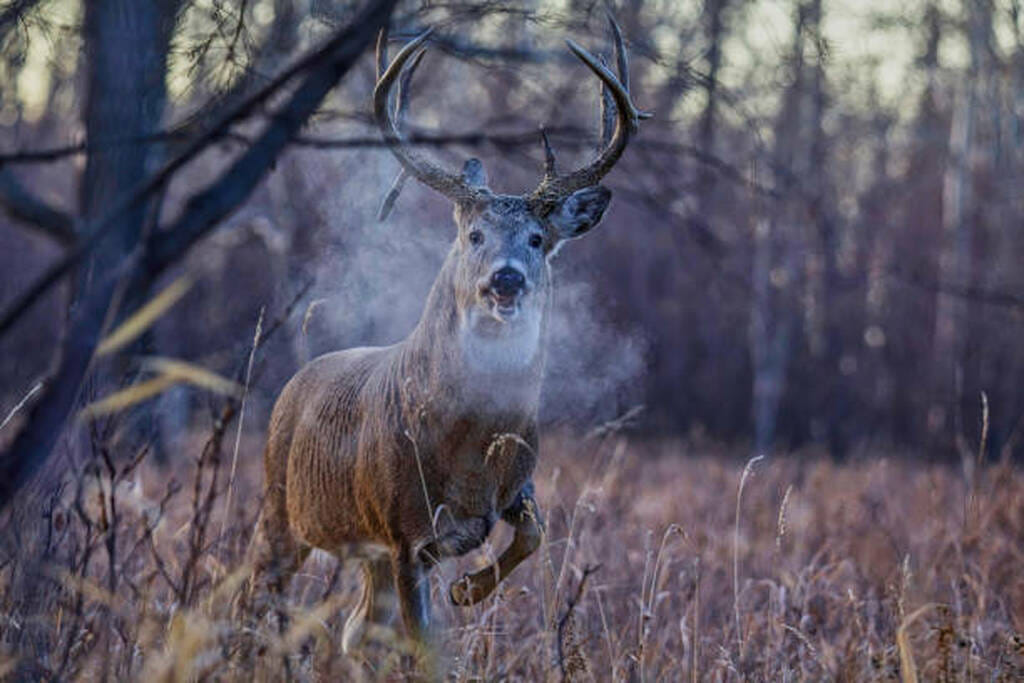
The best place to hunt during the rut depends on the current phase of the rut, not a single “hot spot.” A stand location that produces consistent buck movement during the pre-rut may become far less productive once peak breeding begins. As mature bucks shift from establishing dominance to searching for receptive does and eventually recovering after the breeding season, their travel patterns, priorities, and preferred habitat change accordingly.
Successful rut hunting starts with understanding why deer move rather than relying on historical stand locations. During the pre-rut, mature bucks frequently travel between bedding cover, scrapes, and travel corridors while expanding their home range. During peak rut, they spend more time checking doe bedding areas, funnels, and natural terrain bottlenecks where the chances of encountering receptive does are highest. After the rut, food once again becomes the primary driver of movement, making feeding areas and nearby security cover significantly more productive.
This guide explains where to hunt during every stage of the rut using proven deer behavior and practical hunting strategy. You’ll learn how buck movement changes from pre-rut to post-rut, which terrain features consistently create shot opportunities, how wind direction influences stand placement, and when bedding areas or food sources offer the highest odds of encountering a mature buck. By matching your hunting location to the current rut phase instead of hunting the same stand every day, you can increase your chances of seeing more daylight buck activity throughout the season.
Where should you hunt during the pre-rut?
The highest-percentage locations during the pre-rut are bedding area edges, active scrape lines, travel corridors, and terrain funnels that mature bucks use while expanding their range. During this stage, bucks are not actively breeding, but they increase daylight movement as they establish dominance, check scrapes, and locate does before peak breeding begins. This predictable movement makes the pre-rut one of the best times to intercept a mature buck on a consistent travel route.
Hunt the downwind side of buck bedding areas without pushing too close into the cover. Mature bucks often leave bedding later than does and prefer traveling where they can monitor scent carried by the wind. Setting a stand 75–150 yards from thick bedding cover allows you to intercept movement while minimizing the risk of alerting deer before legal shooting light.
Active scrape lines are another high-value location during the pre-rut. Community scrapes positioned along field edges, logging roads, creek bottoms, or inside timber corridors receive regular visits from mature bucks. Focus on fresh scrapes with wet soil, recently broken licking branches, and multiple tracks rather than isolated scrapes that show little recent activity. Bucks often revisit these locations during the first and last hours of daylight.
Travel corridors become increasingly productive because bucks begin covering larger areas in search of early estrous does. Narrow strips of timber connecting bedding cover to feeding areas, fence gaps, creek crossings, and natural funnels concentrate deer movement into predictable routes. Instead of hunting directly over food plots, position your stand where these travel routes naturally narrow, creating a shorter shot opportunity before deer reach open ground.
Stand placement should always prioritize wind direction over historical success. A productive location quickly loses value if your scent drifts into the bedding area or primary travel corridor. Set up with a crosswind whenever possible so approaching bucks remain within shooting range before they encounter your scent. If the wind shifts toward the expected line of travel, move to an alternate stand rather than forcing the hunt.
The pre-rut rewards mobility and observation. Trail camera activity, fresh rubs, newly opened scrapes, and increasing daylight buck sightings all indicate changing movement patterns. Adjusting stand locations every few days based on fresh sign often produces better results than hunting the same tree throughout the entire pre-rut.
Where is the best place to hunt during peak rut?
The best places to hunt during peak rut are doe bedding areas, terrain funnels, pinch points, and travel routes that connect multiple bedding locations. At this stage, mature bucks spend less time following predictable feeding patterns and more time searching for receptive does. Instead of waiting along traditional food-to-bed routes, they cover larger areas and move throughout the day, making travel corridors with high doe activity the most productive stand locations.
Doe bedding areas become the primary focus because they attract multiple bucks during the breeding season. Rather than entering the bedding cover itself, position your stand along the downwind edge where bucks naturally scent-check for receptive does before moving closer. This setup allows you to intercept cruising bucks without disturbing the core bedding area. On properties with several bedding pockets, the travel routes connecting them often produce even more daylight encounters than the bedding areas themselves.
Funnels and pinch points consistently concentrate buck movement during peak rut. Terrain features such as narrow timber strips, saddles, creek crossings, fence gaps, and ridges force deer to travel through a limited space, creating predictable shot opportunities even when buck movement appears random. Because multiple does use these routes, mature bucks repeatedly travel through the same locations while searching for breeding opportunities.
Unlike the pre-rut, peak rut often produces quality movement well beyond sunrise and sunset. Bucks may cruise continuously between bedding areas from late morning through early afternoon, especially after checking groups of does that are not yet receptive. Hunters who remain on stand longer frequently encounter mature bucks during periods when many others have already left the woods.
Wind management becomes even more important during this phase. Mature bucks often travel with the wind quartering toward the bedding cover, allowing them to detect does without exposing themselves unnecessarily. A crosswind setup lets you intercept this movement while keeping your scent away from the expected travel route. If the wind begins blowing directly into a bedding area, relocating to another stand is usually more productive than risking unnecessary disturbance.
During peak rut, avoid focusing exclusively on food sources. While does continue following regular feeding routines, mature bucks are driven primarily by breeding opportunities rather than feeding schedules. Prioritizing locations with consistent doe activity, favorable wind conditions, and natural travel bottlenecks gives hunters the highest probability of encountering a mature buck during the most active stage of the rut.
Where should you hunt during the post-rut?
The best places to hunt during the post-rut are major food sources, thick security cover near feeding areas, and travel routes connecting bedding cover to late-season nutrition. After weeks of chasing does and competing with other bucks, mature deer lose a significant amount of body weight and shift their priority from breeding to rebuilding energy reserves. Their movement becomes more predictable as they return to feeding patterns.
Large, reliable food sources become the highest-percentage locations during this phase. Standing corn, soybean fields, winter wheat, brassica plots, oak flats with remaining acorns, and natural browse all attract deer looking for high-calorie forage. Rather than setting up directly on the edge of an open field, position your stand along the first section of cover where bucks feel secure before entering the food source. Mature bucks often wait until the final minutes of daylight before exposing themselves in open areas.
Security cover close to food is just as important as the food itself. Thick CRP fields, young clear-cuts, cedar thickets, and dense timber provide bedding locations that minimize travel distance while allowing exhausted bucks to conserve energy. Bucks rarely travel as far as they do during peak rut, making short travel corridors between bedding and feeding areas especially productive.
Cold weather further increases feeding activity. As temperatures drop, deer require more calories to maintain body heat, often extending evening feeding periods and increasing daylight movement after severe cold fronts. Hunting immediately after a significant temperature drop or the passage of a cold front can produce some of the best post-rut opportunities, particularly where high-quality food is limited.
Stand placement should still prioritize wind direction. Bucks remain cautious despite their increased focus on feeding, and a single hunt with the wrong wind can educate mature deer that have already survived an entire hunting season. Set up with a crosswind or quartering wind that keeps your scent away from both bedding cover and the expected approach route.
The post-rut also rewards patience. Deer movement usually occurs in shorter, more predictable windows than during peak rut, but those movements are often centered around the same feeding locations for several consecutive days. Monitoring fresh tracks, browse pressure, trail camera activity, and recent feeding sign helps identify which food source mature bucks are using before committing to a stand location.
Which terrain features produce the most rut activity?
Funnels, saddles, creek crossings, ridge ends, and timber edges consistently produce the highest rut activity because they naturally concentrate deer movement. While bucks roam farther during the rut than at any other time of the season, they still prefer routes that provide security, efficient travel, and opportunities to locate does. Identifying these terrain features allows hunters to intercept deer movement instead of guessing where bucks may appear.
Funnels are among the most productive stand locations throughout the rut. A funnel is any landscape feature that forces deer to pass through a narrow area, such as a strip of timber between two crop fields, a fence opening, or a narrow section between a swamp and a hillside. Because multiple deer use the same route, mature bucks frequently travel through these bottlenecks while searching for receptive does.
Saddles create natural travel routes across hilly terrain. A saddle is the lowest point between two ridges, allowing deer to cross without climbing steep slopes. Bucks often use saddles to move between bedding areas while conserving energy and maintaining visibility. These locations become especially productive during peak rut when deer travel longer distances throughout the day.
Creek crossings offer predictable movement where water limits travel options. Deer generally avoid crossing deep or fast-moving water unless necessary, so shallow crossings, gravel bars, and narrow stream sections receive repeated use. Fresh tracks on both banks, worn trails, and disturbed mud indicate consistent activity and help identify the best stand locations.
Ridge ends and timber edges also create reliable opportunities. Bucks frequently follow the end of a ridge before entering lower terrain, while timber edges provide cover that allows deer to travel between bedding and feeding areas without exposing themselves in open ground. These edge habitats often combine food, cover, and security, making them productive during every phase of the rut.
Rather than choosing a stand because it overlooks a large area, focus on terrain features that naturally compress deer movement. The fewer travel options available, the more predictable buck movement becomes and the greater the chance of a close-range shot.
Read more: How Far Can a Deer Smell? Facts Every Hunter Should Know
How does wind direction affect where you should hunt during the rut?
Wind direction determines whether a productive stand remains huntable. Even the best rut location can become ineffective if your scent reaches approaching deer before they enter shooting range. Mature bucks rely heavily on their sense of smell, particularly during the rut when they use scent to locate does while avoiding danger.
A crosswind setup provides the highest odds of success in most situations. Instead of allowing your scent to drift directly toward bedding cover or expected travel routes, a crosswind carries human odor away from approaching deer while keeping them within effective shooting distance. This setup also aligns with the way many mature bucks travel, as they often use quartering winds to scent-check areas ahead without exposing themselves.
Avoid hunting with a wind that blows directly into bedding areas, funnels, or travel corridors. Even if deer are not immediately visible, scent lingering in these locations can alert bucks before they approach your stand. Once mature deer associate a location with human pressure, they frequently alter their travel routes or delay movement until after dark.
Wind speed also influences stand selection. Moderate winds help disperse movement noise and make it harder for deer to detect a hunter, while strong winds can reduce visibility and encourage deer to remain in protected cover. On calm days, scent tends to pool in low areas such as creek bottoms, making elevated stand locations on ridges or side slopes a safer choice.
Successful rut hunters rarely force a hunt with the wrong wind. Instead, they prepare multiple stand locations for different wind directions and choose the one that keeps their scent away from the highest-probability deer movement. Rotating stands based on daily wind conditions preserves productive locations throughout the season and increases the likelihood of encountering an unpressured mature buck.
Should you hunt bedding areas or food sources during the rut?
The better location depends on the stage of the rut. Bedding areas generally produce more mature buck encounters during the pre-rut and peak rut, while food sources become increasingly productive during the post-rut. Understanding when deer prioritize breeding over feeding is more important than choosing one location type for the entire season.
During the pre-rut, hunting near bedding areas usually provides the highest odds of success. Mature bucks spend more time checking scrapes, expanding their home range, and monitoring doe activity while remaining close to secure cover. Positioning a stand along the downwind edge of bedding cover allows hunters to intercept daylight movement without disturbing deer inside the bedding area.
During the peak rut, doe bedding areas become the primary destination for mature bucks. Instead of following regular feeding schedules, bucks travel between bedding pockets searching for receptive does. This makes travel corridors connecting multiple bedding areas, funnels, and pinch points more productive than field edges or food plots. Staying just outside the bedding cover minimizes disturbance while creating opportunities to encounter cruising bucks throughout the day.
During the post-rut, food sources regain importance as deer recover from the breeding season. Exhausted bucks focus on high-calorie forage and often establish consistent evening movement between bedding cover and feeding areas. Hunting transition zones instead of open fields increases the likelihood of seeing mature bucks before darkness.
Rather than choosing between bedding areas and food sources for the entire season, match your stand location to the current phase of the rut. As buck priorities change, the most productive hunting location changes with them.
What time of day is best for hunting during the rut?
Late morning and midday often produce the best opportunities during peak rut, while early morning and late afternoon remain productive during the pre-rut and post-rut. Unlike other parts of the season, mature bucks can remain active throughout the day as they search for receptive does, making the rut one of the few periods when all-day hunting consistently pays off.
During the pre-rut, daylight activity typically increases shortly after sunrise and again during the final hours before sunset. Bucks travel predictable routes between bedding cover, scrapes, and feeding areas, making these traditional movement windows highly effective for stand hunters.
During the peak rut, movement becomes less predictable but more frequent throughout the day. Bucks may cover several miles while searching for does, creating opportunities between 10 a.m. and 2 p.m., when many hunters leave their stands. Remaining in a productive funnel or near doe bedding areas during these hours often results in encounters with mature bucks that would otherwise go unseen.
During the post-rut, deer gradually return to more consistent feeding schedules. Evening hunts become increasingly productive as bucks move toward food sources before dark, while cold mornings following overnight feeding activity can also produce steady movement near bedding cover.
Weather can further influence daily activity. Overcast conditions, light rain, and falling temperatures often extend daylight movement, while unusually warm weather may delay activity until the final hour of legal shooting light. Monitoring both rut phase and weather patterns helps determine not only where to hunt but also when deer are most likely to appear.
If your schedule allows, hunt as long as possible during peak rut. Mature bucks can appear at any hour, and remaining on stand during the middle of the day frequently separates successful hunters from those who only hunt traditional morning and evening periods.
How does hunting pressure change the best rut hunting locations?
Hunting pressure pushes mature bucks toward thicker cover, less accessible terrain, and areas with fewer human encounters. During the rut, bucks travel more than usual, but they do not ignore hunting pressure. Repeated human activity around field edges, parking areas, and popular stand locations often shifts deer movement to alternative routes.
On heavily hunted properties, focus on terrain that discourages other hunters. Steep ridges, dense swamps, overgrown clear-cuts, and remote bedding cover often receive less pressure and provide mature bucks with a greater sense of security. Even on public land, walking an extra half mile beyond the average access point can significantly reduce competition.
Pressure also changes the timing of deer movement. Bucks that move freely during daylight early in the rut may become increasingly nocturnal after repeated disturbances. Limiting unnecessary scouting, entering stands quietly, and rotating hunting locations help preserve natural deer movement throughout the season.
What mistakes do hunters make when choosing rut stand locations?
Most rut hunting failures result from poor stand selection rather than a lack of deer. Avoiding a few common mistakes can dramatically improve your chances of encountering a mature buck.
The most common mistakes include:
- Ignoring wind direction. Hunting a great location with the wrong wind often educates mature bucks after a single hunt.
- Sitting directly over food sources during peak rut. Bucks spend more time searching for does than feeding during this stage.
- Hunting too close to bedding cover. Entering core bedding areas frequently pushes deer onto neighboring properties.
- Using the same stand every hunt. Repeated pressure causes mature bucks to alter travel routes.
- Failing to adapt to the rut phase. A productive pre-rut stand may offer little activity once peak breeding begins.
- Leaving the stand too early. Many of the largest bucks are harvested during late morning or midday movement in peak rut.
Successful hunters continually adjust their stand locations based on fresh sign, current deer activity, weather conditions, and the stage of the rut instead of relying on last season’s patterns.
What gear helps you find better rut hunting locations?
The right equipment helps hunters locate productive stand sites faster and make better decisions in changing rut conditions. While gear cannot replace woodsmanship, it can improve scouting efficiency and reduce unnecessary disturbance.
Useful equipment includes:
- GPS mapping apps to identify funnels, saddles, creek crossings, and property boundaries.
- Trail cameras to monitor daylight buck movement and identify changes in travel patterns.
- Wind checkers to confirm scent direction before approaching a stand.
- Mobile tree stands or saddle hunting systems that allow quick adjustments as deer movement changes.
- Quality binoculars for observing deer from a distance without disturbing bedding areas.
- Rangefinders to establish accurate shooting distances before deer enter range.
Combining digital scouting with on-the-ground sign such as fresh tracks, rubs, scrapes, and active trails provides a more accurate picture of current rut activity than relying on either method alone.
Frequently Asked Questions
Is all-day hunting worth it during peak rut?
Yes. Peak rut is the one period when mature bucks regularly move throughout the day while searching for receptive does. Remaining on stand through late morning and early afternoon can significantly increase encounter rates.
Should you move your stand during the rut?
Yes. If deer movement changes because of wind, hunting pressure, or a new rut phase, relocating your stand is usually more effective than repeatedly hunting an unproductive location.
Can you hunt the same stand multiple days?
You can, but repeated hunting increases human pressure and the likelihood of mature bucks detecting your presence. Rotating between several stands based on wind direction generally produces more consistent results.
What weather creates the best rut movement?
Cool temperatures, overcast skies, and the first cold fronts of the season often encourage longer periods of daylight movement. However, rut timing has a greater influence on buck activity than short-term weather changes.