
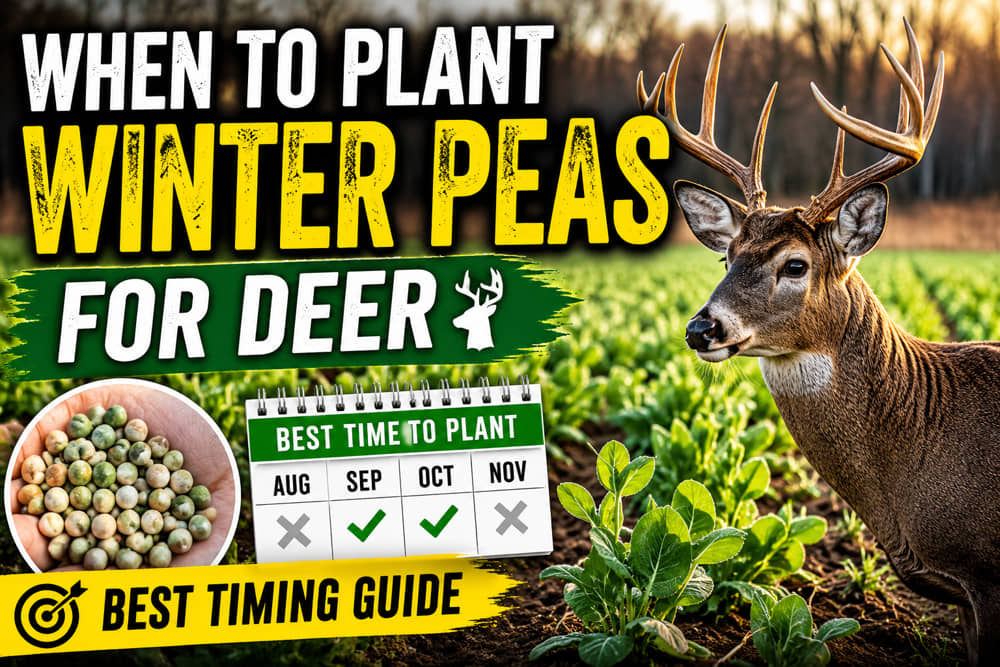
The best time to plant winter peas for deer is generally 6–8 weeks before your area’s average first fall frost. This planting window allows the peas to establish a healthy root system and produce tender, nutrient-rich foliage just as whitetail deer begin shifting to high-quality fall forage. While the exact calendar date varies by region, using the first frost date instead of a fixed month produces more consistent food plot results.
Planting at the right time is one of the most important decisions when establishing a deer food plot. Winter peas germinate quickly in cool, moist soil and can become one of the most attractive forages during early and mid-fall. If they are planted too early, excessive heat, drought, insects, and mature growth can reduce their attractiveness before hunting season begins. If they are planted too late, seedlings may not develop enough biomass before frost or heavy browsing pressure limits establishment.
Successful timing also depends on several local factors beyond the calendar. Soil temperature, rainfall, browse pressure, and regional climate all influence how quickly winter peas emerge and how long they remain productive. Hunters who adjust planting dates to these conditions often maintain a more consistent food source throughout the season, increasing the likelihood that deer will visit the food plot during legal shooting hours.
This guide explains when to plant winter peas for deer, how to determine the ideal planting window using your local frost date, how recommendations change across different regions, and the common mistakes that prevent winter pea food plots from reaching their full potential. By the end, you’ll have a practical planting schedule that helps maximize both forage production and hunting success.
When Is the Best Time to Plant Winter Peas for Deer?
The best time to plant winter peas for deer is approximately 6–8 weeks before your area’s average first fall frost. This planting window gives the plants enough time to establish a strong root system and produce lush, tender foliage before cooler weather arrives. During this stage, winter peas offer the highest forage quality, making them one of the most attractive cool-season food plot crops for whitetail deer.
Planting according to the first frost date is more reliable than following a fixed calendar month. Frost dates vary significantly across North America, so planting in early September may be ideal in northern states but too late in parts of the Upper Midwest or too early in portions of the Deep South. Using the expected first frost as your reference allows winter peas to develop under favorable soil temperatures while avoiding excessive summer heat that can reduce germination and early growth.
Young winter pea plants are especially attractive because they produce tender leaves that contain high levels of crude protein and are easy for deer to digest. During early fall, whitetails transition from summer feeding patterns to building energy reserves before winter and the breeding season. Newly established pea plots provide highly palatable forage at exactly the time nutritional demand begins to increase, encouraging frequent visits to the food plot.
Although the 6–8 week rule works well in most regions, local conditions should always influence the final planting date. Soil moisture, expected rainfall, and browse pressure can all affect establishment. In areas with high deer densities, planting slightly earlier may allow the crop to develop enough biomass to withstand heavy grazing. Conversely, in regions experiencing hot, dry late summers, waiting until consistent rainfall arrives often produces better germination than planting into dry soil.
As a general guideline, many hunters use the following planting windows:
- Northern states: Late July through August
- Upper Midwest: Early to late August
- Mid-Atlantic: Late August through early September
- Southeast: September through early October
- Deep South: October through early November
These dates should always be adjusted based on your local first frost rather than followed as fixed deadlines. The goal is to have actively growing, leafy winter peas available just before hunting activity begins, not simply to finish planting by a certain month.
How Many Weeks Before the First Frost Should You Plant Winter Peas?
Plant winter peas 6–8 weeks before your area’s average first fall frost. This timeframe allows seedlings to establish a strong root system, develop multiple sets of leaves, and produce enough forage to withstand early browsing pressure. Rather than following a specific calendar date, experienced food plot managers use the first frost as the primary benchmark because it reflects local growing conditions more accurately.
The six- to eight-week window matches the period when soil temperatures remain warm enough for rapid germination while air temperatures begin to cool. Winter peas germinate best when soil temperatures range between 45°F and 75°F (7°C–24°C) and adequate soil moisture is available. Under these conditions, seedlings typically emerge within one to two weeks and continue producing tender foliage throughout early fall.
Why planting too early reduces food plot performance
Planting significantly earlier than the recommended window often exposes winter peas to prolonged summer heat and drought. High temperatures can slow emergence, reduce seedling vigor, and increase water stress before cooler fall weather arrives. Early-planted peas may also become overly mature by the start of hunting season, reducing the amount of fresh, highly palatable growth that attracts deer.
Another challenge is browse pressure. In areas with high deer populations, peas planted too early may be grazed continuously for several weeks before they develop sufficient biomass. Constant feeding can prevent the plants from recovering, leaving sparse food plots that provide little forage during the peak hunting period.
Why planting too late can limit establishment
Waiting until just before the first frost creates a different set of problems. Although winter peas tolerate cold weather after they are established, young seedlings need time to build roots and produce foliage before temperatures decline. Late-planted peas often remain small entering winter, making them more vulnerable to frost damage and heavy grazing.
A delayed planting also shortens the period when deer can benefit from lush, nutrient-rich forage during early archery and pre-rut hunting. Instead of producing a dense stand before hunting activity increases, the plot may still be in its earliest growth stage when deer begin using surrounding agricultural fields or natural browse.
When should you adjust the planting schedule?
The 6–8 week guideline should be modified when local conditions differ from average growing seasons.
- Plant slightly earlier if deer density is extremely high and young plants are likely to receive heavy browsing pressure.
- Delay planting until meaningful rainfall arrives if late summer soils are dry enough to prevent uniform germination.
- Follow local frost forecasts rather than historical averages if seasonal weather patterns are significantly earlier or later than normal.
- Prioritize soil moisture over the calendar because even perfectly timed planting will struggle if seeds remain in dry soil.
The objective is not simply to plant before frost, but to ensure winter peas enter the hunting season with vigorous vegetative growth. A healthy stand established during the recommended planting window provides higher forage production, remains attractive for a longer period, and is better able to recover from repeated grazing by deer.
How Many Weeks Before the First Frost Should You Plant Winter Peas?
Plant winter peas 6–8 weeks before your area’s average first fall frost. This timeframe allows seedlings to establish a strong root system, develop multiple sets of leaves, and produce enough forage to withstand early browsing pressure. Rather than following a specific calendar date, experienced food plot managers use the first frost as the primary benchmark because it reflects local growing conditions more accurately.
The six- to eight-week window matches the period when soil temperatures remain warm enough for rapid germination while air temperatures begin to cool. Winter peas germinate best when soil temperatures range between 45°F and 75°F (7°C–24°C) and adequate soil moisture is available. Under these conditions, seedlings typically emerge within one to two weeks and continue producing tender foliage throughout early fall.
Why planting too early reduces food plot performance
Planting significantly earlier than the recommended window often exposes winter peas to prolonged summer heat and drought. High temperatures can slow emergence, reduce seedling vigor, and increase water stress before cooler fall weather arrives. Early-planted peas may also become overly mature by the start of hunting season, reducing the amount of fresh, highly palatable growth that attracts deer.
Another challenge is browse pressure. In areas with high deer populations, peas planted too early may be grazed continuously for several weeks before they develop sufficient biomass. Constant feeding can prevent the plants from recovering, leaving sparse food plots that provide little forage during the peak hunting period.
Why planting too late can limit establishment
Waiting until just before the first frost creates a different set of problems. Although winter peas tolerate cold weather after they are established, young seedlings need time to build roots and produce foliage before temperatures decline. Late-planted peas often remain small entering winter, making them more vulnerable to frost damage and heavy grazing.
A delayed planting also shortens the period when deer can benefit from lush, nutrient-rich forage during early archery and pre-rut hunting. Instead of producing a dense stand before hunting activity increases, the plot may still be in its earliest growth stage when deer begin using surrounding agricultural fields or natural browse.
When should you adjust the planting schedule?
The 6–8 week guideline should be modified when local conditions differ from average growing seasons.
- Plant slightly earlier if deer density is extremely high and young plants are likely to receive heavy browsing pressure.
- Delay planting until meaningful rainfall arrives if late summer soils are dry enough to prevent uniform germination.
- Follow local frost forecasts rather than historical averages if seasonal weather patterns are significantly earlier or later than normal.
- Prioritize soil moisture over the calendar because even perfectly timed planting will struggle if seeds remain in dry soil.
The objective is not simply to plant before frost, but to ensure winter peas enter the hunting season with vigorous vegetative growth. A healthy stand established during the recommended planting window provides higher forage production, remains attractive for a longer period, and is better able to recover from repeated grazing by deer.
When Should You Plant Winter Peas in Different Regions?
Winter peas should be planted according to local frost dates rather than a universal calendar. While the recommended guideline remains 6–8 weeks before the average first fall frost, the ideal planting window varies by several weeks across North America. Hunters who adjust planting schedules to regional climate typically achieve better germination, stronger forage production, and more consistent deer activity throughout the hunting season.
Northern States
In northern states such as Minnesota, Wisconsin, Michigan, New York, and much of New England, the average first frost often arrives between mid-September and early October. As a result, late July through late August is generally the best planting window.
This schedule gives winter peas enough time to establish before temperatures drop rapidly. Planting beyond late August increases the risk that seedlings will remain underdeveloped before the first hard freeze, especially in areas with shorter growing seasons.
Midwest
States including Iowa, Illinois, Indiana, Ohio, Missouri, Nebraska, and Kansas usually provide a slightly longer fall growing season. Most hunters achieve the best results by planting from early August through early September, depending on local frost dates.
Late summer rainfall often determines the exact planting date in this region. If dry conditions persist, delaying planting until after a soaking rain frequently produces more uniform germination than placing seed into dry soil.
Mid-Atlantic
In states such as Pennsylvania, Maryland, Virginia, Kentucky, and West Virginia, late August through mid-September is generally the ideal planting period.
Cooler nights combined with gradually declining soil temperatures create excellent growing conditions during this time. Winter peas usually establish quickly while producing tender foliage that attracts deer during the early archery season and continues providing high-quality forage into the rut.
Southern States
The Southeast—including Georgia, Alabama, Mississippi, South Carolina, Louisiana, and northern Florida—experiences warmer autumns and later frost dates. In these areas, September through October is typically the most productive planting window.
Planting too early often exposes seedlings to prolonged heat, drought, and insect pressure. Waiting until daytime temperatures moderate and seasonal rainfall becomes more reliable usually results in stronger establishment and healthier food plots.
Mild Winter Regions
Areas with very mild winters, including parts of Texas, southern Louisiana, coastal regions, and portions of the Deep South, often allow planting from October into early November.
Because freezing temperatures arrive much later—or may not occur until winter—winter peas can continue producing fresh forage well into the hunting season. These regions also benefit from a longer establishment period, allowing hunters to coordinate planting with seasonal rain events instead of rushing to meet an early frost deadline.
Use Local Conditions Instead of Fixed Dates
Regional recommendations provide a useful starting point, but local weather conditions should always take priority over statewide planting calendars. Two properties located within the same state can experience different frost dates due to elevation, rainfall patterns, and local climate.
Before planting, consider these factors:
- Check your area’s average first frost date.
- Plant when soil temperatures remain between 45°F and 75°F (7°C–24°C).
- Wait for adequate soil moisture if conditions are unusually dry.
- Adjust planting slightly earlier where browse pressure from large deer populations is severe.
Following these local conditions instead of relying on fixed calendar dates helps establish vigorous winter pea plots that remain attractive throughout the fall hunting season.
What Growing Conditions Produce the Best Winter Pea Food Plot?
Winter peas produce the healthiest and most attractive deer food plots when they are planted in fertile, well-drained soil with adequate moisture and cool fall temperatures. Even if planting is perfectly timed, poor soil conditions can reduce germination, slow early growth, and limit forage production throughout the hunting season.
Plant in Well-Drained Soil
Winter peas perform best in loam or sandy loam soils that drain efficiently after rainfall. Excessively wet soils reduce oxygen around the root zone, increasing the risk of seed rot and root diseases before seedlings become established.
If your property contains heavy clay soils, improving drainage through tillage or selecting slightly elevated planting areas can significantly improve stand establishment. Avoid planting in low spots where water commonly pools after storms.
Maintain the Right Soil pH
A soil pH between 6.0 and 7.0 provides the best environment for winter peas. Within this range, essential nutrients such as phosphorus and potassium remain readily available, allowing seedlings to develop stronger roots and produce vigorous top growth.
Many hunters skip soil testing and apply fertilizer without knowing what the field actually needs. A simple soil test provides recommendations for lime and fertilizer, often improving food plot performance more than increasing seeding rates.
Plant When Soil Moisture Is Adequate
Consistent soil moisture is one of the biggest factors affecting germination. Winter pea seeds absorb a large amount of water before sprouting, so planting immediately before or shortly after a soaking rain usually produces faster and more uniform emergence.
Dry soil delays germination and exposes seeds to insects, rodents, and other wildlife for a longer period. In drought conditions, waiting several days for a reliable rainfall event often leads to better establishment than planting strictly according to the calendar.
Target the Ideal Soil Temperature
Winter peas germinate most successfully when soil temperatures remain between 45°F and 75°F (7°C–24°C). Warm soil encourages rapid emergence, while cooler autumn temperatures support steady vegetative growth without the stress caused by summer heat.
When soil temperatures consistently exceed this range, seedlings may struggle under high evaporation rates and moisture loss. Conversely, planting after soils become too cold slows germination and shortens the period available for fall growth.
Support Healthy Root Development
Winter peas are legumes, meaning they form a relationship with Rhizobium bacteria that allows the plants to fix atmospheric nitrogen. Applying the correct seed inoculant before planting helps establish this relationship, especially in fields where peas or other legumes have not been grown recently.
Healthy root systems improve nutrient uptake, increase drought tolerance, and support faster recovery after repeated browsing by deer. Although inoculation is inexpensive, it can noticeably improve plant vigor throughout the growing season.
Produce Enough Biomass Before Heavy Browsing
One of the most common reasons winter pea plots fail is that deer begin feeding before the plants are fully established. In areas with dense deer populations, young seedlings can be grazed faster than they can regrow.
To improve survival under heavy browse pressure, many hunters:
- Plant slightly earlier within the recommended window.
- Increase the total planting acreage instead of concentrating all seed in one small plot.
- Mix winter peas with companion crops such as winter rye or oats to distribute grazing pressure.
- Use temporary electric fencing until plants reach a more established growth stage on high-pressure properties.
A winter pea food plot is most successful when healthy plants enter hunting season with sufficient leaf growth to tolerate regular grazing while continuing to produce fresh, nutritious forage throughout the fall.
Read more: Best Brassica Blend for Deer Food Plots
Why Are Winter Peas So Attractive to Deer?
Winter peas are one of the most attractive cool-season food plot crops because they combine high protein levels, excellent digestibility, and tender new growth that deer actively seek throughout the fall. Unlike many mature forage plants that become coarse over time, young winter pea plants remain soft and highly palatable during the early stages of growth, making them a preferred food source when planted at the correct time.
Winter Peas Provide High-Quality Nutrition
Winter peas typically contain 20–30% crude protein during vegetative growth, supplying the nutrients deer need for muscle maintenance, antler recovery after the growing season, body condition, and overall health. During late summer and fall, whitetails begin preparing for the rut and the coming winter by increasing their intake of nutrient-dense forage whenever it is available.
Compared with many native browse species, winter peas offer a concentrated source of digestible protein that supports deer during one of the most demanding periods of the year. This nutritional value is one reason food plots planted with winter peas often receive heavy grazing shortly after seedlings emerge.
Deer Prefer Tender, Young Growth
The highest attraction occurs when winter peas are producing fresh leaves rather than mature stems. Newly emerged plants have soft foliage, high moisture content, and lower fiber levels, making them easier for deer to digest than older vegetation.
This preference explains why the planting date is so important. A plot seeded six to eight weeks before the first frost reaches its most attractive growth stage during early hunting season. If planted too early, the crop may become mature before peak deer activity. If planted too late, there may not be enough leafy growth available when deer first begin using fall food sources.
Cooler Weather Increases Food Plot Activity
Deer feeding behavior changes as temperatures decline. During early fall, natural vegetation begins losing quality, while agricultural crops are harvested across many regions. At the same time, winter peas are entering their most productive growth stage.
This overlap creates an ideal food source during archery season and continues through much of the pre-rut. As natural forage becomes less nutritious, lush winter pea plots often receive more frequent daytime visits, especially where hunting pressure remains moderate.
Winter Peas Perform Best as Part of a Diverse Food Plot
Although deer readily consume winter peas by themselves, combining them with other cool-season forages creates a more resilient and productive food plot.
Common companion crops include:
- Winter rye, which establishes quickly and continues growing in colder weather.
- Oats, which provide highly palatable forage during early fall.
- Brassicas, which become increasingly attractive after repeated frosts convert stored starches into sugars.
- Clover, which extends forage availability into spring while contributing additional nitrogen to the soil.
These mixtures provide forage at different stages of the hunting season rather than concentrating all attraction into a few weeks. They also reduce the risk that deer will completely consume young pea plants before the stand becomes established.
Heavy Browsing Is a Sign of Success
Many hunters mistake heavy grazing for crop failure. In reality, rapid browsing often indicates that deer strongly prefer winter peas over surrounding forage. When plants disappear shortly after emergence, the problem is usually insufficient planting acreage or excessive deer density rather than poor forage quality.
If browse pressure is consistently severe, consider increasing the size of the food plot, planting additional plots across the property, or mixing winter peas with cereal grains that tolerate grazing more effectively. These strategies help maintain available forage throughout the hunting season while allowing winter peas to continue producing new growth.
Should You Plant Winter Peas Alone or With Other Food Plot Crops?
Most hunters achieve better food plot performance by planting winter peas in a seed mix rather than as a standalone crop. While winter peas provide exceptional nutrition and attract deer quickly, they are highly susceptible to heavy browsing during the first several weeks after emergence. Mixing them with complementary cool-season forages creates a food plot that establishes more reliably, remains productive longer, and supplies forage throughout multiple stages of the hunting season.
When Should You Plant Winter Peas Alone?
Planting winter peas by themselves works best on properties with moderate deer populations and large planting acreage. In these situations, the forage can grow fast enough to keep up with grazing while providing a highly nutritious food source during early and mid-fall.
A pure stand also makes management straightforward because all plants mature at a similar rate and require the same planting depth. Hunters often choose this approach when their primary objective is to maximize early-season attraction or evaluate how well winter peas perform on a new property.
However, monoculture plots have one major drawback. If deer density is high, young pea plants can be grazed repeatedly before they become established, reducing biomass and shortening the productive life of the food plot.
Why Seed Mixes Produce Better Results
A diverse food plot offers forage that matures at different times, helping maintain deer activity from early fall through winter. Different plant species also respond differently to drought, frost, grazing pressure, and soil conditions, making the entire plot more resilient than a single-species planting.
Another advantage is grazing distribution. Deer rarely consume every plant species equally. As they browse winter peas, companion crops continue growing, reducing pressure on the peas and allowing them to recover more quickly.
Winter Peas and Oats
Oats are one of the best companion crops for winter peas during early fall. They germinate rapidly, establish quickly, and provide tender forage shortly after planting.
Because oats emerge before peas reach full growth, they help satisfy early grazing pressure while the peas continue developing. This combination is especially effective for hunters targeting the opening weeks of archery season.
Winter Peas and Winter Rye
Winter rye extends the productivity of the food plot into colder weather. Rye tolerates poor soils, survives freezing temperatures, and continues growing later into the season than most cool-season annuals.
When mixed with winter peas, rye acts as both a companion forage and a protective crop. Even if heavy browsing reduces pea growth, rye continues producing green forage that keeps deer returning to the plot.
Winter Peas and Brassicas
Brassicas—including turnips, radishes, and forage rape—complement winter peas by providing forage during the second half of the hunting season.
Deer often begin feeding heavily on brassicas after several frosts increase the concentration of natural sugars in their leaves and bulbs. This creates a seasonal transition where winter peas attract deer during early fall and brassicas become increasingly valuable as temperatures decline.
Winter Peas and Clover
Clover adds long-term value to a food plot because it survives beyond a single growing season and begins producing new forage again in spring.
Since both peas and clover are legumes, they contribute nitrogen to the soil while supplying high-protein forage. This combination works well for hunters interested in improving soil health and establishing a more permanent food plot program.
Which Seed Mix Works Best?
The ideal mixture depends on your hunting goals.
- For early-season attraction: Winter peas + oats.
- For season-long forage: Winter peas + winter rye.
- For late-season hunting: Winter peas + brassicas.
- For long-term soil improvement: Winter peas + clover.
- For maximum diversity: Winter peas + oats + winter rye + brassicas.
Regardless of the mix you choose, avoid allowing companion crops to dominate the planting. Winter peas should remain a significant portion of the seed blend so the plot continues delivering the high-protein forage that makes it especially attractive to deer during the fall hunting season.
How Much Winter Pea Seed Should You Plant per Acre?
Most deer food plots require 50–80 pounds of winter pea seed per acre, depending on the planting method and whether the peas are grown alone or in a seed mix. Using the correct seeding rate helps establish a dense stand that can withstand browsing while maximizing forage production. Seeding too lightly leaves gaps where weeds compete for nutrients, while excessive seeding increases costs without significantly improving yield.
Recommended Seeding Rates
The ideal seeding rate depends on how the seed is planted.
| Planting Method | Recommended Rate |
|---|---|
| Drill (pure stand) | 50–60 lb/acre |
| Broadcast (pure stand) | 70–80 lb/acre |
| Mixed with cereal grains | 30–50 lb/acre |
| Small kill plots with heavy deer pressure | Increase rate by 10–20% if needed |
Broadcast applications require more seed because some seeds remain on the soil surface or fail to establish. A no-till or conventional grain drill places seed at a consistent depth, improving seed-to-soil contact and reducing overall seed requirements.
Plant at the Correct Depth
Winter peas should be planted 1–2 inches deep. This depth provides enough soil contact for moisture absorption while protecting the seed from birds and other wildlife.
Seeds planted shallower than one inch are more likely to dry out or be eaten before germination. Planting deeper than two inches can delay emergence and reduce the percentage of seedlings that successfully reach the surface.
After broadcasting seed, lightly dragging, cultipacking, or rolling the plot improves seed-to-soil contact and increases germination rates.
Use Seed Inoculant for Better Growth
Applying the correct Rhizobium inoculant before planting improves nitrogen fixation and encourages stronger early growth. This step is particularly valuable in fields where peas or other legumes have not been grown recently.
Nitrogen-fixing bacteria colonize the roots and convert atmospheric nitrogen into a form the plants can use. Well-inoculated plants often develop more vigorous root systems, produce darker green foliage, and require less supplemental nitrogen fertilizer.
Adjust Seeding Rates for Browse Pressure
High deer densities can significantly affect the amount of seed needed. On properties where winter peas are heavily grazed immediately after emergence, increasing plant density helps maintain forage availability.
Instead of relying only on a higher seeding rate, experienced food plot managers often combine several strategies:
- Increase the total acreage planted.
- Divide one large food plot into multiple feeding areas.
- Include cereal grains such as winter rye or oats to distribute grazing pressure.
- Protect young plants with temporary electric fencing until they become established.
These approaches usually produce better long-term results than simply adding more seed.
Don’t Let Seeding Rate Replace Good Food Plot Management
Even the ideal seeding rate cannot compensate for poor planting conditions. Soil pH, moisture, planting depth, fertility, and planting timing have a much greater influence on food plot success than adding extra pounds of seed per acre.
A properly prepared seedbed, combined with the correct planting window and recommended seeding rate, creates a dense stand of winter peas that remains productive throughout the fall hunting season while providing consistent, high-quality forage for deer.
What Mistakes Cause Winter Pea Food Plots to Fail?
Most failed winter pea food plots are caused by management mistakes rather than poor seed quality. Even premium seed cannot compensate for poor planting timing, unsuitable soil conditions, or excessive browsing pressure. Identifying and avoiding these common mistakes will significantly improve establishment, forage production, and deer attraction throughout the hunting season.
Planting Too Early
Planting winter peas well before the recommended window exposes seedlings to prolonged summer heat, dry soil, and insect pressure. Warm temperatures also accelerate plant maturity, causing the forage to become less tender before the peak hunting season begins.
Early planting creates another challenge in areas with large deer populations. As soon as seedlings emerge, deer may browse them continuously for several weeks. Without enough time to recover, plants struggle to produce the dense canopy needed for a productive food plot.
Planting Too Late
Late planting limits the amount of vegetative growth that develops before cold weather arrives. Although established winter peas tolerate frost, young seedlings require several weeks of active growth to build strong roots and produce enough forage to withstand repeated browsing.
Food plots planted only a few weeks before the first hard frost often remain thin throughout the season, reducing both forage availability and the number of deer visiting the area.
Ignoring Soil Tests
Many hunters invest in seed and fertilizer without testing the soil first. This approach often results in nutrient deficiencies or incorrect pH levels that limit plant growth.
A soil test identifies whether lime is needed to raise pH and provides fertilizer recommendations based on existing nutrient levels. Correcting these issues before planting usually delivers greater improvements than increasing fertilizer rates without a plan.
Planting in Poor Seedbeds
Successful germination depends on good seed-to-soil contact. Planting into heavy crop residue, thick grass, or uncompacted loose soil reduces seed placement consistency and leaves many seeds without enough moisture to germinate.
Before planting, remove excessive vegetation, prepare a firm seedbed, and ensure seeds are covered with approximately 1–2 inches of soil. Proper seed placement produces more uniform emergence and stronger stand establishment.
Underestimating Browse Pressure
Heavy browsing is one of the biggest challenges when growing winter peas. On properties with high deer densities, seedlings may be consumed almost immediately after emergence.
Common signs of excessive browse pressure include:
- Plants disappearing within days of germination.
- Short stems with little leaf development.
- Uneven plant height across the food plot.
- Bare patches where repeated grazing prevents regrowth.
If these conditions occur every year, increasing plot size, planting multiple food plots, or mixing winter peas with cereal grains often provides better long-term results than simply reseeding.
Planting Without Adequate Soil Moisture
Even perfectly timed planting can fail if seeds remain in dry soil. Winter peas absorb moisture before germination begins, so prolonged dry conditions delay emergence and reduce establishment.
Whenever possible, schedule planting immediately before a forecasted rainfall or shortly after a soaking rain. Moist soil encourages rapid germination, reduces seed loss, and allows seedlings to establish before insects, rodents, or birds remove exposed seed.
Skipping Companion Crops
Many hunters plant winter peas alone without considering how companion crops improve food plot performance.
Adding species such as winter rye, oats, brassicas, or clover extends forage availability, spreads browsing pressure across multiple plant species, and increases the plot’s resilience under changing weather conditions. A diverse planting also keeps deer using the food plot over a longer portion of the hunting season instead of concentrating activity into only a few weeks.
Focusing Only on Planting Date
Planting date is important, but it is only one factor that determines success. The most productive winter pea food plots combine the correct planting window with proper soil preparation, balanced fertility, adequate moisture, and realistic management of browse pressure.
Hunters who treat food plots as a complete habitat management system—not simply a planting project—consistently produce healthier forage and attract more deer throughout the fall and early winter.
How Long Do Winter Peas Stay Attractive to Deer?
Winter peas typically remain attractive to deer from early fall until repeated hard freezes, heavy browsing, or plant maturity reduce forage availability. On most properties, the highest attraction occurs during the first six to ten weeks after germination when plants are actively producing tender leaves.
The exact duration depends on several factors, including planting date, weather conditions, deer density, and the size of the food plot. Large plots with moderate browse pressure can continue producing fresh forage well into winter, while small kill plots in areas with dense deer populations may be grazed down within a few weeks.
Mixing winter peas with cereal grains or brassicas extends the overall productivity of the food plot. As pea growth slows during colder weather, companion crops continue supplying forage and help maintain consistent deer activity throughout the hunting season.
Can Winter Peas Survive Frost and Winter Weather?
Yes. Established winter peas tolerate light and moderate frosts, which is why they are classified as a cool-season annual. In many regions, frost has little effect on healthy plants and may even improve overall forage quality by slowing stem growth while maintaining tender foliage.
However, tolerance has limits. Extended periods of extremely cold temperatures, repeated freeze-thaw cycles, or prolonged snow cover can reduce plant survival, particularly when seedlings have not fully established before winter arrives.
Planting within the recommended 6–8 week window before the first frost gives winter peas enough time to develop strong roots, increasing their ability to survive cold weather and continue producing forage later into the season.
What Crops Should You Plant After Winter Peas?
Winter peas improve the growing conditions for many crops because they leave behind nitrogen that becomes available as plant residue decomposes. This makes them an excellent rotational crop within a long-term food plot program.
Popular follow-up crops include:
- Soybeans for high-protein summer forage.
- Grain sorghum where drought tolerance is important.
- Corn on properties with sufficient fertility and moisture.
- Brassicas for another cool-season planting cycle.
- Cereal grains such as oats, wheat, or winter rye.
- Perennial clover for year-round wildlife nutrition.
Rotating crops also reduces disease pressure, improves soil structure, and minimizes nutrient depletion compared with planting the same species every year.
Frequently Asked Questions About Planting Winter Peas for Deer
Can you plant winter peas in spring?
Yes, but spring planting is generally intended for soil improvement or forage production rather than fall deer hunting. Spring-planted peas mature before the primary hunting season and usually provide less value as a fall attractant.
Do winter peas come back every year?
No. Winter peas are annual plants. They complete their life cycle within one growing season and must be replanted each year. Under ideal conditions, some seed may naturally reseed, but hunters should not rely on volunteer plants to establish a productive food plot.
Are Austrian winter peas better than regular field peas?
Austrian winter peas are generally the preferred choice for fall deer food plots because they offer better cold tolerance and remain productive later into the season. Standard field peas perform well in milder conditions but typically have lower winter hardiness.
Will deer overbrowse winter peas?
Yes. Winter peas are one of the most preferred cool-season forages for whitetail deer, making overbrowsing common on properties with high deer densities.
If this becomes a recurring problem, consider:
- Expanding the total food plot acreage.
- Planting multiple feeding locations.
- Mixing peas with winter rye or oats.
- Using temporary electric fencing until plants become established.
These strategies reduce grazing pressure and improve the long-term productivity of the plot.
Do winter peas improve soil fertility?
Yes. Winter peas are legumes that fix atmospheric nitrogen through a symbiotic relationship with Rhizobium bacteria. When properly inoculated, they contribute nitrogen to the soil, improving fertility for subsequent crops and reducing fertilizer requirements in crop rotations.
This soil-building benefit is one reason winter peas are widely used not only in deer food plots but also in conservation agriculture and cover cropping systems.
Final Thoughts
Planting winter peas at the right time is the single most important factor in producing a successful deer food plot. In most regions, sowing seed 6–8 weeks before the average first fall frost provides the best balance between rapid establishment, vigorous growth, and peak attractiveness during hunting season.
Successful food plots depend on more than timing alone. Soil pH, moisture, planting depth, browse pressure, and crop selection all influence how well winter peas perform throughout the fall. Hunters who combine proper planting practices with sound habitat management consistently produce healthier forage, attract more deer, and create food plots that remain productive well beyond the opening weeks of the season.
Rather than relying on fixed calendar dates, use your local frost schedule, monitor weather conditions, and adjust planting decisions to match your property’s unique environment. That approach delivers more reliable results year after year and helps maximize the return on every acre planted.