
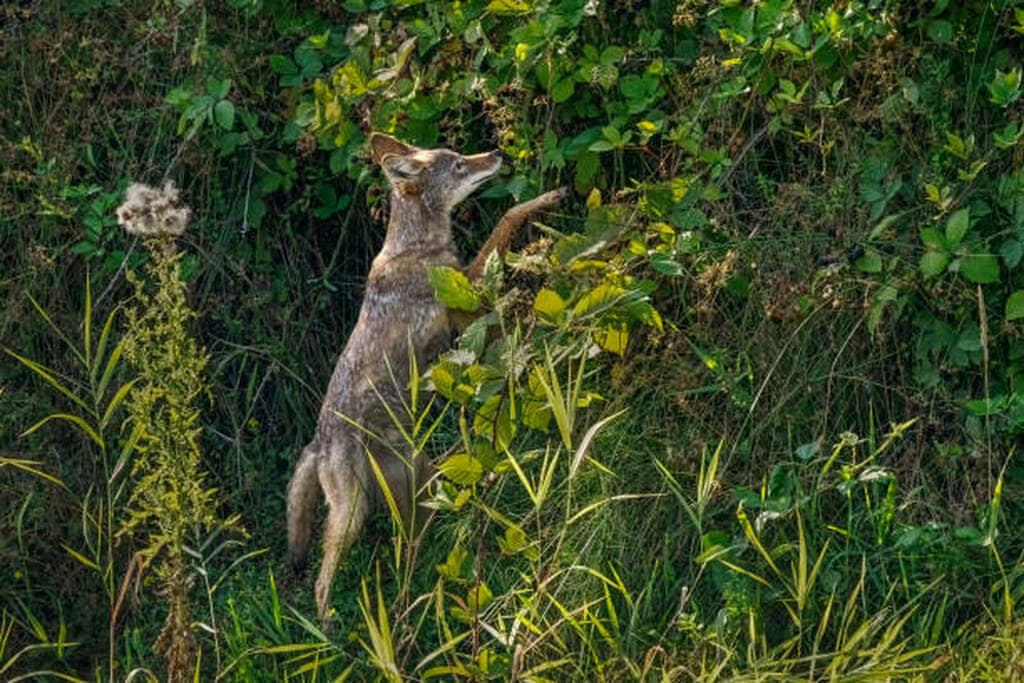
Yes, coyotes eat berries. Although coyotes are widely known as predators, they are actually opportunistic omnivores that adjust their diet to whatever food is most abundant and easiest to obtain. Wild berries become an important seasonal food source during summer and fall, when many berry-producing shrubs and vines reach peak fruit production. At that time of year, coyotes often eat berries alongside rodents, rabbits, insects, birds, carrion, and other plant foods rather than relying only on hunting.
Berries provide coyotes with natural sugars, water, fiber, and antioxidants while requiring far less energy to collect than chasing prey. This flexible feeding strategy helps coyotes survive in forests, grasslands, deserts, mountains, farmland, and even suburban environments across North America. Researchers regularly find berry seeds and fruit remains in coyote scat, confirming that fruit is a consistent part of their diet in many regions, although the proportion varies with habitat and seasonal food availability.
This article explains which berries coyotes eat, why they include fruit in their diet, when berry consumption is most common, and how berries compare with other foods they consume throughout the year. You’ll also learn how eating berries benefits coyotes and the important role they play in dispersing seeds and supporting healthy ecosystems.
Do Coyotes Eat Berries?
Yes, coyotes regularly eat berries as part of their natural diet. Coyotes (Canis latrans) are opportunistic omnivores, meaning they consume both animal and plant foods depending on what is available. While mammals such as rabbits, rodents, and squirrels remain their primary food sources, berries become an important seasonal resource when they are abundant. Studies examining coyote scat across North America consistently find berry seeds and fruit skins, showing that wild fruit is a common component of their diet rather than an occasional snack.
Coyotes eat berries because they provide an efficient source of energy with minimal effort. Hunting prey requires time, energy, and carries a risk of injury, whereas berry patches allow coyotes to consume large amounts of food in a short period. During late summer and early fall, when many shrubs and vines produce ripe fruit, coyotes often combine berries with insects, reptiles, birds, carrion, and small mammals to create a varied diet that matches seasonal food availability.
The proportion of berries in a coyote’s diet varies by habitat. In forests, shrublands, and mountain regions with abundant native fruit, berries may make up a noticeable portion of their seasonal food intake. In open grasslands or arid deserts, coyotes rely more heavily on small mammals and insects because fruit is less available. This dietary flexibility is one of the main reasons coyotes have successfully adapted to almost every ecosystem across North America, including suburban and urban environments.
What Kinds of Berries Do Coyotes Eat?
Coyotes eat many types of wild berries that grow naturally throughout their range. They do not appear to target one specific species. Instead, they consume whichever berries are ripe and locally available, allowing them to take advantage of seasonal food resources with minimal energy expenditure.
Blackberries are among the most common berries eaten by coyotes. Dense blackberry thickets provide both food and cover for small mammals, allowing coyotes to forage for fruit while also hunting prey in the same area. Blueberries are another frequently consumed fruit in northern forests, especially where extensive wild blueberry patches develop during summer.
Elderberries are also an important seasonal food because they grow in clusters that are easy for coyotes to harvest. In western North America, coyotes commonly eat juniper berries during colder months when fewer fresh fruits are available. Depending on the region, they may also consume serviceberries, chokecherries, raspberries, huckleberries, and other native fruits that ripen throughout the growing season.
Coyotes do not limit themselves to berries alone. When available, they also eat fallen apples, grapes, persimmons, plums, prickly pear fruit, melons, and other soft fruits. In agricultural and suburban areas, coyotes may feed on cultivated fruit growing in orchards, vineyards, or backyard gardens if these foods are easily accessible.
Rather than actively searching for a particular berry species, coyotes follow an opportunistic feeding strategy. They consume whichever fruits are abundant during a given season while continuing to hunt small animals and scavenge carrion. This flexible approach allows them to maintain a balanced diet even as food availability changes throughout the year.
Why Do Coyotes Eat Berries?
Coyotes eat berries because they provide an abundant, energy-rich food source that is easy to obtain. Unlike hunting rabbits or rodents, gathering ripe berries requires little energy and almost no risk of injury. When berries are widely available, coyotes can quickly consume enough food to meet part of their daily energy needs while conserving energy for hunting or traveling.
Berries also add nutritional variety to a coyote’s omnivorous diet. They contain natural sugars that supply quick energy, water that helps maintain hydration during hot weather, fiber that supports digestion, and vitamins and antioxidants found in many wild fruits. Although berries contain less protein than animal prey, they complement meat, insects, and other foods that coyotes consume throughout the year.
Seasonal food availability is another major reason coyotes eat berries. Small mammal populations naturally fluctuate, and hunting success is never guaranteed. During late summer and early fall, berry-producing shrubs often produce large quantities of fruit at the same time. Instead of relying entirely on prey, coyotes take advantage of this temporary food surplus by incorporating more fruit into their diet. This flexible feeding strategy improves their chances of finding enough food regardless of changing environmental conditions.
Coyotes also benefit from their ability to switch between different food sources with little difficulty. A single day of foraging may include hunting a rabbit, catching insects, scavenging carrion, and eating berries from several shrubs. This dietary flexibility is one of the key reasons coyotes thrive in habitats ranging from remote wilderness to suburban neighborhoods.
Read more: How To Attract Coyotes To Your Yard?
When Do Coyotes Eat Berries?
Coyotes eat the most berries during summer and fall, when wild fruits reach peak ripeness. In many parts of North America, berry-producing plants begin fruiting in mid-summer and continue producing into early autumn. During this period, berries become one of the easiest natural foods to find, making them a regular part of a coyote’s seasonal diet.
Summer offers the greatest variety of berries. Blackberries, blueberries, raspberries, huckleberries, and serviceberries ripen across different regions, allowing coyotes to feed on whichever species are locally available. Warm weather also increases the availability of insects, reptiles, and other small prey, enabling coyotes to maintain a highly diverse diet instead of depending on a single food source.
Berry consumption often remains high through fall as elderberries, chokecherries, persimmons, grapes, and other fruits mature. At the same time, coyotes begin preparing for winter by maximizing calorie intake whenever food is abundant. Eating fruit alongside mammals, birds, and carrion helps them build energy reserves before colder weather reduces the availability of many seasonal foods.
During winter and early spring, berries become much less important because fresh fruit is scarce. Coyotes shift their diet toward rabbits, rodents, deer carrion, birds, and other available prey. In some western habitats, however, persistent fruits such as juniper berries remain available through part of the winter and may continue to supplement their diet when other plant foods are limited.
The exact timing and amount of berry consumption vary by climate and habitat. Coyotes living in forests and shrublands with abundant fruit-bearing plants generally eat more berries than those inhabiting deserts or open grasslands, where animal prey makes up a larger share of their annual diet.
How Important Are Berries in a Coyote’s Diet?
Berries are a valuable seasonal food for coyotes, but they do not replace meat as the primary component of their diet. Coyotes are opportunistic omnivores whose food choices change with habitat, climate, and seasonal availability. While berries can account for a noticeable portion of their diet during late summer and fall, mammals such as rodents, rabbits, squirrels, and deer carrion generally provide most of the protein and fat they need throughout the year.
The importance of berries varies considerably between ecosystems. Coyotes living in forests, river valleys, and shrublands often consume more fruit because berry-producing plants are abundant. In contrast, coyotes inhabiting deserts, open prairies, or intensively farmed landscapes rely more heavily on rodents, insects, reptiles, and carrion, where wild fruit is less common. Even neighboring coyote populations may show different feeding patterns depending on local vegetation and prey abundance.
Studies analyzing coyote scat demonstrate how flexible their diet can be. Researchers frequently identify berry seeds alongside animal hair, bones, feathers, insect remains, and plant material in the same sample. This combination shows that coyotes rarely depend on a single food source. Instead, they adjust their feeding behavior continuously, consuming whatever foods provide the greatest nutritional benefit with the least amount of effort.
Rather than viewing berries as an alternative to meat, it is more accurate to consider them a seasonal supplement. Fruit supplies carbohydrates, moisture, and fiber, while animal prey provides essential protein and fat. Together, these food sources allow coyotes to maintain a balanced diet across changing seasons and habitats.
What Other Fruits Do Coyotes Eat?
Coyotes eat many fruits besides berries whenever they are available. Like their consumption of berries, fruit selection depends largely on what grows naturally or is easily accessible within their home range. Soft, ripe fruits are especially attractive because they require little effort to consume and provide a quick source of energy.
Wild fruits commonly eaten by coyotes include persimmons, wild grapes, apples, plums, pears, and prickly pear fruit. In regions where these plants are abundant, fallen fruit often becomes an easy meal during late summer and autumn. Coyotes may also consume chokecherries, crabapples, mulberries, and figs in areas where these species naturally occur.
In agricultural and suburban environments, coyotes sometimes take advantage of cultivated fruit. Apples dropped from orchards, grapes growing on backyard vines, peaches, pears, and other garden fruits can all become part of their diet if they are readily available. However, coyotes generally prefer food that requires minimal effort to obtain. They are more likely to eat fruit already lying on the ground than climb or damage plants to reach it.
Fruit consumption reflects the coyote’s highly adaptable feeding strategy rather than a preference for sweet foods alone. A coyote may feed on fruit in the morning, hunt rodents later in the day, scavenge a carcass at night, and consume insects whenever the opportunity arises. This ability to exploit multiple food sources enables coyotes to survive in diverse environments, from remote wilderness to cities and suburban neighborhoods.
Do Coyotes Help Spread Berry Seeds?
Yes, coyotes help disperse berry seeds and contribute to the regeneration of many native plants. After eating berries, most seeds pass through the coyote’s digestive system without being damaged. The seeds are later deposited in the animal’s scat, often several miles from the original plant, allowing new plants to establish in different locations.
This process, known as seed dispersal, benefits both plants and ecosystems. Instead of falling directly beneath the parent shrub where seedlings compete for sunlight, water, and nutrients, seeds carried by coyotes are distributed across forests, grasslands, riverbanks, and shrublands. The nutrient-rich scat also provides a natural fertilizer that can improve the chances of successful germination.
Coyotes are not the only wildlife species that spread seeds. Bears, foxes, raccoons, birds, and many small mammals perform the same ecological function. However, because coyotes have large home ranges and travel long distances each day, they can transport seeds much farther than many other fruit-eating animals.
By feeding on berries throughout late summer and fall, coyotes play a role that extends beyond their position as predators. They also act as natural seed dispersers, helping maintain plant diversity and supporting the long-term health of native ecosystems.
How Can You Tell if a Coyote Has Eaten Berries?
Coyote scat is one of the easiest ways to determine whether a coyote has recently eaten berries. Wildlife biologists commonly study scat because it provides a clear record of an animal’s recent diet without disturbing the animal itself.
Scat produced after eating berries usually contains visible seeds, fruit skins, and small pieces of plant material. The color may also change depending on the type of fruit consumed, ranging from dark purple after eating blackberries or blueberries to reddish tones after consuming other berries. These fruit remains are often mixed with animal hair, bone fragments, insect exoskeletons, or feathers, reflecting the coyote’s omnivorous feeding habits.
Season also provides an important clue. During late summer and fall, berry seeds appear in coyote scat much more frequently because wild fruit is widely available. In winter and early spring, scat typically contains more evidence of mammals, birds, and carrion, while fruit remains become much less common.
Although scat analysis offers valuable insights into coyote feeding behavior, it should be observed from a safe distance. Wild animal scat may contain parasites or disease-causing organisms, so it should never be handled without appropriate protective equipment.
Frequently Asked Questions
Do coyotes eat strawberries?
Yes. Coyotes will eat wild and cultivated strawberries when they are available. However, strawberries are usually an opportunistic food rather than a preferred staple, and they make up only a small part of the animal’s seasonal diet.
Do coyotes eat grapes?
Yes. Coyotes eat both wild grapes and cultivated grapes if they are easy to access. Fallen grapes are more commonly consumed than fruit still hanging on vines because they require less effort to obtain.
Will berries attract coyotes to my yard?
Berry bushes alone are unlikely to attract coyotes. Coyotes are usually drawn to properties that provide multiple food sources, including unsecured garbage, pet food, compost, fallen fruit, rodents, and small domestic animals. While ripe berries may occasionally be eaten, they rarely become the primary reason a coyote visits a residential area.
To reduce the likelihood of attracting coyotes, remove fallen fruit regularly, secure garbage bins, avoid leaving pet food outdoors, and eliminate other easily accessible food sources around your property.