
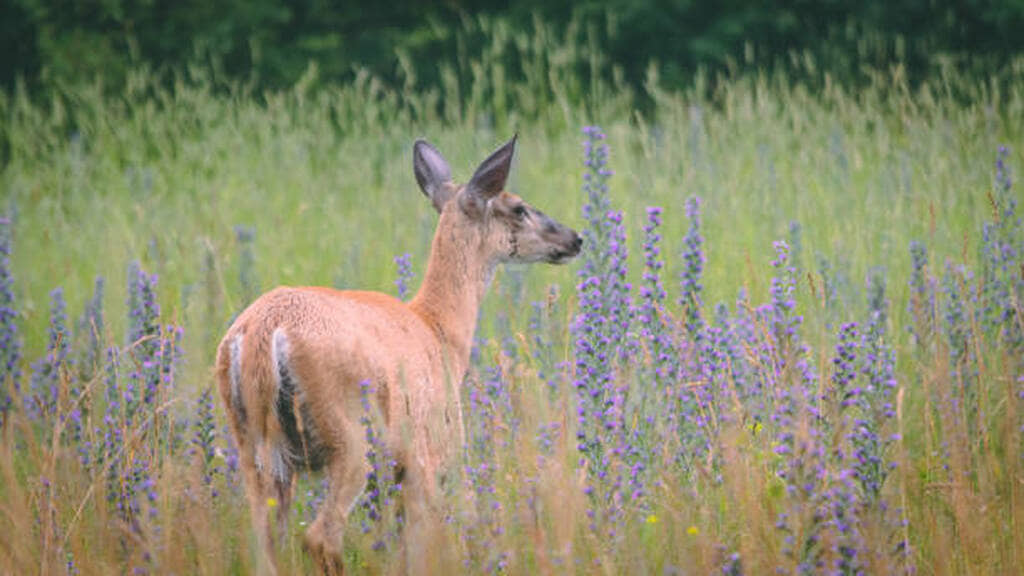
No, deer generally do not eat lavender because they dislike its strong fragrance, woody stems, and aromatic oils. However, lavender is considered deer resistant, not deer proof. When natural forage becomes scarce, especially during winter or in areas with high deer populations, hungry deer may browse lavender despite normally avoiding it.
For hunters and hunting property owners, understanding this behavior is more useful than simply knowing whether deer eat lavender. Plant selection influences habitat management, deer movement, and browsing pressure across a property. While lavender can help reduce browsing around cabins, walkways, and equipment storage areas, it should not be relied upon as a barrier that completely prevents deer from entering an area or reaching nearby food sources.
This guide explains why deer usually avoid lavender, the conditions that cause them to eat it, whether certain lavender varieties are more resistant than others, and whether planting lavender makes sense on a hunting property. You’ll also learn which plants deer prefer instead and practical habitat management strategies that reduce browsing pressure more effectively than relying on a single deer-resistant plant.
Do Deer Eat Lavender?
No, deer generally do not eat lavender because they prefer more nutritious and palatable plants. Lavender is widely recognized as a deer-resistant plant, but it does not guarantee protection from browsing. Hungry deer will eat almost any available vegetation when preferred food sources become limited.
The main reason is that deer are selective browsers. They naturally seek tender, moisture-rich plants that provide higher nutritional value, such as clover, soybeans, native forbs, and young tree shoots. Compared with these forage plants, lavender offers little nutritional reward. Its woody stems, narrow leaves, and concentrated aromatic oils make it a less attractive food source.
Although deer usually pass by established lavender plants, browsing can still occur under specific conditions. Severe winter weather, prolonged drought, overpopulated deer herds, or habitats with limited natural browse can force deer to expand their diet. Young lavender plants are also more vulnerable because their stems are softer and contain lower concentrations of aromatic compounds than mature plants.
For hunting property owners, the most important takeaway is that deer resistant does not mean deer proof. Lavender may reduce browsing around cabins, access trails, or equipment storage, but it should not be expected to stop deer from moving through the property or protect nearby food plots. If quality forage is scarce, deer will continue traveling through the area and may browse lavender as part of a broader survival strategy.
In practice, lavender should be viewed as one component of habitat management rather than a standalone deer deterrent. Maintaining abundant natural browse and productive food plots has a much greater influence on deer feeding behavior than planting any single deer-resistant species.
Why Do Deer Usually Avoid Lavender?
Deer usually avoid lavender because its strong aroma, woody texture, and low nutritional value make it less appealing than their preferred forage. Rather than eating every available plant, deer constantly choose vegetation that provides the highest nutritional return with the least effort.
The most significant deterrent is lavender’s high concentration of aromatic essential oils. These oils produce the distinctive scent that people enjoy, but they can overwhelm a deer’s highly developed sense of smell. When deer have access to more palatable vegetation, they typically ignore strongly scented herbs in favor of tender forbs, broadleaf plants, agricultural crops, or native browse.
Lavender’s physical structure also reduces browsing. As the plant matures, its stems become increasingly woody and its leaves become tougher than the soft, moisture-rich vegetation deer naturally prefer. This texture requires more effort to consume while providing relatively little nutritional benefit, making lavender a poor feeding choice under normal conditions.
Another reason is simple food preference. Deer are opportunistic browsers, but they are also efficient foragers. On a hunting property with abundant natural browse or productive food plots, they are far more likely to feed on clover, soybeans, brassicas, acorns, greenbrier, blackberry, or young hardwood shoots before considering lavender.
For hunters and land managers, this explains why lavender should be viewed as a low-preference plant rather than a deer repellent. It may experience little browsing when alternative forage is plentiful, but its effectiveness depends on overall habitat quality. Improving natural browse and maintaining reliable food sources will have a much greater impact on deer feeding behavior than relying on the scent of lavender alone.
When Will Deer Eat Lavender?
Deer will eat lavender when preferred food sources become scarce. Although lavender is one of the least attractive plants in a deer’s diet, hunger can outweigh its natural feeding preferences. The less forage available, the more likely deer are to browse plants they normally ignore.
Winter is the most common time this happens. As temperatures drop, green vegetation declines and many natural browse species become unavailable. Deer shift from selecting only their favorite foods to consuming whatever helps them meet their daily energy requirements. Under these conditions, lavender may be browsed alongside other low-preference plants, especially if it remains accessible above snow cover.
High deer populations can produce the same effect. When too many deer compete for limited forage, browsing pressure increases across the landscape. Preferred food sources are depleted first, forcing deer to expand their diet to include less desirable vegetation. This is why lavender damage is more common in areas where habitat quality cannot support the local deer density.
Young lavender plants are also at greater risk than established ones. New growth has softer stems, more tender leaves, and lower concentrations of aromatic oils than mature plants. While young lavender is still not a preferred food, it is easier for deer to browse, particularly during spring when nutritional demands are high after winter.
For hunting properties, browsing on lavender often signals a larger habitat issue rather than a problem with the plant itself. Frequent feeding on deer-resistant species may indicate limited natural browse, excessive deer density, drought, or insufficient food plot production. Improving habitat diversity and increasing the availability of preferred forage is a more effective long-term solution than replacing lavender with another ornamental plant.
Should Hunters Plant Lavender on Hunting Property?
Yes, hunters can plant lavender on a hunting property, but it should be used for landscaping rather than influencing deer behavior. Lavender is useful for reducing browsing around buildings and adding a hardy, low-maintenance plant to developed areas, but it does not improve habitat quality or attract deer.
Lavender works best around cabins, sheds, equipment storage areas, and parking spaces where ornamental plants often suffer from deer browsing. Because deer generally avoid its scent and woody foliage, lavender can require less protection than many flowering plants. Even so, occasional browsing is still possible during periods of food scarcity or unusually high deer pressure.
It is not recommended to plant lavender around food plots with the expectation of directing deer movement or protecting forage crops. Deer are attracted by the nutritional value and accessibility of food sources, not by the presence or absence of a single aromatic plant. A field planted with clover, soybeans, or brassicas will continue attracting deer regardless of nearby lavender if those crops provide the highest food value.
For habitat management, time and resources are better invested in practices that directly increase forage availability. Expanding native browse, maintaining diverse edge habitat, improving timber stands, and establishing productive food plots have a far greater impact on deer health and movement patterns than introducing deer-resistant ornamentals.
In short, lavender is a practical landscaping plant, not a habitat management tool. Hunters should plant it where they want an attractive, low-browsing ornamental around developed areas, while relying on proven habitat improvement strategies to support healthy deer populations and consistent hunting opportunities.
What Plants Do Deer Prefer Instead of Lavender?
Deer consistently choose plants that provide more nutrition, moisture, and digestible energy than lavender. As selective browsers, they naturally seek tender vegetation that supports growth, reproduction, and survival. When these preferred food sources are available, lavender is rarely part of their diet.
Clover is one of the most attractive forages for deer throughout much of the year. Both white and red clover contain high protein levels and remain highly digestible, making them a staple in many hunting food plots. Soybeans are another preferred food because their leaves are rich in protein during summer, while mature beans provide an important energy source later in the season.
Brassicas, including turnips, radishes, and forage rape, become increasingly valuable after the first hard frost. As starches convert to sugars, these crops become more palatable and help deer build fat reserves before winter. In agricultural regions, deer also feed heavily on standing corn when cover and grain are available together.
Native browse remains the foundation of a healthy deer’s diet on most hunting properties. Young hardwood shoots, blackberry briars, greenbrier, ragweed, pokeweed, and other broadleaf plants supply consistent nutrition throughout the growing season. A property with abundant native browse generally experiences less pressure on ornamental plants because deer have access to foods they naturally prefer.
For land managers, understanding these feeding preferences is more valuable than simply planting deer-resistant species. If the goal is to attract and hold deer, improving natural browse and establishing productive food plots will produce far better results than relying on ornamental plants. If the goal is to reduce browsing around developed areas, lavender can be a useful addition, but it should complement—not replace—a well-managed habitat with abundant natural forage.
What Other Plants Are Naturally Deer Resistant?
Lavender is only one of many plants that deer usually avoid. Other aromatic herbs and plants with coarse foliage are also considered deer resistant because they are less palatable than preferred forage. While none of these plants is completely deer proof, they experience significantly less browsing under normal conditions.
Rosemary is one of the most reliable deer-resistant herbs thanks to its strong fragrance, woody stems, and high concentration of essential oils. Sage shares similar characteristics, making it another low-preference food source for deer. Thyme, although lower-growing, also produces aromatic oils that discourage browsing when alternative forage is available.
Bee balm and Russian sage are commonly included in deer-resistant plantings for the same reason. Their scent, texture, and relatively low nutritional value make them less attractive than native browse or food plot crops. These plants are often suitable around cabins, entrances, and landscaped areas where minimizing browsing is more important than attracting wildlife.
For hunting properties, deer-resistant plants should be viewed as landscaping choices rather than habitat improvements. They can reduce damage to ornamental areas, but they do not replace productive food plots or healthy native vegetation. Hunters who want to improve deer habitat should prioritize plants that support nutrition, while using deer-resistant species only where protecting landscaping is the primary goal.
Read more: Do Deer Eat Elderberry Bushes? Hunter’s Guide
How Can You Reduce Deer Browsing on Hunting Properties?
The most effective way to reduce deer browsing is to increase the availability of preferred forage across the property. When deer have access to abundant natural food sources, they are less likely to feed on ornamental or low-preference plants such as lavender.
Maintaining diverse food plots is one of the most effective strategies. A combination of clover, soybeans, brassicas, cereal grains, and seasonal forage provides nutrition throughout the year and distributes feeding pressure across multiple food sources instead of concentrating it in one area.
Improving native habitat is equally important. Timber stand improvement, controlled burns where appropriate, edge feathering, and selective forest management encourage the growth of young woody browse and herbaceous plants that deer naturally prefer. These practices increase carrying capacity while improving bedding cover and overall habitat quality.
Monitoring deer density also plays a key role. In areas where the herd exceeds the habitat’s carrying capacity, browsing pressure increases on nearly every available plant, including species that deer usually avoid. Maintaining a balanced deer population through responsible harvest strategies helps preserve both natural vegetation and landscaped areas.
Ultimately, habitat management is far more effective than relying on any single deer-resistant plant. Lavender can help reduce browsing around developed portions of a hunting property, but long-term success comes from creating a landscape that consistently provides abundant, high-quality forage while keeping deer numbers in balance with available resources.
Is Lavender Worth Planting on Hunting Land?
Yes, lavender is worth planting on hunting land if your goal is to protect landscaped areas, but it is not an effective tool for managing deer behavior. Its natural resistance to browsing makes it a practical choice around cabins, equipment sheds, parking areas, and other developed parts of a property where ornamental plants are often damaged by deer.
Hunters should not expect lavender to repel deer from the property or influence travel patterns. Deer movement is primarily determined by food availability, bedding cover, water sources, hunting pressure, and seasonal breeding activity. A few lavender plants cannot compete with these factors or prevent deer from visiting productive food plots and natural feeding areas.
For long-term habitat improvement, resources are better invested in practices that directly support the nutritional needs of the herd. Establishing diverse food plots, improving native browse, managing timber for early successional habitat, and maintaining a balanced deer population provide measurable benefits for both deer health and hunting success. Lavender can complement these efforts by reducing browsing in landscaped areas, but it should never replace proven habitat management strategies.
The bottom line is simple: deer generally avoid lavender, but hungry deer may still eat it when food is limited. If you manage hunting land, treat lavender as a durable ornamental rather than a deer deterrent. Building high-quality habitat with abundant natural forage will always have a greater impact on deer behavior than relying on any single deer-resistant plant.