
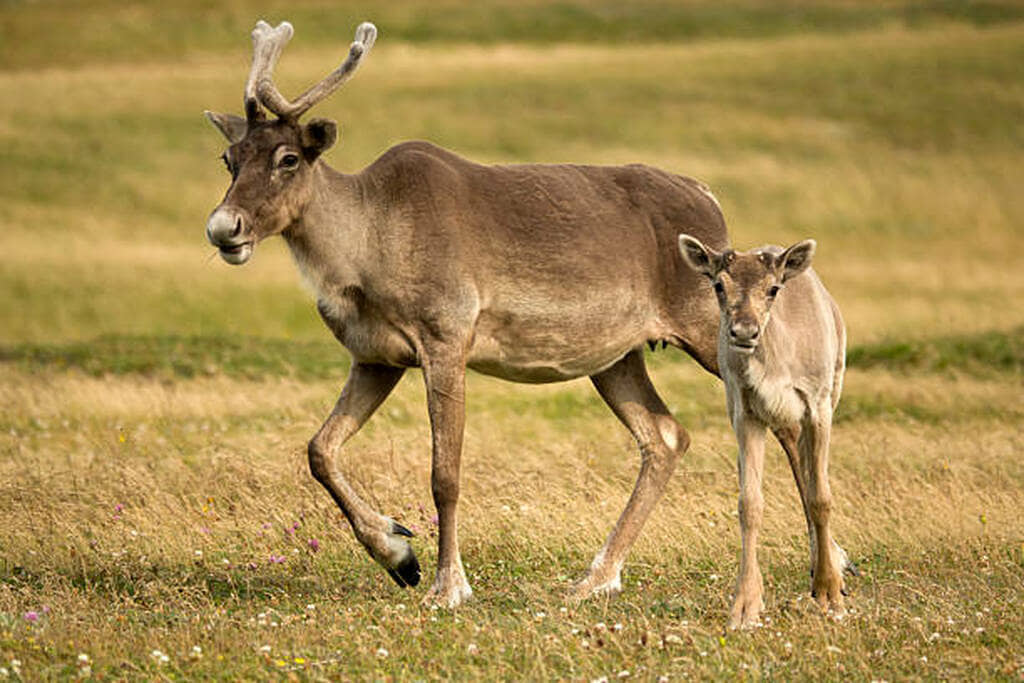
Yes, female reindeer have antlers. Unlike nearly every other deer species, most female reindeer (Rangifer tarandus) develop and carry antlers for much of the year. This unique characteristic often surprises hunters because antlers are typically associated with males in species such as white-tailed deer, elk, and moose. As a result, assuming that every antlered reindeer is a bull can lead to incorrect field identification and, in some hunting areas, potential legal or ethical issues.
Female reindeer grow antlers for a practical survival advantage rather than for attracting mates. Their antlers help them compete for limited food during the Arctic winter, defend feeding craters dug through snow, and maintain dominance over other herd members when resources are scarce. Pregnant females often retain their antlers until after calving, while adult males usually shed theirs shortly after the breeding season. This difference means that many antlered reindeer seen during winter are actually females.
This guide explains why female reindeer grow antlers, how their antler cycle differs from males, and how hunters can accurately distinguish bulls from cows in the field. It also covers common misconceptions, seasonal identification tips, and hunting considerations that improve both accuracy and responsible wildlife management.
Do Female Reindeer Have Antlers?
Yes, most female reindeer have antlers. Reindeer (Rangifer tarandus), known as caribou in North America, are the only deer species in which both males and females regularly grow antlers. In contrast, male-only antler growth is the norm for nearly all other members of the deer family, including white-tailed deer, mule deer, elk, and moose. This biological difference makes reindeer unique and is one of the most common sources of confusion for hunters and wildlife observers.
Female reindeer begin developing antlers during their first years of life, although their antlers are typically smaller, slimmer, and less branched than those of mature bulls. Like males, they grow a new set of antlers each year through a layer of nutrient-rich velvet that supplies blood to the developing bone. Once growth is complete, the velvet dries and is rubbed off, leaving the hardened antlers used throughout the season.
Although both sexes grow antlers, they do not carry them at the same time of year. Mature bulls usually shed their antlers shortly after the rut in late autumn or early winter because declining testosterone weakens the connection between the antler and the skull. Most adult females retain their antlers throughout the winter and shed them only after giving birth in spring. As a result, an antlered reindeer seen in midwinter is often more likely to be a pregnant cow than a mature bull.
For hunters, this distinction is important because antlers alone cannot reliably identify a reindeer’s sex. Seasonal timing, body characteristics, and herd behavior provide much more accurate clues than simply looking for antlers.
Why Do Female Reindeer Grow Antlers?
Female reindeer grow antlers to improve their chances of surviving the Arctic winter and producing healthy calves. Unlike bulls, which primarily use antlers to compete for mates during the breeding season, cows depend on their antlers to secure food when resources are limited. This difference explains why females keep their antlers for several months longer than males.
During winter, reindeer feed mainly on lichens buried beneath deep snow. Accessing this food requires digging feeding craters, and these areas often become the focus of competition within the herd. Females use their antlers to establish dominance and drive away weaker individuals, allowing them to conserve energy and maintain access to high-quality forage during the harshest months of the year.
This advantage becomes even more important for pregnant cows. Gestation continues throughout winter, increasing nutritional demands at a time when food is least abundant. By retaining their antlers until after calving, pregnant females gain a competitive edge that helps them protect feeding sites and obtain enough nutrients to support fetal development. Researchers believe this seasonal dominance contributes to higher calf survival rates by improving the mother’s physical condition before birth.
Antlers also help maintain the herd’s social hierarchy during winter. Dominant females generally spend less energy defending feeding areas because their antlers act as a visual signal of status, reducing the need for frequent physical confrontations. This behavior allows the herd to organize access to limited resources while minimizing unnecessary injuries during one of the most challenging periods of the year.
For hunters, understanding the biological purpose of female antlers provides valuable context when identifying animals in the field. Seeing an antlered reindeer during winter should not automatically lead to the conclusion that it is a bull. In many northern populations, it is the adult females—especially pregnant cows—that are most likely to still be carrying a full set of antlers.
When Do Female Reindeer Shed Their Antlers?
Female reindeer usually shed their antlers in late spring or early summer after giving birth. The exact timing varies depending on age, nutrition, geographic location, and whether the female is pregnant, but most adult cows retain their antlers throughout the winter. This is the opposite of mature bulls, which typically lose their antlers shortly after the rut in late autumn or early winter.
The difference is driven by hormone levels. In bulls, testosterone drops rapidly after the breeding season, causing the bone at the antler base to weaken until the antlers fall off. Pregnant females maintain hormonal conditions that allow them to keep their antlers through winter, giving them a competitive advantage when food is scarce. After calving, hormone levels change, and the antlers are shed before a new growth cycle begins.
Each year, reindeer repeat the same antler cycle. New antlers begin growing under a soft, blood-rich layer called velvet. During this stage, nutrients and oxygen support rapid bone development. Once the antlers reach full size, the velvet dries and is rubbed away, exposing the hardened bone used for dominance displays and competition. After shedding, a new cycle begins.
For hunters, understanding this seasonal pattern is more valuable than simply recognizing that females have antlers. During late autumn, many antlered reindeer are likely to be bulls because they have not yet shed their antlers. By midwinter, however, mature bulls have usually become antlerless, while many pregnant cows still carry a complete set. This seasonal shift explains why an antlered reindeer observed in January or February is often a female rather than a male.
Because shedding dates vary across regions and subspecies, hunters should treat antlers as only one piece of evidence. Combining seasonal timing with body shape, behavior, and herd composition leads to much more accurate identification.
How Can Hunters Tell Male and Female Reindeer Apart?
Hunters should identify male and female reindeer by evaluating multiple physical and behavioral characteristics instead of relying on antlers alone. Since both sexes grow antlers, especially during parts of the winter, using antlers as the only identification feature frequently results in mistakes.
Body size is usually the most reliable indicator. Mature bulls are substantially larger than cows, with heavier shoulders, thicker necks, broader chests, and a more muscular appearance. During the rut, males also develop swollen neck muscles and a bulkier front end that remains noticeable even after the breeding season. Adult females have a lighter body frame, narrower shoulders, and a more streamlined profile.
Antler structure provides useful clues but should always be interpreted alongside other characteristics. Bull antlers generally have thicker beams, wider spreads, and a greater number of tines because they are used in battles for breeding rights. Female antlers are typically slimmer, more upright, and less complex. However, there is considerable variation, and an older cow may carry larger antlers than a young bull, making antler size alone an unreliable measure.
Behavior offers another valuable clue. Outside the breeding season, mature bulls often spend time alone or in small bachelor groups, while females remain with calves and other cows in larger herds. During winter, observing a reindeer traveling with calves or consistently occupying feeding areas within a maternal group increases the likelihood that the animal is female.
Season should also influence identification. In early winter, both sexes may still have antlers. By midwinter, many mature bulls have already shed theirs, while pregnant cows continue carrying antlers until shortly after calving. Hunters who understand this seasonal pattern are less likely to misidentify an animal based solely on the presence of antlers.
Before harvesting any reindeer, hunters should also verify local regulations regarding sex-specific harvests and protected animals. Accurate identification supports ethical hunting, improves wildlife management, and helps maintain sustainable reindeer populations.
Do All Female Reindeer Grow Antlers?
Most female reindeer grow antlers, but not every individual develops the same antlers or keeps them for the same length of time. Antler development depends on several biological factors, including age, nutrition, genetics, reproductive status, and overall health. These differences explain why some cows have large, well-branched antlers while others carry much smaller or less developed antlers.
Age is one of the biggest influences on antler size. Young females typically produce short, simple antlers with few points because they are still allocating energy to body growth. As they reach full maturity, their antlers become longer and develop additional tines. In older animals, antler size may decline again as body condition deteriorates.
Nutrition also plays a major role because antlers are among the fastest-growing bone structures in mammals. Producing a new set of antlers each year requires significant amounts of calcium, phosphorus, protein, and energy. Females living in areas with abundant forage generally develop stronger antlers than those experiencing poor forage conditions or harsh winters. Illness, injury, or prolonged nutritional stress can also reduce antler size or delay development.
Genetics contributes to natural variation within reindeer populations. Some females consistently grow heavier, more complex antlers, while others produce relatively small antlers throughout their lives despite having similar access to food. These inherited differences are normal and should not be used as indicators of age or reproductive success on their own.
Hunters should also recognize that antler appearance varies among different reindeer and caribou populations. Wild herds, semi-domesticated reindeer, and geographically isolated populations may show noticeable differences in antler shape and body size due to environmental conditions and genetic diversity. For this reason, field identification should always consider the local population rather than relying on a single visual characteristic.
Are Female Reindeer the Only Female Deer With Antlers?
Yes, female reindeer are the only female deer that regularly grow antlers under natural conditions. This characteristic distinguishes reindeer from every other living member of the deer family (Cervidae) and is one of the species’ most remarkable evolutionary adaptations.
In species such as white-tailed deer, mule deer, elk, and moose, antlers are almost exclusively a male characteristic. Bulls and bucks grow antlers each year to compete for mates during the breeding season, while females remain naturally antlerless. Although rare hormonal abnormalities can cause individual females in these species to develop abnormal antlers, these cases are exceptional and are not considered part of the species’ normal biology.
Reindeer follow a different evolutionary strategy because both sexes benefit from carrying antlers. Males use them primarily during the autumn rut to establish breeding dominance, while females rely on them throughout winter to compete for food resources buried beneath snow. This dual function has allowed antlers to remain advantageous for both sexes instead of only males.
The Arctic environment also helps explain why this adaptation evolved. Winter forage is limited, and reindeer spend much of the season digging through snow to reach lichens and other vegetation. Females that retain antlers gain a competitive advantage at feeding sites, increasing their chances of maintaining body condition throughout pregnancy. In most other deer species, females do not face the same ecological pressures, so growing antlers would provide relatively little survival benefit while requiring substantial energy to produce.
For hunters, recognizing that female reindeer are unique among deer species helps avoid one of the most common field identification mistakes. Experience with white-tailed deer, elk, or moose can create the expectation that antlers always indicate a male animal. Reindeer are the notable exception, making seasonal behavior and body characteristics far more reliable than antlers alone when determining sex.
Read more: How Far Can a Deer Smell? Facts Every Hunter Should Know
Why Are Reindeer Different from Other Deer Species?
Reindeer are different from other deer species because both males and females grow antlers as an adaptation to life in the Arctic. While most deer use antlers primarily for breeding competition, reindeer have evolved to use them for two distinct purposes. Bulls rely on antlers during the autumn rut to compete for mates, whereas females use them throughout winter to defend feeding sites and secure enough nutrition for pregnancy.
The Arctic environment has shaped nearly every aspect of reindeer biology. Long winters, deep snow, and limited vegetation create intense competition for food. Reindeer survive by digging through snow to reach lichens, mosses, sedges, and other low-growing plants. Because these feeding areas are valuable but limited, dominant individuals gain a significant survival advantage. Female antlers allow cows to defend these feeding craters long after mature bulls have shed their antlers.
Reindeer also differ from other deer in their seasonal behavior and migration. Many wild populations travel hundreds of miles between summer and winter ranges, making them one of the world’s longest-distance terrestrial migrants. These migrations follow changing food availability and weather conditions, helping herds exploit seasonal resources across vast Arctic landscapes.
Another unique characteristic is their ability to thrive in extreme cold. Reindeer have dense insulating fur, wide hooves that function like snowshoes, specialized nasal passages that warm incoming air, and a metabolism adapted to long winters. Together, these adaptations allow them to survive in environments where few large mammals can live year-round.
For hunters, understanding these adaptations provides important context for field identification. Traits that appear unusual compared with other deer—such as females carrying antlers during winter—are normal responses to Arctic survival rather than biological exceptions.
What Hunting Regulations Should Hunters Know Before Harvesting a Reindeer?
Hunters should always confirm local hunting regulations before harvesting a reindeer because seasons, license requirements, and sex-specific harvest rules vary by region. Regulations differ between countries, states, provinces, and wildlife management units, making assumptions based on previous hunting experiences potentially illegal.
Many jurisdictions establish separate seasons or quotas to protect breeding populations and maintain sustainable herd numbers. Depending on local management objectives, hunters may be allowed to harvest only bulls, only cows, or animals of either sex under specific permit conditions. Some areas also restrict harvests during calving season or periods when herds are especially vulnerable.
Correct species and sex identification is an essential part of ethical hunting. Since female reindeer commonly retain their antlers during winter, hunters should avoid using antlers as the sole identification feature. Evaluating body size, herd composition, behavior, and seasonal timing reduces the risk of harvesting the wrong animal where sex-specific regulations apply.
Responsible hunting extends beyond following legal requirements. Ethical hunters respect harvest limits, recover all edible meat, minimize unnecessary suffering, and support wildlife conservation through accurate reporting and compliance with management programs. These practices help maintain healthy reindeer populations while preserving hunting opportunities for future generations.
Because regulations change periodically in response to population surveys and conservation goals, hunters should review the latest rules published by their local wildlife authority before every season rather than relying on information from previous years.
What Are the Most Common Misconceptions About Female Reindeer Antlers?
Several common misconceptions cause hunters and wildlife observers to misidentify female reindeer. Understanding these myths improves field identification and reduces confusion when observing reindeer throughout the year.
One of the most widespread misconceptions is that only male reindeer grow antlers. In reality, most adult females also grow antlers, making reindeer unique among living deer species.
Another common myth is that antlers always indicate the animal is male. While this assumption is accurate for most deer species, it does not apply to reindeer. During winter, a fully antlered animal is often more likely to be a pregnant female than a mature bull.
Some people also believe that all female reindeer have small antlers. Although female antlers are generally lighter and less branched than those of mature bulls, antler size varies considerably with age, genetics, nutrition, and health. An older cow may carry larger antlers than a young bull.
A fourth misconception is that male and female reindeer shed their antlers at the same time. Their antler cycles are intentionally different. Mature bulls usually lose their antlers shortly after the rut, while pregnant females retain theirs until after calving, allowing them to dominate feeding areas throughout winter.
Recognizing these misconceptions helps hunters make more informed decisions in the field and avoid relying on a single physical characteristic when identifying reindeer.
What Is the Key Fact Hunters Should Remember About Female Reindeer?
The most important fact hunters should remember is that antlers do not reliably identify the sex of a reindeer. Unlike other deer species, both males and females normally grow antlers, and seasonal shedding patterns often result in females carrying antlers long after mature bulls have lost theirs.
Successful field identification requires evaluating several characteristics together, including body size, neck thickness, shoulder shape, herd behavior, seasonal timing, and antler structure. No single feature provides a completely accurate answer, but combining multiple observations greatly improves identification accuracy.
Understanding why female reindeer grow and retain antlers also helps hunters appreciate the species’ unique adaptation to Arctic environments. Antlers are not simply ornamental structures—they play a critical role in winter survival, access to food, and reproductive success.
Before every hunt, hunters should review current wildlife regulations, confirm local harvest requirements, and avoid making decisions based solely on the presence of antlers. Applying both biological knowledge and ethical hunting practices supports sustainable wildlife management while improving safety and confidence in the field.