
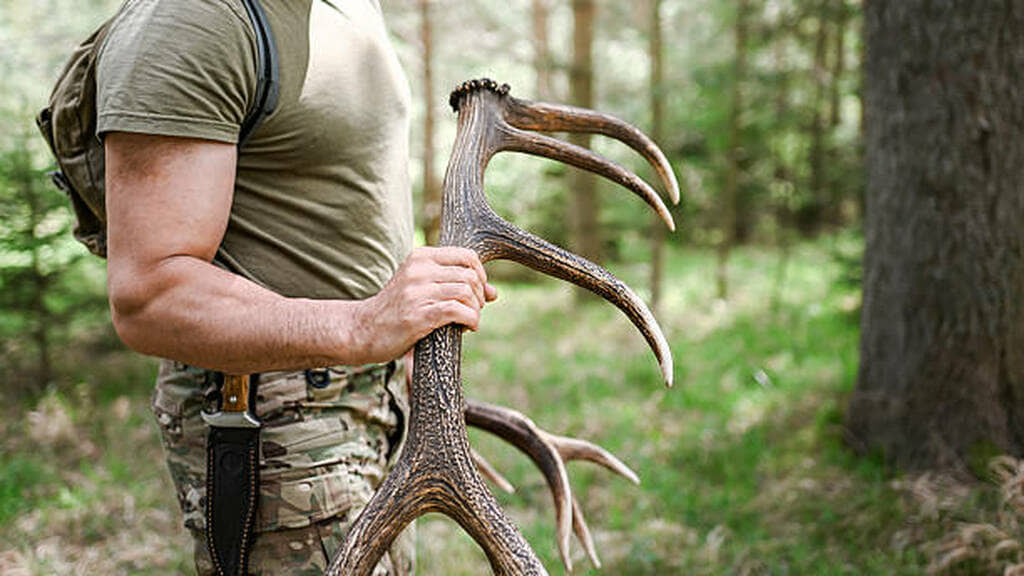
Finding deer sheds is one of the most effective ways to understand where bucks spend the winter and prepare for the next hunting season. Every shed antler marks a location that a buck used during late winter, giving hunters valuable clues about bedding areas, feeding patterns, travel routes, and overall habitat use. Unlike trail cameras that capture activity over a short period, shed antlers provide physical evidence that a buck survived the season and occupied a specific area.
Successful shed hunting depends on more than luck. Bucks drop their antlers in predictable conditions influenced by hormone changes, food availability, winter stress, weather, and daily movement patterns. Learning how these factors affect deer behavior allows hunters to narrow their search instead of covering miles of unproductive ground. Scouting aerial maps, recognizing high-probability habitat, and searching at the right time all increase the chances of finding more antlers.
This guide explains when deer shed their antlers, where to search first, how to identify productive habitat, and which strategies consistently produce better results. It also covers the common mistakes that reduce success and shows how shed hunting can improve preseason scouting, helping you locate mature bucks and make better decisions before the next deer season begins.
When Do Deer Shed Their Antlers?
Most white-tailed bucks shed their antlers between late December and March, with January through February being the peak period across much of North America. The exact timing depends on latitude, weather conditions, nutrition, age, and individual deer. Northern populations often shed earlier because harsh winters increase energy demands, while bucks in southern regions may carry antlers into late February or even March.
Bucks shed their antlers after a sharp decline in testosterone following the breeding season. During the rut, high testosterone levels keep the antlers attached to the skull. Once breeding ends and hormone levels fall, specialized cells at the base of each antler weaken the connection until the antler naturally detaches. This process is called antler casting and occurs without causing long-term injury to the deer.
Timing your search correctly improves success while reducing unnecessary disturbance. Entering winter habitat too early may push stressed deer away from critical food and bedding areas before they have shed both antlers. Waiting until most bucks have dropped their antlers allows hunters to recover more complete sets while minimizing pressure on deer during one of the most challenging periods of the year. In many areas, the most productive window begins several weeks after the peak shedding period, especially once snow starts melting and antlers become easier to spot.
Where Should You Look for Deer Sheds?
The highest-percentage locations are areas where bucks spend the most time conserving energy during late winter. Rather than searching randomly, focus on habitats that provide reliable food, security, and predictable daily travel. Mature bucks follow efficient movement patterns during winter, and those patterns often concentrate shed antlers in a relatively small area.
Winter feeding areas are usually the first places to search. Standing cornfields, soybean fields, food plots, oak flats with remaining acorns, and natural browse attract deer when natural forage is limited. Bucks often spend hours feeding before returning to nearby bedding cover, increasing the chance of dropping an antler as they walk or lower their heads to feed.
Bedding areas also produce a high number of sheds because deer spend much of the day resting there. Thick cover, cedar stands, brushy hillsides, CRP fields, and south-facing slopes provide shelter from cold winds while maximizing exposure to winter sunlight. Mature bucks typically choose bedding locations that balance security with easy access to nearby food sources.
Travel corridors connect bedding cover and feeding areas, making them another productive search zone. Well-used deer trails, creek crossings, ditch crossings, fence crossings, saddles, and natural funnels force deer to move through narrow routes every day. Small jumps, steep banks, or crawling under fences create sudden impacts that can loosen an antler already close to falling off.
Public land and private land require different strategies. On heavily hunted public properties, overlooked cover and difficult-to-access terrain often hold more sheds because fewer people search them. On private land, obtaining permission early and searching before other collectors arrive can significantly improve success while allowing you to build long-term knowledge of local buck movement.
How To Find Deer Sheds More Efficiently
Finding more shed antlers depends on following a systematic search strategy rather than covering as much ground as possible. Hunters who plan their route, understand deer movement, and thoroughly search high-probability areas consistently recover more antlers than those who rely on chance.
Start by studying aerial maps before entering the field. Mapping tools such as OnX Hunt, HuntStand, or Google Earth help identify winter food sources, thick bedding cover, travel corridors, creek crossings, and terrain features that naturally funnel deer movement. Mark these locations in advance to create an efficient search route instead of wandering through low-quality habitat.
Walk slowly once you begin searching. Most shed antlers blend naturally into leaves, grass, crop residue, and fallen branches because their color closely matches the surrounding vegetation. A slow pace allows your eyes to recognize the curved shape, tine pattern, and white antler base that often stand out before the entire antler becomes visible. Rushing through an area causes hunters to overlook antlers lying only a few feet away.
Search using a grid pattern whenever you reach a productive location. Divide large fields, bedding cover, or timber into manageable sections and walk parallel lines to ensure every area receives equal attention. This method reduces missed ground and makes it easier to relocate places that consistently produce sheds year after year.
Return to productive locations after changing conditions improve visibility. Melting snow, flattened grass, and early spring vegetation often expose antlers that were hidden during earlier searches. Recording every shed location with a GPS app also helps reveal patterns in winter deer movement, making future scouting trips more efficient and increasing confidence in where mature bucks spend the late season.
How Does Deer Behavior Affect Shed Locations?
Understanding deer behavior explains why some areas produce multiple shed antlers while others rarely hold any. During late winter, bucks shift their priorities from breeding to survival, conserving energy whenever possible until spring green-up begins.
Food becomes the primary driver of movement after the rut. Bucks that have lost significant body weight travel between dependable food sources and nearby bedding cover using the shortest and safest routes available. As a result, shed antlers are commonly found along these daily travel paths rather than scattered randomly throughout a property.
Winter weather also influences where bucks spend their time. During periods of deep snow, strong winds, or prolonged cold temperatures, deer often select south-facing slopes, dense conifer stands, brushy creek bottoms, and sheltered valleys that provide protection from harsh conditions. These habitats reduce energy expenditure while offering quick access to nearby food, making them reliable locations for shed hunting.
Human pressure can significantly change deer movement before antlers are dropped. Frequent scouting, recreational activity, and repeated disturbance may push mature bucks into isolated pockets of cover where they feel secure. Hunters willing to explore overlooked terrain, difficult access points, or remote bedding areas often discover sheds that other people miss because the deer have shifted away from heavily traveled locations.
Although every property is different, successful shed hunters focus on predictable patterns rather than isolated signs. Combining knowledge of winter habitat, daily movement, weather conditions, and previous shed locations creates a repeatable approach that produces consistent results season after season while also providing valuable insight for fall hunting strategies.
What Signs Tell You a Shed Is Nearby?
The best shed hunters look for evidence of concentrated deer activity before they start scanning for antlers. Areas with multiple signs of winter use are far more likely to hold shed antlers than locations with only occasional deer traffic.
Well-worn deer trails are one of the strongest indicators. During late winter, bucks often follow the same paths between bedding cover and feeding areas to conserve energy. Trails with fresh tracks, compacted soil, or flattened vegetation show regular movement and deserve a slow, methodical search, especially where the trail narrows at creek crossings, fence gaps, or natural funnels.
Bedding areas provide another important clue. Oval depressions in grass, leaves, or snow, along with clusters of droppings and nearby browse, indicate that deer have spent extended periods resting in the area. Since bucks repeatedly stand up and lie down in these locations, antlers that are already loose may detach without the impact of jumping or running.
Browse lines can also reveal productive winter habitat. Twigs with freshly clipped ends, heavily browsed shrubs, and young saplings with missing buds show that deer have been feeding consistently. When browse damage appears alongside fresh tracks and bedding cover, the area becomes a high-priority search zone.
Previous-season rubs and travel funnels should not be ignored. While rubs themselves do not indicate where bucks shed their antlers, they often occur within established travel routes used throughout the year. Combining rub lines with winter food sources and bedding cover helps identify the daily movement patterns that lead to higher shed concentrations.
What Equipment Helps You Find More Deer Sheds?
The right equipment improves efficiency, comfort, and navigation during long days in the field. While expensive gear is unnecessary, a few reliable tools can help hunters cover productive habitat more effectively and avoid searching the same ground twice.
A GPS mapping app is one of the most valuable tools for modern shed hunting. Applications such as OnX Hunt or HuntStand allow hunters to mark bedding areas, food sources, travel corridors, and every shed they recover. Over multiple seasons, these waypoints create a detailed record of winter deer movement that can also guide stand placement during hunting season.
Comfortable waterproof boots are equally important. Shed hunting often involves walking several miles through mud, melting snow, creek bottoms, crop fields, and uneven terrain. Boots with good ankle support and aggressive traction reduce fatigue and allow hunters to safely explore difficult areas where mature bucks often spend the winter.
A lightweight backpack keeps essential gear organized without slowing movement. Water, snacks, extra gloves, a first-aid kit, binoculars, and spare batteries for electronic devices are usually enough for a full day of searching. Carrying pruning shears can also help clear small branches that obstruct visibility without causing unnecessary damage to vegetation.
Some hunters also use trained shed dogs. A dog can locate antlers hidden under grass, brush, or light snow using its sense of smell, allowing hunters to recover sheds that might otherwise remain unnoticed. Dogs are especially effective in large fields and thick vegetation where visibility is limited.
What Mistakes Do Most Shed Hunters Make?
The most common mistake is searching too early. Entering winter habitat before most bucks have dropped both antlers often results in finding only a few sheds while unnecessarily disturbing deer that are already under significant nutritional stress. Waiting until the primary shedding period has passed increases success and reduces pressure on wildlife.
Walking too quickly is another frequent mistake. Many antlers are partially hidden beneath leaves, crop residue, or grass, making them difficult to detect at normal hiking speed. Slowing down and carefully scanning several yards ahead dramatically improves the likelihood of spotting the curved outline or bright antler base.
Many hunters also focus only on open fields because they are easier to search. Although feeding areas produce many sheds, mature bucks often spend more time in secure bedding cover during daylight. Thick brush, cedar stands, CRP grass, and secluded hillsides frequently hold antlers that remain untouched because fewer people are willing to search these difficult locations.
Ignoring previous discoveries limits long-term success. Every recovered shed represents valuable scouting information rather than simply a trophy to collect. Recording the exact location, nearby habitat features, weather conditions, and date of recovery helps identify recurring patterns that can be used to locate future sheds and understand how mature bucks use the property throughout the winter.
Read more: When Do Deer Shed Their Antlers? Seasonal Guide
How Does Shed Hunting Make You a Better Deer Hunter?
Shed hunting is more than an off-season activity—it is one of the most valuable scouting methods for understanding mature buck behavior. Every shed antler confirms that a buck survived the hunting season and reveals where it spent part of the winter. Unlike trail camera images, which capture a single moment, shed antlers provide physical evidence that can be analyzed alongside habitat features, food availability, and travel routes.
Recovering sheds also helps identify high-value hunting locations before the season opens. Bucks often return to the same core areas if food, cover, and security remain consistent. Finding multiple sheds in the same bedding area, travel corridor, or transition zone over several years can highlight locations worth prioritizing for trail camera placement, summer scouting, and stand selection.
Long-term shed records reveal patterns that are difficult to recognize in a single season. Marking every shed on a digital map allows hunters to compare annual movement, habitat changes, and weather conditions. These observations improve decisions about stand placement, access routes, and hunting pressure while reducing unnecessary scouting during the fall.
Perhaps most importantly, shed hunting develops habitat awareness. Spending time in late-winter cover helps hunters recognize subtle terrain features, overlooked bedding pockets, natural funnels, and food sources that are less visible during the growing season. This knowledge creates a more complete understanding of the property and often leads to better hunting opportunities when deer season returns.
What Rules and Ethics Should You Follow When Shed Hunting?
Responsible shed hunting protects deer during one of the most challenging periods of the year while ensuring continued access to quality hunting land. Although shed antlers can usually be collected legally, regulations vary by state or province, especially on public land and in areas that protect wintering wildlife.
Always check local regulations before searching. Some wildlife agencies restrict shed hunting during late winter or early spring to reduce disturbance to deer, elk, and other big game when food is limited and survival depends on conserving energy. Respecting seasonal closures helps minimize unnecessary stress on wildlife populations.
Obtain permission before entering private property. Even if neighboring land has historically allowed access, always confirm permission each season. Building positive relationships with landowners increases the likelihood of future access and demonstrates respect for their property.
Avoid pushing deer out of critical winter habitat. If you notice deer repeatedly fleeing from bedding cover, consider leaving the area and returning later after most antlers have been shed. The goal is to recover naturally dropped antlers—not to pressure wildlife during a vulnerable time.
Finally, follow Leave No Trace principles by packing out litter, avoiding unnecessary damage to vegetation, and respecting other outdoor users. Ethical shed hunting protects wildlife, preserves access opportunities, and supports a positive reputation for the hunting community.
Frequently Asked Questions
Can you find deer sheds in thick woods?
Yes. Thick bedding cover often holds shed antlers because mature bucks spend much of the winter resting in secure locations. Although visibility is lower than in open fields, these areas can produce excellent results when searched carefully.
Do bucks drop both antlers at the same time?
Not usually. A buck may shed one antler several hours or even several days before dropping the other. If you find a single antler, search the surrounding area thoroughly, as the matching antler is often located nearby along the same travel route or bedding area.
How long do shed antlers remain in the woods?
Shed antlers can remain for months or even years, but many disappear quickly due to rodents such as squirrels, mice, and porcupines, which chew antlers for calcium and other minerals. Weather, vegetation growth, and human activity can also make older sheds more difficult to find.
Does rain or snow affect shed hunting?
Yes. Fresh snow can temporarily hide antlers, while melting snow often exposes them and improves visibility. Light rain may also darken surrounding vegetation, helping the lighter-colored antler base stand out against the ground.
Can you legally sell shed antlers?
In many regions, naturally shed antlers can be sold legally. However, regulations differ by state, province, and country, particularly for antlers collected on public land or from protected species. Always verify local wildlife laws before collecting or selling shed antlers.