
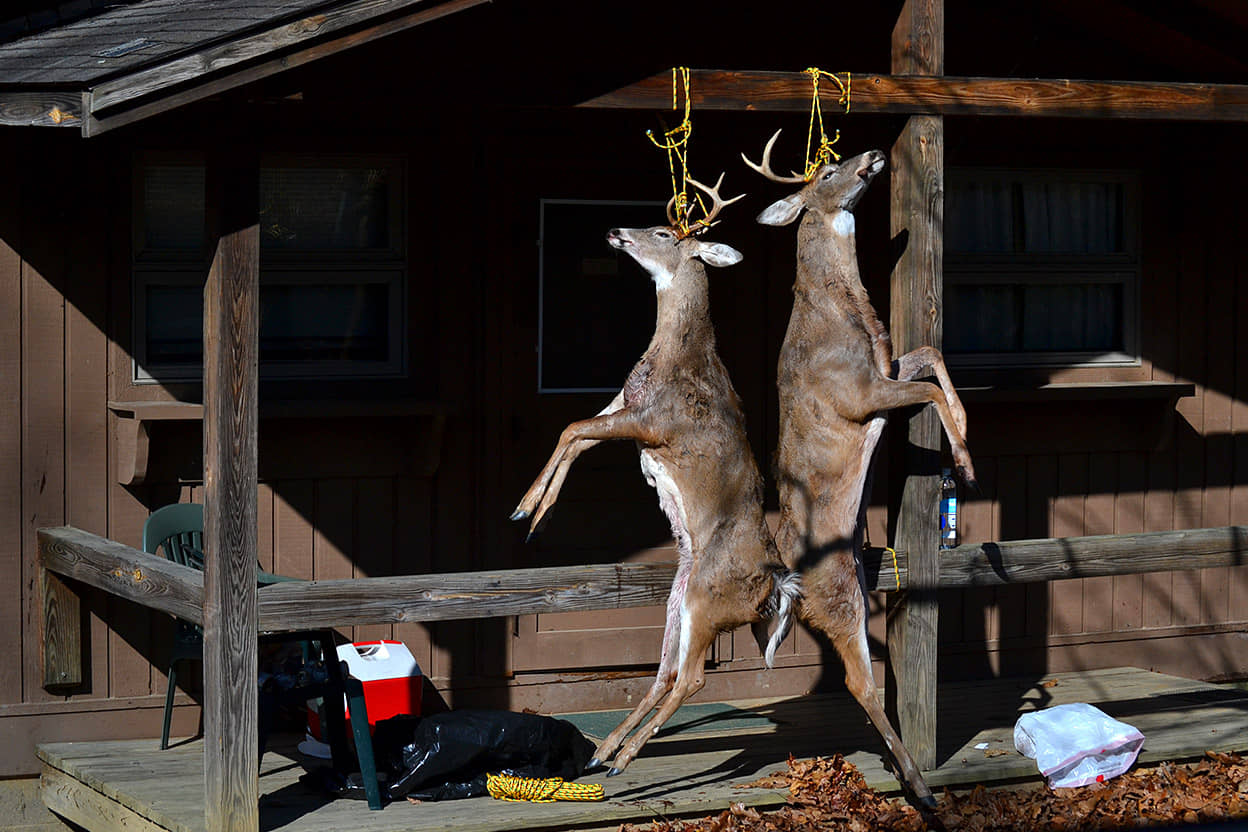
Most deer should be hung for 2 to 7 days before butchering when the air temperature stays between 34°F and 40°F (1–4°C). The ideal hanging time depends more on consistent temperature than on the number of days. Cooler conditions allow natural enzymes to tenderize the meat while limiting bacterial growth, whereas warm temperatures shorten—or eliminate—the safe aging window.
Hunters hang a deer to improve venison quality rather than simply delay processing. During the aging process, natural enzymes break down muscle fibers after rigor mortis, producing meat that is noticeably more tender and, when aged under proper conditions, develops a richer flavor. However, hanging a deer for longer does not always produce better results. Factors such as ambient temperature, air circulation, humidity, carcass condition, and whether the hide remains on all influence how long venison can be aged safely.
This guide explains how long to hang a deer under different temperature conditions, why temperature is the most important factor, and when hanging is no longer recommended. You’ll also learn whether to leave the hide on, how to recognize when a deer is ready to butcher, the warning signs of spoiled venison, and the common mistakes that reduce meat quality after a successful hunt. By understanding these factors, you can choose the safest aging period while producing clean, tender, and flavorful venison.
How long should you hang a deer before butchering?
Most deer should be hung for 2–7 days when temperatures remain between 34°F and 40°F (1–4°C). This temperature range allows natural enzymes to tenderize the meat while slowing bacterial growth. If daytime temperatures consistently exceed 40°F, the safe aging period becomes much shorter. When temperatures rise above 50°F (10°C), hanging a deer is generally not recommended because spoilage bacteria can multiply rapidly.
The table below provides a practical guideline for hanging deer under different temperature conditions.
| Ambient temperature | Recommended hanging time | Notes |
|---|---|---|
| Above 50°F (10°C) | Do not hang | Process immediately or refrigerate the carcass. |
| 45–50°F (7–10°C) | Up to 24 hours | Suitable only if temperatures remain stable and the carcass cools quickly. |
| 40–45°F (4–7°C) | 1–3 days | Provides limited aging while minimizing spoilage risk. |
| 34–40°F (1–4°C) | 2–7 days | Ideal range for most hunters seeking improved tenderness. |
| 32–34°F (0–1°C) | Up to 10 days | Aging continues slowly if the meat does not freeze. |
Temperature matters more than time because aging only occurs when enzymes remain active. After a deer is field dressed, residual body heat gradually escapes from the carcass. Once the meat cools to a safe temperature, naturally occurring enzymes begin breaking down muscle fibers that stiffened during rigor mortis. This process improves tenderness without compromising food safety, provided the carcass stays cool and dry.
Longer aging does not always produce better venison. A mature buck harvested during late-season cold weather may benefit from 5–7 days of hanging because its muscles contain more connective tissue. In contrast, a young doe or yearling often becomes sufficiently tender after just 2–3 days, making extended aging unnecessary. If weather conditions are warm or inconsistent, butchering sooner generally produces better-quality meat than attempting to maximize aging time.
Rather than following a fixed number of days, experienced hunters monitor the environment throughout the aging period. Consistent temperatures, good airflow, low humidity, and a clean carcass all contribute to safe aging. If any of these conditions cannot be maintained, processing the deer immediately is the safer choice and helps preserve venison quality.
Why do hunters hang a deer?
Hunters hang a deer to improve venison tenderness while allowing the carcass to cool under controlled conditions before butchering. The aging process gives naturally occurring enzymes time to break down muscle proteins that become rigid after death. When temperatures remain within the safe range, this process produces meat that is easier to cut, cooks more evenly, and has a more desirable texture.
The first stage of aging begins after rigor mortis, when the deer’s muscles stiffen as energy stores are depleted. Butchering a deer before rigor mortis has fully resolved can result in tougher cuts because the muscle fibers remain contracted. Hanging the carcass for several days allows rigor mortis to pass and gives proteolytic enzymes time to weaken the connective structure inside the muscles. This natural tenderization is one of the primary reasons experienced hunters age venison instead of processing it immediately.
Hanging also helps develop a cleaner, richer venison flavor. As moisture slowly evaporates from the surface, the meat becomes slightly drier while its flavor becomes more concentrated. At the same time, the outer layer forms a dry crust that protects the interior meat from contamination. This dried surface is typically trimmed away during butchering, exposing fresh, high-quality venison underneath.
However, aging is not mandatory for every deer. Young deer generally have finer muscle fibers and less connective tissue than mature bucks, so they are naturally tender and often require only a short aging period—or none at all if environmental conditions are unfavorable. Likewise, hunters who harvest deer during warm early-season weather should prioritize rapid cooling and food safety over extended hanging. Processing the carcass within 24 hours or transferring it to a refrigerated cooler is usually a better decision than risking bacterial growth.
The benefits of hanging depend entirely on proper conditions. Aging improves venison only when the carcass is clean, field dressed promptly, protected from insects, and kept between 34°F and 40°F (1–4°C). Without those conditions, additional hanging time increases the risk of spoilage instead of improving meat quality.
What temperature is best for hanging a deer?
The best temperature for hanging a deer is between 34°F and 40°F (1–4°C). This range creates the ideal balance between meat aging and food safety. It allows natural enzymes to tenderize the venison while slowing the growth of spoilage bacteria. Temperatures outside this range either shorten the safe aging window or stop the aging process altogether.
When temperatures stay between 34°F and 40°F, enzymes continue breaking down muscle proteins after rigor mortis, making the meat progressively more tender over several days. At the same time, the carcass remains cool enough to reduce bacterial activity. Good air circulation also helps dry the surface of the meat, forming a protective crust that is trimmed away during processing. For hunters with access to a walk-in cooler or game cooler, maintaining this temperature consistently produces the most reliable aging results.
Temperatures above 40°F require closer attention because bacteria multiply more quickly as the carcass warms. If daytime highs reach 45–50°F (7–10°C), deer should generally be aged for no more than 24–72 hours, depending on how quickly the carcass cooled after field dressing. Once temperatures exceed 50°F (10°C), hanging a deer outdoors is no longer considered a safe aging method. In these conditions, the carcass should be quartered and refrigerated or processed immediately to protect meat quality.
Temperatures below freezing create a different challenge. Although freezing prevents bacterial growth, it also slows or stops the enzymatic activity responsible for tenderizing venison. If the outer layers of the carcass freeze solid while the interior remains cold, aging becomes uneven and provides fewer benefits. Hunters facing overnight freezing temperatures often use an insulated cooler, unheated garage, or walk-in cooler to keep the carcass just above freezing rather than allowing it to freeze completely.
Temperature alone does not determine whether deer aging is successful. Humidity, airflow, and carcass cleanliness are equally important. Moderate humidity prevents excessive drying, while continuous airflow removes surface moisture that encourages bacterial growth. A deer that is field dressed promptly, kept clean, and protected from dirt, insects, and direct sunlight can be safely aged longer than one exposed to poor environmental conditions, even if both are kept at the same temperature.
For most hunters, the simplest rule is to monitor the thermometer instead of the calendar. If temperatures remain consistently between 34°F and 40°F with good airflow, hanging the deer for several days is usually safe. If temperatures fluctuate well above that range, processing the deer sooner is the better choice.
Should you skin a deer before hanging it?
You can hang a deer with or without the hide, but the best method depends on the weather, aging environment, and how long you plan to age the carcass. Leaving the hide on provides natural protection against dirt, insects, and excessive moisture loss, while removing the hide allows the carcass to cool faster. Hunters should choose the method that best matches the surrounding conditions rather than following a single rule.
Leaving the hide on is often the preferred option during late-season hunts when daytime temperatures remain between 34°F and 40°F (1–4°C). The hide acts as a protective barrier that shields the meat from dust, insects, and direct sunlight while reducing surface drying. This method also helps keep the outer meat cleaner during several days of aging. Once the aging period is complete, the hide can be removed before butchering, and any dried exterior meat can be trimmed away.
Skinning the deer immediately is usually the better choice when temperatures are warmer or when the carcass needs to cool quickly. Removing the hide allows trapped body heat to escape much faster, reducing the amount of time the meat remains in the temperature range where bacteria grow rapidly. This is especially important during early archery seasons or in southern regions where afternoon temperatures may exceed 50°F (10°C). Faster cooling improves food safety and helps preserve meat quality, even if the deer is processed within a day or two.
The decision also depends on where the deer will be aged. Hunters using a walk-in cooler often remove the hide before hanging because refrigeration, controlled humidity, and clean conditions minimize contamination while allowing efficient cooling. In contrast, hunters aging a deer outdoors in cold weather may leave the hide on until processing, provided the carcass is protected from insects and receives adequate airflow.
Regardless of which method you choose, proper field care has a greater impact on venison quality than the presence or absence of the hide. Field dress the deer as soon as possible, keep the carcass clean, avoid washing the meat unless necessary, and hang it where air can circulate freely. These practices reduce bacterial contamination and create the conditions needed for safe aging.
There is no universal answer to whether a deer should be skinned before hanging. If the priority is maximum cooling, remove the hide promptly. If temperatures are consistently cold and the carcass can be protected from contamination, leaving the hide on during the aging period is an effective option used by many experienced hunters.
Can you hang a deer in warm weather?
Hanging a deer in warm weather is only safe for a short period and should never replace proper refrigeration. Once ambient temperatures consistently exceed 40°F (4°C), the risk of bacterial growth increases rapidly. If temperatures reach 50°F (10°C) or higher, outdoor aging is generally not recommended because the carcass can spoil before the meat has time to tenderize.
Warm weather does not automatically ruin venison, but it significantly reduces the margin for error. After a successful harvest, a deer’s internal body temperature remains close to 101–103°F (38–39°C). Unless that heat is removed quickly, bacteria naturally present on the hide, digestive tract, and surrounding environment begin multiplying. The longer the meat stays above 40°F, the greater the chance of spoilage and reduced eating quality.
The most important step is to cool the carcass as quickly as possible. Field dress the deer immediately after recovery to remove the internal organs, allowing trapped heat to escape from the body cavity. If the outside temperature is still too warm, skin the deer soon after field dressing to accelerate cooling. Hanging the carcass in direct sunlight, inside a closed shed, or in the back of a truck slows heat loss and should be avoided.
If daytime temperatures are warm but nights fall below 40°F, some hunters choose to hang the deer overnight before processing it the next morning. This approach is only appropriate when the carcass has cooled completely, remains protected from insects, and temperatures stay within the safe range throughout the night. Once the morning temperature begins rising again, the deer should be butchered or moved into refrigerated storage instead of continuing to hang outdoors.
Hunters without access to a walk-in cooler can still preserve venison by quartering the carcass and placing the meat in coolers filled with ice. Elevating the meat above melted ice water with a rack or drain grate helps prevent prolonged contact with water while maintaining a safe temperature. Replace melted ice regularly and keep the cooler shaded to ensure the meat remains below 40°F until processing.
Early-season hunts often require a different strategy than late-season hunts. Rather than trying to age the entire carcass outdoors, many experienced hunters prioritize rapid cooling and immediate processing. Although this may slightly reduce the benefits of aging, it produces cleaner, safer venison than attempting to hang a deer in conditions that promote bacterial growth.
When warm weather limits safe hanging, protecting meat quality is more important than extending the aging period. A deer processed within 24 hours under proper cooling conditions will almost always produce better venison than one that is aged too long in unsafe temperatures.
How can you tell when a deer is ready to butcher?
A deer is ready to butcher when the carcass has cooled completely, rigor mortis has passed, and the meat shows signs of proper aging without any evidence of spoilage. Rather than relying on a fixed number of days, hunters should evaluate the condition of the carcass alongside the surrounding temperature. This approach produces more consistent results because weather conditions vary throughout the hunting season.
One of the first indicators is the surface of the meat. Properly aged venison develops a thin, dry outer layer known as a pellicle or dry crust. This layer may appear dark red or slightly brown due to moisture loss and exposure to air. The surface should feel dry rather than wet or sticky, and this outer layer is typically trimmed away during butchering to reveal fresh meat underneath.
The texture of the muscles also changes as aging progresses. Immediately after harvest, the carcass becomes stiff during rigor mortis, making the muscles firm and difficult to cut. Over the next several days, natural enzymes gradually break down muscle proteins, allowing the meat to relax. By the end of the aging period, the muscles should feel firm but no longer rigid, indicating that the tenderization process has largely finished.
Smell is another reliable indicator of meat quality. Fresh venison should have a mild, clean aroma similar to fresh red meat. A slightly earthy scent is normal, especially if the deer was hung with the hide on. However, strong sour, rotten, or ammonia-like odors indicate bacterial spoilage rather than successful aging. If these odors are present, the affected meat should not be consumed.
The appearance of the fat and connective tissue provides additional clues. Healthy deer fat is typically white or creamy white, while connective tissue should remain intact and free of slime. Small areas of dried tissue around exposed edges are expected after several days of hanging, but widespread discoloration, green patches, or excessive moisture are warning signs that the carcass has been stored under unsuitable conditions.
Before butchering, inspect the entire carcass one final time. Confirm that insects have not contaminated exposed meat, check for any damaged areas around the wound channel, and trim away bloodshot tissue or dried exterior surfaces. Performing this inspection before cutting the carcass into individual cuts helps ensure that only clean, high-quality venison enters the processing stage.
If the meat is cool, dry, clean, odor-free, and the muscles have relaxed after rigor mortis, the deer is ready to butcher. Waiting beyond this point rarely provides significant additional benefits and may increase the risk of excessive drying or spoilage if environmental conditions begin to change.
What are the signs that venison has spoiled?
Spoiled venison typically develops an unpleasant odor, a slimy surface, abnormal discoloration, or visible mold. These changes indicate that bacteria or fungi have multiplied beyond safe levels, making the meat unsafe to eat. While a properly aged deer may develop a dry, dark exterior, spoilage affects the meat differently and should never be ignored.
A strong, sour, rotten, or ammonia-like odor is the most reliable sign that venison has spoiled. Fresh venison has a mild, slightly earthy smell similar to fresh beef. During dry aging, the outside of the carcass may develop a stronger scent as moisture evaporates, but it should never smell putrid or offensive. If the odor remains unpleasant after trimming away the dried outer layer, the affected meat should be discarded.
A slimy or sticky texture is another clear warning sign. Properly aged venison should feel dry on the surface because moisture gradually evaporates during hanging. In contrast, spoilage bacteria produce a wet, tacky film that makes the meat feel slippery. This slime often appears together with unpleasant odors and signals that bacterial growth has reached unsafe levels.
Unusual discoloration also indicates that the meat may no longer be safe. Normal aging darkens the exterior of the carcass to a deep red or brown, while the freshly trimmed interior remains bright red. However, green, gray, black, or iridescent patches suggest bacterial or fungal contamination. These colors are especially concerning when accompanied by moisture, slime, or foul odors.
Visible mold growth should always be investigated carefully. Small patches of white, dry mold occasionally develop on the outside of professionally dry-aged beef under tightly controlled commercial conditions, but deer carcasses hung in garages, sheds, or outdoor environments should not develop mold. Green, blue, black, or fuzzy mold indicates contamination and is a strong reason to discard the affected portions. If mold has spread extensively across the carcass, disposing of the entire deer is the safest option.
Environmental conditions often explain why venison spoils. Delaying field dressing, hanging the carcass above 40°F (4°C), poor air circulation, excessive humidity, or allowing insects to reach exposed meat all accelerate bacterial growth. Even a deer that appears healthy at harvest can spoil quickly if it remains warm for several hours before cooling.
When evaluating venison, rely on multiple indicators rather than a single symptom. Clean, properly aged meat should be cool, dry, firm, and have a mild natural smell. If the carcass develops a foul odor, sticky surface, widespread discoloration, or visible mold, the safest decision is to discard the affected meat. The cost of losing venison is far less than the risk of consuming contaminated wild game.
Read more: How Much Does Deer Processing Cost? The Prices and What You Need to Know
What mistakes should you avoid when hanging a deer?
The most common mistakes when hanging a deer are allowing the carcass to stay too warm, delaying field dressing, providing poor airflow, and aging the meat longer than conditions allow. These errors increase the risk of bacterial growth and reduce venison quality, even if the deer was harvested cleanly. Avoiding a few critical mistakes has a greater impact on meat quality than extending the aging period.
1. Hanging a deer when temperatures are too high
Hanging a deer above 50°F (10°C) is the fastest way to spoil venison. Warm temperatures encourage bacteria to multiply long before the aging process can improve tenderness. Even if nights are cool, prolonged exposure to warm daytime temperatures can make the meat unsafe.
If daytime temperatures consistently exceed 40°F (4°C), move the carcass into refrigeration or process it as soon as possible instead of attempting a traditional hanging period.
2. Waiting too long to field dress the deer
Field dressing should begin as soon as possible after the deer is recovered. Internal organs retain heat and create an ideal environment for bacterial growth. Delaying gutting by several hours slows cooling and increases the likelihood of meat spoilage, especially during early hunting seasons.
Removing the organs promptly allows body heat to escape and is one of the most effective ways to preserve venison quality.
3. Hanging the carcass in a poorly ventilated area
Good airflow is essential for safe aging. A garage with stagnant air, a tightly enclosed shed, or the back of a pickup truck does not provide adequate ventilation. Without air movement, moisture remains on the carcass, creating favorable conditions for bacteria and mold.
Hang the deer where cool air can circulate freely around the entire carcass without exposing it to direct sunlight or rain.
4. Aging the deer for too long
More aging does not always produce better venison. Once the meat has completed the natural tenderization process, additional hanging mainly increases moisture loss and the risk of spoilage. Lean venison dries out more quickly than heavily marbled beef, making excessive aging less beneficial.
Most hunters achieve excellent results within 2–7 days under ideal temperatures. Extending the aging period should only be considered when environmental conditions remain consistently controlled.
5. Failing to protect the carcass from contamination
Insects, dirt, leaves, and animal hair can contaminate exposed meat during the aging process. Flies may lay eggs on unprotected carcasses, while dust and debris introduce bacteria that shorten shelf life.
Use clean game bags when appropriate, avoid placing the carcass directly on the ground, and handle the meat with clean knives and gloves throughout processing.
6. Ignoring signs of spoilage
Never assume a deer is safe simply because it has not exceeded the recommended number of aging days. Temperature fluctuations, poor sanitation, or delayed cooling can spoil a carcass much sooner than expected.
Inspect the meat daily for sour odors, slime, unusual discoloration, or mold. If multiple signs of spoilage are present, discard the affected meat rather than attempting to salvage it.
Proper deer aging is based on controlling conditions, not following a fixed schedule. Rapid field dressing, consistent temperatures, good airflow, and careful daily inspection are the practices that consistently produce safe, high-quality venison.
Frequently asked questions about hanging a deer
Is 24 hours long enough to hang a deer?
Yes, 24 hours can be enough if temperatures are warm or the deer is young. During this time, the carcass cools completely and rigor mortis begins to resolve. While a longer aging period generally produces more tender venison under ideal conditions, processing the deer after 24 hours is often the safest option when temperatures exceed 40°F (4°C).
Can you hang a deer with the hide on?
Yes, you can hang a deer with the hide on if temperatures remain between 34°F and 40°F (1–4°C). Leaving the hide on helps protect the carcass from dirt, insects, and excessive moisture loss during aging. However, in warm weather, removing the hide allows the carcass to cool more quickly and reduces the risk of spoilage.
Can you age venison in a refrigerator?
Yes, aging venison in a dedicated refrigerator or walk-in cooler is one of the safest methods. Keep the temperature between 34°F and 38°F (1–3°C), place the meat on a rack or hang it so air can circulate freely, and avoid storing it in sealed plastic bags during the aging period. Controlled refrigeration allows consistent aging regardless of outdoor weather.
Does rain affect a hanging deer?
Yes, rain can reduce meat quality if it wets the carcass repeatedly. Excess moisture encourages bacterial growth, slows surface drying, and increases the likelihood of contamination. If rain is expected, move the deer to a covered location with good airflow instead of leaving it exposed to the weather.
Can you freeze a deer before aging it?
No, freezing stops the natural enzymatic activity responsible for aging. Once the meat freezes, the tenderization process pauses until the venison is thawed. Hunters who want the benefits of aging should complete the aging period before freezing the meat for long-term storage.
Is it better to hang a buck longer than a doe?
Not necessarily. Mature bucks often benefit from a slightly longer aging period because they have more developed muscles and connective tissue. Young bucks, does, and yearlings are naturally more tender and usually require fewer days of aging to achieve excellent eating quality.
Should you rinse a deer after field dressing?
Only rinse the carcass when necessary. If dirt, stomach contents, or hair contaminate the meat, rinse the affected area with clean water and dry it immediately using clean paper towels or cloths. Excess moisture slows surface drying, so many hunters prefer wiping the carcass clean instead of washing it whenever possible.
Can you tell if venison is safe just by looking at it?
No. Visual inspection alone cannot confirm that venison is safe to eat. Always evaluate the meat’s smell, texture, color, and storage history together. Even meat that appears normal should be discarded if it has been held at unsafe temperatures for an extended period.