
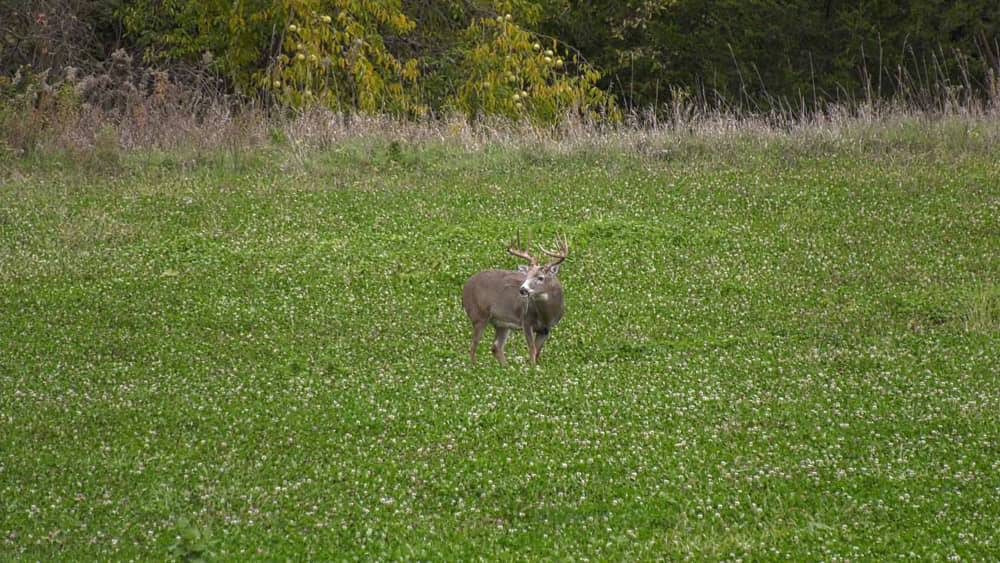
The best clover for deer depends on your hunting goals, local climate, soil conditions, and how much maintenance you’re willing to invest in your food plot. While Ladino clover is widely considered the best all-around option for attracting whitetails over multiple years, white clover, red clover, crimson clover, and arrowleaf clover each outperform the others under specific conditions. Choosing the right variety has a greater impact on deer attraction and forage longevity than simply planting the most popular seed.
Clover remains one of the most valuable forage plants for deer because it combines high protein content, excellent digestibility, and natural nitrogen fixation. A well-managed clover food plot can provide nutritious forage from early spring through fall, helping support antler development, fawn growth, body condition, and consistent deer activity throughout much of the hunting season. Unlike annual forages that require replanting every year, many clover varieties continue producing for several seasons with proper maintenance.
This guide compares the best clover varieties for deer based on deer preference, forage quality, persistence, soil adaptability, and hunting applications. You’ll also learn which clover performs best in different regions, when to plant it, how to establish a productive food plot, and which companion crops can improve year-round attraction. By the end, you’ll know exactly which clover variety matches your property and hunting objectives.
What Is the Best Clover for Deer?
Ladino clover is the best clover for most deer food plots because it produces abundant, protein-rich forage, tolerates frequent browsing, and remains productive for several years. It consistently attracts whitetails from spring through fall and performs well on properly managed hunting properties. However, no single clover variety is ideal for every location. Soil type, climate, rainfall, and management practices all influence which variety delivers the best results.
Ladino clover is a large-leaf variety of white clover that typically contains 20–30% crude protein during active growth. Its high palatability encourages repeated feeding, while its perennial growth habit reduces the need for annual replanting. When maintained with a soil pH between 6.0 and 7.0, regular mowing, and adequate phosphorus and potassium, a Ladino food plot can remain productive for three to five years.
White clover ranks just behind Ladino as one of the most reliable options for deer. It tolerates grazing pressure exceptionally well because it spreads through stolons, allowing damaged plants to recover quickly. This characteristic makes white clover an excellent choice for smaller hunting properties where deer density is high and food plots receive constant browsing.
Red clover offers a different advantage. It establishes faster than most perennial clovers and produces large amounts of forage during its first two growing seasons. Although it usually persists for only two to three years, its vigorous early growth makes it an excellent option for new food plots or locations where quick forage production is the priority.
Crimson clover and arrowleaf clover are valuable annual or reseeding options in warmer regions. Crimson clover provides attractive spring forage and matures earlier, while arrowleaf clover continues producing later into the season and tolerates heat better. These varieties are commonly included in southern food plot seed mixes to extend forage availability and diversify deer nutrition.
The table below summarizes which clover performs best for different hunting objectives.
| Hunting Goal | Best Clover |
|---|---|
| Best overall | Ladino clover |
| Heavy browsing pressure | White clover |
| Fast establishment | Red clover |
| Long-lasting perennial food plot | Ladino clover |
| Southern food plots | Arrowleaf clover |
| Cool-season annual forage | Crimson clover |
| Mixed-species food plots | White or Ladino clover |
Rather than asking which clover is universally the best, deer managers achieve better results by matching the variety to the property’s growing conditions and management goals. Selecting the right clover for your region creates a healthier food plot, provides more consistent forage throughout the year, and keeps deer returning to the property season after season.
How Do the Best Clover Varieties Compare for Deer?
Each clover variety offers different advantages for deer food plots. Some produce forage for several years, while others establish faster or perform better in specific climates. Comparing their growth habits, forage quality, and management requirements makes it easier to choose the right seed for your hunting property.
White Clover
White clover is the most dependable choice for heavily browsed food plots. It spreads through creeping stolons instead of relying solely on seed production, allowing the stand to recover quickly after repeated grazing. This growth habit helps maintain consistent forage even on properties with high deer densities.
White clover typically contains 20–30% crude protein during active growth and remains highly digestible throughout spring and fall. It grows best in well-drained soils with a pH of 6.0–7.0 and moderate moisture. Although it tolerates partial shade better than many other forage legumes, prolonged drought can reduce production.
White clover is ideal for small hunting properties where deer feed frequently because its ability to regenerate naturally reduces bare spots and extends the life of the food plot.
Ladino Clover
Ladino clover is the best overall variety for attracting deer throughout multiple growing seasons. As a large-leaf cultivar of white clover, it produces greater forage volume and larger leaves that deer readily consume.
Under proper management, Ladino can remain productive for three to five years. It responds well to periodic mowing, adequate phosphorus and potassium, and good weed control. Because it produces more biomass than standard white clover, it supports larger deer populations and provides a dependable food source from early spring through fall.
Ladino performs best in fertile soils with consistent moisture. It is less drought-tolerant than some annual species, but its exceptional forage production makes it the preferred choice for permanent food plots.
Red Clover
Red clover establishes faster than most perennial clovers and produces abundant forage during its first two years. It develops an upright growth habit that allows it to compete well with companion grasses and weeds during establishment.
Red clover generally contains 18–25% crude protein and grows well in soils that are slightly less fertile than those required by white clover. Its deeper root system also improves drought tolerance compared with Ladino.
Because red clover usually declines after two or three growing seasons, it is commonly used to renovate existing food plots or provide quick forage while slower perennial species become established.
Crimson Clover
Crimson clover is one of the best annual clovers for cool-season attraction. It germinates quickly, produces lush spring growth, and reseeds naturally under favorable conditions.
This variety is commonly planted in the Southeast because it performs well during mild winters and provides high-quality forage before many native plants begin growing. Although its growing season is shorter than perennial clovers, crimson clover fills an important nutritional gap during late winter and early spring.
Hunters often include crimson clover in seed blends with cereal rye or oats to increase forage diversity and extend seasonal attraction.
Arrowleaf Clover
Arrowleaf clover performs exceptionally well in warm climates and continues producing forage later into the growing season than many other annual clovers. Its upright growth and excellent heat tolerance make it a popular option across southern hunting properties.
Arrowleaf typically matures several weeks later than crimson clover, extending forage availability into early summer. This prolonged production helps support deer after spring green-up, when nutritional demands remain high for antler growth, lactating does, and developing fawns.
It grows best in well-drained soils with full sunlight and is frequently combined with perennial clovers to provide nearly year-round forage across southern food plots.
Overall, Ladino clover remains the best all-around option, while white clover excels under heavy browsing, red clover establishes the fastest, crimson clover fills the early-season forage gap, and arrowleaf clover performs best in warm southern climates. Choosing the right variety based on your property’s conditions consistently delivers better hunting results than relying on a single seed recommendation.
Which Clover Should You Plant for Your Hunting Property?
The best clover for your hunting property depends on four factors: climate, soil conditions, deer population, and management level. Matching the variety to these conditions produces more forage, reduces maintenance, and keeps deer visiting your food plot throughout the growing season.
Northern States
Ladino clover and white clover are the best choices for northern food plots. Both varieties thrive in cooler temperatures, survive freezing winters, and begin producing nutritious forage early in spring. Their perennial growth habit also reduces reseeding costs, making them ideal for long-term habitat improvement.
Properties in states such as Wisconsin, Michigan, Pennsylvania, New York, and Minnesota benefit from perennial clover stands because they provide consistent nutrition during the primary antler-growing season and recover well after winter dormancy.
Southern States
Arrowleaf clover and crimson clover perform best in southern climates. These varieties tolerate warmer temperatures, establish quickly during fall planting, and produce abundant forage throughout late winter and spring.
On many southern hunting properties, managers combine arrowleaf with Ladino or white clover to extend forage production across multiple seasons. As one variety declines, another reaches peak growth, creating a more consistent food source for deer.
Poor or Low-Fertility Soils
Red clover is often the best option for marginal soils. Its deeper root system allows it to access moisture and nutrients more effectively than shallow-rooted clovers, improving establishment where soil fertility is less than ideal.
Although a soil test and lime application are still recommended, red clover generally adapts better to challenging conditions than Ladino. It also establishes rapidly, helping stabilize new food plots before perennial species dominate.
Sandy Soils
White clover performs better than most clover varieties in sandy soils when adequate moisture is available. Sandy ground drains quickly, reducing water availability during dry periods. Incorporating organic matter and maintaining soil fertility improve stand longevity regardless of the variety selected.
In regions with prolonged summer drought, mixing clover with drought-tolerant companion crops such as chicory helps maintain forage production after rainfall decreases.
Low-Maintenance Food Plots
Ladino clover is the best choice for hunters who want a productive food plot with minimal annual replanting. Once established, it can remain productive for several years with routine mowing, weed control, and periodic fertilizer applications based on soil test results.
For larger hunting properties where maintenance visits are limited, perennial clover reduces both labor and seed costs while continuing to provide reliable forage year after year.
Quick Recommendation
Use this guide to match the right clover to your property:
| Property Condition | Recommended Clover |
|---|---|
| Best overall performance | Ladino clover |
| High deer pressure | White clover |
| Cold northern climate | Ladino or White clover |
| Warm southern climate | Arrowleaf or Crimson clover |
| Poor soil fertility | Red clover |
| Long-term perennial food plot | Ladino clover |
| Mixed food plot | White clover + Chicory |
| Fast establishment | Red clover |
Selecting the right variety for your property’s conditions consistently produces better results than choosing the same seed used on another hunting property. Climate, soil quality, and management practices determine how productive a clover food plot becomes over time.
When Should You Plant Clover for Deer?
The best time to plant clover for deer depends on your region, but early spring and late summer to early fall produce the most reliable establishment. Planting during these periods provides adequate soil moisture, moderate temperatures, and less competition from aggressive weeds.
Is Spring or Fall the Best Time to Plant Clover?
Both seasons produce successful food plots, but each serves a different purpose.
Spring planting works best in northern regions where harsh winters prevent fall establishment. As soil temperatures rise above approximately 50°F (10°C), clover germinates quickly and produces forage throughout the growing season. Spring planting also allows young plants to establish before the first hunting season.
Fall planting is preferred across much of the South. Cooler temperatures, frequent rainfall, and reduced weed competition improve germination and seedling survival. Deer also begin using newly established food plots as natural forage becomes less nutritious later in the year.
For many hunting properties, fall planting produces stronger perennial stands because young plants develop extensive root systems before summer heat arrives.
Can You Frost Seed Clover?
Frost seeding is one of the easiest and most cost-effective ways to establish or renovate a clover food plot. Instead of preparing a seedbed, seed is broadcast onto frozen ground during late winter. As the soil freezes at night and thaws during the day, the seed is naturally worked into the surface.
This method works particularly well with white and Ladino clover because their small seeds require minimal planting depth. Frost seeding also fills thin areas in existing food plots without disturbing established vegetation.
Although success depends on soil moisture and freeze-thaw cycles, frost seeding often eliminates the need for tillage while extending the productive life of perennial food plots.
How Do You Establish a Productive Clover Food Plot?
Successful clover food plots begin with soil preparation rather than seed selection. Even the highest-quality seed cannot reach its production potential if soil fertility, pH, and weed pressure are ignored.
Start with a soil test before planting. The results determine whether lime or fertilizer is needed and prevent unnecessary input costs. Most clover varieties perform best at a soil pH between 6.0 and 7.0. If pH falls below this range, nutrient availability declines and nitrogen-fixing bacteria become less effective, reducing plant growth.
After correcting soil pH, prepare a firm seedbed. Clover seed is extremely small and should be planted no deeper than ¼ inch (6 mm). Planting deeper than recommended is one of the most common reasons for poor germination because seedlings often lack enough energy to reach the soil surface.
Apply fertilizer according to the soil test rather than using a general-purpose blend. Clover produces its own nitrogen through symbiotic bacteria, so excessive nitrogen fertilizer usually encourages grass competition instead of improving clover growth. Phosphorus and potassium are generally the nutrients that most influence stand establishment and long-term productivity.
Weed management is equally important during the first growing season. Broadleaf weeds compete for sunlight, moisture, and nutrients, while aggressive grasses reduce clover coverage over time. Periodic mowing above the height of young clover suppresses many annual weeds without damaging established plants.
Once the food plot is established, maintenance becomes relatively simple. Annual soil testing, occasional lime applications, selective weed control, and mowing several times during the growing season help perennial clover remain productive for three to five years. Regular maintenance also keeps forage tender and encourages fresh growth that deer prefer to browse.
What Plants Grow Well With Clover in a Deer Food Plot?
The best companion plants for clover are chicory, cereal rye, oats, wheat, and brassicas because they improve seasonal forage availability, increase food plot diversity, and provide nutrition when clover growth naturally slows. Mixing species also reduces the risk of forage shortages caused by drought, heavy browsing, or seasonal dormancy.
Chicory is one of the most effective companion plants for perennial clover. Its deep taproot allows it to remain productive during dry summer conditions when shallow-rooted clovers produce less forage. Chicory also contains highly digestible minerals and remains attractive to deer well into early fall. A mixture of Ladino clover and chicory is widely used on permanent food plots because both species tolerate repeated browsing and require similar soil conditions.
Cereal rye provides dependable cool-season forage and protects young clover seedlings during establishment. Rye germinates quickly, suppresses weeds, and helps reduce soil erosion over winter. As temperatures increase in spring, clover becomes the dominant forage while rye naturally matures, creating a smooth seasonal transition.
Oats and wheat complement clover by producing highly palatable forage during fall and early winter. Their rapid establishment attracts deer soon after planting, while perennial clover develops its root system. This combination is particularly useful for new food plots where immediate attraction is just as important as long-term productivity.
Brassicas, including turnips, forage radishes, and rapeseed, provide a different nutritional profile than legumes. Deer often increase their use of brassicas after the first hard frost, when starches convert into sugars and improve palatability. Combining brassicas with perennial clover extends forage availability from early spring through late winter instead of relying on a single crop.
Rather than planting one forage species across an entire field, many experienced land managers establish diverse food plots. A mixture of perennial legumes, cool-season grains, and brassicas provides more consistent nutrition throughout the year while reducing the impact of weather, insects, or disease on any single crop.
Read more: Planting Apple Trees for Deer: Complete Hunting Property Guide
What Mistakes Reduce Clover Performance for Deer?
Most clover food plot failures result from management mistakes rather than poor seed quality. Correcting a few common problems significantly improves forage production, stand longevity, and deer attraction.
The most common mistake is ignoring soil pH. Clover struggles in acidic soils because essential nutrients become less available and nitrogen-fixing bacteria function less efficiently. Applying lime according to a soil test before planting often produces greater improvements than purchasing more expensive seed.
Another frequent mistake is planting seed too deep. Clover seed should remain close to the soil surface because its small energy reserve cannot support emergence from deeper planting depths. Broadcasting seed onto a firm seedbed or covering it lightly generally produces better germination than aggressive tillage.
Many hunters also choose the wrong clover variety for their climate. Planting a southern-adapted annual in a northern climate or selecting a moisture-loving perennial for drought-prone ground often results in poor stand persistence. Matching the variety to regional growing conditions consistently produces better long-term performance.
Poor weed management reduces clover production by increasing competition for sunlight, moisture, and nutrients. Annual mowing, selective herbicide applications where appropriate, and maintaining healthy clover density help prevent weeds from dominating the food plot.
Finally, overbrowsing can weaken even well-established food plots. Small plots located in areas with high deer densities may be grazed faster than plants can recover. Expanding planting acreage, rotating food plots, or establishing multiple feeding locations distributes browsing pressure more evenly and protects forage production.
Which Clover Is the Best Choice for Most Deer Hunters?
Ladino clover is the best overall clover for most deer hunters because it combines high forage production, excellent nutritional value, strong deer preference, and multi-year persistence. For hunters looking to establish a productive perennial food plot, it offers the best balance of performance and maintenance.
That said, the ideal choice depends on your property’s conditions and hunting objectives.
- Choose Ladino clover if you want maximum forage production and a long-lasting perennial food plot.
- Choose white clover if your property experiences heavy browsing pressure or contains smaller food plots that require excellent recovery.
- Choose red clover if rapid establishment and drought tolerance are your priorities.
- Choose crimson clover if you need an annual cool-season forage that establishes quickly and attracts deer during late winter and spring.
- Choose arrowleaf clover if you manage hunting land in the South and want forage production that extends into early summer.
For many hunting properties, the highest-performing food plots do not rely on a single clover variety. Combining perennial clovers with companion species such as chicory, cereal rye, oats, or brassicas creates a more resilient forage system that provides consistent nutrition across multiple seasons.
Ultimately, the best clover for deer is the one that matches your region, soil conditions, and management goals. When paired with proper soil preparation, regular maintenance, and a diversified planting strategy, the right clover can transform an average food plot into a dependable source of attraction that keeps whitetails returning throughout the hunting season.