
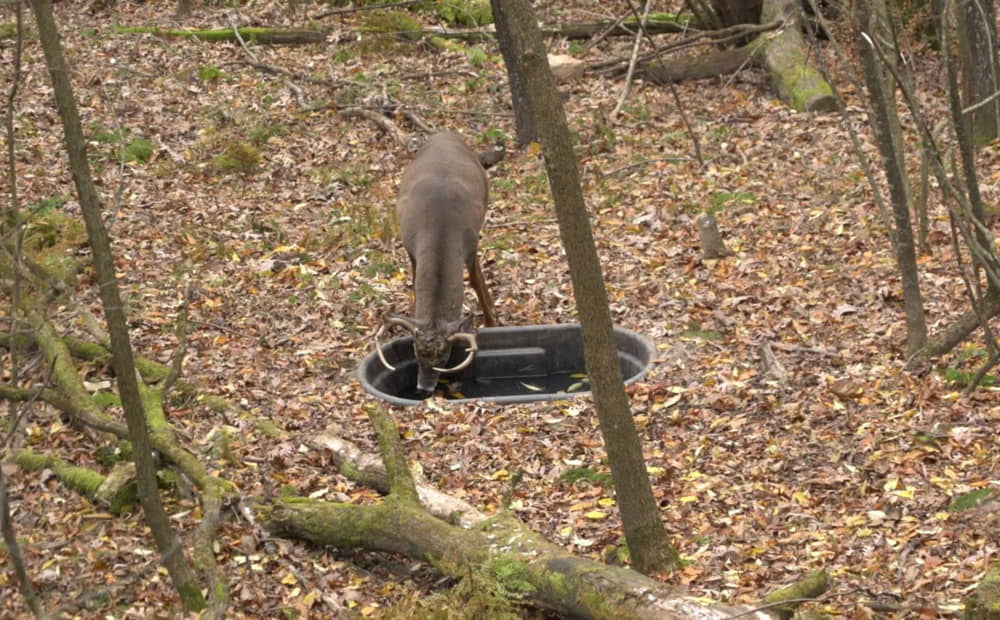
A deer watering hole creates a reliable water source that can increase deer activity on hunting property when natural water is limited. While deer obtain moisture from forage, they still visit open water regularly during hot weather, dry periods, early bow season, and after feeding. On properties without creeks, ponds, or wetlands, adding a small watering hole can influence daily travel patterns and encourage deer to spend more time within your hunting area.
Building a watering hole is not simply digging a hole and filling it with water. Its effectiveness depends on several factors, including location, size, water retention, surrounding cover, and the level of human disturbance. A well-placed watering hole near bedding cover or along an established travel corridor is far more likely to attract consistent deer traffic than one built in an open field or near frequently used access routes.
This guide explains how to make a watering hole for deer from start to finish. You’ll learn where to build it, what size works best, which materials improve water retention, and how to maintain a dependable water source throughout the hunting season. You’ll also discover the common mistakes that reduce deer use and how a watering hole fits into a broader hunting strategy alongside food plots, bedding areas, and trail camera monitoring.
Why should you build a watering hole for deer?
A deer watering hole increases the availability of one of the three essential habitat resources: water. While food and cover often receive the most attention from land managers, water can become the limiting factor that determines whether deer remain on a property or travel elsewhere. This is especially true on hunting properties that lack creeks, ponds, springs, or other dependable water sources.
Deer drink throughout the year, but water demand rises during hot weather, drought, early fall, and periods of increased activity. Lactating does require additional water to support milk production, while mature bucks often visit water after feeding or before returning to bedding cover. If natural water sources are scarce, a strategically placed watering hole can become part of a deer’s regular travel pattern rather than an occasional destination.
A watering hole provides the greatest benefit on small to medium-sized hunting properties where every movement pattern matters. Instead of relying solely on neighboring properties with better habitat, you can create another reason for deer to spend time within your property boundaries. When combined with quality bedding cover and productive food plots, a dependable water source helps complete the habitat requirements deer need in a relatively small area.
Although a watering hole can improve deer activity, it should not be viewed as a replacement for food or cover. Deer select habitat based on the combination of security, nutrition, and water. Properties that offer all three resources are generally more attractive than those that excel in only one area. For that reason, a watering hole works best as part of a broader habitat management strategy rather than as a standalone improvement.
Where is the best place to build a deer watering hole?
The best place to build a deer watering hole is along an established travel corridor, close to bedding cover, and far enough from frequent human activity that deer feel secure using it during daylight. Location has a greater impact on success than the size or appearance of the watering hole. Even a perfectly built pond will see limited use if deer must cross open ground or pass through heavily disturbed areas to reach it.
Place the watering hole within 100 to 300 yards of a bedding area whenever possible. Deer typically drink as they move between bedding and feeding locations, making travel corridors an ideal location. A watering hole positioned just inside timber, along the edge of thick cover, or where multiple game trails converge naturally fits into these daily movement patterns. In contrast, placing water in the middle of an open food plot often results in fewer daylight visits because deer generally avoid exposing themselves before dark.
The watering hole should complement—not compete with—other habitat improvements. If your property already has a productive food plot, position the water source nearby without placing it directly beside the feeding area. A distance of roughly 50 to 150 yards allows deer to move naturally between food, water, and cover while creating multiple opportunities for observation and hunting. This arrangement also reduces crowding around a single location and spreads deer activity across the property.
Terrain is equally important. Choose a naturally low area that collects runoff but is not prone to flooding after heavy rain. Soils with a high clay content retain water better than sandy or gravelly soils and may eliminate the need for a synthetic pond liner. If drainage is poor, installing a pond liner or compacting the soil during construction significantly improves long-term water retention.
Minimize human disturbance around the site. Avoid placing a watering hole beside vehicle trails, ATV routes, field entrances, or frequently used access paths. Once deer associate the area with regular human activity, they are more likely to shift their movement patterns or visit only after dark. Plan your access routes so you can check trail cameras or hunt the area without crossing the primary trails leading to the water.
Before digging, spend several weeks monitoring deer movement with trail cameras or by identifying fresh tracks, droppings, rubs, and well-worn trails. Building a watering hole where deer already travel is far more effective than expecting them to discover an entirely new location. The goal is to reinforce existing movement patterns rather than create them from scratch.
What size should a deer watering hole be?
A deer watering hole should be large enough to hold water through dry periods without becoming difficult or expensive to maintain. For most hunting properties, a watering hole measuring 8 to 12 feet in diameter and 18 to 30 inches deep provides an effective balance between water capacity, construction cost, and long-term maintenance. Larger ponds are usually unnecessary unless they are intended to support multiple wildlife species or serve as a permanent water source across a large property.
Depth is more important than overall size. A watering hole that is too shallow may dry out after several weeks without rainfall, while one that is too deep often develops steep banks that discourage deer from approaching the water. Maintaining a maximum depth of about 24 inches helps retain enough water during dry conditions while allowing easy access around the edges.
The shoreline should slope gradually rather than dropping off abruptly. A gentle slope of approximately 4:1 to 6:1 creates a natural entry point where deer can drink comfortably without stepping into deep mud or unstable ground. Gradual banks also reduce erosion after heavy rain and make the watering hole more accessible for fawns and other wildlife, including wild turkeys and small mammals.
The bottom of the watering hole should be shaped like a shallow bowl instead of a narrow pit. A broad basin increases the surface area available for rainfall collection and helps sediment settle more evenly over time. If you’re installing a pond liner, removing sharp rocks and roots before placement reduces the risk of punctures and extends the liner’s lifespan.
The ideal size also depends on the property itself. On a 20- to 40-acre hunting property, a single well-designed watering hole is often sufficient if natural water is limited. Larger properties may benefit from multiple smaller watering holes placed near different bedding areas or travel corridors instead of one large pond. This approach distributes deer activity across the property and creates more opportunities to intercept natural movement during the hunting season.
How do you make a watering hole for deer?
Building a deer watering hole involves selecting the right location, excavating a properly shaped basin, sealing it to retain water, and minimizing future disturbance. Most projects can be completed in a day using a compact tractor, skid steer, mini excavator, or by hand if the watering hole is relatively small.
1. Mark the location and outline
Start by marking the perimeter with landscape paint, stakes, or a garden hose. A circular or oval shape distributes water evenly and blends more naturally into the surrounding habitat. Before digging, remove brush, roots, rocks, and surface vegetation that could interfere with excavation or damage a pond liner.
Choose a location that already receives regular deer traffic rather than forcing deer to adopt a completely new route. Existing game trails, the edge of thick cover, and natural travel corridors are typically the best starting points.
2. Excavate the basin
Dig the watering hole to a depth of 18 to 30 inches, gradually sloping the sides toward the center. Avoid creating vertical walls or sharp drop-offs, as they increase erosion and make it more difficult for deer to approach the water safely.
As excavation progresses, compact the soil in layers to reduce future settling. If you encounter large rocks or tree roots, remove them to create a smooth basin.
3. Improve water retention
The best method depends on your soil type.
If your property contains heavy clay, compacting the soil is often enough to create a reasonably watertight basin. Moist clay particles bind together under pressure, slowing water loss through seepage.
If the soil is sandy, rocky, or highly porous, install an EPDM or heavy-duty pond liner before adding water. Covering the liner with several inches of native soil protects it from ultraviolet exposure, punctures, and hoof damage while helping the watering hole maintain a natural appearance.
4. Shape the shoreline
Create one or more gradual access points where deer can drink comfortably without stepping into deep water. A gently sloping shoreline also reduces erosion during heavy rainfall and allows smaller wildlife species to reach the water safely.
Leaving a few rocks, logs, or natural vegetation around the edge helps the watering hole blend into the surrounding habitat. The objective is to make the water source appear as natural as possible rather than resembling an excavated construction site.
5. Fill the watering hole
If rainfall is expected soon, the basin may fill naturally. Otherwise, use a water tank, portable pump, or nearby well to establish the initial water level. Filling the watering hole immediately allows surrounding soil to settle and helps identify any leaks before the hunting season begins.
Avoid adding chemicals, dyes, or unnecessary treatments. Clean water is sufficient, and deer generally adapt quickly to a new water source if the surrounding area remains undisturbed.
6. Leave the area alone
After construction, reduce human activity around the watering hole for several weeks. Frequent visits leave scent and disturbance that can delay deer from incorporating the new water source into their daily routine.
Instead of checking the site regularly, monitor activity with a trail camera positioned downwind and several yards away from the water. This approach lets you evaluate deer use while keeping pressure on the area to a minimum. Once deer begin visiting consistently, the watering hole becomes another predictable stop within their natural travel pattern.
How do you keep a deer watering hole full and attractive?
A deer watering hole stays effective when it holds clean water consistently and remains a low-disturbance area throughout the year. Even a well-built watering hole can lose its value if it dries out during summer, develops leaks, or is surrounded by constant human activity. Regular maintenance requires far less effort than rebuilding a failed water source.
Take advantage of natural rainfall whenever possible. Position the watering hole where surface runoff naturally collects, or create a shallow swale that directs rainwater into the basin. On sloped properties, small diversion channels can increase water collection without causing erosion. If prolonged dry weather is common in your area, periodically refill the watering hole using a portable water tank or pump before the water level drops too low.
Inspect the watering hole several times each year for signs of seepage. A noticeable decline in water level after moderate rainfall often indicates a leak rather than evaporation. Clay-bottom watering holes may only need additional compaction, while lined ponds should be checked for exposed edges, punctures, or damage caused by roots and burrowing animals. Repairing small leaks early prevents more expensive maintenance later.
Keep the shoreline accessible without making the area look overly maintained. Trim excessive brush that blocks deer access, but retain enough native vegetation to provide security cover. A watering hole surrounded by thick cover generally receives more daylight use than one exposed in the middle of an open field. Remove fallen branches only when they restrict access or trap sediment, as some natural debris helps the site blend into the surrounding habitat.
Sediment and decaying organic matter gradually reduce water capacity. Every one to three years, depending on site conditions, remove accumulated leaves, mud, and debris from the basin. This maintenance restores storage volume, improves water quality, and slows the growth of unwanted vegetation.
Limit visits to the watering hole during the hunting season. Every unnecessary trip leaves scent, creates noise, and increases the likelihood that mature bucks shift their movement to nighttime. Instead, use a trail camera with long battery life and high-capacity memory cards to monitor activity remotely. Checking the camera only when wind conditions are favorable or during other planned property work helps keep hunting pressure low.
Seasonal inspections are usually enough to keep the watering hole productive. Before summer, confirm that the basin still holds water. Before hunting season, clear minor obstructions and verify that cameras are functioning. After heavy storms, inspect the banks for erosion and repair any damage before it worsens. With consistent but minimal maintenance, a properly constructed watering hole can remain an effective attraction for many years.
Read more: Red Osier Dogwood for Deer: Is It Worth Planting?
What mistakes should you avoid when building a deer watering hole?
Most deer watering holes fail because of poor planning rather than poor construction. Choosing the wrong location, overlooking soil conditions, or creating excessive hunting pressure can prevent deer from using the water source, regardless of how well it is built. Avoiding the following mistakes will improve both the longevity of the watering hole and its value as a hunting asset.
Building in the wrong location
The most common mistake is placing the watering hole where it is convenient for people instead of where deer naturally travel. A watering hole beside a road, ATV trail, field entrance, or frequently used access route exposes deer to regular disturbance. Mature bucks are especially sensitive to human activity and often avoid these locations during daylight.
Instead, build the watering hole along existing travel corridors, near bedding cover, or in areas where trail camera data already confirms consistent deer movement.
Digging a basin that is too deep or too steep
A deep excavation may appear capable of holding more water, but it often creates steep banks that deer are reluctant to approach. Sharp drop-offs also increase erosion and make maintenance more difficult.
A broad basin with gradual slopes provides easier access, captures runoff more efficiently, and remains safer for fawns, wild turkeys, and other wildlife. In most situations, increasing the surface area is more beneficial than increasing the depth.
Ignoring soil conditions
Not every property naturally holds water. Sandy, gravelly, or highly porous soils allow water to seep into the ground, causing the watering hole to dry out quickly even after heavy rainfall.
Before excavating, evaluate the soil texture. If clay is limited, plan to install a pond liner or another sealing method during construction. Correcting drainage issues during the initial build is far easier than rebuilding the watering hole after it repeatedly fails to retain water.
Creating too much human pressure
Many landowners unintentionally educate deer by visiting the watering hole too often. Checking trail cameras every few days, refilling water unnecessarily, or scouting the site repeatedly leaves scent and noise that alter deer movement patterns.
Treat the watering hole like a productive stand location. Visit only when necessary, use favorable wind conditions, and combine maintenance with other property work to minimize disturbance.
Expecting immediate results
Some watering holes attract deer within days, while others require several weeks before becoming part of regular movement patterns. The timeline depends on existing travel routes, seasonal water availability, hunting pressure, and the abundance of natural water nearby.
Avoid making major changes if deer do not appear immediately. Give the area time to settle, allow vegetation to recover around the disturbed soil, and monitor activity with trail cameras before deciding whether adjustments are necessary.
Relying on a watering hole alone
A watering hole is only one component of quality deer habitat. Properties that provide dependable food, secure bedding cover, low hunting pressure, and reliable water consistently support more predictable deer movement than properties focusing on a single improvement.
For the best long-term results, integrate the watering hole into a habitat management plan that includes food plots, native cover improvements, stand access planning, and year-round deer management. When these elements work together, the watering hole becomes a natural stop within a deer’s daily routine rather than an isolated attraction.
Should you hunt over a deer watering hole?
Yes, hunting over a deer watering hole can be highly effective when water is limited, temperatures are high, and hunting pressure remains low. During early season and extended dry periods, deer often establish predictable routines between bedding areas, food sources, and dependable water. A well-positioned stand overlooking a watering hole can intercept these movements without requiring deer to travel into large agricultural fields after dark.
Early season is typically the most productive time to hunt a watering hole. Warm temperatures increase water consumption, while bucks are still following relatively consistent summer movement patterns. As autumn progresses and cooler weather arrives, the importance of water may decrease in regions where natural sources become more abundant, making food sources a stronger influence on deer movement.
Wind direction is critical when hunting a watering hole. Deer frequently approach from downwind to detect potential danger before exposing themselves. Position tree stands or ground blinds so your scent is carried away from the expected approach route rather than across the water source. An ideal setup also allows quiet entry and exit without crossing the primary trails that deer use to reach the water.
Avoid hunting the same watering hole repeatedly. Mature bucks quickly recognize changes in their environment and often become nocturnal after repeated disturbance. Rotating between multiple stand locations and limiting hunts to favorable wind conditions helps maintain the effectiveness of the site throughout the season.
Before planning hunts around a watering hole, review local hunting regulations. Some jurisdictions prohibit hunting over artificial water sources or have restrictions on habitat manipulation intended to attract game. Understanding state or provincial wildlife regulations ensures the watering hole remains both an effective and legal part of your hunting strategy.
How does a watering hole compare with food plots and mineral sites?
Each habitat improvement influences deer behavior differently. Rather than competing with one another, watering holes, food plots, and mineral sites are most effective when they work together to meet different needs throughout the year.
| Feature | Watering Hole | Food Plot | Mineral Site |
|---|---|---|---|
| Primary purpose | Provides dependable drinking water | Provides supplemental nutrition | Supplies minerals where legal |
| Seasonal effectiveness | Highest during hot weather and drought | Highest during active growing seasons and late-season feeding | Most active during spring and summer in many regions |
| Daily use | Can attract deer throughout the day, especially during warm weather | Primarily morning and evening feeding periods | Usually visited intermittently rather than daily |
| Construction cost | Moderate | Moderate to high | Low |
| Annual maintenance | Low to moderate | High | Low |
| Long-term value | High when natural water is limited | High when managed consistently | Varies depending on regulations and natural mineral availability |
A watering hole should not replace a food plot or mineral site because each addresses a different requirement within a deer’s habitat. Food plots improve nutrition, secure bedding areas provide safety, and watering holes ensure reliable hydration. When these resources are located within comfortable travel distance of one another, deer have fewer reasons to leave the property, increasing the likelihood of consistent daylight movement.
For many hunting properties, the most effective strategy is to connect these habitat improvements rather than concentrate them in a single location. For example, a food plot may serve as the primary feeding destination, while a watering hole is positioned 75 to 150 yards away along the route back to bedding cover. This layout encourages natural movement, creates multiple stand options for changing wind conditions, and reduces hunting pressure on any single location.
Instead of asking which habitat improvement is best, focus on which resource your property lacks. If abundant food and cover already exist but dependable water is scarce, adding a watering hole often delivers a greater improvement in deer activity than expanding another food plot. Identifying the limiting resource allows habitat improvements to produce measurable results rather than duplicating resources that deer already have access to.