
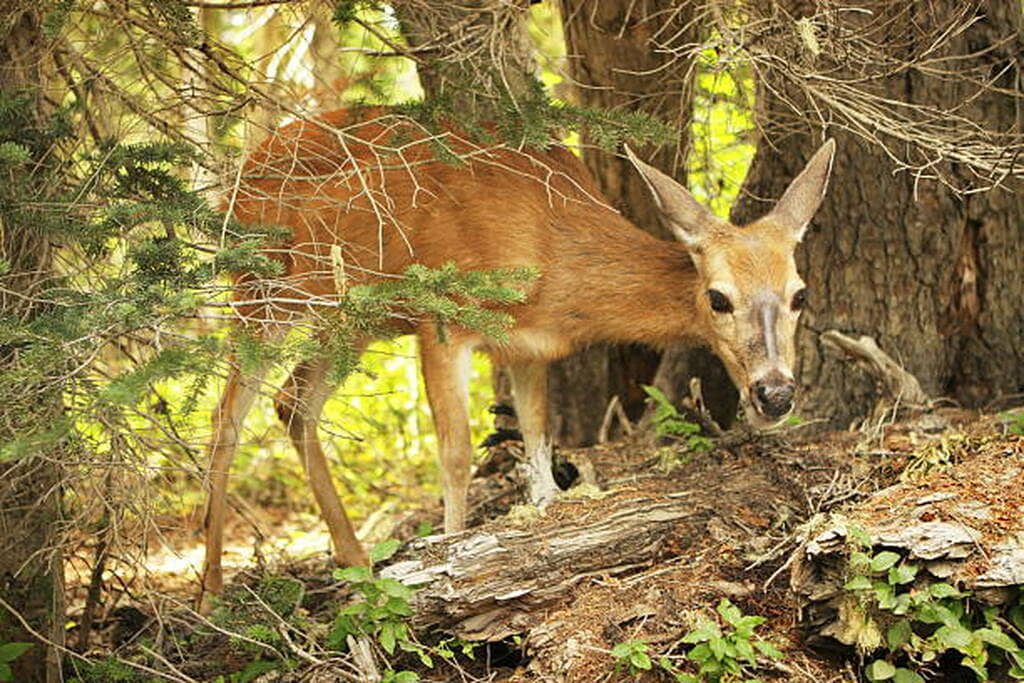
Deer rely on their sense of smell more than any other sense to survive. A deer can detect predators, locate food, identify other deer, and recognize changes in its environment through scent long before it sees or hears anything unusual. This highly developed olfactory system helps deer make critical decisions every day, from choosing safe bedding areas to avoiding danger and finding mates during the breeding season.
For hunters, wildlife enthusiasts, and land managers, understanding a deer’s sense of smell explains many behaviors that seem unpredictable. A deer may suddenly change direction, stop feeding, or leave an area without any visible threat because it has detected a scent carried by the wind. Environmental factors such as wind direction, humidity, temperature, and terrain all influence how scent travels and how effectively deer interpret odor cues.
This guide explains how a deer’s sense of smell works, how powerful it is compared with other animals, how far deer can detect human scent, and which odors attract or repel them. It also examines common myths about deer olfaction and explains why managing scent is often more important than remaining out of sight when observing or hunting deer.
How good is a deer’s sense of smell?
A deer’s sense of smell is its strongest sense and the primary way it detects danger. While deer also rely on hearing and vision, their nose provides the earliest warning of predators, humans, and other environmental changes. This ability allows deer to react before a threat comes within sight or hearing range, giving them a significant survival advantage.
The exceptional performance of a deer’s nose comes from its highly developed olfactory system. Inside the nasal cavity are millions of olfactory receptor cells that capture airborne scent molecules. Once these molecules bind to the receptors, signals travel to the brain, where they are identified and compared with previously recognized odors. This process enables deer to distinguish between food, predators, other deer, and unfamiliar scents in only a few seconds.
A deer’s sense of smell is significantly more sensitive than a human’s. Humans depend primarily on vision to understand their surroundings, whereas deer continuously gather scent information from the air. Even faint traces of human odor, vehicle exhaust, smoke, or predator scent can trigger an alert response when wind conditions carry those odors toward the animal.
Although deer have an excellent sense of smell, they are not equal to specialized scent-tracking animals such as bloodhounds. Dogs possess more olfactory receptors and are selectively bred for scent detection. However, deer do not need to outperform dogs to survive. Their olfactory ability is highly adapted for recognizing danger, locating food sources, identifying members of their herd, and detecting breeding opportunities within their natural habitat.
How does a deer’s sense of smell work?
A deer detects odors by collecting airborne scent molecules and processing them through a highly specialized olfactory system. Every breath carries microscopic odor particles into the nasal passages, where they come into contact with olfactory receptors located in the nasal epithelium. These receptors convert chemical signals into nerve impulses that the brain interprets as specific scents.
The olfactory system allows deer to recognize thousands of different odors and distinguish subtle differences between them. Instead of simply detecting that a human is nearby, a deer may identify whether the scent is fresh or old, whether multiple individuals are present, and whether the odor is mixed with vegetation, soil, or water. This continuous analysis helps deer assess risk before making decisions to feed, travel, or remain in cover.
Deer also use the vomeronasal organ, commonly called Jacobson’s organ, to detect scent signals that ordinary smelling cannot fully analyze. This sensory organ specializes in pheromones and other chemical cues produced by animals. During the rut, bucks rely on it to determine whether a doe is approaching estrus, while deer also use these chemical signals to recognize social status and reproductive condition.
One behavior commonly associated with this process is the flehmen response. A buck may curl its upper lip, raise its head, and pause after smelling urine or another scent left by a doe. This action directs scent molecules toward the vomeronasal organ, allowing the deer to gather more detailed chemical information than normal breathing alone can provide.
Because deer constantly sample the air, they frequently lift or lower their heads while walking, feeding, or standing still. This behavior helps them compare scent concentrations at different heights and determine the direction from which an odor is traveling. Combined with wind direction and terrain, this continuous scent sampling enables deer to build an accurate picture of their surroundings without relying solely on sight.
How far away can deer smell humans?
There is no fixed distance at which deer can smell humans because scent detection depends on environmental conditions rather than distance alone. Wind direction, wind speed, humidity, temperature, vegetation, and terrain all determine how far human odor travels. Under ideal conditions, a deer may detect human scent from several hundred yards away, while in swirling winds or dense cover, that distance can be significantly shorter.
Wind direction is the most important factor affecting scent detection. Air carries scent molecules downwind, allowing deer positioned below the wind to detect human odor long before they see movement. This is why experienced hunters pay close attention to wind forecasts and avoid approaching from a direction where their scent will drift into a deer’s bedding or feeding area.
Humidity and temperature also influence how scent behaves. Higher humidity helps scent molecules remain suspended in the air, making odors easier to detect. Cooler temperatures generally preserve scent longer than hot, dry conditions, while changing temperatures throughout the morning and evening create thermal currents that move scent uphill or downhill. In mountainous terrain, these thermals can carry human odor into areas where no direct wind is present.
Vegetation and landscape further affect scent movement. Thick forests, ravines, creek bottoms, and ridges interrupt airflow, creating swirling winds that move scent in unpredictable directions. Instead of traveling in a straight line, human odor may collect in low areas, circulate around hillsides, or suddenly shift with changing air pressure. As a result, deer often react to scent from locations hunters do not expect.
Because deer constantly sample the air while walking and feeding, they frequently detect humans before any visual or audible evidence appears. A deer may freeze, raise its head, or quietly move away after identifying an unfamiliar odor, making scent management one of the biggest challenges for anyone attempting to observe or hunt deer.
How do deer use smell to survive?
Deer use their sense of smell to locate food, avoid predators, communicate with other deer, and reproduce successfully. Every day, their olfactory system collects thousands of chemical signals that help them make decisions essential for survival.
Avoiding predators is the most important function of a deer’s sense of smell. Wolves, coyotes, bears, mountain lions, domestic dogs, and humans all leave scent trails as they move through an area. When deer detect these unfamiliar odors, they often become alert immediately, change travel routes, or leave the area altogether. Responding before making visual contact reduces the risk of predation.
Smell also helps deer locate reliable food sources throughout the year. Deer identify fresh vegetation, mast crops such as acorns, agricultural fields, fruits, and browse by detecting volatile compounds released from plants. During periods when food is scarce, this ability allows them to locate nutritious forage more efficiently while minimizing unnecessary movement that could expose them to predators.
Social communication depends heavily on scent as well. Deer possess several scent glands located on different parts of the body, including the tarsal, interdigital, forehead, and preorbital glands. These glands leave chemical messages that help other deer recognize individuals, identify travel routes, establish dominance, and maintain social relationships within local populations.
During the breeding season, smell becomes even more important. Bucks use airborne odors and urine left by does to determine reproductive status and locate females approaching estrus. By combining information from their olfactory receptors and the vomeronasal organ, bucks can identify breeding opportunities without relying solely on visual contact. This ability increases mating success while reducing unnecessary energy expenditure during the rut.
Even young fawns depend on scent shortly after birth. Does recognize their offspring through unique odor signatures, while fawns learn to identify their mother using a combination of scent and vocal cues. This recognition strengthens maternal bonds and helps young deer remain with the correct adult during the early stages of development.
Together, these functions make smell the foundation of nearly every important behavior a deer performs. Whether feeding, traveling, escaping danger, or reproducing, deer continually interpret scent information to understand their surroundings and respond to changing environmental conditions.
What scents attract deer?
Deer are attracted to scents that indicate food, mineral nutrition, or reproductive opportunities. Their response to an odor depends on the season, nutritional needs, and breeding cycle rather than the scent alone. An attractant that works during early fall may have little effect during winter or after the rut.
Natural food odors consistently attract deer because they signal a reliable energy source. The scent of acorns, apples, persimmons, corn, soybeans, clover, and fresh browse encourages deer to investigate feeding areas. As these foods ripen or become available, volatile organic compounds released by the plants are carried by the wind, allowing deer to locate them without relying on sight.
Mineral scents also attract deer, particularly during spring and summer when bucks are growing antlers and does are nursing fawns. Mineral licks containing calcium, phosphorus, sodium, and other trace elements help support bone development, milk production, and overall health. Deer often return to these locations repeatedly after recognizing the familiar scent.
During the rut, reproductive scents become the strongest attractants. Estrus urine released by receptive does contains pheromones that signal breeding readiness. Mature bucks use both their olfactory receptors and vomeronasal organ to analyze these chemical cues, allowing them to locate potential mates across large areas. Because breeding behavior overrides many normal movement patterns, rut scents are widely used in deer hunting where regulations permit.
Deer also respond to social scents left by other deer. Secretions from the forehead, tarsal, and interdigital glands communicate information about identity, dominance, travel routes, and recent activity. Bucks commonly investigate fresh scrapes because these scent-marking sites contain chemical signals deposited by multiple deer. Rather than attracting deer with a single odor, these scent hubs provide a continuous source of social information.
Although commercial deer attractants can increase curiosity, they cannot overcome poor habitat conditions. Deer remain more likely to visit locations that provide natural food, secure cover, water, and minimal human disturbance than areas that rely solely on artificial scents.
Read more: How to Attract Deer Without Baiting: Tips You Should Try
What smells scare deer away?
Human scent is the odor deer avoid most consistently. Clothing, skin, breath, vehicle interiors, fuel, food, cigarette smoke, and household products all leave scent molecules that deer can recognize as unfamiliar or potentially dangerous. Even when a hunter remains perfectly still, human odor carried by the wind can alert deer before any movement is detected.
Predator odors also trigger avoidance behavior. The scent of wolves, coyotes, bears, domestic dogs, and other natural predators signals an increased risk of attack. Deer often become cautious after detecting these odors by raising their heads, stopping to assess the environment, or quietly leaving the area. Their response varies depending on predator density and previous encounters within the local habitat.
Strong artificial fragrances frequently make deer suspicious because they do not match the natural environment. Perfume, cologne, scented deodorant, laundry detergent, shampoo, insect repellent, and heavily scented soaps produce chemical odors rarely found in the wild. While deer may not recognize every fragrance as a direct threat, unfamiliar scents often encourage them to investigate cautiously or avoid the area altogether.
Smoke and fuel odors can have similar effects. Exhaust fumes from vehicles or all-terrain vehicles, gasoline, diesel, campfire smoke, and industrial smells introduce foreign scent profiles into otherwise natural environments. Deer living near roads or farms may tolerate these odors better than deer in remote forests, but sudden or concentrated exposure still increases alertness.
Weather conditions influence how strongly deer react to these odors. Steady winds carry scent in predictable directions, allowing deer to identify the source more easily. Swirling winds spread odor across multiple directions, creating uncertainty and often making deer more cautious. For this reason, experienced hunters usually focus on wind management instead of relying entirely on scent-elimination products.
No scent-control product can completely eliminate human odor. Showering with scent-free soap, storing clothing properly, wearing clean boots, and reducing unnecessary contamination can lower the amount of detectable scent, but wind direction remains the single most important factor in preventing deer from detecting human presence.
Can hunters beat a deer’s sense of smell?
Hunters cannot eliminate their scent completely, but they can reduce their scent signature and manage how odor reaches deer. Success depends more on wind direction and hunting strategy than on any scent-control product. Even the best equipment cannot prevent deer from detecting human odor if the wind carries scent directly toward them.
The most effective strategy is to hunt with favorable wind conditions. Deer typically travel with the wind or use crosswinds to maximize their ability to detect danger. Setting up downwind of expected deer movement or positioning so that human scent drifts into areas deer are unlikely to enter greatly reduces the chance of detection. Many experienced hunters will change stand locations or postpone a hunt if the wind is unfavorable rather than risk educating mature bucks.
Reducing odor before entering the field further improves the odds of remaining undetected. Scent-free soaps, detergents, shampoos, and deodorants minimize artificial fragrances that deer can easily distinguish from natural woodland odors. Clothing stored in airtight containers away from household smells, fuel, pets, and food absorbs fewer foreign scents before a hunt.
Clean clothing does not eliminate human odor because the body continuously produces new scent molecules. Sweat, skin cells, and bacteria release volatile compounds throughout the day. As body temperature rises during walking or climbing into a tree stand, perspiration increases and additional odor escapes through clothing. This explains why scent-control sprays and activated-carbon garments can only reduce, rather than remove, detectable scent.
Entry and exit routes are often overlooked but play a major role in scent management. Walking across bedding areas, crossing active trails, or brushing against vegetation leaves ground scent that may remain for hours. Choosing routes that minimize contact with areas deer frequently use helps reduce the amount of human odor left behind.
Many hunters also make avoidable mistakes before reaching their hunting location. Pumping gasoline, eating strong-smelling foods, smoking, handling pets, or transporting hunting clothes inside a vehicle with food wrappers and fuel containers all contaminate clothing with unfamiliar odors. While no single mistake guarantees failure, combining several sources of scent increases the likelihood that deer will detect human presence.
Ultimately, successful hunters do not try to beat a deer’s nose. They learn to work around it by understanding wind, terrain, and deer behavior. Accepting that deer will always have a superior sense of smell leads to better decision-making and more consistent results in the field.
What myths about a deer’s sense of smell are false?
Many popular beliefs exaggerate or misunderstand how a deer’s sense of smell works. While deer possess an extraordinary ability to detect odors, their olfactory system still follows the laws of airflow, scent dispersion, and environmental conditions.
Myth 1: Deer can smell fear.
Deer cannot literally detect the emotion of fear. However, stress causes people to sweat more heavily and release additional body odors. A nervous hunter may unknowingly produce a stronger scent signature, making detection more likely. Deer respond to the odor itself rather than the emotional state behind it.
Myth 2: Rain completely washes away human scent.
Rain can reduce airborne scent temporarily by removing odor particles from the air and dampening vegetation. Once the rain stops, however, people continue producing scent through breathing, perspiration, and exposed skin. Wet conditions also increase humidity, which may help new scent molecules remain detectable.
Myth 3: Scent-proof clothing makes hunters invisible to deer.
No commercial clothing can create a completely scent-free hunter. Activated carbon, antimicrobial fabrics, and scent-blocking membranes may reduce odor escaping from clothing, but they cannot stop scent released from the face, hands, breath, or equipment. Wind direction remains the deciding factor.
Myth 4: Deer always flee immediately after smelling humans.
A deer’s reaction depends on the strength of the odor, previous experience, and perceived level of risk. Some deer leave instantly, while others stop to assess the situation, circle downwind for more information, or slowly move into thicker cover. Mature bucks generally respond more cautiously than younger deer because they have learned from previous encounters.
Myth 5: Strong cover scents can completely hide human odor.
Natural scents such as pine, earth, cedar, or acorn may reduce the contrast between human odor and the surrounding environment, but they do not erase human scent. Deer can often distinguish multiple odors simultaneously, allowing them to recognize human scent even when other fragrances are present.
Understanding the science behind these myths helps explain why deer sometimes detect hunters who appear perfectly concealed. Rather than relying on shortcuts or marketing claims, successful scent management combines realistic expectations with careful attention to wind, habitat, and movement patterns.
How does smell work together with a deer’s vision and hearing?
Deer survive by combining smell, hearing, and vision rather than relying on a single sense. Each sense provides different information, allowing deer to detect danger early and confirm potential threats before reacting.
Smell serves as the first line of defense because scent can travel long distances with the wind. A deer may detect a predator or human long before there is any visual movement or sound. Once an unfamiliar odor is identified, the animal becomes alert and begins gathering additional information.
Hearing provides the next layer of awareness. Deer have large, mobile ears that rotate independently to locate the direction of faint sounds such as footsteps, breaking branches, or approaching vehicles. Even if the source of the sound remains hidden by vegetation, deer can estimate its location and decide whether it poses a threat.
Vision confirms what smell and hearing have already suggested. Although deer do not see fine detail as well as humans, they excel at detecting movement, particularly during dawn and dusk when they are most active. This combination allows deer to identify danger even in dense forests or low-light conditions.
Because these senses complement one another, hunters who remain perfectly still but ignore wind direction are often detected through scent before a deer ever looks toward them. Likewise, controlling scent alone is rarely enough if unnecessary movement or loud noise reveals a person’s location.
Read more: Can Deer Smell Propane Heater?
How does a deer’s sense of smell change throughout the year?
A deer’s sense of smell remains highly sensitive throughout the year, but how it uses that ability changes with seasonal needs. Food availability, breeding activity, weather, and survival priorities all influence which scents receive the greatest attention.
During spring, deer focus on locating fresh vegetation after winter. Does also rely heavily on scent to identify and care for newborn fawns, while bucks increase mineral intake to support new antler growth.
In summer, abundant food reduces competition, but deer continue using scent to locate high-quality forage and avoid predators. Warm temperatures and dense vegetation can alter airflow, making wind direction less predictable in heavily wooded areas.
Autumn marks the beginning of increased feeding activity as deer prepare for winter. Natural food scents such as acorns, agricultural crops, and soft mast become major drivers of movement. Hunters often notice deer traveling consistently between bedding areas and productive food sources during this period.
During the rut, breeding odors dominate deer behavior. Bucks spend much of their time searching for estrous does by following scent trails, investigating scrapes, and checking urine left throughout their home range. Their dependence on smell reaches its highest level during this season.
In winter, survival becomes the priority once again. Deer use scent to locate remaining food sources while avoiding predators during periods of limited energy reserves. Conserving calories often leads to reduced movement, making efficient use of scent even more valuable.
Frequently Asked Questions
Can deer smell you in a tree stand?
Yes. Elevation does not eliminate human scent. Wind and thermal currents can carry odor upward, downward, or across the landscape. A tree stand reduces visual detection but does not make a hunter invisible to a deer’s nose.
How long does human scent stay in the woods?
The duration depends on temperature, humidity, sunlight, wind, and rainfall. Ground scent can remain detectable for several hours, while airborne scent disappears more quickly as air currents disperse odor molecules.
Can deer recognize individual people by scent?
Deer can distinguish between different scent profiles. While there is limited evidence that they identify specific individuals in the same way humans recognize faces, they can learn to associate recurring human odors with either danger or minimal disturbance.
What animals have a better sense of smell than deer?
Specialized scent-tracking animals, including bloodhounds and many working dog breeds, generally possess more olfactory receptors than deer. Predators such as wolves and bears also have exceptionally powerful noses adapted for locating prey over long distances.
Does washing with scent-free soap make you invisible to deer?
No. Scent-free hygiene products reduce artificial fragrances but cannot stop the body from producing natural human odor. Effective scent management requires combining odor reduction with proper wind management and careful movement in the field.