
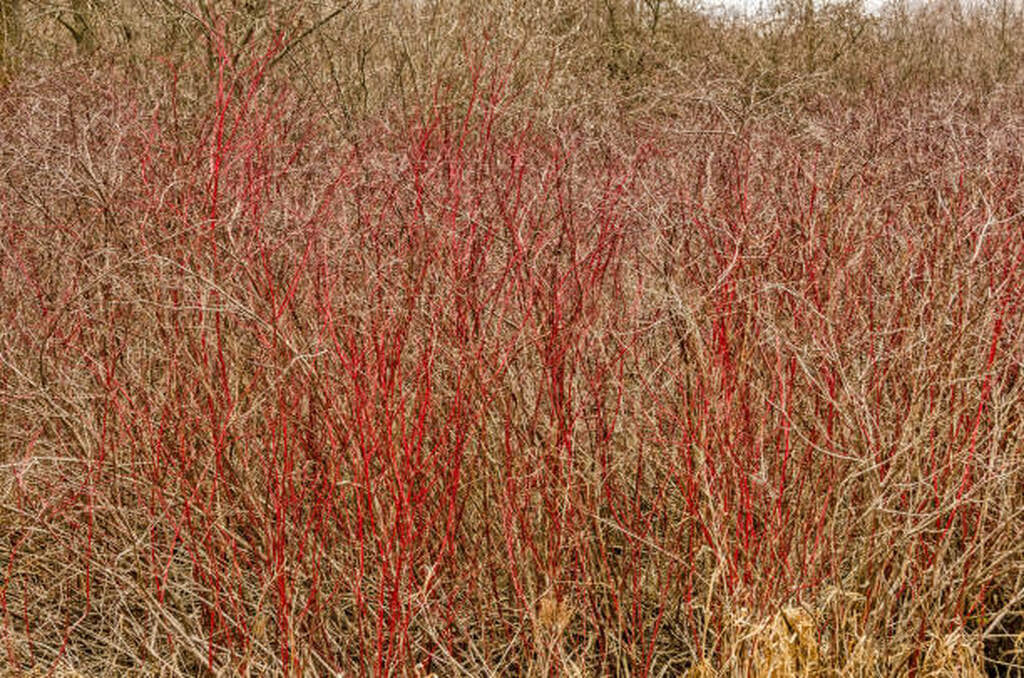
Red Osier Dogwood (Cornus sericea) is one of the best native shrubs for improving deer habitat, especially on hunting properties with moist soils, creek bottoms, or wetland edges. Whitetail deer browse its tender shoots, leaves, and buds throughout much of the year, with browsing pressure often increasing during fall and winter when other natural forage becomes less available. Its ability to recover after repeated browsing also makes it a long-term food source rather than a short-lived planting.
Beyond providing browse, Red Osier Dogwood improves the overall quality of a hunting property by creating dense cover, stabilizing riparian areas, and supporting a wider range of wildlife. When planted in the right locations, it helps increase habitat diversity and encourages deer to spend more time within the property instead of traveling elsewhere for food and cover. These characteristics make it a valuable component of many habitat improvement projects aimed at attracting and holding whitetails.
This guide explains whether Red Osier Dogwood is worth planting for deer, why whitetails prefer it, when they browse it most heavily, and how to establish healthy stands that remain productive for years. You’ll also learn the best planting locations, common mistakes to avoid, and which native shrubs pair well with Red Osier Dogwood to create a more complete and sustainable deer habitat.
Is Red Osier Dogwood Good for Deer?
Yes. Red Osier Dogwood is one of the most valuable native shrubs for deer habitat because it provides highly preferred browse, regenerates quickly after browsing, and contributes both food and cover throughout the year. Wildlife managers commonly include it in habitat restoration projects because it remains productive under moderate browsing pressure and performs well in moist sites where many other browse species struggle.
Unlike annual food plots that require frequent maintenance, Red Osier Dogwood is a perennial woody shrub that continues producing new shoots every growing season. These young shoots are the most attractive part of the plant to whitetails, allowing the shrub to serve as a reliable food source for many years when properly established.
Its habitat value extends beyond nutrition. Dense stems create security cover along creek bottoms, drainage ditches, wetlands, and field edges, encouraging deer to travel, bed, and feed within the same area. For hunting properties, this combination of browse and cover can increase the amount of time deer spend on the property while reducing their need to travel long distances in search of food.
Why Do Deer Prefer Red Osier Dogwood?
Whitetail deer prefer Red Osier Dogwood because its new growth is tender, highly digestible, and available during seasons when nutritious browse becomes limited. Deer primarily feed on young stems, buds, fresh leaves, and developing twigs, while older woody branches receive much less browsing due to their lower palatability.
Browse quality changes throughout the year. During spring and early summer, vigorous new shoots contain higher moisture and protein levels that support antler development, body growth, and lactation. As the growing season progresses into fall and winter, the shrub continues supplying buds and young twigs that remain accessible after many herbaceous plants have declined. This seasonal availability makes Red Osier Dogwood an important source of woody browse during periods when natural forage quality decreases.
Another reason the shrub ranks highly for deer is its ability to produce fresh growth after browsing or pruning. Moderate browsing stimulates new shoots that are often more attractive than older stems, allowing healthy stands to remain productive over multiple years. For habitat managers, this regenerative growth provides a sustainable browse source that complements food plots instead of replacing them, creating a more balanced and resilient deer habitat.
Where Should You Plant Red Osier Dogwood for Deer?
Plant Red Osier Dogwood in moist, sunny to partially shaded areas where it naturally thrives and where deer already travel or bed. The shrub performs best along creek bottoms, drainage corridors, wetland margins, pond edges, and low-lying fields with consistently moist soil. These locations provide ideal growing conditions while naturally funneling deer movement through the property.
On hunting land, planting Red Osier Dogwood near transition zones between bedding cover and feeding areas creates more opportunities for deer to browse without leaving secure cover. Establishing shrubs along field edges, logging roads, or travel corridors can also encourage predictable movement patterns, making these locations more effective for stand placement during hunting season.
Avoid planting the shrub on dry ridge tops, excessively sandy soils, or areas with poor moisture retention. Although established plants can tolerate short periods of drought, prolonged dry conditions reduce shoot production and limit the tender new growth that attracts deer. Choosing sites that match the shrub’s natural habitat results in faster establishment, healthier plants, and greater browse production over time.
How Do You Plant and Protect Red Osier Dogwood?
Successful establishment depends on planting healthy stock, controlling competition, and protecting young shrubs from excessive browsing during their first few growing seasons. Bare-root seedlings are the most common choice for large habitat projects because they are cost-effective and easy to plant, while dormant hardwood cuttings work well in consistently moist soils where rooting conditions are favorable.
Space plants approximately 5 to 8 feet apart when creating browse thickets or screening cover. This spacing allows shrubs to spread naturally while producing dense stems that provide both forage and security cover. Before planting, remove competing grasses and weeds within the planting area to reduce competition for sunlight, water, and nutrients. Applying mulch or using weed mats can further improve early survival and growth.
Young shrubs are highly attractive to deer, which can become a problem if browsing pressure is too intense. In areas with high deer densities, use tree tubes, wire cages, or temporary fencing until plants develop multiple stems and a stronger root system. Once established, Red Osier Dogwood responds well to moderate browsing and periodic coppicing, producing vigorous new shoots that remain highly palatable to deer. With proper site selection and early protection, a planting can remain productive for many years with relatively little maintenance.
How Does Red Osier Dogwood Improve Deer Habitat?
Red Osier Dogwood improves deer habitat by providing dependable browse, increasing cover, enhancing travel corridors, and supporting a more diverse plant community. Unlike annual food plots that produce forage for only part of the year, this native shrub contributes to habitat quality across multiple seasons and continues to improve as it matures.
One of its greatest strengths is its ability to produce abundant woody browse. Deer feed on the shrub’s buds, leaves, and young stems from spring through winter, making it an important natural food source when herbaceous vegetation declines. Because the plant readily produces vigorous new shoots after browsing, it can continue supplying nutritious forage year after year with minimal management.
The shrub also creates valuable security cover. Dense thickets reduce visibility, giving deer protected routes between bedding areas and feeding locations. Mature stands planted along creek bottoms, drainage ditches, and field edges often become natural travel corridors where deer feel more comfortable moving during daylight hours. For hunters, these predictable movement patterns can improve stand placement and increase opportunities during both archery and firearm seasons.
Red Osier Dogwood contributes to habitat quality beyond deer forage. Its extensive root system stabilizes streambanks, reduces soil erosion, and improves moisture retention in riparian areas. Healthier vegetation in these locations supports insects, birds, and small mammals, creating a more balanced ecosystem that benefits the entire property rather than a single game species.
What Other Native Shrubs Grow Well with Red Osier Dogwood?
Red Osier Dogwood performs best as part of a diverse shrub planting instead of a single-species stand. Combining several native browse species creates a longer period of food availability, increases habitat diversity, and reduces browsing pressure on individual plants.
Gray Dogwood is an excellent companion because it tolerates a wider range of soil conditions while producing nutritious browse and dense escape cover. Silky Dogwood thrives in similar moist environments as Red Osier Dogwood, making the two species a natural combination for wetlands, creek corridors, and low-lying habitat restoration projects.
American Plum adds another layer of habitat value by producing spring flowers, summer cover, and fruit that benefits both deer and other wildlife. Willow species establish quickly in moist soils and generate vigorous young shoots that deer readily browse, particularly during periods of active growth. Hazelnut contributes nutritious browse while producing mast that supports additional wildlife, and Crabapple provides seasonal fruit that attracts deer during late summer and fall.
Planting a mixture of shrubs with different growth habits and seasonal food value creates a more resilient habitat than relying on a single browse species. While Red Osier Dogwood may serve as the foundation of a browse planting in moist areas, combining it with other native shrubs ensures deer have access to food, cover, and travel corridors throughout the year. This diversity also improves the planting’s resistance to weather extremes, disease, and localized overbrowsing, resulting in a healthier and more sustainable hunting property.
Read more: Best Food Plot Mix for Deer in Fall
What Mistakes Should You Avoid When Planting Red Osier Dogwood?
Most Red Osier Dogwood planting failures result from poor site selection or inadequate protection during establishment rather than problems with the shrub itself. Avoiding a few common mistakes can significantly improve survival rates and long-term browse production.
Planting in dry, upland locations is the most common error. Red Osier Dogwood naturally grows in moist soils and riparian environments, so drought-prone sites often produce slow growth, sparse foliage, and fewer tender shoots for deer. If your property consists primarily of dry ground, other native browse shrubs may be better suited to those conditions.
Failing to control competing vegetation is another frequent problem. Tall grasses and aggressive weeds compete for moisture, sunlight, and nutrients, slowing establishment during the first two growing seasons. Maintaining a weed-free planting zone gives young shrubs the resources needed to develop strong root systems and vigorous annual growth.
Many landowners also underestimate browsing pressure. Young Red Osier Dogwood is highly attractive to deer, and heavy browsing can repeatedly remove new shoots before the shrub becomes established. In areas with high deer densities, temporary cages, tree tubes, or exclusion fencing are often necessary until plants develop multiple stems capable of withstanding regular browsing.
Another mistake is expecting immediate habitat improvement. While deer may sample young plants soon after establishment, it typically takes several growing seasons before shrubs produce enough browse and cover to make a noticeable difference across the property. Viewing Red Osier Dogwood as a long-term habitat investment leads to more realistic expectations and better management decisions.
Is Red Osier Dogwood Worth Planting for a Hunting Property?
Yes. Red Osier Dogwood is one of the best native shrubs to plant on hunting properties with suitable growing conditions because it provides long-lasting browse, improves habitat structure, and requires relatively little maintenance after establishment. Its greatest value comes from combining multiple habitat functions in a single species rather than serving as only a food source.
For properties with creek bottoms, wetlands, drainage corridors, or other consistently moist areas, Red Osier Dogwood can become a dependable source of browse from spring through winter while creating dense cover that encourages deer to travel and remain within secure habitat. The shrub’s ability to regenerate after browsing allows it to continue producing nutritious new growth for many years, making it a sustainable addition to long-term habitat management plans.
However, it should not be viewed as a replacement for every other habitat improvement practice. The most productive hunting properties combine woody browse, native grasses, mast-producing trees, and seasonal food plots to provide year-round nutrition and cover. Within that broader strategy, Red Osier Dogwood serves as one of the most reliable native shrubs for increasing browse diversity and strengthening natural habitat.
If your property includes moist soils and your goal is to attract, hold, and support healthier whitetail deer, planting Red Osier Dogwood is a worthwhile investment. When combined with complementary native shrubs and sound habitat management practices, it can continue benefiting both deer and other wildlife for decades while requiring far less maintenance than many annual food plot systems.