
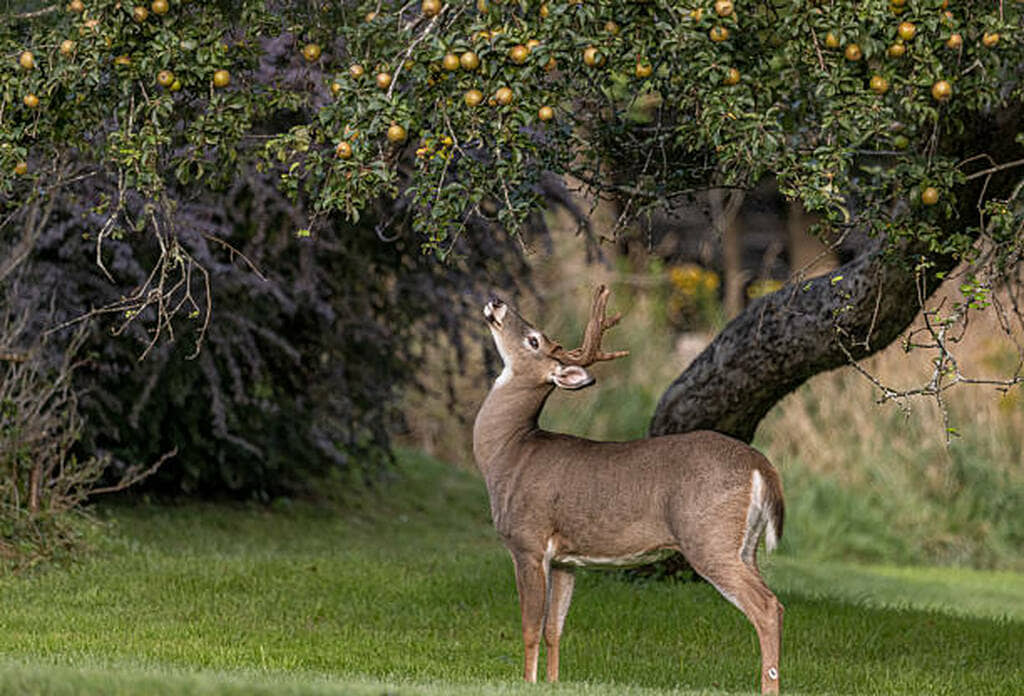
Planting apple trees for deer is one of the most effective long-term habitat improvements for a hunting property. Unlike annual food plots that require replanting every year, apple trees provide a dependable food source for decades when planted in the right location and maintained properly. As the trees mature, they produce fruit that attracts deer from late summer through fall while also creating predictable feeding patterns that hunters can use to improve stand placement and hunting opportunities.
However, not every apple tree delivers the same results. Tree variety, fruit drop timing, planting location, soil conditions, and maintenance all influence whether a tree becomes a reliable attraction or struggles to survive. A poorly planned orchard may take years to establish but produce little fruit or receive minimal deer activity, while a well-designed deer orchard can become one of the most valuable habitat features on the property.
This guide explains how to plant apple trees specifically for deer and hunting purposes. You’ll learn how to choose the best apple varieties, select productive planting sites, prepare the soil, protect young trees from wildlife damage, and maintain healthy trees that produce consistent crops year after year. By the end, you’ll have a practical strategy for building a deer orchard that supports both herd nutrition and long-term hunting success.
Why do apple trees attract deer better than many other food sources?
Apple trees attract deer because they provide a highly palatable food source, seasonal nutrition, and a consistent feeding location that can produce fruit for decades. Unlike annual food plots that must be replanted each year, a mature apple tree becomes a long-term soft mast producer, offering both food and habitat value. As multiple trees mature and produce fruit at different times, they encourage deer to revisit the same area throughout the growing season and into fall.
Apples are rich in carbohydrates and natural sugars that help deer replenish energy before and during the rut. While apples are not a complete nutritional source on their own, they complement native browse, agricultural crops, acorns, and food plots by providing a readily available, high-energy food source. Deer are especially attracted to ripe fruit that has fallen to the ground because it is easy to locate and consume with minimal effort.
Another advantage of apple trees is predictability. Food sources such as acorns can fluctuate dramatically from year to year due to weather and mast cycles. A well-managed orchard that includes several healthy, disease-resistant apple varieties is more likely to produce fruit consistently. This reliability helps establish repeat feeding patterns, allowing hunters to identify travel routes, monitor activity with trail cameras, and adjust stand locations based on regular deer movement rather than unpredictable food availability.
Apple trees also extend the period during which a property offers attractive forage. By combining early-, mid-, and late-season varieties, landowners can create a staggered fruit drop that lasts for several months instead of only a few weeks. Early-dropping apples can attract deer during late summer, while mid- and late-season varieties continue producing fruit throughout much of the archery and firearm seasons. This extended availability reduces gaps in food supply and keeps deer returning to the property as surrounding food sources change.
Beyond fruit production, apple trees improve habitat quality over time. As the orchard matures, it provides shade, structure, and edge habitat that blend naturally with nearby bedding cover, travel corridors, and food plots. When strategically located near existing deer movement, an apple orchard becomes more than a feeding area—it becomes part of a habitat management strategy designed to increase the amount of time deer spend on the property throughout the year.
Which apple tree varieties are best for deer?
The best apple trees for deer combine reliable fruit production, disease resistance, and staggered fruit drop throughout the hunting season. Instead of planting a single cultivar, most wildlife managers recommend growing several complementary varieties that ripen at different times. This approach extends the availability of fruit, reduces the risk of crop failure, and keeps deer returning to the property for a longer period.
Standard apple trees are often the best choice when the goal is producing large quantities of fruit. Cultivars such as Liberty, Enterprise, Arkansas Black, GoldRush, and Freedom are widely recognized for their disease resistance and consistent production. These varieties require less spraying than many traditional orchard apples, making them a practical option for remote hunting properties where regular maintenance may be limited. As mature trees increase in size, they can produce hundreds of pounds of fruit annually, creating a dependable food source for local deer populations.
Crabapple trees are another excellent option because they typically begin bearing fruit at a younger age and often retain fruit longer into the fall and winter. Their smaller fruit remains attractive after frost, providing forage when many other food sources have disappeared. Wildlife-focused crabapple cultivars such as Dolgo, Chestnut, Whitney, Kerr, and Centennial are commonly planted alongside standard apples to diversify fruit size and drop periods while improving overall orchard resilience.
Fruit drop timing is just as important as variety selection. Early-season cultivars begin dropping fruit in late summer, helping establish feeding activity before hunting season opens. Mid-season varieties provide a reliable food source during the pre-rut, while late-dropping apples continue attracting deer through the rut and into the early winter months. By combining trees from each fruiting window, a hunting property can offer a nearly continuous supply of soft mast instead of concentrating all feeding activity into a brief period.
Pollination should also influence variety selection. Most apple trees require cross-pollination from another compatible variety to produce a full crop. Planting at least two or three compatible cultivars that bloom during the same period significantly improves fruit set. Crabapple trees are often used as pollinators because they produce abundant blossoms over an extended flowering period, increasing pollination success across the orchard.
When selecting trees, prioritize cultivars that match your local climate, USDA Hardiness Zone, and disease pressures. A variety that performs exceptionally well in the Midwest may struggle in the Deep South or northern regions due to differences in chilling hours, humidity, or common fungal diseases. Choosing locally adapted, disease-resistant cultivars reduces maintenance requirements while improving long-term survival, fruit production, and overall value to deer.
Where should you plant apple trees on a hunting property?
The best location for apple trees is where deer already travel naturally, not where you hope they will appear. An orchard placed along existing movement patterns is far more likely to receive consistent use than one planted in an isolated open field. Before selecting a planting site, identify bedding cover, travel corridors, destination food sources, terrain funnels, and prevailing wind directions. The objective is to make apple trees part of a deer’s daily routine rather than forcing deer to change their behavior.
Planting trees near travel corridors is often the most productive strategy. Deer prefer moving along creek bottoms, field edges, logging roads, ridges, saddles, and transition zones where thick cover meets open habitat. These natural routes provide security while minimizing energy expenditure. Positioning apple trees 20 to 50 yards off these corridors encourages deer to leave the trail briefly to feed while still feeling protected by nearby cover.
Distance from bedding areas is equally important. Apple trees should be close enough for deer to reach comfortably during daylight but far enough away to avoid disturbing bedding sites during hunting season. A distance of approximately 100 to 200 yards from primary bedding cover is effective on many properties, although the ideal spacing depends on terrain, vegetation density, hunting pressure, and local deer behavior. Keeping orchards outside the core bedding area allows deer to feed without associating the food source with frequent human intrusion.
Accessibility should also influence site selection. Every visit to mow grass, prune branches, replace tree tubes, or check trail cameras leaves scent behind. Choosing a location that can be accessed quietly using field edges, drainage ditches, logging roads, or low-impact entry routes reduces disturbance throughout the year. This becomes especially valuable once the orchard begins producing fruit and deer activity increases during the hunting season.
Sunlight and soil conditions directly affect long-term tree health. Apple trees require at least six to eight hours of direct sunlight each day to develop strong growth and produce consistent fruit. Deep, well-drained loam soils are ideal because they promote healthy root development while reducing the risk of root diseases caused by standing water. Avoid low areas that remain saturated after heavy rain, compacted soils left by heavy equipment, or locations where cold air settles and increases the likelihood of late spring frost damage.
Property layout should also support an effective hunting strategy. Instead of concentrating every tree in one large orchard, many habitat managers plant several smaller orchard clusters across the property. Small groups of three to six trees placed near different travel routes create multiple feeding destinations, distribute deer activity, and provide greater flexibility for stand selection under changing wind conditions. This approach also reduces the risk that a single localized weather event or disease outbreak affects the entire planting.
Finally, integrate apple trees with existing habitat improvements rather than treating them as a standalone feature. Orchards perform best when combined with native browse, food plots, mast-producing trees, and secure bedding cover. This diversity provides deer with food throughout the year and encourages longer stays on the property. From a hunting perspective, apple trees become one component of a complete habitat management plan that supports predictable deer movement instead of serving as the only attraction.
How do you prepare the soil and plant apple trees correctly?
Proper site preparation determines whether an apple tree survives its first few years and develops into a productive food source for deer. Even the best wildlife apple varieties struggle if they are planted in compacted soil, poorly drained ground, or nutrient-deficient sites. Investing time in soil preparation before planting produces healthier root systems, faster establishment, and higher fruit production over the life of the orchard.
The first step is to perform a soil test. A laboratory soil analysis identifies pH, organic matter, and nutrient levels, allowing you to correct deficiencies before planting. Apple trees grow best in slightly acidic soil with a pH between 6.0 and 6.8. If the soil is too acidic, agricultural lime should be incorporated several months before planting. If the pH is too high, elemental sulfur or other approved amendments can gradually lower it. Correcting soil chemistry early is far more effective than trying to solve nutrient problems after the trees are established.
Drainage is equally important. Apple trees require moist but well-drained soil because their roots cannot tolerate standing water for extended periods. Dig a test hole about 18 to 24 inches deep and fill it with water. If water remains after 24 hours, the location has poor drainage and another site should be considered. Where relocation is not possible, planting on raised berms or mounds can improve drainage and reduce the risk of root diseases.
The best time to plant depends on your climate. In most northern regions, early spring is the preferred planting season because trees have an entire growing season to establish roots before winter. In warmer southern climates, fall planting is often equally successful because cooler temperatures reduce transplant stress while allowing root growth to continue through much of the dormant season. Planting during extreme summer heat should generally be avoided because young trees require significantly more irrigation to survive.
When planting, dig a hole that is approximately two to three times wider than the root system but no deeper than the root ball. A wide planting hole encourages roots to expand into the surrounding soil, while excessive depth can bury the root flare and restrict oxygen availability. After positioning the tree, backfill with the original soil instead of filling the hole with large amounts of compost or highly amended soil. Keeping the surrounding soil consistent encourages roots to grow outward rather than remaining confined to the planting hole.
Tree spacing affects sunlight exposure, airflow, maintenance, and long-term fruit production. Standard apple trees generally perform well when spaced 20 to 30 feet apart, while semi-dwarf trees typically require 12 to 18 feet of spacing, depending on the rootstock. Adequate spacing reduces competition for nutrients and moisture while improving air circulation, which lowers the risk of fungal diseases such as apple scab and cedar apple rust.
Pollination is another critical factor that many first-time landowners overlook. Most apple trees are not self-fertile and require pollen from a compatible variety that blooms at the same time. Planting at least two compatible cultivars within pollination distance greatly improves fruit set. Adding one or more crabapple trees can further enhance pollination because they usually produce abundant blossoms over an extended period, increasing the likelihood of successful cross-pollination across the orchard.
After planting, apply a 2- to 4-inch layer of mulch around the base of each tree to conserve soil moisture, suppress weeds, and moderate soil temperature. Keep the mulch several inches away from the trunk to prevent moisture buildup and rodent damage around the bark. During the first growing season, provide deep watering whenever rainfall is insufficient. Consistent moisture encourages rapid root establishment, allowing the tree to become drought-tolerant and more productive in the years ahead.
How do you protect and maintain apple trees?
Protecting young apple trees is just as important as planting them correctly. Most wildlife orchards fail because seedlings are damaged by deer browsing, antler rubbing, rodents, weeds, drought, or neglect during the first three to five years. A simple protection and maintenance plan significantly increases survival rates and allows trees to reach fruit-bearing age much faster.
The first priority is preventing deer from damaging young trees. Although the goal is to attract deer, newly planted apple trees are highly vulnerable because deer readily browse tender shoots and leaves. Bucks can also destroy trunks during the fall rut by rubbing their antlers against young trees. Installing a 5- to 6-foot tree tube protects the trunk while creating a greenhouse effect that encourages vertical growth. In areas with heavy deer populations, a wire cage 5 to 6 feet tall and 3 to 5 feet in diameter provides even better protection by preventing deer from reaching branches outside the tube.
Rodents and rabbits can cause serious damage during winter by chewing bark near the base of the tree. Plastic trunk guards or fine wire mesh help prevent girdling, which interrupts the flow of water and nutrients and can kill a young tree before spring. Regularly inspect protective guards to ensure they remain secure and do not trap excessive moisture against the bark.
Water management has the greatest impact during the first two growing seasons. Newly planted apple trees should receive approximately 1 inch of water per week, either from rainfall or supplemental irrigation. Instead of frequent shallow watering, apply water deeply to encourage roots to grow downward into the surrounding soil. Once established, mature apple trees become considerably more drought tolerant, although prolonged dry periods during fruit development may still reduce crop size and fruit quality.
Weed control is another essential maintenance practice. Grass and aggressive weeds compete directly with young trees for water, nutrients, and sunlight. Maintaining a 3- to 4-foot weed-free circle around each tree reduces competition and improves growth rates. Organic mulch, landscape fabric, or carefully selected herbicide programs are commonly used to keep the root zone clean while conserving soil moisture.
Fertilization should support steady growth rather than excessive vegetative production. During the establishment phase, apply fertilizer only after confirming nutrient needs through a soil test. Excess nitrogen encourages vigorous shoot growth that is more susceptible to disease, winter injury, and deer browsing. Once trees begin producing fruit consistently, annual fertilization can be adjusted based on tree vigor, leaf color, and overall orchard performance.
Pruning is necessary to develop a strong tree structure and maintain long-term fruit production. Remove broken, diseased, crossing, or inward-growing branches during the dormant season to improve sunlight penetration and air circulation throughout the canopy. An open canopy allows fruit to ripen more evenly while reducing humidity that promotes fungal diseases. Annual pruning also stimulates new fruiting wood, helping maintain consistent production as the orchard matures.
Routine monitoring prevents small problems from becoming major losses. Diseases such as apple scab, cedar apple rust, and fire blight, along with pests including aphids, Japanese beetles, and codling moths, can reduce tree vigor and fruit production if left unmanaged. Choosing disease-resistant cultivars minimizes many of these issues, but periodic inspections throughout the growing season allow landowners to identify symptoms early and apply appropriate control measures before significant damage occurs.
As trees mature, continue evaluating their contribution to your overall hunting strategy. Monitor fruit production, fruit drop timing, and deer activity with trail cameras to determine which varieties receive the most use. This information helps guide future orchard expansion, replacement plantings, and stand placement. Over time, a well-maintained orchard becomes more productive each season, providing a dependable food source that supports healthier deer and more predictable hunting opportunities.
Read more: How Long Can Food Plot Seed Go Without Rain?
How many apple trees should you plant?
The ideal number of apple trees depends on your property size, habitat goals, and budget, but planting at least 10 to 20 trees creates a much more reliable food source than planting only a few trees. Small properties of 10 to 40 acres can benefit from an orchard of 10 to 15 trees, while hunting properties larger than 100 acres often establish multiple orchards totaling 30 to 100 or more trees.
Planting a larger number of trees improves long-term success because not every tree will survive. Drought, disease, wildlife damage, poor pollination, or extreme weather may reduce survival during the first several years. Starting with more trees than you ultimately need ensures the orchard remains productive even if some trees are lost.
Variety diversity is equally important. Rather than planting 20 identical trees, distribute the orchard across several compatible cultivars with different bloom periods and fruit drop schedules. This approach reduces the risk that a single disease or late frost affects the entire crop while extending fruit availability throughout the hunting season.
How long does it take apple trees to attract deer?
Most apple trees begin attracting deer long before they reach full production, but significant hunting value usually develops over several years. Grafted apple trees often produce their first fruit within 3 to 5 years, while standard rootstocks may require 6 to 10 years before reaching peak production.
Young trees can still attract deer before producing fruit. Tender shoots, leaves, and new growth are commonly browsed during spring and summer, making tree protection essential from the first growing season. As fruit production increases, deer visitation typically becomes more consistent, especially if nearby food sources become limited during late summer and fall.
An orchard reaches its greatest value when trees of different ages produce fruit across multiple seasons. Instead of relying on one exceptionally productive tree, hunters benefit more from several mature trees that create multiple feeding locations and encourage predictable deer movement across the property.
Should you combine apple trees with food plots?
Yes. Apple trees and food plots complement each other because they provide different food sources throughout the year. Food plots deliver immediate nutrition and can be replanted or adjusted annually, while apple trees become long-term habitat improvements that continue producing for decades.
A productive habitat plan often places small orchards near perennial food plots planted with clover, chicory, cereal grains, brassicas, or other regionally appropriate forages. During different seasons, deer naturally transition between these food sources based on nutritional needs and plant availability. This diversity encourages deer to remain on the property longer instead of traveling elsewhere for food.
Maintaining native browse, mast-producing oaks, shrubs, warm-season grasses, and secure bedding cover alongside orchards further improves habitat quality. Rather than depending on a single attraction, the property offers multiple resources that support deer throughout the year.
What are the biggest mistakes when planting apple trees for deer?
Most orchard failures result from management mistakes rather than poor tree genetics. Avoiding a few common errors dramatically improves long-term success.
The most common mistakes include:
- Planting only one apple variety and creating poor pollination.
- Selecting cultivars that are poorly adapted to the local climate.
- Ignoring soil testing before planting.
- Planting in shaded or poorly drained locations.
- Failing to protect young trees from deer browsing and buck rubbing.
- Allowing weeds and grass to compete with young trees.
- Neglecting pruning during the first several years.
- Expecting immediate hunting results from newly planted trees.
Many landowners underestimate the importance of maintenance. The first three to five years require the greatest investment of time, but once trees become established, annual maintenance becomes much less demanding while fruit production continues to increase.
How do you build a productive deer orchard for long-term hunting success?
A successful deer orchard is built through long-term planning rather than short-term attraction. The most productive hunting properties integrate apple trees into a complete habitat management strategy that includes bedding cover, natural browse, travel corridors, water sources, mast trees, and strategically located food plots. Each habitat component supports the others, creating an environment where deer have fewer reasons to leave the property.
Begin with a realistic planting plan instead of trying to establish a large orchard all at once. Plant a manageable number of disease-resistant trees, protect every seedling, and monitor survival during the first few years. As experience grows, expand the orchard by adding new cultivars with different fruit drop periods and replacing any trees that fail to establish.
Evaluate the orchard every season using trail cameras, observation data, and harvest records. Monitor when fruit begins dropping, which varieties receive the most deer activity, and how weather influences feeding behavior. These observations help refine future planting decisions, improve stand locations, and strengthen overall habitat management.
Over time, a mature deer orchard becomes far more than a source of apples. It creates dependable feeding locations, supports healthier deer, increases daytime movement near hunting setups, and adds lasting value to the property. With proper planning and consistent maintenance, an orchard can remain productive for decades, making it one of the highest-return habitat improvements available to deer hunters.