
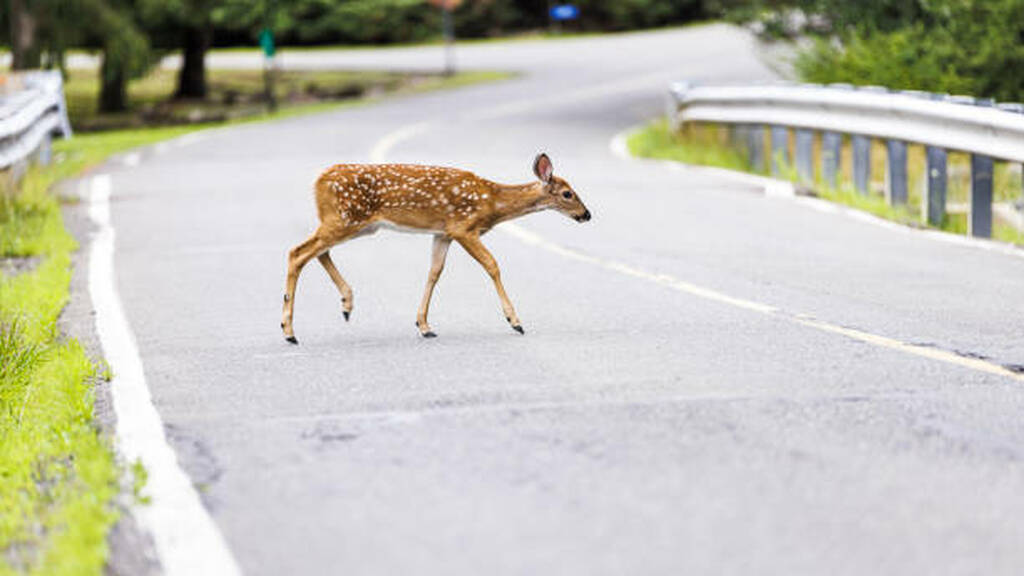
No, current scientific evidence does not show that deer whistles consistently prevent deer-vehicle collisions. While many hunters install them before traveling to public land, private leases, or remote hunting camps, independent studies and wildlife agencies have not found reliable proof that these devices alert deer early enough to reduce crashes. Some drivers report positive personal experiences, but those accounts do not establish that deer whistles are effective under real-world driving conditions.
That does not mean hunters should ignore the risk of deer collisions. Deer are most active around dawn, dusk, and during the fall rut, when hunting activity and deer movement often overlap. A single unexpected crossing can cause severe vehicle damage, injuries, or even fatalities, making safe travel just as important as proper hunting preparation.
This guide explains how deer whistles are designed to work, what scientific research says about their effectiveness, and why deer do not always respond as drivers expect. It also explores the factors that increase collision risk during hunting season and outlines the driving practices that have been shown to reduce the likelihood of hitting a deer. By the end of this article, you’ll know whether a deer whistle is worth installing and, more importantly, which safety measures deserve your attention before every hunting trip.
Do Deer Whistles Work?
No, deer whistles have not been proven to consistently prevent deer-vehicle collisions. Independent research has found little evidence that these devices reliably alert deer or reduce the number of crashes. Although some drivers believe deer whistles have helped them avoid collisions, those experiences are anecdotal and cannot demonstrate that the whistles were responsible. Deer may have crossed safely because they noticed the vehicle itself, changed direction naturally, or were never on a collision course.
Most wildlife agencies and transportation safety organizations do not recommend relying on deer whistles as a primary safety measure. Instead, they emphasize defensive driving because it produces measurable reductions in collision risk. For hunters, this distinction is important. Hunting often requires traveling before sunrise, after sunset, and through rural areas where deer activity is highest. Relying on a device with unproven effectiveness can create a false sense of security during the very conditions when drivers need to be most alert.
That does not mean deer whistles are necessarily useless. They are inexpensive, easy to install, and unlikely to interfere with vehicle operation. Some hunters choose to use them as an additional precaution. However, they should be viewed as an optional accessory rather than proven safety equipment. Safe driving habits remain the most reliable way to avoid deer collisions.
How Do Deer Whistles Work?
Deer whistles are designed to produce a high-frequency sound as air passes through them while a vehicle is moving. Most mechanical models begin generating sound at speeds above 30–35 mph, although the exact threshold varies by design. Manufacturers claim these sounds warn deer of an approaching vehicle, giving the animal enough time to leave the roadway before the vehicle arrives.
The proposed effectiveness of deer whistles depends on two assumptions. First, the sound must travel far enough ahead of the vehicle without being masked by engine noise, tire noise, wind, or surrounding terrain. Second, the deer must detect the sound, recognize it as a threat, and react by moving away from the road instead of freezing or running across it. Both assumptions have been questioned by researchers because they are difficult to reproduce consistently under real driving conditions.
Another limitation is that not all deer whistles operate the same way. Mechanical whistles rely on airflow to generate sound, while electronic models emit sound using a powered speaker. Manufacturers often advertise ultrasonic frequencies because deer can hear higher frequencies than humans. However, there is limited independent evidence that these sounds remain effective at highway speeds or that they consistently influence deer behavior before a vehicle reaches the animal.
As a result, the effectiveness of a deer whistle depends on far more than the device itself. Vehicle speed, wind direction, road conditions, background noise, and the unpredictable behavior of deer all influence whether the sound reaches the animal and whether the animal responds in a way that actually reduces the risk of a collision.
What Does the Research Say About Deer Whistles?
Scientific research has not demonstrated that deer whistles consistently reduce deer-vehicle collisions. Several studies have evaluated whether these devices change deer behavior or lower crash rates, but the available evidence has not shown a measurable safety benefit. While manufacturers often cite testimonials and product testing, independent research has generally reached more cautious conclusions.
One of the most frequently cited studies was conducted by researchers at the University of Georgia, who observed deer responses to approaching vehicles equipped with warning whistles. The researchers found no consistent evidence that deer reacted earlier or moved away from the roadway because of the whistles. In many cases, the animals showed little or no behavioral change compared with vehicles that did not use the devices.
Wildlife agencies have reached similar conclusions. Organizations responsible for managing deer populations and reducing wildlife-vehicle collisions generally do not recommend deer whistles as a proven safety solution. Instead, they encourage drivers to reduce speed in high-risk areas, remain alert during peak deer activity, and expect multiple deer to cross together. These recommendations are supported by decades of collision data rather than individual driver experiences.
One reason research remains inconclusive is the difficulty of testing deer whistles under identical conditions. Every encounter differs in vehicle speed, road layout, weather, surrounding vegetation, traffic noise, and deer behavior. A whistle that appears to work in one situation may have no effect in another, making it difficult to establish a consistent relationship between the device and collision avoidance.
For hunters, the practical takeaway is straightforward. Current evidence does not support relying on deer whistles as an effective method for preventing collisions. If you choose to install one, treat it as an optional accessory rather than a substitute for attentive driving.
Why Don’t Deer Always React to Deer Whistles?
Deer do not respond predictably to approaching vehicles because their behavior is influenced by multiple sensory cues, not a single sound. Vision, scent, engine noise, headlights, surrounding terrain, nearby deer, and instinctive flight responses all affect how an animal reacts when a vehicle approaches. Even if a deer detects a whistle, that sound may not become the dominant factor in its decision.
Road conditions also reduce the likelihood that a whistle will reach a deer clearly. Wind turbulence around a moving vehicle, tire noise on pavement, engine vibration, and roadside obstacles such as trees, hills, and vegetation can weaken or distort high-frequency sounds before they travel very far. If the sound loses intensity before reaching the animal, it is unlikely to trigger a meaningful response.
Another challenge is that deer rarely behave the same way twice. Some immediately run away from traffic, while others freeze in place or suddenly dart across the road. During the fall rut, bucks often become focused on breeding activity and may pay less attention to approaching vehicles. Does traveling with fawns can also behave unpredictably, especially if they become separated while crossing a road.
Hunters should also remember that deer frequently travel in groups. After one deer crosses safely, another may follow only seconds later from the same direction. Drivers who accelerate immediately after the first animal passes significantly increase their risk of a second collision. This pattern explains why experienced hunters often continue scanning both shoulders of the road until they have completely passed the crossing area.
Because deer behavior is naturally unpredictable, no warning device can guarantee that an animal will react in a safe or predictable manner. Understanding when and where deer are most active, combined with defensive driving, remains a far more reliable strategy than depending on an acoustic warning device alone.
When Are Hunters Most Likely to Hit a Deer?
Hunters are most likely to hit a deer during the fall hunting season, especially around dawn and dusk when deer are naturally more active and many hunters are traveling to or from their hunting locations. Reduced visibility, increased deer movement, and higher traffic on rural roads combine to create the highest-risk conditions of the year.
The fall rut is another major factor. During the breeding season, bucks travel longer distances, chase does across roads, and pay less attention to potential threats. Their movements become more erratic than at other times of the year, making them more likely to enter the roadway without warning. In many regions, the peak rut overlaps with firearm and archery seasons, increasing the number of hunters driving before sunrise and after sunset.
Location also plays an important role in collision risk. Deer commonly cross roads near forests, crop fields, creek bottoms, and habitat edges where food, water, and cover are close together. Rural highways that pass through these areas often experience repeated deer crossings, particularly where warning signs have been installed. Hunters traveling unfamiliar roads should assume that any signed crossing area has a history of deer activity rather than treating the signs as routine.
Weather can further increase the danger. Rain, fog, or the glare of low morning and evening sunlight reduces visibility and shortens the time available to react. Wet pavement also increases braking distance, making it harder to stop safely if a deer suddenly enters the lane. Slowing down during these conditions provides more reaction time and reduces the severity of a collision if one cannot be avoided.
Hunters should remain especially alert during the first and last hour of daylight, throughout the rut, and whenever driving through agricultural land or wooded corridors. These situations consistently present the greatest risk of encountering deer on the road.
Read more: Deer Sense of Smell: How Good Is It and Why It Matters
What Works Better Than Deer Whistles?
Defensive driving is far more effective than relying on deer whistles to reduce the risk of a deer collision. While no strategy can eliminate the possibility of hitting a deer, several driving habits have consistently been recommended by wildlife agencies, transportation authorities, and driver safety experts because they directly improve reaction time and vehicle control.
Reducing speed is the most effective step. Driving even 10 mph slower through known deer habitat increases the distance available to identify hazards, brake safely, and avoid a collision. Higher speeds not only reduce reaction time but also increase the severity of any impact that does occur.
Scanning both sides of the road is equally important. Deer often stand just inside the tree line or in roadside vegetation before crossing. Looking beyond the pavement instead of focusing only on the lane ahead gives drivers more time to notice movement. If one deer is visible, expect additional deer nearby because they frequently travel in family groups or small herds.
If a collision appears unavoidable, brake firmly while maintaining your lane instead of swerving. Swerving into oncoming traffic, a ditch, or a tree frequently causes more serious crashes than striking the animal itself. Modern vehicles are designed to absorb frontal impacts more effectively than side impacts or rollovers.
Use high beams whenever traffic conditions allow. Additional illumination helps drivers detect the reflection of a deer’s eyes and identify movement farther ahead. However, high beams should be dimmed immediately when another vehicle approaches to avoid reducing visibility for other drivers.
Finally, stay mentally prepared throughout the drive. Avoid distractions, put away mobile devices, and remain alert in areas marked with deer crossing signs. Hunters often spend hours preparing their equipment before a trip, but the safest hunt begins with arriving at the destination without incident. Consistent defensive driving remains the most dependable way to reduce the likelihood of a deer-vehicle collision.
Should Hunters Buy Deer Whistles?
Hunters should view deer whistles as an optional accessory rather than proven safety equipment. They are inexpensive, easy to install, and require little maintenance, which explains why many hunters choose to use them. However, the lack of consistent scientific evidence means buyers should not expect them to significantly reduce the risk of hitting a deer.
A deer whistle may provide peace of mind for some drivers, but confidence should never replace safe driving habits. Hunters who depend on a whistle while maintaining highway speeds through known deer habitat are likely to gain little real safety benefit. The greatest protection still comes from reducing speed, staying alert, and anticipating deer movement during high-risk periods.
If you decide to install a deer whistle, treat it as one component of a broader safety strategy. Continue scanning both sides of the road, expect multiple deer to cross together, and remain especially cautious during the rut and around dawn or dusk. Even if the whistle has some effect in certain situations, it should never be considered a substitute for defensive driving.
For most hunters, investing time in understanding local deer movement patterns will provide greater value than relying on an unproven warning device. Knowing where deer commonly cross roads and adjusting your driving accordingly can reduce collision risk far more effectively than any aftermarket accessory.
Frequently Asked Questions
Do deer whistles work at highway speeds?
There is no reliable evidence that deer whistles become more effective at highway speeds. Although airflow increases as vehicle speed rises, wind turbulence, road noise, and the short amount of time before the vehicle reaches the deer may limit any potential benefit.
Can deer hear ultrasonic whistles?
Deer can hear higher frequencies than humans, but hearing a sound is not the same as responding to it. Researchers have not demonstrated that ultrasonic whistles consistently cause deer to move away from the road before an approaching vehicle arrives.
Are electronic deer whistles better than mechanical ones?
There is no strong independent evidence that electronic deer whistles outperform mechanical models. Electronic devices generate sound using a powered speaker, while mechanical whistles rely on airflow. Despite the different designs, neither type has consistently demonstrated a measurable reduction in deer-vehicle collisions under real-world conditions.
Do wildlife agencies recommend deer whistles?
Most wildlife and transportation agencies emphasize defensive driving instead of recommending deer whistles. Their guidance typically focuses on slowing down in deer habitat, remaining alert during peak activity periods, and braking safely if a collision becomes unavoidable.
Are deer whistles worth buying?
A deer whistle may be worth buying if you understand its limitations. The cost is relatively low, and using one alongside proven safety practices is unlikely to cause harm. However, hunters should not expect it to replace attentive driving or significantly reduce collision risk on its own.
What Is the Safest Way to Avoid Hitting a Deer?
The safest way to avoid hitting a deer is to combine defensive driving with an understanding of deer behavior. Current research does not support deer whistles as a consistently effective collision prevention tool, but decades of driving data show that slowing down, staying alert, and anticipating deer movement significantly improve safety.
Hunters face elevated collision risk because they often travel during the same hours when deer are most active. Recognizing seasonal movement patterns, watching for multiple deer, and approaching wooded or agricultural areas with extra caution provide practical advantages that no aftermarket accessory can guarantee.
If you choose to install a deer whistle, consider it an additional precaution rather than your primary line of defense. Safe driving habits, realistic expectations, and knowledge of local deer activity remain the most reliable ways to arrive at your hunting destination safely while reducing the likelihood of a costly or dangerous deer-vehicle collision.