
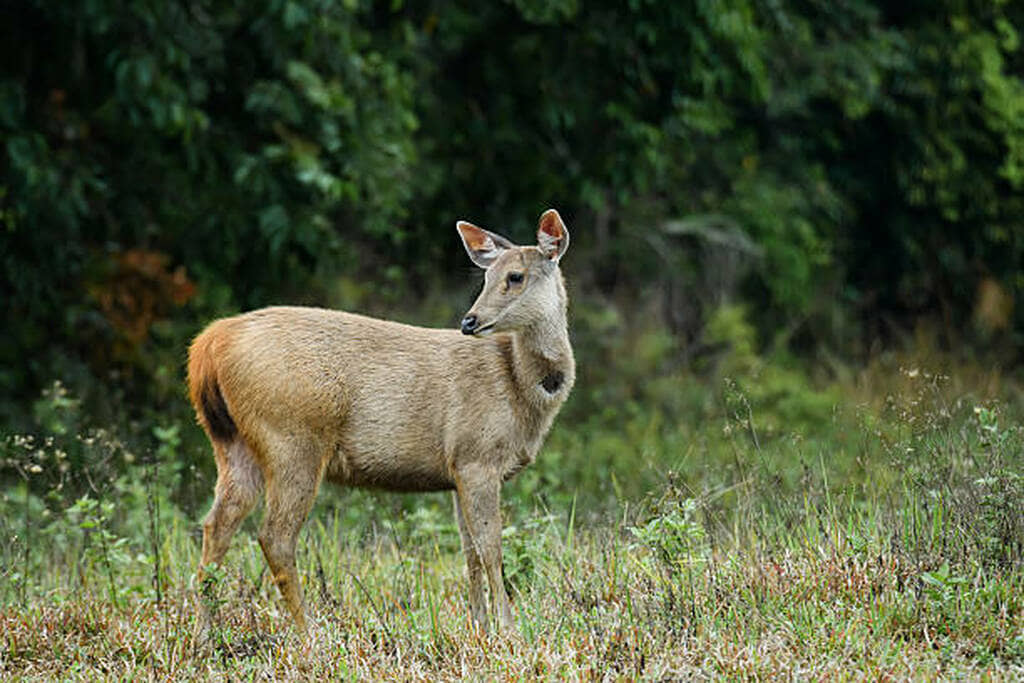
A deer’s teeth provide one of the most practical and widely used ways to estimate its age. Wildlife biologists, deer managers, and hunters examine tooth replacement in young deer and tooth wear in older deer to determine an animal’s age as accurately as possible in the field. While no visual method is perfectly precise for mature deer, tooth examination remains the standard approach because it is fast, inexpensive, and requires only the lower jaw.
To age a deer by its teeth, you first identify whether the premolars are deciduous or permanent, then evaluate the wear patterns on the molars. Tooth replacement can estimate the age of deer up to about 2½ years with high accuracy, while tooth wear helps classify older deer into broader age groups. The reliability of tooth wear depends on factors such as diet, soil abrasiveness, and habitat, which influence how quickly enamel wears away.
This guide explains the complete aging process step by step. You’ll learn which teeth to examine, how tooth replacement differs from tooth wear, how to identify each major age class, and when laboratory methods such as cementum annuli provide a more accurate estimate than field observations.
What Is the Most Accurate Way to Age a Deer by Teeth?
The most accurate way to age a deer by its teeth depends on the deer’s age. Wildlife biologists use tooth replacement to age fawns and yearlings because permanent teeth erupt in a predictable sequence. Once all permanent teeth have erupted, they switch to tooth wear, which estimates age by examining how enamel and dentin have worn over time.
Tooth replacement provides the highest field accuracy for deer up to approximately 2½ years old. During this period, each permanent premolar and molar appears at a known stage of development, making age classification relatively straightforward. For example, the transition from a three-cusped deciduous third premolar to a two-cusped permanent third premolar is one of the clearest indicators that a deer has reached about 1½ years of age.
After about 2½ years, all permanent teeth are present, so age estimation relies on wear rather than eruption. As a deer ages, the enamel ridges become narrower, dentin becomes more exposed, and the cusps gradually flatten. These changes occur consistently enough to separate deer into age classes, although the exact age becomes increasingly difficult to determine because wear is influenced by local conditions.
Field aging becomes less precise as deer grow older. Diet, sandy or rocky soils, browse availability, and regional habitat differences all affect how quickly teeth wear down. A mature deer feeding in abrasive environments may show the same tooth wear as an older deer living in softer habitats. For this reason, experienced wildlife managers usually estimate mature deer within age ranges—such as 3½, 4½, or 5½+ years—instead of assigning an exact age.
When an exact age is required for scientific research or herd management, laboratory analysis of cementum annuli is considered more reliable than tooth wear because it counts annual growth rings deposited in the tooth root.
How Do You Age a Deer by Teeth Step by Step?
To age a deer by its teeth, examine the lower jaw in a consistent sequence, beginning with tooth replacement and ending with tooth wear. Following the same process every time reduces mistakes and produces more consistent age estimates.
Step 1: Clean the lower jaw. Remove dirt, blood, and soft tissue so every premolar and molar is fully visible. A clean jaw makes it easier to distinguish enamel, dentin, and individual cusps.
Step 2: Identify permanent and deciduous teeth. Young deer still retain deciduous premolars, while older deer have a complete set of permanent premolars and molars. The third premolar is especially important because its shape changes noticeably when it is replaced by the permanent tooth.
Step 3: Count and inspect the cheek teeth. Focus on the premolars and molars rather than the incisors. These teeth experience the most consistent wear and provide the most useful information for age estimation.
Step 4: Evaluate tooth wear. Compare the width of the enamel with the exposed dentin on each molar. As deer age, dentin becomes wider, enamel ridges become thinner, and the chewing surfaces appear flatter. Looking at several molars together produces a more reliable estimate than judging a single tooth.
Step 5: Assign an age class. Use tooth replacement to classify deer younger than 2½ years, then use wear patterns to estimate older animals as 3½, 4½, 5½ years, or older. Record the estimate immediately, especially if the information will be used for harvest records or population management.
Following the same inspection routine for every harvested deer improves consistency over time. Although experience plays an important role, using a standardized method helps reduce subjective judgments and makes age estimates more comparable between hunters, land managers, and wildlife biologists.
How Can You Tell the Age of a Deer at Different Life Stages?
A deer’s age can be estimated by matching its tooth replacement and wear patterns to established age classes. The first two years are identified mainly by tooth eruption and replacement, while older deer are classified by progressive tooth wear.
Fawn (Less Than 1 Year)
Fawns still have several deciduous, or milk, teeth. The third premolar has three distinct cusps, making it the easiest feature to recognize. The third molar has either not erupted or is still developing, depending on the time of year the deer was harvested.
Because tooth eruption follows a predictable schedule during the first year, fawns are usually the easiest age class to identify accurately. Wildlife agencies commonly separate fawns from older deer using this stage of tooth development.
Yearling (1½ Years)
A 1½-year-old deer has a complete set of permanent teeth except for the recently replaced third premolar. The permanent third premolar has two cusps instead of three, clearly distinguishing it from the deciduous version.
The molars show little wear, with thick enamel ridges and only narrow bands of exposed dentin. These features make yearlings one of the most reliably identified age classes in field conditions.
2½ Years
By 2½ years, all permanent teeth have fully erupted, but tooth wear remains relatively light. The cusps are still well defined, enamel is noticeably wider than dentin, and the chewing surfaces retain a sharp appearance.
This age marks the transition from tooth replacement to tooth wear. From this point forward, aging depends increasingly on interpreting wear patterns rather than identifying newly erupted teeth.
3½ Years
A 3½-year-old deer begins to show obvious tooth wear. Dentin becomes more visible on the first and second molars, while the enamel ridges appear narrower than they did in younger animals.
Although the cusps remain distinguishable, they are no longer sharply pointed. Experienced observers often identify this age class by comparing the balance between enamel and dentin across all molars instead of focusing on a single tooth.
4½ Years and Older
Deer aged 4½ years or older display progressively heavier tooth wear. The dentin widens, enamel continues to narrow, and the chewing surfaces become flatter with each additional year. In older deer, several molars may appear almost level because years of grinding fibrous vegetation gradually remove the raised cusps.
Separating deer older than 4½ years becomes increasingly difficult because tooth wear varies between regions. Deer living in sandy environments or feeding on abrasive vegetation often develop heavier wear than deer of the same age living in less abrasive habitats. For this reason, many wildlife biologists classify older deer into broader age categories rather than assigning an exact age.
How Does Tooth Wear Change as a Deer Gets Older?
Tooth wear progresses in a predictable pattern as a deer ages, although the rate of wear varies with diet and habitat. Examining several wear characteristics together produces a more reliable estimate than relying on a single feature.
The first visible change is the increasing exposure of dentin on the chewing surface. Young deer have only thin strips of dentin, while mature deer develop broad areas of exposed dentin as enamel gradually wears away. Comparing the relative width of enamel and dentin is one of the most common methods used during field aging.
Another important indicator is the shape of the tooth cusps. Newly erupted teeth have tall, pointed cusps that efficiently grind vegetation. Over time, repeated chewing rounds these cusps until the chewing surfaces become noticeably flatter. The flatter the cusps, the older the deer is likely to be.
Enamel thickness also changes with age. Because enamel is harder than dentin, it wears more slowly. As dentin expands through use, the remaining enamel ridges appear progressively thinner. Mature deer often show enamel bands that are narrower than the exposed dentin, especially on the first molar.
Habitat plays a significant role in how quickly these changes occur. Deer feeding on grasses contaminated with sand or soil generally experience faster tooth wear than deer feeding primarily on leaves, shrubs, or agricultural crops. As a result, two deer of the same age may exhibit different wear patterns depending on where they live, which is why regional experience is essential for improving the accuracy of field age estimates.
How Accurate Is Aging a Deer by Teeth?
Aging a deer by its teeth is highly accurate for young deer but becomes less reliable as the animal gets older. The method is based on biological changes that occur throughout a deer’s life, but the type of evidence changes from predictable tooth replacement to more variable tooth wear.
For deer younger than 2½ years, field aging is generally considered highly reliable because permanent teeth erupt in a fixed sequence. Wildlife biologists can confidently distinguish fawns, yearlings, and most 2½-year-old deer by examining which premolars and molars have erupted and whether deciduous teeth have been replaced.
Accuracy decreases after 3½ years because all permanent teeth are already present. At this stage, age estimates rely entirely on wear patterns, which are affected by environmental conditions rather than age alone. Instead of assigning an exact age, experienced deer managers often classify mature animals into broader categories such as 3½, 4½, 5½, or 6½+ years.
Several factors influence how quickly teeth wear:
- Diet. Deer feeding on coarse grasses wear their teeth faster than deer eating mostly browse, acorns, or agricultural crops.
- Soil abrasiveness. Sandy soils introduce grit into vegetation, accelerating enamel wear with every bite.
- Habitat. Different regions expose deer to varying plant species, mineral content, and feeding behavior, resulting in different wear rates.
- Individual variation. Genetics, overall health, and feeding habits can cause two deer of the same age to develop noticeably different tooth wear.
Because of these variables, tooth wear should be viewed as an estimate rather than an exact measurement. The method is most valuable for separating deer into practical age classes that support harvest records, population monitoring, and herd management decisions.
When Is Cementum Annuli a Better Aging Method?
Cementum annuli is the preferred method when an exact age is required. Instead of evaluating visible wear, this laboratory technique estimates age by counting the annual growth layers deposited in the tooth root, much like counting growth rings in a tree.
The process begins by removing an incisor and sending it to a laboratory. Technicians prepare thin microscopic sections of the tooth root, where alternating light and dark bands of cementum represent yearly growth cycles. Counting these layers provides an age estimate that is generally more precise than field evaluation, especially for mature deer.
Wildlife agencies and research organizations commonly use cementum annuli when collecting long-term population data because accurate age information improves harvest analysis, survival estimates, and herd management models. It is particularly valuable for deer older than 3½ years, where tooth wear alone often cannot distinguish one age class from the next.
Although cementum annuli offers greater precision, it also has limitations. Laboratory analysis requires specialized equipment, additional cost, and processing time. For most hunters and land managers who simply need to separate deer into management age classes, examining tooth replacement and wear remains the most practical field method.
Read more: How Rare Are the Piebald Deer? What You Need To Know For Future Hunts
What Are the Most Common Mistakes When Aging Deer by Teeth?
Most aging errors occur because important tooth characteristics are overlooked or interpreted incorrectly. Following a consistent inspection routine helps avoid these mistakes and improves the accuracy of every age estimate.
One of the most common mistakes is examining only the front incisors. While incisors can show wear, they vary considerably between individual deer and provide much less reliable information than the premolars and molars used in standard aging methods.
Another frequent error is confusing deciduous teeth with permanent teeth. The third premolar changes from three cusps to two cusps when it is replaced, making it one of the most important features for identifying yearlings. Misidentifying this tooth can immediately place a deer in the wrong age class.
Some people also judge tooth color instead of tooth wear. Dark staining does not indicate age. Teeth become discolored from diet, soil, and environmental exposure, whereas age estimation depends on the relationship between enamel and exposed dentin.
Failing to clean the lower jaw before inspection can also lead to inaccurate results. Dirt, dried blood, and tissue may hide enamel edges or dentin exposure, making wear appear lighter or heavier than it actually is.
Finally, many beginners apply the same wear chart to every region. Tooth wear develops at different rates across North America because vegetation, soil composition, and feeding conditions vary widely. Local reference guides and regional harvest data often provide more accurate comparisons than generalized charts developed for another habitat.
Frequently Asked Questions About Aging Deer by Teeth
Can you age a deer without removing the jaw?
Yes, but the estimate is usually less accurate. You can examine the lower cheek teeth while the jaw is still attached, provided the mouth can be opened wide enough to clearly see the premolars and molars. However, tissue, poor lighting, and limited viewing angles often hide important wear patterns. Removing and cleaning the lower jaw provides a much clearer view and is the standard method used in wildlife surveys and harvest inspections.
Can tooth wear determine a deer’s exact age?
No. Tooth wear estimates an age class rather than an exact age. Once a deer reaches about 2½ years, all permanent teeth have erupted, and aging depends on how quickly the teeth wear down. Because wear is influenced by diet, soil abrasiveness, and habitat, two deer of the same age may show different wear patterns. Tooth wear is best used to classify deer into groups such as 3½, 4½, or 5½+ years.
How long does it take to age a deer by its teeth?
An experienced observer can age a deer in one to three minutes. The process becomes faster after examining multiple jaws because the differences in tooth replacement and wear become easier to recognize. Beginners often benefit from comparing each jaw with a regional tooth aging chart until they become familiar with the key features.
Why do wildlife biologists sometimes disagree on a deer’s age?
Experienced biologists can reach different conclusions because mature deer do not wear their teeth at the same rate. Local habitat, feeding behavior, and individual variation all influence tooth wear, especially in deer older than 3½ years. When precise age data are needed for research, many agencies confirm field estimates with cementum annuli analysis.
Final Thoughts
Aging a deer by its teeth is the most practical field method for estimating age and remains the standard approach used by hunters and wildlife professionals. The process combines tooth replacement for young deer with tooth wear for mature animals, allowing most deer to be assigned to meaningful age classes in just a few minutes.
For the best results, always examine a clean lower jaw, focus on the premolars and molars rather than the incisors, and compare multiple wear characteristics instead of relying on a single tooth. Understanding how local habitat affects tooth wear also improves consistency and reduces common aging errors.
If your goal is scientific research or precise population analysis, cementum annuli provides greater accuracy for older deer. For everyday field use, however, a systematic examination of tooth replacement and wear offers a dependable, efficient, and widely accepted method for estimating a deer’s age.