
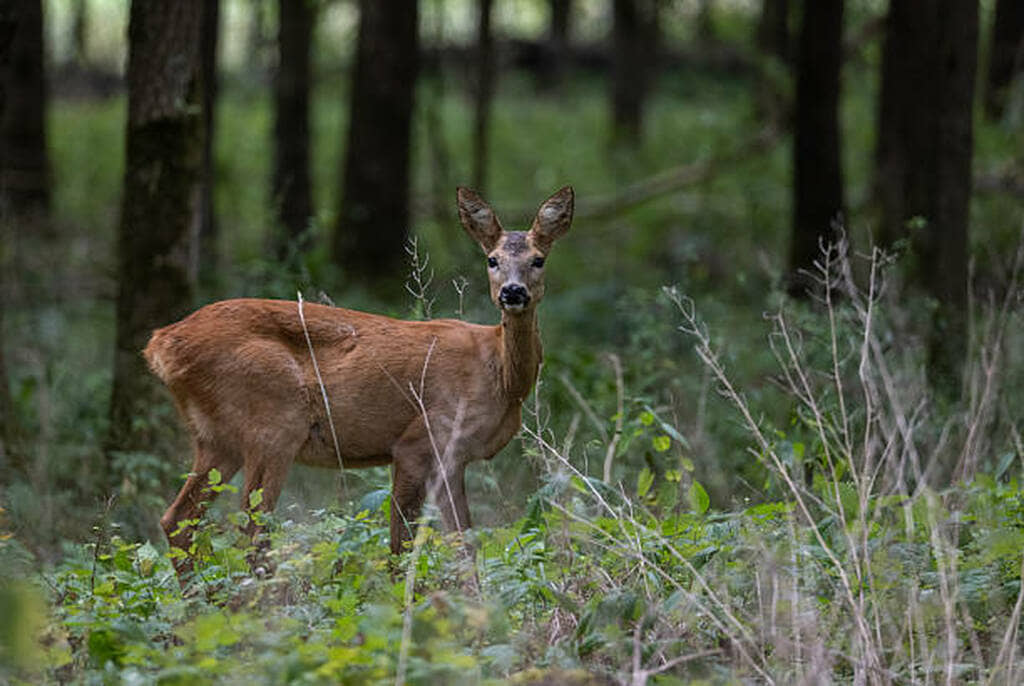
Yes, you can hunt deer successfully on 10 acres, but acreage alone does not determine success. A well-positioned 10-acre property located along a natural travel corridor or adjacent to quality deer habitat often produces better hunting opportunities than a much larger property with poor cover and heavy hunting pressure. Deer move according to food availability, bedding cover, seasonal patterns, wind conditions, and human activity—not property boundaries.
Many hunters assume they need 50, 100, or even several hundred acres to consistently harvest mature whitetails. In reality, countless deer are taken every season on small parcels because hunters understand how deer use the surrounding landscape instead of focusing only on the land they own. A strategically placed tree stand, limited hunting pressure, and careful entry and exit routes often have a greater impact on success than the number of acres listed on a property deed.
This guide explains when 10 acres is enough for deer hunting, the factors that determine whether a small property can produce consistent opportunities, and the strategies that maximize your chances of success. You’ll also learn how to improve a small hunting property, avoid the mistakes that educate deer, and understand the legal considerations that may affect hunting on limited acreage. By the end of this article, you’ll know whether a 10-acre property fits your hunting goals and how to make every acre work more effectively.
Can you hunt deer successfully on 10 acres?
Yes, you can hunt deer successfully on 10 acres if the property is located where deer naturally travel and you hunt it strategically. A small property does not need to contain an entire deer home range. Instead, it only needs to provide a reason for deer to enter the property regularly, such as a travel corridor, a food source, thick security cover, or a pinch point that funnels movement.
Property size is only one variable in deer hunting success. A 10-acre parcel surrounded by agricultural fields, timber, creek bottoms, or large blocks of unmanaged habitat often produces more consistent deer activity than a 100-acre property with little cover or excessive hunting pressure. Because whitetail deer routinely cross multiple properties within their home range, your success depends more on how your land fits into the surrounding landscape than on the number of acres you own.
Many experienced hunters intentionally target small properties because deer frequently lower their guard when moving through overlooked parcels. Large hunting clubs and public lands often receive significant hunting pressure, causing mature bucks to avoid predictable human activity. A carefully managed 10-acre property with limited disturbance can become a secure travel route during daylight hours, especially throughout the pre-rut and rut.
However, 10 acres is not automatically enough for every hunting situation. If the property consists of an open field with little cover, lacks nearby bedding habitat, or is surrounded by heavy residential development, deer may only pass through occasionally or move almost exclusively after dark. Likewise, firearm hunting on a small parcel may be restricted by local regulations or limited by safe shooting distances, making bow hunting the more practical option.
Rather than asking whether 10 acres is enough, a better question is whether the property offers the habitat features and hunting conditions that encourage predictable deer movement. Hunters who understand these factors consistently outperform those who judge a property solely by its size.
What factors matter more than property size?
Six factors have a greater impact on deer hunting success than the size of the property: habitat quality, neighboring land, deer density, hunting pressure, wind direction, and property access. These factors determine whether deer regularly move through your land during legal shooting hours and whether they continue using the property after the hunting season begins.
Habitat quality determines whether deer have a reason to visit.
Habitat quality is the most important factor because deer only spend time where their basic needs are met. Food, water, security cover, and nearby bedding areas influence daily movement far more than property boundaries. A 10-acre parcel containing thick vegetation beside crop fields or oak ridges can become a reliable travel route, while a larger property with little cover may receive only occasional deer activity.
Look for natural funnels such as creek crossings, fence gaps, logging roads, narrow timber strips, or transitions between hardwoods and agricultural fields. These landscape features naturally concentrate deer movement and increase the likelihood of daylight encounters.
Neighboring land often determines your hunting opportunities.
Most whitetail deer use areas much larger than 10 acres, making the surrounding landscape just as important as your own property. If neighboring land contains bedding cover, crop fields, orchards, conservation land, or unmanaged timber, deer may travel across your property every day. Conversely, intensive development, frequent human activity, or poor habitat nearby can significantly reduce deer movement.
Study aerial imagery before selecting stand locations. Understanding where deer feed, bed, and travel outside your property helps predict when and where they will cross your land.
Deer density affects how often you see deer.
Higher deer populations create more opportunities, even on small properties. Regions with healthy whitetail populations often produce regular deer movement across limited acreage because multiple animals share overlapping travel routes. In areas with lower deer densities, sightings naturally become less frequent regardless of hunting skill.
Local harvest reports, wildlife agency surveys, trail cameras, and preseason scouting can provide a realistic picture of deer activity before opening day.
Hunting pressure changes deer behavior quickly.
Excessive hunting pressure is one of the fastest ways to reduce daytime deer movement. Mature bucks quickly associate repeated human intrusion with danger. Frequent scouting, checking trail cameras every few days, or hunting the same stand repeatedly teaches deer to avoid predictable locations during daylight.
Many successful hunters limit their best stands to ideal wind conditions and avoid entering the property unless conditions are favorable. Less disturbance often results in more natural deer movement throughout the season.
Wind direction influences every hunt.
Whitetail deer rely heavily on their sense of smell to detect danger. A stand positioned perfectly for deer movement becomes ineffective if the wind carries human scent toward approaching animals. Successful hunters choose stand locations that keep prevailing winds away from expected travel routes while also providing quiet entry and exit paths.
Using multiple stand locations for different wind directions allows you to hunt more often without educating deer.
Property access can determine whether deer remain comfortable.
The route you take into and out of your hunting area is as important as the stand itself. Walking through feeding areas, crossing major trails, or entering near bedding cover leaves scent and disturbs deer before the hunt even begins.
Whenever possible, approach stands using field edges, creeks, ditches, or low-impact access routes that keep your scent away from the areas where deer are most likely to travel. A careful access strategy helps maintain consistent deer movement across a small property throughout the hunting season.
What is the best hunting strategy for a 10-acre property?
The best strategy for hunting deer on 10 acres is to minimize disturbance while hunting only high-percentage opportunities. Unlike large hunting properties where multiple stand locations can absorb frequent pressure, a small parcel offers very little room for mistakes. Every visit leaves scent, creates noise, and changes how deer use the property. The goal is to keep deer feeling secure so they continue moving through the area during daylight.
Prioritize bow hunting whenever possible.
Bow hunting is generally more effective than rifle hunting on a 10-acre property. Most bow shots occur within 20 to 40 yards, allowing hunters to focus on specific travel corridors or pinch points without affecting deer across the entire property. The shorter effective range also improves safety and complies with regulations in areas where firearm use is limited or prohibited on small parcels.
Rifle hunting can still be productive if local laws permit it and the property provides safe shooting lanes with adequate backstops. However, the increased noise from a rifle shot often disturbs deer over a much larger area, reducing opportunities for follow-up hunts on the same property.
Hunt the highest-percentage stand instead of multiple average locations.
A single well-positioned stand often outperforms several mediocre setups. On a 10-acre property, deer movement is usually concentrated through one or two natural funnels. Position your stand where multiple trails converge, where a timber edge meets a field, or where terrain naturally guides deer into bow range.
Choose locations that allow deer to approach from upwind or crosswind rather than directly downwind. Maintaining a scent advantage is more important than placing a stand on the most heavily used trail.
Plan your entry and exit routes before every hunt.
The hunt begins long before you climb into a stand. Entering through bedding cover or crossing active deer trails can alert deer hours before shooting light. Once mature bucks associate your access route with danger, they often shift their movement to neighboring properties or become strictly nocturnal.
Use low-impact routes whenever possible. Walk along field edges, drainage ditches, creek beds, or existing farm roads to reduce ground scent and avoid disturbing feeding or bedding areas. Leave the property the same way, even if it requires a longer walk.
Hunt only under favorable conditions.
Small properties benefit from patience more than persistence. Hunting every available day usually creates more pressure than opportunities. Instead, wait for favorable weather, seasonal movement, and wind direction before entering the property.
Cold fronts, the pre-rut, the peak rut, and the first evenings after several days without disturbance often provide the highest odds of encountering mature bucks. By limiting hunts to these conditions, you preserve the property’s value throughout the season.
Rotate stands and give the property time to recover.
Even a productive 10-acre property can lose effectiveness if hunted too frequently. Deer quickly recognize repeated human activity around the same stand location. If possible, maintain two or three stand sites for different wind directions and rotate between them instead of hunting the same tree every weekend.
After a successful hunt or several consecutive sits, allow the property to rest for several days. Reducing hunting pressure encourages deer to resume their normal travel patterns and increases the chances of another daylight encounter.
Read more: The 8 Effective Ways on How to Get Deer to Come to Your Stand
How can you improve a 10-acre property for better deer hunting?
A 10-acre property becomes more productive when it provides food, cover, security, and predictable travel routes. While you cannot control the surrounding landscape, you can influence how deer use your property by making targeted habitat improvements. Small changes often produce significant results because they encourage deer to spend more time on your land or travel through it during daylight hours.
Create a reliable food source.
Food is one of the strongest drivers of deer movement. If legal and practical in your area, planting a small food plot can encourage deer to visit your property consistently throughout the season. Clover, brassicas, cereal grains, and soybeans are common choices because they provide nutrition during different times of the year.
Not every 10-acre property has enough open ground for a traditional food plot. In heavily wooded areas, small kill plots, natural browse management, or maintaining productive oak trees can be equally effective. The objective is to provide an attractive feeding location without encouraging excessive human activity around it.
Improve cover to make deer feel secure.
Security cover often attracts more mature bucks than food alone. Deer prefer areas where they can move without being exposed, especially after hunting pressure increases. Thick native grasses, brush piles, young saplings, hinge-cut trees where permitted, and unmanaged vegetation create the type of cover that encourages daylight movement.
Instead of clearing every section of the property, preserve dense cover whenever possible. A property that feels safe is more likely to hold deer longer rather than simply serving as a travel route.
Use trail cameras to understand movement patterns.
Trail cameras help identify when and where deer use your property. Rather than checking cameras every few days, allow them to collect data over longer periods. Frequent visits leave scent, create disturbance, and may alter deer behavior on a small parcel.
Position cameras near trail intersections, field edges, creek crossings, and natural funnels instead of placing them directly over bedding areas. The goal is to monitor movement without educating deer or disrupting their daily routine.
Improve water availability when natural sources are limited.
Water becomes a valuable resource if nearby sources are scarce. In dry regions or during early-season hunting, deer regularly visit ponds, small creeks, springs, and livestock tanks. If regulations and property conditions allow, maintaining an existing water source or installing a small wildlife water feature can increase daytime activity.
This improvement is most effective in areas where water is naturally limited. If neighboring properties already contain abundant ponds or streams, adding another water source may have little influence on deer movement.
Reduce human disturbance throughout the season.
Every unnecessary visit reduces the effectiveness of a small hunting property. Many hunters unknowingly push deer away by mowing trails, cutting shooting lanes during the season, checking cameras too frequently, or bringing vehicles close to stand locations.
Complete major habitat work during the offseason whenever possible. Once the hunting season begins, limit property access to scouting, stand maintenance, and carefully planned hunts. Allowing the property to remain quiet gives deer confidence to continue using it during legal shooting hours.
Focus improvements on travel rather than holding deer year-round.
Most 10-acre properties function as travel corridors rather than permanent home ranges. Trying to keep deer on a small parcel throughout the year is usually unrealistic. A more effective strategy is to make your property the easiest, safest, and most attractive route between bedding areas and feeding locations.
When habitat improvements support predictable travel instead of long-term residency, even a small property can produce consistent hunting opportunities season after season.
What mistakes should you avoid when hunting deer on 10 acres?
Most failures on small hunting properties are caused by hunter behavior rather than property size. Because deer can leave a 10-acre parcel within seconds, repeated mistakes quickly teach them to avoid the area during daylight. Eliminating unnecessary pressure is often more valuable than adding new equipment or habitat improvements.
Hunting the property too often
Frequent hunting is the fastest way to reduce daytime deer activity. Every visit leaves scent, creates noise, and increases the chance that deer will detect human presence. Mature bucks are especially sensitive to repeated disturbance and often adjust their travel patterns after only a few encounters.
Instead of hunting whenever time allows, reserve the property for favorable conditions such as cold fronts, the pre-rut, the rut, or ideal wind directions. Hunting fewer but higher-quality sits typically produces better results than spending every weekend in the same stand.
Ignoring wind direction
Poor wind management ruins more hunts than poor stand placement. Whitetail deer depend on their sense of smell to identify danger long before they see or hear a hunter. If your scent reaches a travel corridor or bedding area, deer may change direction without ever entering shooting range.
Check the forecast before every hunt and choose a stand that keeps your scent away from expected deer movement. If the wind is wrong for your best location, skipping the hunt is often the better decision.
Entering through bedding or feeding areas
A perfect stand location cannot overcome poor access. Walking across active trails, feeding areas, or bedding cover alerts deer before legal shooting light. Even if no deer are visible, fresh ground scent and human disturbance can alter movement patterns for several days.
Plan entry and exit routes that avoid high-traffic areas. Field edges, creek bottoms, drainage ditches, and existing farm roads often provide quieter access while reducing the chance of crossing deer trails.
Checking trail cameras too frequently
Trail cameras provide valuable information only when they do not disturb the property. Many hunters collect memory cards every few days, unintentionally leaving scent and increasing activity around productive travel corridors.
Reduce camera visits by using high-capacity memory cards, extended-life batteries, or cellular trail cameras where legal. Checking cameras every few weeks—or only when entering to hunt—helps preserve natural deer behavior.
Over-clearing the property
Removing too much vegetation makes a small property less attractive to deer. Wide shooting lanes, excessive brush clearing, and frequent mowing reduce the security cover that mature bucks seek during daylight hours.
Create only the shooting lanes necessary for ethical shots. Leave dense vegetation intact whenever possible so deer continue to feel protected while traveling across the property.
Expecting the property to hold deer year-round
A 10-acre property rarely contains an entire whitetail home range. Many hunters become discouraged when trail camera activity changes throughout the season, but this is a normal response to shifting food sources, breeding activity, crop harvest, and hunting pressure across neighboring properties.
View your property as one piece of a larger landscape. Success comes from understanding when deer are most likely to move through your land rather than expecting them to remain there every day.
Failing to adapt during the season
Deer movement changes continuously from early season through late winter. Food availability, breeding behavior, weather, and hunting pressure all influence where deer travel. Hunters who refuse to adjust stand locations, hunting times, or access routes often experience declining success as the season progresses.
Review trail camera photos, fresh tracks, rubs, scrapes, and recent sightings throughout the season. Small adjustments based on current deer activity usually produce better results than relying on preseason scouting alone.
What hunting laws should you check before hunting on 10 acres?
Before hunting deer on a 10-acre property, verify your state’s hunting regulations, local firearm ordinances, minimum acreage requirements, and property boundary rules. Hunting laws vary significantly between states, counties, and municipalities. A property that is legal for deer hunting in one location may have restrictions on firearms, discharge distances, or hunting methods in another.
Check minimum acreage requirements.
Some states establish minimum acreage requirements for hunting with firearms, while others regulate only the safe discharge of a firearm. In many areas, bow hunting is permitted on smaller parcels where rifle or shotgun hunting is restricted. Other states have no minimum acreage requirement but require hunters to maintain safe shooting distances from occupied buildings, roads, or neighboring properties.
Because these rules differ by jurisdiction, review your state’s wildlife agency regulations before each season. Even experienced hunters should confirm current requirements, as hunting laws may change from year to year.
Understand firearm and bow hunting regulations.
Legal hunting methods often depend on both the season and the location. States may designate separate seasons for archery, muzzleloader, shotgun, and centerfire rifles, with different equipment requirements for each. Some suburban or densely populated areas allow only archery hunting regardless of property size to improve public safety.
Knowing which weapons are legal on your property helps you plan stand locations, expected shooting distances, and hunting strategy before opening day.
Respect property boundaries at all times.
Property lines become more critical as acreage decreases. On a 10-acre parcel, a single deer trail may cross multiple ownership boundaries within a few hundred yards. Hunters should clearly identify property corners, fence lines, and neighboring land before placing stands or tracking wounded game.
Modern GPS mapping applications and digital property maps make it easier to confirm ownership boundaries and reduce the risk of accidental trespassing. If a wounded deer crosses onto neighboring land, obtain the landowner’s permission before continuing recovery whenever required by local law.
Follow safety setback requirements.
Many jurisdictions require hunters to maintain minimum distances from occupied buildings, roads, schools, or recreational areas. These setback requirements help protect nearby residents and influence where tree stands or ground blinds can be safely placed.
Even when the law permits hunting, always consider the direction of fire, bullet travel, and what lies beyond your target. Selecting a stand that provides a natural backstop, such as elevated terrain or dense woodland, reduces risk and promotes ethical hunting practices.
Every hunter should carry the licenses, permits, and deer tags required for the season. Licensing requirements often differ for residents, non-residents, youth hunters, and landowners. Many states also require harvest reporting within a specific time after a deer is taken.
Review tagging procedures before your hunt to avoid mistakes in the field. Completing harvest reporting accurately supports wildlife management programs and helps state agencies monitor deer populations.
Confirm local regulations before every season.
State regulations provide the general rules, but local ordinances may impose additional restrictions. Counties, townships, and municipalities sometimes regulate firearm discharge, hunting hours, baiting, or hunting within residential zones. These local rules may apply even when state hunting regulations allow deer hunting on private land.
Checking both state and local regulations before the season begins ensures your hunt remains safe, legal, and ethical while avoiding fines or unnecessary legal issues.
How much land does a whitetail deer typically use?
Whitetail deer typically use far more than 10 acres throughout their normal activities. Their home range varies depending on habitat quality, food availability, hunting pressure, age, and sex. Does generally occupy smaller home ranges, while mature bucks often travel much farther, especially during the rut when searching for breeding opportunities.
This explains why a 10-acre property can still produce excellent hunting even though it does not contain an entire home range. Deer rarely remain on a single property throughout the day. Instead, they move between bedding areas, feeding locations, water sources, and travel corridors that may span multiple neighboring properties.
For hunters with small parcels, the goal is not to “hold” every deer year-round. Instead, focus on intercepting predictable movement. Properties located between bedding cover and major food sources often experience regular deer traffic regardless of their size.
Can multiple hunters safely hunt on 10 acres?
In most situations, one hunter is the most practical choice for a 10-acre property. Small parcels provide limited room for multiple stand locations while maintaining safe shooting distances and minimizing hunting pressure.
Adding a second hunter can work if the property naturally separates into distinct travel corridors that allow each person to hunt without crossing another hunter’s shooting zone or spreading scent throughout the property. Even then, both hunters should coordinate entry routes, stand locations, and hunting times.
If safety or wind conditions force hunters to cross each other’s access routes, the property quickly becomes over-pressured. For that reason, many experienced hunters reserve small properties for solo hunts and larger properties for hunting with partners.
Is leasing additional hunting land worth it?
Leasing additional hunting land is worthwhile if your 10-acre property cannot consistently produce daylight deer movement or if hunting pressure limits opportunities. Additional acreage provides more stand locations, allows properties to rest between hunts, and increases the chance of encountering mature bucks throughout the season.
However, leasing more land is not always necessary. Many hunters harvest quality deer every year on small parcels because they understand local deer movement and hunt only under favorable conditions. Improving habitat, reducing disturbance, and optimizing stand placement often deliver greater returns than simply increasing acreage.
Before investing in a hunting lease, evaluate whether your current property already contains strong travel corridors, reliable food sources, and quality neighboring habitat. If those elements exist, management improvements may provide a better return than acquiring more land.
Frequently Asked Questions
Is 10 acres enough for bow hunting?
Yes. Bow hunting is often the most effective method on a 10-acre property because shorter shooting distances, quieter equipment, and precise stand placement allow hunters to target predictable deer movement without disturbing the entire area.
Can you harvest a mature buck on 10 acres?
Yes, mature bucks can be harvested on 10 acres if they regularly travel through the property. Success depends on timing, low hunting pressure, favorable wind conditions, and understanding seasonal movement patterns rather than the size of the property alone.
How often should you hunt the same stand?
Most hunters achieve better results by limiting hunts on the same stand to favorable conditions. Repeatedly hunting one location allows deer to detect patterns of human activity. Rotating stands and allowing areas to rest helps maintain natural deer movement.
What is the ideal shot distance on a small property?
The ideal shot distance depends on the hunting method, but closer shots generally produce higher success rates. Bow hunters commonly target opportunities within 20 to 40 yards, while firearm hunters should always shoot only when they have a safe backstop, a clear line of fire, and sufficient distance from neighboring properties or occupied buildings.
Final Thoughts
A 10-acre property can become an excellent deer hunting location when it fits naturally into the surrounding landscape. Habitat quality, neighboring land, hunting pressure, wind direction, and disciplined hunting strategies consistently influence success more than acreage alone. Hunters who minimize disturbance, improve habitat where possible, and hunt only under favorable conditions often outperform those with much larger properties.
Rather than focusing on how many acres you own, focus on understanding how deer use those acres. A carefully managed 10-acre parcel positioned along a productive travel corridor can provide consistent opportunities season after season while requiring far less maintenance than a large hunting property.