
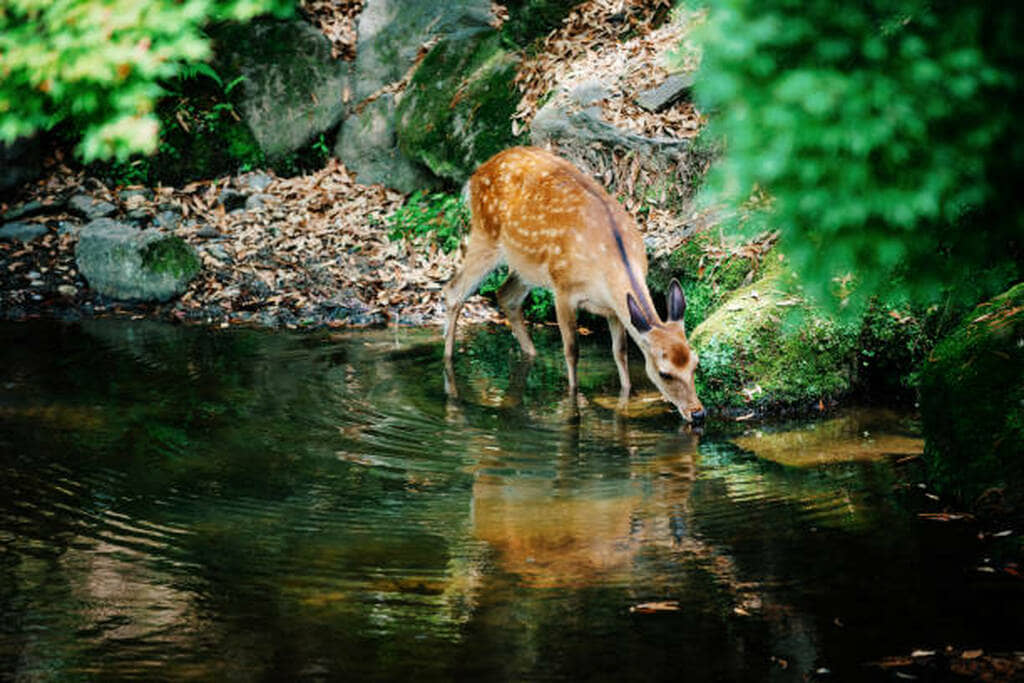
Deer drink water regularly to maintain hydration, regulate body temperature, support digestion, and sustain essential biological functions. Although deer obtain part of their water from fresh vegetation, fruits, and other moisture-rich foods, these sources are not always enough to meet their daily needs. Factors such as air temperature, seasonal changes, habitat conditions, diet, age, and reproductive status all influence how often deer drink and how much water they require.
Water availability also shapes deer behavior in the wild. Deer often establish feeding areas and travel routes around reliable water sources, particularly during hot weather or dry periods. In regions where natural water is scarce, they may travel longer distances, change their activity patterns, or rely more heavily on moisture obtained from plants. These adaptations help deer survive in a wide range of environments, from dense forests and grasslands to mountainous and semi-arid habitats.
This guide explains everything you need to know about deer drinking water. You’ll learn whether deer need to drink every day, how much water they consume, where they find it in the wild, why water is essential for their survival, and how seasonal conditions, diet, and habitat affect their hydration needs. By the end of this article, you’ll have a complete understanding of the role water plays in the daily life and long-term survival of wild deer.
Do deer drink water?
Yes, deer drink water regularly because it is essential for survival. Like all mammals, deer rely on water to regulate body temperature, transport nutrients, support digestion, remove metabolic waste, and maintain normal cellular function. Although they can obtain some moisture from the foods they eat, direct access to fresh water becomes increasingly important when environmental conditions are hot, dry, or food contains little moisture.
Deer do not always visit a water source every day. Their drinking frequency depends on the amount of water already available in their diet. During spring and early summer, many plants contain 70–90% water, allowing deer to meet a significant portion of their hydration needs through browsing. Tender leaves, grasses, forbs, fruits, and agricultural crops all contribute moisture that reduces the need for frequent drinking.
When vegetation becomes dry, deer depend more heavily on ponds, streams, rivers, wetlands, and small natural springs. This shift is most noticeable during late summer, prolonged droughts, and winter when green forage is less abundant. In these conditions, reliable water sources often become focal points of deer movement because hydration is necessary to maintain normal activity, digestion, and reproduction.
How much water does a deer drink each day?
An adult deer typically drinks between 2 and 6 liters (0.5–1.6 gallons) of water per day, although the exact amount varies with body size, diet, weather, and physiological condition. Larger species and heavier individuals generally require more water than smaller deer because they have greater metabolic demands.
Temperature is one of the most important factors affecting water intake. During hot summer weather, deer lose more water through respiration and evaporation, causing their daily water requirements to increase. Lactating females also consume substantially more water because milk production requires a continuous supply of body fluids. In contrast, deer living in cool climates often drink less because they lose less moisture and obtain additional water from succulent plants, frost, or snow.
Diet also plays a significant role in determining how much water a deer needs to drink. Deer feeding primarily on fresh vegetation consume less surface water because their food already provides considerable moisture. However, individuals eating dry browse, woody twigs, acorns, seeds, or crop residues must drink more frequently to maintain proper hydration. For this reason, deer rarely consume the same amount of water throughout the year. Instead, their water intake changes continuously in response to seasonal food availability and environmental conditions.
Where do deer find water in the wild?
Deer obtain water from both natural water sources and moisture-rich foods, allowing them to survive in a wide range of habitats. While ponds, streams, rivers, lakes, and wetlands provide the most direct source of drinking water, deer do not rely exclusively on open water. Their ability to extract moisture from vegetation helps them remain hydrated even when surface water is limited.
In most forests and grasslands, deer prefer reliable water sources that are close to feeding and bedding areas. Small creeks, woodland ponds, marshes, natural springs, and slow-moving streams are commonly visited because they provide fresh water while offering nearby vegetation for cover. Deer typically avoid spending unnecessary time in exposed areas around large bodies of water, where predators or human activity may be more common.
Fresh vegetation also contributes significantly to a deer’s daily water intake. During spring and early summer, young grasses, leaves, forbs, berries, and agricultural crops contain high levels of moisture, reducing the need to drink frequently. In colder regions, deer may consume snow or frost as an alternative water source, although melting snow inside the body requires additional energy and cannot fully replace access to liquid water over extended periods.
The availability of water often influences deer distribution across a landscape. During prolonged droughts or dry seasons, deer may expand their home range or adjust their travel routes to reach dependable water supplies. Wildlife researchers frequently observe increased deer activity around permanent water sources during these periods because hydration becomes a limiting resource for survival.
When do deer usually drink water?
Deer most commonly drink water during the early morning and late evening, when temperatures are cooler and the risk of disturbance is lower. These periods coincide with the natural crepuscular activity pattern of most deer species, which are generally most active around sunrise and sunset.
Morning drinking often occurs shortly after deer leave their bedding areas to forage. After feeding overnight or before returning to cover, many individuals visit nearby water sources to replenish fluids lost through normal metabolism. Evening follows a similar pattern, with deer drinking before or during their nightly feeding activities.
Seasonal conditions can change these routines. During hot summer weather, deer may visit water sources more frequently because higher temperatures increase water loss through respiration and heat regulation. In contrast, deer living in cooler climates or areas with abundant moisture-rich vegetation may drink less often, as much of their hydration comes from the plants they consume.
Human activity and predator presence also influence when deer approach water. In areas with frequent daytime disturbance, deer often delay movement until after sunset or before dawn to reduce the likelihood of encountering people or predators. This behavioral flexibility helps them balance hydration needs with personal safety, allowing them to use the same water source while minimizing risk.
Why is water important for deer?
Water supports every major biological process in a deer’s body, making it one of the most important resources for survival. Without adequate hydration, deer cannot efficiently regulate body temperature, digest food, transport nutrients, eliminate waste products, or maintain normal organ function. Even mild dehydration can reduce physical performance and increase physiological stress, especially during periods of high temperatures or limited food availability.
One of water’s primary functions is regulating body temperature. Deer generate heat while feeding, traveling, and escaping predators. During warm weather, they lose water through respiration and evaporation to prevent overheating. Replacing these fluids helps maintain a stable internal temperature and allows deer to remain active throughout the day. This is one reason deer are often observed near dependable water sources during summer.
Water also plays a central role in digestion and nutrient transport. As deer consume grasses, leaves, shrubs, and woody browse, water helps break down plant material and move nutrients through the digestive system. It also carries oxygen, vitamins, minerals, and hormones throughout the body while transporting metabolic waste to the kidneys for excretion. Without sufficient water, digestion becomes less efficient and overall body condition gradually declines.
Hydration is particularly important during periods of rapid growth and reproduction. Bucks require adequate water to support antler development, a process that demands significant blood flow, minerals, and nutrients while antlers remain covered in velvet. Does need even more water during pregnancy and lactation because milk consists largely of water. A nursing doe must continuously replace lost fluids to produce enough milk for her fawns while maintaining her own health.
How does diet affect how much water deer drink?
A deer’s diet directly influences how much water it needs to drink because different foods contain varying amounts of moisture. Deer feeding on fresh vegetation obtain a large proportion of their daily water requirements from food, while those eating dry forage must rely more heavily on surface water.
During spring and early summer, deer consume young grasses, broadleaf plants, tender shoots, fruits, and agricultural crops that often contain 70–90% water. These moisture-rich foods significantly reduce the amount of drinking required, allowing deer to remain hydrated even if they do not visit a pond or stream every day.
As seasons change, vegetation gradually loses moisture. During late summer, autumn, and winter, deer shift toward woody browse, twigs, bark, acorns, seeds, and dried plant material. Because these foods contain much less water, deer compensate by drinking more frequently whenever fresh water is available. This seasonal dietary change explains why water sources often receive heavier deer activity during dry periods.
Food quality also affects hydration needs. Diets rich in protein and minerals increase metabolic activity, requiring additional water for digestion, nutrient transport, and waste removal. Likewise, deer feeding on agricultural crops or concentrated food sources may consume more water than individuals browsing naturally moist forest vegetation. Rather than maintaining a fixed daily drinking pattern, deer continuously adjust their water intake to match the moisture content of their diet and the physiological demands placed on their bodies.
Can deer survive without drinking water?
Yes, deer can survive for limited periods without drinking directly from a water source, but they cannot live indefinitely without water. Their ability to meet hydration needs depends on the moisture content of their food, local climate, and access to alternative water sources such as snow or dew. In favorable conditions, deer may go several days without visiting a pond or stream because fresh vegetation supplies much of the water their bodies require.
During spring, deer often browse on newly emerged grasses, leaves, forbs, and agricultural crops that contain high moisture levels. These succulent plants can provide a substantial portion of their daily water intake, reducing the need to drink from surface water. In northern regions, deer may also consume snow, frost, or dew-covered vegetation to supplement hydration when liquid water is temporarily unavailable.
However, these natural alternatives have clear limitations. Dry browse, woody stems, acorns, and dormant winter vegetation contain far less moisture than fresh forage. As a result, deer must increasingly rely on ponds, streams, springs, or other permanent water sources to remain hydrated. Snow can temporarily replace liquid water, but melting it inside the body requires additional energy, making it a less efficient source of hydration.
Extended periods without adequate water eventually lead to dehydration. As dehydration progresses, deer reduce their activity to conserve body fluids, spend less time foraging, and experience declining physical condition. Severe water shortages can weaken the immune system, reduce reproductive success, and lower survival rates, particularly during hot weather or prolonged droughts. While deer are remarkably adaptable, dependable access to water remains essential for maintaining long-term health and sustaining stable populations.
What factors increase a deer’s need for water?
A deer’s water requirements increase whenever environmental conditions or physiological demands cause greater fluid loss or higher metabolic activity. Rather than drinking the same amount every day, deer continuously adjust their water intake in response to weather, diet, reproduction, growth, and physical activity.
Hot weather is the most significant factor affecting water consumption. As air temperatures rise, deer lose more water through respiration and evaporative cooling while attempting to regulate body temperature. To replace these losses, they drink more frequently and often remain closer to reliable water sources during the hottest months of the year.
Reproduction also substantially increases water requirements. Pregnant does need additional fluids to support fetal development, while lactating does require even more water because milk is composed primarily of water. During the nursing season, access to dependable water helps maintain both the mother’s condition and the healthy growth of her fawns.
Rapid tissue growth creates another period of elevated water demand. Bucks developing antlers require large amounts of nutrients, minerals, and circulating blood to support velvet antler growth. Adequate hydration facilitates nutrient transport throughout the body and supports the metabolic processes involved in producing new bone tissue.
Diet and habitat further influence daily water needs. Deer feeding on dry browse, woody twigs, crop residues, or low-moisture forage drink more water than those consuming lush vegetation. Individuals living in arid environments or regions experiencing prolonged drought must often travel greater distances between feeding areas and permanent water sources, increasing both energy expenditure and daily water requirements.
Physical activity also contributes to higher water consumption. Deer that travel extensively while searching for food, avoiding predators, or expanding their home range lose more body water than individuals occupying smaller, resource-rich habitats. Because these factors often occur together—for example, hot temperatures combined with drought and reduced forage quality—water demand can increase dramatically during challenging environmental conditions.
Read more: How to Attract Deer With Peanut Butter: 3 Effective Ways
What happens when deer cannot find enough water?
Insufficient water reduces a deer’s ability to feed, reproduce, avoid predators, and survive environmental stress. When water becomes scarce, deer must balance the need to stay hydrated with the energy required to locate new water sources. This trade-off often changes their daily movement patterns and increases physiological stress.
One of the earliest responses to water scarcity is reduced activity. Deer spend less time moving during the hottest parts of the day to conserve body water and minimize heat stress. Although this behavior lowers water loss, it also reduces feeding opportunities, which can gradually decrease body weight and fat reserves.
Limited water availability also forces deer to expand their home range. Instead of remaining close to preferred feeding and bedding areas, they may travel several additional kilometers to reach permanent ponds, rivers, or springs. Longer travel distances increase energy expenditure and expose deer to greater risks from predators, vehicle collisions, and human disturbance.
Prolonged dehydration has the greatest impact on reproduction and population health. Does in poor physical condition produce less milk, reducing fawn survival during the first weeks of life. Bucks entering the breeding season with inadequate nutrition and hydration may develop smaller antlers and have lower reproductive success. If drought conditions persist for multiple seasons, local deer populations can decline because fewer fawns survive and adult mortality gradually increases.
Do different deer species drink different amounts of water?
Yes, different deer species consume different amounts of water because they vary in body size, habitat, diet, and climate adaptation. Larger species generally require more water than smaller species, while deer living in dry environments have evolved behaviors that reduce water loss.
White-tailed deer typically live in forests, agricultural landscapes, and mixed habitats where water is relatively abundant. They often have easy access to ponds, creeks, wetlands, and rivers, allowing them to drink regularly throughout the year.
Mule deer frequently inhabit semi-arid grasslands, shrublands, and mountainous regions across western North America. Because surface water may be scarce, they rely more heavily on moisture obtained from shrubs, forbs, and other native vegetation, particularly outside the hottest months.
Red deer occupy a wide range of habitats across Europe and parts of Asia, including forests, open moorlands, and mountain ecosystems. Their water requirements fluctuate seasonally, with the highest demand occurring during warm weather and the breeding season when physical activity increases.
Although drinking behavior differs among species, all deer depend on adequate hydration to maintain normal metabolism, support reproduction, and regulate body temperature.
Do deer prefer moving water or still water?
Deer do not appear to have a universal preference for moving or still water. Instead, they select water sources that are safe, accessible, and consistently available. If a pond, stream, spring, or marsh provides clean water and nearby cover, deer will readily use it regardless of whether the water is flowing.
Moving water such as streams and small rivers often remains cleaner because continuous flow reduces stagnation and helps maintain water quality. These locations may also provide natural travel corridors with dense vegetation that allows deer to approach while remaining concealed.
Still water sources, including ponds, marshes, beaver wetlands, and small lakes, are equally valuable when they provide dependable water throughout the year. In many forests, these habitats become important gathering points during dry periods because they retain water long after seasonal pools disappear.
Rather than choosing water based on movement alone, deer consistently prioritize locations that minimize risk while providing reliable hydration.
Why are deer commonly seen near water sources?
Water sources provide much more than drinking opportunities, making them some of the most attractive areas within a deer’s home range. The surrounding habitat often supplies food, shelter, cooler temperatures, and secure travel routes in addition to fresh water.
Vegetation growing near streams, wetlands, and ponds is usually greener and more nutritious than plants in drier areas. This creates productive feeding sites where deer can browse while remaining close to water. Dense shrubs, tall grasses, and riparian woodlands also provide excellent cover from predators and human disturbance.
Water bodies frequently create cooler microclimates during warm weather. Shade from nearby trees and increased humidity help reduce heat stress, allowing deer to conserve energy while resting between feeding periods. Because several essential resources occur in the same location, deer often incorporate water sources into their regular daily movements.
How do droughts affect deer populations?
Drought affects deer by reducing water availability, lowering forage quality, increasing competition for resources, and decreasing reproductive success. The longer drought conditions persist, the greater their impact on individual health and population stability.
As rainfall declines, ponds shrink, seasonal wetlands disappear, and vegetation becomes dry and less nutritious. Deer must travel farther to locate both food and water, increasing energy expenditure while reducing the time available for feeding and resting.
Poor nutrition combined with dehydration weakens body condition. Does may produce fewer fawns or less milk, while young deer experience slower growth and lower survival rates. Adult deer also become more susceptible to disease and environmental stress when high temperatures coincide with prolonged water shortages.
At the population level, severe drought can alter deer distribution across entire landscapes. Animals often concentrate around the few remaining permanent water sources, increasing local competition and the likelihood of disease transmission before dispersing once environmental conditions improve.
Can people safely provide water for wild deer?
Providing water for wild deer is generally unnecessary in healthy natural ecosystems and should only be considered as part of a science-based wildlife management program. Most deer populations have evolved to locate natural water sources and adjust their movements as environmental conditions change.
Artificial water sources can unintentionally concentrate large numbers of deer into a small area. Increased crowding raises the risk of disease transmission, habitat degradation, and conflicts with other wildlife. Concentrated feeding and watering locations may also attract predators or increase human-wildlife interactions.
In regions experiencing exceptional drought, wildlife agencies sometimes install temporary water sources to support vulnerable populations. These projects are carefully planned, monitored, and managed to minimize ecological impacts. For private landowners, the best long-term approach is usually protecting natural wetlands, springs, riparian habitats, and forest cover rather than creating permanent artificial watering stations.
Frequently Asked Questions About Deer Drinking Water
Do deer drink water every day?
Not always. Deer may drink daily during hot or dry weather, but they can drink less frequently when their diet contains abundant moisture from fresh vegetation.
Can deer drink salt water?
No. Deer require fresh water for normal hydration. Salt water contains excessive dissolved salts that cannot meet their long-term physiological needs.
Do deer drink at night?
Yes. Deer often visit water sources after sunset, especially in areas with frequent human activity or warm daytime temperatures.
Can deer smell water?
There is little scientific evidence that deer detect distant water sources solely by smell. Instead, they primarily locate water through familiarity with their home range, memory, landscape features, and repeated travel patterns.
How far will deer travel to reach water?
The distance varies according to habitat, season, and water availability. Deer generally prefer dependable water sources located within their normal home range, but they may travel significantly farther during droughts or periods of extreme heat.