
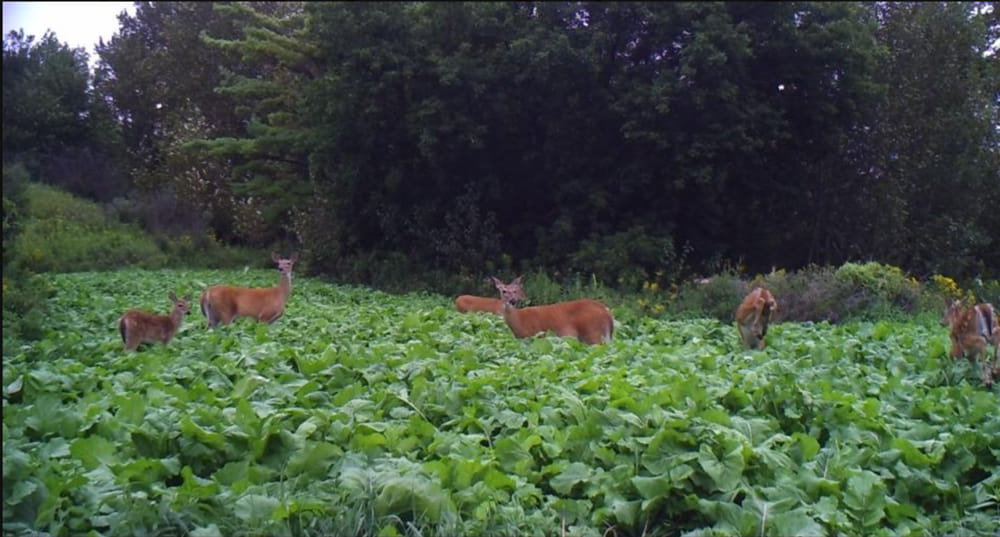
Best brassica blend for deer depends on the right combination of plant varieties, growing conditions, and hunting objectives. A quality brassica blend for deer food plots usually combines crops such as turnips, radishes, forage rape, and kale to provide attractive forage throughout the hunting season.
Brassica crops are widely used by deer hunters because they produce high-volume forage, tolerate cooler temperatures, and become increasingly attractive to whitetail deer after frost. However, choosing the best blend is not simply about selecting the seed mix with the most varieties. The ideal brassica blend depends on factors such as soil quality, planting timing, local climate, deer population, and whether the goal is early-season attraction or late-season feeding.
This guide explains how to evaluate brassica blends for deer food plots by comparing crop types, understanding deer feeding behavior, and selecting the right mix for your hunting property. You will learn which brassica plants provide the strongest attraction, how planting decisions affect performance, and which mistakes reduce the effectiveness of a deer food plot.
What is the best brassica blend for deer food plots?
The best brassica blend for deer food plots is a seed mix that combines multiple brassica crops to provide attractive forage, seasonal nutrition, and reliable growth conditions. A high-performing blend commonly includes turnips, radishes, forage rape, kale, or hybrid brassicas because each plant contributes different characteristics to a deer food plot.
Brassica blends work because they extend the feeding window compared with planting a single brassica species. Some varieties produce more leafy forage early in the season, while others develop larger roots that become valuable food sources when temperatures drop. This combination allows deer to access different plant parts throughout the hunting season.
For example, turnips produce large underground roots that store carbohydrates, while forage rape produces highly palatable leaves that deer can browse before winter conditions become severe. Radishes contribute both edible leaves and strong root growth, making them a common component in many deer hunting food plot mixes.
A well-designed brassica blend also improves food plot resilience. Different brassica species respond differently to temperature changes, moisture conditions, and soil variation. When one variety performs below expectations, another component of the blend can continue producing forage for deer.
Common components of deer brassica blends include:
- Turnips: Provide energy-rich roots and leafy forage, especially valuable during colder months.
- Radishes: Produce large roots and nutrient-rich tops while supporting soil improvement through root development.
- Forage rape: Creates fast-growing leafy forage that deer often consume heavily.
- Kale: Offers strong cold tolerance and extends forage availability later into the season.
- Hybrid brassicas: Combine traits from multiple brassica species to improve growth, palatability, and seasonal performance.
The most effective blend depends on the hunting property’s conditions rather than the number of crops included in the mix. A five-species blend planted in unsuitable soil will usually perform worse than a properly selected three-species blend grown under optimal conditions.
For deer hunters, the primary goal of a brassica blend is not simply producing plants. The goal is creating a dependable food source that matches deer feeding behavior, seasonal nutrition requirements, and hunting strategy.
Why do deer prefer brassica blends during hunting season?
Deer prefer brassica blends during hunting season because these crops provide high-value forage when natural food sources decline and deer require more energy for survival. Brassicas become especially attractive during fall and early winter because their leaves and roots provide digestible carbohydrates, nutrients, and a consistent food source after other vegetation begins to lose quality.
Whitetail deer feeding behavior changes throughout the year based on temperature, food availability, and nutritional requirements. During warmer months, deer often rely on natural browse, grasses, and agricultural crops. As temperatures drop, deer increase their focus on energy-rich foods because maintaining body temperature requires additional calories.
Brassica plants become more appealing after frost because cold temperatures trigger chemical changes inside the plant. The conversion of stored starches into sugars improves the taste of many brassica crops, making leaves and roots more attractive to deer. This process is one reason hunters often observe increased deer activity in brassica food plots later in the season.
Turnips and radishes are particularly valuable during late-season hunting because their underground roots remain available after surface vegetation becomes limited. Deer can continue feeding on these roots when snow, frost, or reduced plant growth affects other food sources.
Brassica blends also support hunting strategies because they create predictable feeding locations. A well-established food plot can concentrate deer movement patterns by providing a reliable food source near bedding areas or travel corridors.
The effectiveness of a brassica blend depends on several seasonal factors:
- Early fall: Deer often browse the leafy portions of brassica plants while green forage remains available.
- After frost: Deer consumption typically increases as plants become sweeter and more energy-dense.
- Late season: Root crops such as turnips and radishes become important food sources when other forage declines.
For example, a hunter managing a whitetail property in a northern climate may benefit from a brassica blend containing cold-tolerant varieties because deer demand higher-energy foods during the colder months. In contrast, properties with longer growing seasons may prioritize blends that maintain green leaf production for a longer period.
A successful brassica food plot therefore aligns plant characteristics with deer behavior. The best blend is the one that provides attractive forage at the exact time deer need it most during the hunting season.
How do you choose the right brassica blend for deer?
Choosing the right brassica blend for deer requires matching the seed mix with the hunting property’s goals, growing conditions, and deer feeding patterns. The best blend for one property may not produce the same results on another property because soil quality, climate, planting timing, and deer density directly affect brassica performance.
A deer hunter should evaluate five main factors before selecting a brassica blend: the purpose of the food plot, local climate, soil condition, crop characteristics, and planting schedule.
1. Define the goal of the deer food plot
The first step is identifying what the brassica blend needs to accomplish. Different hunting goals require different plant characteristics.
A property owner focused on late-season deer attraction should prioritize blends containing root-producing crops such as turnips and radishes because these plants store energy below ground and remain available after freezing temperatures.
A hunter focused on extending forage availability should choose blends with strong leafy producers such as forage rape and kale. These crops continue producing browse when other green vegetation becomes less available.
For example, a small hunting plot designed to attract mature bucks during the rut may require a different brassica mix than a large wildlife management plot designed to provide winter nutrition for an entire deer population.
2. Match the brassica blend with local climate
Climate determines which brassica varieties can establish successfully and how long they remain attractive to deer. Temperature, frost timing, rainfall patterns, and growing season length influence plant development and forage availability.
Northern regions with earlier frost periods often benefit from cold-tolerant varieties such as kale and certain turnip hybrids. These crops maintain quality longer when temperatures decline.
Warmer regions with longer growing seasons may allow hunters to use blends that emphasize rapid leaf production and extended green forage.
A brassica blend selected without considering climate may germinate well but fail to provide maximum deer attraction during the intended hunting period.
3. Evaluate soil conditions before planting
Soil quality directly affects brassica growth because these crops require suitable pH levels, nutrients, and soil structure to produce healthy forage.
Brassicas generally perform best in fertile soil with adequate nitrogen availability. Poor soil conditions can reduce leaf production, limit root development, and decrease the nutritional value of the food plot.
Important soil factors include:
- Soil pH: Influences nutrient availability and plant growth.
- Nitrogen levels: Support leaf production and overall plant development.
- Drainage: Prevents root problems caused by excessive moisture.
- Organic matter: Improves soil structure and nutrient retention.
For example, a radish-heavy blend planted in compacted soil may produce smaller roots and less attractive forage compared with the same blend planted in properly prepared soil.
4. Select the right balance of brassica species
The ideal brassica blend balances different plant traits instead of relying on one crop type. Each brassica species contributes different benefits.
A root-focused blend may contain more turnips and radishes for late-season energy. A forage-focused blend may contain more rape and kale for extended browsing.
Many successful deer food plots use a combination approach because deer preferences change throughout the season. Leafy crops provide early attraction, while root crops maintain food availability during colder conditions.
How do turnips, radishes, and other brassicas compare for deer?
Turnips, radishes, forage rape, and kale each provide different benefits in a deer food plot, and the best brassica blend combines their strengths to create a longer-lasting food source. Comparing these crops helps hunters choose a seed mix that matches their deer management goals, seasonal conditions, and hunting timeline.
Brassica species differ mainly in plant structure, growth pattern, cold tolerance, and the way deer use each part of the plant. Some varieties focus more energy below ground by producing large roots, while others produce abundant leafy forage above ground.
Turnips
Turnips are one of the most common brassica crops for deer because they provide both leafy forage and energy-rich roots.
The leaves attract deer earlier in the season, while the bulbs become increasingly valuable when colder temperatures reduce other food sources. The stored carbohydrates inside turnip roots help provide energy during periods when deer face higher winter survival demands.
Turnips are especially useful in late-season food plots because deer can continue accessing the roots after frost damages other vegetation.
For example, a northern hunting property with heavy winter conditions may benefit from a turnip-heavy blend because the roots remain available even after repeated freezing temperatures.
Radishes
Radishes are valuable in deer food plots because they produce highly attractive foliage, large roots, and strong soil benefits.
Deer commonly browse radish leaves during the growing season, while the underground roots provide additional forage later. Radishes also develop deep root systems that can improve soil structure by creating channels that allow better water movement and nutrient cycling.
However, radishes should not always replace other brassicas because their performance depends on soil conditions and planting management.
A blend containing radishes and turnips often provides more consistent results because the two crops offer different feeding opportunities throughout the season.
Forage rape
Forage rape is included in many deer brassica blends because it produces abundant leafy forage with high deer palatability.
Unlike root-focused crops, forage rape concentrates more growth above ground. This makes it useful for attracting deer during early and mid-season periods when deer are actively browsing green vegetation.
Forage rape also grows relatively quickly, which makes it suitable for hunters who need a productive food plot within a limited growing window.
A hunter planting a small fall food plot may use forage rape as part of a blend to create immediate browse while slower-growing root crops continue developing.
Kale
Kale improves brassica blends by adding cold tolerance and extending forage availability into colder months.
Kale varieties can maintain quality after frost, making them useful for hunters managing properties where deer need access to food later in the season.
Because kale produces persistent leafy growth, it complements root-producing brassicas such as turnips and radishes.
Why mixed brassica blends often outperform single crops
Mixed brassica blends often outperform single-species plantings because they provide multiple food sources during different stages of the hunting season.
A single crop may perform well under specific conditions but can fail when weather, soil, or deer pressure changes. A diverse blend reduces this risk by distributing performance across several plant types.
For example:
- Turnips provide late-season roots.
- Radishes provide roots and leafy forage.
- Forage rape provides fast-growing browse.
- Kale extends cold-weather forage.
This combination creates a more reliable deer food plot because it supports different feeding behaviors and seasonal requirements.
When should you plant brassica blends for deer?
The best time to plant brassica blends for deer is usually during late summer to early fall, allowing plants to establish before the peak hunting season and cooler temperatures. The exact planting window depends on climate, frost timing, soil moisture, and the intended period of deer attraction.
Planting timing directly affects the size, nutritional quality, and availability of brassica forage. A blend planted too early may mature before deer need it most, while a blend planted too late may not develop enough leaf growth or root structure before freezing temperatures arrive.
For most deer food plots, hunters plan brassica planting approximately 6–8 weeks before the first expected hard frost. This timeframe gives plants enough time to germinate, establish roots, and produce sufficient forage before seasonal deer feeding patterns shift.
How planting timing affects deer attraction
Plant growth stage determines when brassica plants provide the highest value to deer. Different growth stages offer different benefits throughout the hunting season.
During early growth stages, deer typically browse the leaves because they are tender and easy to digest. As plants mature and temperatures decline, root crops such as turnips and radishes become more valuable because they store energy below ground.
A properly timed brassica food plot creates a progression:
- Early fall: Deer consume leafy forage from crops such as forage rape and kale.
- Mid-fall: Plants reach stronger biomass production and become established feeding areas.
- After frost: Brassicas become sweeter as plant starches convert into sugars.
- Late season: Root crops provide energy when natural forage becomes limited.
This seasonal progression is one reason brassica blends are popular among whitetail hunters.
Should you plant brassicas before deer hunting season?
Planting brassicas before deer hunting season allows the food plot to become established before deer pressure increases. A newly planted plot needs time for germination and growth before it can support consistent feeding activity.
Hunters should avoid planting immediately before peak hunting periods because immature plants may not provide enough forage. Heavy deer browsing can also damage young plants before they fully develop.
For example, a hunting property preparing for the October whitetail season should typically plant early enough for the brassica blend to produce mature leaves before hunting pressure begins.
How long does a brassica blend take to grow for deer?
Most brassica blends require approximately 45–90 days to produce meaningful forage, depending on the species, weather conditions, and soil quality.
Fast-growing varieties such as forage rape can provide usable browse relatively quickly, while root-producing crops such as turnips and radishes require more time to develop underground storage structures.
Growth performance depends on several factors:
- Temperature: Brassicas grow best during cool-season conditions.
- Moisture: Adequate rainfall improves germination and plant establishment.
- Soil fertility: Proper nutrients increase biomass production.
- Plant density: Correct seeding rates reduce competition between plants.
A well-timed planting schedule ensures that the brassica blend reaches peak attractiveness when deer need it most.
How do you plant and maintain a brassica food plot for deer?
Planting and maintaining a brassica food plot for deer requires proper soil preparation, correct seeding methods, and consistent management practices. A quality seed mix cannot reach its full potential if the soil lacks nutrients, planting conditions are poor, or weeds compete with brassica plants during early growth.
Food plot success depends on creating an environment where brassica crops can establish strong roots and produce enough forage to attract deer throughout the hunting season.
Soil preparation before planting brassicas
Soil preparation is the foundation of a successful brassica food plot because nutrient availability and soil structure directly influence plant growth.
Before planting, hunters should evaluate soil conditions through soil testing. A soil test identifies important factors such as pH level, phosphorus availability, potassium levels, and nutrient deficiencies.
Brassicas generally perform best when planted in fertile soil with proper pH management. Poor soil conditions can result in weak germination, reduced leaf production, and smaller roots.
Key soil preparation steps include:
- Test soil: Determine current pH and nutrient levels before applying amendments.
- Adjust soil pH: Apply lime when soil acidity limits nutrient availability.
- Improve soil structure: Reduce compaction to allow roots to expand.
- Prepare a proper seedbed: Create good seed-to-soil contact for germination.
For example, a turnip and radish blend planted in compacted soil may produce limited root development even when the seed quality is excellent.
Fertilizing brassica food plots
Fertilizer management improves brassica growth by supplying nutrients required for leaf production and root development.
Nitrogen is especially important because brassica crops require significant amounts of nitrogen to produce healthy green forage. However, nutrient application should follow soil test recommendations rather than using excessive fertilizer.
Balanced fertilization supports:
- Strong early plant growth.
- Larger leaf production.
- Better root development.
- Higher forage availability.
Applying too much nitrogen without considering other nutrients can create imbalanced growth and reduce long-term soil health.
How should you plant brassica seeds for deer?
Brassica seeds should be planted at the correct depth and density to maximize germination and plant establishment.
Because brassica seeds are small, they generally require shallow planting. Seeds placed too deeply may struggle to emerge, while poor soil contact can reduce germination rates.
Common planting methods include:
- Broadcast seeding: Spreading seed evenly across prepared soil.
- Drilling: Placing seed at consistent depth for uniform emergence.
- Overseeding existing plots: Adding brassicas into established food plots under suitable conditions.
The correct seeding rate depends on the blend composition and planting method. A blend containing multiple species may require different rates compared with a single brassica crop.
Managing deer pressure after planting
Deer population density affects how quickly a brassica food plot develops because excessive browsing can damage young plants before they mature.
Properties with high deer numbers may require larger plots, multiple feeding areas, or strategic placement to prevent overbrowsing.
A food plot should provide enough forage volume to support deer use without eliminating plants before they reach peak nutritional value.
For example, a small one-acre brassica plot located near a large deer population may experience heavy browsing pressure immediately after germination, while a larger plot with multiple forage sources can maintain production longer.
Common maintenance practices for better brassica performance
Regular food plot management improves the reliability of brassica blends by protecting plant health throughout the growing season.
Important maintenance practices include:
- Monitoring weed competition.
- Maintaining soil fertility.
- Evaluating plant growth.
- Adjusting future seed mixes based on deer usage.
A successful brassica food plot is not created by seed selection alone. It results from combining the right blend with proper soil preparation, planting timing, and ongoing habitat management.
What mistakes should you avoid when planting brassica blends for deer?
The most common brassica food plot mistakes involve poor planning, incorrect planting decisions, and ignoring deer management factors. Even high-quality brassica seeds can produce weak results when hunters select the wrong blend, plant at the wrong time, or fail to prepare the growing environment properly.
Avoiding these mistakes improves plant establishment, increases forage production, and helps create a more reliable food source during hunting season.
Choosing a brassica blend without considering property conditions
Selecting a brassica blend based only on popularity or price can reduce food plot performance because different properties require different plant characteristics.
A seed mix that performs well in one region may fail in another because climate, soil type, rainfall, and deer pressure influence plant growth.
For example, a blend designed for northern climates with strong cold tolerance may not provide the same advantage in a warmer region with a longer growing season. Similarly, a root-heavy blend may underperform on poorly prepared soil that limits underground growth.
The correct approach is matching the blend with:
- Local climate conditions.
- Soil fertility.
- Available planting window.
- Deer population density.
- Hunting objectives.
Planting brassicas too late
Planting too late is one of the most common reasons brassica food plots fail because plants do not have enough time to establish before cold weather arrives.
Brassica crops require sufficient growing time to develop leaf mass and, for root-producing varieties, underground storage structures.
Late planting can result in:
- Small plants.
- Reduced forage production.
- Weak root development.
- Limited attraction during hunting season.
For example, a turnip-heavy blend planted shortly before the first frost may produce green leaves but fail to develop the large roots that provide late-season energy for deer.
Ignoring soil preparation
Ignoring soil preparation reduces brassica growth because plants cannot access nutrients efficiently in unsuitable soil conditions.
Many unsuccessful food plots are caused by planting quality seed into poor soil rather than addressing soil limitations first.
Common soil-related problems include:
- Low pH.
- Nutrient deficiencies.
- Soil compaction.
- Poor drainage.
A soil test before planting provides information needed to correct these issues. Proper soil preparation often creates a larger improvement than simply purchasing a more expensive seed blend.
Planting the wrong seed density
Incorrect seeding rates can reduce brassica performance by creating unnecessary competition between plants.
Planting too many seeds may produce thin, weak plants because available nutrients and moisture are divided among too many seedlings. Planting too few seeds can leave open areas where weeds compete with brassicas.
The ideal planting density depends on:
- Species included in the blend.
- Seeding method.
- Soil quality.
- Expected deer browsing pressure.
A balanced planting rate allows plants to develop enough biomass while maintaining healthy growth.
Failing to consider deer browsing pressure
Deer pressure can determine whether a brassica food plot succeeds because heavy feeding can remove young plants before they reach maximum production.
Properties with high deer density often require larger plots or multiple food sources to prevent overbrowsing.
A small food plot planted in an area with many deer may provide immediate attraction but lose forage availability quickly. In contrast, a properly sized plot can continue producing food throughout the hunting season.
Managing deer pressure may include:
- Creating multiple feeding locations.
- Increasing plot size.
- Combining brassicas with other food sources.
- Improving overall habitat quality.
A successful brassica food plot depends on avoiding preventable mistakes. The best brassica blend performs when seed selection, soil preparation, planting timing, and deer management work together as a complete system.
How do you select the best brassica blend for your hunting property?
Selecting the best brassica blend for your hunting property requires evaluating your deer management goals, local growing conditions, and the period when you want deer to use the food plot most. The ideal blend is not the same for every property because each hunting area has different soil conditions, deer populations, climate patterns, and seasonal food availability.
A successful selection process focuses on matching brassica characteristics with the property’s specific needs instead of choosing a seed mix based only on brand reputation or the number of crops included.
Choose a brassica blend based on your hunting objective
Your primary hunting objective determines which brassica characteristics should receive the most attention.
Hunters managing a property for late-season deer attraction should prioritize blends containing root-producing crops such as turnips and radishes. These plants store carbohydrates underground and remain available after frost reduces other food sources.
Hunters focused on creating a longer feeding period should consider blends with a balance of leafy and root-producing brassicas. Crops such as forage rape and kale provide above-ground forage, while turnips and radishes extend food availability later into the season.
For example, a property used primarily for November and December whitetail hunting may benefit from a blend designed for cold-weather performance rather than one focused only on rapid early growth.
Match the brassica blend with your region
Regional climate conditions influence which brassica varieties will provide the strongest deer attraction.
Temperature patterns, frost dates, rainfall, and growing season length determine how quickly brassicas establish and how long they remain productive.
Important regional considerations include:
- Short growing seasons: Require faster-growing or cold-tolerant varieties.
- Early frost regions: Benefit from brassicas that maintain quality after freezing temperatures.
- Long growing seasons: Allow more flexibility with mixed-species blends.
A hunter in a northern climate may prioritize kale and cold-hardy turnips, while a hunter in a warmer region may focus on varieties that maximize leaf production before winter.
Consider the size and pressure of your deer population
Deer density affects how much forage a brassica food plot must produce to remain effective.
A property with a high whitetail population requires a blend and planting strategy capable of handling intensive browsing. Small plots can be consumed quickly if deer pressure exceeds available forage production.
Properties with heavy deer activity may benefit from:
- Larger food plots.
- Multiple planting areas.
- Diverse food sources.
- Brassica blends combined with other seasonal crops.
For example, a one-acre brassica plot may attract deer effectively on a low-density property but may not provide enough forage on a heavily hunted property with a large deer population.
Use a balanced decision framework when selecting a blend
The best brassica blend is the one that aligns plant characteristics with your property’s conditions and hunting goals.
A practical selection framework includes:
- Identify the hunting period: Determine whether the goal is early-season, rut-season, or late-season attraction.
- Evaluate growing conditions: Review climate, soil quality, and available planting time.
- Choose crop balance: Select the ratio of leafy brassicas and root-producing brassicas.
- Plan for deer pressure: Estimate how much forage the deer population will consume.
The strongest food plot strategy does not rely on a single “perfect” brassica mix. It uses the right combination of crops, timing, and management practices to create a dependable deer food source.
The best brassica blend for deer is the one that matches your hunting property’s conditions, deer behavior, and seasonal management goals. There is no single seed mix that performs perfectly in every location because food plot success depends on the relationship between crop selection, soil quality, planting timing, and deer pressure.
A reliable brassica blend usually combines multiple crops such as turnips, radishes, forage rape, and kale to provide different benefits throughout the hunting season. Root-producing varieties help maintain food availability during colder months, while leafy brassicas provide attractive forage during earlier growth stages.
For deer hunters, selecting a brassica blend should be part of a larger food plot strategy. The strongest results come from evaluating the property first, improving soil conditions, planting at the correct time, and choosing crops that support the specific hunting objective.
A well-managed brassica food plot does more than attract deer temporarily. It creates a predictable food source that supports wildlife management goals and improves hunting property quality over time.