
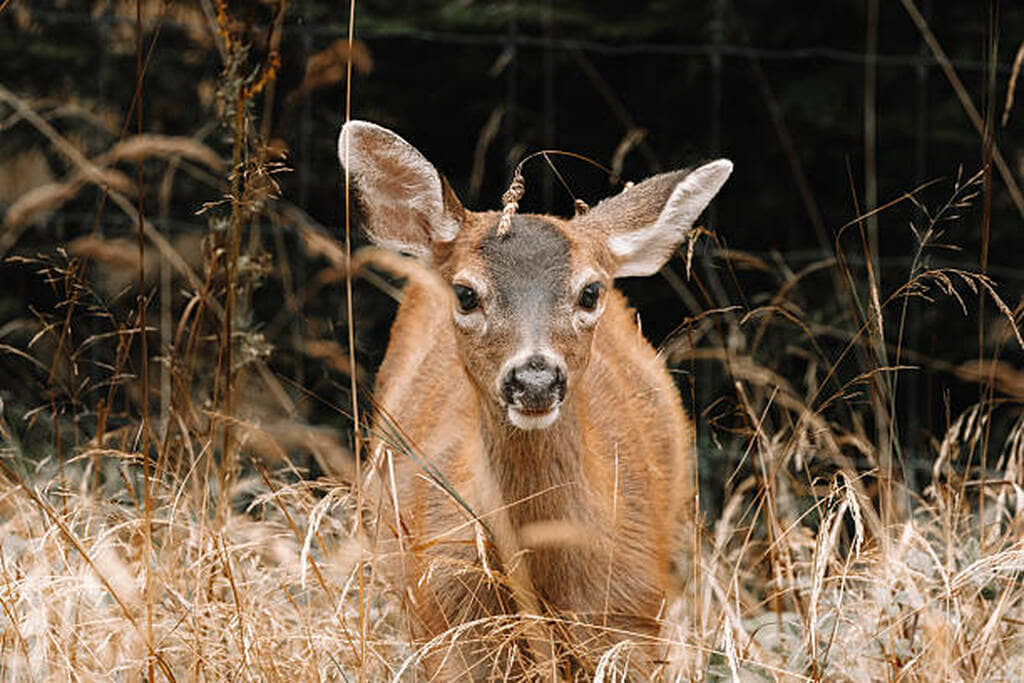
Most female deer do not have antlers. In nearly all deer species, antlers are a trait found only in males because they use them to compete for mates during the breeding season. However, there is an important exception: female reindeer (also called caribou in North America) naturally grow antlers, making them unique among deer species. In rare cases, female deer from other species may also develop antlers due to hormonal disorders or reproductive abnormalities.
Understanding why some female deer have antlers requires looking beyond a simple yes-or-no answer. Antler growth varies between species, is controlled by hormones, and reflects different evolutionary adaptations. For example, female reindeer use their antlers to compete for food during harsh winters, while female white-tailed deer, mule deer, elk, and moose almost never develop antlers under normal conditions.
This guide explains whether female deer have antlers, identifies which species naturally grow them, explores why most females do not, and discusses the rare biological conditions that can cause antler growth. You’ll also learn how antlers develop, why they are shed each year, and how to distinguish male and female deer more accurately in the wild.
Do Female Deer Have Antlers?
Most female deer do not have antlers. In the vast majority of deer species, only males grow and shed antlers each year. Antlers are primarily used during the breeding season, when bucks compete with rivals for access to females. Because female deer generally do not engage in these contests, natural selection has favored females that invest energy in reproduction rather than growing antlers.
The main exception is female reindeer (caribou). Unlike other deer species, both male and female reindeer naturally grow antlers. Female reindeer rely on their antlers to compete for feeding areas during winter, when food is buried beneath snow and resources are limited. This adaptation increases their chances of obtaining enough nutrition to support pregnancy and survive harsh Arctic conditions.
Although uncommon, female deer from species that normally lack antlers can occasionally develop them. These cases are usually linked to hormonal imbalances, reproductive abnormalities, or injuries affecting the ovaries. Such occurrences are extremely rare and should not be considered normal for the species.
Which Female Deer Species Have Antlers?
Female reindeer are the only deer that regularly grow antlers as part of their normal biology. This characteristic distinguishes them from nearly every other member of the deer family (Cervidae). Female reindeer begin growing antlers each year, although their antlers are typically smaller and less branched than those of males.
Female caribou also naturally grow antlers. Caribou are the North American populations of reindeer, so they share the same biological trait. Unlike males, which usually shed their antlers shortly after the autumn breeding season, pregnant females often keep theirs until late winter or early spring. Retaining antlers allows them to dominate feeding sites while carrying calves, giving them better access to limited food.
Female white-tailed deer almost never have antlers. A doe with antlers is considered an exceptional biological anomaly rather than a normal variation. Wildlife biologists typically attribute these rare cases to elevated testosterone levels, ovarian disorders, or intersex conditions.
Female mule deer, elk, and moose also do not naturally grow antlers. Like white-tailed deer, females of these species devote more energy to pregnancy, nursing, and raising offspring than to developing large bone structures. Documented reports of antlered females exist, but they are exceptionally uncommon and usually involve underlying hormonal or reproductive abnormalities.
| Deer species | Do females naturally have antlers? | Notes |
|---|---|---|
| Reindeer (Caribou) | Yes | The only species where antlers are a normal trait in females. |
| White-tailed deer | No | Rare cases are caused by abnormal hormone levels or reproductive disorders. |
| Mule deer | No | Natural antler growth in females is extremely rare. |
| Elk | No | Females do not develop antlers under normal conditions. |
| Moose | No | Antlered females are exceptionally uncommon and usually linked to medical abnormalities. |
Why Do Some Female Deer Have Antlers?
Female reindeer grow antlers because they gain a survival advantage during winter. Unlike most deer species, reindeer live in Arctic and sub-Arctic environments where food becomes scarce after snowfall. Antlers allow pregnant females to compete with other herd members for access to snow-free feeding sites, increasing their chances of obtaining enough nutrients to support fetal development.
Hormones determine whether a deer develops antlers. Antler growth is largely regulated by testosterone. In male deer, testosterone levels rise during spring and summer, triggering rapid antler growth before the breeding season. Females produce much lower amounts of testosterone, so the biological signals needed to initiate antler development are usually absent. Reindeer are an exception because their hormonal regulation has evolved differently, enabling females to grow antlers every year.
Evolution favors different energy investments in most female deer. Growing antlers requires large amounts of calcium, phosphorus, protein, and metabolic energy. For species such as white-tailed deer, mule deer, elk, and moose, females achieve greater reproductive success by allocating those resources to pregnancy, milk production, and raising offspring. As a result, antlers provide little evolutionary benefit and were not retained as a normal female characteristic.
Can Female Deer Grow Antlers Abnormally?
Yes, female deer can occasionally develop antlers because of abnormal hormone production. The most common cause is an increase in testosterone resulting from ovarian tumors, adrenal gland disorders, or other endocrine conditions. Higher testosterone levels can activate the same biological pathways responsible for antler growth in males.
Reproductive abnormalities can also lead to antler development. Some female deer are born with intersex conditions or genetic variations that affect reproductive organ development. These rare conditions may alter hormone production enough for small or partially developed antlers to form. Depending on the underlying condition, the antlers may remain covered in velvet or fail to complete the normal growth and shedding cycle.
Injuries affecting the reproductive organs may contribute to antler growth in exceptional cases. Damage to the ovaries can disrupt hormone balance and increase circulating testosterone. Wildlife researchers have documented isolated reports of antlered does following reproductive injuries, although these cases represent only a tiny fraction of the deer population.
Antlered female deer remain extremely rare outside reindeer populations. Wildlife agencies estimate that naturally antlered does account for far less than 1% of observations in species such as white-tailed deer. Because these individuals are so uncommon, they are often documented by biologists and hunters as unusual biological cases rather than examples of normal variation.
How Do Deer Antlers Grow and Fall Off?
Antlers are living bone structures that regenerate every year. Unlike horns, which grow continuously throughout an animal’s life, antlers are shed and regrown in an annual cycle. Deer begin growing new antlers in spring, reach full size by late summer, use them during the breeding season, and shed them after hormone levels decline.
Antler growth begins under a layer of skin called velvet. Velvet contains a dense network of blood vessels and nerves that deliver oxygen, minerals, and nutrients to the developing bone. During this stage, antlers are among the fastest-growing tissues in the animal kingdom, with some large deer species adding more than an inch (2–3 cm) of growth per day under ideal conditions.
Rising and falling testosterone levels control the antler cycle. As testosterone increases, velvet dries and is rubbed off against trees and shrubs, exposing the hardened bone beneath. Bucks then use their fully developed antlers during the rut to establish dominance and compete for mates. After the breeding season ends, testosterone drops sharply, weakening the connection between the antler and the skull. The antlers eventually detach and fall off naturally.
Female reindeer follow a different antler cycle than males. Adult males usually shed their antlers shortly after the rut in late autumn or early winter. Pregnant females often retain theirs until spring, allowing them to defend feeding areas throughout winter when nutritional demands are highest. This difference is one of the most distinctive features separating reindeer from other deer species.
How Can You Tell a Male Deer from a Female Deer?
Antlers are a useful indicator, but they are not always reliable. During the months when bucks carry antlers, identifying males is straightforward in most deer species. However, males shed their antlers every year, and female reindeer naturally grow them. For this reason, antlers alone should not be used to determine sex in every situation.
Body size provides another important clue. Adult males are generally larger, heavier, and more muscular than females of the same species. They typically have broader chests, thicker shoulders, and a more robust overall build. Females usually appear smaller with slimmer necks and lighter body proportions, especially outside the breeding season.
The neck and head become more pronounced in males during the rut. Elevated testosterone causes bucks to develop thicker neck muscles and a heavier appearance as the breeding season approaches. Females retain a narrower neck and a more streamlined profile throughout the year.
Behavior also helps distinguish males from females. During the rut, males spar with rivals, mark territory, create scrapes, and actively search for mates. Females are more often observed traveling with fawns or small family groups and focus on feeding and caring for their young rather than engaging in aggressive competition.
The most accurate identification combines several characteristics. Wildlife biologists typically evaluate antlers, body size, neck shape, behavior, season, and species together instead of relying on a single feature. Using multiple traits reduces the risk of misidentifying antlerless bucks or the rare female deer that develop antlers.
Read more: The Proper Way on How to Clean Deer Antlers
Are Antlers and Horns the Same?
No, antlers and horns are different structures. Although both project from an animal’s head, they differ in composition, growth pattern, and the animals that possess them. Deer grow antlers, while animals such as cattle, goats, sheep, and antelopes grow horns.
Antlers are made entirely of bone and are replaced every year. They develop from permanent bony structures called pedicles on the skull. During the growth stage, antlers are covered with velvet, which supplies nutrients through an extensive network of blood vessels. Once fully developed, the velvet is shed, leaving hardened bone that males use during the breeding season. After the rut, hormonal changes trigger antler shedding, and an entirely new set begins growing the following year.
Horns have a different structure and life cycle. A horn consists of a permanent bony core covered by a sheath of keratin, the same material found in human fingernails and hair. Unlike antlers, horns are not shed annually. They continue growing throughout an animal’s life, although the growth rate slows with age.
The table below highlights the main differences.
| Feature | Antlers | Horns |
|---|---|---|
| Material | Bone | Bone core with keratin sheath |
| Growth cycle | Regrown every year | Grow continuously |
| Shedding | Shed annually | Usually permanent |
| Covered with velvet | Yes | No |
| Found on | Deer family (Cervidae) | Bovids such as cattle, goats, sheep, and antelope |
Understanding this distinction helps explain why antlers are closely linked to seasonal hormone cycles, whereas horns remain a permanent anatomical feature.
Frequently Asked Questions
Do female deer lose their antlers?
Most female deer never grow antlers, so they have nothing to shed. Female reindeer are the primary exception. Like males, they grow a new set of antlers each year, but they usually keep them until late winter or early spring before shedding them.
Can female deer have velvet?
Yes. Whenever a female deer grows antlers—whether naturally in reindeer or rarely because of hormonal abnormalities—the developing antlers are initially covered in velvet. This soft tissue nourishes the growing bone until the antlers fully mineralize.
Are antlers made of bone?
Yes. Mature antlers consist entirely of bone. During the growth phase, they receive nutrients through the velvet, but once fully developed, the velvet dies and is rubbed away, exposing solid bone.
Can female deer use antlers for defense?
Yes, when they have them. Female reindeer use their antlers to defend feeding sites from other members of the herd during winter. This behavior helps pregnant females secure enough food to support themselves and their developing calves. Female deer from other species rarely have antlers, so defensive use is uncommon.
Do baby female deer grow antlers?
No. Female fawns do not develop antlers under normal conditions. Antler growth begins only in species where females naturally produce antlers, such as reindeer, or in the exceptionally rare cases involving hormonal abnormalities later in life.
Final Answer
Most female deer do not have antlers. The only deer in which females normally grow antlers are reindeer (caribou). Female white-tailed deer, mule deer, elk, moose, and most other species naturally lack antlers. When antlers appear in these species, they are almost always associated with unusual hormonal or reproductive conditions rather than normal development. Understanding these differences makes it easier to identify deer species and explains how antler evolution reflects each species’ environment and survival strategy.