
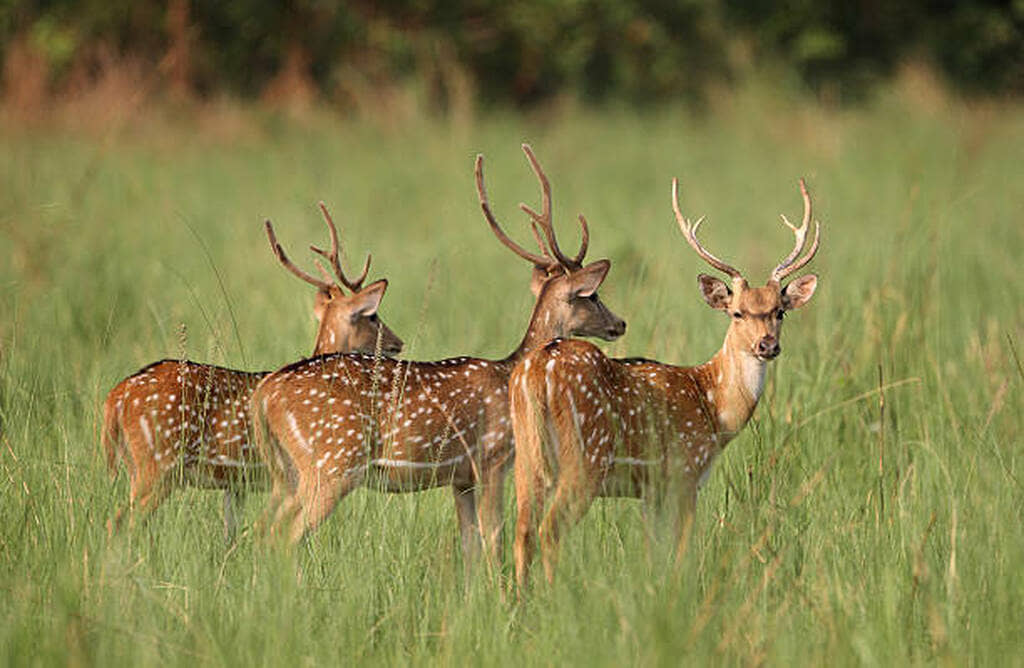
Axis deer are among the most recognizable deer species in the world because of their permanent white spots, graceful appearance, and highly social behavior. Native to the Indian subcontinent, these deer thrive in forests, grasslands, and open woodlands, where they play an important role in maintaining healthy ecosystems. Their adaptability has also allowed them to establish populations in several countries outside their native range, making them both an admired wildlife species and, in some regions, an invasive one.
This guide brings together the most important axis deer facts, covering their physical characteristics, habitat, diet, behavior, reproduction, predators, lifespan, and ecological significance. You’ll also learn why males shed their antlers every year, how axis deer communicate with herd members, what makes their spotted coat unique, and why their populations are expanding in places such as the United States.
Whether you’re researching for school, identifying wildlife, or simply curious about this remarkable species, this article provides a complete overview based on biological facts and ecological context. By the end, you’ll understand not only what makes axis deer unique among deer species but also how they survive, interact with other animals, and influence the environments they inhabit.
What is an axis deer?
An axis deer is a medium-sized deer species native to the Indian subcontinent, known for its reddish-brown coat covered with permanent white spots. Its scientific name is Axis axis, although some modern taxonomic references classify it as Cervus axis. The species is commonly called chital, spotted deer, or Indian spotted deer, reflecting its distinctive appearance and geographic origin.
Unlike many deer species that lose their spots as they mature, axis deer retain their white markings throughout their entire lives. This unique feature provides effective camouflage in forests where sunlight filters through tree canopies, making it more difficult for predators to detect them. Adult males are also recognized by their long, three-tined antlers, which they shed and regrow annually as part of their natural growth cycle.
Axis deer are highly social herbivores that usually live in herds ranging from fewer than 10 individuals to more than 100 in areas with abundant food. Their keen eyesight, excellent hearing, and strong sense of smell help them detect predators early. They frequently associate with other wildlife, especially monkeys, which warn of approaching danger through alarm calls. This cooperative relationship improves the survival chances of both species.
Where do axis deer live?
Axis deer are native to the Indian subcontinent and inhabit tropical and subtropical forests, open woodlands, savannas, and grasslands with reliable sources of water. Their natural range includes India, Nepal, Sri Lanka, Bhutan, and parts of Bangladesh, where warm climates and abundant vegetation provide ideal conditions for year-round grazing.
Within their native habitat, axis deer prefer areas that combine open feeding grounds with nearby forest cover. Grasslands allow them to forage efficiently, while dense vegetation offers protection from predators such as tigers, leopards, and dholes. Access to rivers, lakes, or seasonal waterholes is another important habitat requirement because the species drinks water regularly, especially during hot weather.
Humans have introduced axis deer to several regions outside their native range, including the United States, Australia, Croatia, Argentina, Brazil, and numerous Caribbean islands. In places such as Hawaii and Texas, populations have expanded rapidly due to favorable climates, abundant food, and relatively few natural predators. While these introduced populations support hunting and wildlife tourism in some areas, they can also compete with native herbivores, damage vegetation, and alter local ecosystems when their numbers become too large.
What do axis deer eat?
Axis deer are herbivores that feed primarily on grasses, leaves, shoots, fruits, flowers, and fallen seeds. Fresh grasses make up the largest portion of their diet because they provide the energy and nutrients needed to support daily activity, reproduction, and antler growth. During the wet season, when vegetation is abundant, axis deer spend much of their day grazing in open grasslands.
As food availability changes throughout the year, axis deer adjust their feeding habits. During dry seasons or periods of limited grass growth, they consume more leaves, shrubs, tender twigs, bark, and fallen fruit. This dietary flexibility allows them to survive in habitats where vegetation quality varies with rainfall and seasonal temperatures.
Axis deer also benefit from relationships with other wildlife. In many forests, they forage beneath langurs and other tree-dwelling monkeys that accidentally drop fruits, flowers, and young leaves while feeding. The deer gain access to nutritious food with little effort, while the monkeys benefit from the deer’s vigilance because alarm calls from the herd often warn of predators approaching from the ground.
Like other ruminants, axis deer have a four-chambered stomach that efficiently digests fibrous plant material. Microorganisms inside the rumen break down cellulose, allowing the deer to extract nutrients from grasses that many animals cannot digest. This specialized digestive system enables axis deer to thrive in ecosystems where plant-based food is plentiful but relatively low in energy.
What does an axis deer look like?
Axis deer are medium-sized deer with a sleek reddish-brown coat covered in bright white spots that remain throughout their lives. This permanent spotted pattern is their most recognizable feature and distinguishes them from many other deer species whose juvenile spots disappear as they mature. A dark stripe running along the spine and a white underside further enhance their distinctive appearance.
Adult males are significantly larger than females. Most males stand about 90–95 centimeters (35–37 inches) at the shoulder, measure up to 1.7 meters (5.6 feet) in body length, and weigh between 70 and 110 kilograms (154–243 pounds). Females are smaller, typically weighing 35–75 kilograms (77–165 pounds), making sexual dimorphism easy to observe in the wild.
Male axis deer grow impressive three-tined antlers that can reach approximately 75–100 centimeters (30–39 inches) in length. The antlers are shed and regrown every year, with new growth covered by a soft, blood-rich layer known as velvet. Once the antlers fully develop, the velvet dries and is rubbed off against trees before the breeding season begins.
Their physical features are closely linked to survival. The spotted coat blends with patches of sunlight filtering through forests, reducing visibility to predators. Long, powerful legs allow rapid acceleration and agile movement across uneven terrain, while large ears and wide-set eyes provide excellent hearing and a broad field of vision for detecting danger.
How do axis deer behave?
Axis deer are highly social animals that live in herds to improve survival and increase access to food and mates. Herds typically contain 10–30 individuals, although groups of more than 100 deer may gather in areas with abundant food and water. Living in large groups allows more animals to watch for predators, reducing the risk for each individual.
Axis deer are most active during the cooler hours of the day, especially shortly after sunrise and before sunset. They spend much of this time grazing, resting in shaded areas, grooming, and interacting with other herd members. During the hottest part of the day, they usually seek shelter beneath trees or dense vegetation to conserve energy and avoid heat stress.
Communication is essential to herd survival. Axis deer rely on vocal calls, body posture, scent marking, and tail movements to signal danger or maintain social bonds. When a predator is detected, individuals produce loud alarm calls that alert nearby deer and other wildlife. They also stamp their feet and raise their tails to warn the herd while preparing to flee.
One of the most remarkable aspects of axis deer behavior is their association with other animal species. They are frequently seen feeding alongside gray langurs, macaques, and several bird species. Monkeys often drop fruits and leaves while feeding in the canopy, providing an additional food source for the deer. In return, the deer’s sharp senses help detect predators approaching from the ground, creating a mutually beneficial relationship that improves survival for both species.
When threatened, axis deer rely on speed rather than confrontation. Healthy adults can sprint at speeds of up to 65 km/h (40 mph) and quickly change direction while running through forests or open grasslands. Their agility, combined with keen hearing, excellent eyesight, and a strong sense of smell, makes escaping predators their primary defense strategy.
How do axis deer reproduce?
Axis deer can breed throughout the year, although peak breeding activity varies depending on local climate and food availability. Unlike many deer species that have a single, well-defined rutting season, axis deer living in tropical environments often reproduce in multiple breeding peaks each year because environmental conditions remain favorable for longer periods.
During the breeding season, males compete for access to females by displaying their antlers, vocalizing, and engaging in sparring contests with rival males. These contests establish dominance while minimizing serious injuries, as weaker individuals usually retreat before prolonged fights occur. Mature males with larger antlers and better physical condition generally have greater breeding success.
After mating, females carry a single fawn for a gestation period of approximately 7.5 to 8 months. Twins are uncommon. Mothers give birth in areas with dense vegetation where newborn fawns remain concealed during their first weeks of life. The spotted coat provides effective camouflage, helping young deer blend into dappled sunlight and reducing the likelihood of predator attacks.
Fawns begin grazing within a few weeks but continue nursing until they are strong enough to feed independently. As they mature, they gradually join larger herds and learn essential survival behaviors by observing adult deer. Female axis deer usually reach sexual maturity between 12 and 18 months of age, while males often begin breeding later because they must compete with larger, more dominant adults.
In the wild, axis deer generally live 9–13 years, depending on habitat quality and predation pressure. Individuals kept in protected environments such as wildlife parks and zoos may live 15–20 years, benefiting from reliable food supplies, veterinary care, and the absence of natural predators.
What predators hunt axis deer?
Axis deer are prey for several large carnivores, making predator avoidance one of their most important survival strategies. Across their native range, they are commonly hunted by Bengal tigers, Indian leopards, dholes, and mugger crocodiles. Young fawns are also vulnerable to jackals, pythons, and large birds of prey.
Each predator targets axis deer differently. Tigers rely on stealth and powerful ambush attacks in dense forests, while leopards often hunt along woodland edges where cover is abundant. Dholes hunt cooperatively in packs, chasing deer over long distances until they become exhausted. Crocodiles pose the greatest threat when deer approach rivers and lakes to drink.
Axis deer have evolved several adaptations that improve their chances of escaping predators. Their large ears can detect faint sounds from long distances, while eyes positioned on the sides of the head provide a wide field of vision. A well-developed sense of smell allows them to identify predators before they become visible.
Group living further increases survival. When one deer detects danger, it produces a sharp alarm call that immediately alerts the rest of the herd. Individuals often freeze briefly to locate the threat before fleeing together at high speed. Running as a group makes it more difficult for predators to isolate a single target, increasing the likelihood that most of the herd escapes safely.
Why are axis deer important to ecosystems?
Axis deer play an important ecological role by transferring energy through food webs, shaping vegetation, and supporting predator populations. As one of the most abundant herbivores in many parts of the Indian subcontinent, they consume large quantities of grasses, leaves, and fallen fruit, helping regulate plant growth and influence the composition of forest understories.
Their feeding behavior also contributes to seed dispersal. Many seeds pass through the digestive system without losing their ability to germinate, allowing plants to spread into new locations. In addition, deer transport seeds on their fur as they move through forests and grasslands, increasing plant diversity across the landscape.
Axis deer are equally important as a food source for large carnivores. Healthy populations support predators such as tigers, leopards, and dholes, helping maintain balanced predator-prey relationships. A decline in deer numbers can reduce food availability for these carnivores, while unusually large deer populations may increase grazing pressure and alter vegetation structure.
The species also participates in ecological interactions with other wildlife. Feeding beneath langurs and other tree-dwelling primates creates a mutually beneficial relationship in which monkeys accidentally provide food by dropping fruits and leaves, while deer alert the group to predators approaching from the ground. These interactions illustrate how axis deer contribute to the complexity and stability of forest ecosystems.
Why are axis deer invasive in some countries?
Axis deer are considered invasive in several countries because introduced populations can grow rapidly and disrupt native ecosystems. Outside their natural range, the species often encounters favorable climates, abundant food resources, and relatively few natural predators. These conditions allow populations to expand much faster than they do in their native habitats.
Large populations consume substantial amounts of grasses, shrubs, seedlings, and agricultural crops. Heavy grazing reduces the regeneration of native plants, changes forest structure, and increases competition with indigenous herbivores for limited food resources. In sensitive ecosystems, prolonged browsing can alter plant communities and reduce biodiversity.
Introduced axis deer may also affect local wildlife indirectly. Competition for food and habitat can place pressure on native deer species and other grazing mammals. High population densities increase the risk of disease transmission between wildlife and livestock, while frequent road crossings contribute to vehicle collisions in areas where deer numbers are especially high.
Examples of invasive populations can be found in Hawaii, Texas, Australia, Croatia, Argentina, and several Caribbean islands. In some regions, wildlife managers use regulated hunting, fertility control, habitat management, or population monitoring to limit ecological damage while maintaining sustainable deer numbers. The most appropriate management strategy depends on local conservation goals, ecosystem sensitivity, and population size.
Read more: Best Food Plot Mix for Deer in Fall
What are the 25 most interesting axis deer facts?
Axis deer are one of the most distinctive deer species in the world, combining unique physical features, complex social behavior, and remarkable ecological adaptations. The following facts highlight what makes this species different from other members of the deer family.
1. Axis deer are also known as chital.
The name chital comes from languages spoken in the Indian subcontinent, while “axis deer” is the common English name used in scientific and wildlife literature.
2. They keep their white spots for life.
Unlike white-tailed deer and many other species whose fawns lose their spots as they mature, axis deer retain their white markings from birth to old age.
3. Their scientific name is Axis axis.
Although some taxonomic authorities classify the species as Cervus axis, Axis axis remains the most widely recognized scientific name.
4. They are native to the Indian subcontinent.
Wild populations naturally occur in India, Nepal, Sri Lanka, Bhutan, and parts of Bangladesh.
5. Males grow impressive three-tined antlers.
Adult bucks develop antlers that typically measure 75–100 cm (30–39 inches) and use them to compete for mates during the breeding season.
6. Antlers are shed and regrown every year.
Male axis deer lose their antlers annually before producing a completely new set covered in velvet, which supplies nutrients during growth.
7. They can run up to 65 km/h (40 mph).
Their speed and agility help them escape predators in forests and open grasslands.
8. Axis deer are excellent swimmers.
They readily cross rivers and lakes when searching for food, expanding their range, or escaping danger.
Most herds contain 10–30 deer, although groups exceeding 100 individuals can form where food is abundant.
10. Females do not grow antlers.
Only males produce antlers, making it easy to distinguish adults during much of the year.
11. They communicate with loud alarm calls.
A single warning call can alert an entire herd and even nearby wildlife to the presence of predators.
12. Their sense of smell is highly developed.
Combined with excellent hearing and wide-angle vision, their senses help detect danger long before predators approach.
13. They spend most of the day grazing.
Fresh grasses make up the largest proportion of their diet, although they also eat leaves, flowers, fruits, and young shoots.
14. Axis deer often feed beneath langurs.
Fruits and leaves dropped by monkeys provide an easy food source, while deer help detect predators approaching from the ground.
15. They prefer habitats close to water.
Rivers, lakes, and permanent waterholes are essential because axis deer drink frequently, particularly during hot weather.
16. Fawns are born with natural camouflage.
Their spotted coats blend into patches of sunlight on the forest floor, reducing the risk of predation during their first weeks of life.
17. They can breed throughout the year.
Unlike many deer species with a single rutting season, axis deer may reproduce in multiple breeding peaks depending on local environmental conditions.
18. Most females give birth to one fawn.
Twins are uncommon, allowing mothers to devote more energy to raising a single offspring.
19. They play an important role in forest ecosystems.
As grazing herbivores, axis deer influence vegetation growth, disperse seeds, and provide food for large predators.
20. Tigers are one of their primary predators.
Bengal tigers rely heavily on axis deer as prey across many protected forests in India.
21. Leopards and dholes also hunt axis deer.
These predators use different hunting strategies, from stealth attacks to coordinated pack chases.
22. Axis deer have been introduced to many countries.
Established populations now exist in the United States, Australia, Croatia, Argentina, Brazil, and several Caribbean islands.
23. They are considered invasive in some regions.
Rapid population growth can damage native vegetation, compete with local wildlife, and alter ecosystem balance.
24. Wild axis deer typically live 9–13 years.
Individuals living in protected environments may survive 15–20 years because they face fewer threats.
25. Axis deer are among the world’s most recognizable deer species.
Their permanent white spots, elegant appearance, and social behavior make them one of the easiest deer to identify and one of the most studied species in tropical Asia.
Frequently Asked Questions
Are axis deer endangered?
No, axis deer are not currently classified as an endangered species. They are listed as Least Concern because of their large native population and wide distribution across the Indian subcontinent. However, local populations may decline due to habitat loss, illegal hunting, and human disturbance.
Can axis deer swim?
Yes. Axis deer are strong swimmers. They can cross rivers, lakes, and flooded areas while searching for food, escaping predators, or moving between habitats.
Do female axis deer have antlers?
No. Only male axis deer grow antlers. Adult bucks develop three-tined antlers that are shed and regrown every year, while females remain antlerless throughout their lives.
How fast can axis deer run?
Axis deer can reach speeds of approximately 65 km/h (40 mph). Their speed, agility, and quick changes in direction help them escape predators such as tigers, leopards, and dholes.
What do axis deer eat?
Axis deer are herbivores that primarily eat grasses. They also feed on leaves, flowers, fruits, seeds, and young shoots, depending on seasonal food availability.
Where are axis deer found in the United States?
Free-ranging axis deer are most commonly found in Texas and Hawaii. They were introduced for hunting and wildlife management and have established self-sustaining populations in suitable habitats.
Why do axis deer have white spots?
The white spots provide natural camouflage. Sunlight filtering through trees creates a pattern of light and shadow that helps axis deer blend into forests, making them more difficult for predators to detect.