
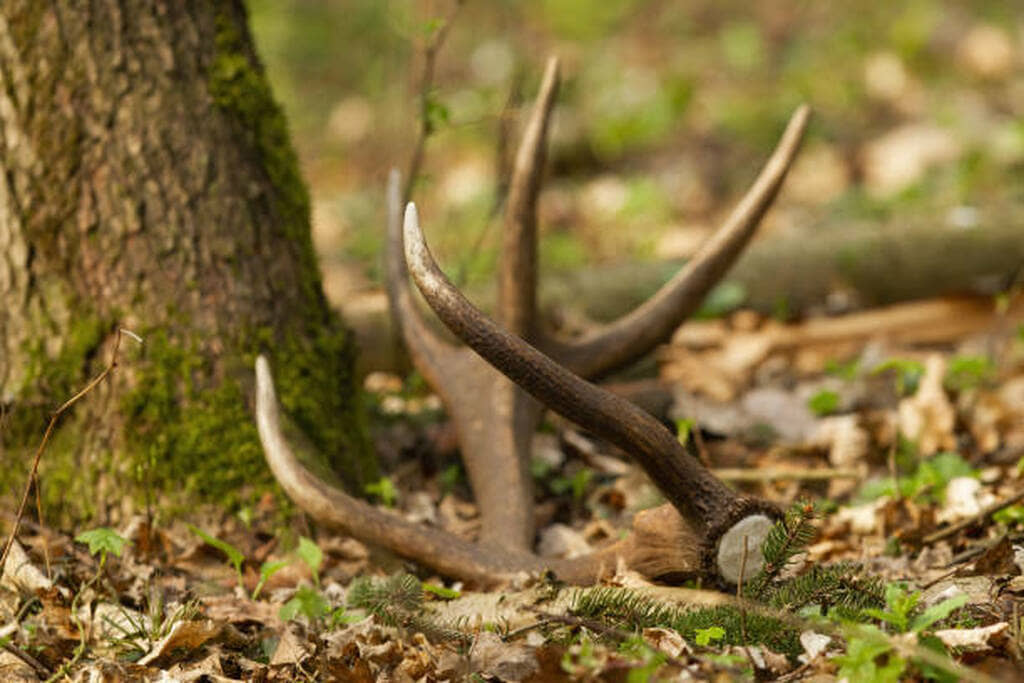
No, you cannot accurately tell the age of a deer by its antlers alone. Antlers can provide clues about a deer’s maturity, but they are influenced by far more than age. Genetics, nutrition, habitat quality, overall health, and environmental conditions all affect antler size, shape, mass, and the number of points. As a result, two bucks of the same age can have dramatically different antlers, while an older buck may carry a smaller rack than a younger one living in better conditions.
The belief that larger antlers always mean an older deer is one of the most common misconceptions among hunters and wildlife enthusiasts. Although antlers generally become larger as a buck matures, their development does not follow a predictable pattern throughout every stage of life. Peak antler growth usually occurs when a buck reaches physical maturity, after which antler size may stabilize or even decline. Because of these natural variations, wildlife biologists rarely rely on antlers alone when estimating a deer’s age.
This guide explains how antlers change throughout a deer’s life, why they are an unreliable indicator of age, and which methods provide more accurate results. You’ll also learn how body characteristics, tooth examination, and professional aging techniques can be combined with antler observations to estimate a deer’s age with greater confidence.
Can you tell the age of a deer by its antlers?
No, antlers cannot accurately determine a deer’s age. They provide a general indication of maturity but are not a dependable aging method because antler development is influenced by multiple biological and environmental factors. Wildlife biologists use antlers as supporting evidence rather than a primary indicator when estimating a deer’s age.
Antlers typically become larger and heavier as a buck matures. Yearling bucks often produce small spikes or simple forked antlers, while mature bucks between approximately 4½ and 6½ years old usually develop thicker beams, greater mass, and more symmetrical racks. However, this progression is not consistent across all deer populations. A well-fed 3½-year-old buck living in high-quality habitat may carry a larger rack than a 5½-year-old buck living where food resources are limited.
Several factors have a greater influence on antler development than age alone. Genetics determines a buck’s antler potential, nutrition provides the minerals and energy required for growth, and habitat quality affects the availability of forage throughout the year. Injuries, disease, harsh winters, drought, and population density can also reduce antler size, even in fully mature bucks. Because these variables interact, antler size should never be treated as a direct measure of age.
Antlers are most useful for placing a deer into a broad maturity category rather than identifying an exact age. For example, hunters can often distinguish a yearling from a mature buck based on overall antler development. Beyond those broad categories, however, estimating age from antlers alone becomes increasingly unreliable because individual variation grows significantly with maturity.
If you need the most accurate estimate, combine antler observations with body characteristics and tooth examination. This approach provides a much more reliable assessment than evaluating antlers by themselves and is the method commonly used by wildlife biologists and deer management professionals.
How do antlers change as a deer gets older?
Antlers generally become larger, heavier, and more complex as a buck matures, but they do not continue improving throughout its entire life. Most bucks experience rapid antler development during their early years, reach peak growth in middle age, and may produce smaller antlers as they become old. The exact timeline varies between individuals because genetics, nutrition, and habitat conditions influence annual antler growth.
During the first one to two years of life, bucks typically grow their first set of antlers after their initial winter. These antlers are often spikes or simple forked racks with limited beam length and little mass because most nutrients are directed toward skeletal growth rather than antler production. At this stage, body development takes priority over producing large antlers.
Between approximately 2½ and 4½ years of age, antler growth accelerates as bucks approach physical maturity. Main beams become longer, antler mass increases, and tine length becomes more pronounced. Many bucks also develop additional points during these years, although point count varies widely among individuals and should not be used as an indicator of age by itself.
Peak antler development usually occurs when a buck reaches full physical maturity, often between 4½ and 6½ years old in healthy populations. At this stage, bucks typically produce their heaviest antlers with the greatest beam diameter, balanced symmetry, and maximum overall size. Even so, not every mature buck will carry a trophy-sized rack. A genetically average buck may reach maturity with moderate antlers, while a younger buck with exceptional genetics and abundant nutrition can produce a much larger rack.
As bucks continue to age, antler growth often stabilizes before gradually declining. Older deer may lose beam mass, develop shorter tines, or produce less symmetrical antlers as overall physical condition decreases. Factors such as worn teeth, declining nutrition, chronic injury, or disease can reduce the nutrients available for annual antler growth. This is why an older buck does not necessarily have the largest antlers in the herd.
Because antler development follows a general biological trend rather than a fixed pattern, it should be viewed as evidence of maturity, not chronological age. Understanding these growth stages helps distinguish young, developing, mature, and aging bucks, but accurately determining age still requires additional indicators such as body characteristics and tooth analysis.
Why aren’t antlers a reliable way to determine a deer’s age?
Antlers are an unreliable indicator of age because they reflect a buck’s overall growing conditions as much as its biological maturity. While age influences antler development, it is only one of several factors that determine the size, shape, and mass of a rack. Genetics, nutrition, habitat quality, health, and environmental conditions all interact to produce the antlers a buck grows each year.
Genetics sets the upper limit for antler development. Every buck inherits a different genetic potential, which determines characteristics such as beam length, antler mass, tine formation, and overall symmetry. Two bucks raised under identical conditions can develop noticeably different antlers simply because they inherited different traits. Likewise, a buck with exceptional genetics may grow an impressive rack at a relatively young age, while another may never produce large antlers despite reaching full maturity.
Nutrition is equally important because antlers are among the fastest-growing bone structures in the animal kingdom. Bucks require large amounts of protein, calcium, phosphorus, and other minerals during the annual antler growth cycle. When food is abundant throughout spring and summer, antlers generally become heavier and longer. In contrast, poor forage, drought, or nutritional deficiencies can limit antler growth regardless of the deer’s age.
Habitat quality also plays a significant role. Deer living in regions with fertile soils, diverse vegetation, and low competition for food often develop larger antlers than deer of the same age inhabiting poorer environments. Wildlife managers frequently observe substantial differences in average antler size between neighboring regions because local habitat conditions directly affect body condition and nutrient availability.
Health and environmental stress further reduce the reliability of antlers for aging. Disease, parasite infestations, severe winters, prolonged drought, injuries, or high population density can divert energy away from antler production. Instead of investing nutrients in growing a larger rack, the deer prioritizes survival and maintaining essential body functions. As a result, even mature bucks may produce smaller or less symmetrical antlers during stressful years.
These combined influences explain why antlers should be viewed as an indicator of overall maturity and physical condition, not chronological age. For this reason, wildlife biologists evaluate antlers alongside body characteristics and tooth development rather than using antlers as the primary aging method. Combining multiple indicators consistently produces more accurate age estimates than relying on antler size or point count alone.
Read more: How to Bleach a Deer Skull: The Steps You Need to Follow
What is the most accurate way to determine a deer’s age?
The most accurate way to determine a deer’s age is by examining its teeth, especially through cementum annuli analysis. Antlers and body characteristics can estimate a deer’s maturity, but tooth-based methods provide a much closer estimate of chronological age because tooth development follows a more predictable biological pattern.
Tooth replacement is the primary aging method for fawns and young deer. Wildlife biologists examine which permanent teeth have erupted to estimate age. This method is highly reliable until a deer reaches approximately 2½ years old because tooth eruption occurs in a consistent sequence. Once all permanent teeth are present, however, tooth replacement can no longer distinguish older age classes.
For adult deer, professionals rely on tooth wear and tooth replacement to estimate age in the field. As deer age, the cusps on their molars gradually wear down from chewing vegetation. By comparing the amount of enamel remaining with the exposed dentin, experienced wildlife managers can classify deer into age groups such as 2½, 3½, 4½, or 5½ years and older. Although this technique is widely used because it is practical and inexpensive, its accuracy decreases for older deer since wear patterns vary according to diet, soil abrasiveness, and regional habitat.
Cementum annuli analysis is considered the gold standard for aging deer. The technique involves removing an incisor tooth, slicing it into thin sections, and examining the cementum layer under a microscope. Similar to annual growth rings in a tree, alternating light and dark bands are deposited each year. Counting these bands allows laboratory technicians to estimate the deer’s chronological age with a much higher degree of accuracy than field observations alone. Wildlife agencies, researchers, and deer management programs frequently use this method when precise age data is required.
Body characteristics provide another valuable source of information, particularly when observing live deer. Mature bucks typically develop a deeper chest, thicker neck during the rut, heavier shoulders, and a more muscular appearance than younger animals. Older bucks often show a slight sway in the back, a sagging belly, and slower, more deliberate movement. While these features cannot determine an exact age, they complement tooth analysis and improve the accuracy of field estimates.
The most reliable approach is to combine multiple aging methods rather than relying on a single characteristic. Hunters may first evaluate body shape and overall maturity through binoculars or trail camera images, then examine antler development for supporting evidence, and finally assess tooth wear after harvest. When scientific precision is required, cementum annuli analysis remains the preferred method because it measures annual biological growth instead of physical traits that fluctuate with nutrition and environmental conditions.
Can body characteristics help estimate a deer’s age?
Yes, body characteristics are often more reliable than antlers for estimating the age of a live deer. While antlers can vary significantly due to genetics and nutrition, body development follows a more consistent pattern as bucks mature. Experienced hunters and wildlife biologists typically evaluate body shape before considering antler size.
Young bucks, typically between 1½ and 2½ years old, have a slim, athletic appearance. Their legs appear relatively long because their bodies are still developing, the neck blends smoothly into the shoulders, and the chest and hindquarters are similar in size. Even if a young buck has an unusually large rack, its lean body proportions often reveal its true age.
As bucks reach 3½ to 4½ years of age, their bodies become noticeably heavier. The chest deepens, the shoulders become more muscular, and the neck thickens during the breeding season. The legs appear proportionally shorter because the torso has filled out, giving the deer a more compact and powerful appearance. At this stage, body characteristics usually provide a better indication of maturity than antler size.
Fully mature bucks, generally 5½ years and older, develop a stockier build. The brisket becomes more pronounced, the back may begin to sag slightly, and the belly often hangs lower than in younger deer. Neck muscles remain thick throughout much of the rut, and the distinction between the neck and shoulders becomes less obvious. These physical changes result from years of skeletal and muscle development rather than annual variations in antler growth.
The most accurate field estimates come from evaluating the entire animal instead of focusing on a single feature. Wildlife professionals commonly assess body proportions, posture, facial characteristics, neck thickness, chest depth, and antler development together before assigning an estimated age class. This holistic approach reduces the errors that occur when antlers are used as the primary indicator.
What mistakes do people make when aging deer by antlers?
The most common mistake is assuming that larger antlers always belong to older deer. Although mature bucks often carry larger racks than younger animals, antler development is influenced by many variables beyond age. Judging a buck solely by its antlers frequently leads to incorrect age estimates.
One of the biggest misconceptions is that more antler points mean an older buck. Point count is largely determined by genetics, nutrition, and growing conditions rather than chronological age. A healthy young buck with excellent genetics may produce more points than an older buck living in poor habitat. For this reason, wildlife agencies generally discourage using point count as an aging method.
Another common mistake is focusing only on antler spread or beam size. Wide antlers and thick beams often indicate favorable growing conditions, but they do not reveal how many years the deer has lived. Environmental factors such as rainfall, soil fertility, and forage quality can significantly increase or decrease antler size from one region to another.
Many hunters also overlook regional differences in deer populations. Bucks living in agricultural areas with abundant nutrition often develop larger antlers at younger ages than bucks living in forests with limited food resources. Comparing deer from different habitats without considering these environmental differences can produce misleading conclusions.
Finally, many people evaluate only one characteristic instead of considering the complete picture. A more accurate assessment combines body shape, facial features, neck thickness, antler development, and—when possible—tooth examination. Using multiple indicators reduces the influence of individual variation and provides a much more dependable estimate of a deer’s age.
When should you use antlers to estimate a deer’s age?
Antlers are best used as a secondary indicator rather than a primary aging tool. They are useful for distinguishing broad maturity classes, especially when observing deer from a distance or reviewing trail camera images. For example, very small spike antlers usually indicate a young buck, while heavy antlers with substantial mass often suggest physical maturity.
However, antlers should not be used to determine a deer’s exact age. Once bucks reach maturity, differences in genetics, nutrition, and habitat make it impossible to estimate age accurately from antler characteristics alone. A mature buck with average genetics may produce smaller antlers than a younger buck living in ideal conditions.
The most effective approach is to combine antler observations with body characteristics before harvest and tooth examination afterward. This layered evaluation provides the most consistent field estimates and aligns with the methods used by wildlife biologists and deer management professionals.
Frequently asked questions about deer age and antlers
Can a young deer have large antlers?
Yes. Exceptional genetics, high-quality nutrition, and favorable habitat can allow a young buck to develop antlers that are larger than those of older deer in poorer conditions.
Can an old deer have small antlers?
Yes. Advanced age, declining health, worn teeth, disease, injury, or poor nutrition can reduce antler size even after a buck has reached full maturity.
At what age does a buck usually grow its largest antlers?
Most bucks reach peak antler development between 4½ and 6½ years of age, although the exact age varies by genetics, habitat quality, and herd management practices.
Not reliably. Antler points may increase as a buck matures, but genetics and nutrition have a much greater influence. Point count alone should never be used to estimate age.
Can you estimate a deer’s age from a trail camera photo?
Yes, but only approximately. Trail camera images are most useful for evaluating body proportions, neck thickness, chest depth, and overall maturity. Without examining the deer’s teeth, an exact age cannot be determined.