
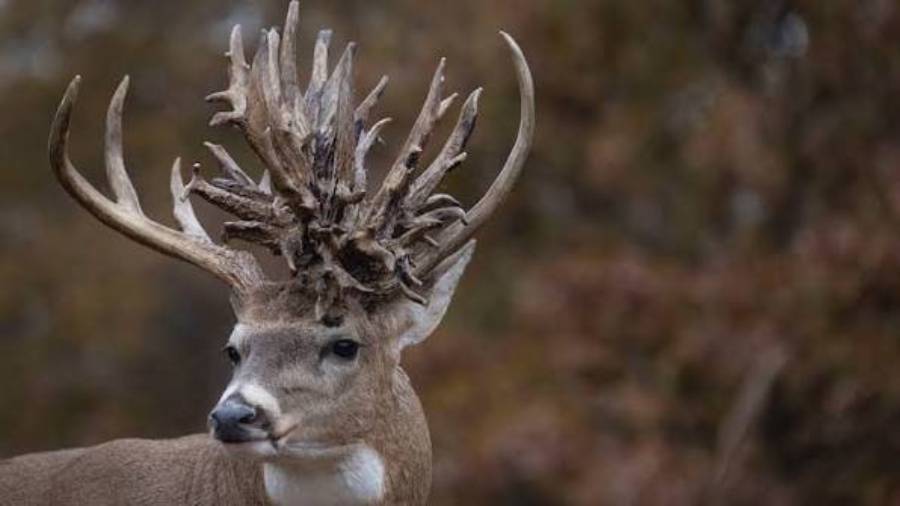
Deer develop abnormal antlers when normal antler growth is disrupted by injury, pedicle damage, physiological stress, poor nutrition, disease or parasites, hormonal problems, or genetics. Because bucks grow a new set of antlers each year, problems that occur during the growth cycle can change the size, shape, symmetry, or texture of the rack.
Many hunters assume that an unusual rack is evidence of poor genetics, but that conclusion is often too simple. A buck can develop a bent beam, missing tine, uneven rack, or other deformity after damaging a growing antler while it is still covered in velvet. Damage to the pedicle can affect later antler growth, while illness, nutritional stress, or hormonal disruption can interfere with the biological processes responsible for normal development. Genetic abnormalities are also possible, but one unusual rack is not enough to identify a hereditary problem.
For hunters, the shape of an abnormal rack can provide useful clues about what happened to a buck, especially when trail-camera photos are available from multiple seasons. The seven main causes of abnormal antlers are direct antler injury, pedicle damage, bodily injury, poor nutrition, disease or parasites, hormonal disruption, and genetics.
Why Do Deer Develop Abnormal Antlers?
Deer develop abnormal antlers when injury, physiological stress, poor nutrition, disease, hormonal disruption, or genetics interfere with the normal antler growth cycle. The seven main causes are direct injury to a growing antler, damage to the pedicle, injury elsewhere on the body, nutritional problems, disease or parasites, hormonal disruption, and genetic or developmental abnormalities. Wildlife researchers caution that several of these factors can produce similar-looking racks, so the exact cause cannot always be identified from a trail-camera photo or harvested antler alone.
Antlers are especially vulnerable to disruption because bucks grow a new set every year. Growth begins from the pedicles, which are permanent structures on the skull. During the growing season, each antler is covered by velvet, a living tissue that supplies oxygen and nutrients to the developing bone. The antlers remain sensitive during this stage because they contain an extensive blood supply. After growth is complete, hormonal changes cause the velvet to dry and shed, leaving the hardened antler used during the breeding season.
The timing and location of a disruption help determine what the abnormal rack looks like. Damage to the growing antler can alter the current year’s rack, while an injury involving the pedicle or frontal bone can affect the structure from which future antlers grow. Systemic problems such as illness, parasites, nutritional stress, or hormonal abnormalities can interfere with antler development without directly damaging the antler itself. Mississippi State University’s Deer Ecology and Management Lab notes that pedicle injuries, velvet-stage injuries, and serious bodily injuries account for many developmental abnormalities observed in wild bucks.
For hunters, this distinction matters because an unusual rack is evidence that antler development was disrupted, but it does not identify the cause by itself. A buck with one distorted beam may have experienced an injury during velvet growth, while a deformity that repeatedly appears on the same side over several seasons can point toward damage at the pedicle. Persistent velvet, in contrast, can indicate disruption of the hormonal processes that control antler hardening and shedding. Evaluating the rack together with the buck’s body condition, visible injuries, and multi-year trail-camera history provides more useful information than assuming every abnormal antler is genetic.
Can an Injury to a Growing Antler Cause Abnormal Antlers?
Yes. An injury to an antler while it is actively growing can change its shape for the remainder of that year’s growth cycle. Velvet-covered antlers are living, rapidly developing structures supplied with blood and nutrients. If a growing beam or tine is struck, bent, cut, or partially broken while that blood supply remains active, the damaged section can continue developing in an abnormal direction or harden with an unusual shape.
Growing-antler injuries can produce several visible abnormalities, including bent beams, irregular tines, localized swellings, unusual branching, or a section of antler that appears broken and then healed. Mississippi State University documents an example in which a broken beam retained its blood supply, survived, and later hardened in an abnormal configuration. The same research program notes that damage to the growing tip can cause the main beam to divide into separate shafts. These abnormalities demonstrate why a strange rack does not automatically indicate a genetic defect.
The severity of the abnormality depends on where the antler is damaged, when the injury occurs, and whether the developing tissue maintains enough blood supply to survive. An injury early in the growth period has more time to influence subsequent development, while damage after the antler has nearly completed growth may produce a more localized defect. Growing antlers are particularly sensitive during the velvet stage; UF/IFAS notes that injuries during this period can bleed heavily because of the active blood supply within the developing structure.
A direct injury to the growing antler is also different from an injury to the pedicle. If the damage is limited to the antler itself and the pedicle remains intact, the abnormality may disappear after the buck sheds that rack and begins a new growth cycle. Damage to the pedicle is more significant because the pedicle remains attached to the skull and serves as the base for future antler regeneration. For hunters tracking the same buck across several seasons, whether the deformity disappears or repeatedly develops in the same location is therefore an important clue to its likely origin.
Can Damage to a Deer’s Pedicle Cause Abnormal Antlers?
Yes. Damage to a deer’s pedicle can cause abnormal antlers because the pedicle is the permanent structure from which a new antler grows each year. Unlike the antler itself, which is shed after the breeding season, the pedicle remains attached to the skull. An injury that changes the shape, position, or integrity of this structure can therefore influence how later antlers develop from the same side.
Pedicle injuries can occur when a buck damages the base of an antler during a collision, fight, or other traumatic event. They can also occur if an antler is broken close to the skull or shed abnormally. UF/IFAS identifies direct injury to the pedicle or growing antler as one of the major categories of abnormal antler growth. When the pedicle itself is permanently altered, the resulting antler may grow at an unusual angle, develop irregular points, or remain noticeably different from the opposite side.
The main difference between a pedicle injury and a direct antler injury is the potential duration of the abnormality. Damage limited to velvet-covered antler tissue may disappear when that antler is shed, because the buck starts the next growth cycle with a new antler. A damaged pedicle can continue influencing antler development in later years because future racks originate from the same injured structure. This is why a buck that repeatedly develops a distorted antler on the same side deserves closer observation.
Trail-camera history can help hunters distinguish a recurring pedicle-related problem from a temporary injury. If a buck shows a similar deformity on the same side for two or more consecutive antler cycles, persistent damage near the antler base becomes a stronger explanation. A single abnormal rack does not provide enough evidence to make that conclusion. Comparing photographs from multiple seasons, especially images that clearly show the antler base, gives hunters more useful information than judging one rack in isolation.
Can an Injury to Another Part of a Buck’s Body Affect Antler Growth?
Yes. A serious injury elsewhere on a buck’s body can disrupt normal antler development even when the antlers and pedicles are not directly damaged. Antler growth is a physiologically demanding process, and a buck recovering from significant trauma must also direct nutrients and energy toward repairing injured tissue. If that stress occurs while antlers are actively growing, development can be altered.
This type of abnormality differs from direct antler trauma because the visible problem appears in the rack even though the original injury occurred somewhere else on the body. Mississippi State University’s Deer Ecology and Management Lab includes bodily injury among the factors associated with developmental antler abnormalities. The resulting rack may become asymmetrical, show reduced development on one side, or develop an unusual configuration during the same growth period in which the buck is recovering.
Hunters sometimes associate leg injuries with an abnormal antler on the opposite side of the body, a phenomenon commonly described as a contralateral antler effect. This association has been reported in deer observations, but it should not be treated as a rule that allows hunters to identify a specific injury from antler shape alone. An abnormal left antler does not prove that a buck injured its right leg, and the absence of an obvious body injury does not prove that the rack is genetic. Antler development can be influenced by several factors during the same season.
Body condition provides useful supporting context when evaluating this type of abnormality. A buck with an unusual rack and a visible limp, healing wound, substantial loss of condition, or other sign of recent trauma gives a hunter more evidence for an injury-related explanation than antler shape alone. Historical trail-camera photographs can strengthen the interpretation further by showing whether the buck appeared normal before the injury and whether later racks returned to a more typical form.
For hunting and herd management, the key point is that a body injury can produce an abnormal rack without changing the buck’s genetics. Removing such a deer specifically to eliminate supposedly undesirable antler genes would therefore be based on an unsupported assumption. The cause should be evaluated using the buck’s physical condition, injury history, and antler development across multiple seasons whenever that information is available.
Can Poor Nutrition Cause Abnormal Antler Growth?
Yes. Poor nutrition can reduce antler development and, when nutritional stress is severe, contribute to abnormal antler growth. Growing antlers require substantial energy, protein, minerals, and other nutrients because bucks produce an entirely new set during a relatively short period each year. When available forage does not meet those nutritional demands, the buck must divide limited resources among basic body maintenance, recovery, reproduction, and antler development.
Nutrition has a measurable effect on antler size. Mississippi State University reports that yearling bucks fed a diet containing 16% protein grew antlers twice as large as yearlings receiving an 8% protein diet. When those diets continued, bucks in the 16% protein group averaged approximately 20 additional inches of Boone and Crockett antler score at 4 years of age. The finding demonstrates that nutritional quality can substantially affect how much of a buck’s antler-growth potential is expressed.
However, small antlers and abnormal antlers are not the same thing. A young buck, an older buck past its physical prime, or a buck living in low-quality habitat may simply grow a smaller rack without producing a true deformity. Poor nutrition becomes more relevant to abnormal antler form when the deficiency is severe enough to disrupt normal physiological processes during active growth. UF/IFAS notes that malnutrition is among the systemic conditions associated with abnormal antlers and that sudden dietary mineral shortages in otherwise well-nourished mature bucks can contribute to collapsing tines or main beams.
Protein and overall forage quality are particularly important during spring and summer because this period overlaps with rapid antler growth. Mississippi State University states that deer require approximately 13% to 16% crude protein for optimum growth and antler development. High-quality warm-season forage therefore affects more than the final size of a rack; it helps provide the nutritional foundation needed for normal body and antler development.
Hunters should also avoid assuming that a mineral block will correct every nutrition-related antler problem. Antler development depends on total dietary quality rather than one isolated mineral source. Habitat capable of supplying adequate protein, energy, minerals, and digestible forage throughout critical growth periods provides a stronger nutritional foundation than supplementation alone. Deer density also matters because excessive competition can reduce the amount of quality forage available to each animal.
Age must be considered before nutrition is blamed for a small rack. Bucks do not express their maximum antler size as yearlings or 2-year-olds. Mississippi State University reports that 3-year-old bucks generally achieve about 75% to 80% of their eventual antler growth, while reaching 90% to 95% usually requires at least 4 years. A small but normally formed rack on a young buck is therefore expected development rather than evidence of malnutrition or an abnormality.
For hunters evaluating an unusual buck, nutrition is most informative when antler condition is considered alongside age, body condition, habitat quality, and the condition of other deer on the property. If numerous bucks show reduced body size and weak antler development, a property-level nutrition problem becomes more plausible. One buck with a single distorted tine, by contrast, provides much stronger reason to investigate injury than to conclude that the entire herd lacks nutrients.
Can Disease or Parasites Cause Deer to Grow Abnormal Antlers?
Yes. Disease and heavy parasite burdens can contribute to abnormal antler growth when they disrupt the buck’s normal physiological condition during antler development. These problems generally affect antlers indirectly. Instead of physically damaging the rack, illness or parasitism places stress on the animal and can interfere with the biological processes and resources needed to build normal antler tissue.
UF/IFAS identifies disease and parasitism among the systemic conditions capable of altering normal body functions and producing abnormal antler growth. The same source notes that certain diseases can influence antler form and cites lungworm infection in red deer as an example associated with spiral or corkscrew-shaped antlers. Comparable physiological disturbances may influence antler development in white-tailed deer, although an unusual rack alone cannot establish which disease or parasite is responsible.
The mechanism is important for hunters to understand. A buck experiencing substantial illness or parasite pressure must allocate resources to maintaining basic body functions and responding to the health problem. If this occurs during the rapid antler-growing period, normal development may be compromised. The resulting abnormality can therefore be a secondary sign of physiological stress rather than a direct effect of a pathogen on antler tissue.
An abnormal rack alone does not mean a deer is sick. Injury to velvet antlers, pedicle damage, nutrition, hormonal disruption, and genetics can produce abnormalities that visually overlap with those associated with systemic health problems. A hunter should therefore evaluate the entire animal rather than diagnose disease from antler shape. Poor body condition, unusual behavior, visible lesions, severe hair loss, weakness, neurological abnormalities, or other physical signs provide more meaningful health context than the rack alone.
The same caution applies to parasites. Most wild deer carry some parasites, and their presence does not automatically result in abnormal antlers. The relevant issue is whether parasite burden becomes severe enough to affect body condition and normal physiology. A healthy-looking buck carrying a typical parasite load should not be classified as unhealthy simply because one tine grows in an unusual direction.
Trail-camera observations can provide additional evidence because they allow hunters to compare antler development with changes in body condition over time. A buck that develops an abnormal rack during a season in which it also appears unusually thin or physically compromised may justify closer attention. If the animal returns to good condition and grows a normal rack the following year, a temporary systemic problem becomes more plausible than a permanent genetic abnormality.
For herd management, abnormal antlers should be treated as one observation rather than a disease diagnosis. Hunters who encounter deer displaying obvious symptoms of illness should follow local wildlife-agency guidance, especially when diseases of management concern are present in the region. The shape of the antlers can provide a clue, but the buck’s overall health and behavior provide the more useful evidence.
Can Hormonal Problems Cause Cactus Antlers in Bucks?
Yes. Hormonal problems can disrupt the normal antler cycle and cause persistent velvet or cactus-like antlers in bucks. Testosterone plays a central role in the seasonal transition from growing velvet antlers to hardened antlers and later antler shedding. When testosterone production does not follow its normal seasonal pattern, antlers may remain in velvet and continue developing abnormally instead of completing the normal cycle.
Normal testicular function is important because the testes regulate seasonal testosterone production. UF/IFAS reports that testosterone levels below the normal threshold can lead to prolonged or permanent velvet retention. Hormonal disruption can result from testicular injury, disease, nutritional deficiencies, toxic substances, or other physiological problems that interfere with normal hormone production.
One of the most recognizable results is a cactus buck, which develops irregular masses of persistent velvet-covered antler tissue. These formations are also called peruke antlers. Rather than producing a clean, hardened rack with clearly defined beams and tines, continued antler growth can create enlarged, rounded, clustered, or tumor-like structures. UF/IFAS notes that continuous velvet growth can become especially pronounced where the living velvet tissue survives for an extended period.
Cactus antlers differ from a localized injury to one growing tine. A direct velvet injury may deform one part of an otherwise normally hardened rack, while hormonal disruption can affect the broader antler cycle, including velvet retention, hardening, and shedding. This distinction gives hunters an important visual clue, although the rack alone cannot identify the exact hormonal problem responsible.
Testicular injury is one condition hunters should consider when a mature buck retains velvet well beyond the normal period or repeatedly develops cactus-like antlers. Damage that reduces normal testosterone production can interfere with the sequence that controls antler maturation. Disease and other physiological conditions can produce a similar outcome, so persistent velvet should be treated as evidence of hormonal disruption rather than proof of one specific injury.
For hunters, persistent velvet outside the expected seasonal growth period is more informative than an isolated crooked tine. A buck photographed repeatedly with soft-looking, irregular antler masses may have a reproductive or hormonal disorder, while a buck with one bent beam and otherwise normal hardened antlers is more consistent with localized trauma. Multi-season trail-camera records can strengthen this distinction by showing whether the condition persists.
Can Genetics Cause Abnormal Antlers in Deer?
Yes. Genetics can contribute to abnormal antler traits, but one abnormal rack is not enough to prove that a buck has undesirable genetics. Antler characteristics are influenced by inherited genetic potential, yet their final expression also depends on age, nutrition, injury, health, and environmental conditions. Hunters therefore cannot reliably separate genetics from these other influences by looking at a single rack.
Hereditary defects are one recognized category of abnormal antler development. UF/IFAS identifies genetic defects as one of three broad explanations for abnormal antlers, alongside systemic physiological problems and direct injury to the antler or pedicle. A genuinely inherited abnormality can influence how antlers develop, but several non-genetic causes can produce similar visible results.
The difference between genotype and phenotype is important when hunters evaluate antlers. Genotype refers to an animal’s inherited genetic information, while phenotype is the physical result produced by genetics interacting with the environment. Two bucks with strong genetic potential can develop noticeably different racks if one receives better nutrition or avoids injury during antler growth. Conversely, an unusual rack caused by trauma can look abnormal even though the buck’s inherited antler traits are normal.
Research from Mississippi State University demonstrates how strongly environment can influence antler expression. Deer from different regions retained their genetic backgrounds while improved nutrition increased body and antler development. The researchers concluded that genetics affects individual potential, but nutrition and environmental conditions have a major influence on how that potential is expressed.
This relationship is one reason hunters should avoid labeling every small or irregular-antlered buck as genetically inferior. A broken velvet antler, damaged pedicle, serious injury, nutritional stress, or disease can change the rack without changing the buck’s DNA. Age creates another source of variation because young bucks have not yet reached their mature antler potential.
How Can Hunters Tell Genetics From an Injury-Related Abnormality?
Hunters usually cannot confirm a genetic antler abnormality from one season of observation, but recurring patterns and injury history can help distinguish possible causes. The strongest evidence comes from following the same buck over multiple antler cycles rather than making a judgment from a single photograph or harvested rack.
A one-time deformity is more consistent with a temporary event when the buck previously had a normal rack and returns to normal growth the following season. For example, a buck photographed with symmetrical antlers one year, a distorted right beam the next year, and a normal rack afterward provides stronger evidence for temporary injury or physiological stress than for a stable inherited defect.
A deformity that repeatedly develops from the same side may point toward pedicle damage rather than genetics. Because the pedicle remains after each antler is shed, permanent damage at the antler base can influence successive racks. Hunters should therefore compare which side is affected, where the deformity begins, and whether the pattern persists over two or more seasons.
Repeated traits across years can make a persistent biological influence more plausible, but recurrence still does not prove genetic inheritance. Pedicle damage, chronic hormonal problems, and long-term health conditions can also produce recurring abnormalities. Confirming that an antler trait is hereditary would require more evidence than a hunter normally obtains from visual observation.
Trail cameras are especially useful because they create a chronological record. Hunters can compare rack configuration, body condition, visible injuries, velvet retention, and the affected side from one year to the next. This makes multi-year observation more informative than trying to diagnose genetics from antler shape alone.
The management implication is significant. Removing an abnormal-antlered buck does not automatically improve the genetics of a free-ranging deer herd. Mississippi State University reports that genetics cannot be practically managed in free-ranging populations through ordinary selective harvest and recommends focusing management efforts on factors such as nutrition and habitat quality. In a 13-year study discussed by Mississippi State University, seven years of removing below-average-antlered bucks did not increase average antler size by age class.
For hunters, the more defensible approach is to treat genetics as one possible cause rather than the default explanation. A single abnormal rack shows that antler development differed from the normal pattern; it does not reveal whether the cause was inherited. Injury history, pedicle condition, nutrition, health, age, and multi-year observations must be considered before genetics becomes a strong explanation.
What Do Different Abnormal Antler Shapes Tell Hunters About the Cause?
Different abnormal antler shapes can provide clues about the cause, but hunters cannot reliably diagnose an injury, disease, or genetic problem from rack shape alone. Mississippi State University notes that developmental abnormalities have many overlapping causes, making it difficult for wildlife biologists to identify the exact cause without detailed examination or necropsy. The most useful approach is to combine antler shape with the location of the abnormality, the buck’s physical condition, and observations from previous seasons.
A localized bend, twisted section, or unusually shaped tine can indicate damage while the antler was growing in velvet. Mississippi State University documents cases in which a broken beam maintained its blood supply and later hardened in an abnormal position. Damage to the growing tip can also cause the main beam to divide into two shafts. These patterns occur because velvet-covered antlers are still actively developing when the injury happens, allowing damaged tissue to continue growing in an altered direction.
An abnormality beginning near the antler base deserves different consideration. Malformed growth associated with the pedicle is more likely to recur because the pedicle remains attached to the skull after the antler is shed. Mississippi State University identifies damage to the pedicle or frontal bone as the most common injury-related cause of antler malformation and documents cases involving asymmetry, accessory antler growth, missing burrs, and visibly malformed pedicles after trauma.
Persistent velvet or a large irregular mass of antler tissue points toward another mechanism. Normal testosterone production is necessary for antlers to complete their seasonal transition out of velvet. Insufficient testosterone can cause antlers to remain in velvet, while prolonged disruption can produce the irregular formations associated with cactus bucks or peruke antlers. This pattern is more consistent with hormonal or systemic disruption than with a simple broken tine.
Small antlers should be interpreted more carefully because size alone does not establish an abnormality. Antler conformation naturally varies with age, genetics, and nutrition, and better forage can substantially increase antler size at the same age. Mississippi State University also reports that abnormal points become more common as bucks get older. A small but symmetrical rack on a young buck may therefore represent normal age-related development rather than disease, poor genetics, or injury.
The following patterns can help hunters organize their observations without treating them as definitive diagnoses:
| Observed antler pattern | Cause worth considering | Important limitation |
|---|---|---|
| Bent, twisted, or locally deformed beam | Injury during velvet growth | Rack shape cannot reveal the exact event |
| Split or double main beam | Damage to a growing antler tip | Other developmental factors may also affect branching |
| Abnormality beginning at the antler base | Pedicle or frontal-bone injury | Closer examination may be required |
| Similar same-side deformity across seasons | Persistent pedicle damage | Recurrence alone does not prove the cause |
| Persistent velvet or cactus-like mass | Hormonal or reproductive disruption | The specific hormonal problem cannot be diagnosed visually |
| Small but normally formed rack | Age, nutrition, or genetic potential | Small size is not automatically an abnormality |
| One unusual rack with no previous history | Temporary injury or physiological disruption | One season is insufficient to identify genetics |
A hunter should therefore treat rack configuration as evidence for narrowing possible causes rather than proof of one cause. The strongest interpretation comes from repeated observations. A single photo showing a crooked beam provides limited information, while several years of photographs showing the same buck, the same affected side, and changes in body condition can reveal whether the problem was temporary or persistent.
Will a Buck’s Abnormal Antlers Grow Back Normally Next Year?
A buck’s abnormal antlers can grow back normally the next year when the cause was temporary and the pedicle remains healthy. White-tailed deer shed their antlers and grow a new set from the pedicles each year, so an abnormality affecting only one season’s developing antler does not necessarily become permanent. Whether the next rack returns to normal depends primarily on what disrupted the previous growth cycle.
An injury limited to a velvet-covered antler has a relatively clear path to recovery. Once the damaged rack is shed, the buck begins producing a new antler rather than repairing and retaining the old one. If the pedicle was not damaged and the buck remains healthy, the next antler can develop without repeating the previous deformity. This is why a bent beam or damaged tine observed for only one season is weak evidence for a permanent problem.
Pedicle damage has a greater chance of producing recurring abnormalities. The pedicle serves as the permanent base for annual antler regeneration, so trauma that changes its structure can influence later racks. Mississippi State University shows that pedicle and frontal-bone injuries can result in asymmetry and malformed antler growth. A hunter who photographs a similar abnormality originating from the same antler base for multiple consecutive seasons should therefore consider old pedicle trauma as a plausible explanation.
Abnormalities associated with temporary physiological stress may also improve when the underlying condition resolves. A buck recovering from bodily injury, severe nutritional stress, disease, or a heavy parasite burden may produce a more normal rack after its overall condition improves. UF/IFAS groups these factors as systemic conditions because they alter normal body function rather than necessarily damaging the antler directly. Recovery of the animal can therefore remove the disruption that affected the previous growth cycle.
Hormonal abnormalities are less predictable because regrowth depends on whether normal endocrine function returns. A buck with insufficient testosterone may retain velvet instead of completing normal antler hardening and shedding. If the hormone disruption results from a temporary condition and normal function returns, later antler development may improve. Persistent testicular damage, congenital abnormalities, or another continuing physiological problem can cause the abnormal pattern to remain.
Genetic traits can also contribute to recurring antler characteristics, but hunters should not use recurrence alone as proof of heredity. Mississippi State University notes that antler conformation is influenced by age, genetics, and nutrition and that the same buck can show both general consistency and annual variation across different years. Persistent pedicle injury and chronic physiological problems can also create repeated abnormalities, so multiple abnormal racks do not automatically establish a genetic cause.
Trail-camera records are particularly valuable because they allow a hunter to compare the same buck across complete antler cycles. The most useful comparison includes at least four observations: which side is abnormal, where the deformity begins, whether the buck shows visible injuries or poor body condition, and whether the same pattern returns the following year. These observations cannot provide a laboratory diagnosis, but they can distinguish a one-season event from a persistent condition far better than a single photograph.
For example, consider a buck with a normal rack at age 3, a severely bent right beam at age 4, and a normal right beam again at age 5. That sequence supports a temporary velvet-stage injury more strongly than a permanent genetic defect. A second buck that develops abnormal growth from the same damaged right pedicle at ages 4, 5, and 6 presents a different pattern and makes persistent structural damage more plausible.
The practical rule for hunters is simple: do not judge the long-term condition of a buck from one abnormal rack. Deer regenerate antlers annually, and many developmental problems occur during only one growth cycle. Following the animal into the next season provides much stronger evidence about whether the abnormality was temporary, recurring, or associated with a permanent problem.
Read more: Why Do Deer Stop Using an Area After Flooding?
Should Hunters Cull a Buck Because It Has Abnormal Antlers?
Hunters should not cull a buck solely because it has abnormal antlers. An unusual rack can result from antler injury, pedicle damage, bodily trauma, nutritional stress, disease, hormonal disruption, or genetics, so the appearance of one rack does not establish that the buck carries undesirable genes. Removing that animal specifically to improve herd genetics can therefore be based on the wrong diagnosis.
The term “cull buck” is commonly used for a deer that hunters believe has inferior antler genetics and should be removed from the breeding population. That concept has limited value in free-ranging white-tailed deer because hunters cannot determine a buck’s genotype from antler appearance alone. A crooked beam caused by a velvet-stage injury can look undesirable while having no connection to the genes the buck passes to offspring.
Research summarized by Mississippi State University also shows why selective harvest is ineffective as a simple genetic-management tool. In a long-term study, researchers removed bucks with below-average antlers for their age for seven consecutive years. After 13 years of monitoring, the selective harvest program had not increased average antler size within age classes. Mississippi State therefore recommends that managers of free-ranging deer place greater emphasis on nutrition and habitat rather than attempting to manipulate antler genetics through harvest.
Age further complicates culling decisions. Young bucks have not reached their mature antler potential, so a small or uneven rack on a yearling or 2-year-old does not provide a reliable picture of how that animal will develop. Antler size generally increases substantially as bucks mature, provided nutrition and health remain adequate. Harvesting a young buck because its current rack appears inferior can therefore remove the animal before its mature phenotype is known.
Temporary injuries create another problem with rack-based culling. A buck may grow a distorted antler after damaging it in velvet and then produce a normal rack the following season. If that deer is harvested specifically to eliminate “bad antler genetics,” the management decision confuses an environmental injury with an inherited trait. Multi-year trail-camera records are much more useful because they reveal whether the abnormality occurred once or repeatedly.
Can Hunters Improve Antler Genetics by Removing Abnormal Bucks?
Hunters cannot reliably improve the antler genetics of a free-ranging deer herd simply by removing bucks with abnormal racks. Antler appearance is influenced by both inherited and environmental factors, while breeding occurs across a large population in which both bucks and does contribute genetic material.
A hunter also cannot see which antler-related genes a doe carries. Removing selected males therefore affects only one visible portion of the breeding population, and even those males cannot be accurately classified genetically from rack size or shape. A buck with exceptional antlers may carry genetic variants that do not consistently produce the same phenotype in offspring, while an average-looking buck may contribute favorable traits that are not visible in his current rack.
Free-ranging deer also move across property boundaries. Dispersal and breeding behavior allow genes to enter and leave a local property, reducing the ability of individual hunters to control the genetic composition of the population. These biological realities make genetic selection fundamentally different from controlled livestock breeding, where parents, pedigrees, mating, nutrition, and offspring can all be managed.
For most hunting properties, habitat quality, nutrition, age structure, deer density, and harvest objectives are more practical management targets than removing individual bucks based on unusual antlers. These factors directly affect the resources available for body and antler development and can be influenced through habitat work and population management.
An abnormal buck may still be harvested when doing so matches the hunter’s legal harvest opportunity and the property’s management goals. The important distinction is the reason for the decision. Harvesting a buck because the hunter wants that animal is different from claiming that one harvest will remove defective antler genes from the herd.
What Should a Hunter Do After Seeing a Buck With Abnormal Antlers?
A hunter should document the buck and observe it over time before deciding what caused its abnormal rack. One photograph can identify that an abnormality exists, but multiple observations provide far more information about whether the condition is temporary, recurring, injury-related, or associated with the buck’s overall health.
First, save clear trail-camera photographs and record the date. Antlers change throughout the annual growth cycle, so knowing whether an image was captured during active velvet growth, shortly before velvet shedding, or after the rack hardened helps establish the developmental stage in which the abnormality was observed.
Second, identify which antler is affected and where the abnormality begins. A localized bend near the end of a beam suggests a different mechanism from abnormal growth originating directly at the pedicle. Recording the same details each year makes future comparisons more useful.
Third, evaluate the buck’s body condition. Look for a visible limp, wounds, unusual posture, severe weight loss, persistent velvet, weakness, or other physical abnormalities. Antler shape alone cannot diagnose a health problem, but antler abnormalities combined with additional physical signs provide stronger evidence that a systemic or injury-related issue may be involved.
Fourth, compare the buck with photographs from previous and later seasons. A rack that becomes abnormal for one year and then returns to normal supports a temporary explanation such as velvet injury or short-term physiological stress. Repeated deformation beginning at the same antler base makes persistent pedicle damage more plausible.
Fifth, avoid labeling one unusual rack as a genetic defect. Genetics is only one of seven major explanations considered in abnormal antler development, and several non-genetic causes are common in wild bucks. A stronger interpretation requires multiple seasons of evidence and consideration of injury, health, nutrition, age, and pedicle condition.
Sixth, evaluate the broader deer population before assuming the property has a herd-level problem. One abnormal buck does not demonstrate poor nutrition or poor herd genetics. If multiple deer show poor body condition, reduced development, or other health concerns, habitat quality, deer density, food availability, and regional disease issues deserve closer investigation.
Seventh, base the harvest decision on the property’s management objectives. A hunter managing for mature bucks may choose to observe a young abnormal-antlered deer for another season, while another property may harvest the same deer because it meets established harvest goals. The rack abnormality itself does not create a universal biological requirement to remove the buck.
For hunters, the most useful rule is straightforward: an abnormal rack shows that antler development was altered, but it does not reveal the cause by itself. Injury, pedicle damage, physiological stress, nutrition, disease, hormonal function, and genetics all need to be considered before drawing a management conclusion.