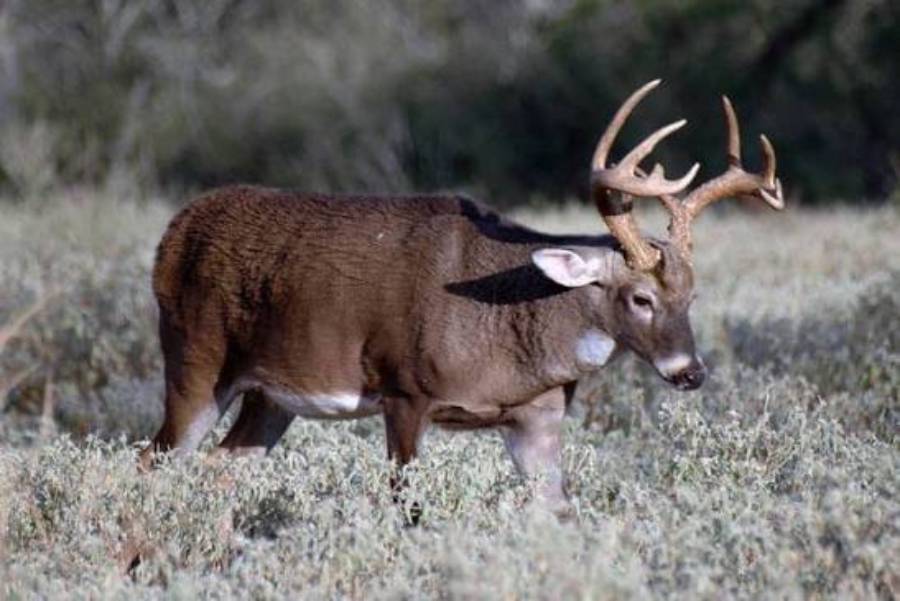
You can identify an old buck by evaluating a combination of body characteristics, including overall body shape, neck thickness, chest and shoulder development, belly and back profile, leg-to-body proportions, and head appearance. No single physical feature confirms a buck’s age on its own. A reliable field estimate comes from observing several characteristics that point toward the same level of maturity.
An old buck generally has a heavier, deeper body than a young buck. Its neck appears thick and blends more smoothly into the chest, while developed shoulders and a deep chest create a heavier front end. The belly may hang lower, the back can lose the straight profile associated with younger deer, and the legs often look relatively short because of the increased depth and mass of the body. Head and facial characteristics can provide additional clues, but they should support rather than determine the age estimate.
These characteristics are most useful for judging whether a buck has reached an older age class rather than assigning an exact age. Season, nutrition, genetics, rut activity, posture, and viewing angle can all change how a buck appears. For that reason, hunters should evaluate the whole animal before making an age or harvest decision.
What Body Characteristics Help Identify an Old Buck?
The most useful body characteristics for identifying an old buck are overall body mass, neck thickness, chest depth, shoulder development, belly profile, back profile, leg-to-body proportions, and head appearance. These characteristics become more useful when several appear together. A buck with only one mature-looking feature should not automatically be classified as old because season, nutrition, posture, and genetics can alter individual physical traits.
Start with the entire body rather than focusing immediately on the antlers or one body part. Look at how the neck connects to the chest, how much mass is carried through the shoulders, how deep the torso appears, and how the legs look relative to the body. Then evaluate secondary characteristics such as the belly, back, and head. This sequence helps prevent one visually prominent characteristic from controlling the age estimate.
Body characteristics are particularly useful for separating younger-looking bucks from physically mature-looking bucks in the field. They are less reliable for determining an exact chronological age. Two bucks of similar age can develop different body proportions because of nutrition, genetics, seasonal weight changes, and breeding activity. The objective is therefore to identify a consistent pattern of physical maturity across the animal.
Antler size should remain a supporting observation rather than the foundation of this assessment. A large rack can attract attention, but the body provides a separate set of maturity indicators. For a hunter trying to identify an old buck by body characteristics, multiple matching body traits provide a stronger field judgment than one isolated feature.
What Does an Old Buck’s Overall Body Shape Look Like?
An old buck generally has a deep, heavy, and compact-looking body, with more visible mass through the chest and front half than a young buck. The increased depth of the torso changes the animal’s proportions. Instead of appearing tall and leggy, the buck can look lower to the ground because its body occupies more visual space between the back and belly.
Overall proportions are useful because they combine several individual characteristics into one visual assessment. A younger buck generally presents a leaner silhouette with a tighter belly, lighter chest, thinner neck, and legs that appear long relative to the torso. As physical maturity increases, greater body mass can make the chest and shoulders look heavier while reducing the visual prominence of the legs. An older buck may consequently appear more blocky than a younger deer.
The front and rear portions of the body also deserve comparison. A young buck can have a relatively balanced or lightly built appearance, while an older buck may carry substantial mass through the shoulders, chest, and neck. During the rut, this front-heavy appearance can become more pronounced because the neck changes with breeding activity. Rut-related changes are one reason overall shape should be evaluated alongside several other characteristics rather than treated as an exact age marker.
A practical field assessment starts with the buck’s silhouette when it is standing naturally and broadside. Observe body depth, front-end mass, belly line, back line, and the apparent length of the legs before examining smaller details. An old-looking buck should show a combination of mature proportions rather than one exaggerated body feature.
What Does an Old Buck’s Neck Look Like?
An old buck typically has a thick, muscular neck that blends gradually into the chest and shoulders instead of appearing as a narrow, clearly separated body part. This heavy neck profile is one of the most noticeable characteristics hunters can use when evaluating a mature buck, especially when it appears together with a deep chest and developed shoulders.
Younger bucks generally have thinner necks with a more obvious transition between the neck, chest, and shoulder area. This gives them a leaner appearance and makes the head and neck look more distinct from the torso. In an older buck, greater development through the neck and front body reduces this visual separation. Viewed broadside, the neck may appear to flow directly into the chest, contributing to the buck’s heavier and more compact overall profile.
Neck thickness must be evaluated in the context of the season. The rut can make a buck’s neck appear substantially heavier, so a thick neck during the breeding season does not independently prove that the animal is old. A hunter who judges age from the neck alone can therefore overestimate a younger buck displaying pronounced rut-related development. Comparing neck thickness with chest depth, shoulder mass, belly profile, back line, and overall proportions produces a stronger field estimate.
The viewing position also matters. A broadside or slightly quartering view provides more information about how the neck connects with the shoulders and chest than a head-on image. In trail-camera photos, compare several images when possible rather than relying on a single frame in which posture can exaggerate neck size. A thick neck is strongest as an age indicator when the rest of the buck also displays mature body proportions.
What Do an Old Buck’s Chest and Shoulders Look Like?
An old buck generally has a deep chest and heavily developed shoulders that create a broad, powerful front-body appearance. Instead of looking narrow through the front quarters, the body carries substantial visual mass from the base of the neck through the shoulders and chest. This development is especially useful when considered together with overall body depth.
The chest provides an important comparison point between younger and older-looking bucks. A young buck generally has a shallower, tighter chest that contributes to a lighter silhouette. An older buck can show greater depth between the top of the shoulders and the bottom of the chest. A developed brisket can further increase this impression, making the lower front portion of the body look heavier and less sharply defined than it does on a younger animal.
Shoulder development reinforces this pattern. Heavy shoulders add mass to the front half of the buck and help create the compact proportions associated with physical maturity. When thick shoulders occur alongside a large neck and deep chest, the three characteristics form a connected front-body profile rather than three isolated indicators. This relationship makes the entire front end more useful for field judging than shoulder size alone.
Posture and viewing angle can still distort the appearance of the chest and shoulders. A buck standing at an angle may look wider or narrower than it actually is, while movement can temporarily change the outline of the shoulders. Hunters should therefore look for a natural broadside position and compare the front end with the torso and hindquarters. A deep chest, developed shoulders, and thick neck that appear together provide stronger evidence of maturity than any one of these characteristics by itself.
What Do an Old Buck’s Belly and Back Look Like?
An old buck often has a fuller, lower-hanging belly and a less straight back profile than a young buck. These two characteristics change the outline of the torso and contribute to the deep, heavy appearance associated with an older animal. Hunters should evaluate the belly and back together because both affect the buck’s overall body proportions.
A younger buck generally has a tight belly line that runs relatively cleanly from the chest toward the hindquarters. This tighter abdomen makes the body look athletic and increases the apparent length of the legs. An older buck can develop a deeper, fuller belly that hangs lower beneath the torso. When pronounced, this creates the pot-bellied appearance commonly associated with physically mature bucks.
The back provides another supporting characteristic. Younger bucks tend to present a relatively straight topline, while an older animal can show a lower or sagging appearance through portions of the back. When a fuller belly and less-straight back occur together, the torso looks deeper from top to bottom. This increased body depth is one reason an old buck can appear compact and relatively short-legged even when its actual leg length has not changed.
Neither characteristic should determine age independently. Body condition, nutrition, posture, season, and the angle from which the buck is observed can change the appearance of both the belly and back. A full stomach can also make the abdomen look larger in a particular observation or photograph. A sagging-looking belly and altered back profile become more useful indicators when the buck also has a thick neck, deep chest, developed shoulders, and mature overall proportions.
Why Do an Old Buck’s Legs Look Shorter?
An old buck’s legs often look shorter because its deeper and heavier body changes the visual ratio between the torso and legs, not because the legs physically become shorter with age. This body-to-leg proportion is one of the easiest ways to distinguish the silhouette of a mature-looking buck from the lighter profile of a young buck.
Young bucks commonly appear long-legged because their bodies are relatively shallow and lean. More space is visually apparent beneath the torso, while a tight belly and lighter chest emphasize the legs. This creates the tall, slender appearance associated with younger deer. The effect is based on proportions: the legs occupy a larger share of the animal’s visible profile.
An old buck produces the opposite impression. A deep chest lowers the front-body line, while a fuller belly increases the depth of the middle portion of the torso. Greater mass through the neck and shoulders makes the upper body appear larger as well. As the body occupies more of the animal’s total profile, the same legs appear shorter in relation to it.
Hunters should therefore judge apparent leg length relative to body depth rather than trying to evaluate the legs in isolation. A broadside view is particularly useful because it reveals the relationship between the chest, belly, torso, and legs. If the buck looks short-legged while also displaying a deep torso, heavy shoulders, thick neck, and fuller belly, the proportions provide a stronger indication of physical maturity.
What Does an Old Buck’s Face and Head Look Like?
An old buck generally has a heavier, more mature-looking head and facial profile, but head characteristics should be used as supporting evidence rather than the primary method for estimating age. Facial appearance varies between individual bucks, making the head less reliable than overall body proportions, chest depth, shoulder development, belly profile, and leg-to-body ratio.
A younger buck often has a relatively slender-looking head that appears proportionally distinct from its thin neck and lighter body. This combination can make the face look narrow and the entire head appear more prominent relative to the torso. As the buck matures and develops greater mass through the neck, chest, and shoulders, the head becomes visually integrated with a much heavier front end.
Hunters should therefore evaluate the head in relation to the neck rather than treating facial appearance as an independent age marker. A mature-looking head attached to a thick neck that blends into developed shoulders supports other signs of physical maturity. In contrast, facial characteristics alone provide insufficient information when the buck still has a shallow chest, tight belly, straight back, and long-legged appearance.
Trail-camera angles can make head characteristics particularly misleading. A close camera position can exaggerate the size of the head, while a head-on image hides much of the body information needed for comparison. Use the face and head to confirm an age estimate already supported by stronger body characteristics, not to establish that estimate on their own.
How Can You Tell an Old Buck From a Young Buck by Body Shape?
You can tell an old buck from a young buck by comparing the entire body profile and looking for multiple characteristics that consistently indicate either a light, developing body or a deep, physically mature body. Young bucks generally look lean, tight-bellied, and long-legged. Old bucks tend to look heavier through the neck, chest, shoulders, and torso, which produces a deeper and more compact silhouette.
| Body characteristic | Young buck | Old buck |
|---|---|---|
| Overall body | Leaner and lighter | Deeper, heavier, and more compact |
| Neck | Thin and clearly defined | Thick and blends into the chest |
| Chest | Shallower | Deep and heavy |
| Shoulders | Lightly developed | Heavily developed |
| Belly | Tight and relatively flat | Fuller and may appear lower |
| Back | Relatively straight | May show a less-straight or sagging profile |
| Legs | Look long relative to the body | Look short relative to the deeper body |
| Head | Slender relative to the body | Heavier-looking and integrated with the neck |
| Overall proportions | Tall and leggy | Heavy and compact |
The most important difference is proportion rather than the absolute size of an individual body part. A young buck can be large, and an old buck does not need to display every stereotypical aging characteristic. Instead, hunters should determine whether the neck, chest, shoulders, torso, and legs collectively create the proportions expected from a physically mature animal.
For example, consider a buck with a thick neck. Neck size alone provides limited evidence because the rut can increase neck development. If the same buck also has a deep chest, heavy shoulders, fuller belly, altered back profile, and legs that look short relative to its torso, several independent observations support the same maturity assessment. Conversely, a thick-necked buck with a tight belly, straight back, shallow torso, and long-legged profile requires greater caution before being classified as old.
This comparison also explains why field judging should begin with the whole animal. Identify the overall silhouette first, verify it against individual body characteristics second, and use secondary clues such as the head only as confirmation. This approach reduces the likelihood that one prominent characteristic will lead to an incorrect estimate.
Can You Identify an Old Buck by Antler Size?
Antler size alone cannot reliably identify an old buck because antler development and body maturity are not interchangeable indicators. A large rack can occur on a buck whose body still displays younger proportions, while an older buck may carry antlers that appear less impressive than expected. For hunters trying to judge maturity in the field, antlers should support the assessment rather than determine it.
Antler characteristics are influenced by factors beyond age, including genetics, nutrition, health, and local environmental conditions. This means two bucks in a similar age class can have noticeably different racks. Looking primarily at antlers can therefore cause a hunter to classify a large-antlered animal as older before examining whether its body shows the same level of maturity.
Body characteristics provide a separate set of visual evidence. A buck that appears mature should show several compatible traits, such as a thick neck blending into the chest, substantial shoulder mass, a deep torso, a fuller belly, and legs that look relatively short compared with the body. If a large-racked buck instead has a narrow neck, shallow chest, tight belly, straight back, and long-legged proportions, the body does not provide the same evidence of advanced maturity.
This distinction is particularly important when a hunter has only a few seconds to evaluate an animal. Antlers naturally attract attention and can dominate the first impression. Judge the body before allowing rack size to influence the age estimate. Start with overall proportions, confirm the estimate using individual body regions, and consider antlers only as supplementary information.
Does the Rut Change How Old a Buck Looks?
The rut can make a buck look older because breeding-season changes can increase the apparent size of the neck and emphasize the mass of the front body. Hunters should account for these seasonal changes when using body characteristics to estimate maturity, especially when neck thickness is one of the primary visual clues.
The neck creates one of the clearest opportunities for misjudgment. During the breeding season, a buck can display a much heavier front-end profile than it does at other times of the year. A thick rutting neck can blend into the shoulders and chest, producing characteristics that resemble those expected from an older animal. For this reason, neck thickness during the rut should never function as a standalone age indicator.
Body condition can also change across the breeding period. Increased movement and breeding activity affect the appearance of the animal, so photographs taken at different points in the season may show noticeably different body profiles. A hunter comparing trail-camera images should therefore consider when each image was captured rather than assuming every visual difference represents aging.
The solution is to prioritize characteristics that agree across the whole body. A rut-swollen neck provides stronger evidence of maturity when it occurs with a deep chest, developed shoulders, mature belly and back profiles, and short-looking leg-to-body proportions. If the rest of the animal remains lean, tight-bellied, and long-legged, the heavy neck alone is insufficient to classify the buck as old.
Seasonal context also makes repeated observations valuable. When trail-camera images are available from multiple periods, compare the same buck across several photographs and body positions. This makes it easier to separate persistent structural characteristics from temporary changes associated with rut activity, posture, or body condition.
Read more: How to Hunt Deer During a Drought: Complete Guide
How Can You Identify an Old Buck in Trail Camera Photos?
You can identify an old buck in trail camera photos by examining several images for consistent body characteristics, especially overall body depth, neck thickness, chest and shoulder mass, belly and back profiles, and leg-to-body proportions. A single photograph provides weaker evidence because camera angle, posture, distance, and movement can change how these characteristics appear.
Start with photographs that show the entire buck from a broadside or near-broadside position. This angle makes it easier to evaluate the relationship between the back, belly, chest, and legs. Look at the overall silhouette before focusing on individual body parts. An older-looking buck should present a deeper, heavier, and more compact body rather than the lean and long-legged profile associated with a younger animal.
Next, evaluate the front half of the body. Look for a thick neck that blends into a deep chest and developed shoulders. Then move along the torso and examine whether the belly appears fuller or lower and whether the back remains straight or shows a more mature profile. Finally, compare the legs with the depth of the torso. Legs that appear relatively short become more meaningful when the rest of the body also displays mature proportions.
Camera perspective can create false age indicators. A buck standing close to a wide-angle trail camera may have an exaggerated head, chest, or front end. A quartering position can make the shoulders appear wider, while a stretched or alert posture can change the belly and back lines. Low-quality nighttime images can further obscure the boundaries between the neck, chest, and shoulders. Compare multiple photographs of the same buck whenever possible instead of assigning maturity from one favorable image.
Season should also be considered when reviewing trail-camera history. A buck photographed during the rut may show a much heavier neck than the same animal photographed earlier. Comparing images across several dates helps separate persistent structural characteristics from temporary changes in posture and breeding condition. The strongest trail-camera assessment occurs when multiple images repeatedly show the same mature body proportions from useful viewing angles.
How Accurate Is It to Age a Buck by Body Characteristics?
Body characteristics are useful for estimating whether a buck belongs to a younger or more mature age class, but they cannot reliably determine its exact chronological age. Visual aging is a field-estimation method. It becomes less precise when a hunter tries to distinguish between bucks that have already developed similar mature body proportions.
Several variables affect the accuracy of a visual estimate. Genetics influence body structure, while nutrition and habitat quality affect body condition and development. Season changes neck size, body mass, and overall appearance, particularly around the rut. Posture and viewing angle can alter the apparent depth of the chest, shape of the belly, slope of the back, and proportions of the legs. These factors explain why one physical characteristic should never be converted directly into a specific age.
Accuracy improves when independent characteristics point toward the same conclusion. For example, a thick neck alone provides limited information. A thick neck combined with developed shoulders, a deep chest, a fuller belly, mature back profile, and short-looking leg-to-body proportions creates a much stronger case that the animal has reached physical maturity. This follows the same principle used throughout field judging: evaluate a pattern rather than an isolated trait.
Hunters should also distinguish between two different questions: “Is this a mature or old-looking buck?” and “Exactly how old is this buck?” Body characteristics are considerably better suited to the first question. Assigning an exact chronological age from appearance alone introduces more uncertainty because bucks of similar ages do not develop identical bodies.
For practical field identification, use a consistent sequence: judge the overall body shape first, evaluate the neck and front-body mass second, examine the belly and back third, compare the legs with the torso fourth, and use the head and antlers only as supporting evidence. When several characteristics agree, a hunter has a stronger basis for identifying an old buck without allowing one visually prominent feature to control the judgment.