
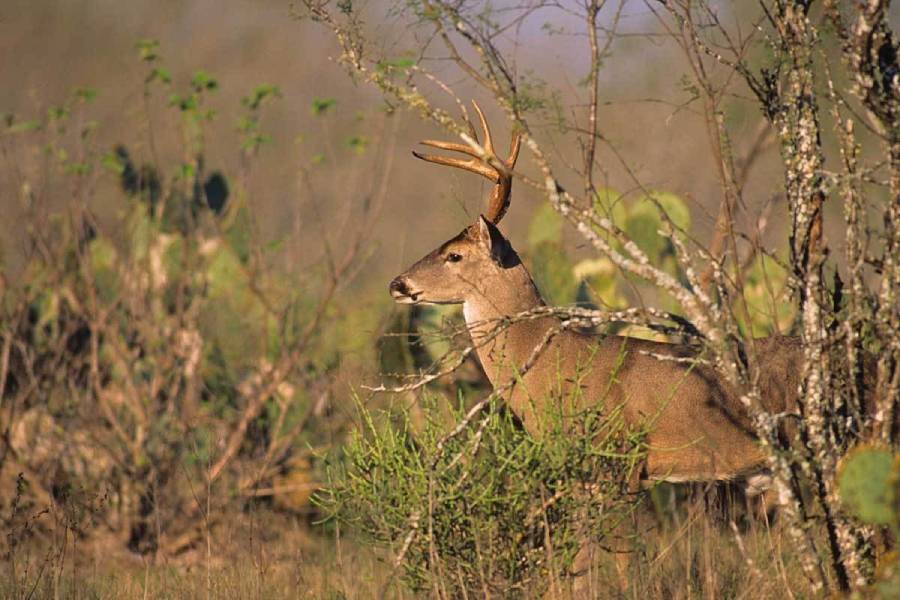
Hunting deer during a drought requires you to focus your scouting on the remaining water, available food, secure bedding cover, and the travel routes connecting these resources. The most productive approach is to identify resources deer are currently using and hunt the movement between them rather than relying on patterns established before the drought.
Drought changes deer hunting because reduced rainfall alters where usable water and forage occur across the habitat. As seasonal creeks, small ponds, and other water sources dry up, the remaining resources can become more important parts of a deer’s daily range. Dry conditions can also reduce or relocate preferred forage, causing feeding activity and travel routes to shift. These changes mean a stand, blind, or trail that produced deer activity under normal conditions may no longer intercept current movement.
Successful drought hunting therefore starts with fresh evidence. Active tracks around water, recent droppings, current feeding sign, well-used trails, bedding activity, and trail-camera observations can reveal where deer are spending time now. Once you identify those patterns, you can select a hunting location based on deer movement, wind direction, access, temperature, and hunting pressure. The sections below explain how drought affects deer behavior and how to turn those changes into a practical scouting and hunting strategy.
How Does Drought Affect Deer Movement and Behavior?
Drought changes deer movement by reducing the number of reliable water and food sources available across their range. As resources become less evenly distributed, deer must adjust where they feed, drink, bed, and travel. Hunters should therefore treat drought as a change in resource distribution rather than assume that deer simply disappear from an area.
Water is one of the first resources to evaluate. Small seasonal creeks, shallow ponds, seeps, and temporary pools can shrink or disappear during prolonged dry periods, while deeper ponds, springs, permanent creeks, and managed water sources may remain available. When several previously usable sources disappear, deer have fewer options. Trails connecting bedding and feeding cover to reliable water can consequently become more relevant scouting locations.
Food availability can change at the same time. Drought can reduce the amount and quality of vegetation in affected habitat, so a feeding location that attracted deer under normal rainfall may receive less use. Hunters need to identify what food remains available instead of assuming deer will continue using their previous feeding pattern. Current browsing, tracks, droppings, and trail-camera observations provide stronger evidence than historical activity at a location.
Drought does not mean deer will automatically travel farther or remain constantly active. Their movement still depends on factors such as temperature, cover, hunting pressure, available resources, and local habitat. A better hunting decision is to determine where essential resources remain and then verify how deer are moving between them. This turns drought conditions into a scouting problem that can be evaluated through current deer sign.
Where Should You Look for Deer During a Drought?
Look for deer around reliable water, remaining food, secure bedding cover, and the travel routes connecting these three resources. The best-looking habitat is less important than habitat showing current use. A creek that held deer before the drought has limited hunting value if it is now dry and nearby tracks have disappeared.
Start by identifying water sources that have survived the dry period. Then inspect surrounding cover and travel routes rather than concentrating only on the water’s edge. Fresh tracks entering and leaving the area can reveal approach routes, while trails leading toward thicker cover may help identify the direction of bedding areas. If one water source has substantially more fresh sign than nearby alternatives, it deserves more scouting attention.
Food should be evaluated in the same way. Locate vegetation, browse, agricultural crops, mast, or other food available within the hunting area, then determine whether deer are currently using it. Fresh feeding evidence becomes particularly useful when it can be connected to a known bedding area or reliable water source. The objective is to build a current resource map showing where deer can bed, feed, and drink and how they travel between those locations.
Travel corridors can be more useful hunting locations than the resources themselves. A hunter who identifies a route connecting secure bedding cover with food or water may intercept deer without entering the resource area and creating unnecessary disturbance. Evaluate these corridors together with wind direction and access before selecting a stand or blind location.
Which Water Sources Attract Deer During a Drought?
The most valuable drought water sources are reliable sources that show fresh deer use. Depending on the hunting area, these can include permanent creeks, springs, ponds, seeps, stock ponds, livestock watering sites, and other dependable sources. Water availability alone does not prove that a location should be hunted.
Inspect each source for recent tracks, droppings, established approaches, disturbed soil, and trail-camera activity. Compare multiple water sources whenever possible. A small source with heavy recent activity can provide more useful hunting information than a large pond with little fresh sign. This comparison prevents hunters from choosing locations solely because water is visible on a map.
Also examine how deer can approach the source. Thick cover, terrain, human activity, and the location of nearby bedding and feeding areas can determine which side receives the most use. Mapping those approaches helps identify potential setups away from the immediate shoreline or water’s edge.
Which Food Sources Hold Deer During Dry Conditions?
Food sources hold deer during drought when they continue providing usable forage and show current feeding activity. The specific food varies with region, season, habitat, and deer species, so hunters should verify use in the field rather than select a location solely because it normally produces food.
Search for fresh browsing, tracks, droppings, trails, and trail-camera activity around remaining food. Compare these observations with nearby water and bedding cover. A food source becomes more strategically useful when there is a repeatable route connecting it with another essential resource.
The key is recency. Old trails and historical feeding locations describe where deer used to move, while fresh sign indicates how deer are responding to current drought conditions. Prioritize the latter when deciding where to spend scouting time and where to hunt.
Should You Hunt Deer Near Water During a Drought?
Hunting near water during a drought can be effective when fresh sign confirms that deer consistently use the water source. Limited water can concentrate deer activity around reliable ponds, creeks, springs, seeps, or other sources, but the presence of water alone does not make a location productive. Hunters should confirm current use and identify how deer approach and leave the water before choosing a setup.
Start by checking for fresh tracks, droppings, recently used trails, disturbed soil, and trail-camera activity. Multiple types of recent sign provide stronger evidence than a single old track or a heavily worn trail with no current activity. Directional tracks are especially useful because they can reveal which approaches deer use and help connect the water source with nearby bedding or feeding areas.
Hunting directly beside the water is not always the best option. A setup on an active travel route can intercept deer before they reach the source while keeping the hunter farther from concentrated activity. This approach can also reduce the risk of disturbing deer at a resource they may use repeatedly. The better location depends on cover, terrain, wind direction, access, deer approach routes, and the amount of hunting pressure around the water.
Treat each water source as part of a larger movement system. For example, if fresh tracks connect thick bedding cover to a permanent pond, the trail between those locations may provide a better setup than the pond bank itself. Scout the entire bedding-to-water or feeding-to-water route before deciding where to hunt.
How Should You Scout Deer During a Drought?
Scout deer during a drought by locating resources that remain available and verifying current deer use with fresh sign. Prioritize reliable water, active food sources, bedding cover, and the travel corridors connecting them. The objective is not to find every possible deer location but to identify the areas receiving repeated activity under current conditions.
Begin with a broad search for dependable resources. Maps and previous hunting knowledge can help identify ponds, creeks, springs, feeding areas, and cover, but field observations should determine whether those locations remain relevant. A marked creek may be dry, a traditional feeding area may have lost usable forage, or deer may have shifted to another part of the property. Current conditions should therefore override historical assumptions.
Next, connect individual observations into a movement pattern. A fresh track at a pond confirms only that a deer visited that location. Fresh tracks along an approach trail, recent droppings farther up the route, and repeated trail-camera observations provide a stronger indication of consistent use. The more clearly the evidence connects water, food, cover, and travel, the easier it becomes to select a hunting location without unnecessary scouting pressure.
Limit disturbance once a useful pattern becomes clear. Repeatedly walking through bedding cover, checking the edge of a water source, or crossing an active travel corridor can introduce scent and human activity into the exact area being evaluated. Use low-impact observation points, strategic camera locations, and access routes that avoid the movement corridor whenever the terrain allows.
What Deer Sign Should You Look for During Dry Conditions?
The most useful deer sign during dry conditions is fresh sign that identifies current movement, feeding, bedding, or watering activity. Focus on tracks, droppings, active trails, beds, feeding evidence, and disturbed ground around water. Each type of sign answers a different part of the scouting problem.
Tracks can show both recent presence and direction of travel. Around muddy pond edges, creek crossings, springs, or other areas where tracks register clearly, several sets of recent tracks can help identify frequently used approaches. Droppings provide additional evidence of deer activity, while fresh browsing or feeding sign can identify resources deer are currently using.
Beds and trails help connect those resources to cover. An active trail running from secure cover toward a reliable water or food source provides more actionable information than isolated sign because it suggests a repeatable movement route. Hunters should evaluate how the trail relates to terrain, cover, wind, and possible stand access before moving closer.
Freshness is the primary filter for all of these observations. Drought can alter patterns that were established weeks earlier, so old tracks, abandoned trails, and historical camera data should not outweigh current evidence. Use recent sign to determine where deer are now rather than where they were before conditions changed.
Where Should You Place Trail Cameras During a Drought?
Place trail cameras where they can confirm deer movement between reliable water, available food, and secure cover without creating unnecessary disturbance. Useful locations include active water approaches, established travel corridors, pinch points, creek crossings, and transitions between resource areas.
A camera does not have to sit directly beside a water source. If tracks reveal one heavily used approach, positioning the camera along that route can document movement while reducing the number of visits required at the water itself. Cameras on travel corridors can also reveal direction of movement and help determine whether deer are approaching a resource from bedding cover or moving toward a feeding area.
Camera placement should answer a specific hunting question. Use one location to determine whether deer are consistently visiting a water source, another to identify which travel route receives the most activity, or a strategically placed camera to establish when deer move through a potential setup. Collecting images without a scouting objective produces less useful information than monitoring locations tied directly to a hunting decision.
Check cameras in a way that limits disruption. Select access routes that avoid bedding cover and primary deer trails, and avoid unnecessary visits once the camera provides enough information to establish a pattern. The purpose of trail-camera scouting during drought is to reduce uncertainty while preserving the deer activity the hunter intends to hunt.
What Is the Best Time to Hunt Deer During a Drought?
The best time to hunt deer during a drought is when current sign shows deer moving between bedding cover, water, and food while shooting light is available. There is no single morning or evening rule that applies to every drought because temperature, water availability, food location, hunting pressure, and local habitat all influence when deer move.
Morning hunts can be productive when deer return toward bedding cover after feeding or visiting water. The key is access. Entering a stand before daylight can be counterproductive if the route requires crossing an active feeding area, water source, or the trail deer are using to return to cover. Fresh tracks and trail-camera observations can show whether morning movement occurs consistently enough to justify the additional intrusion.
Evening hunts can provide a practical opportunity to intercept deer leaving bedding cover and moving toward food or water. During hot, dry periods, visible movement may occur later as temperatures decline. A travel corridor between secure daytime cover and an active resource can therefore be more useful than an exposed location where deer do not arrive until after legal shooting light.
Temperature should be evaluated together with drought rather than treated as the same condition. Drought describes a prolonged shortage of precipitation, while hot weather describes temperature. The two can occur together, but they influence deer through different mechanisms. Hunters should use current observations rather than assume that every drought automatically produces the same hot-weather movement pattern.
Hunting pressure can further change timing. Repeated human activity around a water source, feeding area, or stand can cause deer to use a different approach or shift activity toward periods with less disturbance. If trail-camera observations show that daylight activity has declined after repeated hunting pressure, changing the setup or temporarily reducing pressure may be more useful than continuing to hunt the same location.
How Should You Set Up a Hunting Spot During a Drought?
Set up a drought hunting spot along confirmed deer movement while keeping your wind and access away from the route deer are expected to use. A productive location combines 4 elements: fresh deer activity, a predictable travel route, favorable wind, and low-impact access.
Start with the movement pattern identified during scouting. For example, fresh tracks and repeated camera activity may show deer leaving thick bedding cover and following a terrain feature toward a reliable pond in the evening. Instead of automatically setting up at the pond, evaluate the route connecting the two locations. A suitable point along that route can provide an opportunity before deer reach the water while keeping hunting pressure away from the resource itself.
Cover and terrain determine how close a hunter can set up without exposing the position. Thick vegetation, elevation changes, creek banks, field edges, funnels, and other terrain features can influence both deer travel and hunter visibility. Choose a location that allows deer to approach within an effective range without requiring the hunter to occupy the center of the resource area.
Access deserves the same attention as the stand or blind location. A good hunting spot loses much of its value if reaching it requires walking across the primary deer trail, through bedding cover, or around an active water source. Plan both entry and exit routes before hunting. The objective is to reach the setup without contaminating the movement pattern that made the location valuable.
Distance from water should therefore be determined by conditions rather than a universal number. A hunter may need to set up farther away when open terrain exposes movement or when deer approach the water from several directions. A closer setup may work where terrain and cover provide concealed access. Fresh sign, expected approach direction, shooting opportunities, and wind should determine the final position.
How Should Wind Direction Affect Your Drought Hunting Setup?
Position yourself so your scent is carried away from the deer travel route, resource area, and expected approach whenever the available setup allows it. Wind direction matters at the stand, but it also matters along the route used to enter and leave the hunting area.
Begin by identifying the direction deer are most likely to approach. If current sign shows deer moving from bedding cover toward water in the evening, evaluate where your scent will travel while you wait along that route. A setup that places scent directly into the bedding area, water source, or primary trail can compromise the location before deer reach the hunter.
Entry routes should be evaluated with the same standard. Walking into the stand with a favorable wind but allowing scent to blow across a heavily used trail on the approach creates unnecessary risk. Select an access route that minimizes contact with the areas deer are expected to use, even if that route requires more walking.
Wind can also change during a hunt. Terrain, vegetation, and changing conditions can affect local airflow, so hunters should evaluate what is happening at the actual location rather than relying only on a general forecast. If the wind begins carrying scent directly toward the primary deer approach, continuing to occupy the setup can reduce its value for both the current hunt and later hunts.
The goal is not simply to find water and sit nearby. A drought setup becomes useful when current deer movement, wind direction, cover, and low-impact access work together. Water and food help identify where deer may travel, while fresh sign and field observations determine where the hunter should actually set up.
How Does Hunting Pressure Affect Deer During a Drought?
Hunting pressure can change when, where, and how deer use limited resources during a drought. A water source or travel corridor may initially show consistent activity, but repeated human intrusion can reduce daylight use, alter approach routes, or push deer toward less disturbed resources. This makes pressure especially important when several deer are relying on a limited number of usable locations.
Water deserves careful treatment because scouting and hunting can concentrate human activity in a small area. Walking around a pond to check tracks, approaching the same camera repeatedly, and hunting the same water source on consecutive days all add disturbance. Even when deer continue using the general area, they may approach from heavier cover or use the resource at a different time.
Reduce pressure by hunting only when wind, access, and current deer activity support the setup. Avoid entering bedding cover simply to confirm deer presence when tracks, cameras, or observation already provide enough information. An extra scouting trip has limited value if it disturbs the route you intend to hunt.
Pressure should also be evaluated across the surrounding property rather than only at your stand. Activity from other hunters, vehicles, agricultural work, recreation, or nearby access routes can influence which areas provide secure cover. If a previously active water source suddenly loses daylight activity while fresh sign remains nearby, inspect alternative approaches and thicker cover before assuming deer have left the area.
A productive drought location should therefore be treated as a limited hunting opportunity rather than a place to occupy continuously. Hunt it when conditions are favorable, monitor changes in fresh sign, and adjust when activity shifts. Preserving a predictable movement pattern can be more valuable than adding another hunt under poor conditions.
What Are the Most Common Mistakes When Hunting Deer During a Drought?
There are 5 main mistakes hunters make during drought conditions: hunting water without confirming deer use, ignoring remaining food, relying on pre-drought patterns, over-scouting productive areas, and treating drought and heat as the same condition. Each mistake can cause hunters to focus on locations or patterns that no longer reflect current deer behavior.
1. Hunting water without confirming fresh deer activity. Water becomes an obvious target during drought, but not every pond, creek, spring, or livestock water source receives equal use. Deer may favor one source because of nearby bedding cover, food, terrain, security, or easier travel. Check fresh tracks, droppings, active approaches, and camera activity before committing hunting time to a water source.
2. Ignoring remaining food sources. Drought hunting is not exclusively about water. Changes in forage can shift feeding activity and alter the routes deer use between feeding and bedding areas. Identify food that remains available, confirm current feeding sign, and determine how that resource connects with water and secure cover.
3. Relying on deer patterns established before the drought. Historical knowledge provides a starting point, not proof of current activity. A trail, feeding area, or creek crossing that was productive under normal rainfall may lose value after water and food distribution changes. Recent tracks, droppings, feeding evidence, and trail-camera observations should carry more weight than an old pattern.
4. Over-scouting high-value water and travel corridors. Finding concentrated deer activity can tempt hunters to gather more information than they need. Repeated camera checks, track inspections, and scouting trips introduce human scent and disturbance. Once several pieces of fresh evidence establish a usable pattern, shift from information gathering to a low-impact hunting plan.
5. Treating drought and hot weather as the same condition. Drought is defined by an extended shortage of precipitation, while hot weather is defined by temperature. A drought can coincide with high temperatures, but hunters should evaluate the effects separately. Water and forage availability help explain drought-related resource changes, while temperature can influence when deer are comfortable moving.
These mistakes share one underlying problem: using assumptions instead of current evidence. Drought changes resource availability, but the resulting deer response varies with habitat, season, pressure, cover, and local conditions. Hunters who repeatedly verify fresh activity can adapt faster than hunters who continue following a pattern simply because it worked before the drought.
Read more: How to Use Prevailing Winds for Deer Hunting
Does Drought Affect Whitetail and Mule Deer Hunting Differently?
Drought can affect whitetail and mule deer hunting differently because the two species occupy different habitats and use water, food, cover, and terrain differently. Hunters should apply the same basic drought strategy to both species by locating available resources and confirming fresh activity, but the scouting methods and areas receiving the most attention can differ.
For whitetails, concentrate scouting on the relationship between secure bedding cover, remaining food, reliable water, and established travel corridors. In habitat where these resources occur relatively close together, drought can change which portions of a familiar range receive the most use. A traditional trail has less value when the food or water it connected to is no longer available. Fresh tracks, active trails, current feeding sign, and recent trail-camera observations should determine whether an established whitetail pattern still applies.
Mule deer require the same emphasis on current resources, but hunters should account for the larger and more open landscapes commonly associated with mule deer hunting. Reliable water, productive feeding areas, shaded or secure bedding terrain, and routes connecting these locations provide logical starting points for scouting. Observation can also play a larger role where terrain allows hunters to examine broad areas without immediately entering them.
The practical rule for both species is the same: do not assume drought produces one universal deer response. Identify which resources have changed, determine which ones deer currently use, and build the hunting strategy around fresh evidence. Species, habitat, terrain, season, and local conditions determine how that principle should be applied.
When Should You Change Your Deer Hunting Strategy During a Drought?
Change your drought hunting strategy when current evidence shows that water, food, deer activity, or hunting pressure has changed enough to disrupt the pattern you are hunting. A drought strategy should remain flexible because resource conditions can continue changing throughout the season.
There are 4 primary signals that justify reassessing a setup. The first is a change in water availability. A shrinking pond, dry creek, disappearing seep, or newly available water source can alter the routes deer use. Recheck nearby tracks and approaches when a major water source changes rather than continuing to hunt the previous pattern.
The second signal is a change in food availability. Deer movement can shift when a previously productive feeding location declines or another source becomes more attractive. Fresh browsing, feeding evidence, tracks, and camera activity can show whether deer have redirected their movement toward another resource. Follow the current feeding pattern rather than remaining committed to a location because it produced activity earlier in the season.
The third signal is declining fresh deer activity. Fewer recent tracks, reduced camera observations, inactive trails, or disappearing feeding sign indicate that the existing pattern deserves another evaluation. One quiet hunt is not enough to prove that deer have relocated, but several forms of declining evidence provide a stronger reason to scout alternative routes or resources.
The fourth signal is increasing hunting pressure. Deer may continue occupying the general area while changing when or how they approach water and food. If daylight activity declines after repeated disturbance, examine secondary trails, thicker cover, alternative resources, and lower-pressure approaches. Changing access or resting the location may be more effective than repeatedly occupying the same setup.
The central principle of hunting deer during a drought is to hunt current resource use rather than historical deer patterns. Find reliable water, identify available food, locate secure cover, and verify the routes connecting them with fresh sign. Then choose a setup that accounts for wind, access, timing, and hunting pressure. Reevaluate those factors whenever drought conditions or deer activity change, because the most productive location at the beginning of a dry period may not remain the most productive location later in the season.