
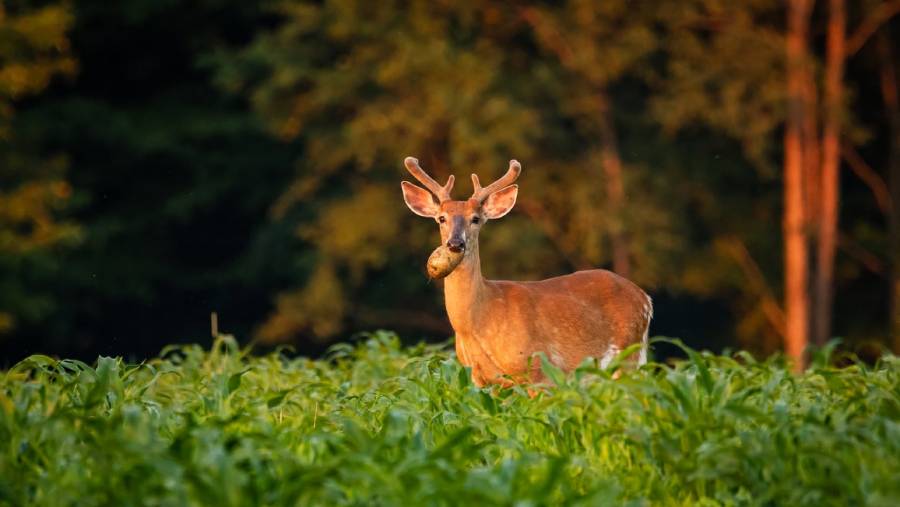
Yes, deer eat potatoes, including accessible tubers and parts of potato plants, but potatoes are not always their preferred food. Deer are opportunistic feeders, so whether they use a potato field depends on how easily they can reach the food and what other natural or agricultural food sources are available nearby.
Potato plants can provide several potential food sources for deer, including foliage, vines, and exposed or accessible tubers. However, finding deer near a potato field does not automatically mean potatoes are attracting them. Deer feeding patterns change as crops mature, fields are harvested, natural foods become available, and other high-value crops provide alternative feeding areas.
For hunters, the more useful question is not simply whether deer eat potatoes, but whether deer are actively using a specific potato field as a food source. Fresh tracks, browsed vegetation, droppings, established trails, and repeated movement between the field and nearby cover provide stronger evidence of feeding activity. Understanding these signs can help hunters determine when a potato field is influencing local deer movement and when the animals are likely feeding somewhere else.
Do deer eat potatoes?
Yes, deer eat potatoes when the tubers or potato plants are accessible, but potatoes are only one potential food source within a much broader deer diet. Deer adjust their feeding behavior according to food availability, accessibility, season, and the presence of more attractive foods nearby. A deer entering agricultural land may therefore eat potatoes without relying on them as its primary food.
The distinction between food use and food preference is important. Evidence that deer have eaten potatoes confirms that they will use the crop as food, but it does not prove they prefer potatoes over every available crop or natural forage. Agricultural landscapes can contain several competing foods, including corn, soybeans, alfalfa, small grains, browse, and seasonal mast. When these foods are available at the same time, deer can shift between feeding areas instead of consistently returning to a potato field.
For hunters, this means the presence of potatoes should not be treated as proof of predictable deer activity. A potato field becomes more relevant when the crop is accessible and fresh deer sign shows repeated use of the area. Tracks, droppings, browsed vegetation, and established trails provide additional evidence that deer are actively incorporating the field into their feeding pattern. Without these signs, another nearby food source may be influencing deer movement more strongly.
What parts of potato plants do deer eat?
Deer can eat accessible potato tubers and above-ground parts of potato plants, including foliage and vines. These parts differ substantially in accessibility because leaves and stems are exposed while the tubers develop below the soil. As a result, seeing damage to the visible plant and finding potatoes consumed at ground level represent different types of feeding activity.
Above-ground vegetation is immediately available to a browsing deer. A deer moving through a potato field can reach leaves and vines without disturbing the soil, making these plant parts easier to investigate and consume. Browsing can leave irregularly damaged vegetation along the portions of the field deer are using. However, damaged potato foliage alone does not identify the animal responsible. Hunters should look for supporting deer sign, such as tracks or droppings, before attributing plant damage to deer.
Potato tubers present a different situation because intact tubers are normally protected by soil. Exposed, harvested, or otherwise accessible potatoes are easier for deer to consume than tubers buried beneath undisturbed soil. This distinction becomes particularly relevant around harvest and disturbed areas where potatoes may be left at or near the surface.
For a hunter evaluating a potato field, the location of feeding evidence can provide more useful information than crop damage alone. Repeated browsing near field edges, fresh tracks entering the crop, droppings, and trails connecting the field with nearby cover provide a stronger pattern of deer use. These signs help distinguish an actively used feeding area from a field where potato plants simply show isolated damage.
Do deer dig potatoes out of the ground?
Deer may eat potatoes that are exposed or easy to reach, but finding disturbed soil in a potato field does not by itself prove that deer dug up buried tubers. Potatoes growing completely beneath intact soil require more effort to access than leaves, vines, exposed tubers, or potatoes left near the surface after agricultural activity. Hunters should therefore separate evidence of deer eating potatoes from evidence that deer actively excavated them.
Accessibility changes considerably as a potato field moves through its growing and harvest cycle. Tubers can become exposed by soil disturbance, harvesting equipment, erosion, or damage to the plants and rows. Potatoes left at or near the surface provide a different feeding opportunity from tubers that remain covered. Deer encountering easily accessible food can investigate and consume it without having to rely on digging as a primary feeding behavior.
Disturbed soil also has several possible causes, so it should be interpreted together with other evidence. Fresh deer tracks around the disturbed area, droppings, browsed plants, and repeated trails entering and leaving the field provide stronger support for deer activity. Without these signs, soil disturbance alone is insufficient to determine which animal caused it or whether potatoes were the reason for the disturbance.
For hunters, the practical distinction is accessible food versus assumed food. A field containing potatoes is only a potential feeding area until deer use is confirmed. Finding exposed potatoes together with fresh tracks and repeated travel routes provides stronger evidence than simply finding potatoes underground within an area where deer are present.
Why do deer eat potatoes?
Deer eat potatoes primarily because they are opportunistic feeders that use accessible food sources within their home range. Whether potatoes receive significant feeding pressure depends on several factors, particularly accessibility, seasonal food availability, and the presence of competing foods. Deer do not need potatoes in their diet, so their willingness to use a potato field can change when conditions elsewhere provide a more attractive feeding opportunity.
Food availability is one of the main mechanisms behind these changes. Deer have access to different foods as vegetation develops, agricultural crops mature, mast becomes available, and fields are harvested. A potato field that receives feeding activity during one period can receive considerably less activity when another nearby food source becomes readily available. The existence of the crop therefore matters less to a hunter than whether deer are currently using it.
Accessibility also determines how easily deer can obtain food from potato plants. Leaves and vines are exposed above ground, while tubers are normally protected beneath the soil. Exposed potatoes, disturbed rows, and potatoes remaining near the surface after field operations reduce that barrier. This explains why two potato fields in the same general area can present different feeding opportunities even when they contain the same crop.
Competing foods add another layer to deer food selection. Agricultural and natural landscapes can provide corn, soybeans, alfalfa, small grains, browse, mast, and other seasonal foods. Deer can move between these resources as their availability changes. For a hunter, current feeding evidence is therefore more informative than assuming potatoes will attract deer simply because the crop is present. Fresh sign around the field shows actual use, while the surrounding food sources help explain why that use may increase or decline.
When are deer most likely to eat potatoes?
Deer are most likely to eat potatoes when the crop is accessible and competing food sources are less attractive or less available. There is no single month when deer consistently target potatoes across every region because planting schedules, harvest dates, climate, natural forage, and surrounding crops vary by location. For hunters, the stage of the potato field and current deer sign are more useful indicators than a fixed calendar date.
The growing period can provide deer with access to the above-ground portions of potato plants. Leaves and vines are easier to reach than underground tubers because deer can browse exposed vegetation while moving through or along the field. The amount of use can change as other foods become available nearby. A field receiving regular deer visits can lose activity when another agricultural crop or natural food source becomes more attractive.
Harvest can create a different feeding opportunity. Agricultural activity disturbs the soil and can leave potatoes exposed or close to the surface, making tubers easier for deer to access than they were during the growing period. Potatoes remaining after harvest can continue to provide food temporarily, but their presence does not guarantee that deer will use the field. The availability of alternative foods in the surrounding landscape still influences feeding decisions.
Hunters should therefore monitor changes in fresh deer sign rather than assuming the field remains equally attractive throughout the season. New tracks, fresh droppings, recently browsed vegetation, and repeated use of trails entering the field indicate current activity. Older sign can show that deer used the area previously without confirming that the same feeding pattern continues today.
Do whitetail deer eat potatoes?
Yes, whitetail deer can eat potatoes and accessible parts of potato plants as part of their varied diet. Whitetails use both natural vegetation and agricultural food sources, and their diet changes according to what is available within their environment. Potatoes should therefore be considered a potential food source rather than a food that whitetail deer consistently depend on.
Whitetail feeding behavior is flexible because food conditions change throughout the year. A deer using agricultural habitat may encounter potato plants alongside other crops and natural foods. Its feeding choices can shift as those resources grow, mature, decline, or become easier to access. This flexibility explains why the same potato field can show substantial deer activity during one period and little activity during another.
The surrounding habitat also matters. A potato field located near cover and established deer travel routes presents a different situation from an isolated field that requires deer to cross large areas of exposed ground. Whitetails must move between food, cover, bedding areas, and other resources, so the location of a food source within that broader habitat can influence how deer use it.
For hunters, fresh whitetail sign provides stronger evidence than the crop type alone. A potato field becomes relevant when tracks, droppings, browsing, or established trails demonstrate repeated use. Examining these signs together with nearby cover and competing food sources provides a clearer picture of whether potatoes are currently contributing to local whitetail feeding patterns.
Do deer prefer potatoes over other crops?
Deer do not consistently prefer potatoes over other agricultural crops because food preference changes with availability, accessibility, crop condition, and surrounding habitat. A potato field can provide food, but its presence alone does not mean deer will choose it over corn, soybeans, alfalfa, small grains, or natural forage available within the same area.
The relative value of each crop also changes during its growth cycle. An agricultural field that attracts deer at one stage can become less important after the crop matures, is harvested, or becomes difficult to access. Potatoes follow the same principle. Above-ground vegetation is accessible while plants are growing, while tubers become easier to reach when they are exposed through soil disturbance or harvesting. Deer can respond to these changes by shifting feeding activity between fields.
Natural food sources further affect this preference. Browse and other seasonal foods can compete with agricultural crops for deer activity. When an alternative food becomes readily available, deer may reduce their use of a potato field even if potatoes remain present. Conversely, accessible potatoes may receive more attention when other foods become less available. This makes food preference a changing relationship rather than a fixed ranking of crops.
For hunters, comparing fresh deer activity around different food sources is more useful than assuming potatoes are more or less attractive than a particular crop. Fresh tracks, droppings, browsing, and repeated trail use can show which feeding areas deer are currently visiting. Observing these signs across nearby agricultural fields and natural feeding areas provides stronger evidence of current food selection than crop type alone.
How can you tell if deer are eating potatoes in a field?
Fresh tracks, browsed plants, droppings, repeated trails, and feeding-related disturbance are the main signs that deer are using a potato field. No single sign necessarily proves that deer are eating potatoes, so hunters should look for multiple pieces of evidence occurring in the same area. The combination of feeding damage and fresh deer sign provides a stronger indication than damaged plants alone.
Tracks can establish that deer recently entered or moved through the field. Their value increases when multiple tracks follow consistent routes between the crop and surrounding cover rather than appearing as an isolated crossing. Track freshness also matters. Clear impressions in suitable soil can indicate more recent movement, while degraded tracks provide less information about whether deer are still using the field.
Browsed vegetation can help identify where feeding is occurring. Damage concentrated on accessible potato foliage along routes that also contain deer tracks provides more useful evidence than plant damage without supporting sign. Other animals, agricultural activity, and environmental factors can damage plants, so hunters should avoid assigning every broken or missing plant part to deer.
Droppings provide another indication that deer have spent time in or near the area. Finding droppings together with tracks and feeding damage strengthens the evidence for repeated field use. Their location can also help hunters identify areas where deer spend more time rather than sections they simply cross while traveling elsewhere.
Established trails provide the broader movement context. A repeatedly used trail connecting a potato field with nearby cover indicates a more consistent pattern than a few isolated tracks inside the crop. Hunters can examine where these trails enter the field, whether fresh sign continues along them, and whether feeding evidence occurs near the same locations. When tracks, droppings, browsing, and trail use overlap, the field is more likely to represent an active part of the local deer feeding pattern.
Read more: Do Deer Eat Pansies? What Hunters Should Know
How do potato fields affect deer movement?
Potato fields can influence deer movement when deer actively use the crop as a food source, creating repeated travel between the field and nearby cover. The field itself does not automatically determine movement. Its influence depends on current food availability, deer use, surrounding habitat, competing food sources, and the routes deer use to reach the feeding area.
Food availability provides the initial reason for deer to visit a field. When accessible potato vegetation or tubers provide a usable food source, repeated feeding visits can concentrate movement around particular sections of the field. This activity may produce recognizable trails, clusters of tracks, droppings, and feeding damage. When fresh sign repeatedly appears in the same locations, it provides stronger evidence that the field is part of an established movement pattern rather than an area deer occasionally cross.
Nearby cover can also affect how deer approach a feeding area. Deer moving between secure cover and an agricultural food source may repeatedly use routes that connect the two habitat features. Field edges, openings in surrounding vegetation, and existing trails can therefore contain more concentrated sign than the center of the field. Hunters examining these transition areas can determine whether movement continues toward the potatoes or simply passes alongside the field.
Competing food sources can change these routes. Deer that regularly visit a potato field can shift their movement when another agricultural or natural food source becomes more attractive or accessible. A previously active trail can consequently receive less use even though potatoes remain in the field. This is why old tracks and established trails should not be treated as proof of current feeding activity.
Fresh sign is the strongest practical indicator that a potato field is currently influencing deer movement. Hunters should compare recent tracks, droppings, browsing, and trail activity with the location of nearby cover and alternative feeding areas. This approach connects the food source to observable deer behavior instead of assuming that crop presence alone predicts where deer will travel.
Are potato fields good places to look for deer activity?
Potato fields can be good places to look for deer activity when fresh sign confirms that deer are actively using the crop or surrounding area. A field containing potatoes is a potential food source, not automatic evidence of consistent deer presence. Hunters should verify current use before treating the field as an important feeding area.
There are several signs that strengthen the case for active deer use, including fresh tracks, recent browsing, droppings, and repeatedly used trails. These indicators become more meaningful when they occur together. For example, a trail entering a potato field becomes stronger evidence when fresh tracks continue along it and feeding damage appears near the same entry area. An isolated track provides much less information about how frequently deer use the field.
The relationship between the field and surrounding habitat is equally important. Nearby cover can provide a logical connection between a feeding area and the places deer use elsewhere in their daily movement. Established trails between cover and the field can reveal repeated travel, while a lack of fresh sign may indicate that deer are currently feeding somewhere else. Alternative agricultural crops and natural foods should therefore be evaluated alongside the potato field.
Hunters should ultimately judge a potato field by current deer behavior rather than the crop name. Potatoes can contribute to a local feeding pattern, but food availability changes and deer can shift to other resources. Confirming fresh sign, identifying repeated travel routes, examining nearby cover, and comparing competing food sources provide a more reliable assessment of deer activity around the field.