
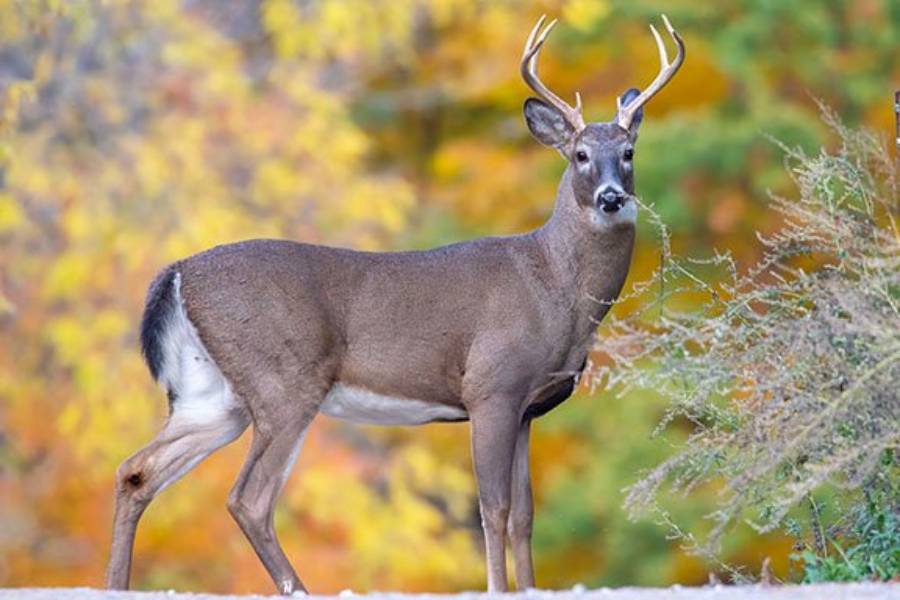
Deer can show behavioral responses after another deer dies or disappears, but current evidence does not establish that deer mourn death in the same emotional way humans do. White-tailed deer form recognizable social relationships, especially between does and fawns, so the loss of a familiar animal can produce behaviors that hunters may interpret as grief.
A deer may remain near another deer, investigate an unresponsive body, revisit a familiar location, or become more vigilant after a disturbance. These behaviors can resemble mourning, but they can also result from social attachment, scent investigation, disrupted routines, or an attempt to assess danger. Observing the behavior alone is therefore not enough to determine the animal’s emotional state.
For hunters, this distinction matters because a deer’s reaction after another deer is killed is not controlled by social attachment alone. Human scent, nearby activity, perceived predation risk, available cover, seasonal movement, and previous hunting pressure can all affect whether deer stay, leave temporarily, or return to the area. This article examines what is known about deer responses to death, which social bonds matter most, and what those behaviors actually mean in a hunting context.
Do Deer Mourn Other Deer?
Deer can react to the loss or death of another deer, but science has not established that they mourn in the same emotional sense as humans. The safest conclusion is that white-tailed deer are capable of social attachment and can respond to separation, absence, or unusual behavior from familiar animals. Calling those responses “mourning” goes one step further because mourning implies an internal emotional state that cannot be confirmed from an observation alone. Research in comparative thanatology, the study of animal responses to death and dying, recognizes grief-like and mourning-like behaviors in several mammal species while also emphasizing that additional research is needed before specific emotional states can be assigned across species.
White-tailed deer have the social structure required for some individuals to form meaningful associations. Their most stable groups are generally built around females. The U.S. Forest Service describes white-tailed deer family groups as consisting of a maternal doe, her current young, and female offspring from previous years, with reported family groups ranging from 2 to 12 deer. Male deer older than one year generally form much looser bachelor groups of about 2 to 5 animals outside the rut. The Pennsylvania Game Commission similarly describes white-tailed deer social organization as largely matriarchal and notes that several generations of related females can occur within the same family group. These relationships mean the disappearance of one deer can change the social environment experienced by another deer, particularly when a doe loses a fawn or a closely associated female disappears.
A social bond, however, does not prove a human-like understanding of death. A deer may notice that another animal no longer responds, detect its scent, search an area where a familiar deer normally appears, or change its behavior after the social group has been disrupted. Those actions demonstrate that the animal is responding to a change. They do not reveal whether the deer understands that the other animal has permanently died or experiences grief with the same cognitive features humans associate with bereavement. Modern research on animal responses to death therefore separates observable behavior from interpretations about emotion and consciousness. Earlier reports were frequently anecdotal, while comparative thanatology increasingly focuses on measurable responses to injured, dying, and dead animals.
For hunters, the practical distinction is important. Seeing a doe remain in an area after another deer has been killed does not by itself prove that she is grieving, just as seeing deer return to the same trail does not prove that they are indifferent to the death. Deer behavior at a hunting location can be influenced simultaneously by social association, familiar home-range use, scent, noise, human disturbance, perceived predation risk, food availability, and cover. A hunter should therefore describe what the deer actually does before assigning a motive to it. “The doe returned to the area several times” is an observation. “The doe returned because she was mourning” is an interpretation that requires evidence that field observation alone cannot provide.
What Behaviors Can Look Like Mourning in Deer?
Behaviors that resemble mourning can include staying near a missing or dead companion, returning to the same location, investigating unusual scents or a body, searching for a separated animal, and showing changes in normal social behavior. The critical point is that the same visible behavior can have several biological explanations. Remaining near a location may reflect attachment, but it may also reflect a familiar home range. Approaching a body may represent recognition of an individual, but it may also be investigation of a new scent or object. Increased vigilance can follow the loss of a companion, but it can also be a response to the predator or human activity associated with the death.
Repeatedly returning to a location is especially easy to misinterpret. White-tailed deer use established home ranges and maintain strong spatial associations, particularly among related females. Research summarized by the U.S. Geological Survey shows that female white-tailed deer are highly philopatric, meaning they tend to remain close to their established home areas, and female offspring may continue living near their mothers into adulthood. A doe that returns after another deer is killed may therefore be following a route, bedding pattern, feeding routine, or family-group range that existed long before the death occurred. Her return is real behavioral evidence, but the location itself does not identify the emotional cause.
Searching behavior can carry more weight when the missing deer is part of a close social relationship. The doe-fawn relationship is the clearest example in white-tailed deer because the mother and young form a biologically important unit during the fawn’s early development. Research on female white-tailed deer during fawning found that mothers isolate themselves and their young from other deer during the first weeks after birth and actively repel other deer from core fawning areas. This level of maternal investment makes a behavioral response to separation unsurprising. It still does not establish that every instance of repeated searching, lingering, or returning after a fawn’s death represents mourning rather than a continuation of maternal behavior.
Hunters should also avoid treating curiosity around a carcass as proof of grief. Responses to dead members of the same species remain poorly documented in many wild mammals, and researchers studying animal death responses distinguish sustained social interest from other motivations such as investigation, danger assessment, or learned associations. Even in species for which carcass interactions have been documented directly, behaviors such as sniffing, touching, remaining nearby, and revisiting a carcass can have multiple explanations. Direct deer-specific research on mourning remains limited, so it is more accurate to describe an observed deer as investigating, searching, lingering, or returning than to state with certainty that it is grieving.
This distinction gives hunters a more reliable way to interpret field behavior. Record what happened first: which deer was involved, how closely the animals were associated before the death, how long the surviving deer remained nearby, whether it returned, and what hunting disturbance occurred at the site. Only then should possible explanations be considered. This approach separates evidence from assumption and prevents normal deer movement, maternal attachment, or a response to human pressure from being mislabeled as mourning.
Which Social Bonds Could Affect How Deer Respond to a Loss?
The strength and type of a deer’s social bond can influence how strongly it responds when another deer disappears, but white-tailed deer do not maintain the same relationship with every member of their species. The strongest and most persistent associations occur within female family groups, while adult bucks generally maintain looser and more temporary relationships. This difference matters because a response to losing a fawn, mother, sibling, or temporary bachelor-group companion should not automatically be treated as the same behavior.
White-tailed deer social organization is largely matriarchal. The Pennsylvania Game Commission identifies the typical social group as an adult doe, her fawns, and her yearling female offspring. In some areas, three or four generations of related females may occur within the same family group. Young females that remain within their mother’s home range can later rejoin her and her new fawns, creating repeated associations among related deer. These long-term family relationships provide a biological basis for expecting one deer to notice and potentially respond when a familiar individual is absent.
Social attachment does not mean that all deer form permanent herd bonds. Large numbers of white-tailed deer may gather where food or winter cover is concentrated, but the Pennsylvania Game Commission notes that these temporary aggregations do not represent the same strong associations found in family groups. For hunters, this distinction is important. Two deer feeding in the same field are not necessarily closely bonded simply because they are physically near each other. The relationship between the animals must be considered before behavior following a death is interpreted as a response to social loss.
Do Doe Deer Mourn Their Fawns?
A doe is likely to notice and respond to the loss of a fawn because the doe-fawn relationship is one of the strongest documented social bonds in white-tailed deer, but there is not enough evidence to state that the doe experiences human-like mourning. Maternal behavior begins immediately after birth and includes nursing, grooming, protection, communication, and repeated contact with the young. Maryland’s Department of Natural Resources reports that newborn fawns remain hidden and largely solitary for about three weeks while their mother returns two or three times per day to nurse and groom them.
Doe-fawn communication provides further evidence that this relationship involves active recognition and contact maintenance. Does use low grunts to communicate with their young, while fawns respond with mews and use bleats to attract their mother’s attention. Maryland DNR specifically states that these vocal exchanges help maintain a close pair bond. A doe that searches an area, repeatedly returns, or appears attentive after separation from a fawn is therefore behaving within an established maternal system rather than responding to an unrelated deer.
The meaning of that behavior depends on the circumstances. A mother searching after temporary separation demonstrates maternal motivation, but it does not prove that she understands that a dead fawn will never return. The same outward action could occur before the doe has recognized that the fawn is dead, while she is attempting to restore contact, or while she is responding to disruption in an established routine. For that reason, hunters should distinguish evidence of a strong maternal bond from evidence of mourning after death.
The fawn’s age also changes the relationship. Maryland DNR reports that fawns can live independently at about two months old, while the Pennsylvania Game Commission states that fawns are functionally weaned by about 10 weeks even though nursing may continue for several additional months. A doe and older fawn can therefore remain socially associated even after the fawn no longer depends on its mother for nutrition. This helps explain why a hunter may still observe a doe and nearly grown fawn traveling together during hunting season.
Do Bucks Mourn Other Bucks?
There is no established evidence that bucks mourn other bucks, although male white-tailed deer do form temporary social associations outside the breeding season. These relationships are different from the long-term maternal associations found among does and their offspring. Bucks frequently form bachelor groups during spring and summer or after the breeding season, but the membership of these groups can change.
The Pennsylvania Game Commission describes post-breeding bachelor groups as loose associations usually containing two to four bucks. These groups remain together through portions of winter and summer before dissolving as the rut approaches. The agency also notes that spring and summer bachelor groups can include unrelated bucks and that individual animals may move in and out of the group as the season progresses. This pattern shows that bucks recognize and tolerate recurring companions, but the association is less stable than a doe-centered family group.
A buck that remains near an injured companion or later returns to a location where another buck was killed should therefore not automatically be described as mourning. Familiar movement patterns, food, bedding cover, rut-related behavior, curiosity, and the level of human disturbance can all influence whether that animal stays or returns. The presence of a previous social association is relevant, but it does not identify the emotional reason for the behavior.
Do Deer Know When Another Deer Has Died?
Scientists have not demonstrated that white-tailed deer possess a human-like understanding of death, but recognizing an unresponsive animal and possessing a full concept of death are not the same cognitive task. Research in comparative thanatology separates simple responses to a dead individual from a more complex understanding that death is permanent. This distinction prevents visible reactions to a carcass from being treated as proof that a deer understands mortality.
A useful way to separate these abilities is to distinguish detection, expectation, and understanding. A deer may detect that another animal is motionless, smells different, or fails to respond. It may also expect a familiar animal to behave normally and react when that expectation is violated. A more advanced concept of death would require recognizing that the loss of normal biological function is irreversible rather than temporary. Research on animal cognition has proposed non-functionality and irreversibility as the two minimum components needed for a basic concept of death.
These criteria are important because approaching or investigating a dead deer proves only part of the process. Comparative thanatology research shows that animals can respond to corpses through combinations of curiosity, avoidance, sensory investigation, and changes in expected animacy. Researchers have described dead bodies as unusual stimuli because they retain characteristics of a familiar living animal while no longer moving or responding like one. An animal can therefore behave differently around a corpse without necessarily understanding death as a permanent state.
The opposite assumption should also be avoided. A lack of human-like mourning does not prove that deer have no awareness of death. Researchers examining death concepts in nonhuman animals argue that requiring animals to possess the complete human understanding of mortality sets an unnecessarily high cognitive standard. Humans associate death with several concepts, including irreversibility, non-functionality, universality, inevitability, causation, and personal mortality. A minimal animal concept could be narrower, involving only the recognition that an organism has permanently stopped functioning.
For white-tailed deer specifically, direct experimental evidence showing that they understand irreversibility after another deer dies is lacking. It is therefore more accurate to say that deer can detect behavioral changes and respond to dead or missing companions, while the extent to which they understand death remains uncertain. This wording separates documented deer social behavior from a cognitive conclusion that has not yet been demonstrated.
For hunters, the practical implication is straightforward. A deer that approaches a carcass, searches an area, or returns after another deer is killed may recognize that something unusual has happened. That observation does not tell the hunter whether the animal understands death, feels grief, investigates scent, follows a familiar travel route, or evaluates danger. Deer behavior should therefore be interpreted from the combination of social relationship, environmental conditions, hunting disturbance, and repeated observations rather than from a single encounter.
Will Deer Come Back After Another Deer Is Killed?
Deer can return to an area after another deer is killed, and the death of one deer does not automatically cause the remaining deer to abandon the location. Whether they return depends more on hunting pressure, human disturbance, available refuge, food, cover, season, and established movement patterns than on the presence of a dead deer alone. For hunters, this means a successful harvest does not necessarily ruin a stand, trail, feeding area, or property for the rest of the season.
White-tailed deer regularly use established home ranges, travel corridors, bedding cover, and feeding areas. A single kill does not remove the biological reasons that attracted deer to those locations in the first place. If an area provides secure bedding cover, preferred forage, access to water, or a travel route between resources, deer may continue using it after another animal has been harvested. The timing of their return can change, however, when the kill is accompanied by substantial human activity.
Hunting disturbance is one of the main factors that can temporarily change deer movement. A 2013 study followed 74 GPS-collared adult female white-tailed deer during controlled hunts in Maryland. The proportion of deer available to hunters decreased by approximately 20–25% from before to after the hunt because some deer moved into refuge areas. Deer outside those refuges increased their movement by about 12.6–15.6 meters per hour during the hunt, then returned to their pre-hunt movement rates afterward. This pattern demonstrates a response to hunting pressure, but it does not show that deer permanently abandoned the area because another deer died.
The distinction between a kill and the disturbance surrounding a kill is important. Harvesting a deer can involve a gunshot or bow shot, tracking, human scent, blood, flashlights, conversations, equipment, dragging or carrying the animal, and repeated entry into the area. Deer that detect these cues may associate the immediate location with danger. A deer that temporarily avoids a stand after a harvest may therefore be responding to human predation risk, not mourning the animal that was killed.
Researchers have documented this risk response in adult bucks. A study of 37 adult male white-tailed deer in Oklahoma compared areas with lower hunting intensity of one hunter per 101 hectares with higher intensity of one hunter per 30 hectares. Deer observation rates declined across successive hunting weekends, and the researchers concluded that deer modified their behavior in ways that reduced detection by hunters. The relevant factor was repeated exposure to human predation risk, not evidence that deer were avoiding locations because they had witnessed another deer die.
This also explains why two hunters can have very different experiences after harvesting a deer. A lightly disturbed property where a hunter quietly removes one deer may continue producing deer activity quickly. A heavily hunted area with repeated entries, vehicles, tracking parties, and several hunters can create substantially more pressure. In both situations a deer has died, but the amount of disturbance is different. The resulting deer behavior can therefore be different as well.
Seasonal behavior can further complicate the response. During the rut, bucks may continue traveling through an area despite hunting activity because reproductive behavior strongly affects movement. Food availability can similarly keep does and family groups near a productive feeding area. Researchers studying 188 GPS-collared male white-tailed deer in southwest Wisconsin from 2017 to 2020 found that the opening weekend of firearm season had no significant overall effect on male movement rates. Age and breeding behavior were more important determinants of movement in that study. This finding shows why a simple rule such as “shooting one deer makes the others leave” does not accurately describe white-tailed deer behavior.
A hunter should therefore evaluate a kill site according to the amount of disturbance rather than assuming that other deer have emotionally abandoned the location. If the property continues to provide food, cover, security, and established travel routes, deer can return. How quickly they do so depends on the individual deer and hunting conditions.
Does Killing One Deer Scare Other Deer Away?
Killing one deer can cause nearby deer to leave temporarily, but it does not consistently scare every deer away or cause permanent abandonment of the area. Deer respond to immediate danger cues and accumulated hunting pressure. The strongest behavioral change is therefore more accurately described as an antipredator response than as a reaction to the death of another deer itself.
An immediate escape response is normal when other deer see, hear, or smell a threatening event. A gunshot, sudden movement, a fleeing herd member, or a hunter entering the area can trigger vigilance and flight. Deer that leave during the event may move toward dense cover, a refuge area, or another portion of their home range. This short-term response should not be confused with permanent displacement.
Repeated pressure has a stronger potential to change when and where deer are available to hunters. In the Maryland controlled-hunt study, the movement of some females into refuge areas reduced the proportion available for harvest by 20–25%. Importantly, deer already using refuges did not substantially change their movement during the hunts, while deer outside refuges increased movement during hunting activity. The pattern shows that deer can use secure areas strategically when disturbance increases.
Adult bucks can also alter their behavior under hunting pressure. In the Oklahoma study, researchers found that observation rates were highest during the first hunting weekend and declined during subsequent weekends under both low- and high-risk hunting treatments. The authors concluded that white-tailed deer adjusted their behavior to avoid hunter detection. For a hunter, fewer daylight sightings after several days of pressure therefore do not necessarily mean that the deer have left the property. Some animals may still be present while using different cover, routes, movement periods, or portions of their range.
At the same time, hunting pressure does not create an identical response in every population. The 2025 Wisconsin study based on 188 collared males found no significant effect of firearm opening weekend on overall hourly movement rates. The study instead identified age and breeding-season timing as important factors, with two-year-old males moving at higher hourly rates than other age classes. This result does not contradict research showing hunting avoidance. It demonstrates that behavioral responses depend on landscape, hunting intensity, season, sex, age, and the specific behavior being measured.
Hunters should also separate leaving the immediate kill site from leaving the home range. A deer may avoid a specific trail or opening after detecting danger while continuing to live within the surrounding property. It may shift into thicker bedding cover, move at a different time of day, or approach the same feeding area from another direction. These changes can make deer seem absent even when their broader spatial distribution has changed very little.
The presence of a carcass is also not enough by itself to explain avoidance. A deer encountering a dead conspecific may investigate it, avoid it, or show little visible response. Direct research demonstrating that white-tailed deer consistently abandon an area because they recognize and fear a dead deer is limited. Hunters should therefore avoid attributing changes in deer activity to the carcass when the same location has also been exposed to human scent, tracking activity, shooting, retrieval, or repeated hunting.
The most useful interpretation is that deer respond to risk, not according to a universal rule about another deer being killed. One harvest may have little measurable effect in a low-pressure area, while repeated hunting can push deer toward secure cover and reduce hunter observations. A deer that disappears after a kill is not necessarily mourning or frightened by the dead animal. It may simply be responding to the strongest danger cue in the situation: the hunter.
Read more: Why Do Deer Lose Their Winter Coat?
Can a Fawn Survive If Its Mother Is Killed During Deer Season?
A healthy white-tailed deer fawn can generally survive without its mother once it is about 8 to 10 weeks old, although losing the doe still removes an important social and behavioral relationship. This distinction matters during deer season because physical independence does not mean the doe-fawn bond has ended. A fawn may continue traveling, feeding, and bedding with its mother after it is capable of obtaining enough food on its own.
Maryland’s Department of Natural Resources states that fawns can live independently of their mothers at approximately two months of age. During the first weeks of life, the relationship is much more dependent. Newborn fawns remain hidden for about three weeks while the doe returns two or three times each day to nurse and groom them. Once the fawn becomes strong enough to follow the doe, it begins eating the same natural foods consumed by adult deer.
The Pennsylvania Game Commission places functional weaning at approximately 10 weeks. Fawns may continue nursing until they are five or six months old when the doe allows it, but milk is no longer necessary for survival after functional weaning. By fall archery season, the agency considers fawns capable of grazing and browsing independently. It also notes that orphaned fawns are rarely adopted by another doe, but adoption is generally unnecessary for fall-aged fawns because they can already feed themselves.
Survival and social response should therefore be treated as separate questions. An older fawn may survive after its mother is harvested while still responding to her absence. White-tailed deer learn feeding behavior from their mothers and remain socially associated after nutritional dependence declines. A fawn seen returning to an area where a doe was killed may consequently be following an established home range, looking for its mother, maintaining a familiar feeding routine, or responding to several of these factors simultaneously. The behavior does not prove mourning, but neither should independence be interpreted as evidence that the relationship had no importance.
The timing is different for very young fawns. A newborn that still depends heavily on nursing is not biologically equivalent to a fall-aged fawn. The first several weeks involve regular maternal nursing, grooming, protection, and relocation within secluded cover. A hunter discussing whether a fawn can survive without its mother should therefore consider age and developmental stage, rather than applying a single answer to every fawn.
This age distinction also explains why observations from deer season can be misleading. A hunter may see an older fawn remain near or return to an area after a doe is harvested and assume that the animal cannot survive alone. By that stage of the year, the fawn is generally capable of feeding independently. Its continued presence can instead reflect the loss of a familiar social companion and the persistence of established movement patterns.
What Should Hunters Assume When Deer Return After a Kill?
Hunters should assume that a returning deer is continuing to use a familiar area unless repeated observations provide evidence for a more specific explanation. Returning to a kill site does not prove mourning, and avoiding the site does not prove that deer understand another animal has died. Both behaviors can result from the interaction of social bonds, spatial familiarity, food, cover, hunting pressure, and perceived danger.
White-tailed deer have strong home-range affinity. Experimental research on adult does demonstrated this by relocating 17 deer with known home ranges to unfamiliar locations. Twelve radio-collared does successfully returned to their original home ranges, while GPS-collared individuals showed extensive searching behavior that included circling, backtracking, and revisiting locations before moving toward familiar areas. Researchers interpreted these movements as evidence of spatial memory and a strong tendency to occupy familiar home ranges. This means a deer returning after a harvest may simply be continuing a spatial pattern that existed before the kill.
Hunters should first consider the relationship between the surviving deer and the animal that was harvested. A doe returning after losing a young fawn has a different social context from an unrelated buck passing through the same location. A member of a female family group may also have a stronger recurring association with other deer in the group than two animals temporarily sharing a feeding area. Social context makes some explanations more plausible, but it still does not establish the emotional state responsible for the behavior.
The second factor is the amount of disturbance associated with the harvest. A quiet bow kill followed by a short recovery creates a different risk environment from repeated tracking, multiple people entering the bedding area, vehicle traffic, prolonged human scent, or several consecutive days of hunting. Deer responding to those cues may alter when or where they move without abandoning their broader home range. Researchers have also found that hunting does not produce a universal movement response. A 2025 study based on GPS data from 188 male white-tailed deer in southwest Wisconsin found no significant overall effect of firearm opening weekend on hourly movement rates, while age and breeding-season behavior explained important movement differences.
The third factor is what continues to attract deer to the area. Food, bedding security, escape cover, breeding opportunities, and established travel routes can remain valuable after a harvest. Removing one deer does not remove those resources. A location that consistently satisfies several biological needs can therefore continue receiving deer traffic even after a kill.
Hunters should consequently avoid four unsupported assumptions: that a returning deer is definitely grieving, that an approaching deer is visiting the dead animal intentionally, that a deer leaving the area has permanently abandoned it, or that one harvest will automatically ruin a productive hunting location. Each conclusion assigns a specific cause before other explanations have been eliminated.
The better interpretation starts with observable behavior. Note which deer returned, how soon it returned, how often it appeared, what relationship it had with the harvested deer, how much human disturbance occurred, and whether normal food or cover remained available. Those details provide more useful hunting information than assigning a human emotion to a single encounter.
For hunters, the central answer is therefore straightforward: deer may respond to the loss of another deer, especially when a strong social bond exists, but a behavior that resembles mourning is not proof of human-like grief. A returning deer may be responding to social attachment, familiar space, normal resource use, or changes in perceived risk. Interpreting those factors separately gives hunters a more accurate understanding of what deer are actually doing after another deer is killed.