
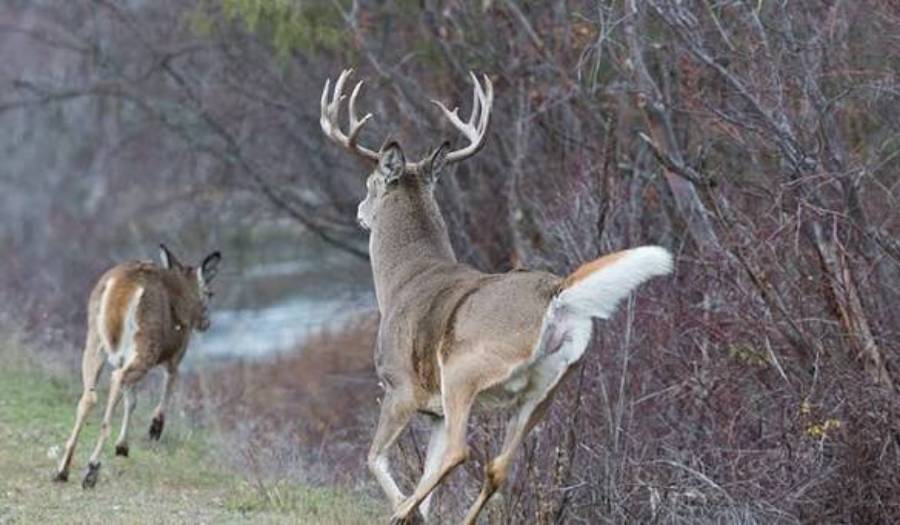
Deer usually abandon or sharply reduce their use of a property when hunting pressure, human disturbance, changing food sources, inadequate security cover, seasonal movement, or better habitat nearby makes another area safer or more valuable. Deer respond to changes in food, bedding security, travel conditions, and perceived risk, so a property that held deer consistently earlier in the season may become less attractive when one or more of these conditions change.
Seeing fewer deer does not necessarily mean they have permanently left the property. Whitetail deer can remain within the surrounding area while shifting bedding locations, changing travel routes, visiting different food sources, or moving primarily after dark. A buck that disappears from a trail camera, for example, may still be using nearby cover but avoiding the camera location during daylight because hunting pressure or human intrusion has changed its movement pattern.
There are 9 primary reasons deer may stop using a hunting property, ranging from hunting pressure and human scent to seasonal food changes, habitat disturbance, predator activity, and more attractive neighboring properties. Identifying the actual cause requires looking at changes in deer sign, trail-camera activity, food availability, bedding cover, and recent human activity rather than assuming the deer simply disappeared. Understanding these factors makes it easier to determine where the deer went and what needs to change to make the property attractive to them again.
Why Do Deer Abandon a Property?
Deer abandon or reduce their use of a property when the area no longer provides the right balance of security, food, cover, and favorable movement conditions. There are 9 primary reasons this happens: hunting pressure, human scent and intrusion, changing food sources, inadequate bedding cover, seasonal movement, rut-related movement, habitat changes, predator pressure, and better conditions on neighboring properties. Each factor can change where deer bed, feed, travel, or spend daylight hours.
Property abandonment is not always permanent. Deer use landscapes according to available resources and perceived risk rather than property boundaries. A deer may stop appearing in a food plot while continuing to bed several hundred yards away, or it may stop traveling through an exposed area during daylight and use the same route after dark. This distinction matters to hunters because reduced sightings can indicate a change in deer behavior rather than a decline in the number of deer living in the surrounding area.
The timing of the change provides an important clue to the cause. Deer activity that declines shortly after repeated hunting may point toward hunting pressure or human intrusion. A decline that coincides with acorns dropping, crops being harvested, or another food source becoming available may indicate a feeding shift. Changes occurring during the rut or as seasons progress may instead reflect normal seasonal movement. Hunters should therefore identify what changed on or around the property before deciding how to respond.
Does Hunting Pressure Make Deer Leave a Property?
Hunting pressure can make deer reduce their use of a property, particularly during daylight, because repeated encounters with hunters increase the perceived risk of using that area. Pressure includes more than shooting at deer. Frequent stand visits, repeated walks through travel corridors, vehicle activity, scouting, and intrusion near bedding cover can all provide evidence of human presence.
Deer can respond to pressure by changing when and where they move. Instead of completely leaving the surrounding area, they may enter food sources later, use thicker cover, avoid frequently hunted trails, or shift toward locations where human activity is lower. For a hunter, the practical result can look like abandonment: trail-camera photographs decline during legal shooting hours, familiar trails become less active, and deer that previously entered a field before dark begin appearing after sunset.
Repeated pressure is more important than a single isolated disturbance when evaluating a property’s hunting strategy. Walking through the same bedding-to-feeding route every time a stand is hunted, for example, repeatedly associates that route with human activity. A stand can therefore have favorable wind while the access route still creates unnecessary disturbance. The property may continue providing food and cover, but deer have less reason to expose themselves there during daylight when safer alternatives exist.
Mature bucks deserve particular attention because losing daylight sightings of a buck does not prove that it has left the property. A buck may change bedding cover, use a different approach to a feeding area, or restrict movement around frequently hunted locations. Hunters should compare daytime and nighttime trail-camera activity, recent hunting frequency, access routes, and deer sign before concluding that hunting pressure has pushed deer completely off the property.
Can Human Scent Make Deer Stop Using a Property?
Human scent and repeated intrusion can cause deer to avoid specific parts of a property or shift their activity to periods when people are absent. Deer do not need to encounter a hunter directly for human activity to affect their movement. Walking along deer trails, entering bedding cover, accessing stands through feeding areas, and repeatedly visiting the same locations all increase disturbance within areas deer use for feeding, bedding, and travel.
The location of human intrusion matters because not every part of a hunting property carries the same level of risk. Disturbance along a field edge may have a different effect than intrusion into secure bedding cover. When a hunter repeatedly walks through a bedding area or a narrow travel corridor, deer can encounter human scent in a location they normally depend on for security. They may respond by using another bedding location, approaching the area from a different direction, or waiting until human activity decreases before moving through it.
Access routes can therefore influence deer activity even when the stand itself is positioned correctly. A hunter who crosses a food plot, follows an active deer trail, or passes close to bedding cover on every hunt can disturb deer before reaching the stand. Entry and exit routes should minimize contact with the locations deer are expected to use, particularly during periods when deer are likely to be nearby.
Can Checking Trail Cameras Too Often Push Deer Away?
Checking trail cameras too frequently can add human intrusion to an area, especially when reaching the camera requires entering bedding cover or heavily used travel routes. The primary issue is not the trail camera itself but the repeated human activity associated with visiting it.
For example, a camera positioned on the edge of a low-risk access route can usually be checked with less disturbance than one located deep inside a bedding area. Visiting the second location repeatedly requires a hunter to enter secure deer habitat, leave scent, and potentially encounter deer. Hunters evaluating a sudden decline in camera activity should therefore consider both what the camera records and how often they physically enter the area to retrieve that information.
Will Deer Leave When Food Sources Change?
Deer can reduce their use of a property when preferred food sources change because feeding opportunities directly influence daily and seasonal movement. Important food sources include acorns, agricultural crops, browse, mast, and planted food plots. When the availability or attractiveness of these foods changes, deer can redirect their movement toward another part of the property or neighboring land.
This shift can happen even when a property’s food plot remains healthy. For example, deer that regularly visit a planted field may reduce their use of it when acorns become abundant inside nearby timber. The deer have not necessarily abandoned their home range. Their preferred feeding destination has changed, which can also change the trails and staging areas they use to reach food.
Agricultural changes can produce a similar effect. Standing corn can provide both food and cover, while harvesting a crop can rapidly alter those conditions. Changes in soybeans, corn, or other nearby crops can therefore redistribute deer activity across several properties. A hunting location that produced consistent sightings before a harvest may become less productive afterward because the surrounding food landscape has changed.
Hunters can distinguish a food shift from broader property abandonment by looking beyond one stand or camera. Fresh tracks, droppings, browsing, and camera detections near alternative food sources can show that deer remain in the area but have changed feeding patterns. Comparing current food availability with what was available when deer activity was highest provides a stronger diagnosis than assuming a decline in one food plot means the deer have left.
Will Deer Leave a Property Without Enough Bedding Cover?
Deer can reduce their use of a property when it lacks secure bedding cover, even when the property provides reliable food. Bedding areas give deer locations to rest while limiting exposure to people and other disturbances. A property that functions mainly as a feeding destination may attract deer regularly but fail to hold them during daylight if suitable bedding habitat is located elsewhere.
Security is especially important when deciding where deer spend daylight hours. Thick vegetation, brush, young forest growth, tall grasses, and other forms of dense cover can provide visual separation from human activity. Open woods or heavily disturbed areas may provide less security. When better bedding habitat exists on neighboring land, deer can bed there and travel onto another property primarily to feed, creating a situation where hunters see limited daytime activity despite finding deer sign around food sources.
Disturbing an established bedding area can also change how deer use the surrounding property. Repeatedly walking through bedding cover to scout, retrieve trail-camera cards, track deer, or reach a stand increases human intrusion in an area deer use for security. Deer may respond by shifting to another bedding location and using different routes between bedding and feeding areas. This movement can make previously productive stands less effective even when the property’s food sources remain unchanged.
Hunters should therefore evaluate bedding habitat alongside food when deer activity declines. A property with attractive food but limited secure cover may function primarily as a destination deer visit from surrounding properties. Protecting existing bedding areas, reducing unnecessary intrusion, and maintaining secure travel cover can increase the property’s value beyond simply providing another place for deer to feed.
Do Deer Leave a Property Because of Seasonal Changes?
Deer can stop using parts of a property as heavily when seasonal changes alter food availability, cover, weather conditions, and habitat needs. A hunting property does not provide the same value throughout the entire year. Areas that concentrate deer during early season can become less important later when preferred foods disappear, vegetation changes, crops are harvested, or other seasonal resources become available.
Food transitions are one of the clearest mechanisms behind seasonal movement. Deer may concentrate around one food source while it is abundant and shift toward another when availability changes. Acorns, agricultural crops, natural browse, and food plots can become more or less attractive at different points of the hunting season. As feeding locations change, the travel corridors and bedding areas associated with those locations can change as well.
Seasonal changes in cover can also redistribute deer. Vegetation that provides concealment early in the season may become less effective after leaves fall or agricultural fields are harvested. Deer seeking secure daytime bedding can shift toward thicker cover, which may place them farther from stands and cameras that produced regular activity earlier in the year. The hunter sees fewer deer, but the underlying change is a shift in habitat use rather than necessarily a permanent departure from the surrounding area.
The timing of declining deer activity helps distinguish seasonal movement from hunting pressure. A gradual shift that corresponds with changes in food or cover points toward seasonal habitat use, while a sharp decline immediately after repeated hunting or intrusion provides a stronger reason to examine human pressure. Hunters should compare current food sources, available cover, deer sign, and trail-camera patterns with conditions from earlier in the season before concluding that deer have abandoned the property.
Does the Rut Make Deer Leave Their Normal Area?
The rut can make deer temporarily change how they use a property, particularly when bucks expand their movements to find receptive does. A buck that follows predictable bedding-to-feeding routes before the rut may travel through different cover, cross neighboring properties, or appear in locations where it was rarely observed earlier in the season. This change can make a familiar buck seem to have abandoned a property even when its broader range still overlaps the area.
Rut-related movement differs from movement caused by declining habitat quality because the primary driver is breeding behavior rather than the loss of food, bedding cover, or security. Bucks may spend less time near previously reliable food sources as they search for does, investigate doe bedding areas, and travel between locations where female deer concentrate. At the same time, unfamiliar bucks may begin appearing on a property as their own movements expand. Trail-camera activity can therefore change substantially without the property’s habitat becoming less attractive.
The end of the rut can produce another movement shift. Bucks must recover from increased activity and return to patterns that place greater emphasis on security and food. A property with secure bedding cover and dependable late-season food may regain buck activity, while a property lacking those resources may receive fewer visits after breeding activity declines. Whether a buck returns to exactly the same location depends on the resources and pressure present across its broader range.
Hunters should avoid diagnosing rut-related disappearance from one camera or stand. Comparing detections across multiple locations, looking for continued doe activity, and examining fresh tracks, rubs, scrapes, and other deer sign provides more context. A temporary change occurring during the breeding period is different from a sustained decline that began after repeated hunting pressure, loss of cover, or a major change in food availability.
Can Habitat Changes Cause Deer to Leave a Property?
Habitat changes can cause deer to stop using parts of a property when those changes reduce food, bedding cover, security, or useful travel corridors. Logging, brush clearing, construction, vegetation removal, and changes in agricultural land can alter several resources at the same time. The effect depends on what the habitat change removes or creates rather than on disturbance alone.
Removing dense cover can have an immediate negative effect when that vegetation functions as a bedding area or protected travel corridor. Clearing brush between bedding and feeding areas, for example, can expose deer as they move and reduce the security value of the route. Construction can create a similar problem when repeated vehicle traffic, equipment, noise, and human activity occur near areas deer previously used during daylight.
Habitat disturbance does not always make a property worse for deer. Some vegetation changes can eventually create additional browse or dense young cover, while other changes may remove valuable habitat without providing a useful replacement. Hunters should therefore evaluate habitat changes according to their effect on specific deer requirements instead of assuming that every logged, cleared, or disturbed area will cause deer to leave.
The location and scale of the change are also important. Losing a small patch of vegetation may have little effect when similar cover remains nearby, while removing a property’s primary bedding area can change movement across a much larger portion of the property. Hunters who notice declining deer activity after habitat work should identify what changed in the relationship between bedding, food, security, and travel routes. That comparison helps determine whether deer actually shifted away from the property or simply reorganized their movement around the new habitat conditions.
Do Coyotes or Other Predators Make Deer Leave a Property?
Coyotes and other predators can change deer behavior, but predator presence alone does not mean deer will completely abandon a property. Deer can respond to perceived predation risk by changing bedding locations, travel routes, group behavior, or the times they use particular areas. The effect depends on the frequency of predator activity, habitat structure, available escape cover, and alternative habitat nearby.
Predator pressure is therefore different from habitat loss. A property may still provide adequate food and bedding cover while deer become more cautious about using a specific location where predator activity is concentrated. For example, repeated coyote activity around a feeding area or travel corridor may contribute to deer using another route. Deer may still remain within the surrounding landscape rather than moving out of the area entirely.
Hunters should also avoid attributing every sudden decline in deer sightings to coyotes. Hunting pressure, changing food sources, seasonal movement, bedding disturbance, and changes on neighboring properties can produce similar observations from a stand or trail camera. Finding coyotes on camera at the same time deer detections decline establishes that both events occurred, but it does not by itself prove that coyotes caused the decline.
A stronger diagnosis requires comparing several forms of evidence. Hunters should examine when predator detections increased, whether deer activity shifted to another part of the property, whether food or cover changed at the same time, and whether human pressure also increased. Predator pressure becomes a more plausible explanation when deer repeatedly avoid locations with concentrated predator activity while continuing to use comparable habitat elsewhere.
Will Deer Leave for a Better Neighboring Property?
Deer can reduce their use of one property when neighboring land provides better food, bedding cover, security, or lower hunting pressure. Property lines have no biological significance to deer. A whitetail can use resources across multiple parcels, making the quality and disturbance level of surrounding properties important factors in where it spends its time.
A neighboring property can become particularly attractive when it provides a resource that is limited on the hunter’s land. For example, deer may feed on one property but spend most daylight hours in thick bedding cover across the boundary. Another property with standing crops, abundant acorns, secure bedding habitat, or less human intrusion can also redirect movement away from previously productive hunting locations.
Differences in hunting pressure can create the same pattern. If one property receives frequent hunting, scouting, vehicle traffic, and bedding-area intrusion while adjacent land remains relatively undisturbed, deer have an incentive to spend more daylight time in the lower-pressure area. They may continue visiting the pressured property after dark, which can produce abundant nighttime trail-camera photographs but few daylight encounters for hunters.
This is why deer can appear to disappear without moving far away. A buck that previously traveled 200 yards inside one property may shift its route a few hundred yards and spend more time across the boundary. From a single stand or camera, the buck appears to be gone even though it remains within the local landscape.
Hunters should evaluate their property in relation to surrounding habitat rather than treating it as an isolated unit. Comparing food, bedding cover, travel corridors, hunting pressure, and trail-camera activity near property boundaries can reveal why deer favor neighboring ground. The objective is not necessarily to keep deer inside one parcel at all times, but to provide enough security and useful resources that the property remains part of their regular movement pattern.
How Can You Tell if Deer Actually Left Your Property?
You can tell whether deer actually left a property by comparing multiple signs of deer activity rather than relying only on sightings from a stand or detections from one trail camera. Useful indicators include trail-camera detections, tracks, droppings, browsing, rubs, scrapes, and direct observations. When several indicators decline across multiple parts of the property, a broader movement shift becomes more likely.
Trail cameras are particularly useful when they cover different habitat types and travel routes. A camera that stops detecting deer near a food plot only shows that activity declined at that location. Cameras positioned near bedding cover, travel corridors, alternative food sources, or property boundaries may reveal that the same deer simply changed where or when they move. Comparing locations provides more information than increasing the number of checks at one camera.
The timing of detections is equally important. Deer that disappear during daylight but continue appearing regularly after dark have not abandoned the property. A shift from daylight activity to nighttime activity indicates a change in movement timing rather than complete absence. Hunting pressure and repeated human intrusion should be examined when this pattern develops during hunting season, especially when food and habitat conditions have remained relatively stable.
Physical deer sign can help confirm what cameras show. Fresh tracks and droppings indicate recent use, while active browsing identifies feeding activity. Rubs and scrapes can provide additional evidence of buck activity during relevant portions of the season. Hunters should compare the freshness and distribution of these signs instead of treating the presence of one old track, rub, or scrape as proof of current property use.
The strongest diagnosis comes from identifying both what disappeared and what changed. If deer detections decline across the entire property immediately after a major food transition, the food landscape deserves attention. If daytime activity declines after repeated stand access while nighttime detections remain consistent, hunting pressure is a stronger explanation. If cameras near one boundary continue recording deer while interior cameras become quiet, neighboring habitat may have become more attractive.
How Long Will Deer Stay Away After Being Spooked?
There is no single amount of time that every deer will stay away after being spooked because the response depends on the severity and frequency of the disturbance, the individual deer, and the availability of secure habitat nearby. A one-time encounter does not have the same effect as repeatedly disturbing a bedding area or exposing deer to hunters in the same location.
The type of disturbance matters. A deer that detects something unusual at a distance may leave temporarily and continue using the general area. A deer that encounters a hunter at close range inside secure bedding cover receives a stronger indication that the location carries risk. Repeated encounters can reinforce that risk and encourage the deer to use different bedding locations, travel routes, or movement times.
Frequency also changes the response. One accidental intrusion should not automatically be treated as permanent property damage. Entering the same secure area repeatedly, however, creates a continuing source of disturbance. In that situation, asking how many hours or days a deer will stay away is less useful than identifying whether the source of pressure has actually stopped.
Hunters should determine whether deer return by monitoring the property without immediately adding more disturbance. Trail cameras positioned along low-impact access routes can help identify returning activity, while fresh tracks and other deer sign can confirm continued use. If deer return only at night, the property may still be part of their range but perceived as unsafe during daylight.
The practical response is to reduce unnecessary intrusion and allow secure areas to function as secure areas. If deer activity recovers after pressure decreases, disturbance was likely an important part of the problem. If activity remains low, hunters should investigate the other major causes, including changing food sources, seasonal movement, loss of bedding cover, habitat changes, and more attractive neighboring properties.
Read more: Why Do Bucks Break Their Antlers? 5 Main Causes
How Do You Get Deer to Come Back to Your Property?
To get deer to come back to a property, correct the specific condition that caused them to reduce their use of it. The most important actions are reducing hunting pressure, protecting bedding cover, limiting unnecessary human intrusion, maintaining attractive food sources, preserving secure travel routes, and monitoring how deer respond. Adding more food alone will not solve the problem if deer perceive the property as unsafe.
Reduce unnecessary hunting pressure first when deer activity declines after frequent hunting or scouting. Avoid repeatedly entering the same stands, bedding areas, and travel corridors simply to determine whether deer have returned. Hunt locations when access, wind, and deer movement provide favorable conditions instead of creating daily disturbance. Giving secure portions of the property periods without human intrusion can restore one of the resources pressured deer need most: security.
Protect bedding areas and the routes connecting them to food. Deer need more than feeding locations to use a property consistently during daylight. Dense vegetation, brush, young growth, and other secure cover can provide places to bed and move with less exposure. Avoid unnecessary clearing or repeated entry into these locations. A property that combines food with secure bedding and travel cover has more functional value than a property that offers food but requires deer to return to neighboring land for security.
Evaluate food availability according to the current season. A food plot that attracted deer several weeks earlier may compete with acorns, agricultural crops, natural browse, or other seasonal foods later. Determine what deer are currently eating and where those resources occur before changing the property. Fresh tracks, browsing, droppings, and trail-camera activity around alternative feeding areas can reveal whether deer have shifted food sources rather than left the surrounding area.
Human access should also be adjusted when entry and exit routes overlap with deer movement. Reaching a stand through a food source or walking close to bedding cover can create disturbance before the hunt begins. Low-impact access routes that avoid important feeding, bedding, and travel locations reduce the amount of human presence deer encounter while using the property.
Monitor the results without immediately recreating the original problem. Trail cameras can be placed where they can be accessed with limited intrusion, and deer sign can be evaluated during necessary property visits. Look for changes in both the number and timing of detections. An increase in nighttime photographs shows that deer are using the property again, while increasing daylight activity provides stronger evidence that deer perceive the area as suitable during hunting hours.
How Can You Prevent Deer From Abandoning Your Property Again?
Prevent deer from abandoning a property by consistently maintaining 4 conditions: security, bedding cover, reliable food, and low-impact human access. Deer movement will still change with seasons and the rut, but maintaining these conditions reduces avoidable reasons for deer to shift their activity toward neighboring properties.
Security requires controlling when and where people enter the property. Bedding areas should receive less unnecessary traffic than field edges, roads, and other locations deer already associate with human activity. Hunters should also consider scouting, trail-camera checks, habitat work, vehicle traffic, and stand access as sources of disturbance rather than measuring pressure only by the number of days hunted.
Habitat management should preserve the relationship between bedding, feeding, and travel cover. Improving one component while damaging another can simply relocate deer activity. For example, creating an attractive food source has limited hunting value when reaching or leaving it requires deer to cross an exposed area from bedding cover. Property improvements should instead allow deer to move between essential resources while retaining security.
Food management should account for seasonal competition. Acorns, crops, natural browse, and food plots can each influence where deer concentrate at different times. Hunters who monitor these changes can adjust stand selection and expectations without immediately assuming deer have abandoned the property when a previously productive location becomes quiet.
Finally, evaluate deer activity across the entire property rather than judging success from one stand, food plot, or trail camera. A deer property should be managed as part of a larger landscape because deer routinely use resources beyond property boundaries. Maintaining useful habitat while minimizing unnecessary pressure gives deer a reason to continue including the property in their bedding, feeding, and travel patterns even when conditions elsewhere change.