
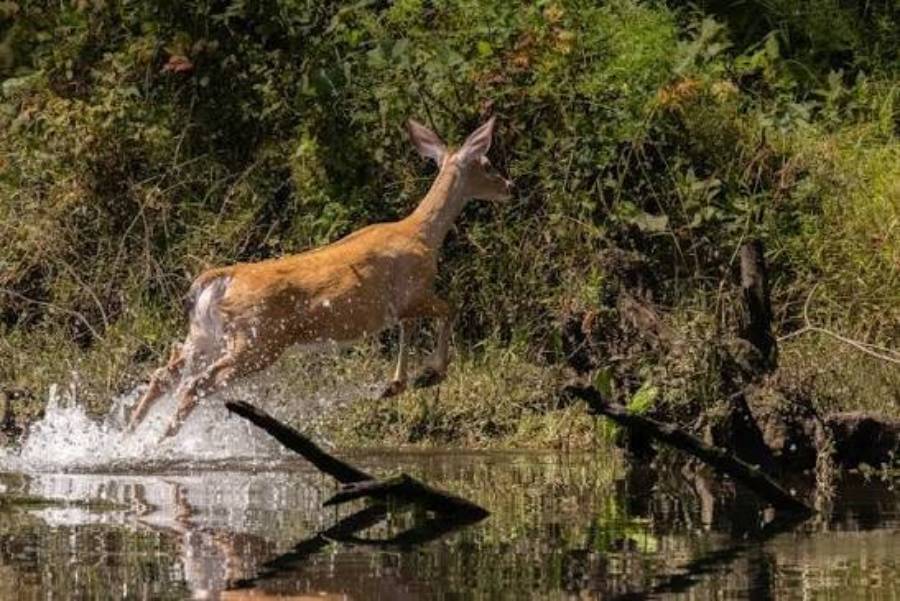
Deer usually stop using creek crossings because hunting pressure, changing food sources, seasonal movement, changing water conditions, physical changes at the crossing, or a better nearby route alters how they travel through the area. A crossing that produced fresh tracks or regular trail-camera activity for weeks can lose activity quickly when one of these conditions changes.
A lack of activity does not necessarily mean deer have left the area. Deer may continue traveling between the same bedding and feeding areas while crossing the creek at a different location. They may also use the original crossing after dark instead of during daylight when hunting pressure increases. Changes in rainfall, creek depth, bank conditions, available food, cover, and seasonal priorities can produce similar shifts in movement.
Hunters should therefore treat a cold creek crossing as evidence of a change in the deer movement system, not immediate proof that the location has been abandoned. Identifying what changed makes it easier to determine whether deer altered their timing, changed their destination, or moved upstream or downstream to another crossing. The six causes below explain why established creek crossings lose activity and what each change means when scouting or hunting the surrounding travel corridor.
Why Do Deer Stop Using Creek Crossings?
Deer stop using creek crossings when changes in risk, food, seasonal movement, water conditions, terrain, or route efficiency make the established crossing less useful than another travel option. There are 6 main causes: increased hunting pressure, changing food sources, seasonal movement shifts, changing creek conditions, physical changes around the crossing, and the availability of a better nearby crossing. Each cause changes either where deer are trying to go or how safely and efficiently they can reach that destination.
A creek crossing is part of a larger travel route rather than an isolated deer attraction. Deer may use it while moving between bedding cover and a feeding area, traveling through security cover, or following terrain that concentrates movement. When one part of that system changes, traffic at the crossing can change with it. For example, deer may stop following a route across a creek when the food source on the opposite side becomes less attractive. The crossing itself has not become unsuitable; the destination that made the crossing useful has changed.
A decline in activity also does not prove that deer have abandoned the crossing. Temporary inactivity and actual abandonment are different movement patterns. A pressured buck might still cross at the same location but move after legal shooting light. Deer can also shift to a second crossing upstream or downstream while continuing to use the same general travel corridor. Hunters should compare fresh tracks, trail-camera activity, connected trails, and nearby crossings before deciding the original location is dead.
The most useful question is therefore not simply whether deer stopped crossing there. Determine what changed before the activity declined. A sudden decline following repeated hunts suggests a different cause than one occurring after heavy rain, a major food-source change, or a transition into another phase of the hunting season.
Can Hunting Pressure Make Deer Stop Using a Creek Crossing?
Repeated hunting pressure can make deer reduce daylight use of a creek crossing, change when they cross, or move to another crossing with less perceived danger. Pressure develops from more than a hunter sitting near the crossing. Walking the same access route, leaving ground scent near deer trails, checking cameras frequently, disturbing bedding cover, and repeatedly entering the area can all increase human disturbance around a travel corridor.
The timing of the change helps identify hunting pressure as the cause. Consider a crossing that produces consistent daylight trail-camera activity before hunting begins. A hunter then accesses a stand along the same creek several times, crossing or walking close to the deer trail on each trip. If daylight activity declines while nighttime activity remains, the evidence points more strongly toward a timing adjustment than complete abandonment. Deer are still using the route, but its value as a daylight hunting location has changed.
Pressure can also move traffic rather than merely change its timing. Creek systems commonly provide more than one place where deer can reach the opposite bank. When the established crossing repeatedly exposes deer to human scent or disturbance, another accessible location can provide a route around the pressured area. This is why immediately adding more scouting pressure to a cold crossing can make diagnosis harder: the hunter may continue disturbing the exact corridor being evaluated.
How Does Human Scent Change Deer Creek-Crossing Behavior?
Human scent can reduce the security of a creek crossing when hunters repeatedly contaminate the crossing, its approach trails, or the surrounding travel corridor. The problem is especially important when the hunter’s access route overlaps the route deer use to enter or leave the creek. In that situation, a hunter can affect the crossing before reaching the stand.
Ground scent can also reveal activity that deer never directly observed. Boots contacting vegetation, creek banks, logs, and established trails leave human odor along the access route. Wind can carry additional scent toward the approach side of the crossing. Repeating the same pattern increases the opportunity for deer using that corridor to encounter evidence of human activity.
Hunters should therefore evaluate three locations when pressure appears to be the cause: the crossing itself, the deer trails leading into it, and the hunter’s access and exit route. If camera activity shifts toward nighttime after repeated hunts, reducing intrusion may be more appropriate than immediately abandoning the location. If both camera activity and fresh sign disappear while a nearby crossing gains tracks, the stronger explanation is that deer have changed routes.
The distinction matters because hunting pressure can create three different outcomes: deer can continue using the crossing at a different time, use it less frequently, or relocate to another crossing. Identifying which response occurred prevents a hunter from treating every decline in sightings as evidence that deer have left the area.
Do Changing Food Sources Cause Deer to Abandon Creek Crossings?
Changing food sources can cause deer to stop using a creek crossing when the feeding destination connected to that travel route loses its value. A productive crossing often exists because it provides an efficient route between bedding cover and a preferred food source. When deer begin feeding somewhere else, the route connecting them to the old destination can lose traffic even though the creek crossing itself has not physically changed.
The key relationship is bedding area → travel route → creek crossing → feeding area. Each part affects the usefulness of the next. For example, deer traveling from thick bedding cover to an agricultural field may repeatedly cross the same creek because that route provides efficient access to the field. If deer shift to acorns dropping on the bedding side of the creek, crossing the water is no longer necessary for that feeding pattern. Fresh tracks at the crossing can decline rapidly even while the same deer remain nearby.
Food changes can also redirect movement to a different part of the creek. Agricultural harvests, changing browse availability, mast production, and depletion of preferred foods can alter the destination deer select. A crossing positioned on the shortest or most secure route to the previous food source may lose activity while another crossing better aligned with the new destination becomes active. This is one reason hunters should avoid evaluating a cold crossing without also checking what lies at the other end of its trails.
To determine whether food caused the change, inspect both sides of the movement system. Check whether fresh tracks continue from the bedding side toward the creek, whether trails beyond the crossing still lead toward an active feeding area, and whether stronger sign has appeared along routes leading to another food source. Trail-camera changes at multiple locations provide more useful evidence than a single camera positioned only at the original crossing. If the feeding destination changes at approximately the same time as crossing activity declines, the hunter has a stronger reason to scout the new bed-to-feed route rather than continue concentrating on the old crossing.
Do Deer Change Creek Crossings During Different Parts of the Hunting Season?
Deer can change creek crossings during the hunting season because their movement priorities shift between feeding, breeding, bedding, and avoiding hunting pressure. A crossing that matches an early-season feeding pattern does not automatically remain the best crossing during the rut or late season. The creek remains in the same place, but the reason deer travel through the surrounding terrain changes.
During the early season, movement can be strongly connected to predictable bedding-to-feeding routes. A creek crossing positioned between secure daytime cover and a regularly used food source can therefore receive consistent traffic. As food availability changes and hunting pressure builds, that pattern can weaken. Deer may select different feeding areas, increase their use of security cover, change movement times, or use another route that reduces exposure to hunters.
The rut can produce another change because bucks are no longer moving only between established bedding and feeding locations. Searching for does can take bucks across travel corridors that were less important earlier in the season. Doe movement remains important because locations connecting doe bedding, feeding areas, funnels, and other concentrated travel features can influence where bucks travel. As a result, an early-season creek crossing can lose buck activity while another crossing positioned along a rut-related travel route gains it.
Late-season movement can shift again as deer place greater emphasis on reliable food and secure cover. Hunting pressure accumulated over the season can further reduce daylight use of exposed routes. A creek crossing that requires deer to travel through open terrain or heavily disturbed ground may become less attractive than a route connecting security cover with a dependable late-season food source.
Hunters should therefore compare crossing activity with the current seasonal destination and movement objective, not with what the location produced several weeks earlier. A crossing that was active during one phase of the season can go cold without indicating a decline in the local deer population. The deer may simply be using a travel system better suited to their current priorities. When the timing of a crossing decline corresponds with a seasonal transition, scout the routes connecting current bedding, food, breeding activity, and security cover before assuming the original crossing has been permanently abandoned.
How Do Water Levels Affect Deer Creek Crossings?
Changes in water depth, current, and bank accessibility can cause deer to stop using one creek crossing and move to a safer or more efficient crossing nearby. The important change is often not whether deer can physically cross the creek, but whether the established location remains the easiest route through it. Heavy rain, flooding, drought, and changing creek flow can alter that calculation within a short period.
High water can make an established crossing less attractive by increasing water depth, strengthening the current, or covering the entry and exit points deer previously used. A gradual bank leading into shallow water can become a deeper crossing after sustained rainfall. Floodwater can also erode banks or deposit debris along the trail. Deer still needing to reach the opposite side may respond by moving upstream or downstream until they find a location with easier water access and a usable exit bank.
Low water can change movement for the opposite reason. When a creek becomes shallower, locations that previously offered poor crossing opportunities can become usable. Deer then have more options for reaching the opposite bank, which can distribute traffic across several locations instead of concentrating tracks at one traditional crossing. A hunter may interpret the resulting decline as abandonment even though deer are still crossing the same creek regularly.
Hunters should compare creek conditions with the timing of the activity change. A crossing that goes cold immediately after heavy rain, flooding, or a substantial change in water level should trigger a search along the creek before a change in hunting location. Check upstream and downstream for shallow sections, gradual banks, trail intersections, and fresh tracks entering and leaving the water. These features provide stronger evidence of a relocated crossing than the absence of tracks at the original location alone.
Water conditions should also be evaluated together with trail-camera data. If deer disappear from a camera at the old crossing but fresh tracks appear at another accessible section of creek, the movement route has likely shifted rather than disappeared. This distinction matters for hunting because moving directly to the new crossing without evaluating wind and access can create additional pressure and cause another movement change.
Can Physical Changes Make Deer Stop Using the Same Creek Crossing?
Physical changes can make deer stop using the same creek crossing when fallen trees, debris, bank erosion, vegetation, or changes to the approach trail make another route easier to use. These changes differ from temporary fluctuations in water level because they alter the structure of the crossing or the terrain deer use to approach and leave it.
The entry and exit banks are particularly important. A crossing can contain shallow, manageable water while becoming less useful because one bank has eroded or an obstacle blocks the established exit trail. Fallen trees and accumulated debris can also redirect movement before deer reach the water. When an existing trail requires more effort while another nearby route provides a gradual bank and clear approach, traffic can shift toward the easier option.
Vegetation changes can influence the approach to a crossing as well. Dense seasonal growth, damaged cover, timber activity, or other changes around the creek can alter how much security a route provides. Deer moving through cover do not interact only with the few feet of water at the crossing; they use an approach trail before entering the creek and an exit route after leaving it. A change anywhere along this short travel corridor can affect the usefulness of the crossing.
Hunters can diagnose a physical change by following the established trail away from the water in both directions. Look for the point where fresh sign separates from the old route. If an established trail becomes faint near an obstacle while a fresher trail turns upstream or downstream, the change provides evidence that deer have rerouted around the problem. Tracks, disturbed leaves or mud, and repeated trail use at the new location strengthen that interpretation.
Do not evaluate a creek crossing only by looking at the water. Evaluate the water, both banks, the approach trails, and the surrounding cover as one travel feature. When a physical change causes the original route to go cold, following fresh sign from the old trail is often more useful than searching randomly for deer activity elsewhere on the property.
Do Deer Switch to Another Creek Crossing Nearby?
Deer often switch to another creek crossing nearby instead of completely abandoning the creek as a travel corridor. A route change becomes likely when another crossing provides easier banks, shallower water, better cover, more direct access to food or bedding, or less exposure to hunting pressure. This means a cold crossing can remain valuable to a hunter because it provides a starting point for locating the replacement route.
The new crossing is not necessarily far from the original one. Deer traveling toward the same general destination only need an alternative that improves some part of the route. For example, repeated human disturbance around one crossing may push movement upstream to another gradual bank. Heavy rain may make the original water entry deeper while creating a more accessible crossing elsewhere. A changing food source can produce a larger shift because deer are no longer traveling toward the same destination.
Rather than choosing an arbitrary distance and walking upstream or downstream, hunters should follow the terrain and deer sign. Start with the trails approaching the original crossing and determine whether they still carry fresh tracks. If a trail turns parallel to the creek instead of entering the water, follow that route while avoiding unnecessary disturbance. Trail convergence near shallow water, gradual banks, cover on both sides, and established entry and exit trails can identify another crossing.
The relationship between the old and new crossing also helps reveal why movement changed. A new crossing with similar terrain but farther from hunter access suggests pressure may have contributed to the shift. A shallower crossing becoming active after flooding points toward water conditions. A crossing aligned with a different feeding area suggests the destination changed. Finding where deer moved is therefore useful for diagnosing why they stopped using the original crossing.
What Signs Show That Deer Have Moved to Another Creek Crossing?
Fresh tracks on both sides of the creek are one of the clearest signs that deer have shifted to another crossing, especially when those tracks connect with an established travel trail. Hunters should look for repeated evidence rather than relying on a single track. Multiple tracks of different sizes, a worn entry trail, disturbed mud, compressed vegetation, and a defined exit route indicate repeated movement more strongly than one isolated print.
Other deer sign can strengthen the evidence. Fresh droppings along the approach trail indicate recent use of the surrounding corridor. Rubs and scrapes can provide additional context during the appropriate part of the hunting season, although their presence does not by itself prove frequent use of the crossing. Trail cameras are more useful for determining frequency, direction, time of movement, and whether the crossing is being used during huntable daylight periods.
Compare the new location with the old crossing instead of evaluating each one independently. If the old crossing produces no fresh tracks while a nearby crossing repeatedly produces tracks and camera activity, the evidence supports a route shift. If both locations contain fresh sign, deer may simply have expanded their crossing options rather than abandoned the original route.
Read more: Why Are Deer Bedding Next to Houses?
How Can You Tell If Deer Have Actually Abandoned a Creek Crossing?
A lack of deer sightings is not enough to determine that a creek crossing has been abandoned. Hunters should verify abandonment with 4 types of evidence: fresh physical sign at the crossing, trail-camera activity, activity on the connected trails, and activity at nearby alternate crossings. Combining these signals distinguishes a true route change from a temporary decline in daylight sightings.
First, inspect the crossing for recent physical sign. Fresh tracks in mud or soft soil, disturbed vegetation, and newly used trails indicate continued movement. Older tracks can remain visible after activity declines, so freshness matters more than the total amount of sign accumulated at the location. Checking immediately after conditions create readable ground, such as rainfall followed by a period without additional precipitation, can make new and old tracks easier to distinguish.
Second, compare trail-camera activity across an adequate observation period. A camera that stops recording daylight movement but continues capturing deer at night indicates that the crossing is still active. No daylight activity means reduced hunting value; it does not automatically mean no deer activity. This distinction is particularly important after hunting pressure increases.
Third, inspect the trails connected to the crossing. If fresh deer sign continues along an approach trail but disappears where that trail reaches the creek, follow the fresh movement to determine where it redirects. Deer may turn parallel to the creek and cross somewhere else. If sign disappears well before reaching the creek, the broader travel route may have changed because the bedding area, food source, or seasonal destination changed.
Fourth, check nearby alternate crossings. Fresh sign at another crossing combined with declining sign at the original location provides stronger evidence of displacement. Cameras placed strategically at both locations can confirm whether movement has shifted and reveal when the new route is being used.
A creek crossing should therefore be considered abandoned only after multiple forms of current evidence show that deer are no longer using the location while movement has either shifted elsewhere or disappeared from the connected travel corridor. This approach prevents hunters from abandoning productive terrain simply because sightings declined for several hunts.
What Should You Do When a Deer Creek Crossing Goes Cold?
When a deer creek crossing goes cold, determine whether the change came from hunting pressure, a new destination, creek conditions, physical obstacles, or a nearby route shift before moving your hunting setup. The most effective response is diagnostic rather than reactive. Immediately hunting harder, checking cameras more frequently, or walking both sides of the creek can add pressure and make the original cause harder to identify.
Start by checking whether deer still use the crossing. Compare fresh tracks, trail wear, and trail-camera activity with the activity that existed before the decline. Separate nighttime use from total inactivity. Deer appearing after dark indicate that the route remains active even though its daylight hunting value has decreased. No fresh sign and no camera activity provide a stronger reason to investigate a route change.
Next, identify what changed around the time activity declined. Review recent hunting pressure, access routes, rainfall, water levels, food availability, and seasonal movement. The timing can narrow the likely cause. A decline immediately after repeated hunts points toward human disturbance. A decline following high water points toward a crossing relocation. A shift occurring when a major food source becomes available elsewhere suggests that the destination, rather than the creek itself, changed.
Then follow the travel system instead of searching randomly. Inspect the established approach trails on both sides of the creek and determine where fresh sign separates from the old route. If tracks begin running parallel to the creek, scout in that direction for another accessible crossing. If the entire approach trail has gone cold, work backward toward bedding cover and forward toward feeding areas to determine whether the broader travel pattern has changed.
Nearby crossings should be evaluated for fresh sign, route efficiency, cover, water depth, bank accessibility, and connection to current deer destinations. A location with fresh tracks is more meaningful when those tracks connect to an established trail leading toward bedding or feeding cover. This prevents hunters from moving a stand based on isolated sign that does not represent consistent movement.
Trail cameras can then verify the new pattern with less intrusion than repeated scouting. A camera positioned to monitor the suspected crossing can establish movement frequency, direction, and timing. When possible, access the camera without walking directly through the primary deer trail or contaminating both sides of the crossing with human scent.
The final decision should be based on the cause of the change. Reduce intrusion when deer still use the original crossing but have shifted toward nighttime movement. Scout a replacement crossing when fresh sign redirects upstream or downstream. Reevaluate the entire travel route when both the crossing and its connected trails lose activity. The goal is not simply to find another creek crossing; it is to identify the route deer are currently using and why that route replaced the old one.
When Should You Move Your Stand to Another Creek Crossing?
Move your stand when consistent evidence shows that deer have shifted to another crossing and the new location provides a huntable movement pattern without requiring a damaging access route. One fresh track or a single trail-camera picture is not enough to establish that the replacement crossing is consistently better than the original location.
Three signals provide stronger confirmation. First, the new crossing should contain repeated fresh sign or trail-camera activity. Second, the movement should connect with a logical travel corridor rather than an isolated deer trail. Third, at least part of the activity should occur during a period that makes the location practical to hunt. A crossing used almost entirely at night may provide useful scouting information without being a productive stand location.
Access should be evaluated before the stand is moved. A crossing can hold consistent deer traffic but still be difficult to hunt if reaching it requires walking through bedding cover, crossing the primary deer trail, or allowing wind to carry scent toward approaching deer. Moving closer to current activity does not improve the setup when the access route increases disturbance enough to change that activity again.
Wind direction and deer approach direction should therefore be considered together. Determine which side of the creek deer approach from, where they are likely traveling next, and whether the stand can be entered and exited without repeatedly contaminating those routes. A slightly less active crossing with cleaner access can offer a more sustainable hunting setup than the location with the highest concentration of sign.
Treat a cold creek crossing as a clue rather than a failed hunting spot. Deer movement changes for identifiable reasons. Determine what changed, locate the current travel route, confirm repeated use, and move the stand only when the new crossing can be hunted without creating the same pressure that may have caused the original location to lose activity.