
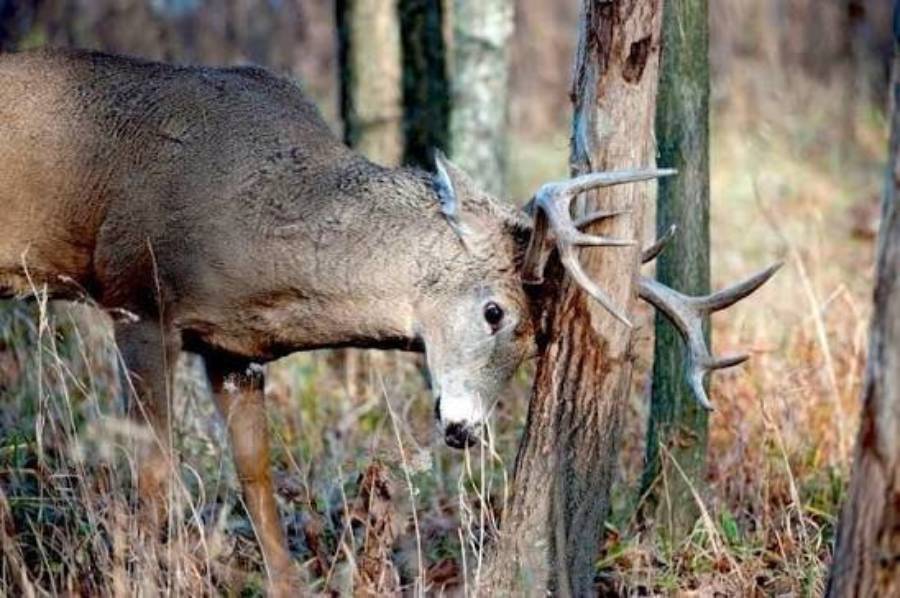
Bucks may make few or no noticeable rubs because of seasonal timing, age structure, low buck density, habitat conditions, movement patterns, hunting pressure, or where hunters are looking for sign. A lack of rubs does not automatically mean bucks have left the area. Bucks can still use a property regularly while leaving limited rubbing sign in the locations hunters typically scout.
Rubbing activity changes throughout the whitetail season. Bucks generally begin rubbing trees around the time they shed velvet, but the amount and location of rub activity can change as the pre-rut and rut approach. Individual bucks also differ in how much sign they leave, while habitat determines where that sign becomes concentrated and visible. A property with bucks may therefore appear to have little rubbing activity when the animals are traveling through thicker cover, using different corridors, or rubbing trees away from commonly scouted trails.
Hunters should treat rubs as one form of evidence of buck activity rather than the sole indicator of buck presence. Evaluating rubs alongside scrapes, tracks, beds, travel routes, and trail-camera observations provides a more reliable picture of how bucks are using an area. The 7 factors below explain why rub activity may be limited and what the absence of rubs means for hunting decisions.
Why Are Bucks Not Making Rubs?
Bucks may not be making many visible rubs because of 7 main factors: seasonal timing, buck age, buck density, habitat, movement patterns, hunting pressure, and the locations hunters are scouting. In many cases, bucks have not stopped rubbing completely. Instead, rubbing activity is limited, concentrated in specific areas, or occurring where hunters are unlikely to find it.
Seasonal timing is one of the first factors to check. Rub activity does not remain constant throughout deer season. A hunter scouting before regular rubbing activity develops may find few fresh rubs even when multiple bucks are using the property. The location and concentration of rubs can also change as bucks shift between seasonal food sources, bedding cover, travel corridors, and breeding-related movement.
Buck characteristics also influence the amount of visible sign. A property dominated by younger bucks can produce a different pattern of rub activity than an area regularly used by mature bucks. Buck density adds another variable because fewer bucks generally provide fewer opportunities for rubs to accumulate across the landscape. Neither factor should be interpreted alone, however, because a single buck can use an area without leaving an obvious concentration of rubs.
Habitat and movement determine where those rubs appear. Bucks do not distribute rubs evenly across an entire hunting property. Suitable trees, cover, bedding areas, travel routes, and frequently used transitions can concentrate rubbing activity in relatively small locations. A hunter may therefore walk through an area with little sign while a more heavily used route nearby contains multiple rubs.
Hunting pressure can further change where buck activity is observed. Increased human intrusion can alter how bucks use exposed trails, cover, and daylight movement areas. As a result, rubs found during early scouting may not accurately represent where bucks concentrate their activity later in the hunting season.
The important distinction is between bucks not making rubs and hunters not finding rubs. Rub abundance is only one piece of evidence. Scrapes, tracks, beds, trails, direct sightings, and trail-camera records can provide additional evidence that bucks continue to use an area even when fresh rubs are scarce.
Is It Too Early in the Season for Bucks to Make Rubs?
Yes, scouting too early can be a reason you are finding few buck rubs. Rubbing behavior is connected to the seasonal development of antlers and changes in buck behavior, so hunters should not expect the same amount of fresh rubbing sign throughout the year.
A major transition occurs when bucks finish the velvet stage of antler development. During the velvet period, developing antlers are covered by sensitive vascular tissue. Once antlers harden and velvet is shed, bucks can begin rubbing trees with their hardened antlers. This makes seasonal timing an important constraint when interpreting the absence of fresh rubs.
Rub activity can become more noticeable as the season progresses toward the pre-rut. Bucks are changing movement patterns and interacting with the landscape differently during this period, creating more opportunities for hunters to encounter fresh sign. Rubs can appear along routes associated with cover, bedding areas, feeding areas, and other locations bucks repeatedly use.
This does not mean every property will suddenly contain the same number of rubs at a specific point in the season. The appearance of rubs depends on both biological timing and local buck activity. Two hunting areas at the same stage of the season can show very different amounts of sign because their buck populations, habitat, movement routes, and hunting pressure differ.
Hunters should therefore compare current rub activity with the stage of the deer season rather than judging a property from rub numbers alone. Finding few rubs early in the relevant seasonal transition provides limited evidence about how many bucks will use the area later. Tracks, sightings, trail-camera records, bedding evidence, and other deer sign can help determine whether bucks are already present before rubbing activity becomes easier to detect.
Do Young Bucks Make Fewer Rubs Than Mature Bucks?
Young bucks can contribute to rub activity, but the age structure of the local buck population can affect the number and type of rubs hunters find. A hunting property dominated by younger bucks may therefore show different rubbing patterns from an area regularly occupied by older bucks. Buck age should be considered alongside season, habitat, and movement rather than used as a stand-alone explanation for missing rubs.
All antlered bucks are physically capable of rubbing once their antlers have hardened. Rubbing is not an activity exclusive to mature bucks. This means the absence of large or obvious rubs should not immediately be interpreted as evidence that young bucks are not rubbing. Hunters need to distinguish between the presence of rubbing behavior and the visibility or concentration of the resulting sign.
Older bucks can also use habitat differently from younger deer. Differences in bedding locations, travel routes, security cover, and responses to disturbance can place their rubs in areas that receive less scouting traffic. A hunter who concentrates on field edges and obvious trails may miss rubs located closer to thick cover or along less visible travel routes.
Tree size creates another potential source of misinterpretation. A large rubbed tree may attract more attention than several small rubs, but tree diameter alone should not be treated as a precise method for determining a buck’s age. The more useful hunting question is whether multiple pieces of sign indicate repeated buck use of the same area. Rub location, freshness, nearby tracks, scrapes, beds, and trail-camera records provide more context than one rubbed tree by itself.
For this reason, few visible rubs do not prove that a property contains only young bucks. Age structure is one possible factor, but hunters should evaluate it together with other evidence of buck presence and movement.
Can Low Buck Density Cause Fewer Rubs?
Low buck density can result in fewer rubs because fewer bucks create fewer opportunities for rubbing sign to accumulate across a hunting property. However, finding few rubs is not enough to conclude that buck density is low. The number of visible rubs also depends on how frequently bucks use the property, where they travel, and whether hunters are scouting the locations where rubbing activity is concentrated.
Consider two properties with different patterns of deer use. Several bucks repeatedly traveling through a small bedding-to-feeding transition can produce concentrated sign that makes the area appear highly active. A buck that only passes through another property occasionally may leave substantially less sign. In this case, the difference hunters observe is not simply the number of bucks in the wider area; it is also the frequency and concentration of buck movement through the specific ground being scouted.
Property boundaries make this distinction especially important. A buck’s range is not defined by hunting-property lines. A deer recorded on a trail camera may spend part of its time on neighboring ground and only travel through the hunter’s property under particular conditions. The buck is present, but it may not spend enough time there to produce numerous rubs.
Rub concentration can create the opposite problem. Several rubs located along one heavily used route can make buck activity appear greater than it is across the rest of the property. Counting rubs without considering their spatial distribution therefore provides an incomplete picture of buck density.
Use multiple forms of deer sign before interpreting few rubs as evidence of low buck numbers. Tracks can show repeated travel, beds can identify areas of sustained use, scrapes can reveal additional buck activity, and trail cameras can document individual deer over time. When several of these signals are also scarce, low buck use becomes a stronger explanation than it would be from rub numbers alone.
The practical distinction is between buck density and buck use of a specific hunting area. A region can support bucks while one particular ridge, field edge, woodlot, or travel corridor receives limited buck traffic. Hunters who understand that distinction are less likely to abandon productive ground solely because they have not found many rubs.
Can Habitat Affect How Many Buck Rubs You Find?
Habitat can strongly affect how many buck rubs hunters find because bucks do not distribute rubbing activity evenly across the landscape. Tree availability, security cover, bedding areas, travel routes, terrain transitions, and feeding patterns determine where bucks spend time and where rubs become concentrated. A property can support regular buck activity while producing few visible rubs in the areas a hunter normally scouts.
Tree availability is one factor. Bucks need suitable woody vegetation to create rubs, but the number and visibility of potential rubbing trees differ between habitats. An area containing numerous saplings and small trees gives bucks many possible rubbing locations, while open habitat or areas with limited woody vegetation provide fewer options. As a result, two locations used by similar numbers of bucks can produce very different amounts of easily identifiable rubbing sign.
Habitat structure also determines whether hunters actually encounter those rubs. Bucks frequently use routes that connect important resources such as bedding cover and feeding areas. Thick cover, edges, funnels, terrain features, and transitions between habitat types can channel movement through particular locations. When a preferred travel route contains suitable trees, multiple rubs may become concentrated along a relatively narrow corridor while nearby woods contain little obvious sign.
Security cover becomes especially relevant when hunters search only easily accessible areas. A buck may spend substantial time in dense vegetation or use less obvious routes around areas of human activity. Rubs produced in those locations can remain undetected even when the hunter regularly scouts field edges, logging roads, or major deer trails. The apparent absence of rubs can therefore reflect where the hunter is looking rather than where the buck is living.
Food sources can change this pattern during the season. When deer shift between available foods, their travel routes between feeding and bedding areas can also change. A rub line that was active during one period may receive less traffic later, while fresh sign begins appearing along another route. This is why older rubs should not automatically be treated as evidence of current movement.
Hunters should evaluate rubs in relation to the surrounding habitat rather than simply counting trees with antler marks. A group of fresh rubs positioned along a defined travel route generally provides more useful movement information than the same number of isolated rubs scattered across a large property. The location, freshness, surrounding cover, and nearby deer sign provide the context needed to determine whether bucks are repeatedly using that part of the habitat.
Can Bucks Be in the Area Without Leaving Many Rubs?
Yes, bucks can be in an area even when hunters find few or no fresh rubs. Buck presence and rub abundance are related, but they are not equivalent. A buck must spend enough time in an area, use locations containing suitable rubbing trees, and actually rub those trees before its presence produces sign that a hunter can detect.
Four separate factors should be distinguished: buck presence, buck movement, rubbing behavior, and rub detection. A buck can be present on a property but move through only a small portion of it. It can travel regularly without rubbing many trees along that route. It can also create rubs inside thick cover where a hunter never encounters them. Each step affects the amount of sign ultimately observed during scouting.
Movement frequency is particularly important. A buck that uses a travel corridor repeatedly has more opportunities to leave tracks, rubs, scrapes, and other sign than a buck that passes through the same location occasionally. This means a trail-camera image confirms that a buck visited a location, but it does not prove that the animal spends enough time nearby to create a noticeable concentration of rubs.
The same principle applies to property size and buck range. Deer movements extend beyond property boundaries, so a buck photographed or observed on one parcel may spend substantial portions of its time elsewhere. Hunters can therefore know that a particular buck exists in the area while finding limited physical sign on the ground they control.
Rub visibility adds another layer. Freshly exposed wood is relatively easy to notice, whereas small rubs inside dense vegetation can be overlooked. Old rubs can also remain on trees after the movement pattern that produced them has changed. Hunters should therefore distinguish between finding a rub and establishing that the rub represents current, repeated use of the area.
Other deer signs help resolve this uncertainty. Fresh tracks, scrapes, beds, frequently used trails, direct observations, and repeated trail-camera records can confirm buck activity when rubs are scarce. For example, repeated images of the same buck along a travel route combined with fresh tracks provide stronger evidence of current use than the absence of rubbed trees provides evidence against it.
For hunting decisions, the key question is not simply, “How many rubs are here?” It is “How is a buck using this area right now?” Rubs become more useful when interpreted as one component of a broader movement pattern rather than as a requirement for proving that bucks are present.
Does Hunting Pressure Reduce Buck Rubbing Activity?
Hunting pressure can reduce the amount of buck rubbing activity hunters observe by changing where and when bucks move. Human disturbance does not necessarily cause bucks to stop rubbing. Instead, repeated scouting, hunting, vehicle traffic, and other intrusion can push buck activity toward thicker security cover, less accessible travel routes, or periods when hunters are less likely to observe deer and fresh sign.
Bucks respond to disturbance by adjusting how they use available habitat. A travel corridor that receives regular daylight movement before hunting pressure increases may become less attractive after repeated human intrusion. When bucks shift toward alternative routes or more secure cover, their rubbing activity can shift with them. A hunter who continues scouting the original route may see fewer fresh rubs and conclude that rubbing has stopped even though new sign is appearing elsewhere.
The location of pressure matters as much as the amount of pressure. Repeatedly entering bedding cover, walking suspected buck travel routes, or checking sign in sensitive areas can introduce human scent and disturbance directly into places bucks use for security. By comparison, activity along roads, field edges, or other locations deer regularly experience as part of their environment may not produce the same movement response. This is why hunting pressure should be evaluated according to where disturbance occurs rather than treated as a single property-wide condition.
Timing also affects what hunters see. A pressured buck can continue using part of a property while shifting more of its movement outside the periods when hunters scout or hunt. The resulting rubs may occur deeper in cover or along routes that receive little human traffic. Finding fewer rubs in familiar locations can therefore indicate a movement shift rather than the disappearance of bucks from the property.
Hunters should compare current sign with earlier observations before assuming pressure has eliminated buck activity. Changes in trail-camera appearances, tracks, fresh scrapes, entry and exit routes, and new rub locations can reveal whether bucks have shifted their movements. When several forms of fresh sign move toward security cover at the same time, changing buck use of the property is a stronger explanation than rub counts alone.
Are You Looking for Buck Rubs in the Wrong Places?
You may be finding few rubs because you are scouting areas where bucks travel or rub less frequently. Rubs are not spread uniformly through deer habitat. They can become concentrated along particular travel routes, transitions, edges, funnels, and areas associated with secure cover, while nearby sections of the same property contain little rubbing sign.
Start by considering how bucks move between the resources they use. Bedding cover, feeding areas, water, terrain features, and security cover create movement patterns across a property. Routes connecting these areas provide opportunities for repeated buck travel. Suitable trees positioned along frequently used routes can accumulate more rubbing activity than similar trees in areas bucks rarely visit.
Transitions between habitat types can be particularly useful places to investigate because they can influence deer travel. Examples include the boundary between thick cover and more open timber, changes in vegetation, narrow strips of cover connecting larger habitat blocks, and terrain features that channel movement. The purpose of scouting these locations is not simply to collect more rubs. It is to determine whether several pieces of sign form a coherent travel pattern.
Hunters should also distinguish an isolated rub from a concentration of related rubs. One rub confirms that an antlered deer interacted with that tree, while multiple fresh rubs associated with a defined route provide more information about repeated use of the area. The direction of travel suggested by trails, tracks, nearby cover, and additional sign gives those rubs hunting context.
Freshness matters because old rubs can remain visible long after the movement pattern that created them has changed. A highly visible rub from a previous period is less useful for identifying current buck activity than fresh sign associated with recent tracks, scrapes, or trail-camera observations. Hunters should therefore prioritize current evidence rather than selecting a hunting location solely because it contains impressive old rubs.
Thick security cover deserves attention when obvious locations contain little fresh sign. Bucks using pressured ground may spend more time around areas where they feel secure, and scouting only open woods, field edges, or convenient trails can create an incomplete picture. Hunters do not necessarily need to walk directly through bedding cover to investigate this possibility. Sign along entry routes, exits, transitions, and nearby travel corridors can provide information while limiting unnecessary disturbance.
A useful scouting approach is to search for clusters of related evidence rather than individual rubs. Fresh rubs combined with tracks, trails, scrapes, bedding-related cover, and repeated trail-camera activity provide a stronger indication of buck movement than any one sign alone. If bucks are appearing on cameras but rubs remain scarce in the locations being scouted, the next question should be where those deer travel before and after reaching the camera location.
Looking in the correct places changes the interpretation of the original problem. The issue may not be that bucks are not making rubs at all. The bucks may be making rubs outside the portion of their movement pattern that the hunter has identified. Mapping fresh sign against bedding cover, food sources, terrain, security cover, and observed movement helps determine where rubbing activity is actually concentrated.
Does a Lack of Rubs Mean There Are No Bucks in the Area?
No, a lack of rubs does not mean there are no bucks in the area. Rubs confirm that an antlered deer interacted with a tree, but the absence of that sign cannot independently confirm the absence of bucks. Seasonal timing, habitat, movement frequency, tree availability, hunting pressure, and scouting location can all affect how many rubs a hunter finds.
The distinction matters because buck presence and rubbing activity measure different things. A buck can enter a property to feed, pass through a travel corridor, or use secure bedding cover without producing obvious rubs in the places a hunter scouts. A deer that spends only part of its range on the property may leave even less sign. In each case, the property contains buck activity without necessarily containing a high density of rubs.
Rub distribution can also make buck presence difficult to interpret. Ten rubs concentrated along one travel corridor do not mean bucks use every part of the surrounding property equally. Likewise, finding no rubs along one field edge does not demonstrate that bucks are absent from nearby cover. Rub location is therefore more informative when evaluated alongside the habitat and movement pattern surrounding it.
Old and fresh rubs should also be separated when evaluating current activity. An old rub establishes previous use but does not confirm that the same movement pattern remains active. A fresh rub provides more current evidence, especially when accompanied by fresh tracks, scrapes, or repeated trail-camera observations. Hunters trying to determine whether bucks are present now should give greater weight to current, overlapping evidence.
The strongest conclusion comes from combining several forms of deer sign. Few rubs combined with few tracks, no recent camera activity, limited trails, and no other fresh buck sign provide stronger evidence of low current buck use than missing rubs alone. Conversely, repeated camera images and fresh tracks can demonstrate that bucks remain active even when rubbed trees are difficult to find.
For this reason, hunters should avoid treating rub counts as a population survey. Rubs are most valuable for adding information about where buck activity has occurred and, when several fresh rubs form a pattern, where repeated movement may be taking place.
Read more: Why Do Deer Stop Using Creek Crossings? 6 Reasons
What Deer Signs Should You Look for When There Are No Rubs?
When rubs are scarce, look for 5 additional forms of evidence: scrapes, tracks, beds, established trails, and trail-camera activity. These signs provide different information about buck behavior, and combining them produces a more complete picture than relying on rubs alone.
Scrapes provide another form of buck-related sign to investigate. A scrape typically includes disturbed ground and may be associated with an overhanging branch. Its value increases when it is fresh and positioned within a larger pattern of deer movement. A single scrape should not automatically determine stand placement, but several active signs associated with a travel route can help identify areas receiving repeated deer activity.
Tracks provide direct evidence that deer have traveled through a location. Fresh tracks are particularly useful when they connect feeding areas, cover, trails, crossings, or other habitat features. Track size alone should not be treated as a precise method for aging an individual buck, but repeated tracks combined with other sign can help establish how frequently deer use a route.
Beds help identify where deer spend extended periods rather than simply pass through. Bedding evidence becomes more useful when interpreted with surrounding cover, access routes, tracks, and nearby feeding opportunities. Hunters should be cautious about repeatedly entering suspected bedding areas because excessive scouting can create disturbance in the same security cover they are trying to understand.
Established trails show repeated movement but require context. A heavily used deer trail can be used by does, young deer, and bucks, so the trail itself does not prove mature buck activity. Fresh rubs, scrapes, tracks, direct observations, or camera records associated with that trail provide the additional evidence needed to determine how bucks use it.
Trail cameras can provide the clearest confirmation when physical rubbing sign is limited. Repeated photographs or videos can establish that a buck is using a location even when no nearby rubs are visible. Time stamps can also help identify when the deer is moving through the area and whether that activity occurs during daylight or primarily after dark.
Camera placement affects the usefulness of this evidence. A single image proves that a buck passed the camera once; repeated appearances across several days provide stronger evidence of consistent use. Cameras positioned around travel routes, transitions, feeding-related movement, or other locations identified through physical sign can help hunters test their interpretation of the property.
These 5 forms of evidence work best together. For example, a hunter may find no rubs but discover fresh tracks leading through a defined trail, a nearby scrape, and repeated trail-camera images of a buck. That combination provides substantially stronger evidence of current buck activity than the rub count suggests.
The objective is to identify a pattern, not to find one specific type of sign. Rubs, scrapes, tracks, beds, trails, and camera observations each describe a different part of how deer use the landscape. When several indicators point toward the same route or habitat feature, hunters have a stronger basis for determining where buck movement is concentrated.
Should You Hunt an Area That Has Few Buck Rubs?
Yes, an area with few buck rubs can still be worth hunting when other fresh evidence shows that bucks are using it. Rub abundance should not determine a hunting decision by itself. Current movement, fresh tracks, scrapes, bedding-related sign, trail-camera activity, food sources, security cover, and hunting pressure provide additional information about whether a location offers a realistic opportunity to encounter a buck.
Start by determining whether buck activity is current. Fresh tracks, recently worked scrapes, repeated trail-camera appearances, and direct observations provide stronger evidence of present use than old rubs from an earlier period. An area containing several impressive rubs but no recent activity may be less relevant than an area with few rubs but consistent camera records and fresh tracks.
Movement patterns should be the next consideration. A productive hunting location needs to intersect with where bucks are traveling, not simply where they have rubbed trees. For example, a route connecting secure bedding cover with a current food source can remain important even when few trees along that route have been rubbed. Repeated evidence of movement gives the hunter a reason to continue evaluating the location.
The timing of that movement also matters. A trail camera that repeatedly records a buck during shooting hours provides different hunting information from a location where the same deer appears only well after dark. When most activity occurs at night, hunters can investigate where the buck may be spending daylight hours and which routes connect those locations to the camera site. This approach uses the camera observation as evidence for a larger movement pattern rather than treating the camera location itself as the automatic place to hunt.
Security cover and hunting pressure should also influence the decision. Bucks can shift toward thicker cover or less disturbed routes as human activity increases. If fresh sign disappears from an exposed location while camera activity or tracks appear closer to secure habitat, the change can indicate a movement adjustment. Hunters should account for this shift without repeatedly entering sensitive cover and creating additional disturbance.
An area becomes less attractive when multiple current indicators decline at the same time. Few rubs alone provide weak evidence, but few rubs combined with no fresh tracks, inactive scrapes, limited trail use, and no recent trail-camera appearances indicate that current buck use may be low. In that situation, scouting alternative travel routes, food sources, transitions, or sections of the property can provide better information than waiting beside old sign.
The opposite situation provides a clear reason not to abandon an area. A property may contain few rubs while producing fresh tracks, active scrapes, repeated trail-camera images, and identifiable movement between bedding and feeding areas. Those observations demonstrate that bucks are using the property regardless of how many rubbed trees a hunter can find.
Hunt the current buck movement pattern rather than the number of rubs on the property. Rubs are valuable because they add evidence about where buck activity has occurred, but they become substantially more useful when combined with fresh sign, habitat features, seasonal timing, and repeated observations. If those indicators establish consistent buck use, a lack of rubs is not a sufficient reason to leave the area.