
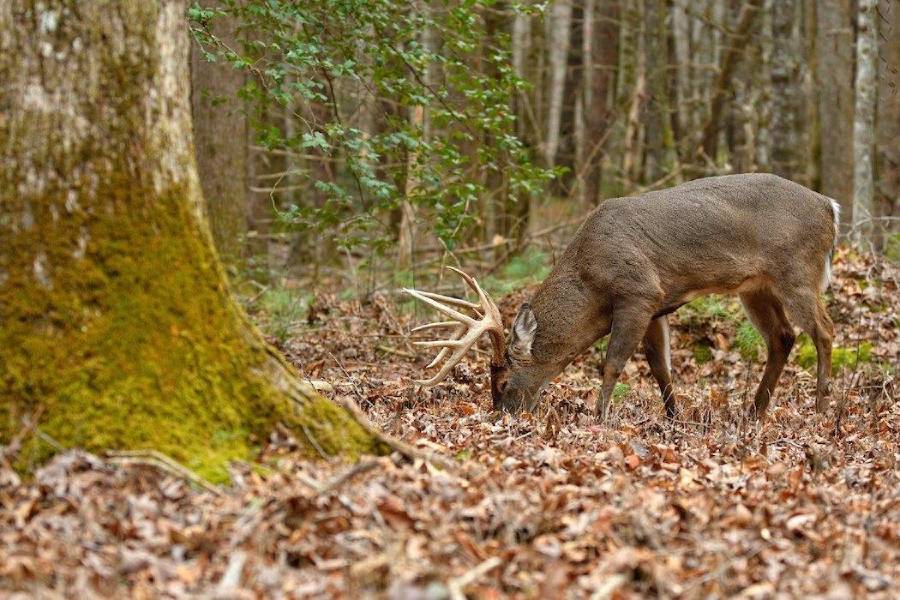
Deer stop eating acorns in a particular area when the available acorns are depleted, become less desirable, or another food source offers a better feeding opportunity. A sudden drop in deer activity under an oak tree does not necessarily mean deer have stopped eating acorns altogether. They may have moved to another productive oak, switched food sources, or changed when they visit the area.
Acorns are an important fall food source for white-tailed deer because they provide a concentrated source of energy during a period when deer are preparing for winter and bucks are entering or moving through the rut. However, an oak stand does not remain equally productive throughout the season. Deer can consume accessible acorns, different oak species can drop at different times, and other foods such as agricultural crops, browse, or food plots can alter where deer feed.
For hunters, the important question is therefore not simply whether deer still eat acorns. It is why deer stopped using a specific acorn feeding area and where their feeding activity moved next. Acorn availability, oak type, alternative foods, rut behavior, hunting pressure, and weather can all help explain that change. Identifying which factor is responsible can determine whether you should keep hunting the same oaks, scout another food source, or move your setup closer to a new travel route.
Why Do Deer Stop Eating Acorns?
Deer stop eating acorns in a specific area for 3 main reasons: the available acorns have been consumed, the remaining acorns are less desirable, or deer have shifted to a more attractive food source. Deer are opportunistic feeders, so their feeding locations change as food availability changes throughout the fall and hunting season. When deer disappear from a productive oak, the change should be interpreted as a feeding shift rather than immediate evidence that deer no longer want acorns.
Acorn availability is one of the strongest reasons for this change. A productive oak can concentrate deer activity while fresh acorns are available on the ground, but that concentration does not last indefinitely. Deer, squirrels, turkeys, and other wildlife consume the mast, while some acorns become damaged or otherwise unavailable. Once the amount of desirable food beneath that tree declines, deer have less reason to repeatedly visit it.
Food competition also changes where deer spend feeding time. Deer do not evaluate an acorn location in isolation; they have access to multiple food sources within their home range. When another oak is dropping fresh acorns or an attractive agricultural crop, browse source, or food plot is available nearby, deer can redirect feeding activity toward that location. A hunter may therefore see a sharp decline in trail-camera pictures at one oak even though the local deer population has not left the area.
The hunting implication is important: a dead acorn spot does not automatically mean a dead hunting area. Before abandoning the location, determine whether fresh acorns remain and look for current deer sign. If the ground has little usable mast and fresh tracks or droppings have disappeared, scout nearby food sources and the travel routes connecting those foods with bedding cover.
Do Deer Stop Eating Acorns When the Acorns Are Gone?
Yes. Deer leave an acorn feeding location when the usable acorns are depleted because the location no longer provides the food reward that attracted them. The shift can occur at an individual tree, a group of oaks, or eventually across a larger oak stand as the available mast is consumed.
This explains why an oak can produce heavy deer activity for part of the season and then appear to shut down. The important variable is not simply whether oak trees are present. It is whether those trees have produced acorns and whether edible acorns are still available where deer can reach them. Two areas containing similar numbers of oak trees can therefore produce very different levels of deer activity.
Depletion can also occur unevenly. Deer may finish feeding beneath one productive tree and begin using another oak only a short distance away. Different trees can produce different amounts of mast, and acorn availability can vary even among trees within the same stand. As a result, deer movement can shift within an oak ridge or timber block rather than moving completely out of it.
Hunters should check the ground instead of assuming an oak area remains productive because it was productive earlier in the season. Look for usable acorns together with fresh deer evidence. When both food and fresh sign disappear, expand the search to nearby producing oaks before abandoning the broader area. This approach separates an individual feeding tree that has stopped producing value from an entire feeding area that deer have actually left.
Why Do Deer Prefer Some Acorns Over Others?
Deer prefer some acorns over others because acorns differ in palatability, tannin concentration, availability, and timing of the acorn drop. This preference helps explain why deer can suddenly disappear from one group of oak trees while continuing to feed heavily on acorns somewhere else. For hunters, identifying the oak trees deer are actively using is more useful than simply finding an area with a large number of oaks.
White oak acorns are an important example. They generally contain lower tannin concentrations than acorns from the red oak group, giving them a less bitter taste. White oak acorns also germinate relatively quickly after falling, which limits how long intact acorns remain available on the forest floor. When fresh white oak acorns are dropping, deer can concentrate around productive trees rather than distributing feeding activity evenly throughout an oak stand.
Red oak acorns provide a different feeding opportunity. They generally contain higher tannin levels and do not germinate immediately after falling. This allows uneaten red oak acorns to remain available later, although actual availability depends on the mast crop, consumption by wildlife, and the condition of individual acorns. The result is a changing food landscape: the oak producing the most deer activity early in the acorn drop may not be the oak producing the most activity later in the season.
Hunters should therefore scout individual producing trees rather than treating all oaks as equivalent food sources. Fresh tracks, droppings, disturbed leaves, and evidence that acorns are being consumed provide stronger evidence of current deer use than oak species alone. The best acorn tree to hunt is the tree deer are actively feeding under, not automatically the tree belonging to a particular oak group.
Will Deer Switch From White Oak Acorns to Red Oak Acorns?
Deer can switch from white oak acorns to red oak acorns when preferred white oak acorns become scarce and red oak acorns remain available. This transition is driven by changing food availability rather than a permanent preference for one acorn type throughout the season.
Consider a hunting area containing both white and red oaks. Fresh white oak acorns may initially concentrate deer around several productive trees. After deer and other wildlife consume much of that mast, those same locations can lose feeding activity. Red oak acorns still available elsewhere can then become a usable food source. A hunter monitoring only the original white oaks may interpret the decline as deer leaving the area when the animals have actually shifted feeding locations.
The practical response is to follow fresh sign. Once a productive white oak loses both usable acorns and current deer evidence, scout nearby red oaks and other remaining food sources. This allows stand placement to follow the current food pattern instead of the feeding pattern that existed earlier in the season.
How Long Do Deer Keep Eating Acorns After They Fall?
Deer keep eating fallen acorns as long as desirable acorns remain available and competitive food sources do not create a stronger feeding opportunity. There is no single number of days that applies to every oak or hunting property because mast production, deer density, competing wildlife, oak species, and alternative foods differ among locations.
A heavy mast crop can spread feeding activity across a large area because deer have numerous productive trees to choose from. A lighter crop can create the opposite pattern by concentrating deer around the limited trees that produced acorns. However, concentrated feeding also means accessible acorns beneath those trees can be consumed. The duration of an acorn spot is therefore determined by both the amount of mast on the ground and the rate at which animals use it.
The condition of the remaining acorns matters as well. Finding acorns beneath a tree does not prove that the tree is still an active deer food source. The remaining mast may include acorns deer have repeatedly passed over, damaged acorns, empty caps, or other material that makes the location appear more productive than it is. Current deer sign provides the necessary behavioral evidence.
For hunting purposes, measure the life of an acorn feeding area by fresh food and fresh deer sign rather than by a calendar date. Recheck productive oaks throughout the season and compare them with nearby food sources. An oak that was worth hunting several days earlier should not automatically remain part of the current pattern once the food or deer sign has disappeared.
What Do Deer Eat After They Stop Eating Acorns?
Deer shift to other available foods after acorns decline, including woody browse, agricultural crops, food plots, and other seasonally available plants. The exact food source depends on what exists within the deer’s home range, its nutritional value, and how safely deer can access it. For hunters, this food transition matters because a change in diet can produce a corresponding change in daily movement.
Agricultural crops can become important where farmland overlaps deer habitat. Corn, soybeans, cereal grains, and other crops can draw deer away from previously productive oak areas when those foods remain accessible. The effect is not simply a change in what deer eat. Moving from timber-based mast to an agricultural field can change travel direction, staging locations, and the trails deer use between bedding and feeding areas.
Food plots can create a similar shift, but deer do not automatically abandon acorns whenever a food plot is available. The relative value of the two food sources changes throughout the season. A productive oak dropping desirable acorns inside secure cover can compete strongly with a nearby plot. Once those acorns are depleted, deer may spend more feeding time on clover, brassicas, cereal grains, or other planted forage available on the property.
Woody browse provides another food source as seasonal conditions change. Deer consume leaves, twigs, buds, and stems from suitable plants, and browse becomes increasingly relevant as other foods disappear. This means the end of an acorn pattern does not end the need to locate food. Hunters should identify what deer are eating next and then determine how that new food source connects to bedding cover. Fresh tracks, droppings, browsed vegetation, field observations, and trail-camera activity can help confirm the transition before a stand is moved.
Do Deer Stop Eating Acorns During the Rut?
Deer do not automatically stop eating acorns during the rut, but rut behavior can make their feeding patterns less predictable. Bucks still require food during the breeding season, yet searching for does, chasing, tending, and increased travel can reduce the consistency of their visits to a specific acorn feeding location. A buck disappearing from an oak stand during the rut therefore does not prove that it stopped eating acorns.
This distinction matters because feeding behavior and movement behavior are not the same thing. Before the rut intensifies, a buck may follow a relatively predictable pattern between bedding cover and an acorn source. During the rut, that same buck can travel beyond its previous routine while checking areas used by does. The oak may still contain food, but the buck’s movement priorities have changed.
Doe activity can make acorn locations relevant during the rut for a different reason. A productive food source that continues attracting does can also create opportunities for bucks searching for receptive females. In this situation, the hunting value of an acorn area is connected not only to the acorns themselves but also to the deer activity the food source concentrates.
Hunters should therefore avoid diagnosing every rut-period decline in buck sightings as an acorn problem. Check whether acorns and fresh doe sign remain before abandoning the location. If does continue using the food source, the area may still influence buck movement even when an individual buck no longer appears on the same predictable feeding schedule.
Can Hunting Pressure Make Deer Leave an Acorn Feeding Area?
Hunting pressure can make deer reduce daylight visits to an acorn feeding area, change their approach route, or temporarily avoid the location even when acorns remain available. This is different from deer abandoning acorns as a food source. The food may still be attractive, but the perceived risk of reaching it has increased.
Repeated human intrusion can create this change. Walking through a feeding area, checking trail cameras frequently, approaching a stand through deer travel routes, or repeatedly hunting the same location increases opportunities for deer to encounter human scent, sound, and movement. Deer can respond by entering the feeding area later, approaching from a different direction, or using another food source where they encounter less disturbance.
This behavioral shift can create a misleading pattern for hunters. For example, a productive oak may still have fresh acorns beneath it while daylight trail-camera activity steadily declines. If fresh tracks, droppings, and other signs continue appearing, deer may still be feeding there outside the hunter’s observation period. In that situation, the problem is not necessarily acorn availability; the timing or security of deer movement has changed.
Check both food availability and current deer sign before concluding that deer have stopped eating acorns. If usable acorns remain and fresh sign continues to accumulate, reduce unnecessary disturbance and examine the routes deer use to reach the area. If both fresh sign and acorn availability decline, scouting a new food source is more useful than continuing to hunt an old feeding pattern.
Does Weather Affect How Deer Feed on Acorns?
Weather can affect when and where deer feed on acorns by changing deer movement conditions, but weather does not normally make an otherwise desirable acorn suddenly cease to be food. Temperature, wind, precipitation, and major weather changes can alter observed activity around an oak stand, making a feeding location appear inactive for a period even when deer continue using acorns.
Temperature can influence the timing of deer movement. A hunter may observe different daylight activity during a warm period than during cooler conditions, but a change in sightings alone does not establish that deer changed diets. The more useful question is whether fresh feeding evidence continues to appear beneath the oaks. If it does, deer may simply be using the food source at a different time.
Wind and precipitation can also change how hunters observe deer movement. Wind affects scent movement and can influence how deer approach exposed or disturbed locations, while rain can make tracks and other physical sign more difficult to interpret over time. These variables complicate scouting because reduced visible activity can be mistaken for food abandonment.
For that reason, weather should be treated as one factor affecting an acorn hunting pattern rather than the first explanation for why deer disappeared. Check the food source itself first. Determine whether desirable acorns remain, whether fresh deer sign is present, and whether another food source has become active nearby. Weather becomes more useful for interpreting the pattern after those basic feeding conditions are established.
How Can You Tell If Deer Are Still Eating Acorns?
You can tell deer are still eating acorns by finding both usable acorns and fresh deer sign around the same oak trees. The presence of acorns alone is not enough. A productive hunting location requires evidence that deer are currently visiting the area and using the available mast.
Start by checking the ground beneath individual oaks. Determine whether intact acorns are still available rather than relying on empty caps, shells, or old mast scattered through the leaf litter. Then compare the amount of available food with evidence of recent deer activity. This approach helps distinguish an oak that merely produced acorns earlier in the season from one that remains an active feeding location.
The distribution of sign also matters. An oak stand may contain dozens of trees, while deer concentrate around only a few productive trees. Finding concentrated fresh sign beneath one oak can therefore provide more useful hunting information than finding scattered old sign across an entire ridge. Once deer consume the desirable acorns beneath that tree, the concentration can move to another tree within the same timber.
Trail cameras can add another layer of evidence by showing whether deer are still visiting and when those visits occur. A decline in daylight pictures combined with continued nighttime activity indicates a different situation from a complete disappearance of deer activity. The first pattern may point toward a timing or pressure change; the second provides a stronger reason to investigate whether the active food source has moved.
What Deer Sign Should You Look for Under Oak Trees?
Look for fresh tracks, fresh droppings, disturbed leaf litter, evidence of acorn feeding, and recent trail-camera activity when determining whether deer are still using an oak tree. No single sign should automatically determine the decision. Multiple fresh indicators around available acorns provide stronger evidence of current feeding activity.
Tracks help identify recent travel through soft soil, mud, or exposed ground around an oak. Droppings can indicate that deer have spent time in or near the feeding location. Disturbed leaves can also reveal repeated movement and feeding beneath a productive tree, especially when deer are searching through leaf litter for fallen acorns.
Freshness is more important than the total amount of sign. A heavily used oak can retain old tracks and droppings after deer have shifted elsewhere. Hunters who rely on accumulated sign can therefore continue hunting a pattern that has already ended. Compare current observations with previous scouting trips or trail-camera records to determine whether activity is increasing, stable, or declining.
The most useful evidence combines food and behavior. Fresh deer sign beneath an oak with desirable acorns still on the ground supports continued use. Fresh sign without acorns may indicate a travel route rather than active feeding. Acorns without fresh sign suggest that deer either prefer another food source or do not currently feel secure using that location. This distinction helps determine whether to stay, reposition within the oak stand, or begin scouting elsewhere.
Read more: Why Do Deer Avoid Mock Scrapes? 7 Common Reasons
Where Should You Hunt When Deer Stop Eating Acorns?
When deer stop eating acorns in your current location, find the food source they have switched to and identify the travel route connecting that food with bedding cover before moving your stand. Moving immediately to another random oak or field can replace one outdated pattern with another. Current deer sign should determine the next setup.
Begin close to the original feeding area. Deer may have shifted only a short distance to another productive oak, particularly when different trees are dropping or retaining acorns at different times. Scout nearby oaks for usable mast and fresh sign before assuming deer have moved into a completely different habitat type.
If nearby oaks are no longer active, expand the search toward other available foods such as agricultural crops, food plots, or browse. The objective is not simply to locate food but to identify food deer are currently using. Fresh tracks, droppings, feeding evidence, direct observations, and trail-camera activity can confirm whether a potential food source belongs to the current pattern.
Once the new feeding location is identified, examine how deer can travel between it and secure bedding cover. Trails, terrain features, cover, wind direction, and hunting access can determine whether hunting directly over the food or along an approach route makes more sense. Follow the current deer pattern rather than remaining committed to the location that produced activity earlier in the acorn drop.
When Should You Stop Hunting an Acorn Feeding Area?
Stop prioritizing an acorn feeding area when desirable acorns are no longer available and fresh deer sign shows that deer have shifted their feeding activity elsewhere. A decline in sightings alone is not enough reason to abandon the location. The decision should be based on current food availability, fresh deer activity, and evidence of a new feeding pattern.
First, inspect the acorns themselves. An oak may still have acorns scattered beneath it even after its value as a deer food source has declined. Determine whether usable acorns remain and whether deer are actively feeding on them. When the available mast has largely disappeared and new feeding evidence is no longer accumulating, the original reason deer concentrated around that tree has weakened.
Second, compare fresh sign with previous activity. Old tracks, droppings, trails, and historical trail-camera pictures confirm that deer used the location, but they do not prove that deer are using it now. Recent tracks, fresh droppings, disturbed leaf litter, and current camera activity provide stronger evidence. Several scouting checks showing declining fresh sign provide a better reason to change locations than one slow hunt.
Do not abandon the broader oak area until you check nearby productive trees. Deer can shift from one oak to another as acorns become available or are consumed, so a stand move of a relatively short distance may put a hunter back into the active feeding pattern. The same principle applies when deer transition from preferred acorns to other available mast.
Hunting pressure should also be ruled out before concluding that the food pattern has ended. Usable acorns combined with fresh nighttime activity can indicate that deer still use the location but have changed their timing. Repeated hunting or intrusive access may make the area less productive during legal shooting hours without eliminating feeding activity entirely. In that situation, changing access, reducing disturbance, or repositioning along an approach route may be more useful than abandoning the food source.
A stronger reason to leave exists when three conditions occur together: desirable acorns have declined, fresh deer sign has declined, and current activity appears around another food source. The replacement food might be another productive oak, agricultural crops, a food plot, or seasonal browse. Finding that transition provides evidence of where the feeding pattern has moved rather than simply showing where it ended.
For hunters, acorn patterns should therefore be treated as dynamic rather than permanent. Productive oaks can identify valuable hunting locations, but their value lasts only while food availability and deer behavior support the pattern. Continue scouting throughout the season, compare current sign with current food, and move with the feeding pattern when the evidence shows deer have shifted elsewhere.