
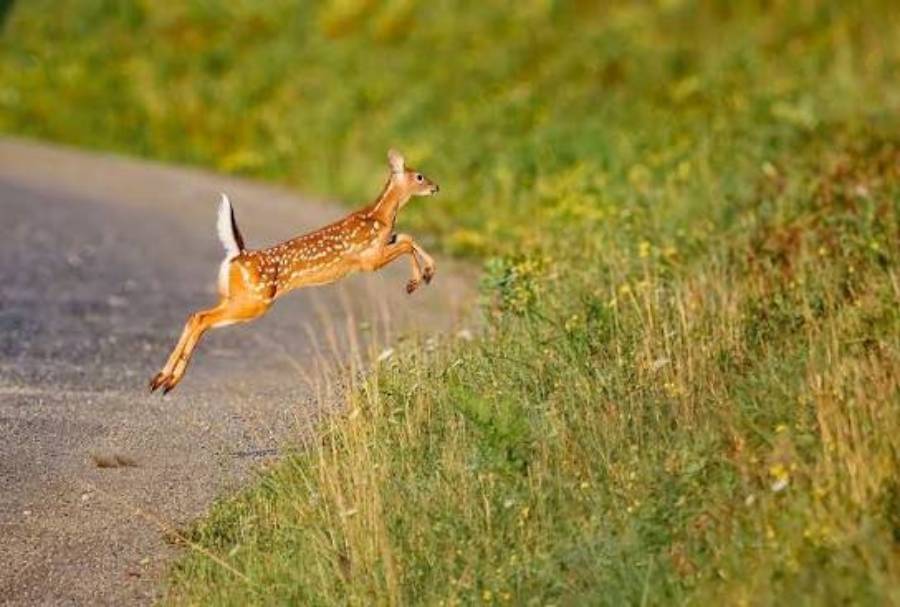
Deer abandon a trail or reduce their use of it when the route no longer provides the same combination of safety, food access, cover, and efficient travel. There are 7 common reasons for this change: hunting pressure, shifting food sources, seasonal movement, changes in bedding areas, rut behavior, habitat changes, and weather or wind conditions. Each factor can alter where, when, or how frequently deer travel through an area.
An inactive trail does not always mean deer have permanently abandoned it. Whitetails can shift to a parallel trail, travel through thicker cover, change their bedding-to-feeding route, or use the same trail primarily after dark. For example, repeated hunter access near a stand or trail camera can increase human scent and disturbance around an established route, giving deer a reason to use a nearby alternative instead.
Hunters should therefore evaluate more than the absence of recent tracks or trail-camera photos before leaving a hunting location. Identifying what changed around the trail can reveal whether deer have temporarily adjusted their movement or established a different travel pattern. The 7 causes below explain why a productive deer trail can go cold, where deer are likely to move, and when changing your hunting setup makes sense.
Why Do Deer Stop Using a Trail?
Deer stop using a trail when the cost of traveling that route becomes greater than its value for reaching food, bedding cover, water, or another destination. A deer trail is part of a movement system rather than a permanent path that deer must follow. Whitetails continually respond to changes in food availability, security cover, human disturbance, breeding behavior, habitat, and environmental conditions. When one of these factors changes, deer can shift their route while continuing to use the same general area.
A trail can also lose activity without being completely abandoned. Deer may move onto a parallel trail 20 or 50 yards away, enter a feeding area from another direction, travel through thicker cover, or continue using the original trail primarily at night. This distinction matters to hunters because several days without trail-camera photos do not prove that the local deer population has left. The camera may simply no longer intercept the current movement line.
The best way to determine why a trail went cold is to identify what changed between the period of regular use and the period of reduced activity. Check recent hunting pressure, food availability, bedding cover, seasonal transitions, weather, wind, and fresh deer sign around nearby routes. Finding fresh tracks or droppings on a parallel trail, for example, indicates a route adjustment rather than abandonment of the entire area.
Does Hunting Pressure Make Deer Abandon a Trail?
Hunting pressure can make deer reduce or stop using a trail when repeated human activity increases the perceived risk associated with that route. The effect is especially relevant when hunters repeatedly walk along the same access route, approach bedding cover, hunt one stand frequently, or disturb a travel corridor while scouting. Deer do not need to leave the property for hunting pressure to affect a trail; changing where or when they travel can be enough to make an established trail appear inactive.
Human scent is one part of that disturbance. Boots, clothing, equipment, and repeated movement can leave scent along access routes and around stands or cameras. Wind can also carry a hunter’s odor toward a travel corridor before the deer reaches the stand. A deer that detects repeated human presence can respond by moving through thicker cover, taking a downwind route, using another trail, or delaying movement until after shooting light. The result for the hunter is the same: daylight activity on the original trail declines.
Trail-camera access can create similar pressure when checking a camera requires walking directly through the area deer use. The camera itself is not necessarily the main problem; the hunter’s repeated entry and exit can introduce scent, noise, and physical disturbance. For example, a camera positioned between a bedding area and a feeding destination may provide useful information, but checking it frequently from the same trail also means repeatedly entering the exact corridor being monitored.
Hunters should therefore consider their own access pattern when a previously productive trail suddenly goes cold. Compare the timing of the decline with stand visits, scouting trips, camera checks, and changes in wind direction. If activity dropped after repeated intrusion while fresh sign appears on nearby routes, reducing pressure and repositioning away from the primary travel corridor is generally more informative than assuming the deer disappeared.
Do Deer Change Trails When Food Sources Change?
Deer change trails when a different food source becomes more attractive, causing their regular feeding destination and the route leading to it to shift. A heavily used trail between a bedding area and a food source can lose activity quickly when that food source declines. The deer may remain in the same general home range while using a different path to reach better forage.
Food availability changes throughout the year. Agricultural crops, acorns and other mast, browse, grasses, and food plots do not provide equal value during every part of the season. When acorns begin dropping in wooded cover, for example, deer that previously traveled toward an open feeding area may spend more time feeding closer to their bedding cover. A trail leading to the original feeding area can consequently show fewer tracks and trail-camera detections even though deer remain nearby.
The location of the new food source determines how movement changes. Deer traveling from the same bedding area to a new feeding destination may establish another trail, use an older secondary trail, or move through terrain that previously received little traffic. This is why hunters should examine more than the cold trail itself. Fresh tracks, droppings, browsed vegetation, and camera activity around alternative food sources can reveal where the movement has shifted.
A sudden decline in trail activity should therefore be compared with recent changes in available food. If a productive trail goes cold at roughly the same time a preferred food source becomes available elsewhere, scouting the routes between bedding cover and that new food source can be more productive than continuing to monitor the old trail. The important question is not simply whether deer stopped using the trail, but whether their destination changed.
Do Deer Use Different Trails During Different Seasons?
Deer use different trails during different seasons because their priorities for food, security, breeding, and thermal cover change throughout the year. A trail receiving regular traffic during early season does not have to remain a primary travel route during the rut or winter. Seasonal changes can alter both the destinations deer visit and the routes they use to reach them.
During early season, movement can be strongly connected to predictable bedding-to-feeding patterns. A trail linking secure daytime cover with a reliable food source may receive consistent use while those resources remain attractive. As fall progresses, changing food availability, vegetation, hunting activity, and breeding behavior can disrupt that pattern. A trail that produced repeated daylight activity earlier in the season can therefore lose traffic without any permanent change to the property.
The rut creates another movement shift, particularly for bucks. Instead of following the same feeding pattern every day, bucks can spend more time traveling between areas used by does and covering additional ground while searching for breeding opportunities. This movement can make established trails less predictable for a period and increase activity on travel corridors that received limited use earlier in the year.
Winter changes the equation again. Deer must balance access to food with energy conservation and protective cover. Routes that efficiently connect suitable winter cover with available food can become more important, while trails leading toward depleted seasonal food sources lose value. For hunters, the practical implication is that a trail should be evaluated within the season in which it is being hunted. Historical activity from another part of the year does not guarantee that the same route remains important under current conditions.
Do Deer Change Trails When Their Bedding Areas Change?
Deer change trails when their bedding areas change because many daily travel routes originate from or lead back to secure bedding cover. When deer relocate a bedding area, the routes connecting that location with food, water, and other cover also change. A trail can therefore lose regular traffic even when the same deer remain within the surrounding property.
Bedding areas can shift when the security of the cover changes. Repeated human intrusion, logging, clearing, construction, livestock activity, or changes in vegetation can make one location less attractive and another location more suitable. Hunting pressure can produce the same effect when hunters repeatedly approach too close to bedding cover. Instead of continuing to enter and leave through the established route, deer may bed farther away or choose another section of available cover.
A relatively small bedding shift can produce a noticeable difference at a specific hunting location. For example, deer can continue feeding in the same field while entering it from a different direction because their daytime bedding location has changed. The original trail between the old bedding area and the field then receives less traffic, while another route becomes more active. A hunter watching only the original trail could interpret this as deer leaving the area even though the feeding destination has remained unchanged.
Hunters should examine the connection between bedding cover and surrounding travel routes when a trail loses activity. Fresh tracks, droppings, beds, secondary trails, and trail-camera detections can help establish whether the movement origin has shifted. Avoid repeatedly entering suspected bedding cover to confirm the change, because additional intrusion can create more pressure and further alter the movement pattern you are trying to identify.
Does the Rut Cause Bucks to Abandon Their Normal Trails?
The rut can cause bucks to temporarily stop using their normal trails because breeding activity changes where and how they travel. A buck that followed a relatively predictable bedding-to-feeding pattern before the rut can begin covering different routes while searching for receptive does. The old trail may consequently go cold even though the buck is still living or traveling within the broader area.
Rut movement is influenced by the location and movement of does. Bucks may spend more time around doe bedding areas, travel between groups of does, check breeding-related locations, or follow individual does away from their previous routes. These movements can pull a buck away from a trail that produced consistent camera photos before breeding activity increased. They can also create temporary activity on trails that appeared relatively unimportant earlier in the season.
This change is particularly important when hunters use historical trail-camera patterns to predict a specific buck. A series of consistent detections before the rut establishes where that buck traveled under one behavioral pattern; it does not guarantee that the same pattern will continue once breeding becomes the stronger priority. Losing photos on one camera should therefore trigger a search for changes in movement rather than an immediate conclusion that the buck has permanently left.
Bucks can return to previous travel patterns after rut-related movement declines, provided the original route still connects useful bedding cover, food, and security. A trail that temporarily loses activity during the rut can therefore become relevant again later. Hunters should compare current sign with pre-rut patterns and nearby routes before abandoning the setup, especially when the habitat and food sources that originally supported the trail have not changed.
Can Habitat Changes Cause Deer to Abandon a Trail?
Habitat changes can cause deer to abandon or reroute a trail when the surrounding cover, travel conditions, or destinations no longer provide the same value. Logging, land clearing, new roads, fences, construction, and major vegetation changes can alter how deer move between bedding and feeding areas. The original trail can lose activity even when deer continue using the same property.
Changes in cover are especially important because a travel route must provide more than a direct path between two locations. Deer also respond to the security available along that route. Removing thick vegetation can expose a previously concealed trail, while new vegetation growth can make another route more attractive. For example, clearing brush along an established trail can create an easier walking path but reduce the cover that previously allowed deer to move through the area with greater security.
Physical changes can also force a route adjustment. A new fence, road, building, logging operation, or other disturbance can alter the easiest path between two destinations. Deer may begin traveling around the affected area and establish a parallel route rather than abandoning the entire travel corridor. Fresh tracks and droppings along the edges of the changed habitat can help reveal this type of movement shift.
The duration of the habitat change matters when deciding whether an old trail can become active again. Temporary disturbance can reduce use while the disturbance is occurring, whereas a permanent change to cover or access can make another route more efficient over the long term. Hunters should therefore scout the boundaries between altered and undisturbed habitat instead of assuming deer have completely left after a familiar trail goes cold.
Can Weather and Wind Change Which Trails Deer Use?
Weather and wind can change when and where deer use a trail, but short-term environmental changes do not necessarily mean the trail has been abandoned. Wind direction, temperature, precipitation, and severe weather can alter movement timing or route selection for a limited period. Activity can return when conditions change again.
Wind is particularly relevant because deer rely heavily on scent while moving through their environment. Different wind directions change how scent reaches a deer along a travel route, including scent originating from hunters. A trail that allows a deer to detect potential danger under one wind condition may be used differently when the wind shifts. For hunters, this means activity observed on a trail under one prevailing wind should not automatically be expected under every wind direction.
Weather can also change the timing and intensity of movement. Heavy rain, strong winds, abrupt temperature changes, or other severe conditions can reduce or redistribute activity during a specific observation period. A trail camera that records little movement during those conditions provides information about that period, not definitive evidence that the route has permanently lost its value.
Hunters should compare trail activity across multiple environmental conditions before labeling a route inactive. Check whether the decline coincided with a wind shift or significant weather event, then compare the trail with nearby fresh sign and camera records. When tracks and other evidence return after conditions stabilize, the trail experienced a temporary change in use rather than true abandonment.
How Can You Tell If a Deer Trail Has Been Abandoned?
You can tell whether a deer trail has been abandoned by checking multiple forms of recent deer sign instead of relying on trail-camera activity alone. The strongest indicators include fresh tracks, droppings, recently disturbed vegetation, current trail-camera detections, and seasonally relevant sign such as fresh rubs or scrapes. When several of these indicators disappear from a previously active route, the evidence that trail use has declined becomes stronger.
Track freshness provides useful information because an established trail can remain visually obvious long after regular traffic stops. Look for clearly defined tracks in mud, soft soil, snow, or other surfaces capable of preserving recent movement. Droppings and disturbed vegetation provide additional context. A visible path through the woods by itself does not establish current activity because repeated historical use can leave a trail recognizable after deer have shifted elsewhere.
Trail cameras add another source of evidence, but no photos do not prove that a trail has been abandoned. A camera monitors a limited portion of a travel corridor. Deer can pass outside its detection area, use a parallel route, change their approach angle, or move through the location at a different frequency. Moving immediately into the area to check or reposition the camera can also add human disturbance and make the movement pattern harder to evaluate.
Hunters should combine physical sign with historical camera patterns and recent changes around the property. For example, if a camera stops recording deer but fresh tracks appear 40 yards away on a parallel trail, the evidence points toward a route shift rather than abandonment of the area. If both camera activity and fresh physical sign disappear while a food source, bedding area, or habitat feature has also changed, a larger movement shift becomes more likely.
Where Do Deer Go After They Stop Using a Trail?
Deer that stop using a trail often shift to another route connecting the same bedding, feeding, or security areas rather than immediately leaving the entire property. The first places to investigate are parallel trails, cover edges, terrain funnels, alternate bedding exits, and routes leading toward currently attractive food sources. Finding the new route requires identifying which part of the original movement pattern changed.
Start by examining both ends of the inactive trail. If the trail previously connected bedding cover with a feeding area, determine whether deer still use both destinations. Fresh sign near the feeding area but not along the original approach indicates that deer may be entering from another direction. Fresh activity near a different food source suggests that the destination itself has changed, requiring a wider search for the new travel corridor.
Security cover can reveal where the new route runs. Deer responding to hunting pressure or habitat disturbance may shift farther into thick vegetation, use a parallel path with better concealment, or approach an open area from a less exposed direction. In this situation, the new route can be close to the old one. A hunter who assumes the deer moved a long distance may overlook fresh activity only a short distance outside the original camera or stand location.
Use scouting to locate the movement shift without creating additional pressure. Check terrain features, edges, tracks, droppings, and existing secondary trails before repeatedly entering bedding cover. The objective is to determine whether deer changed their route, destination, or broader use of the area. Once that distinction is clear, a hunter can decide whether to reposition closer to the new travel line or preserve the original setup for conditions that could make the old trail productive again.
Will Deer Return to an Abandoned Trail?
Deer can return to an abandoned trail when the food, cover, security, or seasonal conditions that originally made the route useful become favorable again. Trail abandonment is not always permanent. A route that loses activity because of temporary hunting pressure, seasonal food changes, rut movement, or short-term disturbance can become active again when those conditions change.
Seasonal food availability is one reason old trails can regain activity. A trail leading to a particular food source may receive little use when deer have access to a more attractive alternative, then become productive again when that alternative disappears. The same principle applies across seasons. A route connecting bedding cover with a destination used heavily during early fall can lose traffic later in the season and become relevant again under similar conditions the following year.
Reduced hunting pressure can also allow activity to return, although deer should not be expected to resume their previous pattern immediately. If repeated stand access, scouting, or camera checks contributed to the decline, reducing intrusion removes one source of disturbance. Whether deer return to the exact trail depends on the availability of safer alternatives and whether the original route still provides an efficient connection between important destinations.
Permanent habitat changes make trail reuse less predictable. A new road, fence, building, clearing, or major loss of security cover can remove the conditions that made the original route valuable. In that situation, deer may establish another travel line and continue using it instead. Hunters should therefore identify why a trail lost activity before deciding whether waiting for deer to return is worthwhile.
Read more: Why Do Deer Stop Eating Acorns? 7 Main Reasons
How Long Should You Wait Before Deciding a Deer Trail Is Inactive?
There is no single number of days that proves a deer trail is inactive because trail use depends on season, weather, hunting pressure, food availability, and the historical frequency of deer movement. A trail used every day requires a different interpretation from one that historically receives deer traffic only several times per week or under specific conditions.
Start with the trail’s previous activity pattern. If a trail camera consistently recorded deer during a particular time window and those detections suddenly stop, the change deserves attention sooner than it would on an intermittently used trail. Compare the decline with identifiable events such as a food-source change, increased hunting activity, a major weather shift, habitat disturbance, or the beginning of a different phase of the hunting season.
Physical sign provides a second test. Fresh tracks, droppings, disturbed leaves or vegetation, and seasonally relevant rubs or scrapes can show that deer still pass through an area even when camera detections decline. Conversely, the disappearance of several forms of fresh sign provides stronger evidence of reduced use than an empty trail-camera card alone.
The final step is to check nearby travel routes without repeatedly disturbing the suspected bedding area. Fresh sign on a parallel trail indicates that deer have probably shifted their travel line. Fresh sign around a different food source can indicate a destination change. A lack of current sign across the broader area suggests a larger movement shift. Hunters should make the inactive-trail decision from this combination of historical activity, current sign, environmental changes, and nearby movement rather than from an arbitrary waiting period.
Should You Keep Hunting a Deer Trail That Has Gone Cold?
You should keep hunting a deer trail that has gone cold only when current evidence suggests deer are likely to use it again under the right conditions. If fresh sign has shifted to another route and activity continues declining on the original trail, repeatedly hunting the same location can waste opportunities and add unnecessary pressure. The better decision is to identify why the trail changed before deciding whether to stay or move.
First, determine whether the trail is actually inactive. Check recent tracks, droppings, trail-camera records, and nearby secondary trails while limiting intrusion into bedding cover. Compare those observations with the trail’s historical activity. A trail that previously produced regular movement but suddenly loses both camera detections and fresh physical sign provides stronger evidence of a route change than a trail that has always been used intermittently.
Second, identify the most likely cause. A new food source suggests checking routes between bedding cover and that destination. Increased hunting pressure suggests looking for movement through thicker security cover or nearby parallel trails. Rut-related changes require evaluating routes associated with doe activity, while habitat changes can create entirely new travel lines. Matching the response to the cause prevents unnecessary stand movement based on incomplete evidence.
Third, decide whether the original trail has a reason to become productive again. Keep the setup when the change appears temporary and the route still connects valuable bedding, feeding, or security areas. Seasonal food changes, temporary weather conditions, rut movement, and short periods of hunting pressure can all reduce activity without permanently eliminating a trail’s value. Waiting for the appropriate conditions can be more effective than abandoning a historically productive location after a brief decline.
Move the setup when current deer sign consistently identifies a different travel route. The goal is not to follow every short-term movement change but to position yourself around repeatable deer behavior. A parallel trail with fresh tracks, repeated camera detections, and a logical connection between bedding and feeding areas provides stronger evidence for relocation than one isolated track.
The most useful response to a cold deer trail follows a simple sequence: identify what changed, confirm where current movement occurs, reduce unnecessary pressure, and adjust the hunting setup only when the evidence supports the move. Deer trails are components of a changing travel system. Understanding why a route lost activity provides more hunting value than continuing to hunt it simply because it produced deer in the past.