
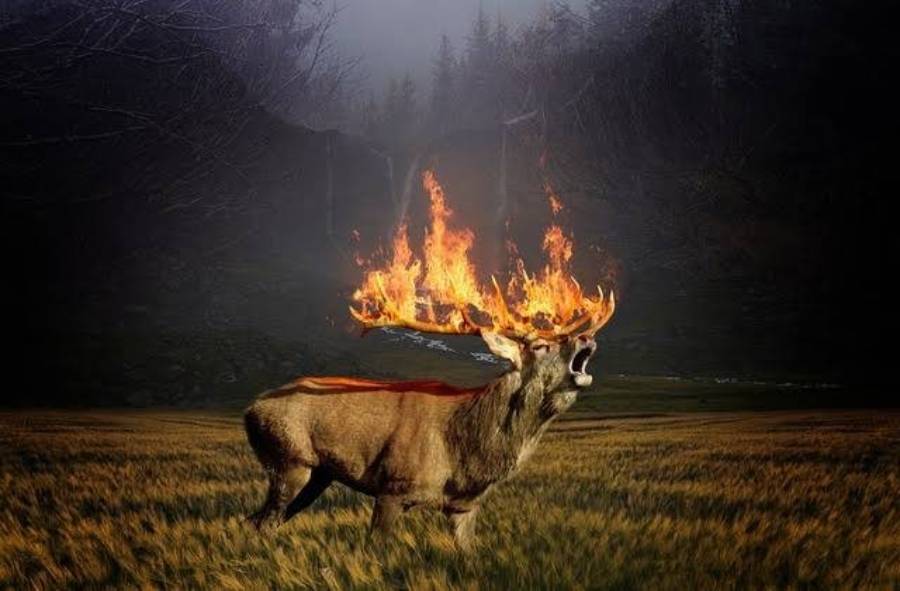
Yes, deer return after a forest fire. A wildfire can temporarily push deer away from burned habitat, but it does not necessarily cause them to abandon the area permanently. How quickly deer return depends on fire severity, surviving cover, new forage growth, water availability, and the amount of usable habitat surrounding the burn.
Deer also do not use every part of a burned forest equally. A deer may cross a recent burn within a short period while continuing to bed in nearby unburned timber. As vegetation recovers, the burned ground can provide new browse and feeding opportunities, while surviving timber, unburned pockets, and thick edges continue to provide security cover. This combination can make specific portions of a recovering burn more useful to deer than others.
For hunters, the important question is therefore not only whether deer return after a forest fire, but where they return and how they use the changed habitat. Fire can rearrange feeding areas, bedding cover, and travel routes across the landscape. Understanding these changes helps hunters identify the burn edges, surviving cover, new growth, and travel corridors that are most likely to hold deer.
Do Deer Return After a Forest Fire?
Deer do return after a forest fire when the burned landscape provides usable food, cover, or travel habitat. A fire may temporarily displace deer, but displacement does not mean permanent abandonment. Deer can continue using parts of the same landscape when suitable habitat survives within the burn or remains immediately around its perimeter.
Returning also does not mean deer immediately resume using the entire burned area as they did before the fire. Deer can use post-fire habitat in at least three different ways: passing through it, feeding in it, or regularly occupying it as part of their home range. A deer crossing an open burn to reach timber is therefore displaying a different level of habitat use from a deer repeatedly feeding and bedding within a recovering burn.
Fire severity strongly influences this difference. A patchy fire can leave islands of vegetation, timber, escape cover, and travel corridors scattered throughout the burned landscape. These surviving features give deer more opportunities to continue using familiar habitat. A severe fire that removes extensive vegetation can temporarily reduce both forage and security cover, making adjacent unburned habitat more important.
The value of a burned area can change again as vegetation recovers. New grasses, shrubs, forbs, and woody browse can create feeding opportunities, while nearby timber or surviving vegetation provides security. For hunters, this means the presence of a burn scar alone does not determine whether an area will hold deer. The distribution of forage, cover, and travel routes within and around the burn is more important than the fact that the land burned.
Where Do Deer Go During and After a Forest Fire?
Deer move toward safer habitat during a forest fire and can use unburned or partially burned areas around the fire afterward. Their exact destination depends on where the fire is burning, its size and intensity, terrain, available escape routes, and the location of suitable habitat outside the active fire.
A forest fire does not necessarily create one uniform burned landscape. Fire behavior can leave unburned timber, partially burned vegetation, creek bottoms, drainages, ridges, and other patches of cover within or beside the fire perimeter. These locations matter because deer require more than open ground. Surviving vegetation can provide concealment and bedding opportunities while the surrounding burned habitat begins recovering.
After the immediate danger passes, deer can also move through burned ground while spending more time in adjacent cover. For example, a deer may feed on recovering vegetation inside a burn during low-light periods and retreat to thicker unburned timber for bedding and security. This creates a functional connection between the burn and the surrounding forest rather than a simple choice between burned and unburned habitat.
Hunters should therefore examine transitions between the burn and surviving cover instead of treating the entire fire perimeter as one scouting location. Unburned pockets, partially burned timber, drainages, terrain funnels, and edges where open burned ground meets dense vegetation can connect feeding and bedding habitat. Tracks, droppings, trails, beds, and fresh browsing can then confirm whether deer are actively using those locations.
The key distinction is that deer escaping a fire and deer establishing post-fire habitat use are separate behaviors. Immediate movement is primarily a response to danger, while continued use after the fire depends on habitat conditions. That distinction becomes especially important when determining how long it takes deer to return to a burned area.
How Long Does It Take Deer to Return After a Forest Fire?
Deer can return to a burned area soon after the immediate danger has passed, but regular use may take longer if the fire removes food and cover. There is no single number of days, weeks, or years that applies to every forest fire. Return time depends primarily on fire severity, the amount of vegetation that survived, forage recovery, nearby security cover, and whether deer can still access water and established travel routes.
A low- or moderate-severity fire can allow relatively quick reuse when it leaves a patchwork of burned ground and surviving habitat. Deer do not need the entire forest to recover before entering it again. They can travel through open sections, investigate new feeding opportunities, and continue using unburned pockets. This is why physical evidence of deer activity is more useful to a hunter than estimating return solely from the date of the fire.
A severe burn can produce a different pattern. When fire removes extensive understory vegetation and security cover, deer may spend more time along the perimeter or in nearby unburned habitat until conditions improve. The burned ground can still function as a travel area, but regular feeding or bedding use depends on what the landscape provides after the fire. A large open burn with little vegetation offers deer a different habitat structure from a patchy burn containing surviving timber and shrubs.
Hunters should also distinguish between deer returning and deer becoming predictable. A buck walking through a burn once does not establish a reliable hunting pattern. Repeated tracks, fresh droppings, browsed plants, established trails, or beds provide stronger evidence that deer are consistently using the recovering habitat. The practical scouting question is therefore not simply how old the burn is, but whether current habitat conditions are producing repeatable deer activity.
What Makes Deer Return to a Burned Area?
Deer return to burned areas when the recovering landscape provides the resources they need, especially forage, security cover, accessible water, and connections between these resources. Fire changes the distribution of those resources rather than affecting every acre in the same way. As a result, one portion of a burn can receive regular deer activity while another portion of the same fire footprint receives little use.
Does New Vegetation Attract Deer After a Forest Fire?
New vegetation can attract deer when post-fire growth provides accessible forage. Fire can remove older vegetation and change the amount of sunlight reaching the ground. As plant communities recover, grasses, forbs, shrubs, and woody browse can become available in portions of the burned area. These food sources give deer a reason to enter habitat that offered little forage immediately after the fire.
The presence of green vegetation alone, however, does not make every recovering burn a productive deer feeding area. Hunters need to determine whether deer are actually eating the available plants. Freshly browsed stems, tracks around feeding sites, droppings, and trails entering the new growth provide stronger evidence than vegetation density by itself.
The location of new growth also matters. Forage positioned close to secure timber or another form of cover can be more practical for deer to use than forage surrounded by a large expanse of exposed ground. For example, a strip of productive regrowth beside surviving timber can provide food within a short movement distance of security cover. This relationship creates a more useful hunting location than simply finding the greenest section of the burn.
How Does Cover Affect Deer Returning After a Fire?
Cover determines whether deer can use a burned landscape for more than feeding or traveling through it. Deer need locations that provide security and, where conditions allow, bedding habitat. A fire that leaves standing vegetation, unburned pockets, dense edges, or adjacent timber can preserve this function even when nearby feeding habitat has changed substantially.
This creates an important post-fire habitat pattern: food and cover may become more clearly separated. Recovering vegetation can provide forage in open burned areas while deer continue bedding in thicker vegetation outside the burn. Deer then travel between these two resources, creating movement routes that hunters can identify through tracks, trails, terrain funnels, and repeated sign.
Water can further influence this pattern, particularly where suitable water sources are limited across the landscape. A burned feeding area, secure bedding cover, and accessible water located within the same movement system give deer multiple reasons to reuse that part of the landscape.
For hunters, the strongest post-fire locations are therefore not automatically the areas with the most new growth. A more useful scouting target is a location where recovering forage connects with surviving cover, water, and a practical travel route. The next factor to evaluate is fire severity because it determines how much of this habitat structure survived the burn.
How Does Fire Severity Affect Whether Deer Return?
Fire severity affects how quickly deer reuse burned habitat because it determines how much food, cover, and vegetation remain after the fire. Deer can use a patchy, lightly or moderately burned landscape differently from an area where intense fire removes most understory vegetation and security cover. Hunters should therefore evaluate individual sections of a burn instead of assuming the entire fire perimeter has the same value for deer.
A lower-severity or patchy burn can leave living shrubs, standing timber, pockets of understory vegetation, and unburned islands. These surviving features reduce the distance deer must travel between feeding areas and security cover. They can also preserve familiar travel routes through the landscape. A deer may continue bedding in surviving cover while using nearby burned ground as vegetation recovers.
A severely burned area can initially provide less usable cover. Large sections of exposed ground can make it difficult for deer to bed securely even when vegetation begins growing back. Deer may still cross these areas or feed in productive sections, but their regular movement can remain connected to timber and other cover outside the most heavily burned ground. As vegetation develops, the value of these sections can change again.
Fire severity also varies within the boundaries of a single wildfire. One hillside may lose most of its understory while a drainage, shaded slope, or isolated stand of timber survives nearby. These differences create habitat transitions. Hunters who scout only the center of a burn can miss deer activity concentrated around these transitions.
Burned-unburned edges are especially useful scouting targets because they place two different habitat structures next to each other. Recovering vegetation on the burned side can provide feeding opportunities, while surviving vegetation on the unburned side provides concealment and security. Deer traveling between the two can create repeatable trails along or across the edge.
The existence of an edge does not guarantee deer activity. Hunters should verify use through tracks, droppings, browsed vegetation, trails, beds, rubs, or scrapes when seasonally relevant. A visually distinct burn edge without fresh deer sign is less useful than a subtle transition that connects active feeding and bedding habitat.
How Does a Forest Fire Change Deer Feeding and Bedding Areas?
A forest fire can relocate deer feeding and bedding areas by changing where forage and security cover occur across the landscape. Feeding habitat can develop in recovering portions of the burn, while bedding habitat may remain concentrated in surviving vegetation or adjacent unburned forest. This separation can create new travel patterns that did not exist before the fire.
Feeding areas change as vegetation responds to the disturbance. Where suitable forage develops, deer can enter the burn to browse new plant growth. Openings created by fire can also alter how deer approach a food source because the distance between forage and protective vegetation may increase. A productive feeding location close to surviving cover therefore has a different hunting value from similar forage located deep inside a large exposed burn.
Bedding areas depend more heavily on security. A recently burned opening with little concealment does not provide the same habitat function as dense vegetation, surviving timber, or an unburned pocket. Deer can consequently continue bedding outside the burned feeding area even after they begin visiting the burn regularly for food.
Terrain can modify this pattern. Ridges, benches, draws, creek bottoms, saddles, and changes in slope can influence how deer travel between resources. When a fire removes vegetation from one section but leaves cover in another, existing terrain features can become more important because they provide efficient routes between feeding and bedding locations.
This creates a practical distinction for hunters: the best feeding area is not necessarily the best bedding area. Finding abundant post-fire vegetation confirms that a location has potential food value, but it does not establish where deer spend daylight hours. Hunters need to identify both resources and then determine how deer move between them.
For example, a recovering burn may contain heavily browsed vegetation 300 yards from a patch of surviving timber. A defined trail connecting those locations provides more information about deer behavior than the food source alone. Tracks and droppings along the route can confirm use, while beds or concentrated sign in the timber can help establish the other end of the movement pattern.
The resulting feeding area → travel route → bedding cover relationship provides hunters with a stronger framework for evaluating post-fire habitat. Instead of hunting a burn simply because new vegetation is visible, hunters can identify where the changed food and cover distribution produces repeatable deer movement.
Where Should You Hunt Deer After a Forest Fire?
The best places to hunt deer after a forest fire are locations where recovering food, secure cover, and established travel routes meet. A burn scar by itself is not a hunting location. Hunters should identify the specific portions of the burned landscape that give deer a reason to feed while allowing them to remain close to bedding or escape cover.
Start by locating productive vegetation inside or along the burn. Then identify the nearest patches of surviving timber, dense vegetation, drainages, or other secure cover. The area between these resources deserves attention because deer traveling from bedding cover to feeding habitat can create repeatable movement patterns. Terrain features such as saddles, benches, draws, and narrow strips of cover can further concentrate that movement.
Time since the fire is less useful when considered alone. A newer burn with productive regrowth beside intact cover can provide a better hunting setup than an older burn where vegetation no longer offers attractive forage. Hunters should evaluate what the habitat provides now rather than assuming a burn becomes better simply because a specific number of years has passed.
Should You Hunt the Edge of a Burn Scar?
Burn edges can be productive hunting locations when they connect post-fire forage with secure unburned cover. Deer can feed on vegetation growing on the burned side while remaining close to timber or dense vegetation on the unburned side. This combination reduces the distance between food and security and can produce regular movement across the transition.
Not every visible burn edge deserves equal hunting pressure. A long boundary between burned and unburned forest may contain several different habitat conditions. One section might border thick bedding cover, another might meet open mature timber, and a third might connect directly with a drainage or feeding area. These locations should be evaluated separately.
Look for physical evidence that deer are crossing or traveling parallel to the edge. Tracks entering new growth, trails disappearing into cover, fresh droppings, browsed plants, and seasonally relevant rubs or scrapes can identify active sections. Multiple forms of recent sign provide stronger evidence than the appearance of the edge alone.
Hunters should also consider how they approach these locations. A productive edge loses much of its value if reaching a stand or observation point requires repeatedly crossing the feeding area or walking through nearby bedding cover. The most useful location combines deer activity with an access route that limits disturbance.
Should You Hunt Unburned Pockets Inside a Burned Area?
Unburned pockets can become important deer locations because they preserve cover inside a landscape where surrounding vegetation has been removed or altered. These pockets can range from small groups of surviving trees and shrubs to larger sections of forest that escaped the fire.
Their value depends on what surrounds them. An isolated patch of cover beside productive post-fire vegetation can give deer access to both security and food within a compact area. A surviving patch with little forage nearby or heavy human disturbance may receive less use. Hunters should therefore evaluate the complete habitat relationship rather than treating every green island inside a burn as a bedding area.
The routes connecting unburned pockets with larger blocks of cover can also reveal deer movement. Deer may travel from secure habitat through surviving vegetation before entering exposed feeding areas. Terrain funnels and strips of remaining cover can narrow the number of practical routes available to them.
Fresh sign should determine whether an unburned pocket deserves further attention. Beds indicate that deer have spent time within the cover, while trails, tracks, droppings, and browsed vegetation can reveal how they enter and leave it. When these signs connect an unburned pocket to a post-fire food source, hunters have evidence of a functional movement system rather than an isolated habitat feature.
How Can You Scout Deer in a Burned Area?
Scout a burned area by identifying food, cover, water, and terrain first, then use fresh deer sign to determine which of those features deer are currently using. This approach prevents hunters from choosing locations solely because a burn looks attractive on a map or contains visible new vegetation.
Begin with the boundaries of the fire and major changes in burn severity. Locate surviving timber, unburned pockets, drainages, creek bottoms, ridges, saddles, benches, and other terrain features that can provide cover or influence movement. Next, identify sections where recovering vegetation provides potential forage. The objective is to find places where these habitat components connect.
Then search for direct evidence of deer. Tracks establish recent travel, while trails can reveal repeated movement. Droppings help confirm use of a location, and beds indicate areas where deer have stopped rather than simply passed through. Freshly browsed vegetation shows that available plants are actually functioning as deer forage. Rubs and scrapes can provide additional information when they are relevant to the season.
The freshness and concentration of sign matter. One old track in a large burn provides little information about current movement. A defined trail containing multiple fresh tracks and droppings between a feeding area and secure cover provides a much stronger hunting pattern. Hunters should prioritize repeated evidence that connects specific resources.
Scouting should also determine the direction of movement. A trail becomes more useful when a hunter knows what lies at each end. For example, a trail leaving dense unburned timber and entering heavily browsed post-fire vegetation establishes a possible bedding-to-feeding connection. A trail crossing an exposed burn without an identifiable destination provides less information until the surrounding habitat is examined.
Finally, account for hunting pressure. Deer can change when and how they use an otherwise productive burned area after repeated human disturbance. A location containing excellent forage and cover can become difficult to hunt if access routes repeatedly expose deer to hunters. Fresh sign, current trail use, and low-impact access should therefore guide the final decision.
Effective post-fire scouting follows one sequence: locate habitat resources, identify the connections between them, and confirm those connections with fresh deer sign. This method allows hunters to evaluate the parts of a burn that deer actually use rather than assuming the entire burned landscape provides equal hunting opportunity.
Are Old Burn Areas Better for Deer Hunting Than Recent Burns?
Old burn areas are not automatically better for deer hunting than recent burns because habitat value depends more on vegetation recovery, forage quality, and available cover than the number of years since the fire. A burn can become more attractive as vegetation regenerates, but its hunting value can change again as plant succession alters the balance between food and security cover.
A very recent burn can offer limited habitat when extensive vegetation has been removed and new growth has not developed. Deer may cross the burned ground while relying on adjacent unburned areas for feeding or bedding. In this stage, surviving cover, partially burned sections, drainages, and the perimeter of the burn can be more useful scouting targets than large expanses of exposed ground.
Recovering burns can become more attractive when vegetation produces accessible forage. Grasses, forbs, shrubs, and woody browse can give deer a reason to feed in the disturbed area, particularly when this food is located near secure cover. This stage can also create distinct transitions between relatively open feeding habitat and thicker surrounding vegetation, producing identifiable routes between food and bedding areas.
Older burns change again as vegetation becomes taller and denser. Additional growth can increase concealment and create new bedding opportunities, but plant succession can also change the accessibility and composition of forage. For this reason, a hunter should not assume that a 5-year-old burn is necessarily better than a 2-year-old burn. Two burns of the same age can provide different deer habitat because fire severity, vegetation type, precipitation, elevation, and regeneration differ between locations.
The more useful comparison is therefore vegetation stage rather than burn age alone. Hunters should determine what a burn currently provides. A productive area contains a usable combination of forage, security cover, water where needed, and routes connecting those resources. Fresh deer sign then confirms whether those habitat features are producing current use.
This approach also prevents hunters from relying too heavily on old fire maps. Historical burn boundaries are useful for locating potential habitat changes, but current conditions determine hunting value. Satellite imagery, aerial photographs, maps, and field scouting can identify candidate locations, while tracks, trails, droppings, beds, and browsing evidence show which portions deer are actually using.
Read more: Do Deer Avoid Areas After Logging?
Does Prescribed Fire Affect Deer the Same Way as a Wildfire?
Prescribed fire does not necessarily affect deer habitat the same way as wildfire because fire intensity, severity, size, timing, and resulting vegetation changes can differ. Both forms of fire can alter forage and cover, but hunters should evaluate the habitat conditions produced by each burn rather than assuming all burned areas create the same deer response.
Prescribed fire is intentionally applied under selected conditions to accomplish land-management objectives. Because the burn is planned, managers can target particular vegetation communities or habitat conditions. Wildfires are unplanned events whose size and severity can vary substantially across the landscape. A wildfire can leave a patchwork of lightly burned, severely burned, and completely unburned sections within the same perimeter.
For deer, the important result is the distribution of resources after the fire. A burn that stimulates useful forage while retaining nearby security cover can create feeding opportunities. A fire that removes both food and cover across a large area can initially provide fewer reasons for deer to remain there. The distinction is therefore not simply prescribed fire versus wildfire, but what each fire does to the habitat deer need.
Hunters can evaluate a prescribed burn with the same core framework used for a wildfire: identify new forage, surviving cover, bedding habitat, water, terrain features, and travel routes. For example, new growth beside thick untreated vegetation can establish a clear food-to-cover transition. Trails crossing that transition can then show whether deer have incorporated the burned area into their regular movement.
Prescribed burns also demonstrate why fire should not automatically be viewed as destructive to deer habitat. Fire is a disturbance that changes vegetation structure. Whether that change improves a particular hunting area depends on the resulting plant community and its relationship with surrounding cover.
The practical hunting question remains consistent for both prescribed burns and wildfires: What resources did the fire remove, what resources did it create or improve, and where are deer using the resulting habitat? Answering those three questions provides more hunting value than classifying an area as good or bad simply because it burned.
Can a Forest Fire Improve Deer Habitat Over Time?
A forest fire can improve deer habitat over time when vegetation recovery creates useful forage while sufficient security cover remains within or near the burned area. Fire itself does not automatically improve habitat. The long-term result depends on fire severity, vegetation response, surrounding cover, terrain, water availability, and how deer use the recovering landscape.
One potential benefit is a change in food availability. Fire can remove existing vegetation and alter growing conditions at ground level. As the burned area recovers, new grasses, forbs, shrubs, and woody browse can provide feeding opportunities. For deer, this vegetation becomes valuable when it includes usable forage rather than simply producing dense plant growth. Fresh browsing, tracks, droppings, and repeated feeding activity provide evidence that deer are benefiting from the new vegetation.
Cover determines whether improved forage translates into useful deer habitat. A productive feeding area surrounded by a large expanse of exposed ground may receive different use from the same forage located beside surviving timber or dense vegetation. Deer can enter open areas to feed while continuing to rely on nearby cover for bedding and security. A patchy burn that creates new growth without eliminating every pocket of cover can therefore produce a useful combination of habitat types.
Fire can also change deer movement by redistributing food and cover. Before a fire, feeding and bedding resources may occur in one configuration. After the fire, productive forage can develop in newly opened areas while bedding cover remains in unburned timber. Deer must then move between these resources, potentially creating new trails and concentrating travel around burn edges, terrain funnels, surviving vegetation, and other transition zones.
The benefits of fire can change as the forest continues to recover. Early post-fire habitat may contain too little vegetation to provide substantial food or concealment. A later stage can produce abundant forage, while further vegetation growth can increase cover and change which plants remain accessible to deer. Post-fire deer habitat is therefore dynamic rather than permanently good or bad.
Hunters should evaluate a burned area according to its current habitat conditions instead of relying only on fire history. Start with the vegetation that exists now, locate secure bedding cover, identify potential feeding areas, and determine how terrain connects them. Then verify deer use through fresh tracks, trails, droppings, beds, browsing, rubs, or scrapes when seasonally relevant.
A forest fire can ultimately create productive deer habitat, but the most valuable hunting locations are usually specific parts of the recovering landscape rather than the entire burn. Areas where new forage, surviving cover, and travel routes converge provide the strongest reason for deer to return and continue using post-fire habitat.