
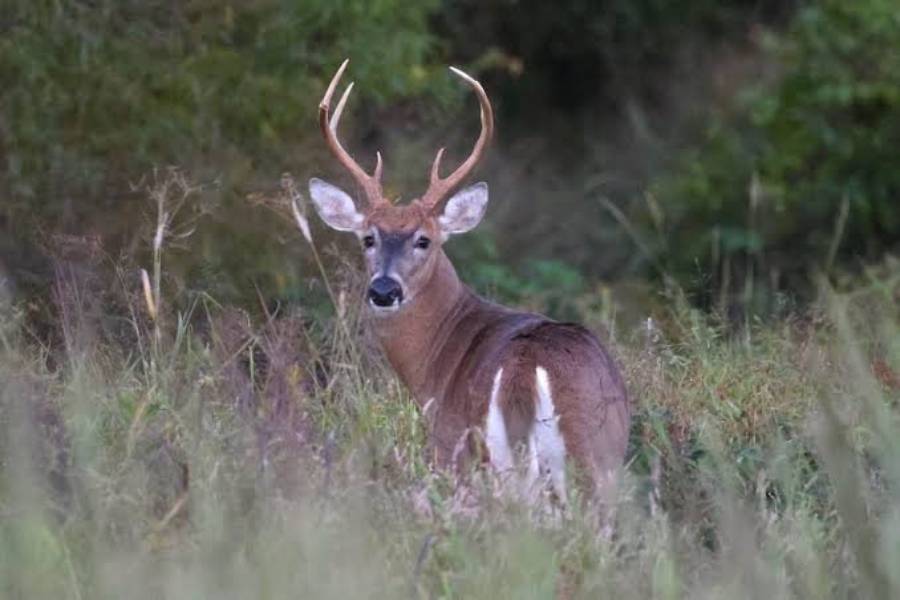
Yes, deer often move differently on public land, especially when hunting pressure increases. The difference is not caused by whether the property is publicly or privately owned. Deer respond to human activity, perceived danger, and repeated disturbance. On heavily hunted public ground, frequent encounters with hunters can change when deer move, which routes they use, and where they bed or seek security cover.
Hunting pressure can reduce daylight movement in exposed locations and push deer toward areas where encounters with people are less likely. Roads, parking areas, established access trails, open terrain, and frequently hunted locations can therefore influence deer movement patterns. Mature bucks may respond particularly strongly to repeated disturbance, while seasonal factors such as the rut can temporarily alter these pressure-driven patterns.
For hunters, understanding these changes is more useful than simply locating old tracks, trails, rubs, or other deer sign. Finding deer on pressured public land requires interpreting deer behavior together with hunter access and current hunting pressure. This article explains why public-land deer change their movement, when and where those changes occur, how bedding and travel routes respond, and how hunters can adjust their strategy accordingly.
Do Deer Move Differently on Public Land Than on Private Land?
Yes, deer can move differently on public land than on private land when the two properties receive different levels of hunting pressure and human disturbance. Deer do not recognize property ownership or change their behavior simply because they cross a public-private boundary. They respond to differences in perceived risk, including how frequently people enter an area, where hunters travel, and when disturbance occurs.
Public land that receives frequent hunting traffic can create a different risk environment from neighboring private property with limited access. Deer using heavily pressured ground may reduce daylight use of exposed travel routes, spend more time near security cover, or use locations that hunters reach less frequently. A nearby private parcel can appear to hold deer more consistently when it provides lower disturbance, but the behavioral difference comes from pressure rather than the ownership category itself.
The same principle means public land does not automatically produce more cautious or nocturnal deer. A remote public tract with limited hunter access may receive less disturbance than a small private property hunted repeatedly by several people. Hunters should therefore compare actual human activity instead of assuming all public ground is heavily pressured and all private ground is a refuge.
For hunting purposes, the useful distinction is high-pressure versus low-pressure habitat. Parking areas, roads, trailheads, easy walking routes, repeated stand access, and concentrated hunter activity help define that pressure. Deer movement becomes easier to interpret when these human patterns are considered alongside bedding cover, food sources, terrain, and fresh deer sign.
Why Does Hunting Pressure Change Deer Movement on Public Land?
Hunting pressure changes deer movement because deer adjust their behavior when particular places, routes, or times become associated with increased danger. A hunter walking through a travel corridor, leaving scent near bedding cover, or repeatedly occupying the same location introduces disturbance into an area deer previously used with less risk. Repeated encounters give deer a reason to change how they use that landscape.
The response does not require deer to abandon an entire property. Deer can reduce risk by changing three major components of movement: timing, location, and route selection. A deer can use a feeding area later in the evening, bed in thicker cover, or approach the same destination through a less exposed route. This distinction matters because hunters sometimes interpret reduced daylight sightings as evidence that deer have completely left an area when their movement pattern may simply have changed.
Hunter access is especially important because pressure is not distributed evenly across public land. Two locations on the same property can experience very different levels of disturbance. An area close to convenient parking may receive repeated foot traffic, while terrain, water, thick vegetation, or a longer approach can reduce hunter activity elsewhere. Deer can consequently encounter pockets of relatively low pressure without leaving public property.
Pressure can also change quickly when hunting activity changes. Opening day, weekends, favorable weather, and other periods that bring more hunters into the field can alter the amount and location of human disturbance. Hunters should therefore treat deer movement as a dynamic pattern rather than assume preseason observations will remain unchanged throughout hunting season. Current deer sign becomes more useful when it is evaluated together with current hunter sign and access patterns.
How Does Hunting Pressure Change When Deer Move on Public Land?
Hunting pressure can shift deer movement away from periods when encounters with hunters are most likely. When hunters repeatedly enter the same areas before daylight, occupy stands during shooting hours, and leave after sunset, deer receive a predictable pattern of human activity. Deer that continue moving through exposed locations during those periods face greater risk, while movement during lower-disturbance periods reduces the chance of an encounter.
This shift does not necessarily mean deer stop moving during daylight. The more important change can be where daylight movement occurs. A deer may remain active before sunset but travel within thick cover rather than crossing an open feeding area. It may also stage closer to a bedding area and delay entering exposed habitat until after dark. Hunters who only monitor fields, major trails, or other visible locations can therefore underestimate how much daylight movement is occurring elsewhere.
Movement timing can also change as hunting pressure changes throughout the season. A location that produces regular daylight activity before the season may become less productive after repeated hunter access. Conversely, an area receiving little human disturbance can continue producing daylight movement even when other sections of the same public property appear inactive. Pressure should therefore be evaluated at the location level rather than applied equally to an entire public-land tract.
Do Public-Land Deer Become More Nocturnal During Hunting Season?
Public-land deer can increase nighttime activity during hunting season, but hunting pressure does not make every deer completely nocturnal. A more precise interpretation is that deer can reduce daylight exposure in locations associated with hunters while maintaining or increasing activity during periods of lower perceived risk.
This distinction matters for hunting strategy. A trail camera showing a buck only after dark does not prove that the buck remains bedded throughout daylight hours. The animal may be moving during daylight inside security cover and reaching the monitored location after sunset. Moving a camera or hunting setup closer to the beginning of that travel route can reveal a different movement pattern.
Hunters should therefore interpret nighttime photographs as information about where and when a deer reached that specific camera, not as proof of its activity across the entire landscape. Combining timestamps with fresh tracks, bedding locations, terrain, cover, and hunter access provides a stronger picture of when pressured deer are actually moving.
Where Do Deer Move When Hunting Pressure Increases?
When hunting pressure increases, deer tend to favor locations that reduce encounters with people while still providing access to bedding, food, and travel cover. This can include thicker vegetation, difficult terrain, overlooked pockets, locations separated from common access routes, and other areas that provide greater security. The critical characteristic is not simply distance from hunters but lower perceived risk.
Thick security cover is valuable because it reduces visibility and can make hunter movement more difficult. Dense vegetation, steep terrain, wet areas, creek systems, or other access obstacles can create locations that receive less foot traffic than nearby easy-to-reach ground. A relatively small pocket of cover can therefore function as a security area when surrounding habitat receives repeated disturbance.
Distance from a road, trail, or parking area alone does not determine whether a location has low hunting pressure. A remote ridge reached by a popular trail can receive more hunters than an overlooked pocket close to a road. Likewise, many hunters may walk past habitat near an access point because they assume they need to travel farther into public land. Actual hunter movement is more useful than a simple distance measurement.
Public-private boundaries can create another movement pattern when the properties receive different levels of pressure. Deer may spend more time on adjacent private land if it provides secure bedding or limited human disturbance and then move onto public land for food, breeding activity, or other resources. The boundary itself does not attract deer; the difference in habitat and disturbance on each side determines its value.
For this reason, hunters should search for pressure transitions rather than automatically searching for the deepest part of public land. Fresh deer sign combined with low levels of current hunter activity can identify these transitions. Tracks, droppings, active trails, bedding sign, and other recent evidence become more informative when hunters also understand how people enter and move through the property.
How Does Hunting Pressure Change Deer Bedding Areas?
Hunting pressure can cause deer to shift bedding activity toward locations that provide greater security from human disturbance. Bedding areas are particularly important because deer spend long periods there during daylight, when hunters are also active. Repeated human scent, close encounters, or hunters walking through bedding cover can make a previously secure location less attractive and cause deer to use another part of their home range.
Security does not always mean the thickest or most remote habitat. A secure bedding area is one where deer can detect danger and reduce the likelihood of a close encounter with people. Thick vegetation can limit visibility for hunters, while terrain features can make an approach more difficult or predictable. Depending on the landscape, deer may use steep slopes, dense cover, terrain transitions, isolated habitat pockets, or locations that require hunters to cross difficult ground.
Hunter access can therefore influence bedding selection as much as straight-line distance from a parking area. A bedding area one mile from the road is not necessarily secure if a popular trail carries hunters directly past it. In contrast, a smaller cover pocket closer to an access point may receive little disturbance because most hunters walk past it on their way deeper into the property. Actual access patterns determine pressure more accurately than distance alone.
Bedding locations can also help explain why hunters continue finding deer sign but stop seeing deer during legal shooting hours. Deer may still feed in familiar areas or travel through established corridors after dark while spending daylight hours in more secure bedding cover. Identifying where that daylight security exists helps connect nighttime observations with potential daytime hunting opportunities.
Hunters should avoid assuming that finding a bedding area means they should immediately enter it. Repeated intrusion near bedding cover can create the same pressure that caused deer to leave another location. Access direction, wind, scent control, noise, and the number of times an area is hunted all affect whether a setup can be approached without substantially increasing disturbance.
How Does Hunting Pressure Change Deer Travel Routes?
Hunting pressure can change the routes deer use between bedding areas, feeding areas, and other important resources. Deer do not necessarily stop traveling to a destination after encountering hunters. Instead, they can reduce risk by approaching it through thicker cover, changing the point where they enter an opening, or using a less disturbed parallel route.
Established deer trails can therefore become misleading when hunters evaluate them without considering timing. A heavily worn trail proves that deer have used the route, but it does not establish that deer currently use it during daylight. Repeated hunter activity near a major trail can shift movement toward secondary trails or move daylight travel deeper into cover while the original trail continues receiving nighttime traffic.
Terrain and vegetation can provide natural travel routes for pressured deer. Features such as benches, creek bottoms, drainage systems, ridges, vegetation edges, and narrow strips of cover can allow deer to travel while limiting exposure. Their value depends on how the surrounding habitat and hunters interact with them. A terrain feature that funnels deer can also funnel hunters, reducing its security once human traffic becomes frequent.
Hunter routes themselves should be treated as part of the movement map. Parking lots, logging roads, maintained trails, creek crossings, field edges, and easy terrain can concentrate people in predictable places. Deer that experience repeated disturbance around these features can adjust their routes accordingly. Mapping where hunters are likely to walk can therefore be as important as mapping where deer are likely to travel.
The most useful travel route is not always the trail with the most visible sign. For hunting pressured public land, hunters should look for routes that connect necessary deer resources while allowing deer to avoid predictable human activity. A subtle trail connecting secure bedding cover with a feeding destination can have greater daylight value than a heavily used trail located closer to common hunter access.
This is why current movement evidence matters more than historical sign alone. Fresh tracks, recently used trails, current camera observations, and recent bedding activity should be interpreted alongside changes in hunting pressure. When hunter activity changes, hunters should expect deer travel routes to change with it rather than assuming preseason patterns will remain fixed throughout the season.
Do Mature Bucks Move Differently From Does on Public Land?
Mature bucks can respond differently to public-land hunting pressure than does because their movement patterns, social behavior, and seasonal priorities differ. The largest practical difference for hunters is often not whether mature bucks move at all, but where their daylight movement occurs after repeated human disturbance. A mature buck that becomes difficult to observe from a field edge or major trail may still be active within or near secure cover.
Age also matters when interpreting pressure response. Mature bucks have survived multiple hunting seasons and can adjust their use of locations where they repeatedly encounter people. Common access routes, frequently occupied stands, exposed feeding areas, and other predictable sources of disturbance can therefore become less productive for daylight encounters. Reduced sightings do not necessarily mean a mature buck has left the property; its observable movement may have shifted to a different place or time.
Does face the same fundamental need to avoid danger, but their movement is also strongly connected to feeding areas, bedding cover, and the needs of their social groups. Hunting pressure can alter those patterns by making exposed locations less attractive during periods of heavy human activity. The result can be changes in both movement timing and route selection without requiring deer to abandon an important food source or bedding range completely.
Hunters should therefore avoid treating every deer track or trail as evidence of mature-buck movement. The identity of the deer using a route matters when choosing a hunting location. Tracks, beds, rubs, scrapes, trail-camera observations, and direct sightings can provide additional context, although no single type of sign should be used by itself to predict where a mature buck will appear during daylight.
The practical goal is to determine where a mature buck can satisfy its needs while minimizing exposure to hunters. On pressured public land, that often means examining the relationship between security cover, bedding locations, travel corridors, food sources, and human access rather than simply searching for the location with the most deer sign.
How Does the Rut Change Deer Movement on Pressured Public Land?
The rut can increase buck movement and create daylight movement that differs from the patterns hunters observed before the breeding period. Bucks search for receptive does, check doe groups, investigate scent, and travel between areas used by females. These breeding behaviors can cause bucks to cover ground they used less frequently during other parts of the hunting season.
The rut does not eliminate the effects of hunting pressure. Breeding motivation and risk avoidance operate at the same time. A buck may increase its overall movement while still avoiding a frequently disturbed access route or exposed location. This explains why increased rut activity does not guarantee that a pressured buck will repeatedly appear in an obvious field, trail, or stand location during daylight.
Doe locations become especially important during this period because buck movement is increasingly connected to females. Secure doe bedding areas and travel corridors between bedding and feeding habitat can consequently influence where bucks search during the breeding season. Hunters who understand these doe movement patterns gain more useful information than hunters who focus only on historical buck sign.
The rut can also make previous movement observations less reliable. A buck that maintained a relatively compact pattern before the rut can begin traveling through additional areas while searching for does. Conversely, a location that produced regular buck activity earlier in the season may become less predictable once breeding behavior changes the reason those bucks are moving.
This creates an important distinction between rut movement and random movement. Increased travel does not mean bucks abandon security behavior entirely. Terrain, cover, doe concentrations, and hunting pressure continue to influence the routes they select. A low-pressure corridor connecting secure areas can therefore become more valuable when bucks begin covering additional ground.
For public-land hunters, the rut should be treated as a change in movement motivation rather than an exception to hunting pressure. Hunters still need to evaluate access, recent human activity, security cover, current deer sign, and daylight observations. The difference is that breeding behavior adds another reason for bucks to move, potentially creating opportunities outside their earlier-season patterns.
How Can Hunters Find Deer Movement Patterns on Pressured Public Land?
Hunters can find current deer movement patterns by combining fresh deer sign, hunter sign, access patterns, and time-specific observations. Deer sign alone shows that an animal used a location, but it does not establish when that movement occurred or whether the same pattern continues after hunting pressure increases. The goal is to identify movement that is both recent and relevant to legal hunting hours.
Fresh tracks, droppings, recently disturbed leaves, active trails, rubs, scrapes, and beds can indicate current use. Their value increases when several forms of evidence point toward the same movement pattern. For example, a fresh trail connecting security cover with a food source provides more useful information when recent tracks and trail-camera activity confirm that deer continue traveling through the corridor.
Hunter sign should be evaluated alongside deer sign because human activity can explain why an otherwise promising location stops producing daylight movement. Boot tracks, recently cleared shooting lanes, tree stands, trail cameras, repeated parking activity, and heavily traveled access routes can indicate concentrated hunting pressure. A location containing both abundant deer sign and abundant hunter sign may still hold deer, but the timing or route of deer movement can change.
Scouting should therefore answer two separate questions: Where are deer currently moving, and where are hunters currently creating pressure? Comparing those patterns can reveal overlooked locations. A small patch of cover may have less obvious deer sign than a major trail but offer better daylight potential because hunters rarely enter it.
What Deer Sign Shows That an Area Is Still Being Used?
Fresh sign provides stronger evidence of current deer movement than accumulated historical sign. A heavily worn trail, old rub, or established bedding area can reflect weeks or months of use. Hunters need evidence that deer are using the location under current hunting conditions.
Tracks are particularly useful when their freshness can be evaluated after rain, snow, or another event that creates a known time reference. Fresh droppings, newly worked scrapes, recent rub activity, and recently used beds can provide additional evidence. Several recent indicators located along the same bedding-to-feeding or bedding-to-bedding route strengthen the case that the area remains active.
Trail cameras add a timing component that physical sign cannot provide by itself. A camera records when a deer reached one specific location, allowing hunters to compare daylight and nighttime use over several days. If a buck consistently reaches a food source after dark, cameras positioned progressively closer to suspected security cover may help determine where its daylight movement occurs.
Camera data should still be interpreted within the surrounding pressure pattern. A camera placed beside an easy access trail can document different behavior from one positioned near low-disturbance cover. Hunters should also consider the disturbance created when checking cameras because repeated visits can alter the pattern they are attempting to measure.
Read more: Do Deer Return After a Forest Fire? Hunting Guide
How Should Hunters Adjust Their Strategy to Public-Land Deer Movement?
Hunters should adjust their strategy when current deer movement no longer matches the pattern on which their original setup was based. Continuing to hunt the same location because it produced preseason photographs or old sign ignores the possibility that hunting pressure has changed when, where, or how deer travel.
Access is one of the first variables to evaluate. The shortest route to a stand is not necessarily the best route if it crosses feeding areas, bedding cover, or important travel corridors. A productive setup requires an access route that reduces the chance of alerting deer before the hunt begins. Wind direction, terrain, vegetation, noise, and likely deer locations should therefore influence how a hunter enters and exits.
Hunters should also consider where other people are likely to travel. Popular parking areas, obvious trails, easy creek crossings, logging roads, and straightforward terrain can funnel hunters into predictable sections of public land. Hunting deeper can reduce competition in some places, but distance alone is not a strategy. An overlooked location closer to an access point can experience less disturbance when most hunters walk through or around it.
Bedding areas require a balance between proximity and intrusion. Hunting closer to secure bedding can increase the chance of intercepting a deer before darkness, especially when the animal does not reach exposed feeding habitat until after sunset. Moving too close without a clean access route can instead disturb the deer and change the movement pattern again. The best setup is therefore not automatically the closest possible location to a bed.
Hunters should also be willing to move when multiple pieces of current evidence show that a pattern has changed. One unsuccessful hunt is insufficient evidence by itself because wind, weather, deer behavior, and chance can affect a single observation. Repeated nighttime photographs, declining fresh sign, new hunter activity, or a clear shift toward another travel corridor provide stronger reasons to reconsider a setup.
The central strategy is to hunt the deer pattern that exists now rather than the pattern that existed before hunting pressure increased. Public-land deer movement is dynamic because hunter activity is dynamic. Scouting, access planning, and stand selection should change when the evidence shows that deer have changed their timing, bedding location, or travel route.
What Is the Biggest Mistake Hunters Make When Predicting Public-Land Deer Movement?
The biggest mistake hunters make when predicting public-land deer movement is relying on deer sign without accounting for current hunting pressure. Tracks, trails, rubs, scrapes, beds, and trail-camera photographs confirm that deer have used an area, but they do not automatically show that deer will move through that location during legal shooting hours. The timing of the sign and the amount of recent human disturbance determine how useful it is for predicting a huntable movement pattern.
Historical sign creates a particular problem on pressured public land. A heavily used trail may have developed before hunting season or during periods of low human activity. Once hunters begin walking the same ridge, accessing stands through the same drainage, or repeatedly entering nearby bedding cover, deer can alter when or how they use that trail. The trail can remain physically obvious even after its daylight hunting value has declined.
Hunters should therefore evaluate deer sign together with hunter sign. Fresh boot tracks, occupied parking areas, established access trails, stands, trail cameras, and repeated human intrusion help reveal where pressure is concentrated. A location with less dramatic deer sign but substantially lower disturbance can offer a better opportunity when fresh evidence shows deer using it during daylight.
Timing provides another necessary layer of context. A trail-camera photograph taken at 2:00 a.m. confirms presence at that location, not a daylight hunting opportunity. The deer may have started moving from secure cover before sunset and reached the camera hours later. Hunters can use bedding locations, connecting cover, terrain, tracks, and additional camera observations to work backward and identify where that movement may occur during legal shooting hours.
Public-land deer should therefore be hunted according to current movement patterns rather than historical assumptions. Hunting pressure can change movement timing, bedding locations, travel routes, and the amount of exposure deer tolerate. The most useful prediction combines four elements: current deer sign, current hunter pressure, access patterns, and movement timing.
A hunter who understands those four elements can respond when a productive preseason location changes after opening day, when a mature buck begins appearing only after dark, or when deer shift toward security cover after repeated disturbance. Instead of assuming the deer disappeared, the hunter can determine whether the animal changed its route, timing, or bedding location and adjust the setup accordingly.
The central principle is simple: do not ask only where the deer are; determine where deer can move while minimizing encounters with hunters. On pressured public land, that relationship between deer movement and human activity often provides more actionable information than the amount of visible deer sign alone.