
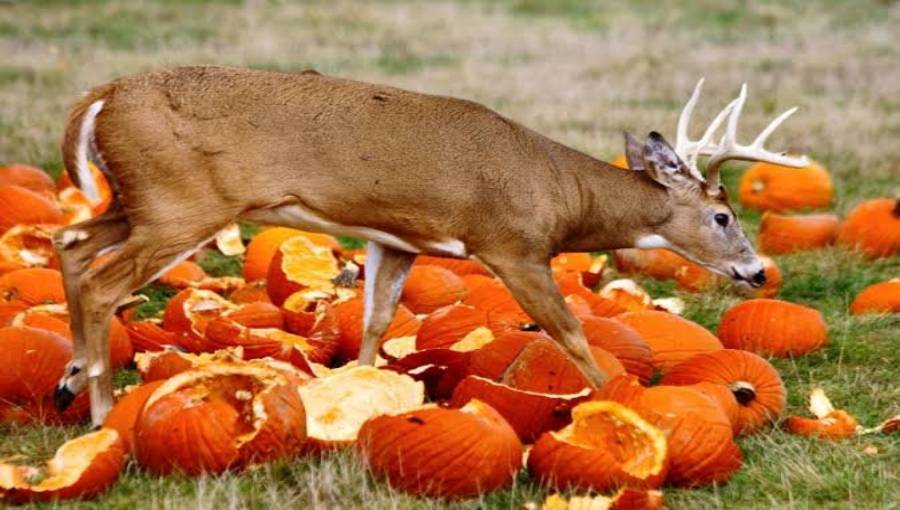
Yes, deer eat pumpkins when the fruit is available and accessible. Deer can consume the soft flesh, seeds, rind, and parts of the pumpkin plant, including leaves and vines. Pumpkins are especially available during fall, when ripe fruit, harvested pumpkins, and discarded or damaged pumpkins may provide an additional food source.
However, a deer eating a pumpkin does not mean pumpkins are a primary or preferred part of its diet. Deer are opportunistic feeders whose food choices change with season, habitat, and the availability of other forage. Natural browse, mast, vegetation, fruits, and agricultural crops can compete with pumpkins as food sources. As a result, deer may readily investigate and eat pumpkins in one location while showing less interest where other suitable foods are abundant.
For hunters, this feeding behavior is useful for understanding how seasonal food availability can influence deer activity. Knowing which parts of pumpkins deer eat, when they are most likely to encounter them, and how pumpkins compare with other fall foods provides better context for interpreting feeding patterns and deer movement. This article explains how pumpkins fit into a deer’s diet and what their presence can mean in a hunting environment.
Do deer eat pumpkins?
Yes, deer eat pumpkins when they can access them. Pumpkins provide edible flesh, seeds, and rind that deer can consume, while pumpkin plants also provide leaves and vines that may be browsed. This makes pumpkins a potential food source anywhere deer and pumpkin plants overlap, including fields, gardens, farms, food plots, and areas where harvested or discarded pumpkins remain accessible.
Deer eat pumpkins because their feeding behavior allows them to take advantage of available plant-based foods. A deer’s diet is not limited to one type of vegetation or fruit. It changes as different food sources become available throughout the year. Pumpkins therefore function as an opportunistic food rather than something deer need to find as part of their normal feeding routine. A deer encountering an accessible pumpkin can investigate and consume it even when pumpkins make up only a small portion of the food available in its habitat.
The distinction between eating pumpkins and preferring pumpkins is important. The presence of partially eaten pumpkins confirms that deer can use them as food, but it does not establish pumpkins as a primary food source. Deer food selection also depends on the availability of natural browse, mast, fruits, crops, and other vegetation. For example, a deer moving through an area with pumpkins may have access to acorns and agricultural crops at the same time. Its use of each food source can change as availability changes.
For hunters, pumpkins are therefore more useful as evidence of a broader feeding pattern than as a standalone explanation for deer activity. Tracks, droppings, browsing damage, trails, and repeated feeding activity around a food source provide additional context for determining whether deer are regularly using an area. Pumpkin consumption should be interpreted alongside these signs and the other foods available within the surrounding habitat.
What parts of a pumpkin do deer eat?
Deer can eat multiple parts of a pumpkin, including the flesh, seeds, rind, leaves, and vines. The fruit itself provides several edible components, while the growing plant gives deer additional vegetation to browse. Which part is eaten depends partly on whether the deer encounters an intact pumpkin, damaged fruit, or a living pumpkin plant.
The flesh is the soft interior of the pumpkin and becomes readily accessible once the outer rind has been broken. Deer can consume this inner material along with the seeds contained in the central cavity. Seeds do not need to function as a separate food source; they can simply be ingested while the animal feeds on the interior of the fruit. A cracked, cut, damaged, or partially decomposed pumpkin exposes more of this soft material than an intact fruit.
Deer can also interact with the rind, although the rind is structurally different from the softer interior. Feeding on an intact pumpkin requires the animal to get through the exterior before reaching much of the flesh. This distinction can help explain why damage to pumpkins does not always look uniform. One fruit may show openings in its exterior and substantial removal of the interior, while another may receive comparatively little feeding activity.
The edible relationship extends beyond the pumpkin fruit. Deer may browse pumpkin leaves and vines when they have access to growing plants. This means deer activity around a pumpkin patch can occur before mature pumpkins are available. For a hunter evaluating feeding sign, damage to the fruit should therefore be considered together with browsing on surrounding vegetation rather than treating the pumpkin itself as the only possible food source.
Identifying the part being consumed also provides better context for interpreting deer activity. A damaged pumpkin alone does not establish how frequently deer are visiting an area or whether deer caused every mark on the fruit. Repeated feeding sign combined with deer tracks, droppings, trails, or nearby browsing provides stronger evidence that deer are using the pumpkins or pumpkin plants as part of a local feeding area.
Do deer like pumpkins?
Deer can readily eat pumpkins, but eating them does not mean pumpkins are always a preferred food. Food preference depends on what else is available in the habitat, the season, and the condition and accessibility of each food source. A pumpkin may receive considerable feeding activity in one area while receiving little attention in another area where deer have access to more attractive seasonal foods.
This distinction matters because consumption, preference, and dietary importance describe different feeding relationships. Consumption means a deer will eat a food when it encounters it. Preference means the deer selects that food when alternatives are available. Dietary importance describes how much that food contributes to the animal’s overall diet. Pumpkins clearly fit within the first category when deer consume them, but their presence alone does not establish that they are preferred or nutritionally important compared with other available foods.
Seasonal food availability can change this relationship. Deer feed on a range of plant materials, so pumpkins compete with other food sources rather than existing in isolation. In fall, for example, a deer may encounter pumpkins alongside mast, agricultural crops, fruits, and natural browse. If several suitable foods occur within the same area, feeding activity reflects the combination of those resources and not simply the presence of pumpkins.
Hunters should therefore evaluate actual feeding sign instead of assuming deer will favor a location because pumpkins are present. Repeated tracks, trails, droppings, browsed vegetation, and progressively eaten pumpkins provide stronger evidence that deer are incorporating the area into their feeding activity. This distinction helps separate the general fact that deer eat pumpkins from the more location-specific question of whether local deer are actively selecting them.
Do pumpkins attract deer?
Pumpkins can provide a food source that gives deer a reason to investigate or feed in an area, but pumpkins alone do not determine deer movement. Their influence depends on at least four factors: local deer activity, food accessibility, competing food sources, and seasonal availability. A pumpkin located within an area deer already use has a different context from one placed where deer rarely travel.
Food accessibility is one important factor. An opened or damaged pumpkin exposes the soft interior and seeds, while an intact pumpkin requires the animal to get through the rind before consuming much of the flesh. Pumpkin plants can also provide leaves and vines, creating feeding opportunities before mature fruit is available. As a result, a pumpkin patch can represent several potential food items rather than a single fruit appearing at the end of the growing season.
Competing food sources also influence whether pumpkins receive repeated attention. Deer choose among the foods available within their habitat, including natural browse, mast, fruits, vegetation, and agricultural crops. When alternative foods are abundant, pumpkins are only one option within a larger feeding environment. When food availability changes, deer can shift their feeding activity to different locations or resources.
For hunters, repeated use is more informative than the presence of pumpkins alone. Fresh tracks, droppings, established trails, browsed plants, and new feeding damage can indicate that deer are returning to the area. Observing these signs over multiple visits provides more useful information about local feeding patterns than assuming a pumpkin automatically attracts deer from the surrounding landscape.
Pumpkins should therefore be considered within the broader relationship between food and habitat. Deer movement also depends on bedding areas, cover, travel routes, disturbance, and the distribution of other food sources. A feeding location becomes more relevant to hunting when it fits into these existing patterns rather than when it contains pumpkins alone.
When do deer eat pumpkins?
Deer can eat pumpkins whenever the fruit or plant is accessible, but encounters are especially relevant during fall when mature pumpkins are widely available. Pumpkin harvest season overlaps with a period when deer are adjusting their feeding patterns as vegetation and other seasonal food sources change. This makes fall the most obvious period for deer to encounter ripe pumpkins in fields, gardens, farms, and areas containing discarded fruit.
Deer feeding behavior follows food availability rather than the calendar alone. During fall, pumpkins may exist alongside acorns, agricultural crops, fruits, browse, and other vegetation. Deer can shift among these foods as their availability changes. A pumpkin patch may therefore receive little activity while another attractive food source is abundant and then receive more attention after competing foods become less available.
Deer can also eat pumpkins after fall if usable fruit remains accessible. The determining factor is whether the pumpkin is still available and suitable for consumption, not whether a particular month has passed. Pumpkins left in fields or other accessible locations may remain potential food sources until they deteriorate, disappear, or become inaccessible. This is why seasonal deer feeding should be evaluated according to current food conditions rather than assuming that a specific food is used only during one season.
For hunters, timing becomes more useful when pumpkin availability is considered alongside fresh deer sign. New tracks, droppings, trails, browsing damage, and recently eaten fruit can indicate current use, while old feeding damage provides weaker information about present activity. Monitoring how these signs change as fall food sources appear and disappear gives a clearer picture of local feeding patterns.
Do whitetail deer eat pumpkins?
Yes, whitetail deer can eat pumpkins when they encounter an accessible fruit or pumpkin plant. Pumpkins fit within the broad plant-based feeding behavior of whitetails, which use different food sources according to habitat, season, nutritional needs, and availability. The important distinction is that pumpkins are an available food option rather than a food that defines the whitetail deer diet.
Whitetail deer are selective feeders, and their diet changes throughout the year as different plants and foods become available. A whitetail may encounter pumpkin flesh, seeds, leaves, vines, and other plant material while feeding within agricultural or human-modified landscapes. In areas without pumpkin cultivation or discarded pumpkins, the same deer can meet its feeding requirements through other locally available foods. Pumpkin consumption is therefore strongly dependent on opportunity.
This feeding flexibility explains why pumpkin use can differ between hunting properties. A property containing pumpkin fields may produce visible feeding damage and repeated deer activity, while a nearby property without pumpkins may have deer concentrated around entirely different foods. Habitat composition and the distribution of food resources determine which feeding opportunities deer encounter during their normal movements.
Hunters should consequently interpret whitetail activity around pumpkins within the animal’s larger movement pattern. Feeding areas are only one component of habitat use. Bedding cover, travel corridors, security cover, human disturbance, water, and alternative foods can influence where and when a whitetail appears. Evidence that deer are repeatedly eating pumpkins is useful local information, but it should be combined with these additional habitat factors when evaluating deer activity.
Are pumpkins an important food source for deer?
Pumpkins are a supplemental food source for deer rather than a primary component of their natural diet. Deer can eat pumpkin flesh, seeds, rind, leaves, and vines when these foods are accessible, but the importance of pumpkins depends heavily on local availability. In habitats without pumpkin fields, gardens, or discarded fruit, deer rely entirely on other plant-based foods.
A deer’s diet is broader than any single fruit or crop. Natural browse, mast, vegetation, fruits, and agricultural foods can all contribute to feeding depending on the habitat and season. Pumpkins therefore compete with multiple food sources for a deer’s attention. For example, a deer encountering pumpkins during fall may also have access to acorns, crops, and woody browse. The presence of these alternatives affects how much feeding activity occurs around the pumpkins.
Availability also explains why pumpkins can appear important on one hunting property but insignificant on another. Deer living near pumpkin fields may encounter the fruit repeatedly during normal movements and incorporate it into their feeding activity. Deer in forested habitat without pumpkin production may never encounter pumpkins at all. The difference reflects local food distribution rather than a biological requirement for pumpkins.
For hunters, this means pumpkin feeding activity should be treated as location-specific information rather than a universal predictor of deer movement. A partially eaten pumpkin confirms access to a potential food source, while repeated fresh damage, tracks, droppings, and established trails provide stronger evidence of regular use. The value of this information increases when the feeding area can be connected with nearby cover, travel routes, and other habitat features.
Pumpkins also should not be evaluated separately from seasonal changes in the rest of the food supply. Deer can shift their feeding locations as preferred or more accessible foods appear and disappear. A location receiving repeated feeding activity at one point in fall may become less important after food conditions change. Understanding the broader seasonal diet therefore provides more hunting context than treating pumpkins as an inherently important deer food.
Read more: Different Types of Deer: Identification Guide
What do deer eat besides pumpkins?
Deer eat a broad range of plant-based foods besides pumpkins, including browse, mast, fruits, grasses, forbs, and agricultural crops. The exact composition of the diet changes according to habitat, season, and food availability. This dietary flexibility allows deer to shift from one food source to another as vegetation grows, fruits mature, mast becomes available, or agricultural crops reach accessible stages.
Natural browse includes the leaves, twigs, buds, and tender shoots of woody plants. These foods are important because they occur across many types of deer habitat and can remain available when seasonal fruits or crops are absent. Forbs and other herbaceous plants add another source of vegetation during periods of active plant growth. Deer feeding in areas containing a mixture of woody cover and open vegetation can therefore access several food categories without relying on pumpkins or other cultivated fruits.
Mast provides another seasonal food category. Hard mast includes nuts such as acorns, while soft mast includes fleshy fruits produced by trees, shrubs, and other plants. The local abundance of these foods can influence where deer spend time feeding. A productive source of mast within suitable cover, for example, may receive substantial deer activity while it remains available.
Agricultural landscapes provide additional foods, including corn, soybeans, cereal grains, and cultivated fruits or vegetables where these crops are grown. These resources can create concentrated feeding opportunities, but their importance varies among locations. A hunting property surrounded by cropland presents a different food environment from a heavily forested property dominated by browse and mast.
For hunters, the useful question is therefore not simply whether deer eat a particular food. The more important question is which foods are currently available and being used within the local habitat. Fresh browsing, tracks, droppings, trails, crop damage, and other feeding sign can help identify active food sources. Comparing those signs across several locations provides a stronger picture of deer feeding behavior than focusing on pumpkins alone.
What foods do deer prefer during the fall?
Deer select fall foods according to local availability, nutritional value, accessibility, and changes in surrounding vegetation. Important fall food categories can include mast, natural browse, remaining herbaceous vegetation, fruits, and agricultural crops. Pumpkins can join this seasonal food supply where they are grown or otherwise available, but they should be considered one option within a much larger fall feeding environment.
Hard mast can become particularly relevant where nut-producing trees are present. Acorns are one example of a concentrated fall food that deer may encounter on the forest floor. The amount available can vary substantially among locations and from one year to another, so deer activity associated with mast should be evaluated through current field conditions rather than assumed from habitat type alone.
Agricultural foods can also shape fall feeding patterns where crops occur within a deer’s range. Corn, soybeans, cereal grains, and other crops create different feeding opportunities depending on their growth and harvest stages. Harvest can alter both the quantity of food available and the amount of cover within a field, which means deer use of an agricultural area can change even when the location itself remains the same.
Natural browse remains relevant as other seasonal foods decline. Leaves, shoots, buds, and woody vegetation provide distributed food sources rather than concentrating deer around a single fruit or crop. Deer can consequently shift between concentrated foods and widespread browse as fall progresses and local conditions change.
For hunters, fresh feeding evidence is the most useful indicator of which fall foods deer are currently using. Recently opened pumpkins, fresh browse damage, disturbed mast, crop feeding, tracks, droppings, and active trails can reveal changes in feeding locations. These observations should be interpreted together with bedding cover, travel routes, hunting pressure, and other habitat features because food availability is only one component of deer movement.
Understanding what deer eat in the fall also explains why pumpkin activity can change quickly. Deer may feed on pumpkins while they are accessible and then shift toward another food source as local conditions change. Treating pumpkins as part of this seasonal food network provides a more accurate hunting context than assuming they consistently rank above the other foods available to deer.