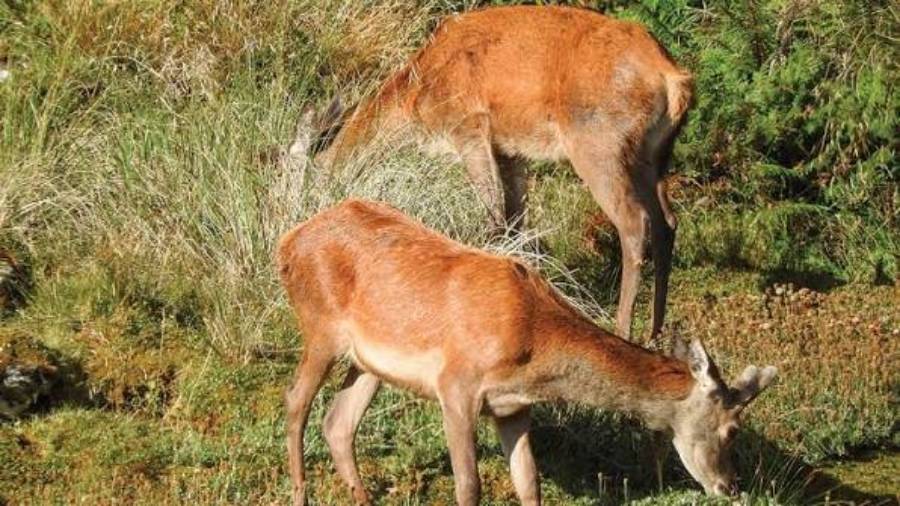
Deer do eat hay, but hay is not automatically a preferred or ideal food source for them. Whether a deer eats hay depends on the type and quality of hay, its familiarity with that food, the season, and the availability of natural forage. Alfalfa and clover hay are generally more attractive than mature grass hay because their plant composition is closer to the leafy forage deer naturally select.
Deer are ruminants, but their feeding behavior differs from that of livestock such as cattle. They primarily select browse, including leaves, buds, tender shoots, woody vegetation, and other seasonally available plants. Their digestive system also adapts to the foods available in their habitat, so the ability to consume hay does not mean every type of hay provides an equally suitable food source.
For hunters, the more useful question is not simply whether deer eat hay, but when deer will use it instead of other available foods. Seasonal forage availability influences where deer feed and can contribute to changes in their movement between feeding areas, bedding cover, and travel routes. Understanding where hay fits within a deer’s broader diet therefore helps hunters interpret feeding activity without assuming that a pile or field of hay will automatically attract deer.
Do Deer Eat Hay?
Deer eat hay when it is palatable, accessible, and compatible with the foods their digestive system is accustomed to processing. Hay is dried forage rather than a distinct plant, so a deer’s response depends heavily on which plants make up the hay. Hay containing leafy legumes such as alfalfa or clover differs substantially from coarse hay made primarily from mature grasses.
Deer are ruminants, but they are selective feeders rather than typical grass grazers. They naturally consume foods such as leaves, buds, tender shoots, forbs, fruits, nuts, and parts of woody plants. This feeding strategy means deer tend to select nutrient-rich plant parts instead of consuming large quantities of coarse, fibrous vegetation. Hay containing leaves and tender plant material therefore resembles their normal forage more closely than stem-heavy mature grass hay.
A deer’s willingness to eat hay also depends on what other food is available. Deer living around agricultural fields may encounter crops and forage plants that are more attractive than dry hay. In wooded habitat, they may rely on browse, mast, and seasonal vegetation. When preferred foods become scarce, deer may investigate alternative food sources, including hay. However, a deer eating hay does not prove that hay is its preferred food or that the hay provides an appropriate long-term diet.
Hunters should therefore treat hay consumption as one part of a broader feeding pattern. Finding deer around hay does not mean hay alone determines their location. Deer select feeding areas according to a combination of food availability, seasonal needs, habitat conditions, security cover, and familiarity with the available food.
What Types of Hay Do Deer Eat?
Three types of hay commonly associated with deer feeding are alfalfa hay, clover hay, and grass hay, but deer do not respond equally to all three. Plant species, maturity at harvest, leaf content, stem content, freshness, and storage condition change the nutritional composition and palatability of a bale. The name “hay” alone therefore provides too little information to predict whether deer will readily eat it.
Alfalfa hay is one of the more relevant types for deer because alfalfa contains the leafy plant material deer readily consume when it is available as growing forage. Alfalfa is a legume rather than a grass, and its leaves provide a different nutritional profile from mature grass stems. Deer commonly use agricultural alfalfa as forage, but fresh alfalfa plants and baled alfalfa hay should not be treated as identical food sources. Drying, harvesting, storage, leaf loss, and plant maturity all change the final hay.
Clover hay can also be eaten by deer because clover is a broadleaf forage plant that already occurs within the feeding environment of deer in many habitats. Hunters frequently encounter clover in managed food plots and other openings used by whitetails. As with alfalfa, however, deer feeding on living clover does not establish that they will show the same preference for dried clover hay. The physical form and condition of the forage have changed by the time it becomes hay.
Grass hay is generally less consistent with the selective browsing behavior of deer, particularly when it consists of mature, coarse stems. Deer can consume grasses, especially tender growth, but their feeding anatomy and food-selection strategy differ from animals adapted to graze large quantities of fibrous grass. As grass matures, the proportion of structural plant material increases and its characteristics become less similar to the tender vegetation deer typically select.
For hunters, the practical distinction is hay type and quality rather than hay versus no hay. A leafy legume hay and a coarse bale of mature grass are two different food resources even though both are called hay. Identifying what the hay contains provides more information about potential deer use than simply finding hay near a hunting area.
Is Hay Good for Deer?
Hay can provide food for deer, but its suitability depends on the plant species, nutritional quality, maturity, and the deer’s existing diet. The important distinction is between a food that deer are physically capable of eating and one that matches their nutritional and digestive needs. A leafy, high-quality forage such as alfalfa hay is fundamentally different from coarse, mature grass hay with a high proportion of stems.
Deer have a four-chambered ruminant digestive system in which microorganisms help break down plant material. However, the microbial population in the rumen changes in response to the foods deer regularly consume. This adaptation allows deer to process seasonally available forage, but it also means their digestive system is not equally prepared for every food at every point of the year. Introducing a substantially different food source does not instantly change the rumen microorganisms required to use that food efficiently.
Fiber content is another reason hay quality matters. Deer naturally select nutrient-rich portions of plants, including leaves, buds, shoots, and tender vegetation. Mature grass hay contains more coarse structural material than these preferred foods. A deer may consume such hay when other forage is limited, but consumption alone does not establish that the hay is nutritionally appropriate or efficiently digested.
For this reason, hunters should not assume that supplying hay automatically benefits a deer herd. Supplemental feeding introduces nutritional, behavioral, disease-management, and legal considerations that extend beyond whether deer will eat the food. The more reliable approach is to evaluate the natural forage and habitat available to deer rather than treating hay as a universal substitute for their normal diet.
Do Deer Eat Hay in the Winter?
Deer can eat hay during winter, particularly when other foods are scarce, but winter food shortage does not make every type of hay suitable for them. Deer change their feeding patterns as green vegetation disappears and different food sources become available. Their winter diet can include woody browse such as twigs and buds, remaining mast, agricultural foods, and other vegetation available within their habitat.
Winter makes digestive adaptation especially important. Deer entering the cold season have spent weeks adjusting to the foods available in their environment. Their rumen microorganisms reflect that seasonal diet. A sudden supply of unfamiliar hay therefore differs from a food source that deer have been consuming consistently. Hunger may make deer more willing to investigate an unfamiliar food, but willingness to eat it and the ability to obtain adequate nutrition from it are separate issues.
Natural browse remains important because deer are adapted to select woody and leafy plant material available within their home range. Hunters can look for browsed twig tips, tracks, trails, droppings, and repeated use of specific feeding locations to determine which winter foods deer are actually using. These signs provide stronger evidence of local feeding behavior than assuming deer will concentrate around hay simply because natural forage has declined.
Severe winter conditions can increase the importance of accessible food while also increasing the energetic cost of movement. Deer must balance obtaining food against conserving energy and remaining in secure habitat. As a result, the location of winter cover and available browse can influence feeding patterns as much as the presence of a single food source.
For hunters, winter scarcity should be interpreted as a change in the entire food landscape rather than evidence that hay becomes a preferred deer food. Identifying the foods deer are already adapted to eating, where those foods remain available, and how they connect with protective cover provides a more useful picture of winter deer activity.
Do Deer Prefer Hay or Natural Browse?
Deer generally select natural browse over coarse hay when suitable browse is readily available. Deer are selective feeders, so their diet commonly includes leaves, buds, tender shoots, forbs, fruits, nuts, and other nutrient-rich plant parts. Hay can become part of their diet, but it does not replace the range of natural foods deer use across different seasons and habitats.
Natural browse matches the way deer feed because they select individual plant parts rather than consuming vegetation uniformly. A deer moving through woodland or edge habitat can take buds from one shrub, leaves from another plant, and tender shoots from a third. This selective feeding allows the animal to build its diet from multiple food sources instead of relying on one large volume of coarse forage.
Food preference also changes throughout the year. Spring and summer provide growing vegetation, forbs, leaves, and agricultural forage in suitable habitats. Fall can add foods such as acorns and other mast, while winter increases reliance on available woody browse and remaining seasonal foods. Hay therefore competes with a different set of natural foods depending on when and where deer encounter it.
The type of hay still matters. Leafy alfalfa or clover hay is more similar to the broadleaf forage deer naturally select than mature, stem-heavy grass hay. This distinction explains why the question “Do deer prefer hay?” cannot be answered by treating every bale as the same food. Plant composition, maturity, condition, and the surrounding food supply all influence deer use.
Hunters can use this feeding behavior to evaluate habitat more accurately. Repeated signs of browsing provide stronger evidence of a productive feeding area than the presence of hay alone. Freshly browsed vegetation, tracks, droppings, trails, and repeated deer observations can reveal which foods deer are actually selecting in a particular location.
Read more: How to Age a Deer: A Complete Guide for Hunters
Will Hay Attract Deer to a Hunting Area?
Hay may attract deer that recognize it as food, but hay is not a reliable standalone method for predicting where deer will move. A food source influences deer activity only as part of a larger habitat system that includes other foods, bedding cover, security, water, terrain, hunting pressure, and established travel routes.
Food availability can influence movement because deer must travel between locations that satisfy different needs. A feeding area near secure bedding cover can produce a different movement pattern from an identical food source located in an exposed area. Deer may also reach food after legal shooting hours if the surrounding cover does not allow them to approach safely during daylight. The existence of an attractive food source therefore does not automatically create a productive hunting location.
Hunters should instead determine whether deer repeatedly use the area. Tracks entering and leaving a feeding location can identify travel direction, while trails can show connections with nearby cover. Fresh droppings and browsed vegetation provide additional evidence of recent feeding activity. Trail-camera observations, where legal and appropriate, can add information about the time and frequency of deer movement. Combining these signs produces a stronger assessment than assuming deer will establish a pattern around hay.
Seasonal competition between food sources also changes the value of a feeding location. Deer using one area can shift when another preferred food becomes abundant. For example, a change in mast or agricultural food availability can alter where deer spend feeding time. Hunters therefore need to monitor the current food landscape rather than assuming a previously productive food source will remain equally important throughout the season.
Should Hunters Use Hay to Attract Deer?
Hunters should not rely on hay as their primary method for attracting deer. Identifying naturally used feeding areas and the travel routes connecting them with secure cover provides more information about established deer behavior. Hay placed specifically to attract deer can also fall under supplemental-feeding or baiting regulations, depending on the jurisdiction.
Baiting and feeding rules are not uniform between hunting areas. A practice permitted in one state, province, or management zone may be restricted or prohibited in another, and regulations can change because of wildlife-management or disease-control measures. Hunters should check the current regulations issued by the wildlife authority responsible for the exact area they hunt before placing hay or any other food for deer.
From a hunting perspective, the distinction is important: finding a food source deer already use is different from placing a food source to change their behavior. Studying existing browse, feeding sign, cover, and travel corridors reveals how deer naturally use the property and provides a stronger foundation for interpreting deer movement.
What Should Hunters Look for Instead of Relying on Hay?
Hunters should focus on natural food sources, seasonal forage, security cover, and established travel routes instead of relying on hay to locate deer. Hay represents only one potential food source, while deer movement reflects the combined availability of food and habitat features across their home range. Identifying resources deer already use provides stronger evidence of consistent activity than introducing a bale of hay and waiting for deer to find it.
Natural browse is one of the first food sources to examine. Deer feed on leaves, buds, tender shoots, forbs, and woody vegetation, with the exact plants varying by habitat and season. Freshly clipped stems and browsed plant tips can indicate active feeding. Hunters can combine these signs with tracks and droppings to distinguish a location deer regularly use from an area that simply contains potential forage.
Mast and agricultural foods can also create concentrated feeding opportunities. Acorns and other available mast can shift deer activity toward productive trees during the appropriate season, while crops and harvested agricultural fields can influence feeding patterns in farm country. Food plots containing plants deer readily consume provide another food source on managed properties. The relative importance of each source changes as plants mature, crops are harvested, mast becomes available, and seasonal vegetation declines.
Food should be evaluated together with cover rather than as an isolated hunting feature. Deer need places to bed and avoid disturbance, so the relationship between feeding areas and secure cover can help explain travel patterns. Trails connecting these areas may reveal how deer approach and leave a food source. Terrain features, habitat edges, funnels, and dense vegetation can further concentrate movement along particular routes.
Hunters should also look for evidence of repeated use instead of relying on a single sign. A well-used trail combined with fresh tracks, droppings, browsed vegetation, and consistent observations provides several independent indicators that deer are using an area. A bale of hay with no corresponding sign provides far less information about established deer behavior.
Seasonal changes require these observations to be updated throughout the hunting season. A feeding pattern based on green forage can weaken when that vegetation matures, while the availability of mast or agricultural crops can redirect deer elsewhere. Later in the year, declining food availability and changes in cover can produce another shift. Scouting therefore needs to identify what deer are eating now, not simply what was attractive several weeks earlier.
For hunters asking whether deer eat hay, the practical answer is straightforward: deer can eat hay, but finding their preferred natural food sources and the routes connecting those foods with secure cover provides more useful hunting information. Hay consumption is one component of deer feeding behavior, not a dependable substitute for understanding the habitat and seasonal food sources that shape deer movement.