
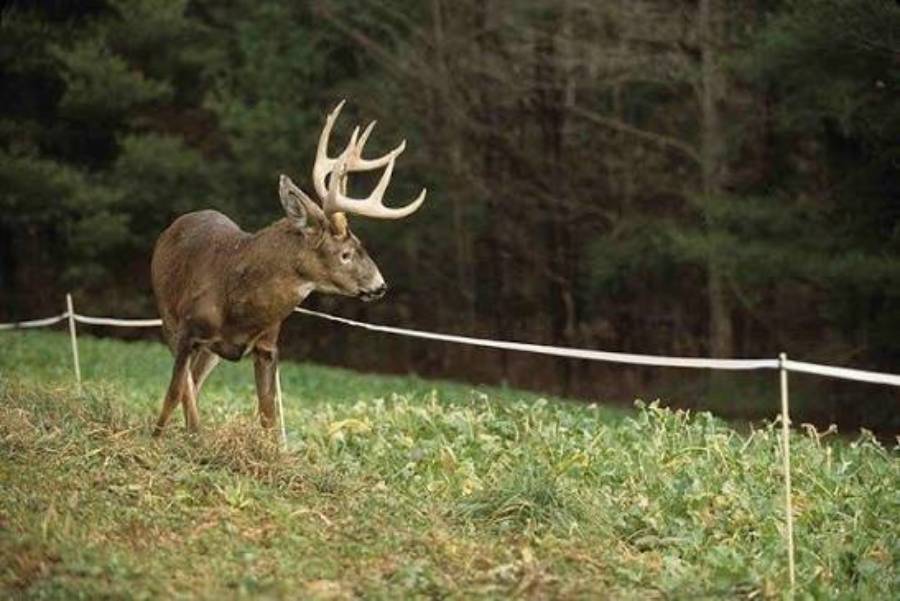
The best ways to improve deer habitat without food plots are to increase native forage, improve forest structure, create bedding and security cover, manage habitat edges, protect mast-producing trees, maintain reliable water sources, and connect these resources with usable travel cover. Food plots can concentrate deer around planted forage, but they are not required to make a hunting property more useful to whitetails.
A productive deer habitat provides four basic resources: food, water, cover, and space with limited disturbance. Improving the vegetation already growing on a property can address several of these needs at the same time. Opening portions of a closed forest canopy, for example, allows more sunlight to reach the ground and encourages understory growth. That new growth can provide both browse and screening cover. Managing mature timber, young forest, native forbs, shrubs, mast-producing trees, and transition zones can therefore produce more habitat value than treating food as the property’s only limiting resource.
The right improvements depend on what the property currently lacks. A wooded property surrounded by agricultural fields may benefit more from thicker bedding and security cover than additional food. A property dominated by mature, closed-canopy timber may instead need more sunlight and early successional vegetation. The goal is to identify the limiting habitat resources first, improve them deliberately, and arrange food, cover, water, and low-disturbance areas so deer can use the property throughout the hunting season.
What are the best ways to improve deer habitat without food plots?
There are 10 effective ways to improve deer habitat without relying on food plots: increase native browse and forbs, open portions of the forest canopy, create early successional habitat, improve bedding cover, increase security cover, improve habitat edges, protect mast-producing trees, control problematic invasive plants, maintain reliable water sources, and connect important resources with usable travel cover. These improvements work because deer depend on an entire habitat system rather than a single concentrated food source.
The first priority should be improving resources that are currently limited on the property. Mature woods with a closed canopy, for example, may contain plenty of trees but relatively little vegetation within a deer’s reach. Opening selected portions of the canopy can increase sunlight at ground level and stimulate grasses, forbs, shrubs, and woody regeneration. In contrast, a property next to crop fields may already have abundant seasonal food but lack secure bedding cover. Creating more forage on that property may provide less habitat value than developing dense vegetation where deer can bed and move with greater concealment.
Habitat improvements also become more useful when they complement each other spatially. Food, bedding cover, security cover, water, and travel cover should not be treated as five unrelated projects. A patch of quality browse becomes more useful when deer can reach it from secure cover without crossing large exposed areas. Likewise, excellent bedding habitat can lose value when frequent human traffic surrounds it. For hunting properties, the objective is to improve the resources deer need while retaining access routes that allow hunters to enter and leave without repeatedly disturbing those resources.
How can you increase natural food for deer without planting food plots?
Increase natural food for deer by encouraging native browse, forbs, shrubs, young woody growth, and existing mast-producing plants. Unlike a food plot, this approach works with vegetation already present or naturally capable of regenerating on the property. It can also distribute forage across a larger area rather than concentrating feeding activity in one planted opening.
Sunlight is one of the main factors controlling how much deer-accessible vegetation grows in wooded habitat. A dense overstory intercepts much of the available light before it reaches the forest floor. Selectively opening appropriate parts of that canopy can stimulate understory vegetation, including young woody stems and herbaceous plants that provide browse. This means cutting a tree can influence more than timber structure: the resulting change in light availability can alter the amount and type of vegetation growing within browsing height.
Natural forage should also be managed for diversity and seasonal availability. Deer do not depend on one plant throughout the year. Woody browse, tender new growth, forbs, fruits, and mast become useful at different times depending on local plant communities and seasonal conditions. Maintaining several productive vegetation types therefore gives deer more feeding options than managing the property around a single food source.
How does opening the forest canopy create more food for deer?
Opening a closed forest canopy can create more deer forage by allowing additional sunlight to reach the forest floor and stimulate understory growth. The mechanism follows a direct sequence: reduced canopy closure increases available light, increased light supports new plant growth, and that regeneration can produce leaves, shoots, forbs, shrubs, and young woody stems within reach of deer.
The objective is not to remove every mature tree. A property containing a mixture of canopy conditions can provide more structural diversity than uniformly closed mature timber. Selected openings can support young vegetation, while retained trees continue providing shade, structure, cover, and potential mast. The appropriate amount of canopy removal depends on the existing forest community, management objectives, soils, regeneration potential, and the tree species present.
Canopy work should therefore begin with the question, “What vegetation is likely to grow after these trees are removed?” Cutting trees without considering the response underneath them can produce an undesirable plant community or allow invasive vegetation to dominate the opening. Effective habitat management combines canopy manipulation with monitoring and follow-up management so that the resulting vegetation contributes usable food or cover.
Why should you protect mast-producing trees for deer?
Mast-producing trees should be protected because they provide an existing seasonal food source without requiring a planted food plot. Hard mast such as acorns can become an important food resource when available, while soft mast from fruit-producing trees and shrubs can diversify the property’s natural forage. The exact value of each species depends on location, season, weather, and annual production.
Mast management should focus on identifying productive trees rather than simply retaining every tree capable of producing mast. Individual trees differ in health, crown development, competition, and production. A landowner managing timber for deer habitat can retain desirable mast producers while reducing competition where appropriate, giving selected trees better access to sunlight, water, and growing space.
Mast should still be treated as one component of the habitat rather than a substitute for habitat diversity. Production can fluctuate between years, and a property dominated by mature mast-producing trees may still provide poor bedding or understory cover. Combining retained mast trees with young vegetation, browse, secure cover, and other seasonal food sources creates a more complete habitat than managing the woods for acorns alone.
How can timber management improve deer habitat?
Timber management can improve deer habitat by changing a mature forest from a mostly closed overstory into a more diverse structure containing understory forage, young woody growth, dense cover, and retained mature trees. The primary habitat benefit comes from controlling how much sunlight reaches lower vegetation. When nearly all growing space is occupied by mature trees, deer may have relatively little food or screening cover available near ground level.
Selective cutting and timber stand improvement can change these conditions without clearing an entire property. Removing selected trees reduces competition and creates openings where sunlight reaches the forest floor. The resulting regeneration can provide leaves, shoots, shrubs, forbs, and young woody stems that deer can browse. At the same time, retaining desirable trees preserves important forest components such as mast production and overhead structure. The goal is a varied forest rather than either extreme of uniformly mature timber or complete canopy removal.
Timber work can also create different habitat stages across the same hunting property. One section might contain mature mast-producing trees, another might support dense young regeneration, and another might function primarily as bedding or security cover. This variation gives deer access to multiple resources over relatively short distances. It also creates a stronger habitat system because the property is no longer dependent on a single vegetation type.
Hinge cutting is one technique sometimes used to manipulate low-level structure, but it should not be treated as a universal requirement for deer habitat. Its usefulness depends on tree species, site conditions, safety, existing cover, and the specific habitat deficiency being addressed. Where the primary problem is a closed canopy and poor understory, broader forest management may produce more habitat value than concentrating on individual hinge-cut trees. Timber work should therefore start with the desired vegetation response rather than with a predetermined cutting technique.
How can you create better bedding and security cover for deer?
Create better bedding and security cover by developing areas of dense vegetation that provide concealment, reduced disturbance, and suitable places for deer to rest during daylight hours. Young woody regeneration, shrubs, native grasses, briars, and other thick vegetation can contribute to this structure when they are appropriate for the site. The objective is not simply to make vegetation difficult for humans to walk through; it is to create cover deer can enter, use, and leave while remaining relatively concealed.
Bedding cover and security cover serve related but different functions. Bedding cover provides locations where deer can physically rest, while security cover helps deer remain concealed as they occupy or move through a property. A bedding area surrounded by open woods may provide a place to lie down but little protection from disturbance. Conversely, thick vegetation distributed along travel routes can provide security even when deer do not regularly bed inside every patch. Managing both functions creates a stronger habitat structure.
Forest regeneration is one way to produce both types of cover. After appropriate canopy disturbance, dense young stems can develop within the vertical zone used by deer. Shrubs, saplings, forbs, and other vegetation can reduce long sight lines while also supplying browse. This creates an important overlap between food and cover: the same young forest stand can provide edible vegetation and concealment instead of forcing the property manager to create separate areas for every habitat requirement.
Security also depends on human activity. Good vegetation does not function as effective security cover when hunters repeatedly disturb the same area. Frequent walking, vehicle traffic, unnecessary scouting, poorly planned access, and repeated intrusion into bedding cover can change how deer use otherwise suitable habitat. On a hunting property, protecting selected low-disturbance areas is therefore part of habitat management rather than a separate hunting tactic.
Where should bedding and security cover be located on a hunting property?
Bedding and security cover should be located where deer can use it with limited disturbance while maintaining practical connections to food, water, and other cover. The best location depends on the property’s terrain, vegetation, surrounding land use, prevailing access patterns, and existing resource distribution. For this reason, bedding habitat should be planned as part of the entire property rather than placed wherever thick vegetation is easiest to create.
The relationship between bedding and feeding resources is particularly important. Deer that can move between secure daytime cover and available food through concealed routes have less reason to cross large exposed areas. Creating or retaining vegetation between these resources can make the habitat more connected. Water can be considered in the same way: its value depends not only on whether it exists but also on how it fits into the surrounding cover and movement system.
Hunter access should be considered before habitat work begins. A newly created bedding area can make hunting more difficult if the only route to a stand requires walking directly through it. Likewise, improving cover beside a frequently used road or access trail may create repeated disturbance. Planning habitat and hunting access together allows important cover to remain relatively undisturbed while hunters approach other parts of the property with less intrusion.
The objective is not to force deer into one predetermined bedding location. The objective is to give deer several usable combinations of cover, food, water, and secure movement while preserving areas with low human pressure. This approach makes the property function as habitat first and allows hunting strategy to work around the resulting deer use rather than repeatedly disrupting the habitat being created.
How can you improve edge habitat for deer?
Improve edge habitat for deer by creating gradual transitions between mature woods, young woody growth, shrubs, forbs, grasses, and open areas instead of maintaining abrupt boundaries between two habitat types. These transition zones can provide browse and screening cover while connecting larger feeding, bedding, and security areas. On a hunting property, well-positioned edges can also influence how deer move between resources without requiring a food plot.
An abrupt edge might consist of mature timber ending directly beside an open field. A more structurally diverse edge can contain several layers, such as mature trees transitioning into young trees and shrubs before reaching grasses and forbs. This additional vegetation increases the amount of low-growing cover and forage available within the same area. It also reduces the sharp change from dense woods to exposed ground, giving deer more vegetation to move through along the boundary.
Edge feathering is one method for creating this transition. Selected trees and competing woody vegetation along an existing boundary can be managed to increase sunlight and encourage lower vegetation. The desired result is not simply a messy tree line. The resulting edge should support useful regeneration, shrubs, forbs, or other vegetation that contributes food or concealment. Where undesirable plants dominate after disturbance, follow-up vegetation management may be necessary to maintain the intended habitat function.
Location determines whether an improved edge becomes part of a useful deer habitat system. Edges positioned between bedding cover and feeding areas can provide transitional cover along potential movement routes. Edges placed beside heavily traveled roads, buildings, or frequently used access routes may receive more human disturbance. Hunters should therefore evaluate an edge according to both its vegetation and its relationship with surrounding resources, access, and security cover.
How can prescribed fire improve deer habitat?
Prescribed fire can improve deer habitat by resetting selected vegetation, reducing accumulated plant material, and encouraging new herbaceous and woody growth where fire is ecologically appropriate. The habitat value comes from the vegetation response after the burn rather than from fire itself. When suitable plants respond with fresh growth, a treated area can provide more forage and contribute to early successional habitat.
Fire can also help maintain vegetation communities that would otherwise progress toward denser woody growth or closed forest conditions. Periodic disturbance changes competition among plants and can maintain a mixture of grasses, forbs, shrubs, and young woody vegetation. These vegetation layers can provide both food and cover for deer, making prescribed fire particularly relevant when the management objective is to maintain early successional conditions rather than allow every opening to develop toward mature forest.
The outcome depends heavily on the site. Soil conditions, vegetation type, season, previous management, weather, fire frequency, and local ecology all affect the plant community that follows a burn. Prescribed fire should therefore not be presented as a universal deer habitat improvement. Burning an area without knowing the desired vegetation response can fail to address the property’s actual limiting resource.
Prescribed burning requires appropriate planning, expertise, weather conditions, equipment, and compliance with local fire laws and regulations. Property owners should use qualified local professionals or relevant land-management agencies when evaluating whether fire is appropriate for a particular site. From a deer habitat perspective, the management question is whether prescribed disturbance can produce or maintain useful forage and cover—not simply whether an area can be burned.
Should you remove invasive plants to improve deer habitat?
You should control invasive plants when they suppress native vegetation, prevent desirable forest regeneration, or reduce the long-term food and cover value of deer habitat. The objective is not to remove a plant simply because it is classified as invasive. Habitat management should focus on how the plant affects the vegetation community and whether controlling it will allow more useful forage and cover to develop.
Dense invasive vegetation can occupy growing space, intercept sunlight, and compete with native shrubs, forbs, tree seedlings, and other plants. This becomes particularly important after timber cutting or another disturbance creates additional light at ground level. If aggressive invasive plants capture the newly available space before desirable vegetation becomes established, a canopy-opening project may produce less useful deer forage than intended.
Invasive plant control should therefore be connected to a vegetation replacement strategy. Removing a dense stand and leaving exposed ground does not automatically improve deer habitat. The treated area needs desirable vegetation to regenerate naturally or become established through appropriate management. For example, a successful treatment might allow native forbs, shrubs, young trees, and other browse-producing plants to occupy space previously dominated by a problematic invasive species.
Property managers should also avoid eliminating useful cover across a large area at once without considering what deer will use afterward. Even undesirable vegetation can temporarily provide physical screening where better cover is absent. A staged approach can preserve habitat structure while desirable vegetation develops in treated areas. The practical sequence is identify the problematic vegetation, determine what should replace it, control it appropriately, and monitor the resulting plant community.
How important is water when improving deer habitat?
Water is an essential component of deer habitat, but creating additional water sources is most valuable when dependable water is limited or poorly positioned relative to other resources. Streams, ponds, springs, seeps, and other reliable sources may already meet the property’s water requirement. For that reason, hunters should map existing water before assuming that adding another source will improve habitat.
The value of water also depends on its relationship with cover. A water source in an exposed location does not function the same way as one deer can approach through usable vegetation. Bedding cover, feeding areas, security cover, and water collectively influence how deer can use a property. Improving vegetation around an existing source may therefore provide more habitat value than creating additional water in a location disconnected from the rest of the habitat.
Seasonal reliability should also be considered. A drainage or shallow depression that holds water during wet periods may disappear when conditions become dry. A property assessment should distinguish these temporary sources from dependable water that remains available during the periods when deer need it. This is particularly important when evaluating habitat during dry weather rather than assuming that every visible water feature provides the same year-round function.
Water should not automatically receive priority over food or cover. The limiting resource should determine the habitat project. A property containing several dependable water sources but almost no understory vegetation will generally have a different management priority from a property with abundant food and security cover but limited accessible water. Evaluating these resources together prevents landowners from investing time in a habitat feature that deer already have in sufficient supply.
How can you connect food, bedding, water, and cover for deer?
Connect food, bedding, water, and cover by managing them as one habitat system and maintaining usable vegetation between the resources deer need. A property can contain excellent food, secure bedding areas, and dependable water yet still function poorly when those resources are isolated by exposed ground or frequent human disturbance. Their spatial relationship matters because deer must move between them while responding to cover, terrain, season, and disturbance.
Travel cover is one way to improve this connection. Strips or broader areas of shrubs, young trees, regenerating timber, tall vegetation, and other suitable cover can reduce the amount of exposed ground between important habitat areas. Existing terrain features and vegetation can also provide natural connections. The objective is not necessarily to create narrow artificial trails but to maintain enough usable cover for deer to move through the property without every resource functioning as an isolated habitat island.
Resource placement should also account for daily deer use. Bedding and security cover generally need protection from unnecessary disturbance, while feeding areas may experience more predictable periods of use. Water can become another point within this movement system when it lies between or near other resources. Mapping these features together helps a landowner identify exposed gaps, unnecessary disturbances, and habitat improvements that could make existing resources more accessible.
For hunters, habitat connectivity should be planned together with human access. Improving deer cover along one route provides little advantage when hunters repeatedly walk through the same route to reach stands. Access trails, parking areas, stand locations, and routine property activity can affect the security value of surrounding habitat. Maintaining separate or low-impact hunter access where practical helps preserve the habitat improvements intended for deer.
How can habitat improvements influence deer movement for hunting?
Habitat improvements can influence deer movement by changing where food, cover, water, and secure travel opportunities are available, but they cannot guarantee a specific deer will follow a predetermined route. Deer movement also responds to weather, season, breeding behavior, hunting pressure, surrounding properties, individual behavior, and changes in resource availability.
The useful hunting application is therefore to make likely movement patterns easier to understand rather than attempting to manufacture an exact path. For example, dense bedding cover connected to natural feeding habitat by secure vegetation creates a logical relationship between two resources. A hunter can then study trails, tracks, camera observations, terrain, and wind conditions to determine how deer actually use that connection.
Habitat improvements can also change movement in unintended ways. Creating excellent cover close to an access trail may increase deer use of the area while simultaneously making it difficult to approach without disturbance. Opening a canopy can increase forage but may alter existing trails as deer begin using newly productive vegetation. Hunters should monitor these changes rather than assume movement will remain the same after habitat work.
The strongest approach combines habitat design with observation. Improve the limiting resources, allow deer time to respond, document actual use, and adjust hunting access or future habitat work based on the resulting patterns. This keeps hunting strategy responsive to deer behavior instead of treating habitat manipulation as a guarantee of deer movement.
Which deer habitat improvements work best on a small property?
The best deer habitat improvements on a small property are those that correct a resource the surrounding landscape does not already provide in sufficient quantity. Limited acreage makes prioritization especially important because a landowner cannot efficiently turn every part of the property into food, bedding, water, and security habitat at the same time.
Start by evaluating resources beyond the property boundary. A small wooded parcel surrounded by agricultural fields may already sit beside abundant seasonal food. In that situation, converting scarce cover into additional feeding habitat can duplicate a resource that already exists nearby. Increasing understory vegetation, protecting bedding cover, improving edges, or maintaining a low-disturbance area may add a resource that is less available across the surrounding landscape.
The opposite situation requires a different strategy. A small property surrounded by extensive mature timber may contain plenty of overhead cover but relatively little low-growing forage. Selective canopy management that stimulates understory vegetation can add both browse and structural diversity. Existing mast trees can be retained while selected areas are managed for younger vegetation, allowing a limited acreage to provide more than one habitat function.
Small properties also benefit from projects that perform multiple functions within the same space. Young forest regeneration can provide browse, screening vegetation, and bedding structure. A feathered edge can provide food while connecting thicker cover to an opening. Protecting an existing water source and maintaining vegetation around it can improve both water access and security without dedicating another portion of the property to a new project.
A small property does not need to provide every resource entirely within its boundaries to contribute valuable deer habitat. Deer use landscapes larger than individual parcels, so the property should be evaluated as one part of the surrounding habitat system. Identifying what neighboring land provides and then supplying a missing or limited resource is usually more useful than trying to reproduce every habitat component on a few acres.
What deer habitat improvements should you make first?
The first deer habitat improvement should address the property’s most important limiting resource rather than follow a predetermined list of projects. Evaluate existing food, bedding cover, security cover, water, forest structure, and surrounding land before cutting trees, creating cover, or adding water. The resource deer have the least access to often deserves priority because adding more of an already abundant resource may produce little additional habitat value.
Start with a property assessment. Map mature timber, young forest, thick cover, open areas, natural forage, mast-producing trees, dependable water, major deer trails, access routes, and areas that receive regular human disturbance. Then consider what exists immediately beyond the property boundary. A hunting parcel should not be evaluated as an isolated habitat unit because deer can obtain resources from neighboring woods, agricultural fields, wetlands, and other properties.
Next, identify the habitat deficiency that management can realistically correct. A closed-canopy woodland with sparse vegetation at deer level may benefit from timber management that increases sunlight and understory growth. A property with abundant forage but little daytime cover may benefit more from creating young woody vegetation and protecting low-disturbance bedding areas. A parcel with good food and cover but no dependable nearby water may justify evaluating its water resources more closely.
The management sequence should follow five steps: assess the existing habitat, identify the limiting resource, select an improvement that addresses that limitation, protect the improved habitat from unnecessary disturbance, and monitor the response. This process prevents landowners from choosing projects because they are popular rather than because they solve a specific habitat problem.
Habitat work should then be expanded according to results. If canopy management produces useful native browse and dense regeneration, similar treatment may be appropriate elsewhere on the property. If undesirable vegetation dominates the opening instead, repeating the same treatment immediately would reproduce the problem. Monitoring allows each project to inform the next management decision.
Read more: 5 Best Warm-Season Grasses for Deer Habitat
What are the biggest mistakes when improving deer habitat without food plots?
There are 7 major mistakes when improving deer habitat without food plots: focusing only on food, ignoring the surrounding landscape, removing vegetation without planning its replacement, treating every acre the same, overlooking hunter access, disturbing security cover too frequently, and expecting immediate results. Each mistake reduces the value of habitat work by addressing individual projects without considering how the entire property functions for deer.
The first mistake is focusing only on food. Deer require food, water, bedding cover, security, and usable space. Increasing browse on a property already surrounded by abundant forage may accomplish less than improving scarce cover. Food is one habitat attribute, not the definition of quality deer habitat.
The second mistake is ignoring the surrounding landscape. Deer do not recognize property boundaries, so neighboring habitat affects the value of resources on a hunting parcel. Agricultural fields, mature timber, wetlands, residential development, roads, and neighboring hunting pressure can all change which habitat feature is most limited locally. Property-level management should complement this broader landscape rather than duplicate resources that are already abundant.
The third mistake is removing vegetation without deciding what should replace it. Cutting trees, clearing invasive vegetation, or disturbing an old field changes plant competition, light, and growing space. The habitat outcome depends on what grows afterward. A project designed to increase native forage can fail when undesirable vegetation occupies the newly available space, which is why vegetation response should be monitored after disturbance.
The fourth mistake is treating every acre the same. Uniform habitat provides fewer structural differences than a property containing complementary vegetation types. Mature mast-producing trees, young regeneration, dense bedding cover, transitional edges, natural openings, and water each perform different functions. Habitat diversity should be intentional rather than created by applying the same cutting or vegetation treatment across the entire property.
The fifth mistake is improving deer habitat without planning hunter access. A productive bedding area beside the only route to a stand can create a conflict between habitat quality and hunting access. Repeatedly crossing feeding areas or security cover can also increase disturbance. Access routes should be considered before major habitat work so hunters can use the property without unnecessarily disrupting the resources they have improved.
The sixth mistake is disturbing security cover too frequently. Thick vegetation alone does not guarantee that an area functions as secure habitat. Repeated scouting, unnecessary walking, vehicle use, habitat work during sensitive periods, and frequent hunting intrusion can reduce the low-disturbance value of an otherwise suitable area. Some habitat should be managed partly by limiting human activity rather than continually modifying vegetation.
The seventh mistake is expecting every habitat improvement to produce an immediate change in deer observations. Vegetation needs time to respond to canopy work, cutting, invasive plant control, or other management. Deer also adjust their use according to season, food availability, hunting pressure, and conditions outside the property. Habitat success should therefore be evaluated through vegetation and deer-use evidence over time rather than by the number of deer seen immediately after completing a project.
How can you tell if your deer habitat improvements are working?
You can tell deer habitat improvements are working by measuring vegetation response and documenting how deer use the treated areas over time. The strongest indicators include increased desirable plant growth, evidence of browsing, bedding activity, changes in trail use, trail-camera observations, and continued use across different seasons. Seeing more deer during a few hunts is not enough to determine whether a habitat project succeeded.
Vegetation response should be evaluated first because most habitat projects are designed to change the amount, structure, or composition of available plants. After opening a forest canopy, for example, monitor whether desirable forbs, shrubs, seedlings, and woody browse develop within reach of deer. After invasive plant control, determine whether native or otherwise desirable vegetation is occupying the available growing space. A habitat treatment has limited value when the intended vegetation fails to develop, even if the project itself was completed correctly.
Physical deer sign provides another measure of habitat use. Browsed stems show that deer are consuming vegetation in an improved area, while beds, tracks, droppings, rubs, and established trails can indicate how deer interact with the surrounding habitat. These signs should be interpreted together rather than individually. A heavily used trail, for example, demonstrates movement through an area but does not by itself prove that the area provides quality bedding or feeding habitat.
Trail cameras can help document changes in when and where deer use a property. Place cameras where they can monitor important habitat features without requiring excessive intrusion, then compare observations across meaningful periods. The useful questions are not simply how many deer appear on camera, but whether deer are using newly improved cover, whether activity occurs during daylight, whether movement changes seasonally, and whether certain habitat features receive consistent use.
Seasonal monitoring is important because deer habitat requirements and food availability change throughout the year. A stand producing valuable browse during spring and summer may function differently during fall or winter. Mast availability can also change deer feeding patterns, while hunting pressure can alter how deer use otherwise productive areas. Evaluating habitat during only one short period can therefore produce an incomplete picture of its value.
The final measure is whether the property is becoming more complete as a habitat system. Successful management should reduce important resource deficiencies while maintaining functional connections among food, water, bedding cover, security cover, and travel habitat. If monitoring reveals that one of these resources remains limited, the next project should address that deficiency rather than automatically repeating the previous treatment.
Improving deer habitat without food plots is ultimately an ongoing management process rather than a one-time project. Assess the property, identify the limiting resource, make a targeted improvement, protect the resulting habitat from unnecessary disturbance, and measure the response. Repeating this cycle allows hunters and landowners to build better deer habitat by improving the natural resources already present on the property.