
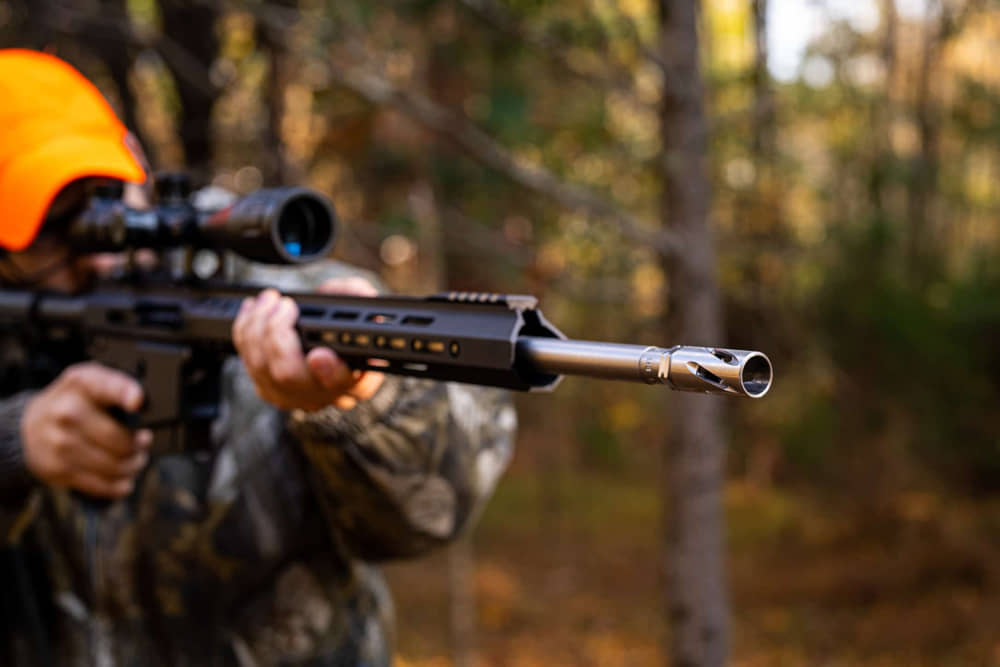
Deer season leaves plenty of AR owners asking the same question. Can the rifle you already own legally go with you on a deer hunt?
The answer comes down to where you plan to hunt. Each state sets its own rules for rifle types, cartridge sizes, and hunting bullets. Your rifle also needs to be chambered for a cartridge that meets those local requirements.
This is worth checking early because big-game hunting attracts millions of people across the country. The U.S. Fish and Wildlife Service recorded 11.5 million big-game hunters in 2022. Together, they spent around 135 million days hunting big game.
So, before planning hunting with AR-15 rifles this fall, check the current regulations for your hunting area first.
Can You Hunt Deer With an AR-15?
An AR-15 is a rifle platform rather than one cartridge. Different versions can use different chamberings depending on their design.
Your state may allow one configuration while prohibiting another completely. Some states restrict semiautomatic rifles during their deer firearms seasons. Others focus more heavily on cartridge specifications and projectile requirements.
Missouri provides one current example of comparatively broad firearm rules. Its 2026 deer regulations allow centerfire rifles using expanding-type bullets during applicable firearms seasons.
Pennsylvania takes a very different approach to semiautomatic rifles. Pennsylvania Game Commission regulations prohibit semiautomatic rifles for deer, bear and elk hunting.
Illinois provides another useful example for hunters researching cartridge rules. Its 2026 firearm deer rules require qualifying centerfire rifle cartridges to meet a minimum .30-caliber requirement.
Those examples show why general internet advice can mislead hunters. Always open your wildlife agency’s current regulations before choosing your equipment.
Check Your AR-15 Chamber Marking First
Many AR-style rifles use either .223 Remington or 5.56 NATO, which can make the two cartridges easy to confuse. You should still never assume they work the same way in every rifle.
SAAMI states that commercial. 223 Remington ammo can be used in a true 5.56 military-specification chamber. Even so – checking your rifle manual is a smart step because chamber designs can vary between firearms.
The reverse situation requires considerably more caution from owners.
SAAMI states that 5.56 NATO ammunition should not be fired through barrels marked only .223 Remington. Differences in chamber geometry can produce increased pressure and serious safety problems.
Read the markings directly from your firearm before making assumptions. Contact the rifle manufacturer whenever the chamber designation is unclear.
Is .223 Remington Legal for Deer?
No nationwide rule gives hunters one simple answer here. Your state wildlife agency determines what firearm equipment hunters may legally use.
Some states permit centerfire cartridges meeting their hunting requirements. Other states establish minimum caliber rules that exclude .223 Remington completely.
Illinois illustrates this difference very clearly for the 2026 season. Its centerfire rifle rules require cartridges of at least .30 caliber. A standard .223 Remington cartridge therefore does not meet that requirement.
Missouri instead permits centerfire rifles using expanding projectiles under its current deer rules. Hunters still need the correct permits and must follow local season restrictions.
Never assume 223 Rem ammo is legal simply because another state allows it. Check the regulations for the exact property where you plan to hunt.
Public lands can also have additional restrictions beyond statewide rules. Wildlife refuges and managed properties may publish separate firearm requirements.
Hunting Ammunition Is Different From Range Ammunition
Cartridge compatibility only answers one part of the question. The projectile also needs to meet your state’s hunting regulations.
Several jurisdictions specifically require expanding projectiles for deer hunting. Missouri currently requires expanding-type bullets when hunters use centerfire rifles for deer.
Illinois prohibits non-expanding military-style full metal jacket bullets for harvesting whitetail deer. Its regulations permit qualifying expanding bullets designed for hunting applications.
Before using 223 ammo, check the exact product’s stated application. Factory packaging should clearly identify its cartridge designation and intended purpose.
Keep hunting cartridges inside their original boxes before your trip. Packaging also gives you useful manufacturer information if questions develop.
Check More Than Your Cartridge Before Opening Day
Legal ammunition does not automatically make every AR configuration legal. State rules may regulate the firearm’s operating system separately from its cartridge.
Pennsylvania gives hunters an especially clear example here. A cartridge might otherwise qualify for deer hunting under state rules. However, a semiautomatic rifle still cannot be used for deer statewide.
Build your preseason checklist around current regulations instead.
- Confirm your hunting license covers the planned deer season.
- Check firearm restrictions for your exact hunting location.
- Review current cartridge requirements before visiting the range.
- Verify projectile rules through your state wildlife agency.
- Read public-land regulations before entering managed hunting areas.
- Confirm your firearm chambering through manufacturer information.
Completing these checks early gives you time to change plans. Waiting until opening morning can leave expensive equipment unusable.
Give Your AR-15 a Preseason Safety Check
An AR-15 used for lawful hunting deserves inspection before the season. Follow the manufacturer’s manual whenever checking or cleaning your firearm.
Start only after confirming the firearm is completely unloaded. Keep ammunition away from your maintenance area during the inspection.
Check your optic mounting according to its manufacturer’s instructions. Inspect your sling and other hunting equipment for visible damage.
Any problem involving the trigger or safety system needs professional attention. A qualified gunsmith can inspect mechanical concerns before your season begins.
Next, visit a lawful range before taking the rifle hunting. Use only factory ammunition approved for your firearm and local regulations.
Do Not Build Your Decision Around Internet Arguments
Discussions about .223 and deer can quickly become opinion-driven. State wildlife rules provide a far better starting point.
Your first question should concern legality in your hunting location. The second should concern safe compatibility with your specific firearm.
After those questions, follow the ammunition manufacturer’s intended hunting application. Your local hunter-education guidance can provide additional information about responsible hunting practices.
The latest Fish and Wildlife Service analysis shows how important big-game hunting remains nationally. Big-game hunters spent about $15.6 billion on related trips and equipment during 2022.
Careful planning helps keep those trips legal and responsible.
The Bottom Line
Deer hunting with an AR-style rifle cannot be answered nationally. Legal firearm types and cartridge requirements differ significantly across state lines.
Start with your wildlife agency’s current regulations every season. Then confirm your firearm’s exact chamber marking through manufacturer information.
If .223 Remington ammo is legal where you hunt, follow every applicable projectile requirement. Never substitute another cartridge because its dimensions seem similar.
The best preparation starts before anyone reaches the woods. Check the law, inspect your equipment, and settle compatibility questions well before opening day.