
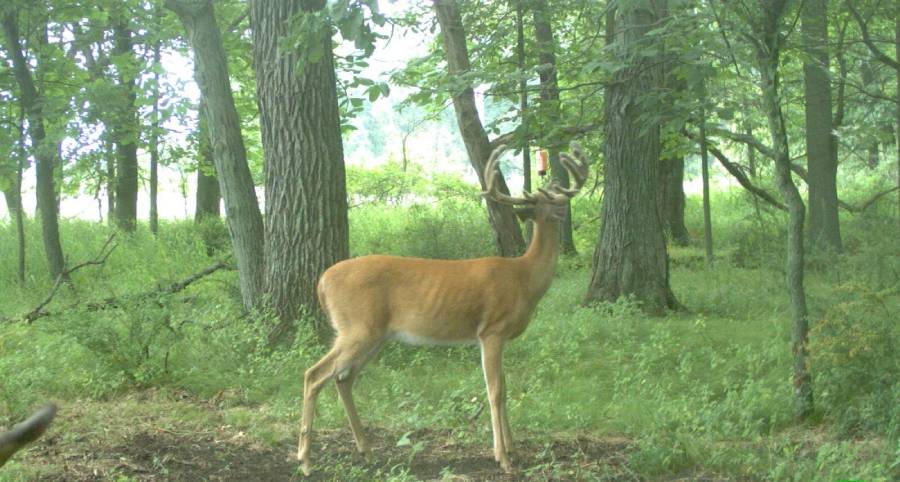
Deer avoid mock scrapes when the setup conflicts with their normal movement, scent environment, or scraping behavior. There are 7 main reasons deer may avoid or ignore a mock scrape: human scent, poor placement, an unnatural setup, an unsuitable licking branch, improper scent use, hunting pressure, and seasonal timing. A mock scrape placed directly along established deer travel can produce a different response from one created in an area deer rarely visit, even when both scrapes are constructed the same way.
A deer that does not visit a mock scrape is not necessarily avoiding it. True avoidance requires evidence that deer encounter the area and alter their behavior around the scrape. For example, trail-camera footage may show a buck approaching the site, stopping before reaching it, moving downwind, or repeatedly bypassing the scrape. In contrast, a scrape with no visits may simply sit outside an active travel corridor or appear when scraping activity is low.
Determining why deer avoid mock scrapes therefore requires examining where the scrape is located, how it was created, what scents were introduced, and how hunters access the site. Identifying the cause before changing the setup makes it easier to distinguish an ineffective scrape from a deer movement or hunting-pressure problem.
Why Do Deer Avoid Mock Scrapes?
Deer avoid mock scrapes when the scrape or the activity surrounding it creates conditions that differ enough from their normal environment to change their behavior. The 7 main factors to evaluate are human scent, poor location, an unnatural setup, an unsuitable licking branch, improper scent use, hunting pressure, and seasonal timing. These factors do not affect every deer or every scrape equally because a mock scrape operates within an existing pattern of deer movement rather than independently of it.
The first distinction is between avoidance and lack of interaction. A buck that never travels close enough to encounter a mock scrape cannot meaningfully avoid it. Low activity may instead indicate that the scrape sits outside a regularly used trail, travel corridor, or transition area. Actual avoidance is more strongly indicated when deer approach the location and then change their behavior. For example, a trail camera may record deer stopping short of the scrape, circling downwind, changing direction, or repeatedly traveling around the immediate scrape site.
Mock scrapes also introduce several changes at the same time. Creating one can disturb soil and vegetation, alter a licking branch, deposit human odor, introduce commercial or deer scent, and increase hunter traffic around a small area. The scrape itself is therefore not always the factor causing avoidance. The disturbance associated with creating and monitoring it may be responsible for the behavioral change. This is why diagnosing a failed mock scrape requires separating individual variables rather than immediately assuming deer recognize the scrape as artificial.
Hunters should first establish whether deer already use the surrounding area. Trail-camera records, tracks, natural scrapes, rubs, and established trails can provide context for existing movement. Once deer traffic is confirmed, the hunter can evaluate individual components of the mock scrape, beginning with human intrusion and location before repeatedly adding new scent or rebuilding the scrape.
Can Human Scent Make Deer Avoid a Mock Scrape?
Human scent can make deer alter their behavior around a mock scrape, particularly when creating or checking the scrape introduces fresh human odor into an area with otherwise limited human activity. Boots, hands, clothing, tools, trail-camera handling, and vegetation contacted while approaching the site can all leave odor around the scrape. Repeated visits can also combine scent deposition with physical disturbance.
The problem extends beyond touching the scraped soil. A hunter may avoid handling the licking branch with bare hands but still walk directly across the deer trail leading to the scrape. The resulting scent trail changes the odor environment deer encounter before reaching the scrape itself. A deer that reacts before entering camera range can consequently make the mock scrape appear unused even though disturbance associated with the setup contributed to the response.
Human scent should not be treated as an automatic explanation for every unsuccessful mock scrape. The strength of the evidence depends on how deer behaved before and after human intrusion. For example, a location with consistent trail-camera activity that experiences an immediate decline following frequent scrape checks provides more useful diagnostic information than a new scrape placed in an area with no established baseline of deer traffic.
Hunters can reduce unnecessary contamination by minimizing time at the scrape, limiting contact with surrounding vegetation, planning an access route that does not unnecessarily cross primary deer travel, and avoiding excessive checks. Trail cameras can reduce the need for frequent physical inspection because scrape activity can be evaluated from recorded behavior rather than footprints alone.
The most useful approach is to treat human intrusion as a variable that can be controlled. Reduce disturbance first instead of repeatedly rebuilding the scrape or adding more scent. If deer resume using the immediate area after intrusion decreases, hunting activity around the scrape becomes a stronger explanation for the original change in behavior. This approach also prevents human scent from being confused with the next major cause of poor mock-scrape activity: incorrect placement.
Can a Poor Location Cause Deer to Ignore a Mock Scrape?
A poor location can cause deer to ignore a mock scrape because the scrape does not create deer traffic where little or no regular movement already exists. Mock scrapes are most likely to receive interaction when they intersect existing deer movement, such as established trails, travel corridors, transition zones, and routes connecting bedding and feeding areas. Placement therefore determines whether deer encounter the scrape before scent, licking branches, or other components can influence their behavior.
A common mistake is treating a mock scrape as an attractant capable of pulling deer a substantial distance away from their normal travel pattern. A scrape placed 30 yards from a frequently used trail, for example, may receive less activity than a scrape positioned directly beside that trail even though the first setup uses stronger scent. The problem is exposure: deer must first pass close enough to detect and investigate the scrape. Existing deer movement should determine mock scrape placement rather than the mock scrape being expected to create a new movement pattern.
Physical evidence can help identify locations with established traffic. Tracks, droppings, rubs, natural scrapes, worn trails, trail intersections, and repeated trail-camera detections indicate that deer already move through an area. A mock scrape positioned where two travel routes converge can receive exposure from deer using either route. In contrast, an open location that appears convenient to the hunter may produce little activity if it does not correspond with how deer actually travel through the property.
Location should also be evaluated before concluding that deer are deliberately avoiding the scrape. If trail cameras record deer elsewhere on the property but not near the mock scrape, the problem may simply be placement. If deer regularly approach the location but begin bypassing the immediate area after the scrape is installed, another variable such as human disturbance, physical changes to the site, or introduced scent deserves greater attention.
Can an Unnatural Mock Scrape Make Deer Avoid It?
An unnatural mock scrape can make deer cautious when creating it produces abrupt changes to a familiar location. The relevant issue is not whether deer understand that a scrape is “fake.” The issue is whether the setup introduces unfamiliar ground disturbance, vegetation changes, objects, odors, or other environmental cues that were not present during previous visits.
Natural scrapes combine several physical elements in one location. The disturbed ground occurs beneath or close to an accessible overhead branch, while the surrounding vegetation and travel route provide the context in which deer encounter the site. A mock scrape should reproduce this basic relationship rather than focusing only on exposed soil. Creating an unusually large patch of bare ground while cutting or clearing substantial surrounding vegetation can change more of the location than necessary.
The licking branch and scraped ground should also function as one setup rather than two unrelated features. Deer can investigate an overhead branch through scent and physical contact while also interacting with the ground beneath it. A patch of disturbed soil placed where no suitable branch is accessible removes an important component associated with scrape behavior. This does not prove every deer will avoid the site, but it makes the setup less consistent with the structure the hunter is trying to imitate.
Excessive modification can create another problem. Cutting branches, moving logs, clearing shooting lanes, installing a trail camera, disturbing soil, and depositing scent during the same visit introduce several variables simultaneously. If deer behavior changes afterward, the hunter cannot determine which change caused the response. Modify only what is necessary to establish the mock scrape and preserve the surrounding environment whenever possible.
Trail-camera observations provide a practical way to distinguish poor construction from simple lack of traffic. Deer that continue traveling through the area but consistently bypass the newly disturbed spot provide different information from a camera that records no deer at all. The first pattern justifies examining the scrape setup; the second requires checking location and deer movement before rebuilding anything.
This distinction is important because repeatedly enlarging or refreshing an unsuccessful scrape can increase disturbance without addressing the actual problem. Once location and physical setup have been evaluated, the next component to examine is the licking branch, which provides a focal point for deer interaction above the scraped ground.
Can the Wrong Licking Branch Reduce Mock Scrape Activity?
The wrong licking branch can reduce mock scrape activity when deer cannot naturally see, reach, smell, or interact with it while moving through the area. The licking branch is not simply decoration above disturbed soil. It provides an interaction point where deer can investigate scent and leave their own scent, making its position relative to the travel route and scrape important.
Accessibility is one of the first factors to evaluate. A branch positioned too high, too far from the deer’s normal path, or at an awkward angle requires the animal to alter its movement simply to investigate it. A more functional setup places the branch where a deer traveling through the location can approach and interact with it without making an unusual detour. This is another reason existing deer movement should determine the setup rather than choosing a convenient tree first and attempting to create traffic around it afterward.
The licking branch should also correspond spatially with the disturbed ground. The branch and ground scrape should appear as components of the same scent-marking location. For example, placing the licking branch directly over or immediately adjacent to the scraped soil creates a clear focal point. Separating the two features can make the setup less consistent with the structure of a natural scrape.
Hunter activity around the branch matters as well. Repeatedly adjusting, replacing, or handling it adds disturbance to the exact feature deer are expected to investigate closely. If a suitable branch is already present, minimizing unnecessary manipulation preserves more of the existing environment. An artificial or transplanted branch may still function, but its installation should not require excessive clearing or repeated visits that introduce additional variables.
Trail-camera footage can reveal whether the branch itself needs adjustment. A buck that approaches the scrape, smells or works the licking branch, and leaves without pawing the ground has still interacted with the mock scrape. Ground disturbance alone should therefore not be used as the only measure of success. Conversely, deer repeatedly passing within close range without investigating either component may indicate a placement, branch-position, disturbance, or scent problem.
Can the Wrong Scent Make Deer Avoid a Mock Scrape?
Improper scent use can reduce the effectiveness of a mock scrape when it introduces an odor that does not fit the location or adds unnecessary contamination to the setup. More scent does not automatically create more deer interaction. Scent type, amount, freshness, application method, and the other odors introduced while applying it all affect what deer encounter at the site.
Commercial deer scent or deer urine is not required for every mock scrape. The physical scrape and licking branch can provide locations where visiting deer deposit scent themselves. Once deer begin interacting with the licking branch or ground, the site can accumulate deer-derived odor without requiring the hunter to repeatedly return and refresh an artificial scent source.
Adding scent also creates another variable that complicates diagnosis. Consider two mock scrapes built in similar travel corridors. One receives minimal human disturbance and no added scent, while the other is visited repeatedly so scent can be reapplied. If activity differs, the hunter cannot automatically attribute the difference to the deer scent itself because frequency of human intrusion also changed. Scent strategy should therefore be evaluated together with access and disturbance rather than in isolation.
Using excessive scent can be counterproductive from a testing perspective even when it does not directly frighten deer. A hunter who applies several scent products simultaneously cannot determine which odor influenced the resulting behavior. Starting with a simple setup establishes a cleaner baseline. Additional scent can then be introduced as a controlled change when there is a specific reason to test it.
The key question is not simply whether a mock scrape contains deer urine. The better question is whether deer already encounter the scrape naturally and have an accessible licking branch they can investigate. A scent product cannot correct a scrape located outside regular deer movement, and continually refreshing scent cannot compensate for repeated human disturbance around the site.
Once location, physical construction, licking branch placement, and scent use have been evaluated, the next variable is broader than the scrape itself: hunting pressure can change when and how deer use the entire surrounding area.
Can Hunting Pressure Make Deer Stop Using a Mock Scrape?
Hunting pressure can make deer reduce, delay, or shift their use of a mock scrape when repeated hunter activity increases disturbance around the site. The effect is broader than scent left directly on the scraped ground. Walking access routes, checking trail cameras, refreshing scent, adjusting licking branches, and hunting repeatedly near the same location can change the conditions deer encounter throughout the surrounding travel corridor.
A mock scrape can therefore remain active while becoming less useful during legal shooting hours. Deer may continue visiting the site but shift more of their interaction to nighttime or other periods with less human activity. For example, a trail camera that initially records daylight visits and later records the same deer only after dark indicates a different problem from a scrape receiving no visits at all. A change in visitation time should not automatically be interpreted as complete scrape avoidance.
Access patterns are especially important because hunters can disturb deer before reaching the mock scrape. An entry route that crosses a primary trail, passes close to bedding cover, or repeatedly deposits scent along a travel corridor can affect movement before deer encounter the scrape. In this situation, rebuilding the scrape or adding more deer scent does not address the source of the disturbance.
Trail-camera data should be evaluated across several variables, including visit frequency, time of day, direction of approach, individual deer, and behavior near the scrape. A decline in scrape interaction accompanied by reduced deer traffic throughout the immediate area points toward a broader movement or pressure issue. Deer continuing to use the surrounding trail while consistently bypassing the scrape provides stronger evidence that something specific to the scrape deserves investigation.
Reduce unnecessary visits when hunting pressure appears to be affecting the site. Hunters should avoid checking a mock scrape simply to see whether the ground has been disturbed when a trail camera can provide the same information with less intrusion. Maintaining a consistent, low-impact access strategy also makes subsequent observations more useful because fewer variables change between visits.
Does the Time of Year Affect Whether Deer Use Mock Scrapes?
The time of year affects mock scrape activity because deer do not interact with scrapes at the same intensity throughout the season. Scraping behavior is connected to deer communication and seasonal changes in buck behavior, so a mock scrape that receives limited attention during one period can become more active later without any change to its construction.
This makes timing an important diagnostic variable. Low activity does not necessarily mean the location, licking branch, or scent strategy has failed. A scrape established along an active deer travel route can receive little initial interaction and then become more frequently visited as scraping behavior increases. Changing the setup too quickly removes the hunter’s ability to determine whether seasonal timing was the limiting factor.
Natural scrape activity around the property provides useful context. An increase in fresh natural scrapes, worked licking branches, rubs, and repeated buck movement indicates that scrape-related behavior is occurring in the surrounding deer population. If natural scrapes are active while a nearby mock scrape remains consistently ignored despite established deer traffic, the mock scrape’s location or setup deserves closer examination.
Season also needs to be separated from hunting pressure. As hunting activity increases, deer movement may change at the same time that scrape activity is changing naturally. A decline in daylight visits cannot therefore be attributed to seasonal behavior alone. Comparing mock-scrape activity with general trail-camera movement and nearby natural sign provides a more reliable picture than evaluating the scrape in isolation.
When Should You Start a Mock Scrape?
Start a mock scrape early enough to establish baseline deer activity before the period you intend to hunt it. An earlier setup gives deer time to encounter the site and gives the hunter time to determine whether the location already supports regular movement. More importantly, it creates trail-camera data that can be compared with activity later in the season.
An early setup also reduces the need for major modifications during periods when minimizing disturbance becomes more important. The hunter can establish the scrape, position the licking branch, install a camera, and then reduce physical visits. If activity subsequently increases, the hunter can observe the change without repeatedly rebuilding the site.
The objective is not to identify one calendar date that works in every hunting area. Local deer movement and existing scrape activity provide better timing signals than a universal date. A hunter who sees increasing natural scrape activity around established travel corridors has stronger evidence for current scrape behavior than one relying solely on the calendar.
Timing also affects how quickly a hunter should judge success. A mock scrape that has existed for only a short period should not automatically be relocated because it lacks immediate interaction. The next step is determining how long deer may take to begin using a mock scrape and when continued inactivity actually justifies changing the setup.
How Long Does It Take Deer to Start Using a Mock Scrape?
There is no fixed number of days it takes deer to start using a mock scrape because first interaction depends on deer traffic, location, seasonal behavior, hunting pressure, and the scrape setup. A deer must first travel close enough to encounter the scrape. A well-positioned scrape on an active travel route can therefore receive attention sooner than an identical scrape placed outside regular movement.
The frequency of deer movement through the location is one of the strongest variables. Consider a scrape positioned beside a trail that multiple deer use regularly versus one on a secondary trail used infrequently. Even if deer have the same probability of investigating each scrape when they encounter it, the first scrape creates more opportunities for interaction. Time without activity means little unless the hunter also knows how much deer traffic passed the site during that period.
Trail cameras provide the context needed to make that distinction. If a camera records deer passing within close range for several days without investigating the licking branch or ground, the hunter has evidence that deer are encountering but ignoring the setup. If the camera records almost no deer, waiting longer or evaluating the location is more logical than immediately changing the scent or licking branch.
Seasonal behavior further complicates a fixed timeline. A mock scrape established before scrape activity increases may remain relatively quiet and then receive more interaction as deer behavior changes. Conversely, a scrape located in an active area can lose visits when hunting pressure alters deer movement. Evaluate the number and behavior of deer encountering the scrape rather than judging success only by how many days the scrape has existed.
This approach also prevents unnecessary intervention. Repeatedly entering the area after two or three quiet days to refresh scent, disturb the soil, or reposition the branch introduces new variables and additional human intrusion. Allow the trail camera and surrounding deer sign to establish whether the problem is time, traffic, or the scrape itself before making changes.
What Should You Change if Deer Keep Avoiding Your Mock Scrape?
Change one variable at a time when deer repeatedly encounter but avoid or ignore a mock scrape. Changing the location, licking branch, scent, ground disturbance, and camera position simultaneously may produce more activity, but it prevents the hunter from identifying which adjustment solved the problem.
Start with deer traffic. Confirm that deer actually pass close enough to encounter the scrape. Tracks, trail-camera detections, nearby rubs, natural scrapes, and established trails can verify movement through the area. Relocation deserves consideration when both the scrape and surrounding location consistently receive little deer traffic.
Next, evaluate human intrusion. Review the route used to create, check, and hunt the scrape. Frequent visits, crossed deer trails, disturbed bedding cover, or repeated handling around the licking branch can introduce pressure beyond the scrape itself. Reduce unnecessary visits before adding another attractant or making the setup more elaborate.
The third variable is scrape placement within the travel route. A scrape may be in a deer-rich area but still sit several yards outside the path animals naturally follow. Moving the setup closer to an established trail, intersection, or transition can increase the number of deer that directly encounter it. This is different from relocating the scrape to an entirely different part of the property.
Next, inspect the licking branch and physical setup. Confirm that the branch is accessible from the deer’s normal approach and positioned logically in relation to the disturbed ground. Avoid excessive clearing, oversized ground disturbance, or repeated modifications that make the immediate location change every time the hunter visits.
Evaluate added scent only after these structural variables have been considered. Simplify the scent strategy when several products or frequent applications are being used. A scrape with an accessible licking branch can accumulate scent through deer interaction, while repeatedly applying additional scent requires the hunter to return and potentially introduce more disturbance.
Finally, account for seasonal timing. Compare the mock scrape with natural scrape activity and general buck movement in the same area. Limited activity across both natural and mock scrapes suggests that repeatedly modifying one mock scrape may not address the actual reason for low interaction.
The diagnostic order is deer traffic → human intrusion → placement → licking branch and physical setup → scent → seasonal timing. This sequence moves from environmental causes to individual components of the scrape and reduces unnecessary changes. It also makes trail-camera observations more useful because each adjustment creates a clearer before-and-after comparison.
Read more: Why Are Deer Not Drinking From My Water Hole? 9 Reasons
Do Mature Bucks Avoid Mock Scrapes More Than Other Deer?
Mature bucks do not automatically avoid mock scrapes more than other deer, but their movement patterns can make their interaction with a scrape appear less frequent or more difficult to detect. A mature buck that rarely travels through the scrape location, visits primarily after dark, or changes its route following hunting pressure can create the impression that it recognizes and deliberately avoids the mock scrape.
Individual identification is therefore important when evaluating mature buck behavior. Trail-camera footage can show whether the same buck uses the surrounding trail before and after the mock scrape is created. If the buck continues traveling through the area but consistently changes direction before reaching the scrape, avoidance becomes a stronger explanation. If the buck disappears from cameras throughout the surrounding area, the evidence points more toward a broader movement change than a reaction to the scrape alone.
Time of day can create another misleading pattern. A buck may stop appearing at a mock scrape during daylight while continuing to visit after dark. This represents a shift in visitation timing rather than complete avoidance. Hunting access, stand activity, camera checks, and other disturbances around the travel corridor should be evaluated when this pattern develops.
Mature buck activity should also be compared with other deer using the same location. For example, regular doe and younger buck interaction combined with one mature buck repeatedly bypassing the scrape provides more specific behavioral evidence than a scrape ignored by every deer in the area. If all deer activity decreases after the setup is installed, location-wide disturbance becomes a more plausible explanation.
For hunting purposes, the objective is not simply to generate the largest number of scrape visits. A mock scrape is more useful when it helps reveal where, when, and how a target buck moves through an area. Even limited interaction can provide useful information when trail-camera records identify a consistent direction of travel or visitation period.
Should You Remove a Mock Scrape if Deer Are Avoiding It?
Do not immediately remove a mock scrape when deer stop using it or fail to interact with it. First determine whether the correct action is to keep, modify, relocate, or remove the setup. The decision should be based on deer movement and observed behavior rather than the number of days without fresh ground disturbance.
Keep the mock scrape when deer continue interacting with either the licking branch or scraped ground. Regular trail-camera visits demonstrate that the location is functioning as an interaction point even when deer do not paw the soil during every visit. The same applies when activity temporarily declines but deer continue using the surrounding travel corridor and seasonal conditions provide a reasonable explanation for the change.
Modify the mock scrape when deer regularly pass within close range but consistently ignore its components. In this situation, make one controlled adjustment, such as repositioning the licking branch, reducing unnecessary scent application, or decreasing disturbance around the site. Monitor the result before changing another variable.
Relocate the mock scrape when the surrounding location produces consistently poor deer traffic. A technically correct scrape cannot generate reliable interaction if deer rarely encounter it. Moving the setup onto an established trail, travel corridor, intersection, or transition area addresses the exposure problem more directly than repeatedly refreshing the original scrape.
Remove or abandon the mock scrape when continued maintenance creates more disturbance than useful information. A scrape that requires frequent entry into a sensitive hunting area but provides little evidence of deer traffic has limited strategic value. Continuing to visit it can increase human intrusion without improving the hunter’s understanding of deer movement.
The final decision should follow a simple sequence: confirm deer traffic, identify actual avoidance, isolate the likely cause, change one variable, and compare subsequent behavior. This prevents a hunter from treating every inactive mock scrape as a construction failure. In many cases, the more important information is not that deer ignored the scrape, but what their response reveals about movement, pressure, and the suitability of the location for hunting.