
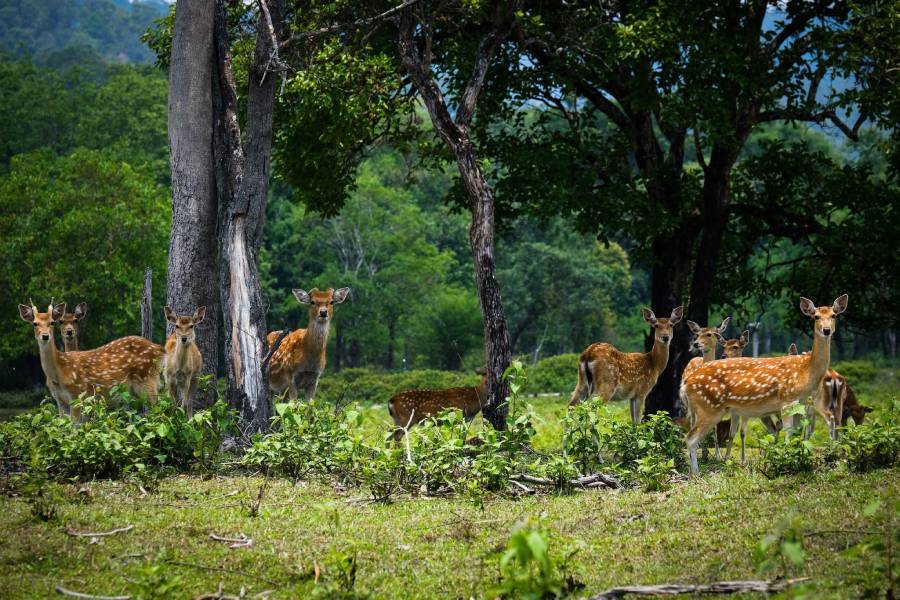
Deer do not necessarily avoid an area after logging. Active logging can temporarily change deer movement because of machinery, workers, noise, and habitat disturbance, but deer may continue using nearby cover instead of abandoning the entire area. Once logging activity stops, deer can return to the cut and adjust their travel, feeding, and bedding patterns around the changed habitat.
Logging can also make an area more attractive to deer over time. Removing part of the forest canopy allows more sunlight to reach the ground, which can stimulate new vegetation and create additional browse. As this vegetation develops, it can provide both food and thicker cover. However, the response depends on the type and intensity of the timber harvest, how much cover remains, the age of the cut, nearby habitat, and hunting pressure.
For hunters, the key question is therefore not simply whether logging pushes deer away. It is how logging changes where and when deer use the property. Understanding those changes can help hunters locate new travel routes, feeding areas, bedding cover, and productive stand locations after timber has been cut.
Do Deer Avoid Areas After Logging?
Deer may temporarily avoid the immediate area affected by logging, but logging does not automatically cause them to abandon the property. Their response depends on the intensity of the disturbance, the amount of cover removed, nearby escape habitat, and whether logging activity is still occurring. A timber harvest changes the habitat deer use rather than simply making the entire area unsuitable.
The distinction between disturbance and habitat change is important. During logging, human activity and equipment can disrupt established bedding areas and travel routes. After the equipment leaves, that source of disturbance disappears, while the physical changes to the habitat remain. Deer then have to adjust to new openings, edges, trails, food sources, and cover conditions. A deer that stops using one trail or bedding location may still remain close by and establish a different movement pattern.
The extent of timber removal also changes the response. Selective logging can leave substantial standing timber and cover while creating small openings and access routes. A heavy clear-cut creates a more dramatic change by removing much of the existing overhead and visual cover. Deer using either area must respond to the habitat that remains around the cut, including adjacent timber, thick cover, feeding areas, and travel corridors.
For hunters, reduced activity at an old stand does not prove that deer have left the area. Logging can make previously reliable trails, bedding locations, and funnels less important while creating new ones elsewhere. Fresh tracks, droppings, beds, rubs, scrapes, and repeated trail use provide stronger evidence of current deer activity than locations that produced deer before the timber harvest.
Do Deer Leave an Area While Logging Is Active?
Deer can move away from active logging operations, especially from the immediate location of workers and machinery, without leaving the surrounding area entirely. Chainsaws, skidders, trucks, falling trees, and repeated human movement create concentrated disturbance. Deer can respond by shifting into adjacent cover where they have greater separation from the activity.
This displacement matters because deer movement can occur on a smaller scale than hunters expect. When secure cover exists nearby, deer do not necessarily need to move to another property. A deer disturbed from a bedding location near an active cut can relocate into standing timber, thicker vegetation, a terrain feature, or another bedding area beyond the main work zone. The result may be a change in where deer are encountered rather than a complete disappearance of deer.
Logging activity also differs from unpredictable hunting pressure. Forestry work is generally concentrated around specific work areas, access roads, and periods of activity. For deer, the important variables are where the disturbance occurs and where suitable habitat remains. This means the most heavily disturbed portion of a timber cut and the surrounding deer habitat should not be treated as one identical area.
Hunters should therefore scout beyond the active logging footprint when familiar deer movement disappears. Adjacent standing timber, thick cover, terrain transitions, and routes connecting undisturbed bedding and feeding habitat are logical places to check for displaced deer. Fresh sign determines whether those locations are actually being used. Once logging ends, deer behavior can change again as the immediate disturbance declines and the altered habitat begins influencing food, cover, and travel patterns.
How Long Do Deer Avoid an Area After Logging?
There is no fixed amount of time that deer avoid an area after logging. The length of avoidance depends on whether logging is still active, how much habitat was altered, how much secure cover remains nearby, and what resources the logged area provides afterward. Deer may reduce their use of the immediate work zone during active disturbance and then begin using portions of the area again once machinery and workers leave.
The first stage occurs immediately after logging, when established travel routes, bedding sites, and cover may no longer function as they did before the timber harvest. Deer must adjust to these physical changes even after the noise and human activity have stopped. A trail that previously passed through continuous timber may now cross an exposed opening, while a bedding location can lose the vegetation that made it secure. Deer may respond by shifting movement toward standing timber, edges, thicker cover, or alternative routes around the cut.
The second stage begins as deer become accustomed to the altered habitat and start using resources created by the timber harvest. This process should not be treated as a universal recovery period measured by a specific number of days. A selectively logged property with substantial cover remaining presents a different habitat change from a large clear-cut with limited immediate security cover. Nearby bedding habitat, food availability, terrain, and human pressure further influence how quickly deer resume regular use.
The third stage occurs as vegetation regenerates. Increased ground-level growth can change a logged area from a recently disturbed opening into feeding and eventually cover habitat. Deer use can therefore increase rather than decrease as a timber cut ages. For hunters, time since logging matters less than the current habitat conditions and fresh deer sign. Tracks, droppings, beds, rubs, scrapes, and active trails provide direct evidence of whether deer have returned to regular use of the area.
What Makes Deer Return to a Logged Area?
Food, cover, and useful travel structure are the 3 main habitat features that can bring deer back to a logged area. Logging changes the amount of sunlight reaching the forest floor, the density and location of vegetation, and the physical structure of the woods. As these conditions change, the same timber harvest that initially disrupted deer can create habitat features deer use for feeding, movement, and eventually bedding.
Food can become especially important after vegetation begins regenerating. Removing trees opens portions of the canopy and allows more sunlight to reach ground level. Greater sunlight supports the growth of low vegetation within suitable growing conditions. New shoots, leaves, shrubs, and other accessible plants can provide browse within the feeding height of deer. This creates a basic habitat sequence: timber removal opens the canopy, increased sunlight supports new growth, and new growth can create additional feeding opportunities for deer.
Cover develops on a different timeline. Immediately after a heavy timber harvest, an opening may provide less visual and security cover than the mature stand it replaced. As shrubs, saplings, grasses, and other vegetation become denser, however, the structure near ground level changes. A regenerating cut with dense vegetation can eventually provide concealment that an open, newly harvested area could not provide. This is why hunters should distinguish a fresh cut from a regenerating cut rather than treating all logged areas as the same habitat.
Travel structure provides a third reason for deer to use logged ground. Timber harvesting creates edges between cut and uncut cover and can leave logging roads, skid trails, openings, and narrow strips of standing vegetation. Deer may incorporate some of these features into new movement patterns when they connect useful feeding and security habitat. Their value must still be confirmed through deer sign because the existence of a skid trail or edge does not prove deer are consistently traveling along it.
For hunters, the best indicator that a logged area has become useful again is repeated deer use, not simply the age or appearance of the cut. A productive area should show a combination of available resources and current sign. New browse with tracks and droppings indicates feeding activity, while beds in dense regeneration indicate that the cut may also provide security cover. Concentrated tracks along an edge or trail can reveal how deer are moving between these resources. These observations provide a stronger basis for choosing where to hunt than assuming deer either avoid or prefer all logged timber.
How Does Logging Change Deer Travel Routes?
Logging can change deer travel routes by altering cover, creating new edges, opening travel corridors, and disrupting established trails between bedding and feeding areas. Deer may continue living within the same general area while using different paths after timber is removed. For hunters, this means an old trail becoming less active does not necessarily indicate fewer deer; movement may have shifted to a route that better matches the new habitat structure.
Cover is one of the main factors shaping this adjustment. A trail through mature timber can become more exposed after surrounding trees and understory are removed. Deer seeking greater concealment may shift closer to standing timber, dense regeneration, terrain breaks, or the edge between cut and uncut habitat. Conversely, vegetation that becomes thick several growing seasons after logging can make parts of the cut more secure and change movement again. Deer travel patterns around a timber harvest should therefore be evaluated according to the current stage of the habitat rather than its pre-logging layout.
Edges created by logging can also influence movement. The boundary between a timber cut and standing woods creates an abrupt transition in vegetation structure. One side may offer new browse while the other provides more established cover. When these resources occur close together, deer can travel along or across the transition while moving between feeding and security habitat. Hunters should pay particular attention to places where an edge intersects another movement feature, such as a terrain funnel, creek crossing, ridge, bedding area, or narrow strip of standing cover.
Logging roads and skid trails provide another potential travel feature. Deer can use logging roads and skid trails, but every logging trail should not be treated as an active deer route. These openings can provide easier movement through thick vegetation and may connect feeding areas, bedding cover, and adjacent timber. Their value depends on location, surrounding cover, human use, and where the trail leads.
Fresh sign is necessary to determine which routes deer actually use. Tracks repeated along the same section, droppings, rubs, scrapes, and defined trails entering or leaving cover provide stronger evidence than the logging road itself. For example, a skid trail running through an exposed opening with frequent vehicle traffic may receive little deer use, while another trail connecting thick regeneration to standing timber may become part of a regular movement route.
Hunters should rescout a logged property rather than relying on the trail network that existed before the harvest. Start with the edges of the cut, remaining cover, skid trails, and terrain features, then identify where multiple movement elements converge. The most useful post-logging travel routes are those that connect resources deer need while allowing them to move through suitable cover. These routes can create new hunting locations even when logging has disrupted previously productive trails.
Do Deer Bed in Recently Logged Areas?
Deer can bed in logged areas when the remaining or regenerating vegetation provides enough security cover, but a newly logged opening is not automatically good bedding habitat. Bedding requires more than available space. Deer need locations that provide concealment and allow them to rest while maintaining an advantage against approaching threats. Logging can either remove these characteristics or create conditions that improve them later.
A fresh, heavily cut area can initially lose much of the structure deer previously used for security. When timber removal leaves the ground open and exposed, deer may shift bedding activity into adjacent standing timber, brush, terrain features, or other nearby cover. This shift can occur even while deer continue entering the logged area to feed. Feeding use and bedding use are separate habitat functions, so finding tracks in a cut does not establish that deer are bedding there.
Regeneration can change that relationship. As shrubs, saplings, grasses, and other vegetation grow, low-level cover becomes denser. Thick vegetation can restrict visibility from outside the cut and provide concealed locations for bedding. A logged area that offered little bedding security immediately after harvest may therefore become more suitable as regeneration develops.
Terrain and surrounding habitat also affect bedding locations. Deer may use portions of a logged area where dense vegetation combines with slopes, benches, points, ridges, or remaining pockets of timber. Proximity to food can add value because deer can reduce the distance between secure bedding cover and feeding opportunities. However, a convenient food source does not override inadequate security cover or persistent human disturbance.
Hunters can identify bedding use by looking for actual beds rather than assuming thick regeneration contains deer. Flattened vegetation, clusters of beds, nearby droppings, tracks entering dense cover, and trails connecting the cover to feeding areas provide stronger evidence. The location of these signs relative to the logged opening also matters. Beds concentrated inside standing timber beside a cut indicate a different movement pattern from beds located within dense regeneration itself.
The hunting value of a logged bedding area increases when bedding cover, feeding habitat, and predictable travel routes occur close together. In that situation, hunters can focus on the transitions deer use when entering or leaving secure cover instead of penetrating the bedding area itself and adding unnecessary disturbance.
Are Clear-Cuts Good for Deer?
Clear-cuts can provide valuable deer habitat when regenerating vegetation supplies accessible food and sufficient cover, but a clear-cut is not automatically good for deer at every stage after logging. Its value changes with the age of the cut, vegetation growth, surrounding cover, human disturbance, and its position relative to other habitat deer use. Hunters should evaluate what a clear-cut currently provides rather than treating all clear-cuts as equally productive.
A newly created clear-cut can initially remove substantial overhead and security cover. This can make the center of a large opening less attractive for bedding or daylight movement, particularly when little vegetation remains at ground level. Deer may still use the edges of the cut or enter the opening to investigate available food while relying on adjacent standing timber for security. The relationship between the opening and surrounding cover is therefore important during the earliest stage after harvest.
The habitat changes as vegetation regenerates. Removing the canopy allows more sunlight to reach the forest floor, which can support new grasses, shrubs, saplings, shoots, and other plants. Some of this vegetation provides browse at a height deer can readily reach. As plant growth becomes denser, the same area can begin providing both feeding opportunities and concealment. A clear-cut can consequently become more useful to deer after regeneration has developed than it was immediately following timber removal.
Clear-cuts become attractive to deer when new growth provides useful browse, cover, or both. There is no single age at which every cut reaches this stage because vegetation develops at different rates according to plant composition, climate, soil, timber management, and the intensity of the harvest. The condition of the vegetation provides more useful information to hunters than the number of years since the timber was cut.
The edges of a clear-cut deserve particular attention. An edge places two habitat structures next to each other: open or regenerating vegetation on one side and standing cover on the other. Deer can feed near the opening while remaining relatively close to thicker security habitat. As a result, tracks and trails may become concentrated where standing timber meets new growth, especially where the edge also connects bedding cover with a food source.
Daylight use depends heavily on security. A clear-cut containing abundant food can show deer activity without producing consistent daylight movement in exposed locations. Hunting pressure, vehicle traffic, nearby roads, houses, and a lack of concealment can influence when deer enter the opening. Dense regeneration or nearby standing cover can provide a different situation because deer can remain closer to security while using the cut.
Hunters should therefore judge a clear-cut using 3 practical indicators: available browse, usable security cover, and fresh deer sign. Browse indicates that the cut offers a potential food resource. Cover determines whether deer can use portions of it with adequate concealment. Tracks, droppings, beds, rubs, scrapes, and established trails confirm whether deer are actually taking advantage of those habitat features. A clear-cut that satisfies all 3 conditions deserves more scouting attention than an opening that merely appears promising on a map.
Is Selective Logging Better for Deer Than Clear-Cutting?
Neither selective logging nor clear-cutting is always better for deer because the 2 methods create different combinations of food, cover, edges, and movement structure. Selective logging retains more standing timber, while clear-cutting creates a larger opening and a greater change in vegetation structure. For hunters, the more useful comparison is how each timber harvest changes the resources deer need and where those resources are located.
Selective logging removes part of the timber while leaving other trees standing. The remaining trees can preserve more of the existing habitat structure immediately after logging, including overhead cover and portions of established travel corridors. At the same time, canopy openings can allow additional sunlight to reach selected parts of the forest floor. This combination can create new vegetation without converting the entire stand into an exposed opening.
Selective logging can also create numerous small-scale movement features. Skid trails, logging roads, canopy gaps, small openings, and transitions between thicker and thinner timber can alter how deer travel through the property. Existing deer routes may remain functional where adequate cover survives, while other routes develop around newly created openings. This can make deer movement less concentrated than it is around the boundary of a large clear-cut.
Clear-cutting produces a stronger habitat transition. Removing most or all of the trees in a defined area creates a distinct boundary between the harvested ground and surrounding timber. Immediately after logging, this can reduce cover within the opening. As regeneration develops, however, the cut can produce a substantial area of low vegetation that provides browse and eventually dense security cover.
The difference creates distinct hunting opportunities. Selectively logged timber may retain movement within the stand while adding new trails and small feeding locations. A clear-cut can concentrate attention around edges, access points, terrain funnels, and transitions between regeneration and standing timber. Neither pattern guarantees deer activity, because the surrounding habitat determines how the harvested area fits into the deer’s larger range.
Hunters should compare the 2 logging methods using 4 habitat attributes: retained cover, new food production, edge structure, and deer travel routes. These attributes explain more about hunting potential than the logging method alone. A selective cut with little useful understory growth may offer fewer feeding opportunities than expected, while a regenerating clear-cut beside secure bedding cover may receive substantial deer use.
The final test is current deer sign. A timber harvest becomes relevant to hunting when deer incorporate the altered habitat into their feeding, bedding, or travel patterns. Tracks and droppings can confirm general use, beds can identify security habitat, and established trails can reveal movement between the logged ground and surrounding cover. Hunters can then determine whether selective logging or clear-cutting has created the more useful hunting setup on that specific property.
Read more: Do Deer Prefer Thick Cover? What Hunters Should Know
Is a Recently Logged Area Good for Deer Hunting?
A recently logged area can be good for deer hunting when the timber harvest creates feeding opportunities, useful edges, or travel routes that deer actively use. Logging alone does not make a location productive. Hunters need to confirm that deer have incorporated the altered habitat into their current movement patterns before choosing a stand location.
Fresh deer sign is the strongest starting point. Tracks show where deer are entering, crossing, or leaving the logged area. Droppings can indicate repeated use around feeding or bedding habitat. Rubs and scrapes can identify areas used by bucks, while beds reveal where deer feel secure enough to remain for extended periods. A single track provides limited information, but several forms of fresh sign concentrated around the same habitat feature provide stronger evidence of regular use.
Hunters should also determine what attracts deer to a particular portion of the cut. There are 3 primary reasons for deer to use logged habitat: feeding, bedding, and traveling between resources. New vegetation can create feeding opportunities, dense regeneration can provide security cover, and edges or logging trails can connect the cut with surrounding habitat. Identifying the function of the area helps determine where deer are likely to appear and how hunters should approach it.
Where Should You Hunt Around a Logged Area?
The best places to hunt around a logged area are locations where fresh deer sign overlaps with cover, food, and constrained movement. Productive locations can include the edge of standing timber, active skid trails, pinch points, terrain funnels, narrow strips of cover, and routes connecting bedding habitat with new growth. These features reduce the amount of ground a hunter must monitor by concentrating deer movement into identifiable locations.
Edges are a logical place to begin scouting because they connect different habitat structures. A deer can remain near standing cover while approaching browse within the cut. Hunters should follow these transitions and look for trails entering or exiting the thicker habitat. An edge becomes more significant when several tracks or a defined trail repeatedly cross the same section rather than being distributed randomly along the entire boundary.
Skid trails and logging roads should be evaluated in the same way. A trail through dense regeneration can provide an easier route for deer, but its existence does not guarantee use. Hunters should look for repeated tracks, droppings, rubs, scrapes, and intersections with established deer trails. A skid trail connecting bedding cover with feeding habitat has a different hunting value from a logging road that ends without connecting useful deer habitat.
Pinch points can become especially important after logging changes the amount of available cover. For example, a narrow strip of standing timber between a cut and another open feature can restrict the routes deer use while remaining concealed. Terrain can create similar effects where ridges, draws, creek crossings, benches, or steep slopes influence movement. Combining these structural features with fresh sign provides a more reliable stand-selection method than hunting the largest concentration of new vegetation.
Access must also be considered before selecting a location. A productive deer trail can become difficult to hunt when the hunter must cross feeding habitat, walk through bedding cover, or allow scent to reach approaching deer. A strong post-logging stand location combines deer activity with an entry route, exit route, and wind setup that limit disturbance. This is particularly important around newly altered habitat because repeatedly entering the wrong portion of the cut can add hunting pressure to an area deer have only recently begun using.
Should You Move Your Stand After an Area Is Logged?
You should move your stand after logging only when the timber harvest has changed deer movement enough that the existing location no longer covers an active travel, feeding, or bedding pattern. Logging is a reason to reassess a stand, not an automatic reason to abandon it. Some stand locations can become less productive, while others may improve because new edges, food sources, or travel routes develop nearby.
Start by checking whether the habitat feature that originally justified the stand still exists. A stand positioned along a trail between bedding and feeding areas may remain useful when selective logging leaves that connection intact. In contrast, a stand overlooking a trail through former security cover may lose value when heavy timber removal exposes the route and deer begin traveling closer to remaining cover.
Next, compare historical sign with fresh sign. Old rubs, trails, and previous sightings describe how deer used the property before logging, while current tracks, droppings, beds, scrapes, and trail activity reveal how they use it now. Current deer sign should carry more weight than past stand success after a major habitat change. Logging can alter the spatial relationship among food, bedding cover, and travel corridors enough to make an established location obsolete.
Hunters should also look for new opportunities before moving a stand. A timber harvest can create an edge beside the existing setup, open a skid trail that connects 2 important habitat areas, or stimulate browse within a short distance of secure cover. In these situations, the original stand may remain productive even though the reason deer pass it has changed. Moving too quickly can cause a hunter to abandon a location that is becoming more useful.
A practical decision follows 5 steps: check fresh deer sign, identify current travel routes, locate feeding and bedding habitat, evaluate wind and access, and compare these conditions with the existing stand. Move the stand when this assessment shows that deer activity has shifted beyond effective range or when the old access route now creates excessive disturbance.
The broader principle is that logging changes habitat faster than hunters should change assumptions. Deer may temporarily move away from active equipment, shift into nearby cover, return to new food sources, and establish different travel routes as vegetation regenerates. Hunters who rescout the property and follow current deer sign can use those changes to identify new opportunities instead of assuming that logging has ruined the area.