
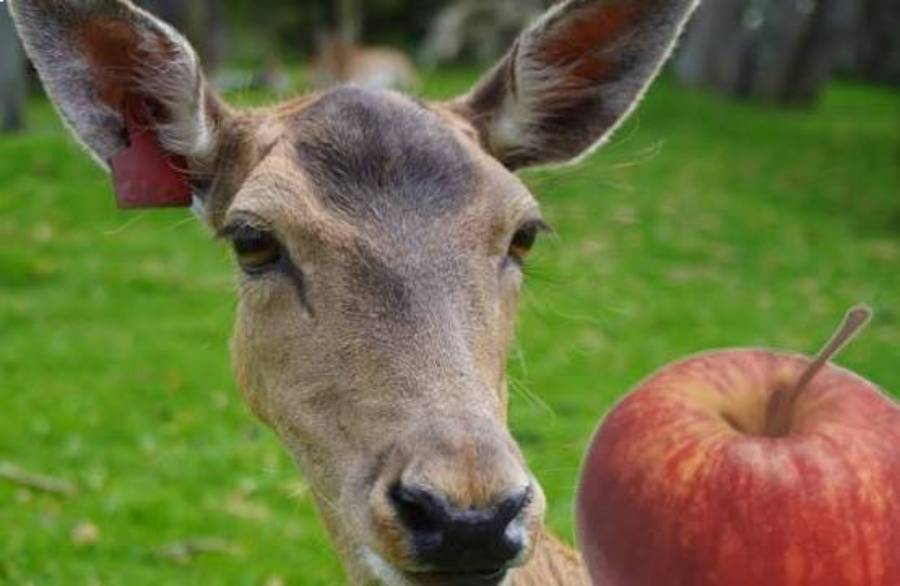
Yes, deer eat apples, and naturally fallen apples can become a seasonal food source where apple trees grow within deer habitat. White-tailed deer are opportunistic feeders, so they use available foods according to season, location, and the abundance of competing food sources. Apples provide carbohydrates and moisture, while fallen fruit gives deer an accessible feeding opportunity without requiring them to browse vegetation.
For hunters, the presence of apple trees matters because fruit availability can concentrate deer feeding activity in a specific area. An apple tree dropping ripe fruit near cover or established travel routes may receive repeated visits, while another tree with little fruit or heavy human disturbance may show limited deer activity. Fresh tracks, droppings, trails, feeding evidence, and trail-camera observations are therefore more useful than the presence of apple trees alone when evaluating a hunting location.
The importance of apples also changes throughout the season. Hunters need to consider when apples ripen and fall, what alternative foods are available, and whether deer continue using the area after the fruit supply declines. Understanding these factors helps hunters determine when apple trees and orchards deserve attention during scouting and when other food sources are more important.
Do deer eat apples?
Yes, deer eat apples, including ripe apples and fruit that has fallen naturally from apple trees. White-tailed deer are opportunistic feeders that adjust their diet according to which foods are available in their habitat. When apple trees produce accessible fruit, deer can incorporate apples into their feeding pattern rather than depending on them as a primary year-round food source.
Deer can consume the flesh and skin of an apple instead of selecting only one part of the fruit. Fallen apples are particularly accessible because deer can feed on them directly from the ground beneath or around an apple tree. This makes productive apple trees and orchards potential feeding locations during periods when ripe fruit is available.
The presence of apples does not mean deer will consistently use every apple tree. Deer food selection changes as other resources become available, including acorns, browse, agricultural crops, and other seasonal foods. An apple tree should therefore be treated as one component of the local food system. For hunters, fresh deer sign around the tree provides stronger evidence of current use than fruit availability by itself.
Why do deer eat apples?
Deer eat apples because the fruit provides an accessible source of carbohydrates, moisture, and energy when it is available. Deer continuously adjust their feeding behavior to seasonal changes in food availability, so ripe or fallen apples can become part of their diet in areas containing apple trees.
Apples contain natural sugars and carbohydrates that supply energy. Their high water content also provides moisture while deer feed. However, these characteristics do not establish apples as a nutritionally complete food for deer. Deer require a broader diet containing different plant materials and nutrients, which is why apples should be understood as a seasonal food source rather than the foundation of a deer diet.
Availability is equally important. A deer cannot select apples that are absent from its home range or no longer present beneath the trees. When ripe apples begin falling, the amount of accessible food at a specific location can increase quickly. Once those apples are consumed, rot, or otherwise disappear, the feeding value of the location declines unless another food source remains nearby.
For hunters, this relationship makes current apple availability more useful than the simple presence of an apple tree. A productive tree with fresh fallen fruit can create a feeding opportunity, while an unproductive tree offers little immediate food value. Hunters should confirm that deer are actually using the location through tracks, droppings, trails, feeding evidence, or trail-camera observations before treating it as an active feeding area.
When do deer eat apples most often?
Deer eat apples most often when ripe or fallen fruit is readily available, so the timing depends on the apple trees and local growing conditions rather than one universal date. Different apple varieties ripen at different times, and climate and location also influence when fruit becomes available to wildlife.
Fall can be an important period because many apple trees produce or drop mature fruit during this part of the year. Fallen apples create an easily accessible food source at ground level. The hunting significance of this period depends on what else deer can eat nearby. A heavy acorn crop, agricultural food source, or other preferred seasonal forage can change how intensively deer use an apple tree.
Deer may also consume remaining apples later in the season as long as edible fruit remains accessible. Apple trees should not automatically be classified as dependable winter feeding sites, however. Once the available fruit has disappeared, deer must shift toward other foods within their habitat.
Hunters should therefore track the food source rather than rely only on the calendar. Check when individual trees begin dropping fruit, look for fresh deer sign, and monitor whether activity rises or declines as the supply changes. This approach identifies the period when apples are actually influencing deer feeding behavior on a specific property instead of assuming that every apple tree attracts deer throughout the hunting season.
Do apple trees attract deer?
Apple trees can attract deer when they provide ripe or fallen fruit that deer are actively feeding on. The attraction comes primarily from the available food rather than the tree itself. A productive apple tree with fruit on the ground provides a concentrated feeding opportunity, while an apple tree that is not producing fruit has less immediate value as a food source.
The strength of this attraction changes with local food availability. Deer have access to different foods throughout the year, including browse, acorns, agricultural crops, and other seasonal plant foods. When another abundant food source becomes available, deer may spend less time around apples even when some fruit remains. Hunters should therefore evaluate an apple tree within the broader feeding environment rather than assume that apples will always control deer movement.
Location also affects how deer use an apple tree. A productive tree close to security cover or an established travel route can fit naturally into a deer’s existing movement pattern. In contrast, a tree in an exposed location with frequent human disturbance may receive less daylight activity. This distinction matters to hunters because evidence that deer feed at a location does not automatically mean the location provides a good hunting opportunity during legal shooting hours.
The most useful apple trees for scouting are therefore productive trees associated with current deer activity. Fruit on the ground establishes that food is available, while tracks, droppings, trails, and trail-camera observations establish that deer are actually using the area. Combining these signals gives hunters stronger evidence than selecting a location simply because an apple tree is present.
How can hunters tell if deer are feeding on apples?
Hunters can determine whether deer are feeding around apple trees by looking for fresh tracks, droppings, feeding evidence, established trails, and repeated trail-camera activity. One sign alone confirms less than several signs occurring together. Fresh deer sign indicates current use and helps separate an active feeding location from an apple tree that deer rarely visit.
Tracks provide one of the clearest starting points. Hunters can inspect soft soil, mud, or disturbed ground around fallen fruit and along trails approaching the tree. Multiple tracks leading between an apple tree and nearby cover provide more useful scouting information than isolated tracks because they can reveal how deer enter and leave the feeding area.
Droppings and visible feeding evidence add context. Deer droppings near the food source indicate that animals have spent time in the area, while disturbed or consumed fruit can indicate feeding activity. These signs should be interpreted together because missing apples alone do not prove that deer consumed them; fruit can disappear or deteriorate for several reasons.
Established trails can show how an apple tree connects with the surrounding habitat. Hunters should inspect routes between the food source, nearby cover, and other areas deer regularly use rather than concentrating only on the ground directly beneath the tree. A well-used trail with fresh tracks provides information about deer movement that the apple tree alone cannot provide.
Trail cameras can add timing and frequency to these physical observations. Repeated images of deer visiting while apples are available provide stronger evidence of an active feeding pattern than a single photograph. Camera observations can also show whether activity occurs during daylight or primarily after dark and whether bucks, does, or multiple deer are using the location. For hunting purposes, these details are more actionable than simply knowing that deer occasionally visit an apple tree.
When should hunters scout apple trees for deer?
Hunters should scout apple trees when fruit begins to ripen and fall, then continue monitoring them while fresh apples remain available. The correct scouting period depends on the individual trees rather than a fixed calendar date because apple varieties and local growing conditions affect when fruit matures.
The first objective is to identify productive trees. Hunters can check which trees currently hold fruit and which have fresh apples accumulating on the ground. This distinction reduces wasted scouting time because two apple trees on the same property can provide different amounts of food at the same point in the season.
The second objective is to determine whether deer have found the food source. Fresh tracks, droppings, trails, and trail-camera activity indicate current use. Hunters should also examine how deer approach the tree from surrounding cover. This can reveal travel routes that are more important for hunting strategy than the feeding location itself.
The third objective is to monitor changes in activity as the apple supply changes. A productive apple tree can lose its hunting relevance when the available fruit disappears or deer shift toward another food source. For example, a location receiving regular deer visits while apples cover the ground may receive less activity after the fruit supply is exhausted or another seasonal food becomes abundant nearby.
For this reason, scouting apple trees should be an ongoing evaluation rather than a one-time observation. Hunters should connect three pieces of information: current fruit availability, fresh deer sign, and movement between the food source and surrounding cover. Together, these factors show whether an apple tree is currently influencing deer behavior on the property.
Are apple orchards good places to find deer?
Apple orchards can be good places to find deer when they provide accessible fruit, nearby cover, and travel routes that deer already use. Multiple productive apple trees can concentrate more food in one area than a single isolated tree, giving deer a reason to visit while ripe and fallen apples remain available. However, the presence of an orchard alone does not confirm consistent deer activity.
The type and condition of the orchard affect its value. An orchard with several fruit-producing trees can offer a larger feeding area, while an old orchard with limited fruit production may provide less seasonal food. Hunters should identify which individual trees are producing apples instead of treating every part of an orchard as equally valuable.
Surrounding habitat is equally important. Deer need to move between feeding areas, cover, and other resources, so an orchard connected to suitable cover can fit into an established travel pattern. Trails entering an orchard from wooded or brushy cover can reveal where deer approach the food source. Fresh tracks and droppings along these routes provide stronger evidence of current use.
Human activity and hunting pressure can change when deer visit an orchard. Deer may feed at a location without consistently appearing there during daylight. For that reason, hunters should distinguish between deer presence and huntable deer movement. Trail-camera observations can help determine whether deer repeatedly use an orchard and whether those visits occur at times relevant to hunting.
A productive orchard is therefore best evaluated as part of the surrounding habitat. Hunters should combine fruit availability, fresh deer sign, travel routes, cover, and observed activity before deciding that an orchard deserves hunting attention.
Do deer prefer apples or acorns?
Deer can eat both apples and acorns, but hunters should not assume that deer universally prefer one food over the other. Food selection changes according to availability, season, habitat, and the alternative foods present within a deer’s range. Apples can produce concentrated feeding opportunities around fruit-bearing trees, while acorns can become an important natural food wherever productive oak trees are present.
Availability creates the first major difference. Apples occur around individual apple trees or orchards, which can make the food source relatively easy for hunters to identify. Acorns can be distributed across a larger area containing oaks. As a result, these two foods can produce different feeding patterns even when deer consume both.
Timing creates another difference. Apple varieties do not all ripen and drop fruit simultaneously, and acorn production also changes between locations and seasons. A productive apple tree may receive attention while fruit is falling, but deer activity can shift as other seasonal foods become abundant. Hunters should therefore identify what deer are eating currently rather than relying on a fixed assumption about their preferred food.
Local deer sign provides the practical answer. If an apple tree has fresh tracks, droppings, active trails, and repeated camera activity while nearby food sources show little use, the apples are currently relevant. If deer sign shifts toward another food source, hunters should adjust their scouting accordingly. Current feeding evidence is more useful for hunting decisions than assuming apples or acorns will always be preferred.
Can hunters use apples as deer bait?
Hunters can physically use apples as deer bait because deer eat them, but whether hunters are legally allowed to bait deer with apples depends on the hunting regulations where the hunt takes place. Placing apples intentionally for deer is different from hunting near apples that have fallen naturally from existing trees. Hunters need to recognize this distinction before using apples as part of a hunting strategy.
Baiting generally involves intentionally placing, distributing, or making food available to influence where deer feed. Apples used this way become a food attractant rather than a naturally occurring food source. The fact that deer willingly consume apples does not make their use as bait legal in every hunting area.
Baiting regulations can also affect more than the food placed on the ground. A jurisdiction may regulate where bait can be placed, when it must be removed, how hunting can occur in relation to a baited location, or whether baiting is prohibited for deer entirely. Disease-management rules can create additional restrictions because concentrating deer around artificial food sources can increase close contact among animals.
Hunters should therefore check the current regulations of the wildlife agency responsible for the location they hunt before placing apples for deer. Regulations should be verified for the specific state, province, public property, or hunting area involved rather than inferred from rules that apply somewhere else.
Is it legal to bait deer with apples?
Baiting deer with apples is legal in some jurisdictions and restricted or prohibited in others. Apples do not receive an automatic exemption simply because they are natural food. Once a hunter intentionally places them to attract deer, the activity can fall under local definitions of baiting.
The legal status can also change over time or vary within the same broader jurisdiction. Wildlife agencies may impose restrictions in specific disease-management zones, on public hunting land, or during particular hunting seasons. A practice permitted on one property should therefore not be assumed to be permitted at another location.
Hunters should consult the current official hunting regulations before creating a bait site. The relevant questions are whether deer baiting is permitted, whether apples qualify as bait under the applicable definition, and whether additional location or disease-control restrictions apply. Current local regulations, not the effectiveness of apples as deer food, determine whether apples can legally be used as bait.
Read more: Do Deer Hibernate? What Deer Do in Winter
What other foods do deer eat besides apples?
Deer eat a broad range of plant foods besides apples, including browse, hard mast such as acorns, agricultural foods, and other seasonal fruits. The foods available to an individual deer depend heavily on habitat and season, which explains why feeding activity can move away from apple trees even before every apple has disappeared.
Browse includes plant material such as leaves, shoots, and twigs. These foods are distributed throughout suitable deer habitat rather than concentrated beneath one fruit-producing tree. Their availability helps explain why deer do not need apples to occupy an area and why an apple tree represents only one part of the local food system.
Hard mast provides another important category of deer food. Acorns are a common example in habitats containing oak trees. When acorns become abundant, hunters may observe changes in feeding locations as deer take advantage of food distributed beneath productive oaks. This is one reason scouting should extend beyond apple trees when fresh deer sign begins to decline around them.
Agricultural foods can also influence deer movement in landscapes containing farms and food-producing fields. The specific crops available vary by region and property. Other fruits and naturally occurring plant foods can add further seasonal feeding opportunities.
For hunters, the important principle is to follow the food source deer are currently using rather than remain committed to apples throughout the season. If fresh sign disappears from an apple tree while activity increases around another available food, the change in deer behavior provides a reason to adjust scouting locations.
Should hunters rely on apple trees to find deer?
Hunters should use productive apple trees as one indicator of potential deer activity, not as standalone proof of a productive hunting location. Apples can provide a concentrated seasonal food source, but deer movement also reflects available cover, alternative foods, travel routes, human disturbance, and hunting pressure.
A useful apple tree has two characteristics: accessible fruit and evidence of current deer use. Finding apples on the ground establishes the first condition. Fresh tracks, droppings, established trails, feeding evidence, and repeated trail-camera observations establish the second. When both occur together, hunters have stronger evidence that the location is part of a current feeding pattern.
The next step is determining how deer reach the food source. A feeding location can receive regular nighttime activity without producing the same movement during legal hunting hours. Examining trails between apple trees and nearby cover and reviewing trail-camera timing can help hunters distinguish general deer presence from movement that is relevant to hunting.
Apple trees also have a limited period of influence when fruit availability is seasonal. Hunters should reassess the location when apples become scarce or fresh deer sign declines. Deer may shift toward acorns, browse, agricultural foods, or another locally available resource, changing the routes and feeding areas that deserve scouting attention.
The strongest hunting assessment therefore combines food availability, fresh deer sign, travel routes, security cover, and observed timing of deer activity. Apple trees can help hunters identify where to begin looking, but current deer behavior determines whether that food source remains relevant.