
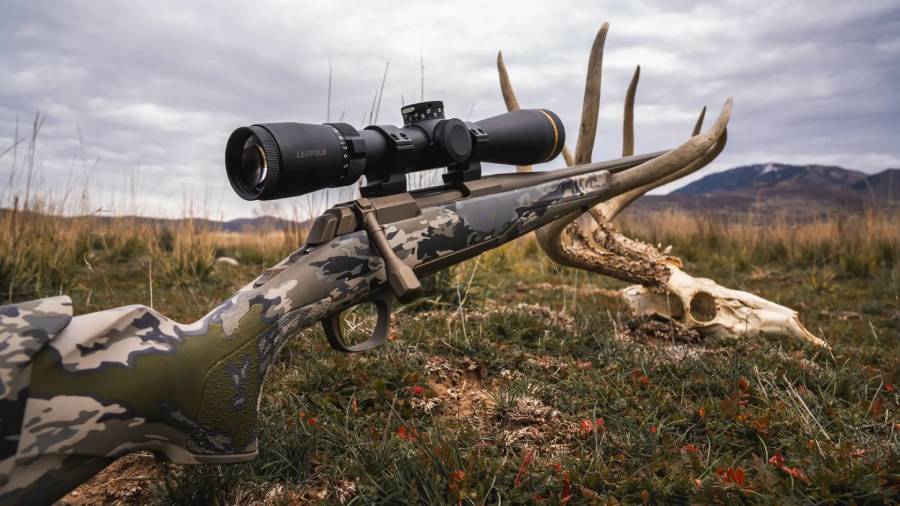
The best deer hunting caliber depends on deer size, hunting distance, recoil tolerance, and the conditions in which the rifle will be used. For an all-around deer hunting cartridge, the .308 Winchester is one of the strongest choices because it combines sufficient terminal performance for deer with practical recoil, broad bullet availability, and useful performance across common hunting distances. The .270 Winchester, .30-06 Springfield, 6.5 Creedmoor, and .243 Winchester are also established choices, but each offers a different balance of recoil, trajectory, bullet weight, and downrange performance.
Choosing the right deer hunting caliber therefore requires more than comparing muzzle velocity or energy figures. A cartridge that works well for a recoil-sensitive whitetail hunter may not provide the same advantages for a mule deer hunter operating across open terrain. Bullet construction and shot placement also affect terminal performance, so using a larger caliber does not automatically produce better hunting results.
This guide compares the leading deer hunting calibers and explains how deer species, hunting distance, recoil, bullet characteristics, and hunting environment affect caliber selection. The goal is to identify not only the best deer hunting caliber overall, but also the options that fit specific hunting situations.
What Is the Best Deer Hunting Caliber Overall?
The .308 Winchester is one of the best all-around deer hunting cartridges because it provides a practical balance of terminal performance, recoil, effective hunting range, and bullet selection. It is capable of taking common deer species, including whitetail and mule deer, without requiring the heavier recoil associated with some larger cartridges. This balance makes the .308 Winchester suitable for hunters who need one deer rifle that can perform across different terrain and hunting distances.
The .308 Winchester commonly uses hunting bullets in the 150- to 180-grain range, with 150- and 165-grain loads being common choices for deer. Bullet weight matters because it works together with velocity and bullet construction to determine expansion and penetration after impact. A properly constructed hunting bullet must penetrate deeply enough to reach vital organs while expanding sufficiently to damage vital tissue. For deer-sized game, the .308 Winchester provides multiple bullet weights and hunting-bullet designs that meet these requirements when paired with appropriate shot placement.
Recoil is another reason the .308 Winchester works well as an all-around choice. Larger cartridges do not automatically produce better results because additional recoil can make a rifle more difficult for a hunter to shoot consistently. The relationship is straightforward: manageable recoil supports shooting control, shooting control supports accurate shot placement, and accurate shot placement is a major factor in an ethical harvest. Rifle weight, stock design, ammunition, and the individual shooter also affect perceived recoil, so cartridge selection should account for the complete rifle-and-hunter combination rather than cartridge power alone.
The .308 Winchester is not the best option for every deer hunter. The .243 Winchester is a more appropriate candidate when low recoil is a primary requirement, while the .270 Winchester and 6.5 Creedmoor offer different trajectory and recoil characteristics that can suit hunting in more open terrain. The .30-06 Springfield provides access to a broad range of heavier bullet options but generally comes with greater recoil. Therefore, the best deer hunting caliber is the one that provides adequate terminal performance at the hunter’s expected distance while remaining controllable enough for precise shot placement.
What Are the Best Calibers for Deer Hunting?
Five of the most established choices for deer hunting are the .243 Winchester, 6.5 Creedmoor, .270 Winchester, .308 Winchester, and .30-06 Springfield. Each cartridge can be suitable for deer hunting, but they solve different selection problems. The .243 Winchester emphasizes low recoil, the 6.5 Creedmoor combines manageable recoil with efficient downrange performance, the .270 Winchester is well suited to hunters who value a relatively flat trajectory, the .308 Winchester provides balanced all-around performance, and the .30-06 Springfield offers a broad range of bullet weights.
| Cartridge | Common Deer Bullet Weights | Recoil Characteristic | Primary Deer Hunting Advantage |
|---|---|---|---|
| .243 Winchester | 90–100 gr | Low | Recoil-sensitive hunters |
| 6.5 Creedmoor | 120–143 gr | Moderate | Manageable recoil and downrange performance |
| .270 Winchester | 130–150 gr | Moderate | Flat trajectory for open-country hunting |
| .308 Winchester | 150–180 gr | Moderate | Balanced all-around deer hunting |
| .30-06 Springfield | 150–180+ gr | Higher | Broad bullet-weight versatility |
The .243 Winchester is a strong low-recoil deer hunting option. Its lighter bullets and lower recoil make it easier for recoil-sensitive hunters to maintain shooting control. The trade-off is that bullet selection and shot placement become particularly important. Deer hunting loads should use bullets designed for controlled expansion and adequate penetration rather than bullets intended primarily for target shooting or smaller game.
The 6.5 Creedmoor is useful when a hunter wants manageable recoil combined with efficient downrange ballistics. Its popularity in longer-distance shooting does not mean hunters need to take deer at extreme distances. Instead, its practical advantage is that an efficient bullet can retain velocity well while producing less recoil than some larger hunting cartridges. This combination can benefit hunters working in open terrain where shots may occur beyond typical woods distances.
The .270 Winchester is a proven choice for hunters who prioritize trajectory and reach. Common deer loads use bullets around 130 to 150 grains, providing a combination suited to whitetail and mule deer hunting. Its relatively flat trajectory reduces the amount of trajectory compensation required as distance increases, although hunters still need to know the actual trajectory of their specific rifle and ammunition.
The .308 Winchester provides the most balanced combination for hunters seeking one versatile deer cartridge. Its common hunting bullet weights provide sufficient options for different deer-hunting conditions without requiring the recoil level of some larger cartridges. Ammunition and rifle availability also make it a practical platform for hunters who want to practice with the same rifle they use during deer season.
The .30-06 Springfield provides greater bullet-weight flexibility for hunters who want one rifle for deer and potentially larger game. Its broader range of hunting loads allows the cartridge to be adapted to different applications, but this versatility is not automatically an advantage for a hunter interested only in deer. Increased recoil can work against shooting consistency when the additional performance is unnecessary for the intended hunting situation.
The comparison shows why there is no universal winner based on power alone. Choose the .243 Winchester when low recoil is the priority, consider the 6.5 Creedmoor or .270 Winchester when downrange performance matters, choose the .308 Winchester for balanced all-around use, and consider the .30-06 Springfield when broader bullet-weight versatility is important. The final choice should still account for deer species, expected shooting distance, recoil tolerance, rifle configuration, and the hunting ammunition being used.
What Is the Best Caliber for Whitetail Deer Hunting?
The .308 Winchester is one of the best all-around calibers for whitetail deer hunting because it combines adequate terminal performance, manageable recoil, and broad hunting-ammunition availability. Whitetail deer do not require the largest available hunting cartridge. A suitable cartridge needs to deliver a properly constructed bullet accurately into the vital area and provide sufficient penetration and expansion at the distance of impact.
The .243 Winchester, 6.5 Creedmoor, .270 Winchester, and .30-06 Springfield are also established whitetail choices. The .243 Winchester is particularly relevant when recoil reduction is a priority, while the 6.5 Creedmoor combines moderate recoil with efficient downrange performance. The .270 Winchester provides a relatively flat trajectory that can be useful across fields and other open areas. The .30-06 Springfield provides a broad selection of hunting bullet weights, although its additional recoil is unnecessary for hunters who only need a cartridge for typical whitetail hunting.
Hunting environment can change which option is most appropriate. A hunter working in dense woods has different ballistic requirements from a hunter watching agricultural fields or other open terrain. Shorter opportunities place less emphasis on trajectory, while increasing distance makes trajectory, wind effects, retained velocity, and the hunter’s ability to place the shot more important. Cartridge selection should therefore reflect the distances the hunter can realistically encounter rather than the maximum distance printed on an ammunition chart.
Bullet construction is equally important because two bullets fired from the same cartridge can behave differently after impact. Deer hunting ammunition is designed to balance expansion and penetration, while other bullet designs may be optimized for different purposes. For this reason, selecting a proven deer hunting bullet and verifying how it shoots from the individual rifle is more useful than choosing a cartridge solely because it produces a higher velocity or heavier projectile.
What Is the Best Caliber for Mule Deer Hunting?
The .270 Winchester is one of the strongest all-around choices for mule deer hunting because it combines deer-appropriate terminal performance with a relatively flat trajectory for open-country conditions. Mule deer hunting can involve larger areas and longer shooting opportunities than hunting whitetails in dense woodland, making trajectory and downrange bullet performance more relevant selection factors.
The .308 Winchester, 6.5 Creedmoor, and .30-06 Springfield are also suitable choices for mule deer when paired with appropriate hunting bullets. The .308 Winchester provides balanced performance across a broad range of conditions, while the 6.5 Creedmoor offers manageable recoil and efficient downrange ballistics. The .30-06 Springfield offers heavier bullet options, although greater cartridge capability does not remove the need to stay within a hunter’s practical shooting range.
The main difference between choosing a cartridge for whitetail and mule deer is therefore not simply the name of the species. Deer size, terrain, expected shot distance, wind, bullet construction, and shooter capability determine how useful a cartridge’s ballistic characteristics are. A cartridge with excellent long-range figures provides little practical benefit when the hunter cannot consistently place a hunting bullet within the vital area at that distance.
For mule deer hunting, the rifle and ammunition should also be evaluated as a complete system. A hunter should confirm trajectory and point of impact with the exact hunting load rather than assuming published velocity figures will match a particular rifle. Barrel length, ammunition, environmental conditions, and the individual firearm can change actual velocity and trajectory. The appropriate mule deer caliber is therefore one that combines sufficient bullet performance with a trajectory and recoil level the hunter can manage consistently under realistic field conditions.
What Is the Best Low-Recoil Caliber for Deer Hunting?
The .243 Winchester is one of the best low-recoil deer hunting choices because it produces substantially less recoil than larger traditional deer cartridges while remaining suitable for deer with appropriate hunting bullets and precise shot placement. This makes it particularly relevant for recoil-sensitive hunters and shooters who perform more consistently with a lighter-recoiling rifle.
Lower recoil matters because recoil can influence shooting behavior. A hunter who anticipates uncomfortable recoil may tense, flinch, or disturb the rifle before the bullet leaves the barrel. Reducing recoil can make it easier to maintain shooting fundamentals and practice regularly. The practical relationship is lower manageable recoil → better shooting control → more consistent shot placement, provided the selected cartridge still supplies appropriate terminal performance for the animal and hunting conditions.
The 6.5 Creedmoor is another option when the hunter wants moderate recoil without moving to the lighter end of common deer cartridges. It combines efficient bullets with recoil that many shooters find manageable, making it relevant when both recoil and downrange performance matter. The .308 Winchester produces more recoil but offers a broader all-around balance for hunters who are comfortable shooting it consistently.
Low recoil should not be treated as the only selection criterion. The best low-recoil deer cartridge must still provide adequate penetration and expansion at the intended impact distance. Bullet construction, deer size, hunting distance, rifle weight, and shot placement remain part of the decision. A hunter gains little from reducing recoil if the selected ammunition is poorly matched to the intended game or if shots are attempted beyond the cartridge-and-bullet combination’s practical hunting capability.
What Is the Best Deer Hunting Caliber for Beginners?
The .243 Winchester is one of the best deer hunting calibers for beginners because its low recoil makes shooting control and consistent practice easier while still providing deer-appropriate performance with suitable hunting ammunition. A beginner benefits more from a cartridge they can shoot accurately and confidently than from additional power they cannot control consistently. The 6.5 Creedmoor is another practical option for new hunters who want manageable recoil with stronger downrange characteristics.
Recoil matters for beginners because repeated exposure to uncomfortable recoil can affect shooting technique. Anticipating recoil can contribute to flinching, trigger-control errors, and movement immediately before the shot. A lower-recoil cartridge reduces this obstacle and allows the hunter to focus on stable positioning, sight alignment, trigger control, and shot placement. Rifle weight and stock fit also influence felt recoil, so two rifles chambered for the same cartridge may not feel identical.
The .308 Winchester becomes a strong beginner option when the shooter can manage its recoil comfortably. It provides greater bullet-weight flexibility than the .243 Winchester while remaining a versatile deer hunting cartridge. The important criterion is not choosing the largest cartridge a new hunter can tolerate for a few shots. A beginner should choose a deer cartridge that provides adequate hunting performance and remains comfortable enough for repeated, accurate practice.
A beginner should also consider the hunting environment before selecting a cartridge. The ballistic advantages of a cartridge intended for longer distances provide limited value when most hunting takes place at shorter ranges. Conversely, hunters expecting opportunities across open terrain need to understand trajectory and wind effects regardless of cartridge choice. Cartridge selection is therefore only one part of a beginner’s hunting setup; familiarity with the rifle and consistent field-position accuracy remain essential.
What Is the Best Deer Hunting Caliber for Long Range?
The 6.5 Creedmoor and .270 Winchester are two strong deer hunting options when longer-distance performance is a priority because both combine useful trajectories with bullets suited to maintaining downrange performance. The better choice depends on the rifle, hunting load, expected distance, wind conditions, recoil tolerance, and the hunter’s demonstrated shooting ability.
Long-range deer hunting places greater importance on trajectory because a bullet continuously loses velocity after leaving the muzzle. As distance increases, bullet drop becomes greater and time of flight increases, giving wind more time to move the projectile laterally. A cartridge that performs well at the muzzle is therefore not automatically suitable at every distance. Hunters need to consider the bullet’s actual downrange velocity and trajectory rather than comparing cartridges only by muzzle velocity.
Bullet design also establishes practical limits. A hunting bullet must arrive with impact conditions that allow it to perform as intended. Expansion and penetration depend on bullet construction and impact velocity, and different bullets are engineered to behave differently. This means there is no scientifically useful universal number that defines the maximum deer hunting range of an entire caliber or cartridge. The applicable limit depends on the specific ammunition and the hunter’s ability to place the shot accurately.
The hunter’s shooting capability can establish a shorter limit than the cartridge’s ballistic capability. A cartridge may remain capable of delivering an effective hunting bullet at a given distance while the shooter cannot reliably make the required shot under field conditions. Wind, shooting position, target movement, terrain, and time pressure add variables that are not present in a simple ballistic chart. The practical long-range limit is the shorter of two limits: the ammunition’s effective performance range and the hunter’s proven field shooting range.
How Does Hunting Distance Affect Deer Hunting Caliber Selection?
Hunting distance affects caliber selection by changing the importance of trajectory, retained velocity, wind drift, and terminal bullet performance. At shorter distances, differences in trajectory between suitable deer cartridges have less practical influence. As distance increases, those differences become progressively more relevant because velocity decreases while bullet drop and wind effects accumulate.
A hunter whose typical opportunities occur in dense woods does not need to prioritize the same ballistic characteristics as a hunter operating across open country. For example, choosing between suitable cartridges based primarily on a small trajectory advantage provides little practical benefit when shots consistently occur at short range. In that context, recoil, rifle handling, ammunition performance, and the hunter’s accuracy can carry greater weight in the decision.
Open-country hunting changes the selection context. A cartridge and bullet combination with efficient downrange characteristics can reduce trajectory and wind-management demands as distance increases, although it cannot eliminate them. The hunter must still verify the rifle’s point of impact and trajectory using the actual ammunition intended for hunting. Published ballistic information provides a reference, but actual results depend on the rifle, ammunition, environmental conditions, and sighting setup.
Distance should therefore be treated as a selection constraint rather than a reason to automatically choose a larger caliber. First establish the realistic range at which deer will be hunted. Then select a cartridge and hunting load that maintains appropriate performance across that range while producing recoil the hunter can manage accurately. This approach connects ballistic characteristics directly to hunting conditions instead of ranking cartridges according to power alone.
How Does Deer Size Affect Caliber Selection?
Deer size affects caliber selection because larger animals place greater demands on bullet penetration and terminal performance, but deer size alone does not determine which cartridge a hunter should use. Whitetail deer and mule deer vary considerably in body size, and individual animals within the same species also differ. The appropriate combination must provide sufficient penetration and controlled expansion while remaining manageable enough for accurate shot placement.
A heavier or larger deer can require a bullet to penetrate more tissue before reaching vital organs, especially when the presentation is not perfectly broadside. Bullet construction therefore matters alongside caliber and bullet weight. A hunting bullet designed for controlled expansion can retain enough integrity to penetrate while expanding to create effective tissue damage. A heavier bullet is not automatically superior because its performance also depends on construction, impact velocity, and where it strikes the animal.
The relationship between deer size and caliber is also affected by distance. As a bullet travels, it loses velocity, changing its impact characteristics. A cartridge-and-bullet combination suitable for a particular deer at one distance does not have unlimited performance as range increases. This is why hunters should evaluate deer size, expected distance, bullet construction, and impact performance together instead of selecting ammunition from caliber diameter alone.
Larger cartridges can provide additional performance, but additional power does not compensate for poor shot placement. A moderate deer cartridge with an appropriate hunting bullet placed accurately in the vital area is more useful than a more powerful cartridge that a hunter cannot shoot consistently. Deer size should therefore establish the terminal-performance requirement, while recoil tolerance and practical accuracy help determine which cartridge can meet that requirement effectively.
How Does Bullet Weight Affect Deer Hunting Performance?
Bullet weight affects deer hunting performance by influencing velocity, trajectory, momentum, recoil, and the way a specific bullet can perform after impact. Common deer cartridges offer multiple bullet weights for this reason. For example, .308 Winchester deer ammunition commonly includes 150-, 165-, and 180-grain bullets, while .270 Winchester hunting loads commonly use bullets in the 130- to 150-grain range. The correct weight depends on the bullet design and hunting application rather than a rule that heavier bullets are always better.
Lighter bullets within the same cartridge can generally be launched at higher velocities, which can contribute to a flatter trajectory over relevant distances. Heavier bullets generally start more slowly but can provide different downrange and penetration characteristics depending on their shape and construction. These relationships cannot be evaluated accurately from bullet weight alone because ballistic coefficient, muzzle velocity, bullet design, and impact velocity also affect the result.
Bullet construction is as important as bullet weight when selecting deer ammunition. Hunting bullets are engineered to provide a particular balance of expansion and penetration. A bullet that expands too rapidly can sacrifice penetration, while inadequate expansion can reduce the diameter of the wound channel. Manufacturers use different construction methods to control this behavior, so two bullets of identical caliber and weight can produce different terminal results.
Hunters should consequently select bullet weight only after identifying the intended application. Deer species, expected shooting distance, cartridge, rifle performance, and bullet construction provide the necessary context. The goal is not to fire the heaviest available bullet; it is to select a hunting bullet that delivers predictable performance at the expected impact velocity and that shoots accurately from the individual rifle.
Why Is Shot Placement More Important Than Choosing a Larger Deer Caliber?
Shot placement is more important than simply choosing a larger deer caliber because an effective hunting shot depends on damaging vital organs, not on maximizing cartridge size. Increasing bullet diameter, weight, or muzzle energy cannot guarantee an effective result when the projectile does not reach the intended vital area.
Cartridge power and shot placement perform different functions. The cartridge and hunting bullet provide the physical capability for penetration and expansion, while shot placement determines where that performance occurs. A suitable deer cartridge already provides the required baseline capability when used within its intended limits. Moving to a larger cartridge can increase recoil and ballistic performance, but it cannot correct an inaccurately placed shot.
Recoil creates another connection between caliber and shot placement. A hunter who shoots a moderate cartridge accurately can achieve more consistent placement than a hunter who develops poor shooting habits with a harder-recoiling rifle. This does not mean hunters should always select the smallest cartridge available. The objective is to use sufficient cartridge and bullet performance without exceeding the recoil level that the hunter can control consistently.
For this reason, caliber selection should support shot placement rather than replace it. A hunter should choose an appropriate deer cartridge, pair it with a purpose-designed hunting bullet, verify its performance from the rifle, and remain within a distance at which accurate field shooting is repeatable. These factors work together; no single ballistic specification can substitute for the complete system.
Read more: Do Deer Eat Apples? What Hunters Should Know
What Is the Difference Between Caliber and Cartridge in Deer Hunting?
Caliber describes the approximate diameter of a firearm’s bore or projectile, while a cartridge is the complete ammunition specification that combines the bullet, case, primer, and propellant. The distinction matters in deer hunting because cartridges with similar bullet diameters can have substantially different case dimensions, velocities, recoil characteristics, and ballistic performance.
For example, .308 Winchester is a cartridge designation rather than simply a caliber. Its bullet diameter is approximately .308 inch, but other cartridges can use bullets of the same diameter while producing different ballistic characteristics. Therefore, comparing deer hunting options only by bullet diameter does not provide enough information to determine their suitability for a specific hunting application.
The same terminology issue applies to searches for the “best deer hunting caliber.” Hunters commonly use caliber conversationally when comparing options such as .243 Winchester, .270 Winchester, .308 Winchester, and .30-06 Springfield. Technically, these names identify cartridges. The distinction is useful because deer hunting performance depends on the complete cartridge-and-bullet combination rather than caliber diameter alone.
This also explains why a larger caliber is not automatically a better deer hunting choice. Cartridge design, bullet weight, bullet construction, velocity, recoil, trajectory, and impact conditions interact to determine practical performance. Caliber is one attribute within that system, not a complete measure of hunting effectiveness.
How Should You Choose the Right Deer Hunting Caliber?
Choose a deer hunting caliber by evaluating 5 factors: deer species and size, expected hunting distance, recoil tolerance, hunting environment, and cartridge-and-bullet performance. These factors provide a more reliable selection framework than choosing the cartridge with the highest velocity, heaviest bullet, or greatest muzzle energy.
1. Match the cartridge to the deer being hunted. Whitetail and mule deer can both be taken with several established deer cartridges, including the .243 Winchester, 6.5 Creedmoor, .270 Winchester, .308 Winchester, and .30-06 Springfield. The cartridge must provide appropriate terminal performance for the animal when paired with a suitable hunting bullet. Larger deer can increase penetration requirements, but automatically moving to the largest available cartridge is unnecessary.
2. Determine your realistic hunting distance. Hunters working primarily in dense woods have different requirements from hunters operating across open country. At shorter ranges, small trajectory differences between suitable cartridges have limited practical significance. At longer distances, trajectory, wind effects, retained velocity, and bullet performance become increasingly important. Select for the distances you realistically hunt rather than the cartridge’s theoretical maximum range.
3. Choose recoil you can control consistently. The .243 Winchester is a strong option for hunters who prioritize low recoil, while the 6.5 Creedmoor provides manageable recoil with efficient downrange characteristics. The .308 Winchester offers balanced all-around performance, while the .30-06 Springfield provides broader bullet-weight flexibility with greater recoil. The correct recoil level is one that allows repeated practice without compromising shooting technique or confidence.
4. Account for the hunting environment. Terrain changes which cartridge characteristics provide practical value. Open-country hunting can place greater emphasis on trajectory and wind management, while hunting in woods can increase the importance of rifle handling and practical shooting control. A ballistic advantage matters only when the hunting environment allows that advantage to be used.
5. Select the cartridge and hunting bullet as one system. Bullet weight, construction, expansion, penetration, impact velocity, and accuracy from the individual rifle all contribute to hunting performance. A cartridge should therefore not be evaluated from its name or bullet diameter alone. Hunters should use ammunition designed for deer-sized game and verify how the selected load performs from their rifle.
For hunters seeking a straightforward starting point, the .308 Winchester offers one of the strongest all-around combinations for deer hunting, the .243 Winchester stands out when low recoil is the priority, the 6.5 Creedmoor and .270 Winchester are strong candidates when downrange performance receives greater emphasis, and the .30-06 Springfield provides broader bullet-weight versatility. None of these advantages eliminates the need for appropriate ammunition and accurate shot placement.
The best deer hunting caliber is ultimately the cartridge that meets the terminal-performance requirements of the deer and expected hunting distance while remaining controllable for the individual hunter. This selection method keeps caliber, bullet, rifle, hunter, and hunting conditions within the same context instead of treating cartridge power as the sole measure of effectiveness.