
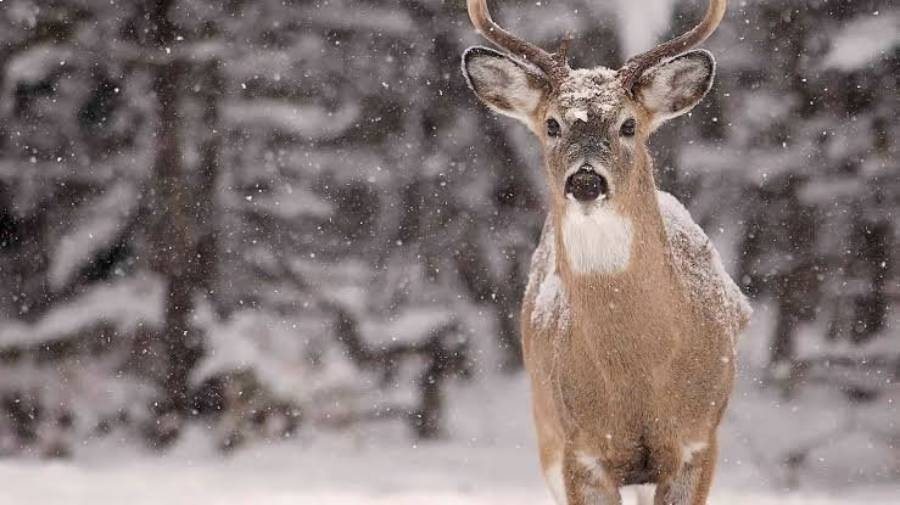
No, deer do not hibernate. Deer remain active throughout the winter, but they adjust their movement, feeding, bedding, and energy use to survive cold temperatures and reduced food availability. Unlike true hibernating animals, deer continue to travel between bedding areas and food sources throughout the season.
Deer survive winter through a combination of physical and behavioral adaptations. Their winter coat provides insulation, stored body fat supplies energy when food becomes scarce, and reduced unnecessary movement helps conserve calories. Deer also select sheltered bedding areas and winter habitats that provide protection from wind, snow, and extreme temperatures. In regions with severe winters, these changes can cause deer to concentrate around dependable food and protective cover rather than use the same areas they occupied during warmer months.
These winter behaviors matter to hunters because deer do not simply disappear when temperatures drop. Their locations and movement patterns change as they balance food, cover, weather conditions, and energy conservation. Understanding what deer do instead of hibernating makes it easier to identify winter feeding areas, bedding cover, travel routes, and other signs that reveal where deer are spending their time.
Do Deer Hibernate in the Winter?
No, deer do not hibernate in the winter. Deer remain active throughout the season and continue to feed, walk, bed, and move between different parts of their habitat. Their winter activity can decrease when conditions become harsh, but this reduction in movement is an energy-conservation strategy rather than hibernation.
True hibernation involves major physiological changes that allow an animal to remain inactive for an extended period while using very little energy. Deer follow a different survival strategy. They maintain normal seasonal activity while adjusting how much energy they spend. A deer may stay bedded for longer periods during severe cold or heavy snow, then leave its bedding area to feed when the energy gained from available food justifies the cost of moving.
This distinction explains why hunters may see fewer deer during parts of the winter even though the animals have not left the area or entered hibernation. Reduced movement, changes in food availability, and shifts toward protective winter cover can make deer less visible. Their tracks, beds, droppings, feeding sign, and established travel routes can still reveal regular activity.
What Do Deer Do Instead of Hibernating?
Deer survive winter by conserving energy while continuing to feed and remain active. Their strategy combines seasonal physical adaptations with behavioral changes, including using stored body fat, growing an insulating winter coat, reducing unnecessary movement, selecting protective bedding cover, and staying close to reliable food when possible.
Energy conservation becomes especially important because moving through winter habitat has a cost. Walking long distances requires calories, and traveling through deep snow requires more effort than moving across clear ground. Deer can reduce that expenditure by limiting unnecessary travel and using established routes between bedding and feeding areas. This behavior does not mean deer stop moving; it means their movements become increasingly influenced by the balance between calories gained from food and calories spent reaching it.
Deer also spend substantial periods bedded in locations that help protect them from difficult weather. Suitable winter bedding cover can reduce exposure to wind and allow deer to conserve body heat. When dependable food is located near protective cover, deer can meet both needs without making long trips. This relationship between food, bedding cover, and efficient travel is one reason winter deer distribution can differ from the patterns hunters observed earlier in the year.
These changes have a practical implication for hunters: reduced sightings do not indicate that deer are hibernating. Hunters should instead look for changes in habitat use. Concentrated tracks, frequently used trails, fresh beds, droppings, and feeding sign can indicate where deer have shifted their winter activity. Finding these areas requires understanding how deer conserve energy rather than searching only the locations that produced deer activity during warmer conditions.
How Do Deer Survive Cold Winter Temperatures?
Deer survive cold winter temperatures by combining an insulating winter coat, stored body fat, energy conservation, protective habitat, and continued access to food. These adaptations allow deer to maintain body temperature without entering hibernation, even when cold weather and snow increase the amount of energy required for survival.
A deer’s winter coat provides an important layer of protection against heat loss. As seasonal conditions change, deer develop a thicker coat that traps insulating air close to the body. This insulation reduces the amount of metabolic energy required to maintain body temperature. Deer can then conserve calories that would otherwise be spent producing additional body heat during prolonged exposure to cold weather.
Stored body fat provides another energy reserve when winter food becomes less abundant or less nutritious. Deer accumulate fat when higher-quality forage is available and draw on those reserves when their daily energy intake falls below their needs. Body fat does not eliminate the need to feed during winter, however. Deer must continue finding food because surviving an entire winter solely on stored energy would create an unsustainable energy deficit.
Behavior is equally important. Deer reduce unnecessary travel, use protective cover, and select bedding locations that limit exposure to wind and severe weather. Remaining bedded during unfavorable conditions can cost less energy than traveling through snow without a strong feeding incentive. Once feeding becomes necessary, deer can use established trails and relatively efficient routes between cover and available food.
For hunters, this energy-conservation strategy changes where deer are likely to concentrate. Winter habitat becomes more valuable when it provides food and protective cover within a relatively efficient travel area. A location that held deer earlier in the season may become less productive after its food disappears or its cover no longer provides sufficient protection.
Where Do Deer Go During the Winter?
Deer move toward winter habitat that provides adequate food, protective cover, and opportunities to conserve energy. They do not go to a hidden location to hibernate. Their winter distribution changes as they seek areas where the energetic cost of feeding, bedding, and traveling remains manageable.
Protective bedding cover is a major component of winter habitat. Deer benefit from locations that reduce exposure to wind and severe weather while allowing access to nearby feeding areas. Dense vegetation and other forms of thermal or security cover can therefore become more important as winter conditions intensify. The exact habitat varies by region, so hunters should identify the local combination of cover and food rather than assume every deer uses the same type of bedding area.
Food availability also influences where deer spend the winter. As seasonal vegetation declines, deer can shift toward areas containing dependable winter forage. When suitable bedding cover exists near that food, deer can shorten the distance they need to travel and reduce energy expenditure. Repeated movement between these resources can create recognizable trails that become especially visible when snow records recent tracks.
In regions with severe winters, deer may also concentrate in wintering areas commonly called deer yards. These areas allow groups of deer to use habitat that offers favorable cover and access to available food during difficult conditions. Yard use should not be confused with hibernation: deer within these areas continue feeding, bedding, and moving throughout the winter.
Hunters can use this behavior to narrow winter scouting areas. Instead of searching an entire property equally, identify dependable food first, then examine nearby protective bedding cover and the travel corridors connecting the two. Fresh tracks, well-used trails, beds, droppings, and feeding sign help confirm current use. This approach follows the central pattern of winter deer behavior: deer conserve energy by arranging their movement around the resources they need to survive.
Do Deer Migrate During the Winter?
Some deer migrate during the winter, while others remain within the same general home range and shift their habitat use. Whether deer migrate depends on the species, local population, geography, elevation, snow conditions, food availability, and severity of winter. Migration is therefore a seasonal survival strategy for certain deer populations, not a behavior shared equally by all deer.
Migration allows deer to move from areas that become energetically expensive to habitats where winter survival requires less energy. Heavy snow can make travel difficult and cover accessible food, while exposed high-elevation areas can increase the energy required to maintain body temperature. Deer that make seasonal migrations can respond by moving toward winter ranges with more accessible forage, protective cover, or less demanding travel conditions.
Mule deer provide a useful example because some populations make pronounced seasonal movements between summer and winter ranges. White-tailed deer can also change their seasonal distribution, although many populations make shorter habitat shifts rather than long-distance migrations. For both species, the important point is that winter location is not necessarily the same as fall location. A productive hunting area earlier in the season can hold fewer deer after weather, food, and habitat conditions change.
Hunters should therefore distinguish migration from local winter movement. A deer that disappears from one part of a property has not necessarily migrated a long distance. It may have shifted to nearby cover, concentrated around a different food source, or changed its travel pattern. Current tracks, beds, feeding sign, and trail use provide stronger evidence of winter deer location than relying exclusively on patterns observed earlier in the season.
What Do Deer Eat During the Winter?
Deer eat available winter forage such as woody browse, twigs, buds, remaining mast, and agricultural food sources where those foods are accessible. Their exact diet varies by region and habitat because winter removes or reduces many of the green plants available during spring and summer.
Woody browse becomes an important food category when herbaceous vegetation is limited. Deer can browse accessible portions of shrubs, young trees, twigs, and buds rather than depending on dormant or snow-covered ground vegetation. Remaining mast can also provide concentrated energy where it is still available. In agricultural landscapes, standing or waste crops can influence deer distribution when deer can access them without excessive energy expenditure.
Winter food should be evaluated by both nutritional value and accessibility. A food source has less practical value when reaching it requires deer to travel long distances through deep snow or leave protective cover for extended periods. Deer must balance the calories obtained from feeding against the energy required to reach and consume that food. As winter becomes more demanding, this balance can make accessible food close to suitable cover particularly important.
Food availability also helps explain why deer movement patterns can become concentrated during winter. When several scattered fall food sources disappear, remaining resources can draw deer into a smaller area. Repeated trips between feeding and bedding locations can establish heavily used travel routes. Snow can make these patterns easier for hunters to identify because fresh tracks reveal where deer recently entered, exited, and crossed a feeding area.
For hunters, finding winter food is therefore more useful when it is combined with an analysis of nearby cover. Identify an active food source, determine where deer can bed with protection from winter conditions, and then examine the terrain between those locations for fresh travel sign. This food–cover–travel relationship provides a stronger picture of current deer activity than treating a food source as an isolated hunting location.
Do Deer Move Less During the Winter?
Deer can reduce unnecessary movement during winter to conserve energy, especially when cold temperatures, deep snow, or limited food make travel more costly. They do not become inactive. Deer still need to move between bedding areas, feeding locations, and protective cover, but winter conditions can change how far, how often, and where they travel.
Movement requires energy, and the energetic cost increases when deer must travel through deep snow or difficult terrain. Conserving energy becomes important when winter forage provides fewer calories than the foods available during more productive seasons. Deer can respond by spending longer periods bedded, using established travel routes, and concentrating their activity around areas where food and cover are relatively close together.
Reduced movement does not mean hunters should expect the same response during every cold period. Temperature is only one part of the winter environment. Food availability, snow conditions, wind, habitat quality, hunting pressure, and the severity of the winter can all influence deer activity. Hunters should therefore evaluate current deer sign instead of assuming that colder weather automatically produces either more or less movement.
How Does Cold Weather Affect Deer Movement?
Cold weather can cause deer to prioritize energy conservation and efficient access to food. During demanding conditions, unnecessary travel consumes calories that deer need for maintaining body temperature and basic biological functions. Bedding in protective cover and using shorter routes to dependable food can reduce that expenditure.
Cold temperatures do not eliminate the need to feed. Deer still require energy, which creates a tradeoff between remaining sheltered and traveling to obtain food. This relationship can produce periods of limited movement followed by purposeful feeding activity. For hunters, the important question is therefore not simply whether the temperature is low, but whether current conditions are changing the relationship between bedding cover and available food.
How Does Snow Affect Deer Movement?
Snow affects deer movement by increasing travel costs, changing access to food, and influencing which routes deer use. Light snow can reveal tracks without creating a major physical barrier, while deep snow requires substantially more effort to travel through and can restrict access to some feeding areas.
As snow becomes deeper, established trails can become increasingly valuable because repeated use provides predictable routes through winter habitat. Deer may also favor terrain and cover that allow more efficient travel. At the same time, snow can cover low-growing food and shift feeding pressure toward browse or other resources that remain accessible above the snow.
Snow provides hunters with direct evidence of recent deer activity. Fresh tracks can show travel direction, trail concentration, and connections between bedding and feeding areas. Hunters should distinguish fresh tracks from older accumulated sign, however, because a trail containing numerous tracks does not automatically indicate that deer used it recently.
When Are Deer Most Active During Winter?
Deer remain primarily crepuscular, with significant activity commonly occurring around dawn and dusk, but winter conditions can shift the timing and duration of their movement. Food requirements, temperature, snow, hunting pressure, and local habitat conditions all influence when deer leave bedding cover and travel.
Feeding needs are an important driver of winter activity because deer cannot conserve energy indefinitely by remaining bedded. They must periodically obtain calories to replace energy used for body maintenance and thermoregulation. When winter food becomes concentrated, movement can become more predictable between secure bedding areas and dependable feeding locations.
Weather can modify this pattern rather than replace it. Severe conditions may encourage deer to remain in protective cover for longer periods, while changes in weather can alter when feeding movement occurs. This is why a fixed rule such as “deer always move more when it gets cold” is less useful than evaluating temperature together with snow, wind, available food, and fresh sign.
Hunting pressure adds another variable. Deer exposed repeatedly to hunters can reduce visible daylight activity, change travel routes, or use thicker security cover. As a result, the absence of deer sightings during daylight does not prove that deer have left an area. Fresh tracks, beds, droppings, and feeding evidence can reveal activity that hunters are not directly observing.
For winter hunters, activity timing should therefore be interpreted together with location. A productive approach is to identify current feeding and bedding areas first and then determine when deer are using the routes between them. Knowing where deer need to travel provides the context needed to interpret when they are likely to move.
How Can Hunters Find Deer During the Winter?
Hunters can find deer during winter by locating current food sources, nearby bedding cover, active travel routes, and fresh deer sign. Winter conditions can concentrate deer activity because the animals need to conserve energy while maintaining access to food. Instead of covering large areas randomly, hunters can narrow their search by identifying places where deer can satisfy these needs with efficient movement.
Start with active winter food sources. Woody browse, remaining mast, accessible agricultural food, and other locally available forage can attract deer after seasonal food sources decline. The presence of food alone does not confirm that deer are currently using an area, so hunters should look for fresh tracks, browsed vegetation, droppings, and trails entering or leaving the feeding location. Multiple forms of recent sign provide stronger evidence than an isolated track.
Next, identify protective bedding cover near the food. Deer benefit from bedding locations that reduce exposure to wind and difficult winter conditions while allowing efficient access to feeding areas. The shortest straight-line distance between food and cover is not necessarily the route deer will use. Terrain, security cover, snow depth, and hunting pressure can influence how deer travel between the two.
Travel routes connect these resources and can reveal how deer use the winter landscape. Frequently used trails, tracks in fresh snow, crossings, and changes in track concentration can help hunters determine movement direction. Following the pattern of sign can show whether deer are traveling toward a feeding area, returning toward bedding cover, or simply passing through the property.
Snow can make this scouting process more precise because tracks provide a visible record of movement. Hunters should prioritize fresh sign over total sign. Twenty old tracks accumulated over several days can provide less information about current deer location than a few fresh tracks from the previous movement period. Track freshness, travel direction, and the resources connected by the trail provide the context needed to interpret what the sign means.
Winter scouting is therefore most effective when food, bedding, and travel sign are evaluated together. A feeding area explains why deer enter a location, bedding cover helps explain where they come from or return to, and tracks reveal the route connecting those resources. This relationship allows hunters to use deer behavior rather than the assumption that deer remain in the same places throughout the season.
Does Hunting Pressure Change Deer Behavior in Winter?
Hunting pressure can change where and when deer move by encouraging them to avoid exposed areas, heavily used access routes, and locations associated with repeated human activity. This response can make deer appear less active even when they remain within the same general area.
Repeated disturbance can increase the value of security cover. Deer can shift toward thicker or less accessible habitat and use travel routes that provide greater concealment. A feeding area with abundant deer sign but few daylight sightings may therefore still be actively used, with deer entering it at different times or approaching through routes that receive less human disturbance.
Hunting pressure can also complicate the relationship between bedding and feeding areas. The most direct route may offer efficient travel, but deer also need to manage risk. When hunters repeatedly disturb a trail or approach a bedding area, deer can adjust their route selection. This means the trail that appears most obvious to a hunter is not automatically the route producing the most current activity.
Access strategy consequently matters when interpreting winter deer patterns. Repeatedly walking through bedding cover, crossing active trails, or disturbing a feeding location can alter the behavior a hunter is attempting to observe. Fresh sign should be evaluated alongside recent human activity so that a change in deer movement is not incorrectly attributed only to temperature or snow.
For hunters, the practical distinction is important: winter conditions and hunting pressure can change deer behavior at the same time. Food scarcity, snow, cold temperatures, and energy conservation influence where deer need to be, while hunting pressure influences how safely they can reach and use those locations. Understanding both factors provides a more accurate explanation for changes in winter deer movement.
Read more: Deer Tracking App: How It Works for Hunters
Do White-Tailed Deer and Mule Deer Behave Differently in Winter?
White-tailed deer and mule deer can use different winter survival strategies, particularly in their seasonal movements and choice of winter habitat. These differences vary among populations, so species alone does not determine exactly how deer will behave. Geography, elevation, snow depth, food availability, habitat quality, and winter severity also shape their response.
Mule deer populations in areas with strong seasonal changes can move between distinct summer and winter ranges. Moving toward lower elevations or other suitable winter ranges can give deer access to more favorable snow conditions, forage, and protective habitat. These seasonal movements allow deer to avoid remaining in locations where deep snow and limited food would substantially increase their energy expenditure.
White-tailed deer also change their habitat use during winter, but long-distance migration is not required for every population. Deer may instead concentrate within suitable winter habitat inside or near their existing range. Where severe winter conditions occur, groups can use wintering areas that provide protective cover and access to available food. In milder regions, seasonal changes in deer distribution may be less pronounced.
For hunters, these differences make local deer behavior more useful than a universal rule about either species. Determine whether the local population makes a substantial seasonal migration or simply shifts between habitats within a smaller area. Fresh tracks, current feeding activity, bedding sign, established winter trails, and local habitat conditions provide evidence of where deer are actually spending the winter.
Can Deer Survive Severe Winters Without Hibernating?
Yes, deer can survive severe winters without hibernating because their bodies and behavior are adapted to conserve energy while they remain active. Their survival depends on the combined effects of body condition, stored fat, winter coat, food availability, protective habitat, snow conditions, and the duration of severe weather.
Energy balance becomes critical during a difficult winter. Deer need calories to maintain basic body functions and body temperature, but obtaining those calories also requires energy. Deep snow can increase the cost of travel, while prolonged snow cover can reduce access to food. Deer respond by limiting unnecessary movement, using protective habitat, and concentrating their travel around resources that provide the greatest benefit for the energy spent reaching them.
Body condition entering winter also matters because stored fat provides an energy reserve when daily food intake cannot fully meet energy requirements. Those reserves are finite. A prolonged combination of deep snow, extreme cold, poor habitat, and limited food can progressively reduce a deer’s condition. Winter survival therefore depends not simply on whether deer tolerate cold temperatures, but on whether they can maintain an adequate energy balance until conditions improve.
Protective habitat helps reduce this energy demand. Cover that limits exposure to wind and difficult weather allows deer to conserve heat, while accessible food reduces the distance they need to travel. The strongest winter habitat consequently provides more than one resource. Food, bedding cover, and efficient travel opportunities work together to improve the conditions deer need for survival.
For hunters, severe winter conditions reinforce the central principle behind winter deer behavior: deer do not disappear because they hibernate; they change how and where they live to conserve energy. Following current food, protective bedding cover, efficient travel routes, and fresh sign provides a clearer picture of deer location than relying on patterns established earlier in the season.