
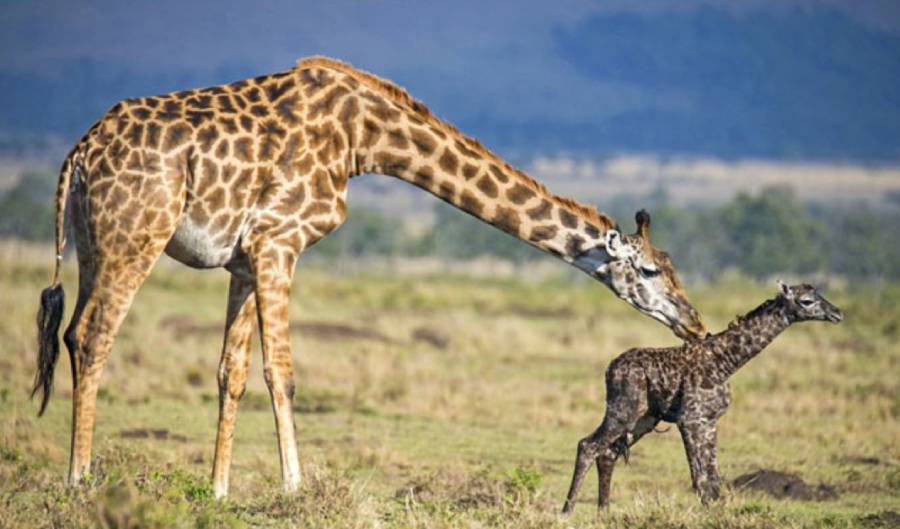
Fawns are typically born in spring and early summer, with many white-tailed deer giving birth from May through June in northern parts of their range. The exact timing varies by region because fawn birth dates are closely tied to when does were bred during the previous rut. After conception, a doe carries her young through winter before giving birth when environmental conditions are more favorable for newborn survival.
Fawning dates are not identical across the whitetail’s range. Northern deer generally have a more concentrated breeding and fawning period, while populations in parts of the South can breed and give birth across a wider window. This regional variation means hunters should consider local rut timing rather than assume that every deer herd follows the same calendar.
Understanding when fawns are born also provides insight into the whitetail’s annual life cycle. The sequence from rut and conception to gestation, birth, nursing, and early fawn development affects doe behavior and herd composition throughout the year. This guide explains when whitetail fawns are born, why fawning dates differ by location, how the rut determines birth timing, and what happens during the first stages of a fawn’s life.
When Are Fawns Born?
White-tailed deer fawns are generally born during spring and early summer, with the main fawning period occurring after does complete their winter gestation. In northern populations, births tend to be concentrated within a relatively short period because most does were bred during a defined rut the previous fall. In southern populations, fawning dates can vary more substantially because breeding seasons differ by region.
The timing of fawn birth begins with conception rather than with spring weather itself. A doe that breeds earlier during the rut will normally give birth earlier than a doe bred several weeks later. The reproductive sequence follows a predictable order: breeding and conception occur first, gestation follows through the winter, and fawning occurs at the end of the pregnancy. This relationship explains why hunters can use local rut timing to understand approximately when newborn fawns will appear.
Fawning within a seasonal window also gives newborn whitetails access to favorable conditions during their earliest stage of life. Spring and early summer provide increasing vegetation and cover across much of the whitetail’s range. Does also need sufficient nutrition while nursing their young, making seasonal forage availability relevant after birth. However, regional breeding schedules remain important when determining actual fawning dates; a May or June timeline should not automatically be applied to every deer population.
What Month Are Most Whitetail Fawns Born?
May and June are the primary fawning months for many white-tailed deer populations in northern parts of the United States, although the peak month depends on local breeding dates. Births tend to cluster because does in the same population are commonly bred within a limited seasonal window. A concentrated rut therefore produces a corresponding concentration of births roughly one gestation period later.
The peak fawning month should not be confused with the entire fawning season. Some does conceive before the peak breeding period and give birth earlier, while others breed later and produce fawns after the local peak. As a result, hunters may encounter young fawns of noticeably different sizes during the same part of the year. The difference can reflect several weeks of separation between their birth dates rather than unusually fast or slow development.
The calendar becomes less uniform when comparing deer populations across the country. A May–June peak is useful for understanding many northern whitetails, but it is not a universal birth schedule for the species. Some southern deer populations have substantially different breeding calendars, which shift fawning dates accordingly. For hunters, the local breeding season is therefore a stronger indicator of fawn timing than a single nationwide month.
Does Fawning Season Change by Region?
Fawning season changes by region because white-tailed deer do not breed at the same time across their entire range. Northern whitetail populations generally have a more concentrated breeding season, which produces a relatively narrow fawning window the following spring. Farther south, breeding dates can vary substantially between regions and even between deer populations within the same state. As a result, hunters should use local breeding data rather than a single nationwide fawning calendar.
Latitude and seasonal conditions help explain the more consistent timing found across much of the North. Northern fawns benefit from being born when temperatures are warmer, vegetation provides cover, and does have access to nutrient-rich forage for lactation. A tightly timed breeding season helps place births within this favorable seasonal window. Consequently, many northern populations have a noticeable concentration of newborn fawns during late spring and early summer.
Southern whitetails follow a less uniform calendar. In parts of the South, the rut occurs later than the familiar fall peak associated with northern deer, while other populations breed earlier or across a broader period. Those differences shift fawning dates because birth follows conception after the doe completes gestation. Two hunting areas at similar latitudes can therefore have different fawning periods when their local breeding histories differ.
For hunters, local rut timing is one of the most useful indicators of local fawning timing. If peak breeding occurs several weeks later in one deer population than another, peak births should also shift later by approximately the same interval. State wildlife agency breeding and conception data are therefore more useful for estimating local fawning dates than assuming all whitetails give birth in May or June.
How Does the Whitetail Rut Determine When Fawns Are Born?
The whitetail rut determines when fawns are born because the date a doe is successfully bred establishes the starting point of her pregnancy. After conception, the doe progresses through gestation before giving birth. This creates a direct reproductive sequence: rut activity leads to breeding, successful breeding leads to conception, and conception determines the approximate fawning date.
Peak rut and peak fawning are therefore connected, but they are not the same biological event. Hunters commonly observe rut behavior when bucks are searching for receptive does, while actual conception occurs when a doe is successfully bred. If most does in a herd conceive within a narrow period, births will also tend to cluster within a corresponding period months later. A broader breeding window produces a broader distribution of fawn birth dates.
Early and late breeding also explains why fawns of different ages can occur in the same area. A doe bred during the primary breeding period will give birth earlier than a doe that conceives during a later breeding opportunity. The resulting fawns may be separated by several weeks in age even though they belong to the same local deer population.
This relationship makes fawn timing another part of the annual whitetail cycle that hunters can interpret through breeding behavior. Knowing when does are typically bred in a hunting area provides a stronger basis for estimating fawn birth dates than relying on a fixed national date. Rut timing, conception timing, gestation, and fawning should therefore be treated as connected stages of the same reproductive cycle.
How Long Are Whitetail Deer Pregnant Before Giving Birth?
White-tailed deer are pregnant for about 200 days, or roughly 6.5 months, before giving birth. This gestation period connects the breeding season directly to the following fawning season. Once a doe conceives, the approximate birth period can be estimated by counting forward about 200 days from the breeding date.
For example, a doe that conceives around November 15 would be expected to give birth around early June. A doe bred two weeks earlier would generally have an earlier expected birth date, while one bred two weeks later would have a later date. The calculation provides an estimate rather than an exact delivery date because gestation length varies between individual deer.
This approximately 200-day pregnancy also explains why differences in regional rut timing produce differences in fawning season. Northern does that conceive during a concentrated fall breeding period tend to produce a similarly concentrated group of births in spring or early summer. Where conception dates are spread across a longer period, fawn birth dates are spread across a longer period as well.
Gestation length and breeding date should therefore be treated as separate factors. Gestation determines how long pregnancy lasts, while conception timing determines where the birth falls on the calendar. For hunters trying to estimate the local fawning period, knowing when does are actually bred provides the necessary starting point.
Can Fawns Be Born Earlier or Later Than Normal?
Fawns can be born before or after the local peak fawning period when their mothers conceive earlier or later than most does in the herd. The peak represents the period when births are most concentrated, not a strict biological deadline. A fawn born outside that window is therefore not automatically abnormal.
Late breeding is an important reason for late-born fawns. A doe that is not successfully bred during the primary breeding period can enter another reproductive opportunity later, shifting conception and the eventual birth date. If conception occurs several weeks after the herd’s main breeding period, the resulting fawn will also arrive several weeks after most fawns in that population.
Earlier births follow the same reproductive mechanism in the opposite direction. Does that conceive before the population’s peak breeding period complete pregnancy sooner on the calendar and produce earlier fawns. Regional differences can make an apparently early or late birth normal for that specific population, which is why local breeding dates provide essential context.
Hunters should consequently distinguish between peak fawning dates and the complete fawning window. Seeing a small fawn after the expected peak does not by itself establish that something is wrong with the animal or its mother. The fawn may simply be the result of later conception, especially in a population where breeding occurs across an extended period.
How Many Fawns Does a Doe Have at One Time?
A white-tailed doe commonly gives birth to one or two fawns, while triplets can occur under favorable conditions. The number of fawns is not identical for every pregnancy because reproductive output is influenced by the doe’s age, physical condition, nutrition, and the quality of the habitat supporting the local deer population.
First-time mothers are more likely to produce a single fawn than mature does. As a doe reaches reproductive maturity and maintains adequate body condition, twins become more common. Triplets are less typical but can occur in productive deer populations where mature females have access to sufficient nutrition. This relationship makes litter size one indicator of how individual condition and habitat quality interact with deer reproduction.
Having multiple fawns also affects what hunters may observe during summer. A doe seen with one fawn did not necessarily give birth to only one. Fawn mortality can occur after birth, and young fawns spend substantial periods hidden separately from their mothers. A single observation therefore does not provide enough information to determine the original litter size.
Litter size should also be distinguished from the number of fawns that survive later into the year. Birth rate describes reproductive output, while fawn recruitment describes young deer that survive long enough to become part of the developing population. Predation, habitat conditions, disease, weather, and maternal condition can influence survival after the fawning period.
What Do Does Do Before and After Giving Birth?
Does reduce their association with other deer and seek secluded cover around the time they give birth. Selecting an area with adequate vegetation and concealment gives newborn fawns protection during a stage when they have limited mobility. The doe’s behavior during this period centers on giving birth, nursing, maintaining contact with her offspring, and limiting unnecessary attention around the fawning site.
After birth, the doe cleans and nurses her fawn, while the newborn spends much of its early life bedded in cover. Rather than remaining continuously beside the fawn, the mother leaves for periods to feed and then returns to nurse it. This separation is normal maternal behavior and helps reduce activity around the location where the young animal is concealed.
A doe with twins can leave the fawns in separate bedding locations. Separating young fawns prevents both offspring from being continuously concentrated at one site and means a hunter or landowner may encounter only one member of a litter. The mother can still be nearby and return periodically even when she cannot be seen from the fawn’s bedding location.
As the fawns become stronger and more mobile, the doe’s behavior changes. The mother and young gradually spend more time moving together instead of relying primarily on the newborn hiding strategy. This transition makes doe-and-fawn groups increasingly visible later in the summer and marks a new stage in the annual whitetail cycle.
What Do Newborn Fawns Do During Their First Weeks?
Newborn fawns spend much of their first weeks hidden in vegetation, nursing periodically and gradually becoming strong enough to move with their mothers. This early-life strategy differs from the behavior of older fawns. A newborn does not need to follow its mother continuously because remaining concealed reduces its exposure while it is still small and relatively vulnerable.
Young fawns are physically developed enough to stand and move shortly after birth, but mobility alone does not mean they immediately travel with the doe throughout the day. During the earliest stage, the mother leaves the fawn bedded while she feeds and returns periodically to nurse it. As the fawn develops stronger legs, greater coordination, and more endurance, its movement increases.
This developmental change also affects what hunters and landowners see in deer habitat. Very young fawns can remain difficult to detect because they spend long periods bedded in cover. Older fawns become increasingly visible as they begin moving greater distances and accompanying their mothers more frequently.
Why Do Newborn Fawns Stay Hidden?
Newborn fawns stay hidden because remaining motionless in vegetation is one of their primary defenses during the first stage of life. Their spotted coats help break up their outline against patches of sunlight, leaves, grass, and other ground-level vegetation. Concealment is particularly valuable before a fawn develops enough speed and coordination to rely more heavily on movement.
The doe supports this strategy by spending periods away from the bedding location instead of remaining beside her offspring continuously. Her absence does not automatically mean the fawn has been abandoned. The mother normally returns to nurse and care for the young while avoiding unnecessary activity around its hiding place.
When Do Fawns Start Following Their Mothers?
Fawns begin following their mothers more regularly as their strength, coordination, and mobility improve during the first weeks after birth. The transition is gradual rather than occurring on a single day. A very young fawn spends more time concealed, while an older fawn increasingly accompanies the doe as it becomes physically capable of keeping pace.
This behavioral transition explains why doe-and-fawn groups become easier to observe as summer progresses. Once fawns depend less on remaining stationary in secluded bedding cover, their daily movements overlap more visibly with those of their mothers. For hunters, these observations can provide a general indication of fawn development, although body size and behavior should not be used to assign an exact birth date.
When Do Fawns Stop Nursing and Become Independent?
White-tailed deer fawns begin eating vegetation before they stop nursing, and weaning occurs gradually rather than immediately after they start consuming solid food. Nursing, eating vegetation, weaning, and becoming independent represent different developmental stages. A fawn can forage alongside its mother while still receiving milk.
The transition toward a plant-based diet becomes increasingly important as the fawn’s digestive system develops. White-tailed deer are ruminants, so young deer must progress from dependence on milk toward the vegetation that will form their adult diet. During this period, fawns can continue nursing while consuming increasing amounts of natural forage.
Weaning does not mean immediate independence from the doe. A fawn can stop depending on its mother’s milk while continuing to travel and associate with her for months afterward. Doe-fawn social bonds therefore extend beyond the nutritional relationship established through nursing.
This distinction is important when interpreting summer and fall deer behavior. Seeing a well-developed fawn traveling with a doe does not mean the animal is still completely dependent on milk. By this stage, the relationship increasingly involves social association and movement within the family group rather than the intensive nutritional dependence characteristic of a newborn fawn.
Read more: Deer With Tumors: What Hunters Need to Know
Why Does Fawning Season Matter to Deer Hunters?
Fawning season matters to deer hunters because it connects the previous rut to fawn recruitment, doe behavior, herd composition, and the next stage of the whitetail’s annual life cycle. Knowing when fawns are born helps hunters interpret summer deer observations within the larger reproductive cycle rather than treating the rut and fawning period as unrelated events.
Fawn timing provides information about local breeding timing. Because birth follows conception after roughly 200 days of gestation, the age of fawns observed during summer can provide general context about when breeding occurred. A population with a concentrated breeding period should generally produce a more concentrated fawning period, while extended breeding can produce a wider range of fawn ages.
Fawning also changes doe behavior. Around birth, does seek suitable cover and spend periods separated from their newborns while feeding. As fawns gain mobility, family groups become more visible because young deer increasingly travel with their mothers. Hunters conducting summer scouting or using trail cameras can therefore see noticeable changes in doe-and-fawn associations as the season progresses.
Fawn survival also contributes to future herd composition. Not every fawn born in spring or summer survives to later stages of the year, so the number of newborns should not be treated as the number ultimately recruited into the population. Habitat quality, available cover, weather, predation, disease, and maternal condition can influence survival. For hunters interested in deer management, fawning season is therefore one part of a larger sequence that includes breeding success, birth, survival, recruitment, and eventually the age structure of the herd.
Understanding this cycle also places the rut in a broader biological context. The rut determines when does are bred, gestation connects breeding to spring or summer, and fawning produces the next generation of the deer herd. Following that sequence gives hunters a more complete understanding of seasonal whitetail behavior than focusing on hunting-season movement alone.
What Should You Do If You Find a Fawn Alone?
Leave a healthy-looking fawn where you found it because a fawn lying alone is not necessarily abandoned. During the newborn stage, does routinely leave their young concealed while they feed and return later to nurse them. The absence of an adult deer at the moment a person finds a fawn is therefore consistent with normal whitetail maternal behavior.
Avoid approaching, handling, moving, or repeatedly checking the fawn when there is no clear sign of injury or distress. Human activity around the bedding location creates unnecessary disturbance and can interfere with the doe’s normal pattern of returning to her young. Giving the animal space allows the mother-fawn system to function without additional disruption.
A different response is appropriate when there is clear evidence that the animal needs assistance. Visible serious injuries, a confirmed dead mother, or other obvious signs of distress justify contacting a licensed wildlife rehabilitator or the appropriate state wildlife agency for instructions. Wildlife professionals can determine whether intervention is necessary and what action is legal in that jurisdiction.
Finding a fawn alone is especially common during the period when newborns rely on concealment instead of following their mothers continuously. An apparently solitary fawn should therefore be evaluated according to its condition and normal fawn behavior, not simply by whether the doe is visible nearby. In most routine encounters with a healthy, quietly bedded fawn, leaving the area is the appropriate action.