
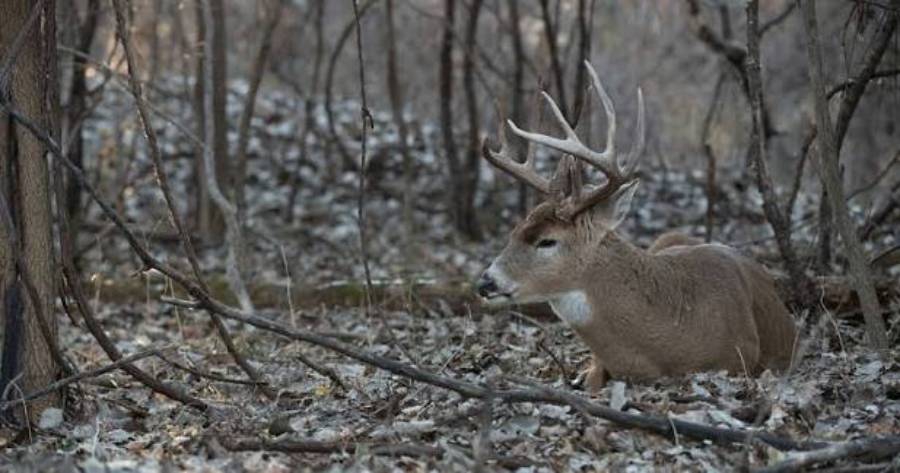
A community scrape is identified by repeated use from multiple deer, consistent activity at the licking branch, and its connection to established deer travel routes. Scrape size alone does not determine whether a scrape is communal. A large scrape may receive limited use from one buck, while a less conspicuous scrape can function as a communication site for multiple bucks and does moving through the same area.
Hunters can identify community scrapes by looking for 7 primary signs: converging deer trails, evidence of multiple deer using the site, repeated licking branch activity, freshly disturbed ground, tracks from different deer, placement along a consistent travel route, and trail-camera evidence of multiple visitors. These signs are most useful when evaluated together because a single track, freshly pawed patch of ground, or broken branch does not establish repeated communal use.
Identifying these scrapes gives hunters more than another piece of buck sign to mark on a map. A confirmed community scrape can reveal where multiple deer travel and communicate within an area. This guide explains how to recognize those characteristics in the field, distinguish a community scrape from a regular scrape, and use trail-camera evidence to confirm which deer are visiting it.
What Is a Community Scrape?
A community scrape is a deer scrape that multiple deer repeatedly visit and use as a communication site. Unlike an isolated scrape that may receive activity from a single buck or only brief use, a community scrape functions as a shared location where different deer leave and investigate scent.
A typical scrape has two important components: disturbed ground and a licking branch positioned above or near it. Deer paw away leaves and expose the soil while also interacting with the overhead branch. The licking branch is particularly useful when evaluating a suspected community scrape because repeated interaction with the branch can indicate that the site serves a communication function rather than being a one-time ground disturbance.
The defining characteristic is communal use, not physical size. A large patch of exposed soil does not prove that several deer are using it, and a smaller scrape should not automatically be dismissed. Hunters should instead look for several pieces of evidence that point toward repeated visits from different deer, including trail patterns, fresh disturbance, tracks, licking branch activity, and trail-camera observations.
This distinction matters when scouting because an active scrape and a community scrape are not necessarily the same thing. A scrape can be active because one deer recently visited it. A community scrape requires evidence that the location is being used repeatedly by multiple deer.
What Are the 7 Signs of a Community Scrape?
There are 7 primary signs of a community scrape: converging deer trails, multiple deer using the site, repeated licking branch activity, recurring ground disturbance, tracks from different deer, placement on a consistent travel route, and trail-camera evidence of multiple visitors. No single sign proves communal use in every situation, so the strongest identification comes from several signs occurring at the same location.
1. Multiple deer trails converge near the scrape
A scrape located where several established deer trails meet has greater potential for repeated encounters than one positioned away from regular deer movement. Look beyond the scraped soil and examine the surrounding area for worn trails entering from different directions. A trail intersection allows deer traveling between different parts of their range to encounter the same scrape, increasing the opportunity for repeated use by different individuals.
Trail convergence is supporting evidence rather than confirmation by itself. Several trails can intersect without deer using the same scrape. The stronger pattern is a scrape positioned at or near the intersection combined with fresh tracks, recurring ground disturbance, or direct evidence that deer interact with the licking branch.
2. Multiple deer repeatedly use the same scrape
Repeated use by different deer is the central characteristic that separates a community scrape from a scrape used primarily by one individual. Hunters should therefore focus on identifying multiple visitors rather than simply determining whether the scrape is fresh.
Evidence can accumulate through repeated scouting observations, tracks, and trail-camera records. For example, photographs showing several recognizable bucks and does interacting with the same scrape over multiple days provide substantially stronger evidence of communal use than finding freshly exposed soil during one scouting trip. The important relationship is multiple deer plus repeated visits to the same site.
3. The licking branch shows repeated deer activity
A frequently used licking branch strengthens the identification of a community scrape because the overhead branch is part of the scent-communication behavior associated with scraping. Hunters should inspect branches positioned within reach of deer for evidence of recurring interaction rather than assuming every branch hanging over disturbed soil is actively used.
Physical disturbance can provide clues, but it should be interpreted with the rest of the site. A branch positioned over a scrape becomes stronger evidence when fresh ground disturbance, deer tracks, established trails, and repeated camera activity occur around it. The goal is to establish a pattern of use rather than assign community status from one damaged twig or branch.
4. The scrape is repeatedly refreshed
Recurring disturbance indicates that deer continue returning to the location. Freshly exposed soil, displaced leaves, and changes in the appearance of the scrape between scouting checks can show that the site is being maintained rather than abandoned after a single visit.
One fresh scrape still does not establish community use. A hunter who checks the location again and finds new disturbance has evidence of recurring activity, but identifying the visitors remains important. Combining repeated refreshing with tracks or trail-camera observations helps determine whether the activity comes from one deer or several deer.
5. Tracks indicate that different deer are visiting
Multiple hoofprints around a scrape can provide supporting evidence that more than one deer has approached the site. Hunters can examine differences in track size, direction of travel, and the number of trails entering the area to understand how deer are moving through the location.
Tracks have limits as identification evidence. Hoof size alone should not be treated as a reliable method for determining the exact age or sex of a deer. Instead, use tracks to establish that different-sized animals or multiple movements are occurring, then combine that information with other evidence. Trail-camera images provide a more direct way to determine whether separate individual deer are responsible for the activity.
6. The scrape sits on a consistent deer travel route
Community scrapes are more meaningful when they connect with established deer movement. A location along a travel corridor, trail junction, habitat transition, or route between important habitat features gives multiple deer repeated opportunities to encounter the same communication site.
This does not mean every scrape between bedding and feeding areas is communal. The location explains why repeated use is plausible; evidence at the scrape establishes whether it is actually occurring. Hunters should therefore evaluate the travel route together with tracks, licking branch activity, fresh disturbance, and observations of individual deer.
7. Trail-camera activity shows multiple deer using the scrape
Trail-camera evidence provides one of the clearest ways to confirm that a suspected community scrape receives visits from different deer. Images or video can show individual bucks and does returning to the same location and reveal whether they actually interact with the scrape or simply walk past it.
The distinction between passing and using is important. A camera may record numerous deer because the scrape sits beside a heavily traveled trail, but high deer traffic alone does not prove that those deer use the scrape. Stronger evidence consists of multiple identifiable deer stopping at the site, investigating the scrape, interacting with the licking branch, or returning on different dates. When these observations align with physical field signs, a hunter has much stronger evidence that the location functions as a community scrape.
Where Are Community Scrapes Most Likely to Be Found?
Community scrapes are most likely to be found where established deer travel routes concentrate movement and give multiple deer repeated opportunities to encounter the same scrape. High-value locations include trail intersections, travel corridors, habitat transitions, and routes connecting bedding and feeding areas. The location itself does not confirm a community scrape, but it helps explain why different deer repeatedly use the same site.
Trail intersections are strong places to investigate because two or more movement routes bring deer through one concentrated area. Instead of examining only the scrape, hunters should step back and identify how trails enter and leave the surrounding cover. A scrape positioned where several well-used trails converge has a stronger physical context for communal use than an isolated scrape beside a faint trail.
Travel corridors can produce the same pattern. Deer repeatedly use terrain and cover that provide efficient movement between important areas, including bedding cover and feeding locations. A scrape positioned along one of these established routes can be encountered by different deer moving through the area at different times. Tracks, worn vegetation, repeated camera observations, and fresh scrape activity help determine whether the corridor is actually producing multiple-deer use.
Habitat transitions are another location worth checking. Edges where two types of cover meet can influence deer movement and create identifiable travel routes. Hunters should look for the combination of an established trail, a suitable licking branch, recurring scrape activity, and evidence that more than one deer visits the location. Finding only a scrape along an edge is not enough to classify it as communal.
Terrain should therefore be used as an identification clue rather than a standalone rule. The useful sequence is location → concentrated deer movement → repeated encounters → evidence of multiple-deer use. A promising location tells a hunter where to investigate; physical signs and repeated observations determine whether the scrape actually functions as a community scrape.
How Can You Tell a Community Scrape From a Regular Scrape?
You can tell a community scrape from a regular or isolated scrape by looking for repeated use from multiple deer rather than relying on the appearance of the scrape alone. The strongest differences involve the number of individual visitors, frequency of activity, licking branch use, surrounding deer movement, and repeated evidence collected over time.
| Feature | Community Scrape | Regular or Isolated Scrape |
|---|---|---|
| Deer use | Multiple deer repeatedly use the site | Use may be limited to one or a few deer |
| Repeated activity | Recurring activity is evident | Activity may be brief or inconsistent |
| Licking branch | Repeated interaction from different deer | Interaction may be limited |
| Deer trails | Often associated with consistent deer movement | Does not require concentrated movement |
| Tracks | Evidence may indicate multiple visitors | Tracks may provide limited evidence |
| Trail camera | Multiple deer can be confirmed using the site | Fewer or inconsistent visitors may appear |
| Scouting value | Helps monitor activity from multiple local deer | May represent more limited activity |
The most important distinction is multiple-deer use. Fresh dirt only establishes that a deer has recently disturbed the scrape. A heavily worked licking branch establishes activity at the branch. A worn trail establishes regular movement through the area. None of those observations independently proves that several deer repeatedly use the scrape.
A community scrape becomes easier to identify when these signals converge. For example, consider a scrape at the intersection of three established deer trails. The soil is disturbed again after multiple scouting checks, several different-sized tracks appear around the site, and a trail camera records different deer interacting with the licking branch on separate days. Together, those observations provide much stronger evidence of communal use than any individual clue.
A regular scrape can still be important to a hunter. The distinction does not mean that every non-community scrape has little hunting value. Instead, classification helps determine what information the sign provides. An isolated scrape may reveal activity from a particular deer, while a confirmed community scrape can provide information about the movements and communication behavior of multiple deer using the surrounding area.
For that reason, hunters should classify a suspected community scrape from a pattern of evidence rather than one visual characteristic. Repeated activity, multiple visitors, consistent deer movement, licking branch interaction, tracks, and trail-camera observations create a more reliable identification than scrape appearance alone.
Does the Size of a Deer Scrape Mean It Is a Community Scrape?
No. Scrape size alone does not determine whether a deer scrape is a community scrape. A large scrape can result from concentrated activity by a limited number of deer, while a smaller scrape can receive repeated visits from multiple bucks and does. Communal use is therefore a stronger identification criterion than the physical dimensions of the disturbed ground.
Scrape size can still provide useful information when evaluated with other field signs. A large area of exposed soil indicates substantial pawing activity, but it does not reveal how many deer created that disturbance. The same problem applies to a heavily worked licking branch. Both features demonstrate activity, but neither independently establishes that multiple deer repeatedly use the site.
Hunters should prioritize 5 stronger indicators: multiple identifiable visitors, recurring scrape activity, repeated licking branch interaction, consistent deer traffic, and trail-camera confirmation. For example, a relatively small scrape that produces photographs of several individual bucks and does interacting with the licking branch over multiple days provides stronger evidence of communal use than a large scrape with no evidence of multiple visitors.
The practical rule is simple: judge a community scrape by who uses it and how consistently they return, not by how large it looks. Size becomes supporting evidence only when it aligns with repeated activity from different deer.
When Are Community Scrapes Most Active?
Community scrape activity changes throughout the year and generally becomes more noticeable as whitetail breeding activity approaches, but hunters should distinguish seasonal increases in scraping from the long-term use of an established communication site. A scrape that receives intense activity during the pre-rut may still have value outside that short period.
The pre-rut is especially important because bucks increase sign-making and scent-marking behavior as breeding season approaches. Existing scrape locations can consequently become easier for hunters to detect through freshly disturbed soil, licking branch interaction, tracks, and repeated visits. Increased activity during this period does not mean every fresh scrape is communal. Hunters still need evidence that different deer are using the same site.
Activity can also change during the rut as deer movement priorities shift. A scrape that produced frequent visits during one period may receive fewer observable visits later. Reduced visible activity therefore does not automatically mean that the location has stopped functioning as a community scrape. Weather, deer movement, breeding behavior, hunting pressure, and changes in food use can affect when deer pass through the surrounding area.
Repeated observation provides a better assessment than a single scouting trip. For example, finding leaves covering the scraped ground on one morning does not establish that the site has been abandoned. Checking the location over time or reviewing trail-camera history can reveal whether deer continue visiting the licking branch even when ground disturbance becomes less obvious.
Hunters should therefore evaluate both current activity and historical use. Current sign indicates what is happening at the scrape now, while observations collected across weeks or seasons show whether the location consistently attracts multiple deer. That distinction helps separate a temporary burst of scraping activity from a community scrape that functions as a recurring communication site.
Read more: How to Find Buck Staging Areas: Step-by-Step Guide
How Can You Confirm a Community Scrape With a Trail Camera?
You can confirm a community scrape with a trail camera by documenting multiple individual deer repeatedly interacting with the same scrape or licking branch. Camera evidence is stronger than relying on scrape size, tracks, or disturbed soil because photographs and videos can show which deer visit the site, when they arrive, and whether they actually interact with the scrape.
Position the trail camera so its detection area includes both the licking branch and the scraped ground when possible. The objective is not simply to photograph deer traveling past the location. A deer walking through the camera frame establishes traffic, while a deer stopping to investigate the scrape, work the licking branch, or return to the site provides stronger evidence of actual scrape use.
Identify individual deer across the camera history whenever the images provide enough distinguishing features. Mature bucks can often be separated by visible antler characteristics during the antlered portion of the year, while body characteristics and other recognizable features may provide additional context. Avoid assigning an identity when the images do not contain enough evidence. The relevant question is whether the camera provides defensible evidence that more than one deer is interacting with the site.
Repeated visits add another layer of confirmation. A camera that records three different deer interacting with the scrape during several days provides stronger evidence of communal use than a single night containing several photographs of the same animal. Review timestamps, dates, direction of approach, and behavior at the scrape to distinguish separate visits from multiple images generated during one encounter.
Camera placement should also minimize unnecessary disturbance. Repeatedly walking directly into the scrape area to check a camera can introduce human scent and alter the activity the hunter is trying to observe. The exact effect depends on the location and deer behavior, so camera access should be planned with the surrounding travel routes, wind, and available cover in mind.
The strongest confirmation comes from combining camera records with physical evidence. Multiple identifiable visitors + repeated interaction + recurring scrape activity + consistent deer movement creates a stronger case for a community scrape than any one indicator by itself. Trail-camera monitoring turns an initial field identification into evidence of how the site is actually being used.
Should You Hunt Directly Over a Community Scrape?
You should hunt directly over a community scrape only when deer activity, timing, wind, access, and surrounding movement make the location suitable for a hunting setup. Finding a heavily used community scrape does not automatically make the tree beside it the best place for a stand.
Start with daylight activity. A community scrape can produce numerous trail-camera photographs while most visits occur after legal shooting hours. In that situation, the scrape is still valuable because it confirms which deer use the area, but the camera data may indicate that the hunter needs to identify where those deer travel before reaching the scrape during daylight.
Access is another consideration. A productive scrape loses practical hunting value when reaching it requires crossing the same trails deer use to approach the location. Walking through bedding cover, repeatedly crossing a major travel corridor, or approaching from an unfavorable direction can create disturbance before the hunt begins. A setup farther from the scrape may provide a better interception point when it allows cleaner entry and exit.
Wind direction should determine whether a hunter can observe the location without placing scent where approaching deer are likely to encounter it. Evaluate the scrape together with the trails entering it rather than considering only the tree or licking branch. Different trails can create several possible approaches, which means a wind that works for one movement direction may expose the hunter to another.
Community scrapes can also function as scouting locations even when they are poor stand locations. A camera placed at a frequently used scrape can reveal which bucks are present, when individual deer appear, and which directions they use to enter or leave the area. That information can help a hunter move the actual setup toward a travel corridor or other location associated with daylight movement.
For this reason, the final decision should follow a clear sequence: identify the community scrape, confirm repeated use, analyze when deer visit, determine how they approach, and then choose a hunting location that accounts for wind and access. The scrape provides information about deer activity; the surrounding movement pattern determines how that information should influence the hunt.